
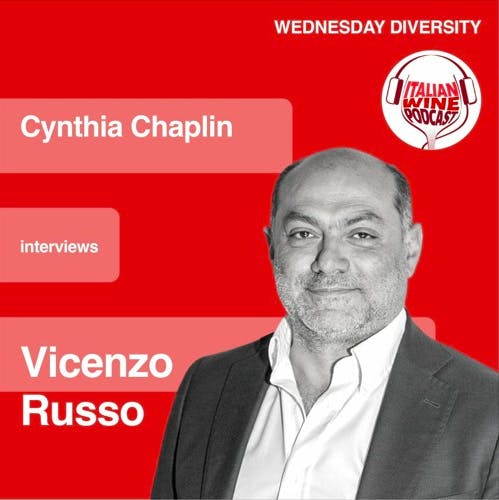
Ep. 909 Vincenzo Russo | Voices With Cynthia Chaplin
Voices
Episode Summary
Content Analysis Key Themes and Main Ideas 1. The application of consumer psychology and neuromarketing to wine communication. 2. The fundamental difference between rational and emotional consumer responses to wine marketing. 3. Tailoring wine marketing strategies for different consumer segments (experts vs. non-experts). 4. The use of neuroscientific tools (eye-tracking, EEG) for objective consumer insights. 5. The importance of professional and integrated marketing strategies for wineries. Summary In this ""Voices"" episode of the Italian Wine Podcast, host Cynthia Chaplin interviews Professor Vincenzo Russo, a leading expert in consumer psychology and neuromarketing from IULM University in Milan. Professor Russo discusses his book, ""Communication Wine, Applied Marketing Technologies,"" highlighting the complex interplay of psychological, sociological, and even religious factors in wine consumption and marketing. He explains that non-expert consumers, who represent the larger market, primarily engage with wine emotionally, activating the limbic system, while experts respond more rationally, using the prefrontal cortex. The conversation delves into the limitations of traditional market research, emphasizing that consumers often don't accurately articulate their true feelings or motivations. Professor Russo introduces neuroscientific methods like eye-tracking, electroencephalography (EEG), and skin conductance to objectively measure emotional responses to marketing stimuli, such as labels and websites. He advises wineries to prioritize marketing to non-experts, who are drawn to storytelling, food pairings, and basic information like organic certifications, rather than technical details. Finally, he stresses the critical need for professional marketing expertise and a comprehensive, multi-channel communication strategy, rather than relying on amateur efforts. Takeaways - Wine marketing is deeply influenced by psychological and emotional factors, particularly for non-expert consumers. - Emotional responses are often subconscious and can be objectively measured using neuromarketing tools like eye-tracking and EEG. - Non-expert wine consumers represent the largest market and are more swayed by emotional cues, storytelling, and practical information (e.g., food pairings). - Expert wine consumers engage more rationally, focusing on brands, terroir, and technical details. - Traditional consumer surveys and self-reported data can be unreliable as people often don't accurately articulate their true thoughts or feelings. - A successful wine marketing strategy requires professional expertise and a layered approach across various platforms (labels, websites, social media) to effectively reach different target audiences. - Wineries should invest in professional marketing talent and comprehensive communication strategies. Notable Quotes - ""We are not thinking machine that can have emotion, but, we are emotional machine that we can have, thinking process."" (Quoting Antonio Damasio, via Professor Russo) - ""Usually, the non drinker, the non expert are the big market. So maybe it's important to to create the label for the non expert, not for the expert."
About This Episode
The speakers discuss the importance of emotional and psychological aspects of wine communication in the wine sector, including the emotional responses to commodity and label, the use of eye tracking and heat mapping experiments, and the use of neuroscientific approaches to eye tracking and temperature mapping experiments. They emphasize the need for a professional approach to communication, including investing in professional expertise, social media marketing, and the use of Italian wine podcasts. They also mention the importance of creating a clear message for consumers and targeting the right audience.
Transcript
Welcome to the Italian wine podcast. I'm Cynthia Chaaplin, and this is voices. Every Wednesday, I will be sharing conversations with international wine industry professionals discussing issues in diversity, equity, and inclusion through their personal experiences, working in the field of wine. If you enjoy the show, please subscribe and rate our show wherever you get your pods. Hello, and welcome to voices. I'm Cynthia Chaplin, and today I'm honored to have professor Vincenzo Russo on voices. He's a professor of consumer psychology and neuromarketing at Elum University in Milan. And he's a member of the scientific committee for the Milan Expo two thousand and fifteen. But for our purposes today, he is the author of a fascinating book called Communication Wine, Applied Marketing Technologies. Which takes an in-depth look at how to be effective in the area of wine communication. So welcome to the show of Encenzo. Thank you so much for giving us your time today. Thank you. Thank you for your invitation. Well, I had a a really interesting time, reading through your book It's a fascinating study of what works and what doesn't work in the world of wine marketing. What got you interested in looking into the wine sector in particular? So when when I talked with my student about the wine marketing area, I talk about, a very, big area, interested by, psychological, sociological, really just as a fact. So it's very important to analyze the why the one marketing strategy with a different, the approach, respect to other kind of consumption because there are a lot of, meaning, psychological, sociological, religious suspected that we need to consider when we, analyze the wide marketing strategy. So, with our instrument, we've analyzed the the this field with a very new approach with the neuroscientific approach. And then we analyze a two different thing that is very important in this sector. The technical indication about the wine and the emotional aspect And, in particular, this aspect is very important for a non, non expert drinking cars. So, in this case, they use a lot of the emotion that a label can produce or the the the value so that you can communicate with your website, for for them is very important. So we have a two different area of analysis, and I think in this sector is very important to the emotional one. It's it's so interesting because a lot of of wine consumption is very personal and very emotional on many levels. Can you explain to our listeners what what constitutes an emotional response and how can wine market it generate an emotional response for for consumers? Yeah. This is a very important question because, when we talk about the emotional, aspect, we think that the emotional, the emotion is, a variable that can change our, think our decision making process. In reality, the emotion is a very important part of this kind of, process. So when we talk about the emotional response, we talk about the normal, approach to the stimuli. There's a very, very famous sentence from, one of the main expert in neuroscience, Antonio. He was the author of one of the very incredible book, the title was, the, discarded error. And he said that we are not, thinking machine that can have emotion, but, we are emotional machine that we can have, thinking process So the emotion is a part of our reaction to the stimuli. The first part of the brain that, we can, activate it with the stimuli is the limbic system. The very whole part of our brain dedicated to the emotion. So when we talk about the, reaction, we talk about the emotional reaction. And then we, we, activated the other part of the brain, the the cortical part, or the noble cortical part dedicated to do, to the original part. Of our decision making process. So when we talk about the emotional response, we talk about the normal reaction to the people to, for example, the color of the wine, the color for the label, the for the size of the bottle. And, I think in the in the wine sector, this aspect is very important. There is a very famous theory about the decision making process from a very hold part, that in nineteen eighty one, they say that we have a two different process of decision making. The first one is linked with our rationality. And, when we have, a very big engagement, bigger motivation. And when we are expert, we use the rationality. We use the noble cortex. But many time, we have a very low motivation or if we have, a very high motivation, we can have also a low capacity of and ability to understand as expert. In this case, we use a very, very, very critical reaction, emotional reaction to the side. So usually, when we talk about the consumer, we talk about the non expert usually. So they use a lot of the emotional reaction that they can produce a label or a color of the wine and so on. So for us, in the wine marketing, sector is very important to analyze this this part of the, our brain. It's it's very interesting. You make a good point there too that there are several categories of wine consumers, wine experts, or sommeliers, or just average wine drinkers or people who are new to wine, what are the different messages that appeal to each one of those groups? How can wine producers adapt their label design and their marketing to attract to those people? Is it we know that there are a very different reaction to the stimuli like a label from, expert and non expert. For example, from our studies, we we we can see that usually the non expert to look a lot information like, organic certification of the wine. And, usually, they're not the the expert that don't don't pay attention to this this information. I don't know why, but usually, when we compare the the output from my tracking, the tracking tool for the analysis of eye movement. We can see that the non expert to look at the, this indication, maybe because they understand the meaning of organic certification. They look at the organic certification. They look at the capacity of the bottle. It's a very strange because usually the the the the the capacity of the bottle usually is the same, but they look at this information maybe because they won't understand or maybe because they understand it is the kind of information. Anyway, if we want to talk about the the different, aspect, important of our different expert and non expert, drinkers, we can see that the the the the non expert are so attracted by the history, the storytelling of the, the wine. Usually, you can find the storytelling in the, back of the the label in the for them, it's very important to to understand, the history of the winery, and they wanted to, have more information about the which kind of flavor they can, try with this wine and, the combination of the food. And, for them, these three indications are so important. In the expert, like, a sommelier, this is not so important. It's important, which kind of, wine you have in this, in this product and the brand, the the the terroir and, there's a very different approach. If we look at the brain of expert and expert, in the activation of the brain with the Dominican resonance, we can see that the the the two groups use a different different part of the brain. Usually, the non expert, every activation of the whole part of the brain linked to the emotion, the limbic system, and, the expert, every the activation of the dorsal prefrontal cortex at this part of the brain as a link to the directionality. So the approach to the wine is completely different. But I remember to the producer that, usually, the non drinker, the the non expert are the big market. So maybe it's important to to create the label for the non expert, not for the expert. That's such an interesting point. You know, there are definitely fewer experts in the world than non experts So I can see what you mean. The the market for non experts is much bigger. I want to touch on something you just mentioned, the use of eye tracking and heat mapping experiments. Can you explain to our listeners what these methods were and how they worked in terms of measuring response because it's fascinating to read in the book. They can't see the photographs that you put in there, but if you could describe to us how that technology worked and how you came to these conclusions. Yeah. The the tracking is, really, the the, a very easy tool for, for us, because it's a very old, instrument. Of course, now is a more sophisticated instrument to, for the analysis of the movement. With this tool, we can have indication about the the the fixation of some, web page, for example, or the label, how many millisecond the people who look at this indication, the sequence, of a division of, a little part of the portal, a little part of the website. So it's a very important tool for analysis of, for eye movement, for the, analysis of, the vision of some, something. But I think it's very important that you to use other other instrument. The neuroscientific approach usually, put in inside, you know, together different, different, tools, like, eG, electricity, that the call talk with the eye tracking, instrument. So with the AG, I can give information about which a part of the brain is activated. And, this for me is a very important indication because it can, can give indication of can give, information about, which kind of emotion or positive or negative, the people have, have, when looks something. So, the e g, the literature philosophy talk with, eye tracking, And if you use other instrument, like, evaluator of, was in conduct and saturated, I can have also information about the intensity of the motion. So the eye tracking is a very important tool for analysis of the high movement, but I think it's very important to have all syndication about the, our brain, thanks to the, g, tensorflowography. Our, body, thanks to the other instrument for the analysis of and skin conductance. The neuromarketing approach now is a very strong approach to the analysis of, the emotion of people. And, there is a very famous sentence from one of the main person in, in communication of the last century that can explain why we have to use this kind of instrument. The name of this expert is David Ogilby, one of the main experts in advertising. And this said in nineteen sixty three, a very interesting phrase, he said that that the problem that we have when we wanted to understand a little more about our consumer is that the consumer don't think how they feel. They don't say what do they think, and they don't do what do they say. So it's very difficult to have the real indication from, the people, with a questionnaire interview and, in the, in focus group about their real emotion. So we needed to use other instrument for the emotional analysis, like, e g, like, the NICE of skin conduct and, of course, eye tracking for the NICE of the A movement. That's that's so interesting. I've I've heard similar things said before about surveys and questionnaires that people won't tell the truth even if they're anonymous because they don't want to be seen as being uneducated or not having a good palate, even if they're drinking box why they won't admit to it. So that's a that's a very good point. So the technology that you're using is is much more of a three hundred and sixty degree technology. You're able to track eye movement and and other body responses and not rely on actually what the people say they're going to do. That's very interesting. Let me just ask you Vincenzo, how how do you do this research? Do you have fifty people in a room each of them with bottles of wine in front of them? Or what does it look like when you're doing this research? I'm curious. No. We usually, have one person in, in our lab for each protocol. And, because we spend a twenty minute to, put all the instrument in the body of the people. And, but usually, we have, at the hand of our search, about twenty, twenty people, or thirty people. And with a very short sample, we can have a very valid data because we analyze the it's simple reaction to people, and we don't analyze the opinion of the people. When we study the opinion of the people, we need a very big, you can, big sample. But when we, analyze the reaction of the people, they seem to have a very short a very short sample. In the ability to sample. So, for us, it is important to have, twenty people, but I remember you that we have a different reaction is into a different iteration from a man and, woman and from, people holding the young people. So, with the twenty twenty people of each subgroup, we can have a very valid data about the emotional reaction. But usually, we have one person every, every time for for the nicest, for example, in order to analyze the website or the reaction sure not to the taste of the wine, the call of the wine, and so on. And so interesting. Who who is, commissioning this research? Do wine producers come to you? Or is it, you know, sort of a government body or wine regulator? Who who asks for this research? Because it's absolutely fascinating. Usually, we we work a lot with a very big company, or a consortium because they they have, they have the sensibly validation to spend the money for the research. We work with a very famous winery and, and with a big company like, the food field, there is a LaVSA for example, or Casberg, Heineken, a very big company to spend a lot of money for communication that they wanted to have more indication about the quality of the communication, the quality of the advertising for example. But sometime, we we work also with, a little, a small, a small, companies. For example, a little, a small company from the land for the, a new communication of, bottle for Barolo. And, because there is a a very, a new generation, a young owner that the day that they can understand the the potentiality, the, the power for this kind of approach. So, the cost of these approaches are not so big, not so high. So, usually, the cost is at ten percent of your investment, five percent is a very little but you are you are more indication about the quality of the the the the the efficacy of the communication. Absolutely. And I I think I think you've just hit on something really interesting. The younger generation tends to understand technology better and trust technology more. So they're they're comfortable with using it, and I think they're comfortable with the findings. So that's a really interesting point that young wine producers are younger, younger people in the business are really open to using this kind of research. I think that's that's also fascinating. I just wanted to ask you in your opinion, sort of what area of marketing is the most important, you know, according to the research that you've done, you know, is it websites or social media or just simply the label by itself what has the biggest impact and what generates the most response from the consumers in the lab? Usually, I think it's important to have a very complex, strategy of communication. It's very difficult to to say that, the website is more important than the label. I think it is important to have a very, complex strategy, able to put together on the same, direction. The website, social media marketing, and so on. But sometime, this this approach depend on the target. If my target is, only the people in the store, maybe it's better to, to to invest them all in the, in the, in a good bottle, a good label, and so on. But I I remember you the people usually, love to to have more information. So after the the the purchase for one bottle, maybe they go in the go inside the website for, in order to have more information about the winery. So it's very difficult to say that, which is the the the the main area where it's important to invest money. There is also an important consideration, about the social media marketing. Many people who say that we have the social media market and then when you look at the social media market, you can find all the, Facebook page without the, new information and new news I think it's very important that you have a professional approach to the social media marketing. Yeah. Well, that's it's I think the concept of layering layering communication is really important. Not everyone tunes into the same sort of communication. I know that I I don't follow Instagram the way that my twenty year old, children do. So I think that's a very good point that there's no one solution to to marketing and communicating, especially in wine. What advice would you give to producers seeking to sort of improve the impact of their their marketing and generate more sales? What would you advise them to do? I thank you for in particularly, more producer, spend a lot of time to produce a very good product. And, now is I think is very important to to spend the time mounting an effort for the good marketing strategy. I think it's very important to have a very clear indication about the target, about the the the the best strategy. And I think it is very important to invest, in, professional expert inside the company inside the binary, expertise in communication, expertise in marketing, many times, I I I found out different producers that they say, yes, the the communication, my son is expert in communication, because he he is important to have a son with a professional competencies in this area. And we are working a lot with our master in the WAN Communication in order to improve the capacity, the ability of the people in this, in this, in this field. For example, we have a disaster only for communication with the five hundred hours of lesson about marketing communication. And, usually, we need more hours. So, the field is so big. We have a digital marketing. We have a traditional marketing. We have, the, the, the, different, approach, advertising, and so on. Is very important to have one expert in this area, not the sum. Definitely. Definitely. I think people tend to forget too. Wine is not like a t shirt. You know, a lot of time and effort goes into making wine. So once you've invested all of that in your in your soil, in your, you know, technical abilities in the Cantina, in all of your harvest, you definitely should be putting some money into actually selling the wine. So, I think you have a good point there. Probably, your son shouldn't be running that Absolutely. After all the effort that you've, you've done to get your product to market, it should definitely get its message out. So this is, this is a fascinating topic, and I'm, I'm so interested to hear how many opportunities to study at the university just wine marketing. It it really shows how our society now is so inundated with messages. It's important to be able to target and to focus properly. So thank you so much for coming on. Before I let you go, I'm gonna have to ask you, What is your favorite Italian wine, Vincent? What would you drink if you were opening a bottle for yourself? I love cecillium wine. And, for me, the best wine, the white wine is from, with a little bit more food. It's very, very, very nice. Very, very good. Perfect. Perfect. Art Sicilian wines doing well now. Talk about marketing success. Thank you so much for coming on today. Thank you. Really appreciate it. And this is this is such a fascinating topic to talk about. So thank you for, giving me the chance to read your book and coming on and chatting with me today. Thank you. Thank you. Thank you. Thank you for listening, and remember to tune in next Wednesday when I'll be chatting with another fascinating guest. Italian wine podcast is among the leading wine podcast in the world, and the only one with a daily show. Tune in every day and discover all our different shows. You can find us at Italian wine podcast dot com, SoundCloud, Spotify, Himalaya, or wherever you get your pods. Hi, guys. I'm Joy Lemings Denon. I am the producer of the Italian wine podcast. Thank you for listening. We are the only wine podcast that has been doing a daily show since the pandemic began. This is a labor of love and we are committed to bringing you free content every day. Of course, this takes time and effort not to mention the cost of equipment, production, and editing. We would be grateful for your donations, suggestions, requests, and ideas. For more information on how to get in touch, go to Italian wine podcast dot com.
Episode Details
Keywords
Related Episodes

Ep. 2651 Diversity in the Wine Industry and Wine Tech Innovation with Jeremy McCarty | Voices with Cynthia Chaplin
Episode 2651

Ep. 2627 Regenerative Winemaking, Mentorship & LGBTQ+ Perspectives with Terah Bajjalieh | Voices with Cynthia Chaplin
Episode 2627
Ep. 2545 Building Inclusive Wine Spaces Through Storytelling with Amari Collins | Voices with Cynthia Chaplin
Episode 2545

Ep. 2542 4th Anniversary Special | Voices with Cynthia Chaplin
Episode 2542
Ep. 2531 Winemaking Journey from Mumbai to Napa with Priyanka French | Voices with Cynthia Chaplin
Episode 2531

EP. 2517 Sarah Looper | Voices with Cynthia Chaplin
Episode 2517