
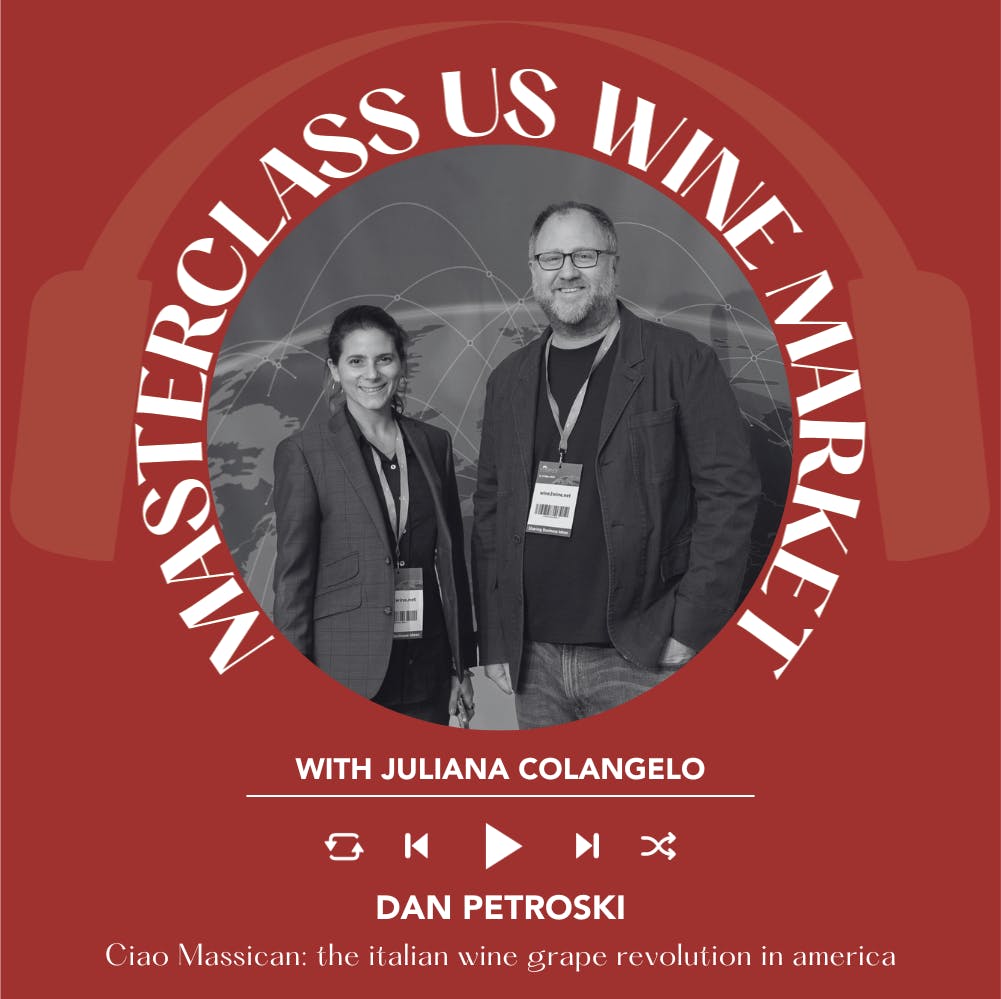
Ep. 1721 Ciao Massican The Italian Wine Grape Revolution |wine2wine Busines Forum 2023 Series
wine2wine Busines Forum 2023 Series
Episode Summary
Content Analysis Key Themes and Main Ideas 1. Branding the Italian Lifestyle for the American Market: The core focus on leveraging Americans' deep affinity for Italian culture (food, entertainment, travel) to market wine. 2. Dan Petrovsky's Entrepreneurial Journey with Massican: His evolution from advertising to Sicily, then establishing Massican in Napa Valley as a unique white wine producer, and its eventual acquisition by Gallo. 3. Consumer-Centric Brand Building: The philosophy of selling an experience or benefit (""it's not me, it's you"") rather than just the wine product itself. 4. Challenges and Opportunities in Wine Marketing: Addressing historical perceptions of Italian varietals in California, the importance of long-term marketing investment, and adapting to new digital landscapes. 5. The Power of By-the-Glass Sales: Highlighting this as a critical strategy for brand building and gaining consumer impressions in restaurants. 6. The Evolution of Italian Grapes in California: Discussion of the historical decline and potential resurgence of Italian grape varietals in American winemaking. Summary In this episode of the Italian Wine Podcast, host Juliana Colangelo interviews Dan Petrovsky, founder of Massican, about the successful branding of the Italian lifestyle for the American wine market. Petrovsky recounts his journey from Brooklyn to Sicily, which inspired him to establish Massican, Napa Valley's only white wine winery focused on Italian varietals. He emphasizes that Americans have a profound love affair with Italian culture, making it an ideal foundation for wine branding. Petrovsky details Massican's success by focusing on a ""sell the benefit, not the product"" approach, creating a brand that evokes the Mediterranean lifestyle rather than just discussing terroir. He advocates for consumer-centric marketing, urging producers to understand how wine fits into customers' lives (""it's not me, it's you""). He shares insights on his unconventional marketing investments, which, despite not always showing immediate DTC ROI, contributed to consistent wholesale success and rapid sales growth, eventually leading to Massican's acquisition by Gallo. Petrovsky also discusses the historical highs and lows of Italian varietals in California and highlights the ""by-the-glass"" strategy as a highly effective brand-building tool in restaurants, offering valuable consumer impressions over expensive digital advertising. He concludes by stressing the importance of long-term investment and patience in brand building, challenging the industry's traditional immediate ROI mindset. Takeaways * Americans' strong cultural affinity for Italy creates a fertile ground for marketing Italian wine and lifestyle brands. * Successful wine branding should focus on selling the ""experience"" or ""benefit"" (e.g., nostalgia, escapism, lifestyle) rather than solely the product's technical attributes. * A consumer-centric marketing approach (""it's not me, it's you"") is crucial for truly connecting with an audience and integrating the brand into their daily lives. * Long-term, consistent investment in diverse marketing efforts, even without immediate, clear ROI, can cumulatively lead to significant brand growth and sales. * ""By-the-glass"" sales in restaurants are a powerful and cost-effective method for brand building, providing direct consumer impressions. * The history of Italian grape varietals in California shows periods of decline, but there's potential for resurgence, particularly with white wines. * The wine industry often overemphasizes self-promotion and terroir, hindering broader market appeal and connection with diverse consumers. Notable Quotes * ""The branding of the Italian lifestyle for the American market."
About This Episode
The Italian wine industry is experiencing a decline and resurgence of Italian wine grapes, with Mas protective from COVID-19 and the desire for a home lifestyle to enjoy the Italian wine culture. The success of Mas protective is due to a phylloxera epidemic and a desire for a home lifestyle to enjoy the Italian wine culture. The speakers emphasize the importance of brand building and building a brand for consumers, while also acknowledging the risks of marketing and the importance of SEO in the industry. They plan to sell more wines and address issues with communication and communication.
Transcript
The Italian wine podcast is the community driven platform for Italian winegeeks around the world. Support the show by donating at italian wine podcast dot com. Donate five or more Euros, and we'll send you a copy of our latest book, my Italian Great Geek journal. Absolutely free. To get your free copy of my Italian GreatGeek journal, click support us at italian wine podcast dot com, or wherever you get your pods. Y to wine business forum is a training and networking event for anyone involved in the wine business. Held in verona on November thirteenth and fourteenth. This year, the forum will involve over ninety international speakers in over fifty sessions on topics ranging from marketing and communication, sustainability, strategy, new market trends, and market focus. In collaboration with the Italian trade agency, a number of market focused sessions will be broadcast in a podcast series on the Italian wine podcast, a media partner of the wine wine business forum. Hi, everybody. Good afternoon. Noon. I'm Juliana Colangelo. Many of you know that by now. It's my third session today. Thank you, Stevie. It's a little marathon, but, no, in all seriousness, thank you, Stevie, for the the platform of the opportunity to be here today with you all. I'm really, really excited about this session today with Dan Petrovsky. We get to talk about two of my favorite things Italian American culture and wine. So two things we both know very well from growing up, in the tri state area. But first, let me tell you all a little bit more about Dan and his illustrious career. So Dan was born and raised in Brooklyn, New York, attended a Columbia university. After graduating, he had a very successful career in advertising with Timeick, Orange's MBA at NYU, and during that time, was drinking a lot of wonderful wines. He took some time to take a sabbatical and ended up in Sicily, way ahead of, white lotus. And upon returning from his harvest experience in Sicily, thought he would work in wine sales in New York, but ended up out in California, making wine once again. He eventually became the winemaker at Lark Meade Vineyards and also launched his own brand, Massicon, which is what we're here today to talk about. So Dan's background in publishing, as well as in winemaking, making a label that embodies the Italian lifestyle and produces, Italian white wine varietals in California is what leads us to our topic. Which is the branding of the Italian lifestyle for the American market. The good news is we're starting from ahead here in Italy. Americans love all things Italian, but how do we take that love affair with Italy and turn it into successful branding? Dan having recently sold Masicon to Gallo is a prime success story to talk about this topic and talk about the successful branding of the Italian lifestyle for the American market. So that's what we're here to talk about today. So, Dan, take it away. Oh, thank you, Juliana. I'm kinda nervous now because I really still am pinching myself that, this small little white wine only brand in Napa Valley, California, sold to the world's largest wine company. So I'm still trying to figure that out and maybe we can talk it through in this conversation. But I will say the title of this conversation, came about when Julian and I spoke on the Italian wine podcast earlier this year, to talk about the history of Italian wine grapes in California. There was a history, but then there was also a decline and then a resurgence of it. And now today in twenty twenty three, twenty twenty four, as I move forward, leading Masicon into the future. We're gonna try to bring that back in a big way. And we'll talk a little bit about that a little bit later. So just don't worry about the title here. We're gonna just jump straight into why Americans love Italianians and the Italian lifestyle. I wanted to give you a few points and some statistics about this. But first and foremost, my harvest finished on Thursday of last week. I got on a plane on Friday. I did not have a presentation ready. I think I'm wearing the boots and the jeans that I I left the warranty with on Thursday. So, I got really excited. Yes. French shower. I, I got very excited about the AI presentation yesterday in Regina, and she started talking about the tools we all can use to make our lives more effective and more efficient. So yesterday after that presentation, Juliana and I, like, had a brainstorm and said, Hey, let's just use Dolly, Chachi b tease, visual programming to create our presentation. So we created this yesterday at three o'clock. So all the illustrations you see above us came right out of prompts that we put into chat GPT. So, Steve, you will be happy to know that we have taken action from seminars, within twenty four hours of the seminar happening. So here, why do Americans love Italy, and you can see, a a faint representation of Frank Sonatra. There's a little bit of a Madonna in there as well. A couple of characters from the Sopranos, Italy is in there. So let's jump right into it here. It's like a where's Waldo for Italian Americans. I love it. First and foremost, why Americans love Italian is they go to Italy, ten percent of all the tourists in Italy are Americans, and they bring Italy culture and Italian culture back to America. First, we've leaned into Little Italy, meaning on a restaurant basis. There are fifty thousand Italian restaurants in America. There are a hundred and fifty thousand restaurants in all of Italy. So when you think about your opportunity to sell wine, you are already at a third of the market of your entire country. So that's an op that's a great opportunity for wine sales. Food is a big part of it. Food is a big part of the culture. But also those Americans who came to Italy and brought the culture back, Howard Schultz in nineteen eighty seven came to Italy, had a business trip to Milan, went back to Seattle, bought out his business partners and his in his coffee shop and created Starbucks and he didn't just create Starbucks. He created coffee culture in America. He's not creating pumpkin spice latte. He put sixteen thousand stores on the ground in America about coffee culture. That is not product. That's about experience. That is about benefit. Fast forward to today. In two thousand and seven, Italy was conceived in Tarino. Two thousand ten, they opened their first door. There's ten Italy's in America today. With another one, a third store opening in New York next year. They believe they wanna get the sixteen of America by twenty twenty five. And that's about food and beverage culture. So taking it to we have the restaurants, the Italian restaurants you experience out of home. Italy is bringing you in home with product. Speaking of that product, even though the French outpaced the value of Italian wines in America, Italian wines sell forty five percent more bottles. So there's more quantity, more volume of Italian wine spread out through America. And put on tables and restaurants and homes throughout. And when you're at home, drinking Italian wine, what are you doing? It's entertainment culture. Seven of the top fifty films of all time. We're talking goodfellas. We're talking godfather one and two, pulp fiction mean streets, apocalypse now. These are all Italian American directors and or actors. And then you take it to, you know, from the big screen, the TV, and you have Rolling Stone calling, the Sopranos, the number one TV show of all time. Not only did American publications say that the British newspaper, the Guardian said it as well. So we know why American love Italy. It's it it's there's an attraction to the culture. There's an attraction to the food, the wine, the entertainment. You know, we overuse the terms. It's a love letter, but Americans truly have a love letter story and life and relationship with Italy. So your total addressable market of selling wine in America or selling any product in America is easy because Americans wanna lean into the Italian lifestyle. Well, if they leaned in so much of the Italian lifestyle, you're gonna see over the next few slides that they actually don't want to buy Italian made grapes into wine from American producers. But I'm hoping to change that. So in nineteen sixty seven, Bob Mondavi, created what he wanted to be. He wanted to get out of the table wine game and wanted to raise a level to premium wine. So he started Madavi. He fought with his brother, who spun off, started with Madavi winery in nineteen sixty seven. Ten years later in nineteen seventy six, we're gonna look at these slides here. These are the California grape crust report of French varieties. When I say French varieties, I'm only talking about cabernet and chardonnay. And then I'm talking Italian varieties. I'm talking about all Italian varieties in California. In nineteen seventy six, it was almost parody. Fifty five percent French, forty five percent Italian grapes planted in America. Between seventy six and eighty six, unfortunately, there was a phylloxera epidemic, and people decided to start changing their varietal plantings. And why did they go to the French side as opposed to the Italian side? Even then, in nineteen eighty six, there was more Barbara planted in California than there was cabernet sauvignon. So even up until nineteen eighty six, I'm very modern less than forty years ago, there was still more Italian red grapes planted in America. But that changed drastically because with the judgment of Paris in nineteen seventy six and Americans investing, you know, the French considered the best wines in the world, the American, wine vigneron decided that they wanted to lean into the French culture. They wanted to, you know, to continue to make the best wines in the world and be part of the culture of the best wines of the world. And unfortunately, those were not Italian. So where does that leave us today? During that timetable of that last slide of where Italian grapes have come from, we we, as Italian lovers, we saw all of that red wine grapes collapse. We saw Antinori in nineteen eighty two, plants three hundred acres Sanjay on Atlas Peak. Today, there is three acres of Sanjay on Atlas Peak. And, Antori, Antinori still owns that property. What we did see was you saw a massive resurgence of white wine. That massive insert is the white wines, pinot grigio. And we went from zero pinot grigio plants in the California in nineteen eighty six to two hundred thousand tons last year. So there is a a movement towards white wine. This wasn't necessarily my decision to be Masacom because of the pinot grigio movement. But if you look at the other sales of white wines in in America and you look at the stats that Danny burgers sent out yesterday or you guys presented to you all yesterday, Cabot pinot grigio, Santa Margot, pinot grigio, These are millions of cases of white wine coming from Italy into America and onto the tables at restaurants and homes. This is we tried to do this in America. Two people tried to do this, Bob Mondavi, with La Famellia in nineteen ninety seven, and George Vare, ex Barringer, in nineteen ninety five at Luna. So they tried to create the Calatau movement. They tried to bring the Italian grape revolution to California. They planted Sanjuvesic at Luna. They planted pinot grigio at Luna. Bob Madavi planted tokeye for Elano in Monterey County. He was trying to make, you know, white table wines. He was planted San Giovanni as well, massive failures, huge failures. And within five to seven, the ten years, those businesses were gone. Or turned over or sold or forgotten about within larger organizations. So why does it make me optimistic as, as a white wine producer, focusing on Italian varieties? Massacana's napa's only white wine winery. It's sixteen, excuse me, new new, record show. It's eighteen hundred registered wineries in this, in Napa Valley. Masa Khan is the only white wine winery in that entire eighteen hundred. I started Masa Khan in two thousand and nine because I lived in Sicily in two thousand and five, two thousand and six. Worked in a vineyard drank nothing but white wine. I was living in, outside of Catania. We drank Aetna whites. We didn't drink Aetna reds. And I came back to America, and we drank nothing but Cabernet sauvignon and Chardonnay. And those wines were big. That was the big flavor era. That was the two thousand five to two thousand six, two thousand seven, two thousand eight. Those are the Parker boom era era years. That was when Pito noir was fifteen percent alcohol. That just didn't sit with me. As we were, you know, hanging out outside, living the Mediterranean lifestyle with friends and family being a Vigneron, being a winemaker, being really cool, wearing the boots, doing all the things. And it was like ninety degrees, and it was eight PM, and we were drinking really rich heavy wines. I said this just doesn't make sense. So Masicon was really born out of a cultural desire. We were already consuming Italian products culturally, but as an American producers, we weren't living the vision that we I had personally as living in a Mediterranean climate in a Mediterranean environment, I wanted to be drinking Mediterranean style wines. California wasn't making those wines at that time. It gave me a window and an opening an opportunity to say, I want to produce the things that I want to drink. So I started with four hundred cases, you know, nothing. Very small. Went to five hundred cases, to seven hundred cases, at twelve hundred cases, twenty five hundred cases. And I always said, Hey, look, I'm making the wines. I'm selling the wines. I'm going to market door to door. I'm people are buying wines from my website. I'm delivering them to their house. I can't make this very super stressful that it's gonna actually impair the my day job. So I made enough wine that the market would absorb. And that got to a point where the market was growing too much for me to to not be focusing a hundred percent on Masakon. In two thousand and one, I made the the choice to to leave my day job and pursue making this doing something. What I thought George Vair, who was my mentor at loo and when he was at Luna, and what Bob and Davi failed to do. And that's some really big fucking shoes to fill because these are two icons in the American, wine business, but I think that we can do this. And I was I was totally confident in myself. And then one day Joe Gallo called and said, hey, I love what you're doing. How can I help you? And I said, what do you mean? And then he went through the process of thinking through how do we make Masicon this white wine, this revolutionary white wine brand in California that reaches more people that makes it more accessible that you are able to find it at your local store at your restaurant on your corner, and you can afford to buy it and enjoy it. How can we bring quality white wines, Italian themed white wines? I make eleven great varieties. Nine of them are Italian grape varieties in California. How do we grow that production and grow that network forward? And over a bottle of Italian white wine, Joe Gall and I asked it out, and we decided that this is what we're gonna do. And I guess the big question is, how the fuck did I get there? Do they have the largest wine company in the world calling the smallest revenue winery in all of Napa Valley and say, we wanna take what you're doing and blow it up. Yeah. That's what we're here to talk about and find out. Hopefully, you'll tell us all your secrets, Dan. So, let's talk about the bullet points on this slide as a way to dissect what you just said. Why did the largest wine company in the world come knocking on your door of seven thousand cases to purchase Masicon? What did they see in your brand? And what did you create with Masicon that was so successful? So, you know, first, the total addressable market being present. I think we spoke about earlier that Italian grape varieties declined in California because Americans wanna purchase a piece of the Italian lifestyle by purchasing authentic Italian ones. But how did you take that could be a challenge to Massicon and make still a successful brand. The best point made today is that in America as a wine producer, I saw when I actually made wine in Italy, when I made wine in for yulie, for four years and imported those wines into America under the Masicon brand, those sales were stagnant because I was an American making wine abroad and trying to bring this marketplace into restaurants and homes. And I was shocked at it. I thought it would have been a great opportunity to have a brand live in two places simultaneously making a singular statement with the wine, and it would bring joy or enthusiasm and curiosity But everyone rejected the Italian wine I made. And it came to Juliana's point is that, yes, it was made in from Italian dirt in an Italian winery and imported under an Italian label, but the reality of it wasn't it didn't have the ethos of Italian hospitality of Italian culture. And if for some reason I couldn't break through that, but what I realized was that there was a massive magnetism towards what Masakan was doing to create this marketplace or to insert itself into this marketplace of all the just all the statistics I just showed you about restaurants and about culture and about history and about food and coffee. These are things that Americans adore because it's a bit of escapism for them. It's a bit of nostalgia and romance. I tell the story all the time. My wife's sister and my sister went to Italy for the first time on their honeymoon, and it never been back, but they don't stop talking about it. And it's been twenty five years. So this is something that sticks with us. So my goal with Masakan was how do I create a wine in the style of an Italian white wine? A style of a Mediterranean white wine that takes you back somewhere. That takes you to this romantic nostalgic place. And if I can push the wines into the atmosphere of the culture that already exists in America that we love Italy, All I need to do is I'm the key to bringing you back there. And that was what I was doing with everything from my marketing, my advertising, to my communications, to my Spotify playlist, to, you know, my editorial. I mean, if you go to the Masakan website, there's over thirty thousand words on the website that don't talk about wine. Italian wine podcast brought to you by mama jumbo shrimp. Yeah. And that brings us, I think, to that second point, sell the benefit, not the product. You've just described a few ways in which you're selling a benefit to the Massacre customers, the playlist, the lifestyle, the recipes, the web content. And there's probably some Italian producers in this audience that might be a little bit envious of of the position that you've taken the Italian lifestyle and put it into the Massacre brand. But talk a little bit more specifically about that because, you know, we're all here to learn and come up with new ideas for sales and marketing. So talk a little bit more tangibly to us about how you took that Italian lifestyle and put it into the Mexican brand. And this sell the benefit, not the product, I think, is the the easiest way to think about this from a marketing perspective is think of Nike. You don't buy sneakers. You buy the ability to be like Mike you buy the ability it says Juliana runs marathons when she puts on her Nike sneakers. Like, that is what you buy. And I think the wine industry has a major problem with understanding that, understanding that wine is a vehicle to something else in someone's lives. We have this problem, and it's part of bullet point number three as well, is we have this problem of talking about ourselves. We have this problem of when marketers told us to be storytellers, we only talked about ourselves. We didn't actually think about our customers, think about who our customers were and are and how our customers consume our product. What's the benefit of someone drinking Masicon in their home or at a restaurant? There's the price value benefit, the qualitative benefit. There's the escapism benefit if I can trigger an emotion. I'd Masaka never owned a vineyard or a winery. It was an idea. An ideas are more powerful than the real thing. And what we do in the wine industry is when we have a real thing like a vineyard or a winery or a wine tasting room, we want you to come to us. We want you to experience us and to lodge that memory in your brain. I can't do that with Masicon because I don't own anything. Galo doesn't own anything. They own the name Masicon. So what we're doing and what we what we're gonna build upon is having these communications like where do you wanna drink a glass of wine? You wanna drink it when you're watching a movie, when you're Netflix and chilling, and we wrote a a piece about all of our favorite Italian movies. You wanna drink it when you're cooking. You wanna we're writing a cookbook. We have fifteen thousand words in a cookbook. We've done fifteen chapters on, on the the Mediterranean Masagon cookbook, but it's all about Italy traveling around and creating Italian dinner parties, regional Italian dinner parties. So all of this content exists to meet you where you are with about and, hopefully, Masakan is that vehicle that is on the table when you're there. We created a magazine three years ago in partnership with fighting to talk about How do we escape our homes during quarantine during the middle of the pandemic? And how do we go to restaurants throughout Europe or travel America or go to galleries and museums and see great architecture? We did this all because we wanted people to experience what they do in their daily lives and insert Masicon into that experience. You read, you watch TV, you listen to podcasts, you cook, you commute, you do all these things, and how you get this a brand as part of your fabric of your life. And I don't have something that allows people to come to me except an idea. And again, I go back to this idea is better than the real thing. You know, Nike sneakers aren't the best sneakers in the world, but the idea of wearing them is better than the real thing. And that's where I've been with with this product, like this understanding that the product is not, you know, the perfection of the product is not what we should be worrying about. We should be worrying about our consumer. And this is that bullet point number three, it's not me at you. This goes back to that storytelling theme. Everyone tells stories about themselves. Well, guess what? Eighteen hundred wineries in Napa Valley, eleven hundred vineyards. They're all the best. Eleven hundred vineyards are all the best. All the winemakers, they're all the best. Everyone's the best. How could that be true? It's not Montessori School, not everyone gets a fucking medal. The bottom line is stop talking about yourself and meeting your customers where they are. Truly. Don't just listen to the message and pretend you're doing it. Actually say it's not me. It's you. I wouldn't be here without you. Thank you. Let me figure out how I can fit myself into your life at what stage of your life. We sit here and talk about, oh, I'm so afraid of so afraid of the next generation not drinking wine. Well, guess what? A twenty one year old wants to travel to Italy just like a sixty one year old does. So we stop thinking. We stop ageism in consumption. All the statistics we showed earlier about the love affair with Italy is it spans from twenty one year olds to sixty one year olds. Like, we have to stop thinking that we're putting ourselves in these buckets and these targets, and we're afraid of the next generation. We're not afraid of them. They wanna be here too. They wanna be sitting in this room. They wanna be out walking in the piazzas and verona. Like, this is how we have to start thinking about it's not me. It's you. And I think that's something that we've you know, marketers have been telling us for years, but here it is. It takes time. And Dan, one of the reasons I was so excited for you to be at wine to wine for the first time is you bring a really unique perspective and a unique lens to what you're doing with marketing with Masicon, but also your background in publishing. Can you talk to us a little bit more how that background has informed the decisions you made with Masicon and how it will inform future decisions as well as you continue the partnership with Gallo? Partnership takes time and relationships with the consumers take time. Advertising will tell you you need four a minimum of four impressions before a customer, it will engage with what you do as a brand. So if you think you're gonna go to America and pour in the slow wine, tasting one time and say, oh, come back and be like, oh, that was a failure. The failure is your mindset. You gotta do it five times. You gotta do it ten times. That takes money, takes investment, And that's something that we don't do well as an industry. We do not invest our money. We'll invest our time. Our wine takes time. We have patience with growing grapes and growing old vineyards and making wine and aging wine. We have zero patience with marketing and spending money. When I met Juliana and hired her to be our PR agency at Lark Meade, I told her I'm hiring you because we're celebrating our hundred and twenty fifth anniversary in three years. Let's make a road map to what that looks like. That was a three year plan, but I started Masicon, I said there's a ten year plan for my PR. I said, I'm not gonna get an article written about Masicon by Eric Asimov because I don't need it right now. Everyone in this room wants an article written in the New York Times about their wine brand. I didn't want it. I said, I want it when I need it. When I need to sell wine, when I need an extra bump, when I need something to kind of help wine sales in the fourth quarter in New York, I'll want Eric Asimov to write about my wine. But today, I don't need him. So to this day, Eric hasn't written about my wine. And he has in group formats, but as a singular soul love affair with a wine, which Eric does so well, he has not done that with Mossagon. And he's happened to be a good friend. I just did a talk with him at the New York Times last two weeks ago. And I think PR marketing, we have to truly get out of this ROI immediacy mindset in the wine industry. It's gonna kill us. It's gonna destroy us if we're worried about the next generation. Yeah. And if that's a really, really valuable point. And as hard as that might be to hear, we all know that we have bottom lines to meet and tough business environment ahead of us, but I think you're you're absolutely right, Dan. It's really important to keep that top of mind. Talk to us a little bit what's next for Mossicon. I mean, now with this partnership with Galla, what do you foresee as the future? What are you excited to do with this new partnership? How do you envision taking this brand further? First and foremost, the one thing that Joe Joe Gala and I always talked at the highest levels. And what I mean by that is we talked about how we can bring make Masakan more accessible, make more wine and make it more affordable to, customers nationwide and have the have the vehicle to actually put the wines on tables and restaurants and and and via retail shops. That to me is my number one goal. And with the with the partnership, it's an access to to some of the greatest vineyards in California. It's an access to a number of wineries that will give me more tools and a toolkit to make better wine. And then on the the the wholesale side, it gives me the access to distribution network of an amazing team of professionals who are just joyful to work with who just love wine and who will put the wine in their bag and tell a great story. And I think that as a, as a machine for lack of a better word is something that'll help you know, take Mosak onto that next level, but that's just making one. That's product. I said I wouldn't do this unless I had creative control and that we continue with a marketing budget to do the things I was doing. And I'll be honest you. I've failed at a lot of things from an a short term immediacy ROI investment. And I think of things like internet advertising, Google advertising, Instagram advertising, I think of advertising in the Paris review. I think of advertising and, you know, conde nast and food and wine magazine and travel and leisure email banners, buying email notifications. I do all of those things. I spent two hundred and twenty five thousand dollars, last year doing all of those things. And that's that has a significant portion. That's a lot more than some of the larger wine companies or even, you know, on a percentage basis that a Fortune five hundred company would spend, on their marketing on a percentage basis of their revenue. And for me, that was a huge chunk of money, but it was about this in this engagement over time to have these impressions, to have this opportunity to meet people where they are. And I've advertised on podcasts. I listened to in a great podcast seminar earlier today that Juliana was on and I've advertised on podcasts and they had some of the funniest, you know, connections with the hosts with my wines and how they talked about the wines and the advertising. And then to this day, I laugh about it. Did I get any sales? Zero zero from a DTC side, but people always ask me what's the what's the one that works? What's the silver bullet? What's the DTC driver? And I'm like none of them worked for Masicon. There was one, and I'll talk about it in a minute because the person's in the room. But none of them worked. But it worked on the wholesale side because it met the customers where they are. And I've been sold out of wine by the fourth quarter every year since Masacanas started in two thousand and nine. And I think all those efforts that didn't show immediacy of ROI at DTC ROI showed immediacy of wholesale ROI, more opportunity for people to find the ones and buy them and bring them home. My retail sales since I started investing in marketing have gone up, have surpassed my restaurant sales. In twenty eighteen, Masicon, fifty percent of all my wine was sold by the glass in America, In twenty nineteen, it was about fifty sixty forty, excuse me, fifty fifty. Obviously, the pandemic happens. I switched to sixty forty. Today, I've held that sixty forty in retail, because people are eating more at home. They're taking the culture. They're taking my recipes. I did a I did eleven virtual cooking classes with my customers. I did a hundred and forty eight Zooms, virtual tasting zooms between April first twenty twenty and December twenty twenty one, brought Masakan into people's homes and had a laugh and had a and had fun and joy and watched them clink glasses and cooked food together and did it virtually. And these things, they never really turned on my DTC profits. But I was sold out every year. I had to make more wine. And I think that was the ROI. So you can't really say, well, what's the silver bullet? I will say the silver bullet is by the glass, and it was talked about with Adam and misregent yesterday in the LVMH conversation. The silver bullet is you know, brand building is by the glass. And I'm gonna use it, an advertising, analogy for this. Selling advertising, the biggest recall from a consumer is that first opening page spread. They'll remember the Ford f one fifty. They'll remember the Chanel ad. They'll remember the Gucci loafers, but they or or the watch ad. You get halfway through the magazine. They don't remember what the ads look like. You know, everyone in this room has been to lettega Delvino and that fucking wine list. Do you remember what was on page sixty? Do you, like, you're you just start to blank out. So get to the front of the wine list. Granted, unfortunately, today, a lot more wine lists are being just one piece of paper to not a book anymore or there are some sort of electronic device, but get to the front page. The front page is where you're going to build the brand. The sixteenth to be one of sixteen or one of fifteen as opposed to one of hundred and sixty or one of a thousand is where you're gonna build brands. So I love that that was said yesterday because that's been a a small target of mine forever. And I and it actually I didn't it didn't come to me naturally to think that way until I did Instagram advertising. Anyone ever do that? I did Instagram advertising, and it cost me five dollars for a click. Wasn't even wasn't even someone who actually followed me. It just cost me five dollars for someone to click through. And I said, that is the worst return on investment of all time. So immediately, the next year in California, I took my pricing of my wine from twenty three dollars for one case wholesale to eighteen dollars by the glass, five dollars off by the glass pricing because that's five glasses of wine per bottle, one dollar per person experiencing my wine in a place where I want them to experience it in a restaurant. Shelly, Lindgren, one year bought out my entire vintage of, my Grereco and, and at the time it was Pino Barrigio. And she brought out the entire vintage, twenty eight cases, twenty eight cases, five glasses per bottle. That's fifteen hundred impressions. I'll pay fifteen hundred dollars for fifteen hundred people to experience my wine as opposed to five dollars to have someone click through to my fucking Instagram. So you have you have to take something and and turn it into your favor. In a positive way. And because of the sales teams we have, because of the restaurant and love that Italy has, we have the ability to do that. Right. And I think though, Dan, despite, you know, what you just said about the Instagram ads, you have tried everything when it comes to marketing, And I think you've done a lot of things that most brands just aren't risky enough to do, or don't take the time to, or for whatever reason, haven't tried. So tell us about some of the risks you've taken in marketing, some of the successes, and then maybe some of the greatest failures too. As I said earlier, there's close to twenty or thousand words on my website that don't pertain to wine. And it's a concerted effort of mine. I have a love affair with the the the Australian product ASAP, which is a skin care product branding. I just think their branding and marketing has been genius and their website if they can do a deep dive into art design and architecture, you just leave their product website. And so I've I've modeled Masakan off of that a little bit, and that's been a a massive financial black hole. But it's actually, you know, we're moving away from we're moving away from SEO and into artificial intelligence. Again, this is a really important thing to understand. And someone, I think Robert Joseph said it earlier yesterday is like once we get once everyone becomes an expert at SEO, it's gonna go away. And guess what? That's happening next year. Because AI is gonna take over. And everyone who raised their hand yesterday said they used AI and AI bought like a chat GPT in that in that conversation is not using SEO anymore, not Google searching anymore. So why would you speak spending money there. So I spent a lot of money doing that, and I spent a lot of money, and that that's all gonna go away. But the content is relevant. The content is so the the bringing people there, third parties or fourth fourth parties or seventh, you know, touches away from you into your brand through SEO, is gonna have to be fixed. And we're gonna have to figure out what that looks like. I haven't figured that out yet. I'm hoping that my my my partners and colleagues at the at Gallow family of wines are smarter than I am. They'll help me figure that out. But I'm super excited about it. So I've spent a lot of money doing this. But again, I come back to this singular fact. I don't know what's working, but the sum of the parts has me sold out every year for three months. And I've went from four hundred cases to seventy eight hundred cases last year, and I've never been with wine. Come January, February of the new year. And I'm starting to sell in April. So I'm I'm within a nine month cycle. I'm done. So something's working. Right. And I think that's valuable advice, even if you're not seeing a dollar dollar return that marketing investment at the end of the day, if you're looking at your sales and they're going up, you're doing something right. Something's working. And you can't always isolate exactly what it is. But when you walk into your room, you feel buzz. People know your name, something's happening, something's working. I get the pleasure of talking to you a lot, Dan. And I we only have a few minutes left, and I'm sure there's a lot of people in the room that might wanna ask you a question and hear more from you. So anything else to say before we turn it to Q and A? I can talk forever. Yeah. Sorry. Probably realize that by now. Thank you, Dan. That was really interesting. Question for you is if let's say all the producers in this room start following your advice and trying to chase what consumers want or at least what they think consumers want, does that lead to parkerization and producers starting to make identicate wines or identicate messaging and marketing? And when that lead to the loss of this beautiful diversity that we have in Italian wine and that a lot of winemakers truly believe in and want to promote. I am all for talking about terroir, but I do and bringing people into your space. But it can't be your it can't be ninety nine percent of your marketing and communications concept. Honestly, it just it's a it's a failure. Italy happens to be too diverse. It's too parochial. There's too much neighborhoodism with regards to how many wines per region, twenty, region six hundred varieties, thirty per How is a single consumer at Italy gonna understand that when they've come and see a wall of wine? I'm not saying to be parkerized or filtering your communication strategy down to a singular thing. I just think that there's an opportunity and it's unique to every one person's marketing, ideal, and vision to figure out how to tell your story in this diaspora of Italian culture as opposed to saying, My dirt and this grape that grows in that dirt is unique and special and it's diverse amongst the six hundred grape varieties in Italy and twenty grape regions. That's all well and good, but for how many people. And what that is doing to the Italian marketplace is that diversity is creating a broad scale. The reason why I said it earlier in that slide, French, the French have identified two grapes in one region, three grapes in another region, and they are the two most expensive wines in the world. Their luxury of those. They should put everything into I wouldn't call Bordeaux plain. I wouldn't call it not diverse. I wouldn't call burgundy not diverse, but they focus their energies. I'm not saying that Touara of Italy, like you can't grow Sangevese and Pied Montee. Why not? You can't grow Nebula and send it in Tuscany. Why not? And I'm not saying you have to, you know, unify a message of parkerization or stylization. You just have to be willing to stop talking about yourself all the time and stop whining when it doesn't work. Any other questions? No. Okay. Great. Well, thank you, Dan. Thanks for being here. Thank you everybody for joining us. Listen to the Italian wine podcast wherever you get your podcast. We're on SoundCloud, Apple Podcasts, Spotify, HimalIFM, and more. Don't forget to subscribe and rate the show. If you enjoy listening, please consider donating through Italianline podcast dot com. Any amount helps cover equipment, and publication costs. Until next time.
Episode Details
Keywords
Related Episodes

Ep. 2741 The Future of Timorasso and Italian wine with Walter Massa | Grandi Langhe e il Piemonte del Vino 2026
Episode 2741

Ep. 2704 Italian Wine in Brazil: what you need to know with Vinícius de Miranda Santiago IWA | Grandi Langhe e il Piemonte del Vino 2026
Episode 2704

Ep. 2520 From Critic to Sommelier: Mastering Italian Wine with VIA Benchmark Wines | wine2wine Vinitaly Business Forum
Episode 2520

Ep. 2036 Marco Gandini Narrates Pt. 80 | Italian Wine Unplugged 2.0
Episode 2036

Ep. 1989 Marco Gandini Narrates Pt. 75 | Italian Wine Unplugged 2.0
Episode 1989

Ep. 1930 Marco Gandini Narrates Pt. 69 | Italian Wine Unplugged 2.0
Episode 1930