
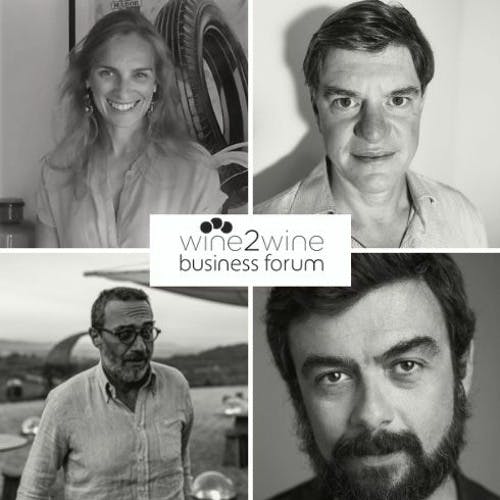
Ep. 1028 Action Not Perfection...Internalizing Climate Change | wine2wine Business Forum 2021
wine2wine Business Forum 2021
Episode Summary
Content Analysis Key Themes and Main Ideas 1. The accelerating shift towards sustainability in the wine industry, driven by consumers, retailers, and producers. 2. The multi-faceted nature of sustainability, encompassing environmental, social, and economic dimensions. 3. Challenges faced by wine producers in implementing sustainability, particularly around education, monitoring, and adapting to climate change. 4. The role of organizations like Porto Protocol and Equalitas in providing guidance, networking, and certification for sustainable practices. 5. The long-term benefits of sustainability, including enhanced reputation, consumer appeal, talent attraction, and resilience against climate impacts. Summary This Italian Wine Podcast session, recorded during the Wine to Wine Business Forum 2021, focuses on the critical importance of sustainability in the wine industry. Host Nick Breeze is joined by Martha Mendoza from Porto Protocol, McAllen Menetti from Equalitas (Vice President), and Ricardo Pasqua from Pasqua Wines. The discussion highlights a significant global shift towards sustainable practices, driven by consumer demand and retailer requirements. Martha emphasizes that sustainability is not just a trend but a matter of survival, particularly concerning climate change impacts like water scarcity and changing harvest times. Ricardo shares Pasqua Wines' journey, noting education and monitoring as key challenges, but also highlighting the unforeseen benefits of enhanced reputation and attracting new talent. The panel discusses the role of certification bodies like Equalitas and the value of collaborative platforms like Porto Protocol in helping producers navigate this transition. The conversation concludes with a strong call for ambition and courage in embracing sustainability, framing it as an essential long-term investment for the future of the wine industry. Takeaways * Sustainability is a rapidly growing imperative in the wine industry, influenced by consumer demand and retail mandates. * The Porto Protocol acts as a valuable platform for wine businesses to share solutions and learn from each other regarding sustainability. * Equalitas provides crucial certification and auditing services for sustainable wine production in Italy. * Key challenges for producers include educating staff across all departments and establishing robust monitoring systems for sustainability metrics. * The long-term benefits of adopting sustainable practices include improved brand reputation, increased consumer trust, and the ability to attract new generations of talent. * Climate change, particularly issues like water scarcity and extreme weather events, poses the biggest existential threat to wine production. * Regenerative viticulture is an emerging trend focused on improving soil health for carbon sequestration and climate resilience. Notable Quotes * ""The need to go into a sustainable approach to your business would not be as as dense as it is right now. So there is indeed a shift and the shift comes from everywhere."" - Martha Mendoza * ""The biggest challenge has been, and is still is, education. So really being able to deploy this change of culture throughout all the layers of the organization has been a huge, a huge, challenge."" - Ricardo Pasqua * ""Taking care of of the environment, of protecting our businesses, our people, our civilization, is about self care. It's not a question of the producer wanting the retailer. It's not a trend. It's really a question of survival."" - Martha Mendoza Related Topics or Follow-up Questions 1. What specific technologies or innovations are proving most effective in mitigating the wine industry's environmental footprint? 2. How can smaller wineries with limited resources effectively embark on their sustainability journey? 3. What are the key differences between various sustainability certifications (e.g., organic, biodynamic, national certifications) and how do they impact market perception? 4. Beyond environmental impact, what are the most significant social sustainability challenges in the wine supply chain, and how are they being addressed? 5. How are wine-producing regions across the globe sharing best practices and collaborating on solutions for climate change adaptation?
About This Episode
The shift towards sustainability and working with experts is becoming more popular, but challenges exist such as the lack of water availability, private ownership, and the need for consumers to articulate their values. The industry requires long-term commitment and incentives for achieving goals, including setting up a guideline and educating workers. The importance of sustainability and ad adaptation is emphasized, as well as the need for leaders to articulate their values and values. The importance of sharing and learning with others is emphasized, as well as creating a community project in Milan. The company is focused on regenerative agriculture and sustainability, and their creative approach to it is emphasized.
Transcript
Talian Wine Podcast, a wine to wine business forum twenty twenty one media partner is proud to present a series of sessions highlighting the key themes and ideas from the two day event held on October the eighteenth and nineteenth twenty twenty one. This hybrid edition of the business forum was jam packed with the most informed speakers discussing some of the hottest topics in the wine industry today. For more information, please visit wine to wine dot net and tune in every Thursday at two pm Central European time for more episodes recorded during this latest edition of wine to wine business forum. Hello, and welcome to this session on, Ryan Eastustainability and how important it is to get onto the journey of sustainability. I'm Nick Breeze from Secret Media, and I'm with, Martin Mendoza from the Porto protocol, McAllen Menetti from Equelitas, he's vice president of Aqualitas, and Ricardo Asquare here in Verona, from Pasco wines. And the objective really is to have three different lenses. One is the global perspective, which Martha provides from force of protocol. The second is more of the national in Italy. With the Qualitas and the journey of sustainability here, and what Ricardo is doing with Astra wines on that journey. So I'm gonna start by asking Martha And Martin, much of what auto practical does is about bringing expert knowledge for across the whole industry. What have you observed regarding the momentum shift towards having robust sustainability credentials starting with the producer of moving through the industry? Hi, Nick. Good morning to all. And first of all, very, I'm very grateful for this opportunity for, of course, protocol. So moving on to your question, I think it's amazing, and it's a very good thing. The the the shift we get get towards sustainability. And and what is amazing is that happens well pandemic. Suddenly, if we were solving having this conversation a year ago or a year and a half ago, the the need to go into a sustainable approach to your business would not be as as dense as it is right now. So there is indeed a shift and the shift comes from everywhere. It starts with the consumer because at the end of the day, that's what will make we are all consumers at the end. We are all people, first of all, and we're all consumers. And there is a shift and there are studies proving that there is a shift for consumers looking for, more sustainable products looking to how their products, the products they consume are produced and that goes to wine as well. So there is indeed a shift to wines that are produced sustainably. And then we go before I go into producers, let me go into retailers as well because retailers are starting to to force their producer so to speak to, to prove their sustainability credentials. So we have retailers on one side, and we have, for example, skinny Navy markets being really the leaders in in this sustainably policies search, and then we have consumers as well and then we host producers. And when we speak about producers, we're lucky enough as part of protocol to meet absolutely amazing people and we meet champions. So when people, when companies come to us, that's because no matter what stage they are in terms of stay mobility, that means they want to either start or they want to share and they feel the need of working together with other companies. So what we see is producers understanding that there is a new way of approaching their business. There's new a new way of producing wine to work on one hand because it's important that If we're talking about sustainability, we always bear in mind that we're looking into the social, the economic, and the environmental dimension. So what we see is this shift It's not absolutely general, but it's very strong of, producers wanting to work more hand in hand in nature in terms of respecting it more. And and that goes to see that goes that happens in various ways. It happens for example in lighting lightning there, the the weight of their bottle because it is in fact the the the aspect that promotes the most the current footprint of life. It goes into promoting more biodiversity and it using less pesticide and herbicides, for example. And then we go to the social part, in there is, and and retailers do force that a lot in in the need to to because this is a very fragile business when we think of the whole value chain, we're talking about agriculture. So there is a shift in the way, human resources, people are managers all. And of course, There's always a need for a business to exist. We can never forget the economic part, but there is a sense of building balance within this value chain and within this through these three dimensions. So, yes, from wherever you look there is a force bringing sustainability to to the table and to the mindset of producer, retailers, consumers, everything. Okay. And often we talk about sustainability. It's a broad term. It's very loosely used and can be quite intangible to those. We're trying to convince to go on a sort of journey. And a question for Mckevin, when you look at the work that a quality assess does across Italy, in certification, and auditing, etcetera. How do you summarize the absolute benefit in terms of value that is coming back to the producer? Well, I think good morning, first of all, and thank the the great job that we have achieved, has been to create a guideline that that supports the the producer to to in their investment to our sustainability because, you know, that that that you need to have a framework in which to to to move parameters to to measure what you're doing. Yes. Because, Fred, I'm gonna get it straight to Ricardo. He's with Pascal wines who's on this journey now. And Ricardo, you've been on the sustainability transition process. Can you give us an example of one of the biggest challenges that you faced? And we'll say rather unforeseen benefits that you can give examples of. Thank you, Nick. First of all, good morning, everyone. Great pleasure to be in this round table. And let me thank you for your question. In in our, small experience because, I I I have to say we we started the this process, a few years ago. So we are we are learning every day. The biggest challenge has been, and is still is, education. So really being able to deploy this, change of culture throughout all the layers of the organization has been a huge, a huge, challenge, you know, from, the agronomic side, all the way to, you know, the marketing department convincing them not to print double shirts that, making it a digital or, you know, the, when when you speak with the older generation management, you know, and try to convince them, that a light, weight glass is, maybe not as sexy as a heavy one in the in the short term, but, along the way, we will get, definitely, more benefits That has been definitely the biggest challenge and, you know, on a everyday basis, let's say. And the second challenge, which, I think links very quickly with the, what, equality does in Italy, and, with the fact that, we will be, soon as soon as certified by by equality as we are in the making of, of the certification is, the culture of monitoring. So the the big change is, to keep track of it, you know. So print and and, compile, sustainability report every year that, allows you to keep tracking of what you're doing, tracking of how much you're investing, and, and most importantly, sets targets for the future. Okay. And you mentioned, bottle weight, which just comes up quite a lot in mass mentioned it as well. It needs to do with associations of value with consumers, much as anything else. The password, for example, has a strong association with Upt, which is another way that you can add that layer of a desirability to your brand by these kinds of different associations. I mean, I I you were talking about, unforeseen advantages, and, definitely, I mean, what we're doing and what, what the protocol is doing and what the quality is, is doing to help wineries and companies like like ours is strategic for, for for the future reputation. So so indeed, I mean, it's, Well, this is our message. Let's see if we can close to many aspects of the industry. And I wanted to ask what's the big challenge that you see facing the whole industry and what is the pathway to overcoming? Well, Nick, I think, first of all, it's the biggest challenge, which is the one we work with the most is climate change. And it's not a question of of understanding that the the industry is at stake, but it's the species. I think first of all, before answering directly new to your question, I think we almost understand that taking care of of the environment of protecting our businesses, our people, our civilization, is about self care. It's not a question of the producer wanting the retailer. It's not a trend. It's really a question of survival, and I think each of us misunderstand that. Now in regards to the industry itself besides the industry itself being at stake. You can see, for example, I think the main challenge that we hear the most is about water, the lack of water I've just recently Oh, we were talking to the producer in the US, for example, in Napa, and Sonoma actually, and and he was mentioning what he had to do to have water to irrigate his vineyards, for example. So that's a huge challenge. We face again, not only as an industry and as a species. And another thing, is if you if we think that we are dependent on private as an industry, the fact that for example, harvest starts earlier and earlier each year. And I'm I mean, there's probably no producers that can deny this. So thinking and and I think something that happens in Italy that happens in in many countries is that wines, wine producers have been around for generations. So it's very natural for them to think to to to to to for their business to be saved for the generations to come. And so, the fact that this harvest that some grapes will not be adapted anymore. Some some as as the panic gets warmer. So they need to think what will happen in many years time whether it's the the place where they have a teflac where they have their own vineyards if they'll be able to to grow grapes there and therefore produce wine. So many challenges rise. The water is by far the biggest challenge they face. Okay. And you you started at the beginning, by talking about climate, gentlemen, and the values that we all, you know, we're all going to face it, and we are facing it. Many people are. But there's an articulation issue. So consumers of learning how to articulate their own values and what they want. And then, and at the same time, producers are learning or the industry is learning to articulate how it is addressing it. And it's it's at very early stages, it seems right across the board. So going back to the theme of this talk, how important it is to get on the journey and learn just to talk about it and articulate it is is an important step, I think. And and I wanna go back to Ricardo because One thing about the wine industry and one thing about climate change is that they both require a long term view. And I wanted to ask you what are the main considerations now as you look at your business over the next few decades. And how much the sustainability or kind of resilient scale master said feed into those considerations? I mean, from from every angle from a production standpoint from a reputation standpoint from a human resources standpoint. I mean, it's a very, large question and, and, but I think, you know, in one word, we we need to be ambitious, you know, as a as a system, European community needs to to give, you know, that our policy makers need to give, ambitious targets for the future, and they they need to give incentives to to, to achieve that. You know, maybe some, tax incentive, for example. And, and as well as they have to, give a words to the peer choose, examples, for sure. And, and, but, yeah, I mean, and so I think they can help us, pushing the envelope and, and, and I think, for example, I know that, European community is issuing a new rule where companies, over forty million euros revenue. By two thousand twenty four, they will need to, to include in their books, system ability report. And this new rule brings, companies that they already have these obligation from six thousand companies to almost fifty thousand companies. So, you know, the the culture of monitoring has already happened. And, and, this is a great thing. I I think. And so as part of the ambitious plan. And, and, and, you know, last consideration I I want to add is that, you know, the the the performances of a company like ours, are made by the people. And, people are is everything, you know. And I think, if, we are not, taking in consideration, sustainability, environmental impact in our equation, we will not be able to attract new talents to our organization. That that would be a disaster. No. So the new generation, of course, the new generations, would be more and more sensible to that. So that's another key key part in my vision of this table. Okay. Can you talk, a little bit about well, the question I asked you before was how you see it from a national perspective on terms of the biggest challenges in this sustainability field facing the producers in going forward and what's the pathway to overcome? Well, there are three main, aspects I would say. Of course, it it's very complex. Anything can be a challenge, any action, any, any, side of your process and product, but let's say that, environmental in the in the farming, there still is a big challenge toward the use of energy for feeding tractors and also the production of, of whatever we use to fertilize and defend the plants from diseases. So let's say the pest management, let's call it this way if you want. It's always a Are you enjoying this podcast? There is so much more high quality wine content available for mama jumbo shrimp. Check out our new wine study maps or books on Italian wine including Italian wine unplugged and much much more. Just visit our website, mama jumbo shrimp dot com. Now, back to the show. I'm gonna ask Martha, Martha, how much is true sustainability and ad adaptation to a worsening climate becoming an integral part of the story of wine, because we talk about legacy of wine going back thousands of years, and we're reaching out of one of the big sort of challenges, I think, in our current story. So how how much is true sustainability and adaptation becoming an integral part of the the story today? You've already touched on it, but I just wanted to see how with all the people that you speak to with the portal protocol, How do you see that moving sideways throughout the whole conversation about? As I said, Nick, we we are lucky enough to speak to very committed people. Even if they are starting starting their journey or still way beyond the others even as their champions. But I think the commitment to sustainability comes from everywhere. In some cases, in some cases, there is there is no need to adapt to sustainability. Sometimes just a question of organizing it so to speak because some companies are already truly sustainable. They just don't call it that way. It's just a it's just a term that makes every sense that suddenly became part of everyone's language, everyone's day to day conversations, but again, if you want to to have your business for your grandchildren, that requires a planet in this case, and that requires also think thinking again of the social and economic dimension, that means that you have to take care care of the people that work with you. It's probably the simplest way to to talk about sustainability in the social terms, and you want to make sure that the the the business is viable. So in many companies, that's that is a way of being in the business. It didn't require any certification or any any any particular, new trends, so to speak, because it's way more than a trend. So in many cases, it's it's it's the real deal. It's just a question of organizing and suddenly you have to communicate it because your retailer, the where you want to place your your, your bottles, is is asking you for for you to prove that you are sustainable. On the other hand, we do speak to companies that suddenly they even if they do have sustainability practices, Even if they take care of the people they work with, even if they do, work, in a more environmentally sustainable way, they have to do more. And many are being obliged to speak by, again, by retailers. So we see both. Okay. So we see, we see companies that are really committed, and they're so happy to have other companies to speak with, which is why we are a forum of, for a network and for sharing. So there are many committed companies and there are companies that are suddenly waking up in in and saying, look, we have to change something because we're being asked. Otherwise, we will not be able to place our products in, in certain places and because consumers are demanding. So We see it all, but I must say we are lucky enough to see very, very committed people. Okay. And it's the same actually that we've lost, Mick. Yeah. Yes. Because he has a lot to share yet. Enormous insight on from Equelitas. So I'm gonna ask Ricardo to try and plug some of those gaps. In terms of, can you talk a little bit about how on your journey? How have you interacted with Equelitas and what have they given you? Which adds to your credentials as a sustainability business because one thing we wanna always avoid is the idea of being watched is that we're saying we're doing something we're not doing. Can you talk a bit about that? Exactly. No. Yeah. In fact, as I said, we we want to work with a very solid and serious partner and the qualities is absolutely the perfect, partner to to to start the journey. And, I have to say we started from a very solid base because we are, since many years, we and we're pursuing, energy saving, water saving, and, and, we converted some of our vineyards. So, and, and, again, it probably does to hold that in order, and, we'll allow us, to, to start the tracking what we're doing. So, as I said, that we will, start from this year to put in our books, a sustainability report, which is gonna include the all aspects of, of the subject, including, of course, the social side of it. Where I think, Pasco is, quite innovative. We we, have different forms of, of welfare and, some quite innovative for our industry and and our size and let's say, for example, this twenty twenty, you know, we start the amazing program introducing a mental coach in our organization, like, you know, with with athletes, there was a quite innovative program, and, and, and that is gonna be part of, of the social side of, of the report. And, and, so, yeah, I mean, we we found an amazing, partner that challenged us to to, to, you know, achieve, and check out all the requirements, we started from a group base. But again, as I said before, we need to be ambitious, you know, and the quality is, definitely, the right partner to to to kick it off, to to try to achieve those ambitions and, and, and, again, having, forty pages report every year where you track, how much you did, and how much you will do and, a report that, would be used to analyze performance exactly like you do with the financial performance. Yeah. I think is a very strong tool of transparency and And, So in a row, what you're saying is that you were doing a lot of things sustained, you know, adapting to certain things and implementing new procedures that Equalitas gave you a kind of auditing process that allowed you to add a layer of, external accreditation. And how does that help you engage with, sort of areas of the market? So I know the Scandinavia and Canada are imposing quite strict, terms or conditions on what they want from producers. Can you talk a bit about how you interacted with markets on this issue? Sure. Well, I mean, for sure some markets are more than than others, and you're absolutely right. The monopolies, for example, as coming out here in in in premise, they're very sensible on that. But I really believe, really, to believe that the the real, return in terms of, of, performances of business is, intangible. Is, is, reputational. He's, you know, the the reputation of your brand of your organization, that, that to down the line, we bring the majority of, of a business stands, so so to speak. And I have to say, going to the everyday, you know, work besides, the monopoly markets, I I'm experiencing, more and more from, also, countries that you wouldn't expect, like, China, for example. We have two companies in China, and, They are managed by millennials, young managers. Of course, the new generations there, like, here, are much more conscious and sensible and, and, we are starting to to have, a lot of conversation about it, there and, how our people there really believe that, is, is, again, the the reputational side of it, is gonna be very strong in the years to come. Okay. I expect that a little bit of China scandinavia and a little spread. It will become ubiquitous. Okay. And Martin can you've interacted with quite a few of the different market areas around the world. Can you just give a little overview of what you're seeing in terms of the demands that are being put on produce if they want to sell into certain markets on sustainability? Yes. The most radical thing we've realized is that some companies cannot even apply to certain tenders. If they don't, when a tenders, I think that's the word, you cannot even, apply to have your product in a certain retail if you don't have, for example, a a national sustainability certification such as, equalities, for example. That's the most radical. And we've seen, and you mentioned that I had mentioned before certain markets such as the Scandinavian markets, not only the Canadian, but you you see it coming from various places. For example, in the UK, different retailers are becoming more and more strict with what they asked from, their produce from their, from their suppliers from human rights to make making sure that there is a basic human respect for the people that work with you, especially because being an agricultural sector, we know that we suffer from very, to carriers, hand work. From environmentally. For example, in terms of packaging, I can tell you the outcome, just to give you an example, the Finnish monopoly has, extremely strict, targets, and in nine years, that is until two thousand and thirty to reduce, I don't know the number by heart, but to reduce the weights of, these carbon footprint in terms of packaging in something like fifty percent. So this will definitely affect everyone that works with these monopolies. And so we can see that trend being very, very strong and requiring, a lot of changes from from producers in general. Okay. Then we've got a question from someone in the audience from Leika. Has there been any an initiative to start educating better culture lists about the awareness or is it mostly done individually by private company initiatives. So we'll start with Ricardo of your experience. How did you start actually pragmatically doing things where you guided, how are you girdened? Well, by by our vision, I have to say. I mean, we we did it, we did it, privately, meaning that, we, had the opportunity to hire some consultant, helping us understanding, what, what to do in the vineyards. I give you a a straight example. We have, a project, called the bravoqueerta is a natural wine, is a in order to do that, we we hired agronomist, slash winemaker from Piedmont called Lorenzo Corino, which make wines that weigh since forty years. And, and, since that experience, we learned, a lot. We got a lot of, interesting tips, from from Yidma. And, that was, let's say, the key care to to start a process of, of education for our technical team. And and it was, I think, also, a great experience for for the whole organization, including also the the communication side of it, where, you know, we once we we launched it, there was a very interesting, debate, a very interesting ping pong, let's say, between, journalist saying, how Pascal such a big house, can do a natural line. Aren't they not too big to do that? Another journalist answered, no, is because, they are a big winery that they have the responsibility to invest to experiment to to to to to push the envelope to, try to work with the with the, experts, like Lorenzo and and the start, this sort of project. So it was very interesting. No? It was back three years ago, but I think, we we learned a lot from that experience, and I I I could say that was the the key care for on the educational side and the big inspiration. Okay. And, Martha, same question, really, because obviously people can join your forum because you're sharing a lot of information and bringing people in. And what are the pragmatic steps when they produce a counselor? And they they wanna do something with this. They know what it is they want they're going to do next. Well, the perfect step is that we have a conversation with each of our members and try to understand first what they do already? And what are their challenges? And within what we are, which is the platform of solutions. So by answering directly to to, Jose Pablo that asks the question you can come to us because That's exactly what we we are building. It's on one hand the platform of solutions that really becomes a network of people, and there's nothing like sharing. We cannot, because we cannot respond to this together to to, on our own, is by sharing and learning with other people. So you come to us. You send us an email, sign our letter of principles, and it really starts with the conversation and trying to see, where are the solutions that can help you in your what we call our your climate path, your climate journey. So that's the first preventive step. Just getting in touch with us. Now, and then in terms where where can an individual or company find information, really from our website, from our climate talks that are webinars that gather, producers from around the world, producers or other players in the wine value chain and address specific topics that have to do with wine in a changing climate. There you can find a lot of information. Just to give you an example, and and taking, this opportunity to talk about one of the challenges that, that producers are facing, which are extreme weather events, and fires, most of all. I mean, if our fire floss, you name it, and that has led many many producers to really wake up to the challenge of climate. For example, we have a climate up there is exactly to do with extreme weather events where you have people from Australia that's that as you recall faced really extreme fires in two thousand and nineteen. And then someone from Napa that face again really extreme fryers in twenty twenty. And then someone from South Africa that face extremely whether, extremely water scarcity and have these people learn from each other. And so come to us if you want, it's it's a free platform. So it's not like I'm doing, free, advertising by Mayzay. But it's, again, it's us learning with others because we can only do this together. So Let's start together and let's share together with a way of saving time and money and resources. There's no need to reinvent the wheel because there are so many solutions out there. And hopefully, we're we're building them as we go. At what point? And it's a shame again. I mean, McCallen is here that he we we can't seem to, hear him. So he can hear us, but I was wondering what point you actually approach the certification body, because, obviously, you start investing as a producer, you're you're on the journey, but you can't get certified because you've gotta get go through the process. And that could take, I don't know, you know, how long does it take? You you can answer, but it's how, how do you start telling that story? Along the way because you're making efforts. You're aligning your values with the producer, with the consumers. So that story itself has value, but, you know, it's not just about the the final situation. It's about the journey. Can you talk about when you how long it takes when you bring in the certification? Well, I mean, it's a project that, as you can imagine, that moves a lot of a lot of part of the organization. So we started the we started the the the old process, approximately three years ago. And, and, from there, we started the the the packaging, basically, a year ago. And we will be able to to finish the the first cycle of of auditing that will allow us to to get the certification within this this year. So how we communicate to the customer. So we we got, several projects along the way from different angles, as I was saying, on the previous question, the kicker was this project in the natural line. And then, on, on, when making side, we launched two weeks ago in Milan during Milan, one week, a new project called, Casina San Muncenzo, is a a vineyard here in the Eastern, that has been, since ten years in our stables, but we never, bottle it, as a project, and this vineyard, that has been planted twenty years ago. Has been always, grown in a organic way. So that's another effort under the the Passco umbrella. And, the third, you know, big, project on the other side is, to celebrate a project where we will, convert, within twenty twenty three, the the core items of Chichilevera, which is a a winery inside the winery is one of our strategic, brand, which is, distributed all over the world. And that's let's say, on on the winemaking side, on the, let's say, terwa side on the on the territory, on the community side that we did some amazing projects, and I reconnect to, your, art wine, question before. We did in thousand eighteen, these, project called, talent never tasted better, where Pasqua acted as a mentor to, at first local talents, helping them achieving their dreams to finish their projects. For example, the first one was, a Veronese, a Valer, the only Italian accepted to Julia School. We help there to, to for with the tuition in the junior school so that she can, she could finish and she did a few months ago. And, and, she became together with other two Veronese, the the the the face of our communication platform. So from that, intuition, from that concept, we stretched out towards other Italian artists and talents, and then to international artists and talents, different disciplines, different arts. Some of them made some labels for us. Other made some piece of art that, fed our communication platform. And, they're we're all young emerging. So we were able to help them, getting noticed, growth. So that was, you know, started from our little community, and then became, larger, ending up with their artistic installation, which is open to the public, until tomorrow, not today. Sorry. And, and then we we did another beautiful project with the phone that's on arena, sixty seven Collins. It's a it's a foundation that supports the the the cultural, arena, arena, riverona. So, so, yeah, I mean, we deployed the message on on a social side through those projects. Okay. So creativity, again, thinking rapidly about your identity and how you interact with the social side is is a very important part. Martin, there's one more area which I know you've covered with the political and it's always getting one step further on the sustainability side is regenerative agriculture, bitter culture. Can you talk a little bit about how that's fitting into this equation at the moment or from your perspective? Yes. I think that's actually where we've met more amazing people. I think we can call it a trend in way, in in one way. One thing that is important, in regards to regenerative Viticulture is that the the concept needs to be clarified. It's like sustainability as a word. It became part of everything we say, and suddenly everything is regenerative. And so, yes, the type of agriculture that works more in hand with nature that is less interventions, let's say. It's definitely becoming, one of the trends to be able to deal with climate change in the sense that It focuses on soils and soils that we know better than any other industry. All soils are important to to to wind the wines we produce. So it's basically looking at soil as, as a means of think uh-oh it because so so is our carbon sink and therefore to take your soil in a way that it can really boost its potential to to, capture capture carbon the most in the most efficient possible way. And we're looking at regenerative regenerative approach or the regenerative transition coming from everywhere in the world, but the concepts need to be clarified to make sure that when we're talking about a regenerative air Viticulture, we know what we are talking about. Otherwise, it has just become another very, common word that we don't even know what we're talking about. Okay. We've got about one minute left. So I think the degenerative side is almost where this is kind of heading because it builds resilience and everything else. And regarding adjusted and a quick one message with tour producers who are really considering starting this journey or needing more information. What would be your your main advice? Well, man, I mean, I I don't give a give advice. I I think I can give a message. I mean, I think, as I was saying before, we need to be ambitious. We we need to be brave. I think, we need to pretend from policy makers from the European community incentives to accelerate this pro process, but, you know, as as the title of these, these table action, not perfection. Let's kick it off. You know, let's, let's, getting started. And, and, BMB shows, not be scared because, I, I'm, absolutely from this down the road. It's gonna make a lot of sense on on every angle. So, my my keyword is, ambition, and, and, courage and evade. Time's up, so we're gonna say goodbye. And, mikaela, if you'd like, you can say goodbye as well. Thank you very much everyone for listening. Thank you, Marta. Thank you, McCarla. Thank you, Mata. Thank you. Bye bye. Thank you. Well, have a nice day. Thank you, Nikita. Charl, bye. Oh, to show. Listen to the Italian wine podcast wherever you get your podcasts. We're on SoundCloud Apple Podcast spotify, email ifm, and more. Don't forget to subscribe and rate the show. If you enjoy listening, please consider donating through Italian wine podcast dot com. Any amount helps cover equipment, production and publication costs. Until next time. Hi, guys. I'm Joy Livingston, and I am the producer of the Italian wine podcast. Thank you for listening. We are the only wine podcast that has been doing a daily show since the pandemic began This is a labor of love and we are committed to bringing you free content every day. Of course, this takes time and effort not to mention the cost of equipment, production, and editing. We would be grateful for your donations, suggestions, quests and ideas. For more information on how to get in touch, go to Italian wine podcast dot com.
Episode Details
Keywords
Related Episodes

Ep. 2016 VIA 2024 - Climate Change pt 3 of 3 | Everybody Needs A Bit Of Scienza
Episode 2016
Ep. 2007 VIA 2024 - Climate Change pt 2 of 3 | Everybody Needs A Bit Of Scienza
Episode 2007
Ep.1997 VIA 2024 - Climate Change pt 1 of 3 | Everybody Needs A Bit Of Scienza
Episode 1997

Ep. 1328 Wine Suite | wine2wine Business Forum 2021
Episode 1328

Ep. 1319 Wine Influencers (Italian) | wine2wine Business Forum 2021
Episode 1319

Ep. 1310 Native Digital Content | wine2wine Business Forum 2021
Episode 1310