
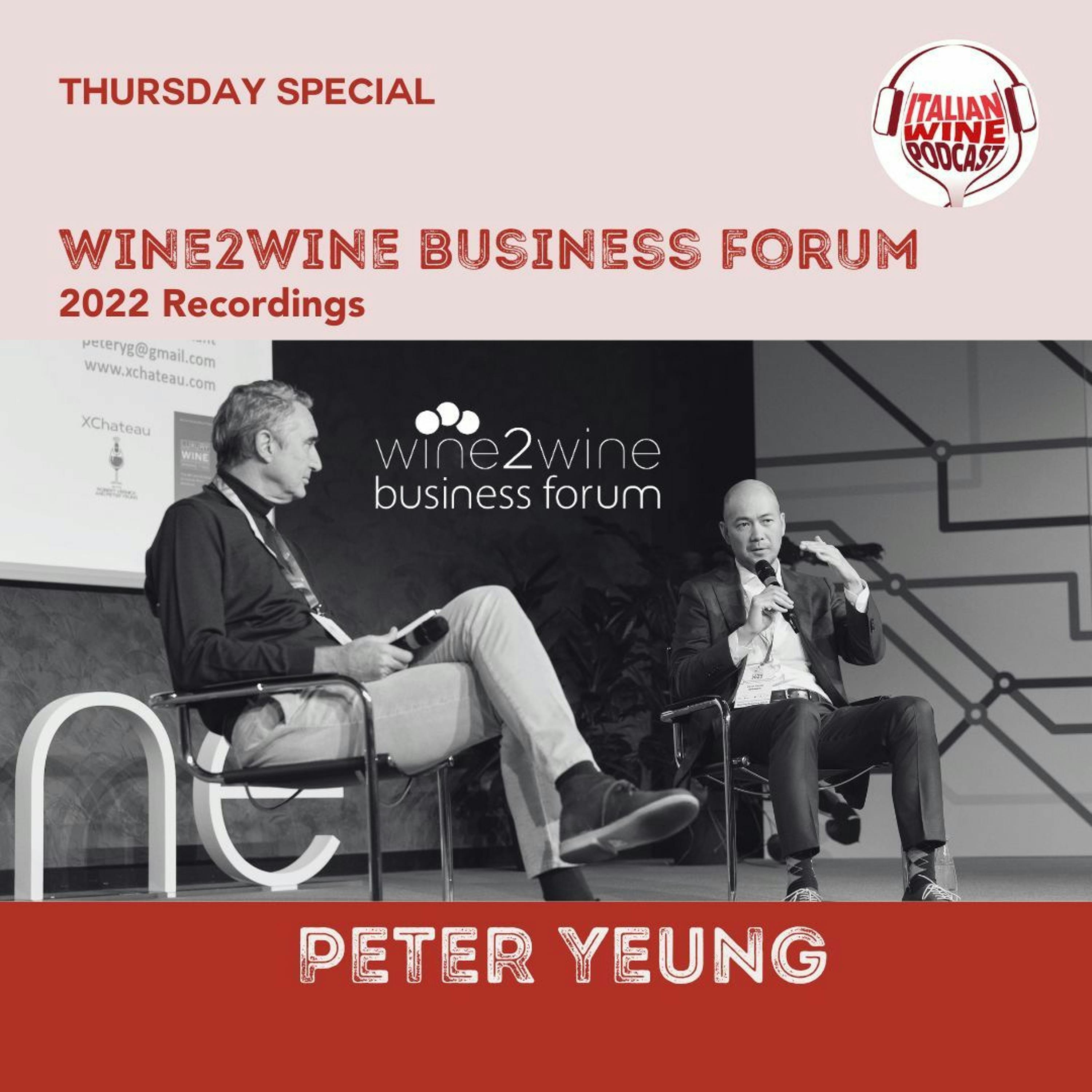
Ep. 1449 What Pricing Communicates | wine2wine Business Forum 2022
wine2wine Business Forum 2022
Episode Summary
Content Analysis Key Themes and Main Ideas 1. The distinct dynamics of pricing for fine wine versus commercial/mass-market wine. 2. The multifaceted messages communicated by a wine's price to consumers (value, quality, brand, relativity, willingness to pay). 3. The concept and categories of the ""luxury wine pricing spectrum."
About This Episode
The importance of price in the luxury industry is discussed, including the need for brand reputation and understanding the impact of price on sales. The speakers emphasize the importance of price in setting an expectation for quality and value for customers, and the need for hard work to manage the price disparity. The importance of understanding the trade-offs of price and shelf value is emphasized, and the need for marketing and sampling to build brand loyalty is emphasized. The speakers also discuss the importance of understanding the end price and managing the price disparity in the market.
Transcript
Hey, guys. Check out Italian wine unplugged two point o brought to you by Mama jumbo shrimp, a fully updated second edition, reviewed and revised by an expert panel of certified Italian wine ambassadors from across the globe. The book also includes an addition by professoria Atilushienza. Italy's leading vine geneticist. To pick up a copy today, just head to Amazon dot com or visit us at mama jumbo shrimp dot com. Italian One podcast is delighted to present a series of highlights from the twenty twenty two white wine business forum, focusing on wine communication and bringing together the most influential speech and the sectors to discuss the hottest topics facing the wine industry today. Don't forget to tune in every Thursday at two pm, Central European time, or visit the Point Wine dot net for more information. Well, Jordan, good morning, everybody. Welcome to this, session of wine to wine. I must confess that I am very, very excited to introduce you to the wine professional we host today, Peter Young, And I'm also thrilled at the the topic that Peter is going to cover today. I find this, subject very, very intriguing, very fascinating, especially for those like me who are nowadays in these days while, you know, preparing budgets, business plans confronted with, setting prices of ultra premium wines. And evaluate the consequences, positive and negatives of this very, say key exercise. So just a quick note, to introduce you to to the guest today, Peter is a business consultant. You will correct me if I'm not describing or, let's say, talking about you incorrectly. Any press release we made that spans from finance to marketing and business strategy to name just a few. And Peter also boast a significant track record of remarkable as achievement also in the wine business and in in the wine industry. And he's also author of a book that I strongly recommend that you download. I bought it, I bought the digital version by the title of luxury wine marketing. Our hope is that, by the end of the presentation, we ignite some, interesting, solid, useful conversation between us and, and the audience. So We look forward to that. In the meantime, it's on to you. Thank you. Thanks, Tory. I don't have to readjust because he's so much taller than me, but at least there's a stand here to make me slightly taller. Well, thank you for having me. When Stevie asked me to present, she said, take any idea. And the theme is communication. I was, I was, like, she said, I love your book. Take any idea. I was like, okay. What is something that I thought would be a different twist on communication that no one else would be talking about? So I said, well, first, I emailed Pauline Vakar of Arania to see because I knew she was speaking too and be like, let's not talk about the same thing and do different things. And then I thought, well, maybe pricing. What pricing communicates as something that's a twist on what's inside the book, luxury, why marketing, but, isn't in the book either. So it was this is somewhat new work, things I think about a lot, but don't always, they haven't written down and talked about. So it's a little bit new. So hopefully, forgive any mistakes. So, yeah, what price communicates? So outside of the book, luxury, white marketing, I also am the host and producer, with a friend of mine of the X Chateau podcast, which is focused on the business of wine. And both of these, will have books in the book corner right after this. So what does price communicate? I think we wanna differentiate what we're not talking about before we talk about what we are talking about. So I think for commercial wines or mass market wines, if you wanna call it that, that's it follows standard economic theory. There's very competitive market with lots of substitutes. So price tends to drive towards marginal cost, and brand isn't as it's important, but not as important. It's like if you go to least in my viewer, when I've been to a French grocery store and you look at the row of bordeaux, it's not quite clear what you're deciding from one picture of a chateau to another. Right? You're looking at price most of the time. Find wine is totally different. You're looking brand is super important. A customer is completely different. People who are buying fine wines or luxury wines are often not buying wines from the supermarket. And the sales channels are different with a supermarket versus specialty retail fine dining and direct to consumer being more important Obviously, that's more of, like, an American thing in a lot of cases, but in luxury controlling the retail, the experience all the way through retail is an important element of what differentiates luxury from, from more commercial pursuits. So what does price communicate for fine wine? And I think there's five things. Some of these things do overlap a little, but they're all different. The one is are you communicating in terms of your value proposition to your cus to customers? Customer. Are you trying to, you know, be a good value? Are you trying to say that you're the best in the world? What you when you price a wine, you're sending that communication. The one example from a winery that I I used to help manage Costa Brown and Sonoma, our smallest production, rarest wine, was initially priced the same as all of the other single vineyards because it was a thank you to our long tenured members who had been buying for a long time. So we didn't want to even though we could have priced it two or three times, more, and it wouldn't have sold, we wanted it to be a thank you, and that was part of the thought process behind the initial pricing. It it is now actually priced more than all the other ones. But You're setting an expectation of quality when you price a wine. Like, what that price is sends into consumers minds, this should be of a certain quality. And so that has a is a big impact. And I think an interesting thing, more anecdotal evidence, but when I see winds that score a hundred points from various different critics, especially the wine advocate. You usually see them in retail, like, around three hundred dollars or they get to three hundred dollars at secondary market. But then there's lots of wines that are priced above that. Right? And what does that mean? Well, it's not about quality at that point, then it's more about brand value, which is sort of the the next point, the brand reputation, where, you could be a thousand dollar wine, and that's more than just the quality that's inside the bottle. And so brand reputation is another thing you're trying to project as you price the wine. So, for example, Harlem Estate, in Napa. When they first launched their wine, they priced it in nineteen ninety six at sixty five dollars, which was the most expensive wine in at that time. And now it's like eight hundred fifty dollars. Direct. So it's they're setting an expectation of who they are in the marketplace with their price. Then there's also relative quality, and I I tried to have a global set of examples here. So, you know, Gaiaia back in seventy one doubled their price to match the top wines of Bordeaux and Burgundy to say that we are on par with those wines. And they had to, you know, build up their sales again and get that message into the marketplace, but that was, you know, relative quality, but not just my brand is important, but in my quality is good, but how does that quality compare to other wines of the world or even within your portfolio of wines, how does it compare to other wines that you sell? And then it's also about, you know, lastly in this tour ties back to the first one. This is almost like circle, I think. But of what customers what you think customers are willing to pay, because we all would like, I think, not to price on cost, but to price on value. And what people are willing to pay as part of that value association. The one example of, I what I believe now is currently the most expensive wine in the world. I don't know how to say the name properly in French, but liver liver potter. They did a duck Dutch auction of their buyers to see what they should set their price at. They only had five hundred fifty bottles, but it was three hundred thirty thousand euros in two thousand fifteen, which was and that's an amazing price to, to be able to accomplish. So this this part is part part of the, part of it too with with pricing was so that I could pull lots of things from the book and make it easier to have a presentation. So so this price spectrum, comes from the book. Luxury wine Marketing is our luxury wine pricing spectrum that's focused on US retail primarily in terms of the pricing. And so we have the first category of affordable luxury, fifty to ninety nine dollars in retail. I have some restaurant equivalent pricing. But it's that taste of wine for a taste of luxury for the everyday buyer So there's a you know, that's part of the value proposition communication. There's the association with luxury and luxury brands, if this is a second label or a second wine, and and the people who drink them. So sometimes this is about accessing a wine that you know, people you look up to drink and that you're able to have some association with that. Then hundred to two hundred about is, like, what I call the Everyday wine for the luxury buyer. It's special, but approachable. This is what, you know, LeBron James might drink every day. So it's a everyday line for some luxury buyers. And then you get to, like, two hundred to five hundred, and these are more special occasion wines. So I, you know, had dinner a few years ago, with the guy who's the chairman of the NYSE in Atlanta. And, you know, the guys got plenty of money, very well off person, And he said three hundred dollars was an occasion. It was a special occasion for him to buy that type of luxury wine, even though you you objectively say he could be drinking that every day if he wanted to. Right? But for him, This matched pretty well. It was, like, hundred dollars for an everyday bottle, and three hundred was a special occasion. But what about the wines that are even more expensive than that? I think from five hundred to a thousand, we call them Micon wines, but because the brand elevates the price so much more than, just being what's inside the bottle itself. It's one of the iconic wines of the world. But then there's a even a category above that, which we call Dreamwinds, better a thousand dollars plus. And that's partially because they're iconic, but they're also very rare and hard to find, and that drives the the price of those lines up. So when we talk about price, we're mostly referring to what I call here, the suggested retail price. But there's other prices that you need to consider to understand what messages they're communicating. And when I actually looked at this this morning, and I thought, oh, the suggested retail price is what you're as the producer telling consumers, The average selling price or what's actually happening in the market, so the price that you see actually showing up in retail or in restaurants because of any promotions that you're doing or or people can't move it is sort of more implicit messages that you're sending the consumer. So you're not saying them directly, but you're implicitly saying them through different promotions or other things. And then the secondary market with what your your wine trades at, whether that's in retail or an auction or other thing, that's what consumers are telling you back. Right? So that's the message consumers are telling you around what is your wine worth. Granted, there's a a very small mar relatively small market for that. So if you're if there's only, you know, dozens of bottles trading on the secondary market, You don't don't think you can transact your entire production at that price. But, so, the average selling price is really important when, especially if it's lower than the SRP, because you can move more wine that way. If it's on sale, you can sell more wine, but it may hurt your brand reputation and put you in a place of lower associated quality than than others. And then the secondary market, when it's higher, It can improve your brand reputation, make people want to buy it and think of the investment demand. I just talk about two types of demand for fine wine and for luxury wine, being consumption demand, people who buy it to drink it, and investment demand, people who are going to store it and resell it at some point in the future. And both of those are are important as you get to the higher levels of of wine. So when you're thinking about setting price, I like especially for fine wine, I think of four key considerations that you have to think about. The first is quality. Like, if you don't have a good quality wine and that doesn't match the price, then it it's just not a sustainable full price. Like, if, basically, your quality level is like a fifty dollar wine and you're trying to sell it for two hundred dollars or three hundred dollars, people will discover that over time and and not, not be willing to pay for it. So, you know, an example there is Harlan again didn't sell their first releases of wine because he didn't think the quality was high enough. So even though he came out at the highest price in the market, he wanted the quality to be able to support that. And then brand strength, and this is a little bit harder to measure, but it's important to try and there's different proxies for it. But how strong is your brand? How much do people say? I always give the example of, like, DRC, right? Like, you can drink any burgundy even while others, but DRC is singular in that if you drink DRC, it's not the same thing as drink any other wine in the world. It's it's unique and singular, and that that gives it that brand strength that makes it, you know, able to have more pricing power. I think competition is around the relativity, like, where are you in your peer set or in the global peer set of, of price, and then you can also associate, quality and, and production levels with that as well to understand how you fit within the context of what you're looking at. It's super relevant today. I think external influences are really important us having a conversation this morning just in last night around, tariffs and in the global markets and the geopolitical actions, whether that's the US or China or the their relations with Europe can dramatically influence, like, demand for your wines and the markets available for your wine, which will impact, you know, the demand and and your price what you can set the price at. One of the other things to look at even just as a macro thing today with the increased volatility and downward volatility of, of of the financial markets is, what does luxury wine correlate with. I hear a lot and read a lot of media that says, oh, luxury wine has done so well in the last few years. It's immune to the, you know, the macro markets and things of that nature. But, you know, I did a study, back when I was at McKenzie from, like, the nineteen nineties through the mid two thousands and the u of the US Y market as a whole. And the market inquiry was on a cagr of, like, nine percent growth per year. Right? Three percent of that was volume. And six percent was price. And so, you know, I had my team look at, like, what is that correlated with? And what we discovered that the closest correlation was that the price went up with net wealth blagged by a year. So it you I kinda think of it as, like, you make more money. You have more money in your bank account. You paid the taxes on it. Now I can, like, step up and buy a more expensive line. But why I think this is important is because net wealth has largely gone up over the last time period. And so the richer getting richer, the poor are are still struggling, unfortunately. And that has created the conditions for luxury to do really well over the last few years, even when the overall economy may not be doing, as well. And so theoretically, that could be changing, depending on how the central banks choose to conduct their monetary policy. And it's important to consider when you're you're thinking about raising your price. So when it comes to to setting a new wine, the price of a new wine, we have to not just look at those four considerations, but also the volume that you're producing in the sales channels that you're gonna be selling it in. So took a quote from Antonio Glory Gologna here that says, like and I see this happen all the time being based in California, that New Napa lines with no track record come out at the enormous triple digit pricing, like, two, three hundred dollars. And they have no no one has tried the lines. It's not like when at other times, even heartland back in the day of sixty five dollars, even though the sixty five is, you know, nineteen ninety six is probably two hundred or something today or a hundred hundred something today with inflation, People could still afford to try the lines. Now if you come out at three, four hundred dollars a bottle, people don't even get to try the line. So two examples I I took from the from my book, if is that if you're a new Napa winery, you're in Pritter Hill, which is like the rodeo Drive, And you're only making two hundred cases, and you got a great score with a famous winemaker blah, blah, blah, but not. But just, like, every other wine pretty much, that comes out of there. What should you price that? Right. And my thought is, like, maybe you wanna price at the lower end of that spectrum. So one hundred and seventy five to two fifty a bottle, because you wanna be associated with the top quality. You don't wanna be a fifty dollar bottle of wine. And even though a lot of the wines range from a hundred fifty to four hundred, you still wanna encourage trial and have people try it for a bit. And since it's very small volume and you're primarily thinking about selling it direct, that should be easier in terms of making that sale. Whereas if you're a new or newly acquired Northern road winery from co routine, you're making a thousand cases that's all going through wholesale, it gets a decent score, maybe a hundred to a hundred twenty five. Cause if you still wanna be luxury, you wanna be branded as luxury, but you'd need a lot more proof points in the market, especially if you're in retail and you're buying a sitting on the shelf, whether literally or virtually, next to all the other wines of a similar type. People are gonna see the differences. And even though there are some, like, the Gheagal la la's that are three hundred dollar plus, there are many that are sub one hundred dollars that are very high quality. And so you're still trying to be luxury. Maybe it's in that hundred, hundred and twenty five. Italian wine podcast, part of the Marmar jumbo shrimp family. And then so there's setting a new price, and then there's you have a price. What do you wanna do when you change when you need to change the price? And you're not Bordeaux, which is more, market driven and goes up and down. So normally changing means taking it up in most cases. You have to look at, those four price considerations and understand where you are today to make that decision. So understanding wine quality, or, you know, you're continuing to pump out great scores. We interviewed for, the podcast at Chateau Jeb Donic and was like, so how do, how do, how do wineries, like, become luxury or top. And his view, which I thought was, a normal answer, but wasn't nothing breakthrough was you just need to have consistently great wine over and over again, right, over the course of time, keep producing consistently great wines. Like, okay. That that's true. Alright. Your brand's strength needs to be important. You can sort of measure that with secondary market premium, wine searcher search rankings, or things like that. And, you know, the competition one is interesting because I think when you're low, if you think of the spectrum of wines relative to where you are, if you're actually low priced, it's easier to move up to the middle. And if you're high priced, if you're one of the top, it's actually easier to move, and to continue to move up because that means you've already established yourself most likely as the top in your region. Right? And I see this all the time, especially if I look at Napa at Harlan and Scream Eagle, who's price is, you know, eight hundred plus dollars a bottle. They're way above everyone else. But because they've established themselves as sort of the cult darling, the wines that people want from Napa Valley, I continue to move their price up, and they're able to, achieve that so far. And then as we just talked about, like, the external influences of what's happening in the economy and whatnot, make make a big difference. I worked with a a Napa brand who just, this year, took their price from three fifty to four twenty five a bottle in the middle of this, you know, markets crashing, and it did not work out that well for them in terms of how they're they're offering it. So some examples of that, domain Perot Munot from Burgundy doubled their price from the fifteen to sixteen vintage. And according to, try back at Y merchants who we interviewed on the podcast, their people just stopped buying because they thought they have an association of that price, and then to change it double in one year was a shock to people. So similar, not quite as fast happened at Larkmeade and Napa, where they'd always been known for being great quality and great value, for the price within Napa Valley. And they doubled their price from about twenty thirteen to twenty twenty sixteen. And so they changed their value proposition. They were, you know, a value provider, and then now they're market price. So they weren't, you know, expensive when you look at the scheme of things, and you could understand the owner wanting to do that to make enough money, but it was a shock to the consumer who said they had a consumer who was looking at the value there, and now they need to find consumers who are just more interested in their quality. And so they had to really change their complete customer base and which also led to complete turnover of their team as well because there was a lot of, differences in how you sell with the different value propositions. So their team turned over as well. But you look at an example like Harlan that we've talked about several times already increasing their price from three hundred dollars to eight hundred fifty in less than ten years without that much of a problem, and they're still selling out a small amount of wine, fifteen hundred, two thousand cases a year. But partly because they have a significant secondary market premium, So even though they sell for eight fifty now, on the secondary markets, the wines sell for twelve hundred plus a bottle. And, you know, I think I've worked with a lot of people who worked with Bill Harlan, and he often said, like, I need at least thirty percent premium on the secondary market to be feel comfortable that I'm gonna increase my price. And so he was able to do that. He's also expanded internationally, so it sort of created more domestic scarcity and things of that nature to make know, the supplydemand balance in the US better to keep keep this going, but he's made a lot a lot of money this way by being able to increase price. So on on that note, tracking secondary market pricing helps you'll understand what pricing power you may have. Volumes tend to be pretty low. I I developed this, for Castle Brown when I worked there. And we actually tracked bottles that were offered, at least. So you could see that the volumes are pretty low. If you look at this how easy it is to see, but the numbers are like less than fifty bottles being offered at any particular time. So it's not like a high volume of transactions are happening. And it's not even transactions that is offering But there's other sources of data that you can get this from, like, LiveVX or Y Market journal that has some transaction prices as well from auctions or from merchants that are selling globally. But understanding where where you are, where customers are what customers are seeing in the marketplace, versus what you're offering the price at your suggested retail price. If there's a premium to that, then it's a then you may have more pricing power. And then, you know, importantly, what does discounting do? And I'm not saying don't discount because there's reasons that you may wanna discount, but there's important trade offs to consider. So, you know, you can increase short term sales because people psychologically like to feel like they're getting a good deal. They're buying it, and they still have the expected quality being at your suggested price. Because you say when someone buys a wine on sale, they said I buy a hundred dollar I bought a hundred dollar bottle of wine that was seventy five dollars. And so I got a I got a deal. My expectation is the quality is still a hundred dollars. But it does imply then that you may be having difficulty selling your wine and that the brand is less desirable. So that has sort of erode the brand reputation. And over time, it can push the relative quality of what you think, of what consumers think, the category wine that falls in goes down. And it may engrain a habit of people knowing that they can buy this wine because it's having a harder time selling at a lower price and only being willing to pay that lower price and making it harder for them to, you know, go back to retail at some point. So what are some alternatives that you can do to that? Well, you could have a second label or second brand although the trade off is that's a lot of work in terms of marketing potentially and launching a brand. That's not a trivial task, and you don't want to take away from your core task at hand. There are some retailers that focus on curation. It may have like a fixed price wine club. So they, you know, sell you six bottles of wine for x dollars, and doesn't matter what the wines are inside. But so you can actually discount to them and people won't know what the price of your wine is. Or there's some people who are trying to do, like, upgrading. So you hang thirty dollars and getting at least forty five dollars worth of wine or something, like underground cellar. And some people, when they sell direct, might have, shipping subsidies or things like that. And so that's what setting price for fine wine communicates from my point of view and array of messages that have to be carefully considered from from the winery. So those five things, the what you think your value proposition is a consumer. What the expected quality of the wine is, reflection of your brand reputation, the relative quality within your peer set or within the world, and what you believe customers are willing to willing to pay. And looking at data and understanding the four price considerations is very important as you go into pricing decisions, Tory was mentioning, like, thinking about what I'm doing. And so often, like, grounding yourself a little with some of that data around How's your wine quality been? What's your brand strength? Where do you fit in the marketplace and the external forces that are happening? Are important to think about as you, go into those price setting conversations? And then when you're changing price to be really thoughtful and prepared, not to it is an art. I say it's both an art and a science, which is like the subtitle of luxury wine marketing, but in pricing in particular is more of an art. Cause you can have all the data. It doesn't tell you necessarily what to do or what the right thing is to do. So there is a bit of a feel associated with that as well, and what's the balance of art and science. And and I don't think a lot of people track secondary market pricing, and I think that's probably something that needs to be done more of in our industry to really understand what's happening in the marketplace. What are consumers telling us back around what they believe our wines are worth? So it's, that's it. Yeah. Feel free to contact me, and I think we have Q and A. Just to start the conversation, I have a question for you be before we pass the the mic on to the audience. Let's talk about scarcity. What does scarcity communicate for fine wines? Scarcity or delusion of scarcity, not just scarcity because it is true. It is actual, but also the illusion of scarcity. What's your read about this? Everyone wants what they can't have. So scarcity does have an element of creating more demand. Can create think there's different types of scarcity because you have true scarcity, not just in the sense of, like, supply is great or is less than demand, but, like, it's just a really small amount, like, the Liber Potter example. Right? There's only five hundred fifty bottles out there it's really a rare, singular item that's collectible, versus you can have scarcity for a five thousand case production, but it's more of what I would call excess demand. And I think that excess demand creates a notion in consumers that people people want it and that it's valuable. And so there's becomes, in the from the luxury sense, a privilege to own it. Because luxury and whether you agree with this or not, but the point of luxury is that it differentiates people. And then it says, like, a birkin bag, which is like an hermes bag, that the bag could be completely the same as any other bag. But because people other people know that that's a birkin bag, and that's hard to get and very expensive, that it connotates something about you that is that is differentiated from everyone else. And therefore, that type of scarcity creates a differentiation, which is what people are willing to pay for for a luxury. And on this on this topic, another question, how dangerous for a brand, is it is it to let's say, artificially create scarcity. I think it depends. Because what are the other when you're doing it artificially, you can do it in a way that, no one will ever know about. Really? Like, if you're just holding more wine for the library and you're keeping it yourself. And so what's in the marketplace is truly out there and scarce, and that that becomes scarce. That's, I think, no one's gonna hear about it. If people can hear about it because, you know, you're artificially you're you're saying that you're allocated, and, you know, you can't buy it. And then people ask you to buy it and you say, sure. I can buy it or it shows up, you know, at Costco or in retail, then It's not, your scarcity message is being undermined by everything else that's happening. So I think that that can be dangerous depending. You have to be very careful when you're creating it to be consistent in your messaging. Thank you. I don't wanna steal time away from the audience. So I I still have a question, but I keep it for later. So, don't be shy. Peter is here. Questions for you. I think we need a mic for, Hi. Great presentation. I have a question. Do you think there's a clear correlation between demand, and producers or regions that allow valued to be kept throughout the, supply chain, particularly in three tier system in the United States. For example, Burgundy versus Bordeaux. I just was just in Bureau last week, and there was some where the demand is incredible. And there's some producers that have raised their ex ex seller pricing to go with that demand and some that have raised it slightly and allowed, value to be kept throughout the system. So what do you think that correlation is and how important it is? Alright. Is the question so I understand it that is the macro regional demand supply correlate, very correlate with an individual producer? Is that Let's take burgundy and Bordeaux as a specific example. Bordeaux sells through the plots. There's limited margin to be made despite the high prices, whether you're an importer, a distributor, or a restaurant. Burgundy mostly sells through importers, and there's value to be made at all three tiers, whether you're a restaurant, an importer, a distributor. And do you think that that has been, allowed burgundy to continue to increase their demand versus Porto, which is still has demand, but not the same way that Burgundy does today. I I think part of that is, not to say, but a lot of Burgundians are mostly farmers and Vineirones and not as much. They don't have as many staff for the business side. So they're not allocating optimally is what I would say across their global markets. And so you can have the same burgundy being, a hundred dollars in South Africa or or somewhere and a thousand dollars in the US. And so that to me is more about misalignment of allocation, and understanding where their demand is and allocating appropriately so that the margin should occur, but the other parts of the supply chain shouldn't be having these outsized margins, and there's arbitrage opportunities. In fact, there's some companies that take advantage of this arbitrage opportunity and buy from one region, and so another, in another, especially the investment, focused firms. So that is creating arbitrage, which in a competitive market, with good supply chains and things like that shouldn't exist. I've got a question slash comment on the point three. The message of brand reputation, what we've seen when we've asked producers, how they come up to set their price and and how they arrived to that decision. A lot of them have been quite honest saying the only reason I can I can sell that wine for that price is because I'm working with Pina noir or Cabanese Avenue? Or because I come from Burgundy or because I come from Napa. So how important do you think in the brand reputation, the collective reputation of, you know, something bigger than the producer, but something that comes with the grape variety reputation or the region collective image, like, Can you sell an eight hundred dollar bottle of Granache from wherever? That's not really known. Like, how does that collective play to the pricing? It it has a huge impact because I think it sets your specific peer group and what people are willing to pay, and there's a an established demand. It's not to say that you can't. And there's examples all over the world with even like a Vegas Cecilia that created the whole category of Robert Eduardo, of creating a wine that does establish itself singularly outside of its region, in that case, even created its own region. So you can do it. It's just harder. You just have to go down a harder path and and meet more collectors and prove that your you're worth it. Or the other examples of even the reason Napa is is so powerful to begin with today is from the judgment of Paris in seventy six. And so other ways were, or what, you know, I talked about Guy did, your people are able to do it. You just then have to change your base of who you're comparing yourself to and convince the world and and blind buyers that, that that is the right way to think about it. And so it's a lot easier if you know, your neighbor is selling everything for five hundred dollars a bottle then. You know? Okay, Peter. Thank you. My name is Victor. My question would be, what do you consider to be the biggest Alyn for wine pricing, especially now with global inflation, the crisis, and the war in Ukraine and the rest of all that. Now the second point, added to this, it's for developing countries in Africa. With huge interest or interested and important. What do you think the pricing strategy should be for producers in Europe, especially because these economies where potential consumers have very limited assessed to be able to afford the kind of quality wines that they would wish to have. So those are my questions. Okay. So the first question was, how do you think about pricing in the inflationary environment that we're in today and, the difficult financial markets. I think you have to be careful and do your best probably not to increase price too much because people are having this impact, especially at the the higher end, where, oh, maybe where I'm based more so in Silicon Valley. If I was based in Houston, it might be different because the energy world is making a lot of money. But, in Silicon Valley, a lot of people have lost a large percentage of their wealth, due to the crash in stocks like Meta and and Google and whatnot, Amazon. And so it's it's harder for them to pay even more money for for that wine in at the same time miners have increasing cost pressures. Great pricing is going up labor. Everything is more expensive. So you may have to run lower margin for a shorter period of time, but then hopefully continue to build your brand and loyalty from your customer base to help you increase pricing later. I think the second question was around how should European wineries think about pricing in Africa where there's a great demand for the wines, but they don't have, necessarily the ability to pay some of the higher prices. I think if it's you know, truly a huge growth opportunity in the long term, you might consider, you know, investing in marketing and sampling to allow people to try the lines even maintaining your price point because this is a global marketplace, and you can't you can have some dislocations between regions, but if they're dramatic, people are gonna know about it and not wanna buy the wine, right, or, or know that they're not getting a, a great deal. I've heard of people in Like, they still use wine searcher to see what the price of wine is in the US and other places to know that they're not getting, you know, ripped off, from the people trying to sell them wine. So I think you still need to keep a relatively, stable or, you know, correlated price globally. So I wouldn't discount there to try to drive demand, but maybe invest in in marketing and have people try it and to build the brand so that when they do have the ability and money to buy the wines that they're there for that. Hi, Peter. I was wondering, currently, what do you think the most impactful, influenceable factors are for luxury brand on the global market. What are the things that brand managers and others can actually influence today? That's a very big question and and very broad. So what can brand managers influence for, luxury wines. I mean, they can influence everything. I think, you know, new categories are being created all the time and you can establish yourself as luxury. I I I think the The big thing with that is that it takes time and that you can't become, and it's very rare to become an overnight sensation, even if you look at, you know, I look at my experience in California, and there's a a very small production wine called Ultra Marine, which is a sparkling wine that has become sort of a darling of critics and a bit of a cult classic. There's a good secondary market premium. It still took when you talk to Michael Cruz, it still took, like, five to seven years, not just to make the wine, but also to build that reputation to drive that demand to have it done. And so, you know, there's everything you could do to there's a lot of things you could do to influence. When I look at when I was helping to run the brand, realm sellers in EPA, we completely overhaul the label design and how people the storytelling of how people, connected with the brand, and that created a lot more interest and understanding, as well as, you know, getting a bunch of, at the same time, getting a bunch of top scores and hundred points and whatnot. So that helped create more demand for the wine to get people more connected to the story and connected to the individual wines than it was before. I have a question for, the US market as it relates to gray market pricing. So obviously there is, you know, the mandatory three two system and and we're dealing with global supply coming into the US. Do you have any advice or examples to give around how to manage that very difficult conversation, either that being with the importer or the collector to talk about that price disparity. You mean the just the price disparity, or the ability to purchase. So you have an allocation of a prestige wine coming in, importer is given a certain X seller price. All of a sudden on the market is an X seller from another country coming in, collectors having access to two potentially quite differently priced. Opportunities to buy from different sourced markets. Part of that is understanding what the end price would be to the consumer. So if someone's buying the line from London, you know, in bond or whatnot, then will they have to pay VAT? What's the shipping gonna be if you're buying, like, a bottle of wine? You're trying to ship it across the world. That could be extremely expensive by the time you get it. So, you know, comparing the value then that each layer of the system is adding, can can help with that or the the actual price of the consumer. If there is still a big there there shouldn't be a big disparity. If there is, then the there's something wrong. I think so much. Okay. We're gonna take one last question from Robert, and then we're gonna have close. Robert, I'm gonna give you a minute. Thank you. I guess this is really the the the million dollar or multi million dollar question. And you kind of alluded to it when you talked about what's happened in Silicon Valley to a lot of people's wealth there. We have seen I lived in burgundy when ten or fifteen dollars was quite was okay. My point is the price of wine has gone up and up and up, and we are sitting here talking about eight hundred and fifty dollars for a bottle of liquid that we can assume. Is this gonna go on forever, or do you see a point at which we say this is a maximum that people are gonna pay in any volume for a bottle of liquid. Well, I Robert, you stole my question. That's not fair. A long term. Right? So people that say the same thing about real estate too. Right? Like, real estate in the long term goes up. Why does it go up? Well, there's a thing called inflation that we're experiencing now. And inflation makes everything go up. So on an nominal basis, I'm saying this as an economist, I guess. But on a on a nominal basis, like, sure. It's gonna be more expensive because money will be worth less. And that same so on a nominal basis, it will go up. Can people still afford to buy? I think it depends what it is and the demand for it when you talk to William Kelly of the wine advocate, For Burgundy, the production levels are so small that one person can create the market for one billionaire in China creates the market for that wine and can outpay people by two or three times. And so long as you keep finding that one person with really small production, that's fine. If you're talking about twenty five thousand cases of, you know, Lafid or or Margo or something like that, you need a lot more people. And so that's gonna be more market driven and more of a barrier as to how many people you can find who are willing to pay that price. Okay. I'm gonna close. But before I wanted to say one thing, I know Peter's slides. First of all, Erica, you I I gentleman came up to me after your presentation saying, I we couldn't read the slides, especially in the back. So then then I saw Peter's slide. So I don't know where this gentleman is, but you were in for a treat. So I have some good news, however, Okay. All of the slides and the presentation. There's no live streaming. However, we will be putting them on the platform. The Vineeti plus platform, basically, where you have registered It will be available for, you can replay many times as you want. With the slides included, it will be available towards the end of the month. Okay. And then we will give you, I think, three months period for you to replace. So don't go crazy. Okay. And don't come up to me again and say that you can't read the slides because it was incredibly dense, but I want to also echo Eterous recommendation. Please go by the book. If you are interested in fine wine marketing, this is a benchmark book. This is why I fell in love with Peter Young's book, and I said he has to be here for for today. So let's give it up for and Peter Young. Thank you very much. You guys have a small break now and come back here. Listen to the Italian wine podcast wherever you get your podcasts. Were on SoundCloud, Apple Podcasts, Spotify, EmailIFM, and more. Don't forget to subscribe and rate the show. If you enjoy listening, please consider donating through Italian wine podcast dot com. Any amount helps cover equipment, production, and publication costs. Until next time.
Episode Details
Keywords
Related Episodes

Ep. 1670 Can A Wine Brand Sold In Grocery | wine2wine Business Forum 2022
Episode 1670
Ep. 1659 Making Social Media Work For A U.S. Audience | wine2wine Business Forum 2022
Episode 1659
Ep. 1608 E-Commerce And Trade Communication In The US | wine2wine Business Forum 2022
Episode 1608

Ep. 1598 From Serial Killer To The World's Hottest Wine Trend | wine2wine Business Forum 2022
Episode 1598

Ep. 1588 Crisis Of International Wine PR | wine2wine Business Forum 2022
Episode 1588

Ep. 1578 Segmenting The Fine Wine Consumers | wine2wine Business Forum 2022
Episode 1578