
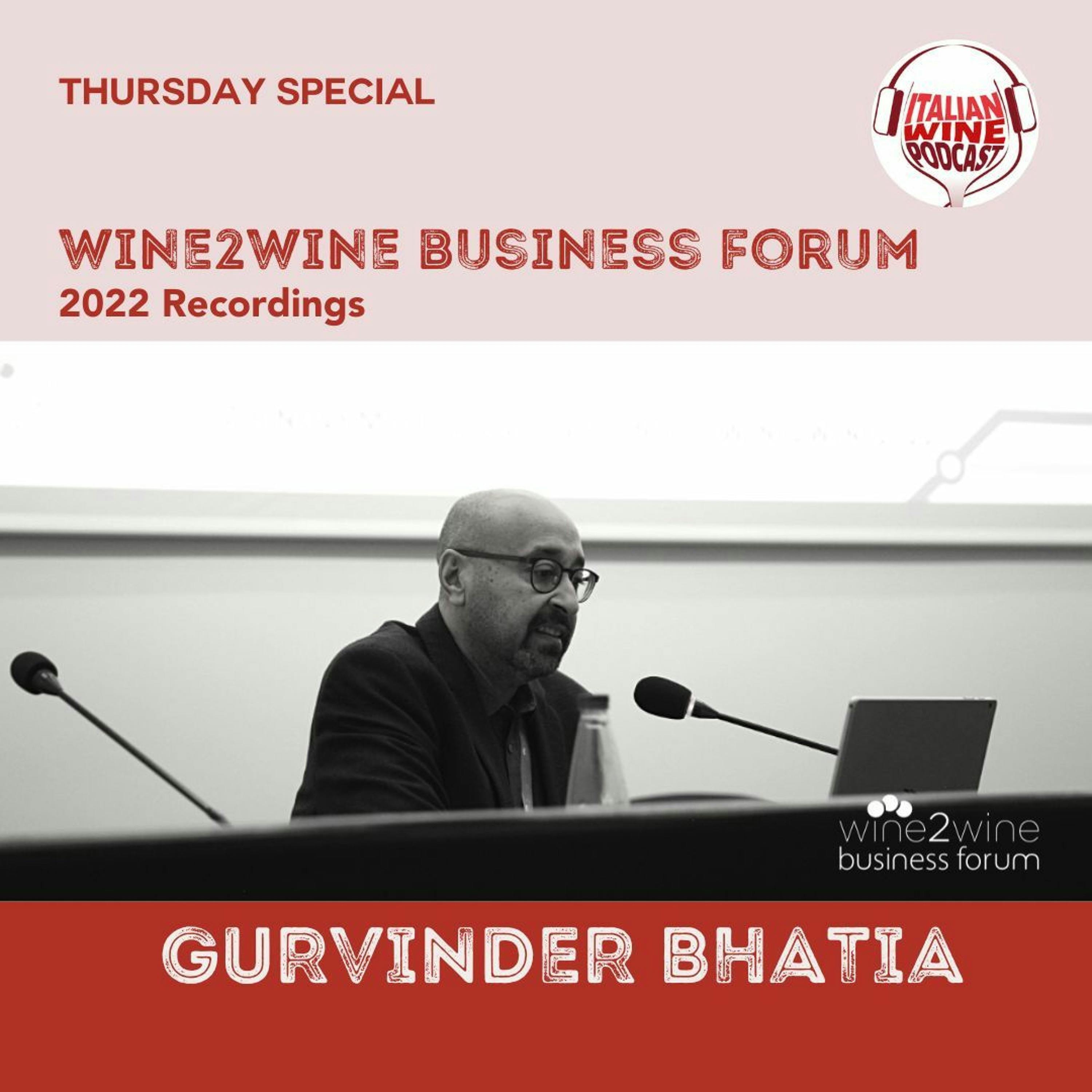
Ep. 1468 Gurvinder Bhatia: Understanding Consumer Behaviour | wine2wine Business Forum 2022
wine2wine Business Forum 2022
Episode Summary
Content Analysis Key Themes and Main Ideas 1. The Importance of Understanding Consumer Behavior: The central argument is that the wine industry must prioritize understanding consumers as individuals, moving beyond broad generalizations and data-driven assumptions. 2. Critique of Current Industry Practices: The speaker criticizes the industry's shift away from direct consumer interaction, over-reliance on statistics, and the tendency to produce ""Coca-Cola wines"" which alienate new consumers. 3. The Value of Direct Interaction and Trust: Building trust through personal, non-condescending interaction is highlighted as paramount for cultivating loyal customers and guiding them on their wine journey. 4. Making Wine Accessible: Accessibility is defined not by stratifying wines by quality, but by appealing to individual consumer needs and making them feel valued in their purchasing decisions. 5. Effective Communication and Storytelling: The importance of relatable storytelling, conveying emotional experiences, and avoiding technical jargon in wine descriptions is emphasized. 6. Role of Influencers and Social Media: Influencers (true ones who are trustworthy) and social media are seen as crucial tools for narrative control and direct communication, rather than just sales. 7. Consumer Guidelines: Practical advice for consumers is offered: don't generalize, always say yes to tasting, and remember the people behind the label. Summary This segment of the Italian Wine Podcast features Mariana Velinosi from Velinosi Winery and guest Gervinder Batia, editor-in-chief of Quench magazine and a former wine retailer. The discussion centers on the critical need for the wine industry to better understand consumer wine buying behaviors. Batia argues that the industry often fails by treating consumers as a homogenous entity and relying too heavily on data and ""pseudo experts"" who lack direct consumer interaction. He emphasizes that building trust through genuine, individual engagement is far more effective than marketing or scores. Batia recounts his experience as a retailer and radio columnist, explaining how connecting with consumers on an emotional, relatable level—through stories of people, place, culture, and history, rather than technical jargon—fosters loyalty. He critiques the industry's past tendency to create a divide between ""geeky"" wine drinkers and the ""average consumer"" who was offered lower quality wines, leading to a loss of trust. Batia advocates for producers to actively seek direct consumer interaction, utilize social media for narrative control, and adjust communication to focus on the feeling and experience of wine, making it accessible and inviting for novice drinkers. The core message is that restoring trust and fostering individual connections are key to growing the wine market. Takeaways - The wine industry needs to prioritize understanding individual consumer behavior over reliance on broad data. - Direct, personalized interaction builds strong consumer trust and loyalty. - Making wine accessible means appealing to individual needs, not just price or quality stratification. - Effective wine communication involves storytelling and emotional connection, not technical terms or scores. - The industry has historically alienated new consumers by not engaging them directly or promoting low-quality mass-market wines. - Producers should actively engage with consumers directly, whether at wineries, events, or through tastings. - Social media is a valuable tool for wineries to control their narrative and communicate directly with consumers. - Traditional wine tasting notes (e.g., ""racy acidity,"" ""crunchy tannins"") can be unhelpful and alienating to average consumers. - Consumers, even novices, can recognize and appreciate better quality wines. - Trustworthy ""influencers"" are those who genuinely have the consumer's best interest at heart. - Consumers should be encouraged to be open-minded (""don't generalize""), try new wines (""always say yes to tasting""), and appreciate the human element behind the bottle (""remember the people behind the label""). Notable Quotes - ""Understanding consumer behavior today is one of the main topics for the wine industry."
About This Episode
The speakers discuss the importance of understanding consumer wine buying behaviors and the need for a more accessible and sustainable approach. They emphasize the need to treat consumers as individual and guide them in a way that is accessible and sustainable. The importance of educating consumers on the quality and value of wine and creating a separation between consumers and wines, as well as the importance of trustworthiness in the wine industry. They also emphasize the need for more people to have that intent in order to make the job easier. The importance of sharing one's narrative and controlling their own narrative on social media is emphasized.
Transcript
Since twenty seventeen, the Italian One podcast has exploded and expects to hit six million listens by the end of July twenty twenty three. We're celebrating this success by recognizing those who have shared the journey with us and giving them the opportunity to contribute to the on the success of the shows. By buying a paper copy of the Italian wine unplugged two point o or making a donation to help the ongoing running costs, members of the international Italian wine community will be given the chance to nominate future guests and even enter a price draw to have lunch with Stevie Kim and Professor Atigioshenza. To find out more, visit us at Italian wine podcast dot com. Italian wine podcast is delighted to present a series of highlights from the twenty twenty two White wine business forum, focusing on wine communication and bringing together the most influential speakers and the sectors to discuss the hottest topics facing the wine industry today. Don't forget to tune in every Thursday at two PM central European time or visit point wine dot net for more information. I'm Mariana Velinosi from Velinosi winery, and I'm the moderator of this session today. So, first of all, I will introduce the topic. Today, we will speak about what to understand consumer wine buying behaviors. Stop listening toopsello experts. So, understanding consumer behavior today is one of the main topics for the wine industry. Now that the quality the average quality of wine has raised, thanks to, when making techniques and innovation, the main challenge for wineries and win operators is still how to approach the market. So if a winery want to, address is strategies according to the customer behaviors, it has, to understand customers, first of all. So, the wine industry has a really high level of differentiation And, that's why it's fundamental to understand customers' behaviors in order to have an advantage on the market. So if a winery wants to stand out from the crowd and wants to open new markets or talk to new clients, the first thing that it has to do is to understand which type of customers is talking to. So to, just to give you an example So understand consumer behaviors is, are important to think to, have success on the market. I just give you two examples of, how a strategy that, addressed, a specific need of customers, can have a success on the market. The first one is a domestic trend that that is primitivo. Primitivo grape in Italy. So primitivo producers were able to satisfy a specific need of young customers. So to have wines that can be drank immediately, but at the same time with a great body and a great structure. Another trend is the Rosier wines. So this is a more international and widespread trend of Rosier wines from province. But if we speak about understanding a consumer's behavior, we have to, mention two important facts. First of all, consumers are not the same all around the world. So if we speak about customers in Canada, they will not behave the same as customer in China or in Italy, for example. And another important fact is that wine is part of the consumer's culture. So people that, live in different countries will have different cultures So they will behave differently on the market. So today, the question that we want to answer is, which source should we listen to when we want to understand customers' wine behaviors. And the second question is, once we identified a customer behavior, which communication a winery should adopt to succeed in the market. So to do so, we have with us Gervinder Batia, which is one of the main experts of wine in Canada, and, also editor in chief of the Quench magazine. Good afternoon. You know, today, I may be known mostly as a journalist, but I started in the wine industry as a retailer and owned a wine shop for over twenty years. In nineteen ninety three, the Alberta government was the first in Canada to privatize the importation and retailing of alcohol. And I wasn't from a wine background. I was actually practicing law at the time, and I thought, this is an opportunity, to to open up a shop in a in a market that was young, that was, not a developed, a wine market, but The idea behind the shop was to make quality wine accessible to the average consumer. And I always felt that my role was to be an advocate for consumers and quality wine producers, particularly the small independent wine grow that generally didn't have the same marketing resources, that the large some of the larger producers did have and really be that connection to bring the two together. So, I opened up a shop called Venomania, and the idea was we didn't care whether somebody was buying their first bottle of wine, or whether somebody was filling up their cellar for the for the twentieth time. We wanted to connect with the consumer as an individual. So, I'm not sure how many baseball fans we have in the room, but, I'm gonna pull up a little baseball reference here. Just doing my homework just so. Gus, did you ever think in a million years that computers would be a part of this game? Computers. Everybody uses computers. There's no damn thing about this game. You know, if you wanted to, you could access any high school or college roster, pull the stats on any player anytime. You wouldn't have to waste your time with all these papers. I'm not wasting my time. I enjoy doing this. They got a special program now that can calculate a player's stats. And based on the competition he's seen, tell you whether or not he's ready for the next level. Do you believe that? Yeah. What else does it tell you? When to scratch your ass? I don't like them either, but they're a part of the business now. Pete, scouts, put scouts that are the heart of this game. They decide who's gonna play. And if they're lucky, they decide how it's gonna be played. But a computer that can't tell if a kid's got instincts or not or if he can hit a cut off man or hit behind the runner or look into a kid's face that's just gone over for and know if he's gonna be able to come back the next night like nothing's happening. No, a computer can't tell you all that crap. I'll tell you. No. What do you Don't sign them. It works a lot better if you, if you know, based on, but for for any sport. I mean, this is from a movie called trouble with the curve, and the movie is about an aging and temperamental baseball scout, who has one final chance to prove that observation is a better predictor of future performance of a major league baseball prospect than commuter, a com computer analysis of past performance. And this is this is part of it. So because you know, relying on statistics, relying on data is not new. People have been relying on statistics forever in every industry, but you have to understand the data where it's coming from How how narrow or broad is it, what's its context, what does it represent, and how to interpret it? An absent practical experience data loses its value. Based on that, the learning objectives today are number one to communicate effectively with wine consumers. One must first understand human behavior and accept that before someone is a wine consumer, they are a consumer. The wine industry too often fails to understand that making wine accessible is not about stratifying wine based on quality, but instead about appealing to a consumers, to an individual's need to feel that they're being benefited from their purchasing decisions. Now all wine apps and data relied on to analyze wine buying behavior rely on past purchases and predominantly well known wine labels that have wide distribution. The result is a narrowing and homogenization of the types of wines in the pool either recommended to consumers or relied upon by the wine industry to make decisions about consumers. So if the actual intent as the wine industry loves to message is to encourage consumers to explore, to try and drink better, understanding that quality and price are not mutually exclusive, then the wine industry really needs to not just change the manner in which it communicates with consumers, but in many ways it needs to return to the manner in which it communicated with consumers twenty to thirty years ago. So, I mean, data is important, but some data is important. Most data having to do with consumer buying decisions, in my personal experience and belief, is complete shit. There's really no substitute for meaningful, relevant, substantive interaction with the consumer. And it's important to recognize that people are consumers before they are wine consumers. So in order to understand consumer buying behavior or wine consumer buying behavior, you first need to understand consumer buying behavior if the intent is to create more wine drinkers. And intent I will come back to intent many times over because intent is significant, throughout this. To understand how consumers shop, there's no replacement for direct interaction with the consumer. And for twenty five years, I direct interaction with the consumer on an everyday basis. The idea was that to treat the consumer as an individual instead of as a single homogenous entity, and how you communicate with a consumer buying their first bottle of wine is different than how you communicate with a consumer who's an experienced wine drinker. And our industry has come to the point, I think, where our industry tends to place more importance on communicating with those that they perceive as experienced wine drinkers. Personally, I wanna talk to the person who's buying their first bottle of wine. To me, that's exciting. To be able to talk to people who are just entering their wine journey. I wanna talk to the people that don't think they like Italian wine because we all know that's impossible. And today, Italian wine is the darling of the wine world. But thirty years ago, there were very few consumers who knew anything about Italian wine beyond Kianti. And even the industry thirty years ago didn't know very much about Italian wine because WST, MW's I mean, wine education was all very French centric. I mean, I wanna talk the consume the customer who thinks they don't like chardonnay, but they love Chablis. I see all these consumers as opportunities to guide them on their wine journey, but how we communicate with these consumers is the key. And we need to treat them as individuals. We need to speak to them in a manner that's accessible without condescension. We don't talk to out of them and we shouldn't talk over their heads. And when you guide somebody, with their best interests and heart, and they feel that you gain their trust. And once you gain their trust, you have a customer for life. I mean, the other thing that our, I think our industry has, has a tendency to do is to try to fit square pegs in the round goals. There's a lot of wine being produced in the world, and every consumer doesn't have to like every wine. And that's okay. Of course, we want to encourage people to try everything. But when we treat them as individuals, we get a better sense of where and how we can guide them, in a way that helps them expand their palace and experiences without frightening them off. So if they like the certain style of wine, go one step further. Don't take them from here to here immediately, particularly if they're at the beginning of their wine journey because you will scare them off. You don't wanna shock their palate because human nature is unfamiliar equals bad. So if you shock somebody's palate, immediate their first indication is their first thought tends to be, I don't like this. So it has to be a process where you are are actually guiding this person's pout with their own with their individual pout in mind. So you largely need to eliminate your assumptions and preconceived notions about people and treat everybody as this individual. Does that require more effort? Absolutely. But it's also in the long run more sustainable. So I think one of the one of the ben the benefits I had was that I didn't come from the wine industry. And I approached consumers like I would wanna be communicated with as a consumer. It was interesting in, a few years after I opened the shop, I had a call from from CBC Radio, and they asked they said, we're looking for a wine columnist. Can you come do a wine column? I'm like, sure I can do the wine column. And this was a few years in to to opening the shop, and I was still early on in my wine journey as well. But I've always believed that number one wine is food, and I've also always believed that food and wine get their context from people place culture and history. So when I did my column on the radio, and it was every Thursday morning, at seven fifty for it turned out to be for eleven years, but the focus was was to help people to relate to wine. And when you relate to something, you create an emotional connection, and when you create the emotional connection, you create that loyalty and trust. And one of the best compliments I ever had from somebody was I was in the airport, and I I got stopped by, somebody and said, oh, we love listening to you on the radio. We love listening to your call. And I said, well, thank you. And they said, we don't drink. And I just kinda looked at them, they said, but we love listening to the way you talk about wine. It makes us want to taste the wine, even though we don't drink. But it was because of the stories of people place and culture history. It was the way that, I wasn't talking about the technical. I was talking in a way that the people who were listening could actually relate to. And I think that's such an important thing because so often, I hear, producers speaking to consumers and talking, in very technical terms. And the consumer doesn't care about the pH of a wine. And it's so important to know your audience and relate to them in a way that they'll actually have that ability to connect. Think another assumption that, our industry tends to have is that the average consumer doesn't care about the quality of what they're drinking, and that assumption, is grossly false. And that assumption is making it difficult for the wine industry to cultivate new wine lovers. I mean, you can make wine accessible to the average consumer and you can do it on a large scale basis and get them interested to learn more about wine. But again, there has to be the intent of the professionals in the wine industry when they interact with the consumer. So, I mean, they're, most large events, most large festivals tend to, in North America, anyways, tend to dismiss completely the quality of the wine that is being served at the festival. Their attitude is it doesn't matter. People are coming anyways, they'll drink it. So they tend to, they tend to get the the least expensive, wine that they can find, very poor quality in general. There was an event that, at five hundred thousand people over ten days, called taste of Edmonton where, people come, there's a number of restaurants set up. And historically, the the wine tent would have just the worst quality wines. And one year, I said to the organizers, I said, I said, let's put good quality inexpensive wine in the wine tent. And the response was, it doesn't matter. People will drink it anyways, so why do we have to worry about quality? And I said, people will know the difference. I said, even the average novice wine drinker who knows nothing about wine will recognize the fact that you're serving something better quality. Understanding that it's not more expensive. It's just better quality. And this is exactly what happened. People would come and pick up wine, and they would actually say, We don't know what it is, but this wine tastes better than what you guys normally serve. So there is an opportunity to educate and to give that experience to the average consumer who knows nothing about wine. Because the average consumer still has that ability to recognize when something is better quality. The other thing that I think our our industry tend doesn't sometimes recognize is the average consumer doesn't know the difference between Cabernet sauvignon and Sarrah, and they don't care. The average consumer, may be familiar with these names. They don't know anything other than the fact that they just wanna like the wine. And that's actually an advantage to the wine industry, not a disadvantage, and it's a huge advantage for Italian wines. So consumers are an open book, and they're waiting to be guided, and they wanna be guided by somebody that they trust. So, ultimately, if you recommend a wine to somebody that they trust, they will be become that open book. So we have this belief that you can't start the average consumer with a wine made from timorazo or La crema or Nero davela or negromaro because they're unfamiliar with these grape varieties. But if we treat the consumer as an individual and we get to know their palate, and we can give them a style of wine, that they'll like. Again, this is a huge benefit to the Italian wine industry because there are just so many different grape varieties used to make wine, and because of the regionality, it lends itself to the storytelling. Now, if the consumer likes this wine, they don't care. What the grape is. But a trust now starts to develop between the consumer and the wine professional. So so long as that wine professional doesn't abuse that trust, they can guide that consumer to try more interesting and different wines. Italian wine podcast brought to you by mama jumbo shrimp. I mean storytelling is not new. I mean storytelling has been around for forever. Again, the way that our industry talks, today, it sounds like that, that they feel that storytelling is is is a is a new thing. But having a great story is not enough. And it can't be the same story as everyone else. Having a story is great, but people still need to like the wine. If the intent is to make the wine more accessible for a greater portion of the population. But twenty five years ago, the industry was actually trying to make wine more accessible for consumers. But as wine became more prevalent in mainstream society over the past twenty five years, and I think in particular over the last fifteen to twenty years, The wine industry has actually acted counter intuitively and counter productively. And instead of elevating and getting the consumers to drink better, understanding that quality and price are not mutually exclusive, they created and perpetuated a race to the bottom. So instead of promoting great quality inexpensive wine to these consumers who are becoming more and more interested in wine, great wines from great value, Portugal, Italy, South, South of France, Spain, our industry decided instead to create these industrial Coca Cola wines packed with added sugar. So they actually made our industry actually created the separation And they said, let's put all these average consumers over here and feed them these industrial Coca Cola wines because they don't care, and they're going to drink it anyways. And let's give The geeky wine drinkers, the people who are really interested in wine, let's give them the good stuff and focus our efforts on education and providing information and resources to them. And then our industry put the blame on the average consumer for not caring about wine and not drinking better. I mean, there was even a period of time, and I still think it exists to some extent, where wine producers didn't want to do consumer events. They would do a trade tasting, and they would do industry events, but they would send their agent to do consumer events. And if a producer is too is not willing to take that opportunity to speak directly with consumers. If they're not willing to take that opportunity to sell your wine to the ultimate end user, then there's a huge issue. I mean, basic marketing principle is a pull strategy is much more effective than a push strategy. If you make a connection with the consumer, they'll ask for your wine in wine shops. They will tell their friends about your wine. And they will that they'll say, I met the winemaker. I met the winery owner. They will serve your wine to guests in their home. They'll give your wine as a gift. They will be your best ambassadors, and they will make your job so much easier. And this is so much more effective than convincing members of the trade to sell your wine to the consumer because they have every producer trying to convince them to sell their wine to the consumer. And you might be the favorite for a, in a restaurant this week, but next week, another producer will have charmed them. And now that's their favorite. So That's not to say that you shouldn't cultivate key members of the industry, but you have to ensure that you devote quality time and resources to those opportunities where you can communicate directly with the consumer. Because ultimately they are the end user, and it's a lot easier if they're the ones who are asking for your wine. So the industry, actually, over the last fifteen years, I think they've created this issue and now are suffering the consequences of of and this is why we're having conferences like this where the focus is on communication to try and figure out how to communicate with wine consumers again. To add another dimension to this issue is the technology and the formats on which we do communicate have evolved and changed over the past twenty years. So now it's not just about, okay, how do we reconnect with the consumer, but it's about determining which technology is going to be effective, and then actually effectively utilizing that technology. So essentially, we're looking at we need to build trust with the consumer again because that trust has been eroded. And how do you rebuild trust with intent? Influencers, and really, I mean, the the true definition of influencer is is anybody who actually has that influence. So it's wine writers, retailers, sommeliers, they're all influencers. Can influencers be trusted? Only if their intent is to be trustworthy. Do they have the best interest of the individual consumer in mind and a big picture view of what is best for the industry? Or is the intent for self promotion. So trust, for particularly for a novice wine drinker, trusting someone to try, let alone buy wine that you are completely unfamiliar with, is very different than buying a wine based on some writers scoring at ninety eight points. Scores tell a consumer nothing about whether they might like a wine. In our shop, we never had scores because we wanted to encourage, engage the staff, we wanted to encourage this engagement with the consumer to talk to them about the wine, not about some score. And in fact, nothing tells a score really tells you nothing about the wine if it's a style that at Orthisa's style that that particular customer is going to like. I've never had, I'm a believer in no rules. I don't like rules. I would always tell my customers that when it comes to wine, there's no rules. But I would have three suggested guidelines for them in order to help them enjoy wine more, appreciate more wines, and ultimately make a more significant, a wine more significant part of their life. And the three lessons for for consumers, number one is don't generalize. It's absurd to say you don't like chardonnay or only drink chardonnay or don't drink Italian wine. There's just too many styles out there. So in wine, in art, in music, in people, don't generalize. The second guideline for consumers is always say yes to tasting. When considering whether you try a glass or bottle of wine, try it, the worst that can happen is that you don't like it. The best thing that happened is that you fall in love with something that you've never tasted before. But also, I think it's important to to tell consumers that never judge a wine by it's or by the first taste, particularly if it's something that you're unfamiliar with. Because often that first taste is a shock to the palate. And for the novice consumer, again, it's human nature unfamiliar equals, I don't like. So let their palate be acclimatized to the wine and give it a second taste. Also, our palate's changed. So if a consumer doesn't like wine today, that doesn't mean they might not like it a year from now. And ultimately, for the consumer, it was always, and I would tell them that it's always a goal to reach the stage where you can distinguish between the objective and the subjective, where you can say I don't like a particular wine, but I can appreciate the fact that it's well made. Because once you reach that stage, it actually broadens your palate and opens up a lot of opportunities, to enhance your enjoyment. And the third, lesson for consumers was remember the people behind the label. I would tell them that, you know, there's there's people that are somewhere in France or Italy or Argentina or per on a particular wretch of soil under a particular sun who actually care more about you and the richness of your life than you may ever dream about. And he or she bottles that humanity in a wine that may not be as well known because their resources are going to the quality of what's in the bottle as opposed to solely just packaging and marketing. And those producers, those people are worth supporting by our effort of seeking them out, listening to the conversations they've started, and by our decision to buy the product of their passionate hard work and help spread that work. I think it's ironic though that so many of the labels that most consumers support, because these are what's being put in front of them by our industry, they those labels don't actually care at all about the consumer. So in terms of takeaways, Number one is stop listening to pseudo experts. So people who have no or only limited direct interaction with the consumer. I've been on so many press trips over the years where, people are talking about consumer behavior, consumer behavior, consumer behavior, and often I will ask some of my colleagues in the press how much direct contact have you had with the consumer. And the answer invariably tends to be zero. So it's really hard to understand consumer behavior if you have no interaction with the consumer. Second is before you can understand consumer wine buying behavior, you need to understand consumer behavior. Treat the consumer as an individual as opposed to one homogenous entity. Third is a good story isn't enough. I mean, people still need to like your wine, but it's okay if they don't. And fourth is intent, trusting those that are trustworthy. If you want to be trusted by consumers, you need to be trustworthy. They need to feel that you have their best interest at heart. And once you gain their trust, they are yours for life. I was just, thinking about your comment about, connecting with the, the consumer on an individual basis. Obviously, as a shop owner for as long as you were, that was, fairly easy to do. And for myself, I I I work on the floor. So, you know, I get to connect with them individually. But I think for a lot of people in the room, they're probably wondering about connecting with those consumers on an individual basis, but at scale. And so I was wondering if you could maybe, talk a little bit about some of, some examples that you might have come across, that you think are good ways for producers and people in the industry to connect with those consumers, on an individual basis. But from a larger perspective, rather than just being a shop owner or being a sommelier, Sure. Absolutely. And, you know, it's a great question because that tends to be, one of the, points that people bring up most is how do you do this on a on a large scale basis? And, in terms of I think it goes back to intent. So if if the people in our industry have that intent so I had that intent, so I was able to do it on the radio, and have you know, hundreds of thousand people listen to this, on a weekly basis. I have my column on, Global TV on Sunday mornings. So I have the intent I'm able to do that. But in terms of we won't need them basic. We need more people in the industry to have that intent. We need more writers to have that intent. We need to have, journalists to have that intent. We need to have shop owners to have that intent. We need to have some ayes to have the have that intent. And if more and more people in our industry actually have that intent, it actually makes the job easier. In terms of doing things on large scale, I mean, a taste of Edmonton is a great example of that where you offer great quality inexpensive accessible wines for the average consumer because they will start to recognize the quality. And that causes them to gain interest and then they will go to the white wine shop and start asking questions. They will ask questions in the restaurant when they're deciding on a bottle of wine. I think festivals are a great way to, I mean, for music festivals, there was a, a great music festival on Canada called interstellar rodeo, where they paired great quality wines with the bands that were on stage, and that wine was served while that band was playing. So there's opportunities, but our industry has to actively work to to utilize and, to actually make those placements in the industry or in in mainstream, events like that because this is where you have people at scale. And I'm a firm believer that if you give the average person better quality at an inexpensive price point, they will learn to enjoy and drink better quality. And for producers, do events, do do consumer events. Really, it it's so important that you that you interact directly with the consumer, whether it be at your winery, whether it be when you're visiting markets, whether it's in doing a tasting in a wine shop, whether it's, doing a a walkabout event, whether it's, at wine dinner, take every opportunity that you can to interact directly with the consumer and share your story with that consumer. Again, once you actually hook the consumer, you have a customer for life. I have a question. Since we are speaking about to, transfer this intent to a large scale of end consumer, which is the role of social media. So, is the role of social media important for wineries to speak to the end consumer, and how wineries should approach these new tools. I think social media is important for, for wineries, not necessarily to to sell wine, but to share your narrative. Because wineries who are on social media, they have that ability to control their narrative. They have the ability to send their message. And that's such an important thing in terms of controlling your own narrative. Yeah. And it also I mean, as you mentioned earlier, I mean, every market is different. And so the ability to control your narrative, regardless of which market it is, is such a crucial thing. Because again, it's direct interaction with the consumer. What do you think of the way? What do you think of the way that we describe the way a wine tastes to the average consumer? If you look at a typical tasting note, it might say something like fresh bright red fruit, racy acidity, and crunchy tannins. And I I don't really know what that tastes like, and I taste wine all the time. I can't imagine what a consumer thinks of that. So do you have a view of that? I I I think that, there's definitely an issue with some of the terminology used to describe wine. And again, I think part of that is because, so much of, wine writing and wine education is directed to people that we perceive have some level of experience with wine. So it is rather exclusionary for someone who is just starting out. And we wanna make that more accessible. I mean, with, I always tell my writers at Quench that, when you're doing your tasting notes, don't just talk about, you know, flavor profiles. I don't I mean, part of experiencing wine is how does it make you feel? And I think once we get into talking about more about the experience of drinking a particular wine and the experience of the person who's now, trying to convey that to to the consumer, whoever's reading that note. Then we get into more situations where the person who's reading can actually relate. So I think definitely traditional wine writing in terms of tasting notes, I think needs to change. Sure. I mean, I mean, it it it it can be so simple. It can be so simple as, you know, there there's certain words that everybody can relate to and that everybody knows. I mean, people can relate to terms like fresh and brightness. Right? And instead of, talking about specific types of fruit, because, again, for everybody's experience, it's it's a it's a little bit different. But, I mean, there's nothing wrong with saying things like you know, the the, the wine is is is lifted and it, you know, the experience in your mouth. I mean, that that you so, you know, I can I wish I had one in front of me now, but, I mean, in in in terms of in terms of, I think there's so many different ways because and it's a very personal subjective thing? Right? So in terms of when you taste a wine, don't just think about what you're smelling and the flavors that you're tasting, also allow yourself to to the the actual emotional experience of what is it because in some cases, when you taste a wine, there's nothing. Right? And so it's important I think to take that next step and and have that experience and and convey that to the consumer as well. Yeah. Yeah. This is something really interesting how to communicate wine in a different perspective, so not speaking about the technical issues, even because this part, I think that speaking to technically has created more distance with the end consumer. And this is a problem of the wine industry itself. So just to give an example of what you just said, when I speak about my wines, I don't speak about how they smell or how they taste, Yes. With b to b customers, of course, I do. But speaking about end consumers, but I just say that this wine, I would drink this wine in a special occasion, and this makes me feel in a special way. So I just described the feeling that that wine gives to me instead of describing the wine itself. Yeah. And I think it's different if you're actually tasting with the consumer or they're reading a note too. Right? Because When I do tastings, I don't tell the consumer what they should be tasting. Everybody has their own experience. That's where it's you tell the story about the wine, and you tell the story about where it's made, how it's made, the people behind it, you know, the historical context, all these sorts of things, and let the consumer actually have their own experience as opposed to imparting that experience on them, little bit different from a tasting note. So, I mean, I think, that's where, again, you have to look at, people and situations on an individual basis. Even because feelings are international, but I mean, Fruit doesn't taste the same in China or in Canada, for example. Exactly. So speaking about feelings, for sure, it has a more large scale approach. Exactly. Absolutely. Do we have other questions? Okay. Thank you. Perfect. Thank you. Listen to the Italian wine podcast wherever you get your podcasts. We're on SoundCloud, Apple Podcasts, Spotify, email, IFM, and more. Don't forget to subscribe and rate the show. If you enjoy listening, please consider donating through endline podcast dot com. Any amount helps cover equipment, production, and publication costs. Until next time.
Episode Details
Keywords
Related Episodes

Ep. 1670 Can A Wine Brand Sold In Grocery | wine2wine Business Forum 2022
Episode 1670
Ep. 1659 Making Social Media Work For A U.S. Audience | wine2wine Business Forum 2022
Episode 1659
Ep. 1608 E-Commerce And Trade Communication In The US | wine2wine Business Forum 2022
Episode 1608

Ep. 1598 From Serial Killer To The World's Hottest Wine Trend | wine2wine Business Forum 2022
Episode 1598

Ep. 1588 Crisis Of International Wine PR | wine2wine Business Forum 2022
Episode 1588

Ep. 1578 Segmenting The Fine Wine Consumers | wine2wine Business Forum 2022
Episode 1578