

Ep. 273 André Ribeirinho (CEO of Adegga) on the Portuguese Wine Market
Andre Ribeirinho on the Portuguese Wine Market
Episode Summary
Content Analysis Key Themes and Main Ideas 1. The integration of technology and digital marketing into the wine industry. 2. The characteristics and evolution of the Portuguese wine market. 3. The cultural perception and integration of wine as a lifestyle choice in Portugal. 4. The unique economic and geographical significance of wine as a non-transferable agricultural product. 5. Innovative approaches to wine tourism through digital concierge services. Summary This episode of the Italian Wine Podcast features Andre Rubenio, a Portuguese food, wine, and travel entrepreneur and digital marketing consultant. Andre shares his unique entry into the wine sector, transitioning from computer science after being inspired by how the internet revolutionized other industries and recognizing the inherent passion people have for wine. He discusses the Portuguese wine market, highlighting its status as a top producer with a diverse range of native varieties, and how, despite strong domestic consumption, it's a significant market for Italian and French fine wines found in high-end restaurants and shops. Andre introduces his ""Wine Spots"" project, a global digital wine travel concierge service, emphasizing its role in guiding travelers remotely via an app. He also delves into Portugal's progressive approach to alcohol education, where wine is integrated into culture from a young age, fostering a lifestyle rather than a forbidden item. Andre concludes by stressing wine's inherent connection to its place of origin, its unique ability to redistribute wealth from urban centers to rural farming communities, and ultimately, its identity as a farm crop. Takeaways - Digital marketing and the internet have transformative potential for the wine industry. - Portugal is a notable wine-producing country with increasing focus on its native grape varieties. - Italian fine wines, including less common varieties, are gaining presence in high-end Portuguese markets. - Early, integrated exposure to wine in a cultural context can lead to more thoughtful consumption habits. - Innovative digital platforms like ""Wine Spots"" are changing how wine tourism is experienced. - The future of wine consumption points towards ""drinking less, but drinking better."
About This Episode
The speakers discuss the Italian wine industry, which is consumer-oriented and tasteier than other countries. They also talk about the success of the drug addict program and treating people as criminals. The importance of food and wine in the Portuguese culture is emphasized, along with the success of the wine travel concept. The speakers discuss their success in reaching out to consumers and empowering them to know what to drink, with plans to travel to Europe and visit wine hotels. They also talk about their success in dealing with drug addict practices and the importance of empowering consumers.
Transcript
Do you produce a wine that is exceptional? Register your wine for this April's five star wine selection. Over one hundred judges, including masters of wine, Master Somides, analogists, and wine professionals will select top wines for feature in five star wines the book. The best certified biodynamic and organic wines also will be presented through the dedicated section, wine without walls. Feature wines will gain continued worldwide visibility through VIN Italy in National promotional support. Find out more at five star wines dot it. Italian wine podcast. Chinchin with Italian wine people. Hello. This is the Italian wine podcast to be Montewooding my guest today. He's Andre not Andre, Andre. Rubenio. Perfect. From Portugal? Yes. And you are a food wine and travel entrepreneur, digital marketing consultant, CEO at Adega and you also have just the previous conversation we've had about soccer. Obviously, we have a soccer fan, which we probably won't have time for today. So just how did you get started in the wine industry? I actually started, fifteen years ago? I don't know about fifteen. I'm forty two. You don't like it. Well, thank you. But I was actually I'm a computer science engineer, so that's where I studied. And around fifteen years ago, I read a book called The Long Tail. And the long tail is a book by Chris Anderson, who was the editor of wired magazine at the time. And he actually, at on this book, he explained how the internet changed the world of music, the world of films, and he explained the theory about, about this long tail. And actually, the interesting part is that I still don't know why, but I read the book. I was in London, during holidays, and I read that book. And for some reason, I thought, wine is exactly like this. And I would love to understand what is behind this idea that wine can have the same success online and why how internet can help wine become as successful as music and as films. To you how old then? Sorry. So I was, twenty, I don't know, twenty seven, twenty six, twenty seven, and I was actually not a wine fan. So I didn't drink wine at the time. It was actually a business idea that I was interested in. And that was something that I've I've come to learn, throughout the years that that was more than I thought initially. Actually, every time I I heard someone speaking about wine, they had this brightness in their eyes, you know, they they had this this thing that know I under understand what it is. So how about it? Yeah. But but now you see that that when people talk about wine, they have a passion. They have they have something more than just, of course, being the stuff that they do day to day. And, now I know that I found it. And, and I'm Where are you based? I'm based in Lisbon, Portugal. So tell me about the Portuguese market just for wine in general. Obviously, it's a wine producing country, and also for Italian wines in particular. Portugal is, top ten wine producing country, in the world. I think it's either ten or eleven depends on a year. It's a it's a very interesting, country, very much like Italy. It does have a diversity of of varieties of, of top ten as varieties that is, exciting. It it has also been a challenge, of course, in the last ten years to evolve from a world that was, interested in buying, single variety wines and basin, you know, Covony and Merlo and all the international varieties. And has evolved to something really exciting. Has you know very well that, Italy has been doing an amazing job there of getting people around the world excited about stuff that they didn't know before. And so Portugal has been doing a, quite a good job of coming to the modern wine world, and promoting what he's doing in terms of, of Doctor. No's varieties. And of course, even being as quite a small country, it's quite a diverse country again in terms of of terroir's and in terms of of, of everything that is that makes wine. In terms of wine, Italian wine in Portugal, you have this being a wine making country, so we consume maybe ninety nine percent Portuguese wine, but it's actually an interesting country when it comes to, fine wine, consumers. Has everywhere, you do have fine wine consumers. And, Italian wine, I would say Italian wine next to French wine is probably the the two top countries that are, that gets people excited about fine wine. When you say fine wine, is this wine shops, people are walking into wine shops available there, fine dining wines that are served during Yeah. I would say that the, Michelin Star restaurants have Italian wine, have, some of some of the best wines in Italy are, available there, which is probably the easiest and the, the best place to enjoy them. Then you have some of the best wine shops, in Lisbon and portal, that have, also those. And then you have, of course, like, everywhere, you have some clubs, you have some private clubs, but I would say that, that is quite interesting that today you can find some more obscure Italian wines there. For example, actually, we'll we'll talk about that, but actually, I'm doing an event next Saturday. And for the first time, we're having a table of Aetna wines at the event in Portugal, and it's something that is totally unknown the Portuguese. But is this just a wine tasting or is this a sort of, for professionals or for private? It's totally consumer oriented. Oh, really. And it's actually a taste and buy wine. So people that are tasting, can buy all the wines that are available at the tasting. And so the idea is that of the people for the first time will be introduced to the amazing wines of Aetna, but also that they could taste them. And then it would be hard to find them there. They can taste them and they can buy them right away. I mean, how important is food and wine together in Portugal? So if you're my Italian, say, Aetna wines, and a Portuguese person, that sounds interesting. The story of the volcano, all those kind of stuff, volcanics was. And then the next question is, what would what would I drink this with? What Portuguese dish would I drink this with if I buy the sicilian wine? So the first thing is, people will assume, most people will assume that, Italian wine goes well with, Italian food. And that's quite a big assumption also because Italian food means so many things, so many different people. But I would say that, most most people who try who'd who'd like to try Netno wine would probably pair it with a pasta and some, some, you know, special pasta that they could make at home or get in a restaurant. That would be my guess for a first thing. Maybe some people would even think of pizza, again, generalization. But in terms of Portuguese, not only do we have have also an interesting volcanic area called the Azorders that produces volcanic wines. So some of the people who know that area might try to do a a comparison and try to see, oh, this is interesting in comparison to to Aetna. But I think being a country that is very open to to the world. Portuguese speak very good English, very good French. The whole TV in Portugal is with subtitles. So we hear languages from around the world since we're kids, and so it opens us up to the world. So we want international news. We want to understand what's happening outside. We respect what we do in the country, but we want to learn from the outside. So when you introduce Italian wine to Portuguese or, specifically at why to Portuguese, they wanna know everything that is to know about it. And they might try with Italian food. They might try to mix it with the Portuguese food. It's quite diverse there, but it's quite interesting because of that. It's not set in stone that it needs to be enjoyed in an Italian restaurant. When it is a progressive country. I don't know a lot about Portugal, but, just in terms of the, just a social thing, a bit of a segue here, but in terms of attitudes to drug addicts, we've had the most successful program of of dealing with that issue of actually not treating people as criminals, but really trying to get them back on their feet. That's true. And I think that's a really, you've noticed what the hell's this gotta do with an Italian wine podcast, well, it does because we're working in the industry of alcohol and it's important that we recognize that, you know, people can end up in trouble. So I think that's very enlightening. I think if a country thinks that, they're also gonna treat their, what they put in their, you know, what they're eating and what they're drinking in a in a way, in a slightly more thoughtful way. It's, it's very true, and actually about that program, about, treating people, like, they have actually a health problem and not they're not criminals. The pro was so successful. That is now being implemented in cities exactly copy of their program. In cities like Seattle, in the US, they're they're using the same model to, to take care of that problem. And it it's really interesting about also the education and and the alcohol education that people in Portugal were kids, I was born in Portugal. I have always lived in Portugal. And when you're a kid, alcohol is not something you're forbidden from drinking. You're not incentivized to drink. And if you're at the table with your family, you don't want, you know, no one is going to say you should drink. But I remember being a kid and Mike and father telling me, oh, you should just use a finger and try alcohol. And actually, by the time you get to, legal drinking age, it's not something forbidden. It's something you enjoy. It's something that is part of culture. And in that sense, we're very much related, to the way people, think about alcohol in Italy. I do that with my kid with the finger in the ask him to give me three flavors. So we live in North Tashunas. We've got a lot of brunello in his time, but it's true. It's what you say. It's about, about the attitude to, it's gonna send lifestyle, if you like. Yes. Yes. And, and, of course, then you understand that when people are, they become teenagers and then they they, they reach, an adult age. They make wine part of their lifestyle, lifestyle because it was or something imposed. It was always part of whatever celebrations they were having, and, and mostly Portuguese wine in Portugal, but, but that happens. And it's it's it's one of the great things of living in a, in a wine producing country. So part of your brief, your description's a travel entrepreneur. So So, you know, you're not, like, running travel events, Portuguese people going to Italy, or are you? No. No. That's not something, we do. We do actually have a project called wine spots, and what we do is, wine travel concierge. So anywhere, you know, any wine region in the world, if you don't wanna have a guide that goes with you, but you wanna have someone who's guiding you via WhatsApp or via whatever is like a good friend in that region. We have a service for that. It's called wine travel concert. It's called wine spots. And we do that anywhere in the world, including Italy. That's incredible. So if I'm going if I get that, how do I, how do I get the app? I just go online and get the app? Or just go on, you you can use it through the through the website, but you can also download it on the iPhone, and, and it will work. And then, and then, actually, you have, like, a, we work with, different guys around the world in different regions. And people sit at home or at the office or whatever they are, and they actually have to respond to messages from someone there. There's not really a script. There's guidelines, but, it's, like, if you know Tuscany really well, you're the best person to guide someone else there. Maybe you don't wanna do it in person or they don't want to have someone, you know, in the car with them. They wanna go on their own, but they wanna have someone that if, like, a very good friend that that knows the area and they can send a message saying, hey, I could really have some truffles, you know, and they can point them in the right direction. Interesting. If I ever get fired from this job, because I spent a lot of time in Tuscany. I'll take your business card later. Please do. Just in case. Okay. In terms of the future, just talk about wine in general, and, obviously, from your Portuguese, quote, Italian standpoint, where do you see things going? Are we drinking less and drinking better, or is that just a sound bite? Yeah. It seems so. Looking at, all the marketing studies, it does seem that we are, drinking better. I see, and I'll be touching on my presentation during wine to wine. I'll be touching on that subject that, that we need to do a better job of reaching out to consumers. And, wine, as we all know, it's quite behind, compared to other products. At the same time, we are quite ahead that we have one of the most wonderful treasures of the world, has diversified and has complex in it. There's wine for every wallet, for every taste, for every. We just just need to make sure that we are doing everything we can to, to get to consumers. And I think, if we are drinking better, drinking less, but drinking better, people will want more information that will be want to be more empowered to know they should be drinking, and it's our job to make it happen. What's your favorite region in Italy? They wanna put you on the spot or your favorite wine style or wine if you love Vincent or prosecco? I love Vincento, and I love prosecco. I would say I have my my heart since I start coming to Italy My heart has always been sicilian. It's a very special place in the world. The whole volcano, Montana is something very special. He touches you, but there's amazing one from anywhere, from Altoadigit to Deleria. It's, it's an amazing country, and, it's it's hard to say that it's my favorite dream. Yes. I have a special thing for Sicily, but I love, all of Italy. You speak Italian. Yeah. I don't speak Italian, but has a Portuguese. I understand Italian. Yeah. It's pretty, yeah. Which which makes it easy to come here and to to talk to people because they can talk to me in in Italian, and and I was just in Sicily, a couple of weeks ago, for ten days in, Taormina, and, and around, and in, in the, in the mountain. And it it's really a special place, and it's time as you for the the way you see wine being part of culture again there. And actually, something I believe in, which is, I think an important topic of wine is one of the few products in the world that is not transferable to another country. So Aetna wine will never be able to be made in China. The other thing is that wine is one of the best products in the world to redistribute money because it actually brings money from urban centers that have a lot of money to poorer areas that are actually making wine. And that's one of the most beautiful things about wine. Great. Nice and nice note to finish it. And then a very valid point, actually. I mean, ultimately it's we're wine often is in the industry, people think it's very, very special. And it very special because we work in wine, but, ultimately, it's a farm crop. It is. It is. And we have to think about it. Yeah. We're farmers, and that's really what we do. So, and we should look after our farms. Anyway, Andrea, I wanna say thank you very much for coming in. Thank you for having me. CEO at Adegat, Andre. For us a rest? Oh, yeah. It's been rushing for weeks. It's alright. Tending us in the you just your enthusiasm shines through. There we go. It's always a good thing for someone that's, doing what you do. Thank you. Thank you. Thank you for energizing people to to explore. It tastes and and territories. Yes. Nice one. Been great, mate. Thanks a lot. Thank you. Thanks for having me. Take it easy. Listen to all of our pods on Sound Cloud iTunes, iTunes, Spotify, HimalIFM, and on Italianline podcast dot com. Don't forget to send your tweets to at itau wine podcast.
Episode Details
Keywords
Related Episodes

Ep. 2772 A Surprising Partnership between Japanese Sake & Italian Wine with Monica Samuels | Masterclass US Wine Market
Episode 2772

Ep. 2770 China’s Wine Market: From Misleading Import Numbers to Today’s Consumer with Fongyee Walker MW - Part 1 | Asia Wine Market
Episode 2770
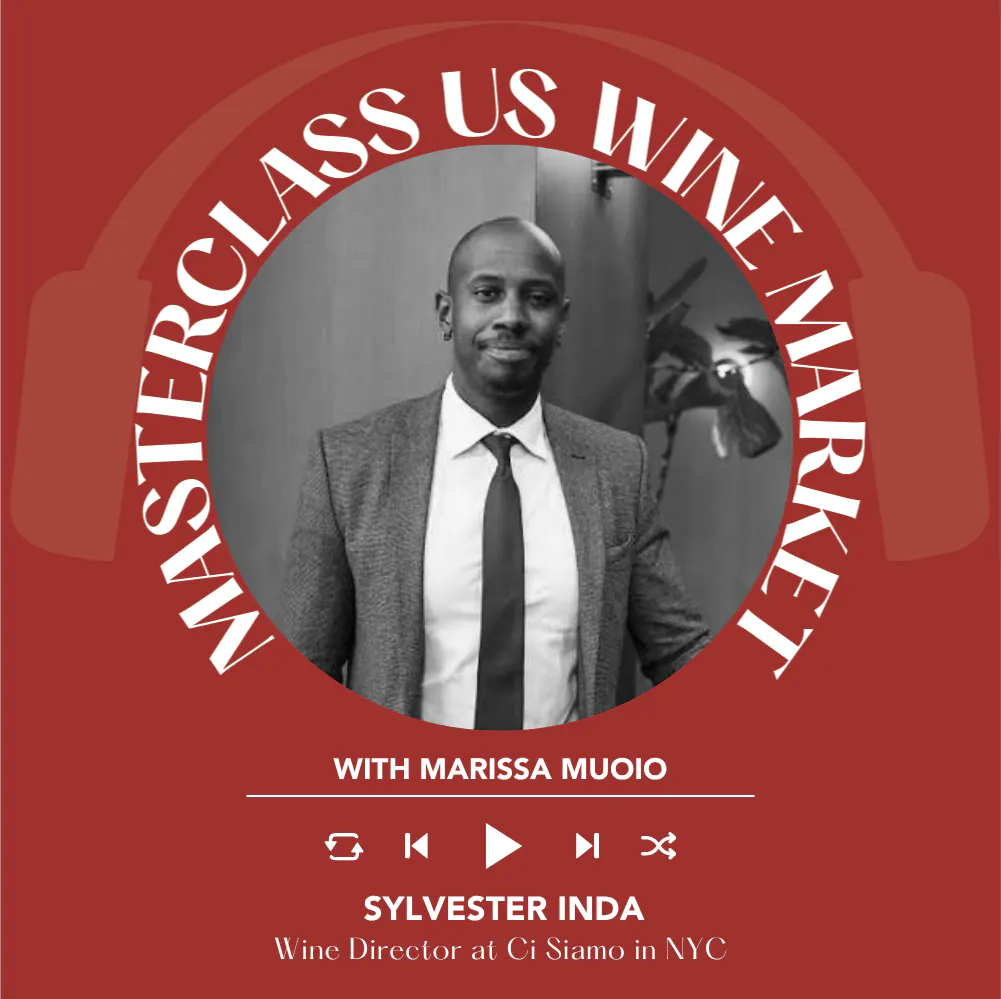
Ep. 2760 Winning the Restaurant Floor: Training, Education & Italian Wine with Sylvester Inda of Ci Siamo | Masterclass US Wine Market
Episode 2760

Ep. 2751 From Montalcino to Kazakhstan with Francesca Arquint of Collemattoni | Asia Wine Market
Episode 2751

Ep. 2748 Florida Wine Market & Vinitaly USA with VIA Italian Wine Ambassadors Stefano Campanini & Daisy Penzo | Masterclass US Wine Market
Episode 2748

Ep. 2746 From Almaty to Verona: Inside the Italian Sommelier Challenge with Leonid Kirsanov | Asia Wine Market
Episode 2746