
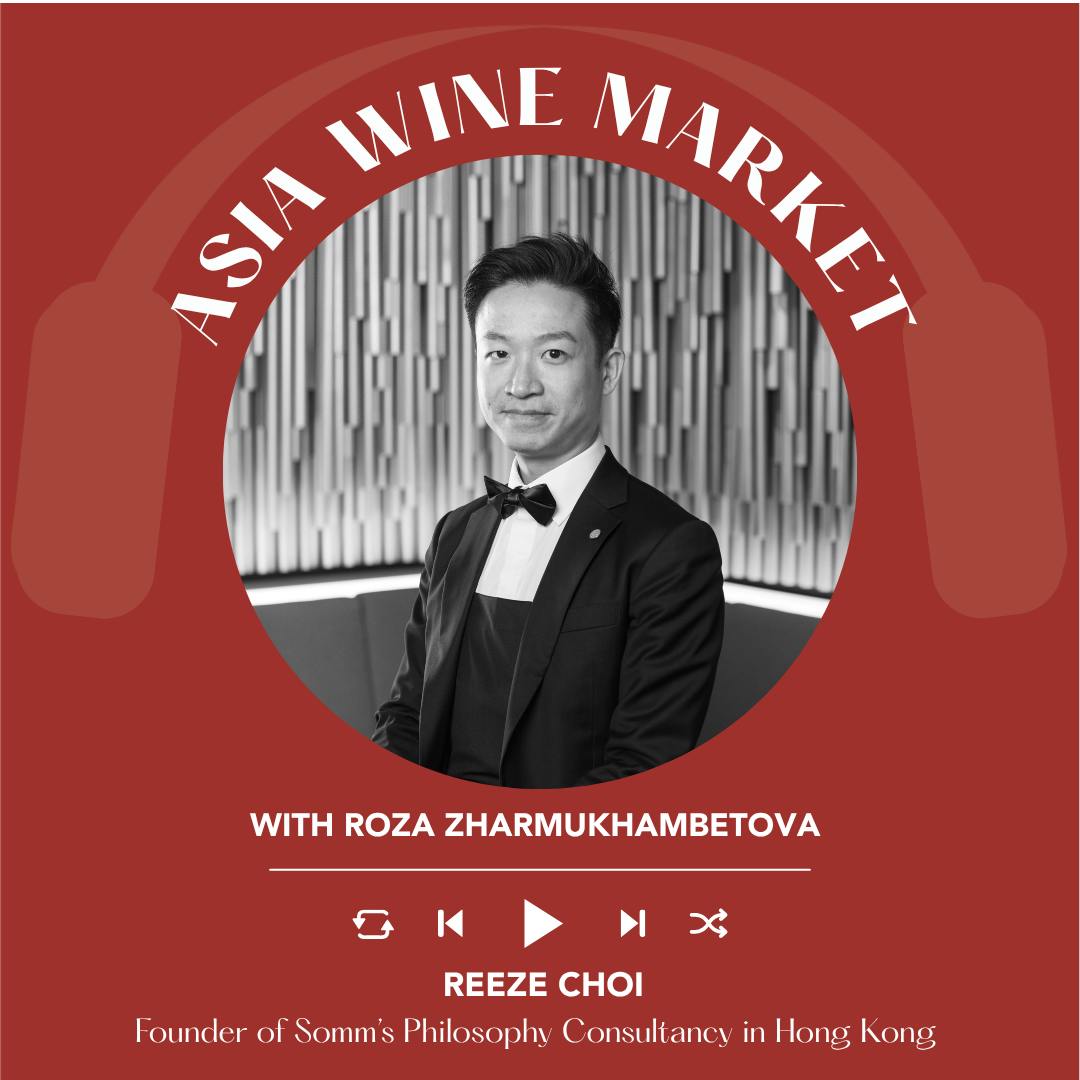
Ep. 2535 Inside Hong Kong’s Wine Scene with Reeze Choi, Best Sommelier of Asia & Pacific 2025 | Asia Wine Market
Asia Wine Market
Episode Summary
**Content Analysis** **Key Themes** 1. **Post-COVID Market Recovery and Consumer Behavior Shift** — Hong Kong's wine market experienced significant contraction (2020-2024) with cautious spending patterns, but shows renewed momentum with 30-40% income increases during recent events and projected 2026 growth[1]. 2. **Italian Wine Market Leadership** — Italian wines rank second after French by import volume, with Barolo, Brunello, and Chianti as mainstream favorites, while Moscato d'Asti gains traction among younger consumers preferring sweeter, lower-alcohol styles[1]. 3. **Strategic Distributor Selection Over Brand Size** — Small family wineries should partner with boutique distributors who understand their philosophy rather than large importers, emphasizing authentic representation and targeted market access[1]. 4. **Localization Across Multiple Touchpoints** — Modern label design, winemaker visibility, technical website content, and storytelling about production methods are critical for engaging new and established wine consumers[1]. 5. **Quality as Foundation for Sustainability Messaging** — While consumers value sustainability narratives, wine quality ultimately determines success; storytelling about practices (recycled packaging, water conservation, solar systems) matters only when backed by excellent wine[1]. **Summary** This podcast episode featuring Asia's best sommelier for 2025 maps Hong Kong's wine market recovery post-pandemic. After experiencing economic contraction from 2020-2024, Hong Kong shows renewed consumer engagement, with restaurant and bar revenues climbing 30-40% during recent peak periods. The market demonstrates stark polarization: consumers either purchase premium bottles or budget selections, with midrange products underperforming. Italian wines dominate as second-largest import category after French wines, with regional classics (Barolo, Brunello, Chianti) leading sales, though Moscato d'Asti surges among younger drinkers seeking approachable styles. For market entry, small Italian wineries should prioritize partnerships with passionate boutique distributors over major players. Success requires attention to modern label design, direct winemaker engagement, comprehensive website content, and authentic sustainability storytelling—provided quality foundations remain intact. Hong Kong's established yet "boring" wine culture (preferring traditional choices) presents both challenge and opportunity for brands willing to educate consumers while respecting market preferences. **Key Takeaways** - Hong Kong's wine market is recovering with accelerating consumer spending; 2026 projected as a strong growth year following pandemic-induced contraction[1] - Italian wines rank second in imports; Barolo and Brunello appeal to established consumers prioritizing prestige over taste, while Moscato d'Asti captures younger, health-conscious demographics[1] - Small wineries should avoid major distributors and instead partner with boutique importers who genuinely understand their brand philosophy and have restaurant relationships[1] - Modern branding is essential: contemporary label design, active winemaker presence, and detailed websites matter significantly for Gen Z and newer wine drinkers[1] - Sustainability messaging requires authentic storytelling backed by quality wine; consumers increasingly distinguish between superficial claims and genuine production practices[1] - Wine bars and small tastings cost-effectively build market presence compared to formal wine dinners; personal connection with clients is paramount[1] **Notable Quotes** - "People love to see the winemakers, especially in Hong Kong... if you have the budget, if you have the time, come to Hong Kong, see people, see your clients, and I think this is very important" - "Small group of wine tasting... you show some PowerPoint of your winery... tell some story, and then taste some wine. This costs you very less. You just need a location with glasses, PowerPoints to showcase, and that's it" - "Keep the passion... Italian people respect their culture... they are so passionate all the time. So please keep that way. People love that" **Follow-up Questions** 1. How do e-commerce channels currently compare to on-premise restaurant sales in Hong Kong's wine market recovery, and which growth rate is steeper post-2025? 2. What specific sustainability certifications (organic, biodynamic) are gaining consumer recognition in Hong Kong, and do certified versus non-certified wines command different price premiums? 3. Beyond Sardinia, which underrepresented Italian wine regions have growth potential in Hong Kong given current demographic shifts toward younger, non-traditional consumers?
About This Episode
During a conversation about Asia Wine Market, Rhys Choi, the founder of Citrus Sparkling Tea, Vivang, and Star Wine List, explains that the Chinese market is becoming more successful and that Italian wines are becoming more popular. They discuss the benefits of Italian wines in the market, the rise of nonalcoholic drinks, and the importance of tailor-made menu and service. They also touch on the importance of language and communication in promoting their wine programs and the need for a new design and a trendy label design for wineries. They emphasize the importance of being passionate and concise in their craft.
Transcript
Before COVID and after COVID, the spending tendency the lifting tendency changed. We experienced really bad economic in Hong Kong since 2020 to 2024. I can't say people doesn't have the money, but they tend to spend more carefully compared to before COVID. But in the past few months, as we can see that the restaurant's getting more and more better. And as we just had Halloween, we saw the news about the Halloween that the street was crowded. Some shops, some restaurants, and bars said to the newspaper about 30 to 40% of income increase during the Halloween period. We can see that Hong Kong is getting better. The market is getting better. It's still growing in the future months. 2026 will be a good year to us at forecast. Welcome to Asia Wine Market, the series that takes you inside the most dynamic and fast evolving wine markets across Asia. I'm your host, Roze. And in each episode, we'll uncover the stories, trends, and opportunities shaping the future of wine in this vibrant region. Whether you are a winery looking to expand in Asia or a wine professional exploring global trends, this series is for you. Welcome to Asia wine market series. Two weeks ago, we shared a detailed breakdown of the Chinese market, and today, we're shifting our focus to Hong Kong. I'm thrilled to welcome the best sommelier of Asia and Pacific 2025, Rhys Choi. Rhys is the founder of Sam's Philosophy, a sommelier services and wine consultancy company. He's an advanced sommelier with the court of master sommeliers, holds the ASI diploma gold, and is a WSET educator. He placed third at the twenty twenty three best sommelier of the world and has won best sommelier of Greater China multiple times. Rhys is also a brand ambassador for Citrus Sparkling Tea, Vivang, and Star Wine List, and also a wine consultant for Yata supermarket chain. And besides that, he launched a winemaking project in Hiroshima with Vinyobla Vineyard and Winery in 2023. Alright. So welcome, Rhys. We're very happy to have you here today. Thank you very much for having me. So excited about this podcast. And the pleasure is ours. And not long time ago, Rhys visited my home country, Kazakhstan, to take part as a judge in the, best sommelier of Kazakhstan competition. So, Rhys, just shortly, this was your first trip in Kazakhstan. So what do you think about our country? It was a really, really impressive and eye opening trip for me. You know? I never been to this country before, and I know nothing about this country. I don't know about food, the culture, and then how it looks like. Nothing about this country. And my imagination before I land this country, I thought that I'm going to land between the fields surrounded by horses and cows. But, you know, it's really, like, impressive. I'm so surprised by, you know, how busy it was. The F and B scenes was super, you know, stunning, and then the hospitality of people was really, really impressive. So I was so surprised along the journey in Kazakhstan. And thank you for, you know, for having me in the country, and then I enjoyed a lot the food, and then I tried some, like, very interesting drink, the horse milk. Mhmm. So, yeah, I I enjoyed a lot. Okay. That's great to hear. I hope that you will have another chance to visit our country again. And not only Almaty, but also Astana, the capital city, and probably just just traveling, not only for wine, but also as a as a tourist maybe. I wish to. Yeah. Okay. Before we dive in into our main topics of today, can you please briefly walk us through how your journey in wine began, and what inspired you to start your own consultancy, Somme's philosophy? Yeah. I started my career when I was 21, which is sixteen years ago. I'm 37 now. And I started to learn about wine about fourteen years ago. And then I joined my first competition in 2013, and then I'm still competing. I'm preparing for my, world competition next year. I found that, you know, there's lots of places that are really short of manpower, or some small restaurants or sushi restaurants, they can't afford a souvenir to stand on the floor for them, but they still want to have good enough wine program for their restaurants and bar. So I saw that this is a good business chance, so I just go for it. And I started my company in 2020. It's five years now, and I served couple of restaurants in Hong Kong and also a supermarket chain. And I also am ambassador for some clients as well. You just talked about it in the in introduction. Yeah. And about my wine, how I started it, I don't have a very romantic story to share. It was about money. It was, like, my manager told me, if you learn about wine, you can get more salary, and then that was the first simple reason. Because of money, I started to learn about wine. But, you know, when you started this journey, you found that it is super interesting to learn about wine. And more and more you learn, the less you know, you realize that you don't know so many thing. So that's why I started my journey. Money is a pretty good motivation to start something. Yes. My first five dining restaurants were Italian restaurants, so I started my wine journey with Italian wine, not French wine. To me, Italian, it is complicated to learn, but it's relatively compared to the other country, it's relatively easier for beginners. I mean, like, the pronunciation of Italian is so straightforward. You read the name, you know how to pronounce it, doesn't like the German or the French. So I'm lucky enough to get started with Italian wine. Well, yeah, Italian wine is, like, the brand's names, at least how many letters you see, so many sounds you usually pronounce. Not always, but most of the time. It's not like French, like, word consisting of 10 letters, but only five of them you have to pronounce. That's true. Alright. Thank you for sharing your personal story. I prepared a lot of questions, and I'm a bit scared that we won't finish on time. So that's why let's dive into our main focus for today. So our three learning objectives are we're going to understand the Hong Kong wine market consumer preferences and top performing Italian wines. We are going to learn practical strategies for market entry, partnerships, and brand activation. And third, we are going to gain insights on cultural adaptation, education, and long term planning for success, especially for Italian wineries in Hong Kong market. So to begin, so can you give us a short overview of the market today, key trends, and also consumer preferences? Yeah. So it is a huge difference. I I mean, this is similar to the other countries or the other cities in the world. Before COVID and after COVID, the spending tendency or the lifting tendency changed. Especially in Hong Kong after the COVID, we don't have that much of nightlife. I mean, people tend to go home earlier, and then the restaurants tend to be, you know, closed very early. When you go out at 09:00 in the evening in the central of Hong Kong, nine to ten, the street was empty, so we experienced or we suffered couple of years really bad economic in Hong Kong since twenty twenty to twenty twenty four. The spending power of people getting lax for a couple of years. I I can't say people doesn't have the money, but they tend to be spend the money carefully, more careful compared to before COVID. The average chat of the restaurants dramatically decreased a lot. I'm working for a supermarket, so the most sales item in our supermarkets is the lowest price on the rack. So in restaurants, you don't have to meet the range. So either the people spend their money for the most expensive wine on the list, or they go for the wine bottle, the cheapest wine bottle on the list. So you can see that there are two extremes of two type of customer in the markets too. And, yes, and during the COVID, retail shop, online shop, doing super well. I mean, because they can't go out to the restaurants and spend their money on wine, so instead of, they spend their money on the Int
Episode Details
Related Episodes

Ep. 2794 Inside the South Korean Wine Market with Juhee Ryou IWA from Ethica Wines | Asia Wine Market
Episode 2794

Ep. 2781 China’s Wine Market: From Misleading Import Numbers to Today’s Consumer with Fongyee Walker MW - Part 2 | Asia Wine Market
Episode 2781

Ep. 2772 A Surprising Partnership between Japanese Sake & Italian Wine with Monica Samuels | Masterclass US Wine Market
Episode 2772

Ep. 2770 China’s Wine Market: From Misleading Import Numbers to Today’s Consumer with Fongyee Walker MW - Part 1 | Asia Wine Market
Episode 2770
Ep. 2760 Winning the Restaurant Floor: Training, Education & Italian Wine with Sylvester Inda of Ci Siamo | Masterclass US Wine Market
Episode 2760

Ep. 2751 From Montalcino to Kazakhstan with Francesca Arquint of Collemattoni | Asia Wine Market
Episode 2751