
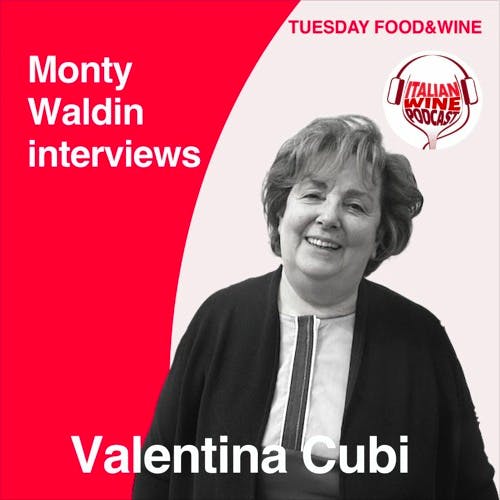
Ep. 650 Valentina Cubi | Biodynamic & Organic
Biodynamic & Organic
Episode Summary
Content Analysis Key Themes and Main Ideas 1. The journey and philosophy of an organic and biodynamic winemaking family in Valpolicella. 2. The unique characteristics and traditional winemaking practices of the Valpolicella region. 3. The debate and benefits of traditional vine training methods like Pergola in modern viticulture. 4. The production of specific Valpolicella wines, including Classico, Superiore, Ripasso, Amarone, Recioto, and the natural ""Sincero."
About This Episode
The speakers discuss their commitment to bringing free content every day and their use of less chemical products and organic production. They also discuss their organic wines, including a mix of grapes, pears, and tans, and their use of hybrid vines with a mix of rocky and air-in-wormy ingredients. They also discuss the challenges of producing a certain type of wine and the importance of maintaining humidity for better grapes. They produce a small quantity of their wine every year and are unable to produce every year due to sugar and alcohol stop working. They also discuss the production of wines and their use of recchiettees.
Transcript
Italian wine podcast. Chinchin with Italian wine people. Hi, guys. I'm Joy Livingston, and I am the producer of the Italian wine podcast. Thank you for listening. We are the only wine podcast that has been doing a daily show since the pandemic began. This is a labor of love and we are committed to bringing you free content every day. Of course, this takes time and effort not to mention the cost of equipment, production, and editing. We would be grateful for your donations, suggestions, requests and ideas. For more information on how to get in touch, go to Italian wine podcast dot com. Now back to the show. Hello. This is the Italian wine podcast. My name is Monte Walden. I guess today is Valentina Kubi, who has an organic estate winery in fulmane in the province of Verona in the Val Pollicello region in the Veneto in northeast Italy welcome Valentina. I thank you. My winery is, located in the located in Venezuela, Northern Italy, Northwest of the plastic of a good wine. So when did you start, working with the family winery? My husband decided to buy this property in nineteen seventy. And, he comes from a family that had a winery in many, many years ago, many centuries ago. He wanted to repeat what he used to do with his father. So, yeah, the opportunity to buy the first part of the the actual property about the rose a small winery and some hectares of vines. And then we bought some motor vines. And, but when my husband bought this property, he was a teacher at primary school with two children, very small, very and so I didn't want to take care of the winery. I started it later when I got to retire. I started before trying to learn how to grow the vines. And, I wanted to use less, chemical products and and to move to organic production. That was I mean, that was quite unusual in those times that you wanted to go, organic because it wasn't very well known at that stage, was it? But, you know, I think that, apart from the products that we have found there, because you are, but every day, we use the water. And, if what using agriculture goes in the in the water that we use every day. And so I wanted to to try to respect a little bit of the underground. And so we're working this way. Okay. So tell tell us a little bit about where the vineyards are exactly. Whereabouts in the Benito are they? The vines, are on hill, close to Verona, is not very high position, around three hundred meters above the sea. In a very, beautiful position, sunny and windy also. So the grapes don't suffer a lot for the humidity. Our wines are quite old. The youngest are twenty, five years old. The oldest were planted in nineteen seventy four. Are some of your vineyards on terraces? Yes. Some. Yes. Some are on the top of the year, so we don't need to have a lot of terraces because it's quite flat. So in terms of the local microclimate, what kind of influences do you do you get regarding wind? Is there a lake nearby that provides cool winds or anything like that? Typical vines of this area. So, Corvina, Corvina, Ronvina, Ronvina, Ronvina, Ronvina, San Duvez, we use these grapes to produce IGT. It's a QB. Like my name and the name of the wine is like my surname, but we don't produce every yet is wine. But it shows small the quantity of it is for engraves that is not very important. It's only for this wine. And, we produce the typical wines of this area about Palicella Glasgow, Balicella Clacheco Superhore, Rapasho, and, natural wine is a Corvina Rondinayla typical blend of Balicella not certified as a Balicella that we produce only when the grapes are perfect. It's a wine made with the the grapes crushed and fermented with their own east of the grapes. We don't add the east. We don't add other sulfides. It's a very interesting wine. Okay. So tell us about the okay. Can you tell us about the Balpolicella DOC, Iperico? Yes, sir. It's the double cella classico. The name came from some plant that you can find some herbs, actually, that you can find, everywhere in, in the in this area. And then we have, and the name is the overcoat of, old farmer, something very thick that they used to wear in winter. Then there is Arusnatico Lipaso. That that the the name it came from Arusnath people that live in this area at the Roman time, they were strong, proud and never submitted to my Romans. So the right name for Repaso. Amarrone is a called Morar. Morar is the local name of, Marlberry. Marlberry, because there were a lot of these trees in the past. They were at the beginning and at the end of the road events. And the the women use it to feed the silk worm with the leaves of history. So it's it's something typical, tis, tis area. And then there is Melilotto, is the street wine Minilotto is a herb. And the name remember, Mille Hone, and so is the right name for sweet wine. So that's what you're talking about. Yeah? Yes. The natural wine is a cincero means clean. And that and how often do you make the sincero? We we make the sincero only when the grapes is, completely healthy. So in, for example, in two thousand twenty, we had a little bit of a pile. And so we decided to do not use the grapes to to make this wine, we'll do the properties here. And, is, the fermentation is spontaneous. And so and so is a a special wine because he represented the the grapes of this, it is added. You've been organic, for quite a long time, and you also used some biodynamic practices. Why did you why did you choose organic and biodynamic? We started in two thousand seven. We started in a small junior that we had close to the three actors of vines. Because you wanted to experiment a little bit. What means, working organic, what are the problem? What sort of products do you have? And, in two thousand ten, we had the first grade certified organic. We produced the festival, the first time we're on organic. We love this product. We decided to work in all this state in this, in this way. And and then we changed a little bit in biodynamic way into but the certificate is only organic. I believe it is, I think that, the idea to have a device that are growing a soil rich, rich because we we work in the way, in this way, in a natural way, whatever soil, the vines after they are more able to to fight some diseases, for example, and we preserve the the nature also. So on you I mean, you you have, you're very proud of your single vineyard wines or your single vineyards. Can you just tell us a little bit about the terroir of your vineyards that have a name, like, you have a vineyard called Casterna vineyard. Tell us about that. Casterna is the village. We are in Fumane, but not in the center of the village of Fumane. In Casterna, is a small village, close to Sumane. It's one kilometer far Fumane, but not in the center of the Fumane village. We have a song, Vignan, one is, Montatenda is a beautiful place. It's the top of the hill. From there, you see also the lake of guard. It's a very windy, very sunny, there is whole building that we are rebuilding now. And, it's a beautiful place. And, the vines in this in this vineyard, we have the oldest vines. They are five and half meter far from one to the other one the route is parallel. The way that we grow this is the old way to to trade the vines. And then we have a monte carusator that is a little bit higher. Monte ratio to have name of a vineyard. And is that what kind of soil type is, Montecroseta got the vineyard? In Montecroseta, we have all pergola, and we grow all the vines for the maroona Corvina Corvina and Toronto. And also a little bit of more inara because we are still working with these, graves. And that's on limestone, isn't it? The soil? Is it quite rocky? The snow is the soil is you know, we have two vineyards, one close to the owner, and one close to the the seller that are made with, a lot of stones, but it is I saw that at the bottom, more from the from the sediment of the the rivers, added a close to the owner, and there's more rivers that is air informane. And the other one instead are more calcarriers and so more useful to maintain the humidity to have better grapes. So Just going back to the idea of the pergola. Some people think it's very old fashioned and gives not great quality wine. Why do you think the pergola is still a good way of growing grapes in your region? Actually, we have not only pergola, but also with your system. You know, pergola is the typical way to grow the vines in the in the past and also now. You you know, when is summer, July, for example, it's time to take away a little bit of leaves from the Evines because they have too much leaves. You can't reach with the the treatment of the the branches. And so you take away take away the leaves. But what happens is that the sun can burn the grapes, and so the grapes became dry. With parallel, it doesn't happen because the branches are protected from the leaves. And I think it's possible to control the production of the the grapes to have a good parable if she wants. So we add also to some who you, because it was fashion, you know, it was the new way to grow the wife. But, my dad is a that is better parable, but, you know, I'm not so as perpet. I only it is only my idea. But, I mean, what's the difference in the cost of managing a pergola vineyard and, a normal in Vilgolletti, vineyard? Is it much more expensive with perbola? Yes. No. It's much expensive because you have to spend more time to to to to to work around the device in this way. But, you know, sometimes you don't take a lot of care when you want to produce a good wine, Okay. It's important that the cost of growing the grapes, but it's more important to have good grapes. And so you try you try to work, in the way that for you is bad is the best. Do you ever get younger younger wine growers who who see what you do and say, hang on. Actually, even though this is an old system, the pergola, actually with climate change, maybe it's actually the better choice than, Spallera. Do people come and speak to you about that? I think so. Because, with parallel, the grapes are more protected. From hail. Yeah. Yes. Ours also. From from the air, from the sun, because sometimes the sun is quite heavy for the for the grapes in a special time during the when the grapes are are growing and becoming bigger, the the barriers. Tell us a little bit more about some of the wines that you make. And also, if you can, some of your favorite foods with your with your wines. I love, the valpolicella, because it's, okay, I love also Marona Marona is very important. It's very rich. But the double pointed is the wine that we produce. And, is, it meets with everything. It's also a summer wine that you can drink a little bit called a fixed existing degree. For example, is good with meat. The root with fish is good with pasta, and then it's not too much higher the alcohol. I love these wines. And what about the age ability of these wines? If they're getting a little bit of sun and a little bit of shades, you must get good numbers, like, in terms of acidity and alcohol. You don't have these very high alcohol wines here, and you have nice acidity too. I think the acidity is typical of the grey the wine made with the grapes of Apolicella. This is my idea. Okay. Or the alcohol, you know, that the vermicella grapes don't produce a very alcoholic wine. They produce fresh fruity wine. If you want to have a more alcoholic wine, you must try the grapes. You make a marone. Or you make the second fermentation of Balpuliettella on the Marona Pumans, you have a repass. So Tell tell me a little bit about the, recchietteo. Milil mililatto. Recchietteo is typical wine word. The is the wine with the capital letter for all the people of this area because it it is the first, the imported wine born in in by Portachella area. We make the ricciotto with the same grades that used for the maroonne. We dry the grapes, minimum one month more than the grapes, for the maroonne. So we have a lot of sugar. And during the fermentation, a lot of alcohol, a lot of sugar, they stop working, and the wine remains sweet. And we we cool a little bit of the tank also at the end of the fermentation to to make the the yeast stop working. So It's a wine that we are not able to produce every year because sometimes the fermentation goes on. You have a a marone. But, when we are able to have a risotto, it's very good because it is sweet, but not too much sweet. So, it's very good with the blue cheese, with the chocolate, with also alone at the end of the meal. Just tell us a little bit more about the cincero. Is, a challenge. All the wines are a challenge, but it's cincero, particularly. Cincero is, is made with these grapes. We are not able to to call the the the tank during the fermentation because we produce a a small quantity of this wine. You know, without sulfide, sulfates, we are worried to not be able to to that this wine can last in the time. So we make much more production to to sell a maximum to, yes, is, it represented the capacity of this, which is the the great of this area. People love very much this wine. How much do you how much do you produce each year, though, of that? Is it quite small production cincero? Oh, you make, now that we we produce a lot of cincero is around three thousand bottles. But, we started with one thousand bottles. Nine hundred bottles, some, yes, at the beginning because we wanted to introduce this wine. And to check, what people think about this. And then we we see that they love this. And so we we make a little bit more, but not too much. We know we produce a few bottle in total, we arrive at forty thousand bottle per year. And so since Cheru is one of these wines, and doesn't matter if it's not a big production. But does it help the fact that you've got these pergative vines, which is shading a little bit the grapes that when you're making an no added sulfite wine. You've got, juice that has good acid strength or good pH means that, it's more naturally able to resist oxidation. We choose the best grades said to be sure to have a good, good, fermentation. So so to have at the end, a good wine without a problem. And then we try to have, to clean everything, to have a very, very clean bottle, very clean, times, what to use to to avoid any sort of pollution. But, in the bottle, the the wine seems better one day after you have opened the bottom tongue at the, when you open immediately. And so it's it's a strange one. It works to test. What do you eat it with then? What's a good dish with the cinchina? You can eat, pasta. You can eat, white meat. Like, like, Balicella is, the alcohol, the alcohol arrives at twelve, twelve, and and point five. Percent. So it's not very, very alcoholic. It's not very strong. Final final question. How did you meet your husband? The love story going, how did you meet him? It's very, you know, last week we celebrated the fifty five years of my wedding. And, I, my husband is a two years older family. We should have, being the at school together, but instead he was sent to a boarding school. And so I remember, you know, when I I went to school, they use every morning to to call the name of students to see what is what was present and what not. I remember that he wasn't at school. And and then they said he he doesn't come. He goes to the boarding school, so he didn't make. After three, four years, we celebrated, a day for the older students of, the school, and I have a picture with with him close to me. But I didn't know who he was. After the song, I was already, a teacher. He was a winemaker. We went to, dancing afternoon. We met a dad, and then I started together. Who was the better dancer him or you? Both. I don't know. Good. Very good. That's a secret of a good marriage, isn't it? It's being very diplomatic. It's, it's difficult to say. We were very poor when we started. So, you know, you have very young. My husband will start making my maker, but the selling equipments for the wine and because he worked for, two, three years in, wineries, but today, we started selling some equipments for the wineries. And we were at the beginning of, of our life when we got married. And so we had to work a lot, but you wanted to to arrive, to have something. Our leader, to were the same. And so we worked together. We were very close. Can we arrive, until now, with the some some time, not that it's beautiful, not not not always, as simple as living together. But it's okay. You are still together. Excellent. Okay, Valentino. I just wanna say thanks. Very much to you for speaking to us today and telling us all about your wonderful wines and, your your love of, burglar, and the common sense option that you think it is. And also, just for telling us a little about your your family relationship, it seems like you're a very good team and we wish you continued success together. Take care. Okay. Thank you. Listen to the Italian wine podcast wherever you get your podcasts or on sunk loud, Apple podcasts, Spotify, email, IFM, and more. Don't forget to subscribe and rate the show. If you enjoy listening, please consider donating through Italian wine podcast dot com. Any amount helps cover equipment, production, and publication until next time.
Episode Details
Keywords
Related Episodes

Ep. 1868 Livin' The Dolce Vita with Jeff Porter Pt. 5 | On The Road With Stevie Kim
Episode 1868

Ep. 1793 Corinne Keddie | Everybody Needs A Bit Of Scienza
Episode 1793
Ep. 1785 McKenna Cassidy Interviews Diletta Tonello | The Next Generation
Episode 1785
Ep. 1287 Lisa Saverino | The Next Generation
Episode 1287
Ep. 655 Anna Alessandro | Biodynamic & Organic
Episode 655

Ep. 651 Victoria Cece | Voices
Episode 651