
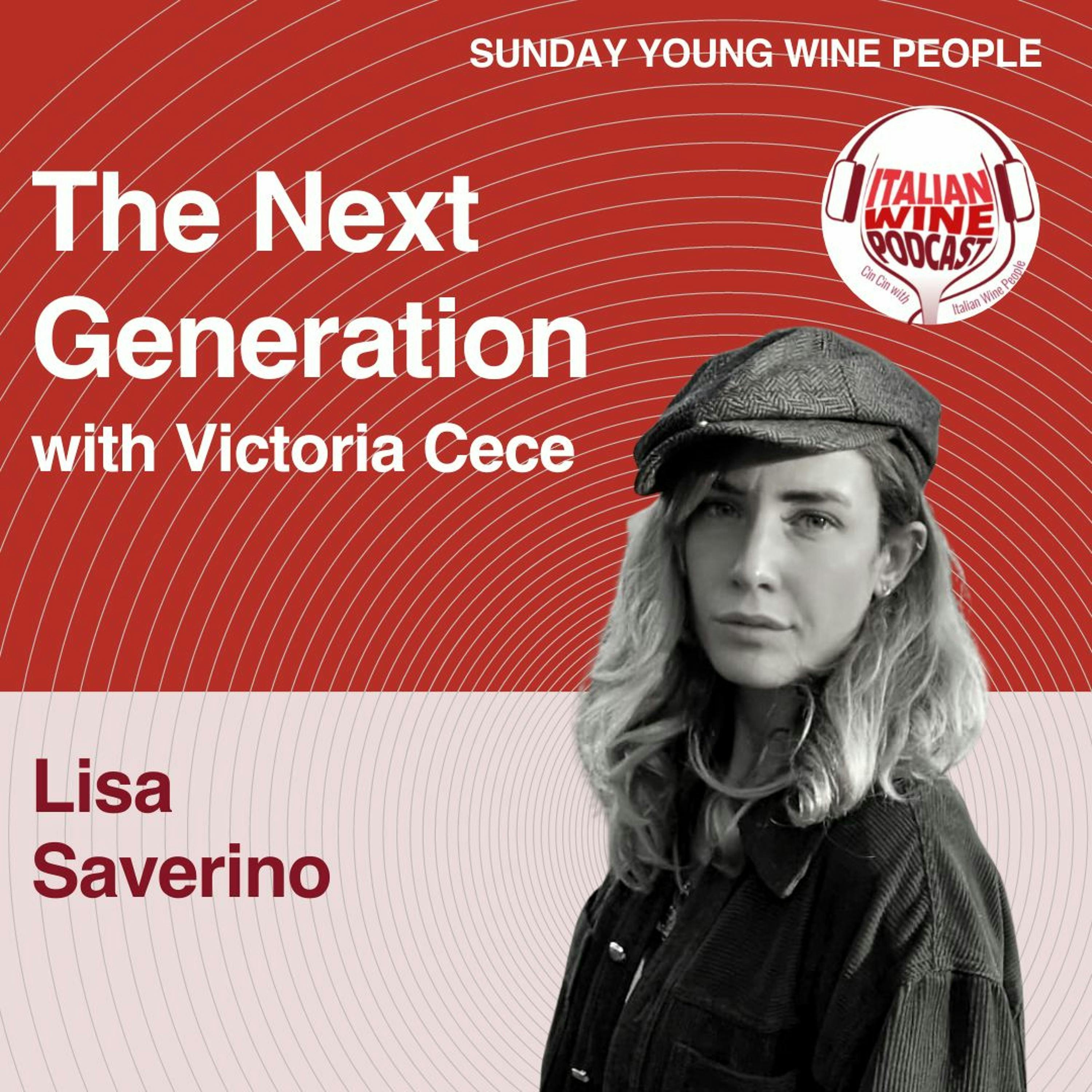
Ep. 1287 Lisa Saverino | The Next Generation
The Next Generation
Episode Summary
Content Analysis Key Themes and Main Ideas 1. ""Italian Wine Unplugged 2.0"" Book Promotion: The segment begins with an advertisement for the updated edition of ""Italian Wine Unplugged,"" highlighting its content, expert review, and focus on benchmark producers. 2. ""The Next Generation"" Podcast Series: Introduction to the podcast hosted by Victoria Chachia, focusing on young Italian wine professionals. 3. Spotlight on Canaiolo Nero Grape: A detailed ""fun facts"" segment on this indigenous Tuscan grape, covering its history, characteristics, and role in winemaking. 4. Profile of Lisa Sabarino, Winemaker: An in-depth interview with Lisa Sabarino of Tenuta La Novella, exploring her unique background, daily life, and professional philosophy. 5. Biodynamic Winemaking and Holistic Practices: Discussion on Lisa Sabarino's approach to biodynamics, including her studies in herbalism and biodynamic beekeeping, emphasizing its philosophical rather than merely agricultural aspect. 6. Work-Life Balance and Connection to Nature: Lisa's personal insights into managing multiple projects, academic pursuits, and her deep preference for outdoor activities and a life integrated with nature in Tuscany. Summary The segment opens with a promotional message for the ""Italian Wine Unplugged 2.0"" book, emphasizing its comprehensive content and expert contributions. Host Victoria Chachia then introduces her podcast, ""The Next Generation,"" dedicated to showcasing young Italian wine professionals. Before bringing on the main guest, Chachia delves into ""fun facts"" about Canaiolo Nero, an indigenous Tuscan grape, explaining its historical significance (once prominent in Chianti), reasons for its decline (phylloxera, grafting issues), and its current role as a blending grape that enhances floral and red berry notes. The main interview features Lisa Sabarino, a young winemaker from Tenuta La Novella. Lisa shares her fascinating upbringing across Calabria, Paris, and Australia, eventually settling in Tuscany. She describes her demanding daily routine balancing work at Tenuta La Novella, her own budding wine project, and her studies in herbalism and biodynamic beekeeping. Lisa passionately articulates her philosophy on biodynamics as a holistic way of life, extending beyond viticulture. She also discusses her profound connection to nature, preferring outdoor activities like surfing, fishing, and forest walks over city life, offering a unique, non-touristic perspective on experiencing Tuscany's beauty. Takeaways * ""Italian Wine Unplugged 2.0"" is positioned as an essential, updated resource for Italian wine knowledge. * ""The Next Generation"" podcast aims to highlight emerging talent in the Italian wine industry. * Canaiolo Nero is a historically significant Tuscan grape that complements Sangiovese, adding complexity to wines like Chianti Classico. * Lisa Sabarino is a multi-talented young winemaker in Tuscany, balancing established winery work with her own project and academic pursuits. * Biodynamic winemaking, for Lisa, is a comprehensive life philosophy that extends to various natural practices like herbalism and beekeeping. * Authentic Tuscan experiences can involve deep immersion in nature, rather than solely traditional tourist attractions, as exemplified by Lisa's lifestyle. * Young winemakers often face demanding schedules but find fulfillment in their work and connection to the land. Notable Quotes * ""Italian wine Unplugged two point o. The latest book published by Mamma jumbo shrimp."
About This Episode
Speaker 2 and Speaker 3 discuss the history and connection of various Italian wines, including "vanse of San Jose" and "vanse of Tuscany", and their love for their pets and dogs. They also talk about their experiences with French and Italian language, their love for nature, and their interest in "vanse of Tuscany" and "vanse of San Jose". They also discuss their experiences with small and big groups, fishing, and staying in bed to maintain a holistic approach to life. They mention their love for the sea and natural beauty of Tuscany, and express interest in returning to Tuscany for a birthday party.
Transcript
By now, you've all heard of Italian wine Unplugged two point o. The latest book published by Mamma jumbo shrimp. It's more than just another wine book. Fully updated second edition was inspired by students of the Vin Italy International Academy and painstakingly reviewed and revised by an expert panel of certified Italian wine ambassadors from across the globe. The book also includes an addition by professor Atilio Shenza. Italy's leading vine geneticist. The benchmark producers feature is a particularly important aspect of this revised edition. The selection makes it easier for our readers to get their hands on a bottle of wine that truly represents a particular grape or region to pick up a copy, just head to Amazon dot com, or visit us at mama jumbo shrimp dot com. Welcome to the next generation. I'm Victoria Chacha, join me as we chat with young Italian wine people shaking up the wine scene. We're going to geek out on a grape or grape fan and hear about all the wild wine things are guests have been up to. From vineyard experiments to their favorite wine bars. Hey, guys. It's Sunday. You know what that means? You're here sitting with me, Victoria. C c c is my last name in American pronunciation. I did it for the rhyme. But welcome back to the next generation. Today, we have loveliest Lisa Sabarino of Tenuto La novella. But before we get to chatting with this really exciting winemaker, we are going to talk about the grapes, as usual, and I have some fun facts about a sweet little, great baby named, canaiolonero, and I believe we may have spoken a bit about canaiolonero in the past. I wanted to give you the lowdown from the Fresh Off the Press pages of the Italian wine unplugged two point o book. Because we got some fun facts in here that you should know about this grape. This indigenous grape to Tuscany, Lisa Sabarino, our guest. It's a Ymaker in Tuscany. Just goes well. Perfect. Let's go. As I said, it's found mainly in Tuscany and actually used to be the leading grape in county wines until the sixteenth century. And then it started to pretty quickly loo's favor among winemakers because it doesn't wrap well onto new root stock, which was a problem when the phylloxera outbreak came about and destroyed ton of vineyards. Now, going to the name canelo Most likely derives from Rosa Kanina, the fragrance of the dogwood rose. Well, it's so sweet. Or possibly from the dog days of August, the Diaz caniculares. That's my latin for you. Let's move on. Now today, Canelo is blended into wine, like, chianti, Glassico, and, you know, no, etcetera, etcetera. It enhances the floral and red berry character that makes these wines of San Jose among the best food pairing partners in Italy. So it looks like, you know, San Jose is the Batman and Cannelonero is the Robin. On its own, Kanelonero has a bit of balsamic spice on the nose as well. Red berry, sour cherry, and saline notes. Has light to medium tannins with complimentary acidity, medium complexity, and while most mono varietal bottlings will it be wine to drink early Those bundle of sandro is it. Wines can age worthy. Okay. We do that. I give that away with county glass ago, not to hurry it up. But those are the facts about canelo loans straight off the pages of the Italian line unplugged two point o book, which you can get, and hold in your hands. And cuddle with while you sleep and absorb all the great knowledge, or you could just listen to me or both. Anyways, now it's time to bring on our guest, Lisa Sabarino drum roll. Char Lisa, how's it going? No. I'm good. You? I'm surviving. Living. So are you in in in, where are you right now? Cause I know you you live in Grave in County? Not really Greve. It's called, San Polling County. It's quite it's quite close to grave, but it's not really grave. How's it been going there? How's pruning. There's a lot. You're you're much busier than I, I can tell. Well, I, everyone is tired. And, we are going through printing, and now, like, it for for a few days now. And, hopefully, the first stop. So right now, in the on the morning, it's a there there's a little bits of sand And, it's it's it's pretty cool to to be in the vineyard with the with the heat and the and the sun. It's not really cool for the for divine for unfortunately. Oh, it sounds a lot cooler than sitting inside an office. I'd rather rather be in the vines. Don't tell my boss that, though. But I do wanna say something before we start any kind of crazy questions. I am obsessed with your dog. Your dog is the cutest. Uh-oh. That's key. Yes. Yeah. She's she's very cool and she is she's so kind. And they it was very hard at the beginning because she's she's like a wolf. And I was not really prepared, of having a wolf like a dog. And, she tends to be very, very cool. And she she follows me, every day Indvigna, the only seller. Doesn't matter, Chifalo. That's so precious. And what's her name again? Yana, like the princess. Oh, okay. I was about to ask. I was like, okay. The princess. I love it was like it was because of the of the goddess. Of the the the Latin goddess Diana. I was not thinking about the the the English princess. That's what I was gonna ask. I was like, did she name her after princess Diana or did she name her after I was lose a lot because of, like, your whole job and your life, but I'm I didn't know you could be a huge princess Diana fan. I don't know. Oh my gosh. That's so precious. So it's so cool to have you on here. And for everyone to know, Lisa has a pretty cool upbringing. You grew up between Calabria and other parts of Southern Italy in Paris. Yeah. Right. That's incredible. Can you kinda dive a bit into that? Is your I can only imagine, like, your accent and things probably gets all crazy and in Italian. Alright. And don't worry. I've got diff the French accent. It's very hard to to live to live behind the the French accent. So what was it like growing up? Like, can you tell us more about that? I'm I'm really fascinated. Actually, my shrink from be a switch personality since the beginning. I'm just joking. Oh my god. I was like, wait a minute. No. I'm kidding. Are you talking to Diana now? It it was not easy. I felt like I never belonged. I have this, intellectual side that, appeals to Paris. But, part of me, like, leave with the jeep and, and the dog, and the sleep in the middle of the forest that didn't fit with the city of Paris. Oh, yeah. There's not much parking. Not really. So did you spend most of your childhood in Paris? Or I spent, most of the child early in Paris. Yeah. That's right. The first year were in Calabrio and, and they finished, high school in Paris. When after that, I went to Australia for one year. And and so what ended up leading you back to Italy more precisely Tuscany. For Tuscany, it was during the summer twenty twenty one. I was on a retreat between Calabria, Campania, tuscana and Emilia Romania just before returning to PMont. And I just fell in love with Tuscani. It had everything to please me, vineyards in the middle of the woods. Sea mountain. It is land very complex. And you found the perfect spot to park your car with your dog. She's like, that was the only reason I chose Tuscany. I found the best spot. Oh, that's beautiful. So I I probably should tell the guests, the listeners, so Lisa is French, French, Italian, if you couldn't tell from her accent in the story, she just told us. Which is so funny. And, like, I I know this is probably a really annoying question to ask, but do you feel more French or Italian and answer this however you want? Oh, wow. She she she's, saying she's more French on the Italian wine podcast. Everyone love it. Do you travel to France often? I'm trying to to go back to Paris at least two two, three times, a year, at least. So it would be it would probably be one time every three, four months. Okay. So it's, like, all your family and your, like, lovers all in in France. And then, like, your work life is in Italy. I've got my no. I've I've got to still got my mom in Paris Oh, that's so wonderful. And it's not too far. Like, for me, you know, I'm I'm Italian American, so my my majority of my family is in America. So it I would it's it's nice when you don't have to travel too far, you know. Yeah. I can imagine. Well, that's super cool. So you you work with, and then you have and I'm assuming that is your your own wine project. Right? Exactly. So quickly, can you give us a day in the life of Lisa Sabarina, what's going on? Two projects and a dog. So the day in the life, of Lisa would be, in the morning, Diana Maske. It comes to lick my hand. To have to get up. I'll take the time to have breakfast because, it's very important. We have, a physical day. Usually, well, we have a physical day at the Antonio, And, manage, the administration, reply some text and a good work in the other seller, quick lunch break. The late afternoon is where my second day begins, dedicated two hours to my studies, like, I just finished studying air air, terrorism, and a study to study, economy. And, I read a lot of a lot of books recently became passionate about biodynamic beekeeping. I'm going crazy for bees, really crazy. And, and I fell asleep around ten PM. Just I will never have believed it at thirty one years old. Oh, I feel you. I'm I'm also a student too. And it's like, it gets around nine thirty. And I'm like, is it twelve? And then I'm just like, oh my gosh. I was like, I swear to god. I did I turn sixty today? Like, But first of all, incredible. So you work at a winery. You have your own wine project. You're also a student. Yeah. Former student and current student. Wow. In herbalism, biodynamic beekeeping. Okay. Two really cool topics. Which road are we gonna go down? Well, first of all, what led you into herbalism? I just, I think that herbalism is, it's a different way, to approach, biodynamic. It's a very original way, and, and it's, it it it helps you to understand, which plant is, is useful secure the the vine and that's it. That that was the the main subject for the for the study. And is there anything, like, are there any, like, secrets you discovered or anything really surprising you found out through your studies? Yeah. Just I found some, little trips probably for the Pick n Pay, not for the the Viticulture. For the Pick n Pay, it was very useful. How so? I I mean, I've I I know a a good lot about biodynamics, but biodynamic beekeeping. I need to know more. Just imagine that you can help and care for bees with plants. The idea, the whole idea is to give them a boost, not to deprive them of, all day, honey, which is essential for the survival. For example, only take what is necessary from for me. I just take the the honey for me and and leave all the rest for the bees. Okay. So so did you study the biodynamic beekeeping? Was was that like a course you did? There there was, like, you know, a little course, but, most of it, I made a lot of books about beekeeping. And, and the there is one book, that surprised me. Actually, it was the it it is the son of, Magatun, which she is, like, the the mother of Biodemic. And, and the son wrote a book about biodynamic beekeeping was very, very interesting. Okay. That's the most super fascinating. I know that that that line of honey, the military, they are they considered nomadic beekeepers? Is that the term they use as well? Yep. Be could be the term. Okay. That's Oh, that's fascinating. Well, super cool. So you're a very, very, very busy gal. It's very impressive. And do you have, like, any secret to keeping it all together besides going to bed at ten PM? Just sleep, sleeping up. Except when harvest rolls around, then it's sleep if you can. Yeah. But with the with the harvest, I just managed to have, at least, seven hours of sleep. It's it's important because, you have to you have to get up. I can't sleep at least seven hours. I'm just like, no. I can't get up. That's when you know you're still thirty one. You're still young. Like, I need to stay in bed. But to go back to the biodynamic discussion, what is your opinion on biodynamics, biodynamic winemaking in Italy currently? I think there are those who don't consider it a whole, those who take advantage to make it trendy, and those who don't know how to go about it. And for me, it's not just whole manure. It's a whole philosophy of life. It applies to every culture, not just Viticulture. That's that's super true. It's not something that's, like, where you just attach to a wine or whatnot. Like, it's it's a whole holistic practice because if, you know, if you're maintaining a vineyard and you wanna keep it as holistic as possible, you have a certain amount of biodiversity around. So those, you know, It would it would apply to everything. Did you with your new vineyard project, was that something that you planted yourself and started practicing biodynamics, or was it already existing vineyard? Are you enjoying this podcast? Don't forget to visit our YouTube channel, mama jumbo shrimp for fascinating videos covering Stevie Kim and her travels across Italy and beyond, meeting winemakers, eating local food, and taking in the scenery. Now, back to the show. No. It's it was very we we started with, the Walter project a few months ago, and we just planted the the vineyard. And I had in in my mind the the biodynamic thing. And, you know, when when you work for yourself, you you just forget to cancel the hours. And, with this project, it it missed my expectation in terms of, sustainable development and, and, also, when making style, it's it's it's your own baby. So now you have you have two babies. You have your dog. And then you have your vineyard. Yes. So that's an incredible amount of work, especially for your age. It's super impressive. And to go on that biodynamics discussion of, you know, the just applying it to different things, it's always refreshing to talk to someone who's really dedicated to it. And we don't have to, you know, throw a to we don't have to hate on anyone, but it's always something that comes up in the industry. But to turn a little bit away, from the the vineyard talks. You deal with vineyards all day and grapes all day. What do you what do you do for fun, Lisa? Like, what do you what what what do you do when you're outside when you're not in the forest? I know you're you like to hang in the forest, but outside. Or do you invite people to hang out in the forest? Do you have forest parties? No. No. Just, gosh. I I remember, I brought some friends in the forest last year. It was, like, eleven o'clock, probably midnight. And they were so afraid. So, I just talked to myself. No. It won't happen anymore. I do I do surf, I do fish, I go fishing. I spend all probably I will spend all my time in the in the nature. It's, it's it's it's a kind of a thing. I have to I have to be outside. I just I just cannot be inside unless it would be probably for reading a book or eating, sleeping. Just have to be outside. Yeah. I knew it's like if you're gonna be outside, you're gonna be in a beautiful place, which you chose well. But I, yeah, I could not imagine trying to, like, handle a bunch of friends in the forest drinking. I would have insane anxiety because I love to be outside too, but there's a difference between being outside alone with your dog and outside alone with as you both were drunk. But, you know, that's super cool. Where do you go fishing? Are there secret fishing spots in Tuscany? There is a spot called marina dibi Bona. It's close to Bulgaria. If you if you know the the area of, Bulgaria, close to the close to the sea, in the Tuscany, Tuscany Tissue. So it's a very pretty pretty spot for surfing or so. I've I haven't gone fishing in a long time, but you might have inspired me too. Because I love the sea. Like, you love the forest. I love the sea. So that that I'm I'm totally gonna find that spot one day when I learn how to fish. But would fishing so if I were to come or, you know, some Italian wine loving person would to come visit you, do you have, like, an itinerary or what it what it would be like? And would we go fishing? I think I'd probably take you for, a picnic in the vineyard. Oh, I would love to to take you, for a trip to Bulgaria. So you could visit the the medieval city She's very pretty. And, we do have some sheep. So if you, enjoy to her sheep, you'd like to to to try. Would be very funny. And, probably we we we go pick some picking some blackberries to make jam, if you like jam. Oh, I I love jam. This this whole day sounds like out of a book. You had me at Take Me on a picnic. And and everything we would do would be outside, which I'll hear for. I think it's really refreshing speaking to you and also for listeners because I think you represent a really beautiful and and, you know, beautiful future of Tuscany in the sense that it, you know, it's you're obviously, you are not going to give a a touristic perspective of Tuscany rather show showcase the nature of a very popular region, you know. So instead of going to some swanky silly resorts or something, it's like go hang out with someone like Like, Lisa, who is who's gonna show you the actual beauty of Tuscany. You know? And, I would be glad to I would be glad to take you for for this kind of thing that we we we can do in in testing. It's a nature thing of, but, I would be glad. Don't ask me to bring you to, Florence. Okay. Duly noted. I'm not asking you go to Florence. Do you not like Florence? No. I like I like Florence, but, Florence is a this is the the best way to, have some drinks with friends, get dinner, get lunch. Because it's super easy. It's it's close. There are so many restaurants, but, this is not really the the task and, you know, So probably I I won't bring you to Florence. That is that is not a problem. Also, there's many people that don't know Florence is in Tuscany. So, you know, we could just pretend it doesn't exist altogether. Just kidding. Super cool. Well, thank you so much, Lisa, for chatting today. I know you've had a busy long day. So I think we both need to go to bed. Probably. It's it's a o'clock. It's a little bit. For real. But, yeah, so Lisa, Sabarino, everyone, to Nuto novella, So lovely to have you, and you can find her on Instagram, all the things. Thank you so much, Lisa. Thank you for having me. As always, a big Roxy for hanging out with me today. Remember, you can catch me every Sunday on the Italian wine podcast. Available anywhere, you can get your pots.
Episode Details
Keywords
Related Episodes

Ep. 2434 Giulia Stocchetti interviews Alberto Sabaini and Sara Piubelli from Cantina Sabaini | Next Generation
Episode 2434

Ep. 2427 Margherita Andrenacci interviews Alejandro Fargosonini of Châteauneuf-du-Fargosonini | Next Generation
Episode 2427

Ep. 2415 Giulia Stocchetti interviews Claudia Bustos from Viña Raíz Criolla | Next Generation
Episode 2415
Ep. 2409 McKenna Cassidy interviews Riccardo Baldi of La Staffa | Next Generation
Episode 2409

Ep. 2402 Margherita Andrenacci interviews Erin Kirschenmann of Wine Business Monthly | Next Generation
Episode 2402

Ep 2396 McKenna Cassidy interviews Luca Paolo Virgilio of Caprera Winery in Abruzzo | Next Generation
Episode 2396