
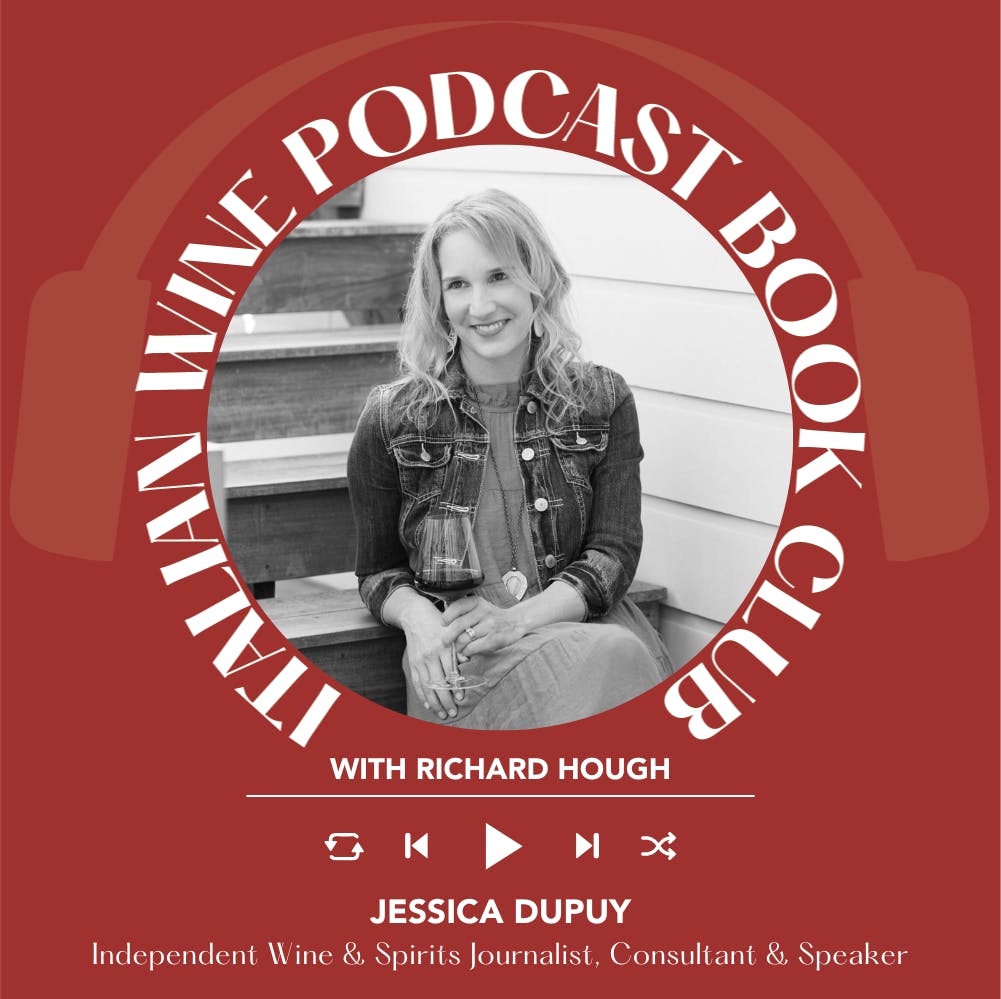
Ep 2380 Jessica Dupuy | Book Club with Richard Hough
Book Club with Richard Hough
Episode Summary
Content Analysis Key Themes and Main Ideas 1. The historical evolution and current significance of Italian wine tourism. 2. Filippo Managni's entrepreneurial journey and his role as a pioneer in the Italian wine tourism sector, including the founding of ""Fuflans."
About This Episode
Welcome to Book Club and Episode 2380 of the Italian Wine Podcast with Richard Hough. Today Richard is in conversation with Jessica Dupuy, the Texas-based writer, educator, and consultant, specializing in wine, spirits, food, and travel. Amongst other things, the conversation covers Jessica’s career in wine writing, the cuisine of the American south, the thriving Texas wine scene, her forthcoming writing project with Italian Master of Wine Andrea Lonardi, and the potential impact of tariffs on the domestic and international wine market. On the bookshelf: Amongst the items discussed in today’s show were: To Kill A Mockingbird by Harper Lee The Ghosts of Rome by Joseph O’Connor A Season for That by Steve Hoffmann A History of Philadelphia Sandwiches by Mike Madaio Another Bottle Down podcast Forbes Magazine, How Tariffs Could Make American Wine And Spirits More Expensive: https://www.forbes.com/sites/jessicadupuy/2025/03/14/why-wine-and-spirits-tariffs-are-bad-for-american-business/ About today’s guest: Jessica Dupuy is a Texas-based writer, educator, and consultant, specializing in wine, spirits, food, and travel. Her work features in notable publications such as Decanter, Forbes, Texas Monthly, Food & Wine, Imbibe, GuildSomm, SevenFifty Daily, VinePair, and Wine Enthusiast. She also co-hosts the wine-focused podcast, Another Bottle Down. In 2022, she earned a Diploma in Wine from the Wine and Spirits Educational Trust (DipWSET). She is also a Certified Sommelier through the Court of Master Sommeliers and a Certified Specialist of Wine and Spirits through the Society of Wine Educators. In addition to written projects, she works with specific brands to help tell their story and project their presence into the global market. Connect: Website: https://www.jessicadupuy.com/ Instagram: https://www.instagram.com/jessicandupuy/# LinkedIn: https://www.linkedin.com/in/jessica-norman-dupuy-86486a4/ More about the host: Richard Hough is the editor, translator and project curator behind Wine Democracy and Vine and Prejudice. He has also published several books about life in Verona, chronicling the city’s history, culture and daily life, not forgetting, of course, its wine! With a long-standing passion for whisky and beer, he’s a relative newcomer to the world of wine and is now desperately trying to make up for lost time! He is the host of Book Club on the Italian Wine Podcast. Connect: Bluesky: https://bsky.app/profile/rickhough.bsky.social Instagram: https://www.instagram.com/ricksnotesfromverona Linkedin: https://www.linkedin.com/in/rickhough/ _______________________________ Let's keep in touch! Follow Italian Wine Podcast on our social media channels: Instagram: https://www.instagram.com/italianwinepodcast/ Facebook: https://www.facebook.com/ItalianWinePodcast Twitter: https://www.twitter.com/itawinepodcast Tiktok: https://www.tiktok.com/@mammajumboshrimp LinkedIn: https://www.linkedin.com/company/italianwinepodcast If you feel like helping us, donate here: https://www.italianwinepodcast.com/donate-to-show/ Until next time, Cin Cin!
Transcript
Speaker 0: yeah so books take a while especially this because it'll have photography and illustration and things like that so it's a Speaker 1: nice stevie kim is your boss in which case we churn them out within three or four months Speaker 0: stevie kim is welcome to be my boss anytime Speaker 1: hello and welcome to book club with the italian wine podcast i'm your host richard hoff and i'm delighted that you're joining us as we get between the vines with some of the best wine writing out there so sit back pour yourself a glass and enjoy the show with the italian wine podcast once again this month you join us behind the scenes at five star wines in verona where our guest today is jessica dupuy jessica will be a familiar voice to many of you as the host of a special italian wine podcast series from barolo and barbaresco world opening from austin texas earlier this year and from tex from twenty twenty four in which she interviewed leading players in the global italian wine community jessica is also a distinguished wine writer author of six or seven Speaker 0: seven Speaker 1: seven cookbooks her latest book the wines of southwest usa explores the burgeoning wine regions of texas arizona new mexico and colorado she's currently working on another exciting project focusing on italian wine hi jessica Speaker 0: hi thanks for having me Speaker 1: it's a pleasure how are you Speaker 0: i'm doing all right just finished tasting about ninety italian wines so i'm feeling spry Speaker 1: good that's a perfect way to prepare for an interview on the italian wine podcast Speaker 0: absolutely Speaker 1: so i want to start and we'll come back to obviously your role as a judge here at five star wines but i want to start just by exploring a bit about your background in the world of wine and food writing you like me have a degree in history yes i think you actually graduated the year after me if i have understood correctly from your linkedin profile Speaker 0: ah maybe but we don't need to talk about that Speaker 1: we wanted to talk about how long ago that was so with a degree in history and then a master's in journalism what was it that drew you to the world of food and wine Speaker 0: well know it started with food what drew me to it is my mother used to put me on the counter when she was cooking at a very young age and i loved watching and i loved tasting over time that evolved into watching my parents cook and wanting to participate in that for whatever reason the curiosity of taste and creation came together in college i put a challenge to myself hey you can cook the way that your parents do but how do you figure out how to cook the way that professionals do and so i actually started getting subscriptions to some of the big deal gourmet magazines and in college would challenge myself every month to create a dish from there that seemed intimidating and so i'd invite friends over i kind of encouraged them to bring something too but for the most part i would just really kind of force myself into uncomfortable places when it came to food and hopefully could create something that evolved over time to when i was working for a magazine in texas which is called texas monthly magazine i was actually working on the business side i was doing advertising sales and the food editor there she and i became good friends and one of the things that we became friends over is the fact that i talked to her a lot about liking to cook at home she said you know it's really interesting because we fact check everything in the magazine but we don't have a test kitchen i wonder if you would become one of our cooking fact checkers so when a chef you know if we're gonna print a recipe that a chef has we need someone to make sure that the average cook at home could do what the chef can do i started doing the recipe testing and she started to really trust my palate and basically it would be i'd cook it the way the chef wanted me to and then i would make notes about how i would change that and do it differently if it were me in my own house that evolved into her trusting my palate enough to start becoming a dining guide reviewer a restaurant critic which i still do it's super fun and it's allowed me to really dig into the foods restaurant scene of austin and throughout texas which has become really prolific in the past decade or so it's it's a really like strong thriving food scene particularly in austin houston san antonio dallas so that really kind of ushered in a whole different type of career for me because i left my job in advertising sales and decided to become a freelance writer and and strictly focus on food at the time she offered me one particular job job assignment which was hey i don't really know anything about wine but apparently texas has a wine industry and i wonder if you wouldn't mind doing a couple stories about texas wine for us to kind of figure out if if it's any good and i was like well i mean why not i mean i'm a reporter i can i can report anything and the truth is that's in the case of wine and food that's it's kind of hard to just be a reporter you really have to understand flavor and taste etc so luckily because i'd been covering the food scene for so long i had already become really good friends with a lot of sommeliers and i was telling some of them about this that you know i'm supposed to be covering texas wine i've met a lot of texas winemakers everybody's really nice and has a great story but i don't really know if i can tell the rest of the world whether or not texas wine is any good with confidence know so it sent me down the path they were like we can help you why don't you take they were all court of master sommelier students and they're like we can help bring you through court we can help you become a sommelier and teach you how to blind taste teach you how to do it the way that the court does once you become certified then you'll be able to look at texas wine and compare it to how the rest of the wine in the world is i did that i started dedicating myself to study learning how to do service the court of master sommelier in europe we talk a little bit more about the masters of wine and that program or the wset program the has taken in the more recent years more precedence just in terms of service and hospitality so i did that and became a certified sommelier which is wonderful and really grounded my understanding of texas wine so for fifteen years i think it was like i have basically been the main writer about texas wine for texas monthly magazine which has essentially left me as one of the main primary writers about texas wine in general but it ignited something else which is an absolute love for wine and as you mentioned our background is in history and i'd always told my dad like don't worry dad i'm going to use my history major for something and i was a politics major as well and so i thought i'd be a lawyer thankfully i got into wine which as you know connects us to so much of the world of history Speaker 1: yeah absolutely Speaker 0: yeah Speaker 1: there's a lot to unpack there that Speaker 0: super Speaker 1: interesting answer your culinary habits at college for a start were obviously completely different to mine i think i was living on a diet of beans on toast i think if i remember my university days correctly Speaker 0: i love it Speaker 1: but i'm also curious about sitting on your mum's counter as she was preparing food what kind of stuff was she cooking fourth generation texan am i picking up that correctly Speaker 0: i think i'm a sixth generation texan Speaker 1: so what were the influences there what was on the table Speaker 0: yeah texas food is very much influenced by southern dishes so depending on where in the state you are and what part of the country you're in texas is technically part of what is the deep south right so southern foods in the same way that you kind of break italy up northern italy eats very different than southern italy and the ingredients are very different and so that's very similar in the united states texas in particular has its own sort of cuisine and food ways if you will and so for her it was mainly you know ragous dishes that may have come from somewhere else such as like peppered steak or she would make hungarian goulash or she you know she wanted things that that involved multiple flavors into a long slow cooking process her biggest thing was making sure that there were three things on the plate something green something protein and then something else like a starch like potato or corn or something like that so she was a simple cook a basic cook if you will she wasn't trying to do fancy haute cuisine but she was a good cook she understood flavor and she's i mean she still does she still cooks quite a lot for us today and my father was the same way he was much more in texas the grill the outdoor cooking is a very very big deal he's kind of the master of smoking meats and grilling meats and things like that so i learned from him as well Speaker 1: i mean europe we can sometimes be a bit dismissive of american cuisine we can look at the kind of negative aspects of the american diet but i know of you know recently i've had mike madiejo on the show i've spoken to steve hoffman and both of them are fantastic on the richness and the diversity of the american cuisine and the regional diversity as well and you've obviously published Speaker 0: some Speaker 1: fantastic lavish good on a range of different aspects of that maybe give us a flavor of that aspect of your work Speaker 0: yeah absolutely so i'm glad you touched on that so i can't speak for all of american cuisine but as we all know and as many people talk about america is kind of a melting pot of multiple different cultures right and there was a long time ago when a very popular southern magazine it's a national magazine but it's called southern living it's a lifestyle magazine that has always focused on all things southern so the cuisine the fashion the the way of life of southern states and they approached me and said hey listen you know we we do a lot of cookbooks in addition to our magazine but we've never actually done a cook book on texas and so we'd really love for you to write that for us i'd already done a few cookbooks already so it wasn't out of the blue and they said know so could you write a book on tex mex for us which is a hybrid of texas mexican food we're right on the border of mexico and so we do have a cuisine that is called tex mex and i said well sure i mean we can but you're going to isolate a lot of people in the state because not everyone only eats tex mex if you look at our state we weren't all about mexico and so this is where i like i'm going to pause real quick and remind everyone here that the entire state of texas geographically is larger than the entire country of france Speaker 1: yeah Speaker 0: okay and so if you think about that think about how france eats what they eat in alsace is very different than what they eat in bordeaux and what they eat in champagne or and this all comes down to wine too the rhone valley or southern france it's all very different and it's because it's all very influenced by whatever culture settled there over centuries and it's the same with texas so in east texas we hardly ever see or the majority of that food is more influenced by southern cuisine rather than jalapenos and spicy foods it's much more mashed potatoes and fried chicken whereas in west texas it's very much impacted by the influence of cowboy culture because it's a big ranching scene out there so it's big beef always you know smoked or grilled or something whereas on south texas it's more influenced by mexico so etcetera etcetera Speaker 1: yeah i think from one of your articles i took a bit of a deep dive into your body of work which is really really fascinating some really amazing stuff and it was a cab and a slab Speaker 0: a cab and a slab Speaker 1: which actually i think sounds fantastic Speaker 0: yeah well i mean what's better italy it's can't Speaker 1: do the wrong background Speaker 0: yeah yeah yeah i mean you have bistecca alla fiorentina in tuscany and of course what's better than chianti glasico or so we have this was a particular story about cabernet sauvignon and steak which in the city of dallas is kind of king yeah we have you know each of our big cities have different culture to them but dallas is the steak capital really and as a result you have people there that really love their big reds and cab is kind of the at the top of that list so i wrote a story actually about how they've got a great wine scene and that it's beyond just your average cab and slab even though that's fine to love but yeah that's that's very texas Speaker 1: yeah so moving on to wine i mean you've already mentioned just how big this region is that we're talking about and that's just texas yeah so you took on this task of writing a book about the wines of southwest usa which includes texas new mexico arizona and colorado that sounds like a pretty enormous task Speaker 0: it is it's interesting it's pretty enormous i mean most people when they associate or even think about american wine the first thing that comes to mind especially if you're not from america is california and that's rightfully so right napa sonoma and then beyond and then maybe people have heard about oregon wines or washington wines but what many people don't know is the way that vitis vinifera even came to the united states was because of spanish colonization which means that it came up through mexico into the first two states that border mexico texas and new mexico and so we had bidis vinifera i actually did a story for imbibe magazine recently about the story of listan prieto which in texas mexico and north america became known as the mission grape it moved its way up to north america that way through texas and new mexico in the 1620s and moved down south to south america becoming criollo chica in argentina and pais in chile it's a fascinating story of this one grape really becoming the discovery for the new world of vitis vinifera but i like to remind people of that too because we had vitus vinifera growing and proliferating quite honestly over one hundred years before california even had it and that's just by virtue of people not getting up to california yet but it's something to remember in terms of our origins and our vineyard and viticulture origins Speaker 1: and then there was a crash then what happened there was prohibition Speaker 0: yeah yeah yeah so yeah so natural disasters happened massive floods through the rio grande valley that wiped out a lot of vineyards that's one of the things but then prohibition really stunted more than just growth of vineyards in america in my opinion and i'm not alone prohibition stunted a developing culture of wine in america so whereas i feel like in europe totally in italy you have a culture of wine in which people are growing with up with generations of there's always wine a glass of wine on the table whether it's a small little you know glass you know kitchen glass or an actual beautiful riedel glass right it's it's always around mhmm and prohibition stopped that for american culture and therefore it it prevented what i think we miss now which is we we don't have we're not growing up with wine on the table so to speak yeah and and so that's to me the unfortunate part in our overall culture Speaker 1: okay and are we witnessing revival in southern america in texas let's focus in on texas because we've got question slightly slightly more focused are we witnessing a revival in fortunes what can you tell us about wine production in texas Speaker 0: yeah so in texas texas is technically the fifth largest wine producing state in the country that's just by virtue of the fact that it's large but it doesn't necessarily have the largest grape growing regions right so in terms of actual production so we maybe have seven thousand acres of grapes planted that's in comparison to more than six hundred thousand acres of what california has planted but that means that the rest of the states that are under you know under us in production have even less right and that's just because people haven't believed that they could grow grapes in the way that california does for many many years texans have have been pioneers of trying to do vineyards for a long time in fact in the nineteen seventies they were planting they were following along california and planting all sorts of bordeaux varieties and even some warm climate varieties such as sangiovese montepulciano and more and more i would say probably in the past ten to fifteen years is when we've seen some real pivotal changes in the quality and production of the texas wine that we're seeing and so we have some really great key players who have realized we need to not follow a bordeaux model we're texas we're at a a parallel that doesn't work for that our soils don't work for that our climate doesn't work for that but you know what we should be mimicking places like the warmer parts of italy portugal spain southern france so we actually have now people that are having great success with valentino montepulciano as i mentioned alianico not so much sangiovese you have some people that are able to do well with it but sangiovese as many people know is a very finicky grape and so but we also do things like tempranillo mourvedre grenache and that has been an exciting thing because i think most of that change started when i first started writing about texas so i feel like i've been in got in early on a very strong evolutionary part of the industry Speaker 1: yeah this is something we touched upon or i touched upon with robert joseph in last month's episode what feels like to be part of an observer or even a participant at the beginning of a particular movement as he was in the european wine scene in the 1980s yeah is it a market for texas wine or what is the market are they exporting it's not something i've seen on the supermarket shelves in verona Speaker 0: yeah you're not gonna see it in verona we are very very welcoming people in texas so please come and try it but i will say you're not gonna see a lot of it exported outside of the country but you will see some of the smart savvy and good producers getting their wines outside of the state of texas these are people who believe that the best way for people to even recognize that texas is making wine is for people outside of texas to even know that we're making wine so we do as as mentioned with only six thousand or seven thousand acres we're not producing a great volume of it but we are seeing more and more people who are starting to market it wisely and try to not have it all consumed within the state Speaker 1: okay very i want to shift focus to the italian wine scene this after all is the italian wine podcast i gather you've been spending an increasing amount of time in italy what is it that's drawn you to italy in recent years and what styles or what regions are of particular interest to you at the moment Speaker 0: so you know as mentioned as food can bring you close to history wine brings you close to culture so for as many years as i've covered texas wine i've also evolved and freelanced for multiple publications outside of texas to cover the world of wine so i've traveled everywhere from south africa and new zealand to all over europe and i do it frequently and i'm always looking for stories of people or stories of people who have really great ideas so i locked into italy not so much just because it's italy and beautiful but because i started listening to someone on two or three different occasions that i had met him and realized that there was something really unique about the way he was talking about wines and so i it piqued my curiosity and understanding italian wine more so that kind of started to happen independent of that but then it eventually developed a relationship with this person to try to understand how his vision of italian wine could be understood by people outside of italy and that is something that i think is really important is that you know being american i can only speak as an american but we hear about italian wine through regions right like barolo has global recognition brunello di montalcino has global recognition chianti classico but not every single region in italy is is very recognized yet by all americans i mean even wine collectors you know there are people who may know about brunello di montalcino but don't know that much about abruzzo right and so i think that i've been fortunate in the past two years or so to be able to do a deep dive and figure out different ways to communicate to people you need to know more about italian wine and here's why but then also in knowing this person his name is andrea leonardi he's one of the masters of wine here in italy and the way that he thinks about italian wines is just a little bit different because of his experiences in his career Speaker 1: yeah and also a fantastic communicator i think i can listen to him speak about italian wine all day long Speaker 0: yeah yeah well mean i think that's what it was for me is that i mean again having traveled to italy quite a few times for other things wine related of course but not where andrea was involved i'm always fascinated by people in general and so it's not difficult for me to figure out a way to tell a story about someone but he was talking about wine with such passion and such interest not only because it was personal for him but because it's really important for him that people love it as much as he does and so that that really piqued my interest in terms of trying to figure out how to communicate that yeah Speaker 1: this is probably a good time then to tell us about that new project of yours that's in the pipeline why don't you tell us a bit more about that Speaker 0: yeah so this is in direct reflection of a time that i had interviewed him we were he had been talking to a group of journalists and trade people about at a specific tasting about how there is something about italian wines that has an identity that's beyond anything else that regions in the world experience okay and he started using a word first i thought it was italianality as in italian plus personality smashed together but it was actually italianatee which is a riff on the italian word italianita mhmm right and and i was stuck on this word because i mean i know this is may sound annoying and i'm sorry for people that are annoyed by texans but texans have a very strong nationality yes we're part of america but we're texan first i kind of feel like the sicilians get this too it's like yes we're italian but we're really sicilian first so when he started talking about that i'm like that's an identity that is way beyond politics or even history it's an identity he's talking about that is made common or there's a commonality that's making italianity which is the wine that's what he's talking about and when someone who loves history i remember thinking well it's interesting because italy is only it's been a unified country since eighteen sixty one before that it's very very regionalized and even still is regionalized in terms of people's identity like you're either pimonese or tuscan or sicilian yeah veronese exactly and one of the things that he was really passionate about was that one thing that definitely brings us all together is the italian wine and i think doing the master of wine actually really helped clarify that for him because he had to start learning about the rest of the world of wine and he started to have to understand italian wine from a global perspective and this is where i could really understand and connect with them because i've done the court of master sommelier's i've also got my diploma in the w set i've done both understanding of tasting grids and blind tasting one of the things when you're in blind tasting groups one three of the grapes that are very commonly mistaken for each other are nebbiolo sangiovese and norella mezcalese now that's definitely happening when you're first smelling and tasting these wines and you're like okay i know this isn't cabernet sauvignon i know it's not this i know it's not that but you start to narrow your circle and narrow your circle and a lot of time what's happening is you're thinking i might be in nebbiolo maybe it's a you know a less ripe or you know lower alcohol nebbiolo or maybe it's a really high alcohol sangiovese etcetera etcetera you may not be able to quite get the region right off the bat but you will say to yourself i don't know what region i'm in but i know that this is an italian wine that is something that i find even today doing the judging with the five stars there were things that i tasted today that i'm not as familiar with like beracone and i was like gosh this wine just tastes italian i can't tell you how many people i know in the sommelier world in the us that say stuff like that all the time but you don't say oh i don't know what wine this is but i know that it's french no you're either in bordeaux or you're in burgundy or you're in the rhone and it's the same with spanish wines you know there's there's a very something very distinctive about regionality for other wines and i'm not trying to say that we muddy the or blur the lines between regionality within italian wines but there is a really common thread through these grape varieties and i think the same thing is true of the white wines and so we got together i was like i just feel like you're onto something here and you should really dig into it and if you think about people like atelio ginza this is stuff he talks about too that there's there's an anthropology and a culture to our wines that is something we should not avoid or take for granted and so we've started going on this this journey to figure out how to define the culture of italian wine this is not a book that'll be an academic book on every single region in italy that's been done and a lot of people have done that really well so i want to be clear like this is not about trying to cover the whole country of italy it's more about trying to express where you find this great identity of italian wine and how other people outside of italy are starting to see it and we're trying to give it to them in a very concise and approachable way Speaker 1: interesting Speaker 0: at the same time we want italians to feel proud of it yeah and so we're talking to people there's going to be stories of different people there's going to be people that have been mentors to him throughout his entire career that will kind of enlighten how they have been able to gain this kind of innate understanding of italian wine if you and so it's going to be a lot of story as well he's i don't want to go through his whole biography here but most people are aware of him and he's had quite a fascinating career path that has allowed him to understand deeply everything from viticulture to winemaking to the business of wine and it makes him a very unique individual to be able to represent italian wine Speaker 1: yeah Speaker 0: so we're gonna put all of that together in a very beautiful book Speaker 1: fantastic sounds very interesting and he he is a as i mentioned earlier an extremely compelling communicator and ambassador really for italian wine and a disciple really of schenza i think Speaker 0: you would Speaker 1: be the first to yeah how does that work in practice then he's italian you're american he's in italy you're in texas is this an italian book or an english book or an italian english book or Speaker 0: i'm glad you asked so yeah well it's been a lot of time in italy lately was counting up the weeks for twenty twenty four i'm like it's about fifteen weeks that i spent over the course of that year and it's looking to be more for twenty twenty five which is great i would say first of all for technology because we can do you know all sorts of zoom calls and things like that to get any sort of bits and pieces that i need but a lot of this is you know we're able to like we've done everything from driving mean i think one day we drove from all the way from bulgari to murano in alto adige to get from one thing that we were working on all the way to the murano wine and food festival right so long time in the car which i don't waste time so i'm i basically just interviewed him for the entire time was like alright now talk about this now talk about this now we need you to talk about this and i think he was so exhausted but i it's been a great way to kind of grab information and put everything together and yeah i it i've learned i've started learning italian i understand it better than i can speak it but to me that's part of what i've always loved about everything i do in my job is getting people to feel comfortable enough to share what's in their mind and figuring out a way to get it down so that other people can understand and experience it as well fantastic Speaker 1: yeah i'm really looking forward to to seeing that book when it comes out in Speaker 0: ah so we have a release plan for venetoli twenty twenty six Speaker 1: okay Speaker 0: yeah so books take a while especially this because it'll have photography and illustration and things like that Speaker 1: so it's nice stevie kim is your boss in which case we churn them out within three or four months Speaker 0: stevie kim is welcome to be my boss anytime Speaker 1: okay so yeah so april twenty twenty six Speaker 0: that's the goal yeah i mean we're and we're on track it's looking good in term you know we've got all of our team in place and yeah we just gotta get it written which is a lot of it is written i wanna be clear okay Speaker 1: well we'll definitely have you back on the show and andrea as well perhaps closer to the time when you can tell us a bit more about what's inside that book yeah another project i wanted you to touch on was your wine focused podcast another bottled down Speaker 0: yeah Speaker 1: i'm not sure if we're in direct competition but it's another great lesson there's there's plenty to listen to out there and this is another good fun enlightening podcast centered around the world of Speaker 0: beverage yeah we try to i you know it's funny thank you for bringing it up and and i don't know if i'd say we're in direct competition i mean i happen to have a lot of italian interviews but only because i've just in the presence of italian people more recently in the past year or so but no this is basically a partnership that i have with a friend of mine who is in the importing business in the united states and he is a wine educator his name is mark reyschap so he had this podcast called another bottle down for many years and wanted to invite a partner to kinda help divide and conquer the actual interviewing process and and things like that and so that's what we do we cover everything from south african wine to french to anything but i also have a background in spirits and so every once in a while try to fit something in there that that kind of is beyond the world of wine and so it's more just for us it's just really fun as a journalist i spend a lot of time putting pen to paper or text to type which is great but i love having conversations with people and so it's just a different medium to be able to tell stories and get you know get some some great content out that has more depth to it in a much more relaxed way i drive a lot so i listen to a lot of podcasts and i've enjoyed being able to produce them Speaker 1: as well yeah not too new but an exciting exploding medium really podcasts and as you say it's a great way to tell stories and to interact with a range of different people Speaker 0: absolutely Speaker 1: now there's a very large orange elephant in the room and it would be remiss of me to have someone involved in the american side of things and not ask about this question of tariffs that is looming large over european and american wine industry we're at the beginning of april this episode will probably work in may so anything could have happened by then your take on what's currently happening Speaker 0: yeah so this is actually fascinating because today is i say what day it is that we're recording this today is april second and at four pm today there is supposed to be a press meeting at the white house in which donald trump is gonna unleash his liberation day plans for tariffs so we literally are hours away from finding out what that is i don't want to speculate well we we can speculate because he's already at least since you know started talking about what he thinks he's gonna do so i won't get into that but i will get into the fact that we are in a really dangerous situation for the wine industry in the united states when it comes to tariffs and so and i've actually if you if you're willing to put i i did an article on this for forbes in the show notes and that that i really tried to break down in the simplest terms possible why this is troubling for Speaker 1: the industry it's a fantastic article read that before coming into the conversation it really does set out not just the impact obviously we're aware of the impact in europe but the impact for the whole american side of things as well Speaker 0: absolutely Speaker 1: yeah i'll put a note to that in the show notes Speaker 0: yeah that would be great i want to be clear too i have plenty of wonderful colleagues who have also covered this as well so so please just look it up there's some really great stories out there that try to break it down but the biggest thing is this me personally as a wine lover as an italian wine lover i'm gonna be heartbroken if we can't get wines into italy and i'm gonna be heartbroken if i mean if we can't get italian wines in the united states and i'm gonna be heartbroken for the italian wine producer that may not be able to get their wines to the united states but this is much bigger than that it's it's about the fact that for every one dollar spent to an italian wine producer four dollars and fifty two cents is spent with an american wine business right so importers that's the distributors that's the retailers restaurateurs etc and what that means is unfortunately since prohibition our country has had what's called a three tier system in place which means you can't sell wine from italy unless you have an importer and you can't the importer can't sell wine to a retailer or restaurateur unless they have a distributor and then that distributor has to be the person that gets it to the retailer or restaurateur in order for an actual consumer to purchase the wines it's ridiculous and it's antiquated but it's not looking like it's going to change anytime soon and as a result you have multiple people taking a little piece of the pie when it comes to the actual sale of wine in the united states and so these tariffs i don't want to try to tell people what they should probably already know in our leading administration but what this really means is that this is very devastating for business in the united states it means importers can no longer bring wines over which means they start to evaporate we no longer will have importer companies right and then the distributors a lot of american people have said oh this is great for american wine we can have more american wine being sold that's cute and it's a nice idea but it doesn't necessarily ring true because all american wine still has to be sold through a distributor and distributors are going to start drying up because the majority of what they distribute is european wine or wine from other parts of the world and their labor force is built on humans that help distribute that wine well if there's less of a majority of one of their areas of sales they're going to start laying people off and they're going to start becoming smaller and smaller and many of them may not even make it and so we're talking about more loss of jobs in the united states more loss of opportunity for even american wines to get distributed from california to virginia or north carolina etc and those are the things that people aren't seeing quite yet but it is definitely going to be a ripple effect Speaker 1: yeah i mean it doesn't take a genius to work out that the impact on the american ecosystem the ecosystem that surrounds the wine industry is going to be utterly devastated by this mean we can already see looking at canada and how they've responded to punitive tariffs that this doesn't end particularly well Speaker 0: or doesn't Speaker 1: end well Speaker 0: no it doesn't end well and that's the thing too is it's going to change our retail and restaurant environment too because an italian restaurant in austin texas let's talk about one that i love called sammy's they sell italian wine because they're an italian restaurant right they're not going to start selling napa valley cabernet to go with their italian cuisine it just doesn't that's not what they want to do and it's not what their customers are asking for right but one of the things that's really hard is that the margins in a restaurant are really really small when it comes to food and so they rely heavily on great wine lists to be able to sell wine that gives them a bigger margin and a bigger profit to be able to stay in business so these smaller high end nice family owned restaurants that really have focused on wines outside of america and they may even have a mix of some american wines but the point is the less selection that they have to offer their guests the more dried up that business is gonna become and so it's just from multiple different directions it's extremely shortsighted and i don't know but if this is airing in may i would to have another conversation and kind of do a state of the union Speaker 1: yeah i mean it's just at the moment it's just so unpredictable which is tough as anything for if you're a producer and a european producer are you going to invest in the american market at the moment i don't know it's just the unpredictability and the uncertainty that is devastating Speaker 0: absolutely european producers are smart you're going to find a space to put that wine if you're producing it you're still going to produce it and you're going to find a place for it maybe it's going be canada i don't know but what i will tell you is it's extremely hard to get that wine back into our market if it's being sold somewhere else so let's say these tariffs get lifted and we've damaged the relationships that we have with these european producers all over not just italy it's going to be hard to say well okay now we're back can you start selling us your wines they're going to be like we're sold out i'm sorry you know how highly allocated our stuff is and that is going to be a problem Speaker 1: okay thanks for that that's extremely interesting in these troubling times as students of history didn't ever think that i would be living in such historical it Speaker 0: is surreal every day we wake up and i'm like wow okay Speaker 1: okay moving on really just to your writing habits when it comes down to producing your books producing your writing how do you get in the mood to write are you locking yourself away somewhere Speaker 0: i do have to yeah because to me and i've tried to explain this to like my kids you know it takes multiple layers of concentration for me to get into the zone quote unquote for writing like especially long format type of things and so i can get there and all of a sudden if like the dog is asking to go out that concentration is broken and i'm all of a sudden having a hard time so i like to tell people the story about how when i was writing the wines of the southwest it's right when covid happened and so i thankfully had done all the traveling and research but i was on deadline to do the writing part and then all of a sudden the world shut down which means that my kids were at home during the day and they were having to do school at home just like everybody else and i realized there's no way i'm going to be able to write a book and be overseeing the education of my children so that was an example where i would get things done with them during the day i'd cover emails i was able to do that kind of work but basically at nine pm every night i would say i'll see you guys later and i mean they would be in bed by that time but i would work at least until two a m every night just because it was silent i didn't have anyone bothering me and i just treated it like being back in college when you pull on all nighters to like do study for a test but it was actually a beautiful time i work really well at night i'm not so great in the morning so i was able to pull it off and get it done but i remember thinking like i really need that alone time that uninterrupted time without any distraction to be able to write the way that i want to write Speaker 1: yeah covid was a strangely productive in some ways period as well i actually published a series of diary entries which from verona during lockdown the trials and tribulations of daily life and they're trying to homeschool and exercise and work and stay sane and not panic about what's happening on your immediate vicinity but also you know back home in the uk as well so yeah quite a strange time but also a funnily productive time in some ways Speaker 0: as it's true mean and here we are today and i feel you know more engaged than ever so i think that that's kind of a hopefully a positive thing that came out of all of it Speaker 1: okay any advice for aspiring wine writers Speaker 0: a couple of things i mean helped you know i've studied a lot for different certifications and i like to remind people that i don't really care that much about letters behind my name and it's true i don't but i really the reason i study for these different certifications is to stay grounded and kind of tied into the world of wine from an academic perspective and it's not to act like i'm smarter than anyone else but i will tell you as a journalist the first time i meet a winemaker and we're in a room full of other journalists the second i can start asking questions that i know speak the same language as him and i'm not saying or her i'm not saying italian french spanish i mean like i know how to ask a question about viticulture or specific wine things that are happening in such a way that all of a sudden they're like oh i'm not just talking to someone who knows a little bit about chardonnay i'm talking to someone who cares about clones and cares of you know what i mean Speaker 1: and having expertise guess is what Speaker 0: you're having a little bit of that expertise disarms people and allows them to start trusting you more to be able to speak in a way that they are more comfortable speaking and that is what we are supposed to be doing as a journalist so one thing i tell people all the time speak on occasion to the journalism school at the university of texas and have done this in a few other places where it's hey so you want to be a wine writer let me tell you how to do it kind of thing and one of the things as like a classically trained journalist so my master's is in journalism is if you're freelancing you have to see yourself as a producer of something but that you're producing something for a client and the client is actually your editor or the publication that you're writing for not the actual reader or the subject and certainly not yourself and so you have to trust and understand who the editor is and what the publication is to be able to write pitch the story to them and then understand who their reader is and what they're trying to communicate to their reader who their audience is and so you're working as a vendor for them right not as a romantic who loves writing and loves the written word and wants people to hear their words and once all of a sudden if that's the case and it's about you it's no longer about the story the subject or the people that you're writing for so that's something i like to remind people that it's lovely if you are an amazing novelist or a creative writer there is a place for you in this world and definitely don't give up but in the world that i am and the things that i do it really really matters to me that i'm not in the way it matters to me that it's about the people that i'm writing about or the subject matter that i'm writing about and then hopefully making sure that the people i'm writing it for getting paid by that i'm following that assignment and doing exactly what i've been asked to do Speaker 1: okay good advice thank you very much Speaker 0: yeah no worries Speaker 1: i'll take that on board as well because i come from the opposite spectrum is the kind of the bluffers guy Speaker 0: no and there's space for that but i mean more and more you know the more people that say yeah like i want to be i want to do exactly what you do i'm like okay i need you to know that it didn't start out from a from a whimsical way i had i had to be serious really quick Speaker 1: absolutely there's no substitute for genuine hard earned expertise and knowledge what about reading for pleasure then how do you take your mind off the serious world of wine and food and wine writing what do you read for pleasure what's on your bedside table Speaker 0: well there was a time in my life when i was never without a book i loved fiction there is a time in my life which is right now in which everything i'm reading is about wine it's just if i have time to read it it needs to be about whatever my subject is because i'm on deadline for a lot but again i mentioned i have kids and that's actually really helpful because they're at the age where they're reading literature now that's real literature not children's books right and so one book that i did just get on onto my side table is one of my favorite all time books it's called to kill a mockingbird by harper lee and it's very much a snapshot of the american south during a very troubling time in our history and the main character is it's told from the perspective of a young teenager pre teen who is in awe of her father who is this great attorney his name is atticus finch and he defends somebody who is on trial for something that they didn't do and that's all i'm going to say Speaker 1: no spoilers Speaker 0: but i'm someone who believes deeply in justice and as someone from a very young age i'll never forget reading the book seeing the film which has gregory peck and robert duvall and it's just a fantastic film and so when my son came home and said hey we're about to read to kill a mockingbird i'm like i am gonna read it alongside you i'm hope that you love it as much as i do but yeah Speaker 1: it's a stone cold classic and even growing up in the uk it was also a set text at high school so yeah a really influential and important book good i'm reading a book at the moment called the ghosts of rome it's published quite recently by joseph o'connor yeah and it's like a world war ii thriller set in rome with the vatican and spies Speaker 0: like historical fiction Speaker 1: historical fiction yeah very much historical fiction Speaker 0: totally that's up my alley so let me know how it is Speaker 1: okay well i'm at the early stages like you i find it increasingly difficult to devote time to reading purely for pleasure i'm very much into audiobooks at the moment i choose to fall asleep though after ten minutes and have to keep listening to the same part over and over again but i do try and carve out a little time in my day where possible for an actual reading just for the sake of reading Speaker 0: yeah to help your mind escape a little bit i get it Speaker 1: okay what about your plans for this summer Speaker 0: yeah yeah so one of the things that i do every summer with my family is we've done this for a few years now we try to go to a different country for five weeks nothing fancy we get an airbnb somewhere in a smaller town just so it's something that we can try to be local and so we've done the west coast of ireland we've done northern spain and ribadisea last year we did lake garda let's see and then this coming summer we're doing murano in alto adige so the goal is eventually we'll probably do a big city but my kids have been kind of young up to this point so we're wanting to put them in environments where we can say hey go down the street and get a gelato here's some muros and we trust you to come you know go do that and come back and feel like even if you don't speak the language the truth about humans is they want to be able to communicate with each other regardless of that i have found nothing but generous kind people absolutely throughout italy and other parts of europe too where it's like they think it's great when you're just humble and willing to say hey i'm so sorry i don't speak your language but can we work together here Speaker 1: and kids especially have a knack of just being able to communicate through sheer charm and innocence Speaker 0: yeah it's true people want to help Speaker 1: zero inhibitions they can just go for it Speaker 0: yeah exactly Speaker 1: that sounds wonderful amazing you should read if you haven't already steve hoffman's book i had him on the show a couple of months ago and he wrote a fantastic book about his experiences in the landork with his family Speaker 0: i will Speaker 1: and it's hilarious so highly highly recommend it Speaker 0: perfect i will thank you for that i've got two books now i can go read Speaker 1: i'll drop that in the show notes as well because he really is a fantastic writer american and a really really fantastic take on taking his family for this kind of immersive experience in france Speaker 0: i love it that's wonderful Speaker 1: and finally where can we follow you and more importantly where can we get hold of your books Speaker 0: okay well thank you so all of my books are available technically on amazon but i also sell them on my website which i do they're a tiny bit more expensive than they are on amazon but when you receive them they're signed by me so if you want a signed copy can get it from my website which is jessicadoupuy pui dot com you can follow me on instagram jessica n as in nancy or norman which is my maiden name so jessica n du pui and yeah like i said amazon and definitely if you want a copy of italianity april twenty twenty six vinitaly and Speaker 1: that website is fantastic i've put a link in the show notes but i had a deep dive on there in preparation for this interview and it's really well done and a fantastic body Speaker 0: oh thank you so much i appreciate Speaker 1: take a look at that when you get the chance Speaker 0: thank you it's been so fun to talk about this like i said earlier i'm used to trying to get out of the way and not talk about myself so it's an awkward place to be but hopefully it works out Speaker 1: yeah good it's been fantastic really pleasure speaking to you jessica and good luck with that writing project really looking forward to reading that when it comes out Speaker 0: thank you so much for having me Speaker 1: okay thanks so much for being my guest on book club today jessica and thanks for your company until next time ciao Speaker 0: ciao y'all Speaker 1: thanks for joining us on book club with the italian wine podcast tune in again next month when we'll get between the vines with another great wine book remember our show notes including full details of all the books we've discussed today are available at italian wine podcast dot com or wherever you get the points
Episode Details
Keywords
Related Episodes

Ep. 2639 Sustainable Wine Stories: Climate, Bottling & Reasons for Optimism with Andrew Neather | Book Club with Richard Hough
Episode 2639

Ep. 2581 Why Humans Love to Drink with Professor Edward Slingerland | Book Club with Richard Hough
Episode 2581
Ep. 2560 Sophie Thorpe’s Wine Books of 2025 | Book Club with Richard Hough
Episode 2560
Ep. 2532 The Wines of Beaujolais with Natasha Hughes MW | Book Club with Richard Hough
Episode 2532

Ep. 2519 Wine and Crime at Venice Noir with David Hewson and Philip Gwynne Jones | Book Club with Richard Hough
Episode 2519
Ep. 2411 Paul Balke | Book Club with Richard Hough
Episode 2411