
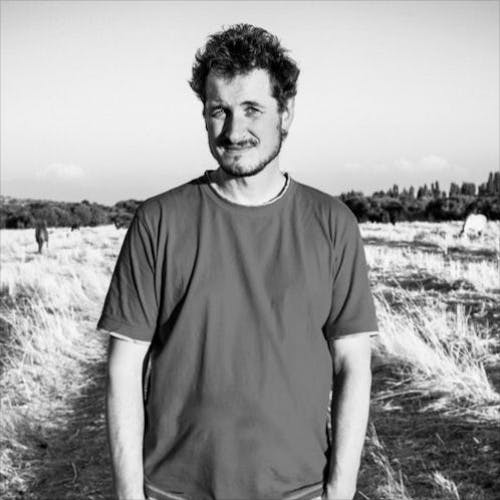
Ep. 371 Monty Waldin on Biodynamic Wine | Certifications
Certifications
Episode Summary
Content Analysis Key Themes and Main Ideas 1. The history and evolution of biodynamic agriculture, particularly Demeter certification. 2. The distinctions and requirements of organic versus biodynamic wine certification globally. 3. The role and regulation of sulfites in organic and biodynamic winemaking. 4. The importance of vineyard management (""terroir"") and minimal intervention in natural wines. 5. Environmentally sustainable practices and green winery design in the context of biodynamic principles. Summary In this episode of the Italian Wine Podcast, host Monty Waldin delves into the world of biodynamic wine, focusing extensively on the Demeter certification. He explains that biodynamics, established in 1928, predates modern organic movements and is the world's oldest officially defined form of organic agriculture. Waldin clarifies that Demeter is a private, non-profit organization with rigorous standards for both grape growing and winemaking, which often exceed national or supranational organic regulations. A key point emphasized is that all biodynamic farms must first satisfy organic certification criteria. The discussion covers the certification process, including inspections, conversion periods (two years for annual crops, three for perennial like vines, with an additional two for biodynamic, or concurrent), and the continuous revision of standards. Waldin also addresses the controversial topic of sulfites, their function as a preservative, and the varying labeling requirements for organic and biodynamic wines in the EU and the US, noting the US's more detailed distinctions. He advocates for minimal intervention in winemaking, stressing that ""the less you want to do in the winery, the more you need to work in the vineyard."" Finally, the podcast touches on the biodynamic philosophy of enriching the world and promoting environmental sustainability through practices like gravity-fed winery designs, green roofs, and carbon capture technologies. Takeaways - Biodynamics is the oldest, officially defined form of organic agriculture, represented by the Demeter trademark established in 1928. - Demeter is a private, international certification body with standards that are often higher than basic organic requirements. - Organic certification is a mandatory prerequisite for biodynamic certification. - Strict conversion periods are required for vineyards transitioning to organic (3 years) and biodynamic (additional 2 years, or concurrent). - Sulfites are widely used as disinfectants and preservatives in wine, but ""natural wines"" represent a growing trend towards lower or no added sulfites. - Labeling standards for organic and biodynamic wines, especially concerning sulfites, differ between regions like the EU and the US. - Biodynamic winemaking promotes environmental enrichment, terroir expression, and sustainable winery practices. - Success in minimal intervention winemaking heavily relies on intensive, quality work in the vineyard. Notable Quotes - ""Biodynamics is the world's oldest, officially defined form of organic agriculture."
About This Episode
The Italian wine industry has been certified for a long time, with the Demita trademark being a private trademark and the Demeter trademark being a non-profit organization. The certification process involves certification, inspections, and a conversion period before certification occurs. The use of sulfites and sulfur dioxide is seen as a key part of the marketing mix, and the importance of transactional nature of wine is discussed. The use of minimal intervention in the vineyard is necessary to ensure proper wine quality, and the industry is becoming more aware of the importance of natural wines. The transcript concludes with a brief thank you for watching the podcast and a reminder to subscribe and rate the show.
Transcript
Italian wine podcast. Chinchin with Italian wine people. Hello. Welcome to the Italian wine podcast. I'm your host, Monte Walden. In recent years, I've noticed increasing interest in ideas such as organic wines, so called natural wines, and biodynamic wines. I'll read for you some excerpts from my book Biodynamic wine and follow-up with some commentary on the topics covered. As we mentioned previously, Biodynamics actually predates modern organic movements, and the organizing body, Demita, has its own rules surrounding biodynamic certification. Will now consider demeter certification as well as national and international regulations. So now we're gonna talk about certification. Biodynamics is the world's oldest, officially defined form of organic agriculture. A trademark was first registered for it in nineteen twenty eight. The name chosen was Demita. The word Demita derives from da Mata or earth mother. The mythical Greek goddess of fertility and protector of the fruits of the earth. Now Demita is a private rather than government trademark. Its standards for both wine growing and winemaking are at least equivalent to national or supranational standards for organics. So a national standard would be so that the US standard on organics, and a supranational one would be the European unions rules on organics. So, things that are dealt with in the certification code would be things like limits for copper based sprays, limits on, animal welfare, and that kind of thing. Now the demeter trademark is administered by a body called Demeter International. This is a non profit organization. It's based in Dalstadt in Germany. In two thousand sixteen, Demeter International represented five thousand farms with nearly a hundred and fifty thousand hectares of land in more than forty five countries. Demeter International's Biodynamic standards. So Demeter International's standard for Biodynamic farming was first published in nineteen ninety two. It's under constant revision. The Demitor International Standard is the baseline for biodynamic farmers and also, of course, wine growers, they have to adhere to this standard. Demitor certification programs in Demeter International member countries can set higher standards than Demeter International's baseline if they wish. So one small detail when considering, certification, in the case of wine, wine is considered a transformed crop. And what that means is the raw material, which is the juice, of the wine grapes is transformed, in, obviously, wines case fermented. So the grapes are transformed, fermented into wine. So both the grape growing and the wine making are covered by certification rules. Farms or vineyards seeking demeter international's biodynamic certification must first satisfy the criteria for certified organic production to be considered eligible So that's basically non negotiable. You can't be biodynamic without being organic. If you're organic, you don't have to be biodynamic. But if you're biodynamic, you absolutely also have to be organic. You gotta have that as your baseline. So as mentioned, because Demita International is a private standard, it's not a government regulated standard, it's a private standard with its own higher than, organic rule book. Farms or vineyard seeking, biodynamic status will either be certified by their local demeter office. If this is also a government accredited certification body, as is the case for the biodynamic association in the UK, for example, or demeter in France, and in various other countries, or the local demeter office will ask an accredited certification body to do the inspection on its behalf and complete a report on its behalf. So in France, for example, Demota France asks Echocet France to perform the certification inspections on its behalf. So if you turn up to a French vineyard, and you say, are you organic, I'll say, yes, we're certified organic. Who do you certify for, for example, Echocera? And you say, are you also certified by Dynamics, and they don't have to be, but if they are certified by dynamic and they're certified by by demeter, it would have been Echocert or someone from Echocert, which would have gone to that vineyard, looked at the books, gone into the vineyard, taken samples of leaves, or or soil, or whatever it is that they want to to check or think they need checking, and they'll do that, and then report back to Demeter. And also, Demita would have said not only must they be organic, they must also be doing all the biodynamic stuff. And here's the list of biodynamic stuff that these wineries must be doing. So that's basically how it works. Normally, the certifiers inspector will make an appointment with the vineyard owner so that, for example, maps of vineyard plots, receipts for vineyard sprays and cleaning materials, inventories of farm machinery and buildings, you know, buildings could be a winery, the barrel seller, the bottle sellers storage areas, whatever. Tests can be taken of, soil, obviously, or vine leaves. These may be taken by the inspector for check so that they can check for any residues or banned substances. I'll just make a little note here that, obviously, if your next door neighbor is conventional, Normally, what happens is the first three rows of your vines, will will not actually get certification. And you'll either sell those grapes, the local cooperative, or or not you you're not allowed to use them in in your winemaking because they likely will be have some kind of cross contamination from your neighbor. Every eighteen months or so, an unannounced visit may be made. Reany and when you we say unannounced, it means that one day's notice is given to the grower in order to avoid a wasted journey. There's no point doing a a flash visit if if the growers, you know, in New York selling his wine or her wine to, New York restaurants, for example. Now inspectors can advise growers which sprays are accepted under the rules, but they cannot advise on any spray's use, or it's how to purchase that spray or how effective that spray is. Inspectors usually inspect the same farm for no more than two successive years. And this is to avoid, favoritism or bias. The inspector's vineyard report is then passed to a certification officer, and it is for the latter, not the former, to decide whether the vineyard qualifies as biodynamic or organic. Now I've always been a big fan of certification. Anybody that's heard me speak on biodynamics will know that. No system is perfect. Everybody can get past rules. However strict or well enforced they are, but at least gives you as a consumer or you as a journalist or you as a buyer as a sommelier some sort of yardstick So, basically, the winery is claiming to be x, y, and zed. Let's look at the paperwork and let's taste the wine, and we can analyze the wine even, and find if we find residues in those wines, we know that something's gone wrong. So that's the whole point of having this yardstick. Okay? So certification is increasingly seen by wine importers, retailers, and sommeliers as a key part of the marketing mix. Furthermore, countries in which state monopolies control the import of alcohol are increasingly favoring wines, which are certified organic or biodynamic over their conventional counterparts. So if you look at Canada and so the scan the Scandinavian Monocles, for example, they like this idea, not only have organic but certified organics. They don't accept, anything as organic or pandemic unless it's got the certification stamp, and I think, well done them. And, and long way, that continue. Any land being converted from conventional farming must undergo a conversion period before crops from that particular piece of land can be described as organic or biodynamic. This organic conversion period is two years for annual crops, such as carrots or peas or potatoes, and three years for perennial crops like vines, olives, or apples. To be officially biodynamic, another two years is required, or if the vineyard is converting directly from conventional to biodynamics, these two years may be allowed to run concurrently with a three year organic conversion period. The Biodynamic trademark, Demita International says that only wines made from grapes originating from vineyards certified by accredited demeter International member countries, and which conform to demeter International's winemaking standard. May carry the demeter logo or mention the word biodynamic. However, in short, there are there's more than one bi the demeter organization was the first biodynamic organization to certify biodynamics, but other and organizations such as in France, the Sandicat, Antennasional de vignon, uncoutre boudinemic, which is Boud de Ville. Sort of, that's a rival, not a rival group, but basically, because Demetor, or the binder, sort of, Founding fathers or mothers of the biodynamic movement didn't drink alcohol, because they felt it, it interfered with your spiritual development, or you're just a way of acting and stuff. And you can't, I can't argue with them if it does have an effect they didn't really take to wine or vineyards. They weren't really sort of switched on to that. And so, what has happened is, wine growers who want to be biodynamic and who had possibly one or two issues with Demitor or vice versa, have created their own, sort of, bodies. And so one of them is the Sandica Antanasiuland de Vineo on Gucci, butenimique or buteniva. In the Austria, you have the respect buten group, which is very good, and it, as is buteniva. And so they're certified biodynamic. They follow the European union, union rules. They follow virtually the same rules as demeter does. They have to do all the biodynamic bits that Demeter asks for. But they're just a little bit more flexible on one or two things because of their particular transformation of the grapes into wine, basically, without getting into too many details. Biodynamic wine and creep growing. So vineyards certified as biodynamic by demeter, apart from Demetra in Australia, all conform to demeter International's production standard. Now this production standard stipulates all the biodynamic preparations be used each year on the vines and on other farmed areas. The biodynamic preparations do not have to be applied to any permanently non productive area. The overriding principle in the Biodynamic rule book is that vineyards should shed their inherent tendency to monoculture, which perennial crops like vines encourage, The idea is to make better farms, better farmers, and better surroundings for the community. So it's important also to remember that wine is a transformed product. You know, if you're making if you're growing biodynamic bananas, you pick the banana, and it's a biodynamic banana, and that's that's the end of the story, whereas if you're making you've got grapes, you have to transform them into wine. So biodynamic grapes are one thing, and biodynamic wine is another thing which is which is completely different in terms of in terms of the rule books, different sets of rules for the winemaking, completely different sets of rules for the FITicultural side. So that's really important to bear in mind. So here we go. Wine is a transformed product. So regulators consider wine a transformed product. Wine exists only if the raw material, the juice of freshly gathered grapes, is transformed into wine by alcoholic fermentation, jam, butter, yogurt, cider, and beer are also considered transformed products. The beginnings of the regulation of organic wine began in Europe after pioneering organic and biodynamic wine growers there formed voluntary groups initially as a means of exchanging information. Then they drew up codes of practice. The most notable of these bodies was Ecover. Ecover. So that's eco, eco wine, Ecover. And this is the association of German organic growers. This was formed in nineteen eighty five. So just about organic wide labeling in Europe. In two thousand and twelve, the European Union finally came up with a definition for organic wine. And this came about under the regulation, EU regulation number two zero three slash two thousand and twelve. So this regulation covered which inputs and practices were permitted for both grape growing and wine making. The result was that any wine made from a hundred percent organic grapes and made according to the European Union's wine making rule which allowed the addition of sulfites, these wines could be labeled, quotes, as organic wine. The term wine made from organic grapes was phased out. So that was the previous term. In the United States, however, a clear divide between organic wines with added sulfites and those without sulfites had existed since two thousand and two. Now this was when the United States Department of Agriculture national organic program or the acronym first, the USDA NOP. When this national organic program came into force, So this federal law on organics replaced the existing patchwork of organic legislation passed previously by individual states, such as California's nineteen ninety organic food act, for example, it's basically a little bit like the European Union. Instead of having different rules in France and Germany in Spain and Switzerland, or in Oregon or Washington state or California, it's one rule for each country. So we're now gonna talk about, sulfites, which is a hot issue, rather a smelly issue, if you like, a a nose tingling issue in the wine industry. Why add sulfites or sulfur dioxide to wine? Sulfur dioxide is added to the vast majority of wine as well as to many foods as a disinfectant and preservative. In wine, sulfur dioxide prevents or slows microorganisms, such as yeast and bacteria, which can, but not always, obviously, can spoil the wine's taste, for example, by turning it to vinegar. Wine being the midpoint between fresh grape juice and vinegar. Level of sulfur dioxide or sulfites tend to be significantly lower in wine compared to foods like dried fruit or tinned soups, for example. However, added sulfites are blamed for exacerbating the hangover effect despite this being caused primarily by the effect on the body of excess alcohol combined with dehydration. Nevertheless, the recent boom in interest in so called natural wines has seen increased demand for wines containing either low levels of added sulfites or none at all. So when I wrote this book, I said that at the time natural wine was, an unofficial term, but it recently, got some legal traction, which is, I think, good to see. Good to see for the natural listers and for consumers as well. So I support that very, absolutely. No added cell fights. So an increasing if small number of producers never add sulfites to any of their wines. Prerequisites of such successful minimal intervention in the winery are having the right grape variety planted on the right terroir and were applicable to right rootstock. And often a high degree of intervention in the vineyard is required, mainly of manual and ideally of animal labor. So my tagline is the less you want to do in the winery, the the more you need to work in the vineyard. That's how I see it. You can't make good wine of whatever stripe if you can't be bothered to do your work in the vineyard. And if you're gonna make a wine with with little or no input, in the winery in terms of crutches like sulfites and fighting all the rest of it. You've got to have a great the right grape variety of the right root stock in the right place planted in the right way, picked up the right time, fermented at the right time, and the right temperature in the right container, etcetera, etcetera. And then you can make a fantastic natural wine with low or no inputs at all. And, hopefully, more in the industry will take up the challenge to to minimize their inputs, in the vineyard and, also, that would reflect much better for tick culture as well. So I think it's a win win for everybody. It's a win win for consumers. It's a win win for neighbors of of people that live near vineyards. It's a win win for the environment at large, and it's a win win for any of us that love wine. And depend on this industry for our living. So sulfite levels and wine labeling. So the exact level of sulfites allowed in wines in general is dictated by the color of the wine, its sweetness level, and its style, so still fizzy, fortified. Maximum sulfite levels for wine labeled as organic or biodynamic are set roughly at around thirty percent lower than for conventional wines. Alable levels are lowest for red wines and dry wines, and they're highest for white wines and those with residual sugar. Sulfite levels also have a bearing on exactly how wines are labeled. With some subtle, but key differences between Europe and the United States and between organic and biodynamic. So in the United States, all organic and by implication biodynamic, Alcohol beverages carrying the USDA's organic seal must have met both the alcohol and tobacco tax and trade bureau, that's the TTV and the USDA organic regulations. These regulations differentiate between wine made with organically grown grapes on the one hand and organic wine on the other. Wines produce from certified organic grapes, and which contain up to a hundred milligrams per liter of sulfur dioxide side added during winemaking are labeled, wine made with organically grown grapes. All grapes must be certified organic, but other ancillary aids such as yeast or acid are not required to be organic. Wines produced from a hundred percent certified organic grapes with no added sulfites and with less than ten milligrams per liter of naturally occurring sulfites, produced as a natural byproduct of fermentation, these wines can be labeled organic wine, or even one hundred percent organic wine. Wines produced from one hundred percent certified organic grapes, with no added sulfites and whose levels of sulfites is so low as to be classed as non detectable. These wines may be labeled as organic wine sulfite free. In America often gets told off where it's kind of, you know, sort of over complicated, labeling and things like that. But actually, in this case, they were ahead of the game. So well done, well done Captain America. Demator International's Biodynamic winemaking standards. Demator International's processing standards now cover winemaking And they begin by stating that demeter biodynamic wine growers should not see wine growing purely as a means to an end, but more as a way to, quote, enrich the world and to celebrate the beauty of landscape and life. The demeter International Standards state that biodynamic methods should help each vineyard become an individuality in its own right. Wines should then be a true, unique, authentic expression of this individuality. What in wine speak would be called terroir driven. Demitor International's Biodynamic winemaking standards ask that negative effects on the environment are minimized when making wine. Winery design in general is becoming greener and more carbon neutral against the backdrop of wild fluctuations in the price of fossil fuels and increase evidence of their role in contributing to climate change. Techniques for reducing energy use include gravity fed and geothermal designs, green roofs, and using rammed earth for better insulation using wind and solar power, making more efficient use of water and waste water using sustainable or renewable raw materials for construction. Technology is being developed, for example, in which algae capture fermentation gases, like the main greenhouse gas, carbon dioxide. This is released during winemaking. And reusing these gases or recycling them as biodiesel. Some winemakers offset their greenhouse gas emissions by planting a tree for every pallet of wine they ship or using power from local wind farms. Thank you again for listening to the Italian wine podcast with me, Monte Walden. Next week will be our final installment of the Biodynamic wine series. Listen to the Italian wine podcast wherever you get your podcasts. We're on SoundCloud, Apple Podcasts, HimalIFM, and more. Don't forget to subscribe and rate the show. If you enjoy listening, please consider donating through Italian wine podcast dot com. Any amount helps cover equipment, production, and publication costs. Until next time, to xi.
Episode Details
Keywords
Related Episodes
Ep. 376 Monty Waldin on Biodynamic Wine | Epilogue
Episode 376

Ep. 366 Monty Waldin on Biodynamic Wine | Celestial Rhythms
Episode 366
Ep. 361 Monty Waldin on Biodynamic Wine | Teas Decoctions and Essential Oils
Episode 361

Ep. 356 Monty Waldin on Biodynamic Wine | Other Sprays and Techniques
Episode 356

Ep. 351 Monty Waldin on Biodynamic Wine | Dynamizing
Episode 351
Ep. 346 Monty Waldin on Biodynamic Wine | Using Biodynamic Compost
Episode 346