

Ep. 1956 Jennifer Russo interviews Margherita Letrari | Clubhouse Ambassadors’ Corner
Clubhouse Ambassadors’ Corner
Episode Summary
Content Analysis Key Themes and Main Ideas 1. The format and community aspect of the Italian Wine Podcast through Clubhouse. 2. The diverse roles and experiences of wine professionals like Jennifer Russo (Enoteca owner, Ambassador) and Margarita Letrari (family winery, next-gen). 3. In-depth discussion of Trentodoc sparkling wine, its unique characteristics as a ""mountain wine,"" and regional identity. 4. The significant influence and high quality of wine cooperatives in Trentino. 5. Debates and realities surrounding DOCG status for Trentodoc compared to its current DOC. 6. The balance between tradition and innovation in Trentino winemaking. 7. Sustainability practices in Trentino, particularly ""Lotta Integrata."
About This Episode
Representatives from Clubhouse discuss the importance of women in the wine industry and the trending "slack lines" in wine production. They emphasize the importance of women in the wine industry and the trending "slack lines" in wine production. They also discuss the use of new equipment and machinery for the production of wine and the importance of sustainability and the trending "slack lines" in wine production. They also discuss the future of organic wine production and the importance of maintaining respect for traditions and innovation. They mention their plans for expansion in Europe and the US, and their interest in the younger crowd and their interest in the younger younger younger younger younger younger younger younger younger younger younger younger younger younger.
Transcript
The Italian wine podcast is the community driven platform for Italian winegeeks around the world. Support the show by donating at italian wine podcast dot com. Donate five or more Euros, and we'll send you a copy of our latest book, my Italian Great Geek journal. Absolutely free. To get your free copy of my Italian GreatGeek journal, click support us at italian wine podcast dot com, or wherever you get your pots. Welcome to this special Italian wine podcast broadcast. This episode is a recording off Clubhouse, the popular drop in audio chat. This clubhouse session was taken from the wine business club and Italian wine club. Listen in as wine lovers and experts alike engage in some great conversation on a range of topics in wine. If you enjoy listening, please consider donating through Italian wine podcast dot com. Any amount helps cover equipment, production, and publication costs. And remember to subscribe and rate our show wherever you tune in. Hello, everybody. Welcome back. This is Club House. Chata Gatsi. This is what we call the ambassadors corner on Club House. It is now called rooms, I believe, or is it a house? It's a room. It's it's a room. Like I'm sitting right next to me, we're in the podcast booth together today. Today is the twenty eighth of May almost getting towards the end of the month and soon it will be June coming up soon. The second of June is the tie in national holiday. It is what it's equivalent to the liberation day, I suppose. So today, we have a special guest Jennifer Russo. Hi, Steve. I'm fine. So glad to be here. Okay. It's been a long time. Jennifer, what have you been up to? I'm not seeing you for a very long time. I know that, and Well, we've been extremely busy with businesses. So so we both have a business in Denmark now and also in Italy. So that's actually the reason. So tell us about that. We do. Well, that's not so wine, mind that we, we kind of help people build their dream house in Susconia, yeah, besides from, of course, cruising around and finding wines for the restaurant in Copenhagen. So a lot of time has been spent that way. The last two, three years. Oh, so this is a new business? Yes, it is. Well, I I don't talk that much about it because, I try to keep focused on wine, at at least on social media, with regards to, well, when I post myself, and when I still do a lot of events in them, but we do all kinds of wine, and we still have the restaurant. We still have the wine business. We're still into wine, but we do this thing. It is actually a side hustle. We have a couple of customers building houses for them now, so it's still a side hustle. And it takes a lot of time. So Yeah. Of course. That is why you haven't seen me in verona. Oh, okay. Well, congratulations. Thank you so much. Okay. So, Jennifer, I just wanted to introduce you to our audience, Jennifer Russo, so of Italian origin. Is that correct? No. I'm actually Danish. My husband is Italian. So my last name now. Yeah. Yeah. Yes. Yeah. Yeah. But you look very Italian. That's right. That's right. So you took your husband's name. I didn't even know that. I I somehow thought you had Italian origin for some reason. Yeah. But I a lot of people, they do. And I guess it's because everything around me is Italian. So people, and I speak Italian. My husband is Italian. The kid's a kind of Italian, and, will it so, everybody just I think that I'm trying to, but I'm not I'm actually not. Okay. So you're based in Copenhagen still. Is that that's right? Yes. And you have a restaurant. Yeah. How long ago have you been doing that? For ten years. Oh my goodness. And how was it during the pandemic? How do you survive? Was it tough or did you close down? We closed down. We were actually one of the first ones to close down, even though but that was because we had all the Italian channels. So we could kind of, follow, even though we were in Denmark, what happened in Italy and the and and the danes, they didn't know anything about not really about what happened in Italy. So we got really scared, and closed down the restaurant some days. That doesn't seem like a lot. But we closed down the rest of restaurant two, three, two or three days before the government, told everybody to close down. And people were laughing at us, I remember. So anyway, we've we closed down. We've been closed. We well, one of the periods for, like, five months. Not the first period, but the second lockdown. That was five months. But we were we got stuck in Italy. So that was kind of the good thing about it, but it's been tough. Very tough. Okay. Well, Jennifer, of course, Jennifer Russo very danish, but very Italian, for many of us, not only has the Enoteca, which is called Mr. Bernelo, but she has many wine qualifications with w said, and she is also an instructor. She's a judge. She's a speaker. She's a wine educator and a writer. But of course, the thing that is close to our heart is she's also a Vineetal International Academy, Italian wine Ambassador. Right? You're still the Italian wine Ambassador. Yes. I am, and I am so proud to be so. Yeah. You've done the course. I I can't remember many, many years ago. Right? Well, I did it in seventeen and again in twenty one. So you believe it or not, we've gone through twenty eight editions. And we will be having a big party next year, so hopefully you can join us. It will be a ten year anniversary. And Professor Shenza, he's going to be eighty, eight zero. So Oh, wow. Oh, wow. See, I am so going to try to prioritize everything that actually I thought I was coming to the Italy this year. Mhmm. And I had it planned. And then, in February, I just had to realize that it wasn't possible. But, trust me, I really want to go. I really wanna go. Okay. Have my fingers crossed to Yeah. We'll keep in touch with the team. We'll loop you in with the upcoming events. So getting back to your call today with Margarita Letrari, I know she's the daughter. Oh. So why did you choose Lettrari as your favorite producer to be on your call today, Jennifer? Well, I kind of feel that I grew up with Litrade. I'm not that old. Just above, mid forties. You're still a baby. Yes. Thank you so much. And, one of the first train, the dogs that I ever tasted, that was Jiaz Solipari, so the mom of, and I just remember, you know, back in the early zeros, female Minayolas, the wine producers, was not a common sight in Italy. And, a lot had happened, but twenty and something years ago, it wasn't that normal to be well, Well, there are still a lot more men, at the board in in boards and running things in Italy with the interline companies than and women. So my husband took me to Luchia. We went to visit her, winery. And, I was just, so inspired by this woman who was running all of this, kind of by herself. She has a husband. Of course, her father was still around back then. Him, I I remember this. If I remember, right, he passed by some years ago. I was very inspired by her by her. I love bubbles, especially, met her with her. So make the traditional way. So I I kind of fell in love with with, with her products and was very inspired, inspired by her as a person. The wine is wonderful. So that was why Lucia just came to my mind. Right away, Lucia. Of course, now Margarita is the first generation. And, I already we already met Margarita. He claims to the restaurant just a couple of months ago, some months ago when you were cruising around Europe, with your girlfriend? Yes. Right. Yes. I was there with a friend of mine. And I'm I said, oh, come on. Let let's just go to Little Takadim mister Bruno. So I can meet, Jennifer, and we actually met. And the place is beautiful. Like, if you have never been, you have to go, if you're happy in Copenhagen. Trust me. Yes. Everyone. Take note, everyone. Next time you're in Copenhagen, pop by Enotheca, Mr. Bernelo. Yes, absolutely. I'm going to let you interview Agarita today. But what are their learning objectives that we should be expecting from you today? On this school? Yeah. I think, insight into some of the unique qualities and the characteristics that set trended dark lines apart from other sparkling wines. I'll start a little bit about how trying to dog. And in this case, the Thrade and Margarita think that they will how they see themselves on the global market compared to other really good sparklers like champagne and, of course, Franco Corta. Then I'm so in then we will also hear something about, any potential for the UCG status. I personally find it very interesting to find out what is going on. Is it gonna happen? If it's not gonna happen, why is that? And something about sustainability. Of course, we can't get, we can't have to speak without talking about that and something about biology, well, biology, ecology. How do you say that? You know, yeah. So, Bill, and trends and new trends and techniques, techniques, sorry. And finally, a little bit about the roles that the cooperatives, they play in, in the appalachian. Okay. Well, that's a lot of geeky stuff to get into. So I'll let you do exactly that. I will mute myself and then come back towards the end of the show. Thank you so much, Steve. Okay, Margie. We're good. Hi. We're gonna go we're gonna go right to it. Right? So one of the first question is, about the the the cooperatives. There are, there are many wine growers and there are many how many per how high is the percentage to re remember as I think it's something like, is it possible? It's like seventy eighty percent after wine production is, made by cooperatives. Yes. It's like around the eighty, eighty five percent of the whole, region production. Yes. Yeah. And do you think that well, this inference by the the cooperatives? Do you think that that has, that that contributes to the diversity of the wine production in, in Trento and if so, how? Alright. So, we first have to say that as we said, the majority, of our production is, made by the cooperatives, so eighty, eighty five percent. Of course, there's a lot of, people that give decreapes to, these cooperatives. This happens because, in our region, a lot of people have just like half a hectare or a hectare, of, vineyards, And, of course, they cannot live, with what, it could give, offline that small hector. So they just, take the grapes and give it to the cooperatives. By making so, the comparative have a lot of, a lot of people of all around the region that give them, the grapes, for wine. So, for that, they have, medium, high quality, wines usually because, here in Francino, the cooperatives work really well, also because they use high technology machines. So we we would say that, they are, high medium, high quality, wines. But of course, I think, like, as usually, for everything. If you take, like, a small, wine grower, wine, it's different from the one of the cooperatives just because it has some peculiar peculiarities, that the cooperatives cannot have just because they, have the the grapes from all over the region. So, of course, you have a quality wine, but you don't have the same, peculiarities that you could have. I don't know, maybe that we have because we only take from our, vineyards that are from a specific part of the region. So I think that contributes a lot. Italian wine podcast brought to you by mama jumbo shrimp. So, what so what about the region itself? The appalachian itself. It's it's right a big, isn't it? Is it eight well, not that big, of course. It's eight hundred hectares in total. Am I right about that? Yeah. Something like that. Okay. Yeah. Okay. So, like, three thirds of, of the Montecino area to to compare. Yeah. Yeah. Okay. Like, because we're not a really big region, but we have a lot of vineyards. Yes. Yes. Yes. So the contribution, what, if I hear it right, the contribution of all these cooperative that gives some some dynamics to it because they, are small producers, and they, and and they kind of, take care of the vineyard maybe in a better matter, or that wasn't all clear to me. The exact reasons. Yeah. Like, if you, cause, like, we our winery that only produce with our own vineyards. So we take the grapes from our vineyards, and that are located in a specific, part of, Drintino. So from that, you can gain, some peculiarities, that are, of that particular area, whereas, the cooperatives, take the grapes from a lot of, one year's owners from all around the region. So you you have the quality, because of course, as I said, our twenty new cooperatives work really, really well. So you have a medium high quality, but maybe you don't have the same peculiarities of small, producers just because, you have, the grapes from all over the region. Okay. Got that. Okay. So as I can hear that, it say it sounds like the collaboration between, the wine grows and crops that works very well in practice then. That's a good collaboration. Yes. Yes. Yes. Yes. Yes. Yes. And and how because we're talking mountain wines, if we should just make a small, if we just you we got you you train the UC. Then we got the Franco Corte. You are you are some of the other peculiarities that you have is that compared to Franco Corta, Not because we need to compare, well, actually, what I would want to say is to make a little comparison, but in terms of quality, of course, you are, you are defined as mountain wines. Can you tell a little bit about why that is? Alright. So, I don't know if any of you has ever been, to Latino I have to. Okay. Great. If so, we are, in the mountains. Usually, the lowest, altitude we have for the vineyards it's around four hundred meters above the sea. Yes. And we go from there to a thousand, a thousand and five meters above the sea. Depends where you are in Centino, because we are on the lower side, of the mountain. But there's a lot of, wineries that are up the mountain. So we're a month also because we are we are in the mountains. From here, you're just surrounded by the mountains. We live in the mountains, our winers are in the mountains. Yeah. Right. Did you say thousand and fifty or one thousand five hundred? Five hundred. Yeah. Oh, really? I thought that the approximate height was one thousand. I even think that the They're they're not many. Just there's like a few, but they're minories that are really high. Yeah. Okay. So they're there. Extremely interesting. Really interesting. And and just to to make a small person, the French and court, the Vineyard, they're like around five three five three to five hundred meters above sea level. They are talking about, I know, maybe to go higher. Which would make sense, which will make sense because we can see. Well, of course, that's one of the next question that I want to ask you. And that is with regards to style as well. What effect in the wines for instance, compared to other very, interesting sparkles like Shenaine and, and, of course, to your neighbor. Alright. So, the first things, of course, it's that, train to the campaign and, Frances Corta have a completely, different, climate. And soil sometimes. I mean, champagne and trentino, the Champagne region and trentino are, pretty similar to what is the the soil that can produce high quality, bubbles that are similar. We can say. The thing is that, the mountain bubbles, here in Trentino, They have, like, a climate that it's perfect for, for the maturation of the grapes. So you have, the sun. You you don't have a lot of humidity. Which you do have in the Franco region. Mhmm. You have, like, the perfect soil. So we have a lot of minerals, CDT. So it it, helps the grapes to, migrate. But we cannot, of course, wear, trinto dog champagne and franta Corta based on, I don't know, like, the the quality or whatever because I think they all have, high quality. So it it would Yeah. For me, it's more like, how the rates, evolve during the year because of the quality, I think you've planned it all over, these three denominations. Absolutely. So will it be fair to say that, trinto doc is, in the same league as three different relations to three different climates, three different soils. An an older, two at least two different cultures. After all, even though both Latin and countries. But is it fair to say that centered up in the same league as Champagne? I don't know. That that that's a tricky question, actually. Because, we're used to think about champagne as a, high quality, nearly inaccessible product. So something only the elite, drinks, most of the times. Train to dock, wants to be the product, for everyone, but or for the elite. So Okay. High quality, but still I I don't think we can compare them because we're the same, but completely different, also based on two different cultures as, as you said. Mhmm. Mhmm. Right. A little bit about traditions and innovation. We all talk so much about that we have to be at the forefront with things. We have to innovate. We have to disrupt. We always have to be ahead. How do you maintain, balance between respecting traditions and invading within, the wine production in, in your region? I actually don't think, there's much of innovation in the production, here in Trentino. Like, because we follow a lot the tradition. So that's actually our goal. And the innovation, I think, could be, in the machinery, but in the style of the production itself, we don't actually have much innovation right now because, everyone just wants to follow the tradition. Okay. Okay. So so not a lot of innovation. You go with the tradition. And when you talk about tradition, we talk about, of course, making the traditional style wine that, of course, is, is, is, of course, the basic. But, also with regards to, the wine techniques, of course, you don't you use, new machinery. So that's more this is what you intend with regards to innovation that you get new equipment, new machinery. Yes. And, yeah, okay. Okay. What about, what about, you know, we we talk about the the the the most, the the the first, decree that comes out when you when you press the the the grapes. How many times is it the is it normal? Or, yeah, how many times is it normal to to press the grapes to use the first, second, and third pressure of the grapes once, once pressed. So you mean sorry. I don't know if I got the question right. No. I mean, I mean, when you press all the grapes and all the moss comes out, then you got the first pressures, you got the first and the second. Then some wineries, they also use the third pressure. In Trankino, do you use only the first or the second impression or do you also And you used deferred pressure, pressing yourself. So I cannot speak for the frontier region as I actually don't really know, what other wineries drew. Because I I'm I actually don't know. So I don't wanna give wrong informations about this. But we usually, stop at the second one. Yeah. Right. Yeah. Yeah. I think a lot, does that. I think that too. Yeah. Yes. Yes. What about your potential? No. Before I ask about it, how many you got a lot of cooperative? Well, you got not a lot. We got, a market that's dominated by a cooperative. Yes. But, is it is it right? Do you have around seventy, seventy five, independent producers? Is that right? I think I saw that We are nearly eighty now. Eighty now? Okay. Yeah. Nearly. Yeah. Okay. Since you're you're not that many when it comes when it comes down to it. What is your impression that your perspective and also your colleague's pro perspective is on trended dog's potential to achieve the DUG? Alright. So as you may know, like, the docs, the OCG, is already present in the, financial quota. Yes. So, it's just a, denomination that, is like the doc that we have here, in Clento. And it's not, about quality because, we all have that quality. But for the DOCG, you have to, have like, I don't know if you have ever noticed, like, a wristband, kind of, around, the, the neck of the bottle. That says the OCG. So for that, you need to buy those, those necklaces for the bottom. Yes. So you have to, say how many of them you need, for the number of bottles you have. And you pay for them, of course. So you pay more, to have them on the bottles and you have to declare, the numbers of, of them. The thing is, in Centino, it's not, like, a perspective for now, just because, the, our market, it's led by one, big leader, for dental doc, that does more than the fifty percent of their production. And then we have the cooperatives. But, it's not in the interest of the big leader of our trend to dock, market. Just because they would need to pay more, to have the docG name, when we actually can have the docs, denomination, that is basically the same. Just, without the declaration of the number, of bottles per year, but the quality standards, the quality level, it's the same. Just, I don't think in Trentino will happen for now. Because of this reason. Just because I understand. Lead leader, it it wouldn't be in his interest. Let's say this. I understand. I understand. That makes a that makes a lot of sense Yeah. We have, like, lot, of big companies, like, more of, I would say industries. Yeah. And maybe more well, I was about to say more competition as well. I don't know if that's right, but I guess more companies, more companies. Yeah. Yeah. But it was like they're a lot bigger, like, more industrialization. So whereas in Latino, it's, as I said, those big, the the first big leader that does more of the fifty percent than the cooperatives and then us, mediums, more producers. Yeah. Okay. So, we got that first producer, then the cooperative. And then, you are are you are you one of the bigger, producers compared to the and I'm not talking about the leading one and and the cooperatives, but how many bottles do you produce per year? Yeah. I mean, we are, in the medium big ones. Because we produce a hundred, a hundred and ten thousand bottles of trinto doc per year. Okay. So we are between, yeah, the medium big ones, because it there's, like, out of this eighty, there's, I I wouldn't say more of the half, but more of half of this eighty, the do, like twenty thousand bottles. Okay. Well, they're pretty, pretty small. Yeah. Because there's, new, wannaries are are growing and are just starting year and and per year. Yeah. Did they just started recently? Was that what you said? Yeah. There's a lot of wineries that just started. So, of course, they do, small numbers of bottles. Yeah. And you have been around till some time you got fifty year old, the anniversary in two years. You've been, you've been around since the seventy six. Right? Yes. Right. Because we started with my granddad, who actually started making one in nineteen fifties. But then found it at our name in the nineteen seventy six. So we were one of the we we actually are one of the, the first ones that started the old ones. Yes. You are. Yes. You are. Back to the DCG just to round that off. I understand that it's probably not gonna happen right now. And even though you're telling us that, any way, at least that's how I hear it anyway that the quality is in the bottle whether we have that g or not. But what do you think that it could mean for your Appalachian, recognition and prestige also globally if you got that extra g? Actually, I don't really know. Just because it's not something that we think about. Talking for the whole region, it's not something that we think or struggle about. So I don't I don't think it would bring, a lot more, recognition because, in the last few years, the, Triinto doc institution really did a huge, huge work, on communication, and Trent Dark really grow, grew as, as an identity of sparkling wines. So I don't I I wouldn't know how to answer this question just because it's not something that we're used to think about, and I don't think it will ever happen for now. So I would know what answer to give you. Okay. So it I really see I really think that I have to stop dreaming that I love bubbles so much. And, of course, my favorites are twenty doc, and, of course, also And I have been taught because I talk a lot, with everybody who who, is willing to listen to me. I talk about train do dog and friends about all the time, telling them to not to get rid of champagne because I love champagne as well, but just to push these products because they are so worth it. And I've been dreaming about it because I think it's so fair. I think that because well, at least in my opinion, the other the extra g is so is so you would just serve it anyway. But I understand that that's probably not gonna happen right now. Yeah. No. It's not gonna happen. And then it's, as you said, it's, like, a g more, to add. But, you know, the quality is, the same. So it doesn't really affect quality. It's just, recognition, that you have added to what you already have. So but for now, I mean, I think we're all pretty happy with that because, we still have the recognition of the quality. So I think that that's the important one. You're absolutely right. You're absolutely right. I have a I have a a couple of questions more. A little bit about the the organic, the future of organic, yeah, wine production in your area. How is it with that? Is is that something that you focus on in your escalation to be organic. Alright. So, actually, Trintino is the first region that, uses the, lotte integrata. As a system, to, to, get closer to the, due dynamic. So it's like the first step. So we don't use pesticides or chemical, stuff. That's all over the, the region, and it's called, lot integrata, integrata, as I said. And it's the system SQL. So that's like the really the first step to get closer, to the bio, techniques. Yeah. And we all, like, really focus, like, the whole region, focuses on, preserving the, the nature and not using chemical or pesticides, products. Okay. And what is it? How how do you call that in Italian? Lota in tegrata? Lota in tegrata. And that means Yes. I wouldn't know that in English, Hamsom. No. No. But that doesn't matter. Lota in tegrata, but that means that you're you have a biodynamic approach. Yeah, kind of. It's not like, biodynamic. It's just the first step to get closer to that. Yeah. Okay. Okay. Okay. Right. And and that's kind of all of your your your your all into that, but it's not a law. It's not in it's not in the protocol. It's something that you do. Yes. Just all around the region. Everyone does it. Like, we are all, into, preserve our region. Right. Okay. Another thing that is not in your protocol is, is is something about how long the, how long your wines, they they undergo the second fermentation with regards to the Cervagil from the daughter. Because you got, you got, you got the non vintage. If you wanna call it that, that's fifteen months. Right? And then you got something called the milisemato and the reserve. Could you explain, milisemato and the reserve. What's the What that means? Also, like the, the first one you said, it's fifteen months, for, like, the Trinto Doc rules. But as, as a winery, we start at twenty four months. With, like, the the classic ones. Then the Milezimato, starts, at twenty months, if I'm not around, so that you can, put, the, the harvest here, on the label, on the back label. And then there is Arva. It's, a wine that stays on the lease for more than thirty six months. Right. Right. And usually, they are all really zimato. Okay. Your reserves are so low. Yeah. But as a one, we start from sixty months. So we go from five years to ten years with our reserva. But you could start at thirty six. Right. Okay. So you kind of do the same thing as they do in French a quarter for their every reservas. That's sixty months as well. Yeah. And then you got this you got this story about which is, as I have understood it. It started with, the late, Julia. And it was, contribute from the Linelli family to, they made this bottle as a contribution, to contribute to honor, Julia Ferrati, and made this bottle, the seven from the daughter, back in. Oh, don't remember, but I think it was in oh, it's seventies. I think it was, yeah, it's the first one. I just actually remember the year, but yeah. Yeah. Yeah. Yeah. And, I know that you make this evident from the tour as well. Yes. Could you could you yeah. Yes. How is that story? What is that story? So I'll reserve your fondatory. It's the nine seven six which stands for, nineteen seventy six. That is the year, of the foundation of the winery, at our own name, because, Latari, it's our surname. And it's dedicated to my granddad. In fact, the label, has its, its firma on top. Oh. Yeah. Because it's dedicated to him because he spent his whole life doing wine and doing researches and just trying to, putting just effort in everything he did also because, like the Trentino, sparkling wine history, started with, Julia Ferrari, and then he sold, to the Renelli family that it's, they're now the owners of the Ferrari. And then, my granddad with another four, winemakers. They founded the equip five winery. Mhmm. And they were basically the second ones after Ferrari. So they produce half a million bottles in nineteen nineteen sixties. And then my granddad, just decided that he wanted to, start his own, winery. So he saw the, his his part of the winery of the Kib five and found it at our own own name. So that's the recerava del form notore. Comes from that just to honor, his work because he have done he's done a lot. Yeah. I can I can imagine? So, here's a little extra to that story. So It might be that the Ferrari, brand was the first one to make the to establish the the subject from the Toyota, but your granddad actually worked, side by side with Judith and Ivy back in the fifties. Yeah. Like, he he worked with a lot, of, big, winemakers back in the days. He he with with a lot of big winemakers. And then he he was, I think, I'm I'm proud to say, one of the major leaders, of Tarantino wine history. Mhmm. And I I am so I so agree with you. That's also what I say. When I talk about Litrade, I say one of the leading tended dog producers. That's, that's so true. But, back to the thing about the wording, reserved for the so the name reset, the the title, the stamp, because that is not in the discipline area. And, that might be a little bit like the Lotto integrata you talked about before. Get some of you. I know if it already makes it. You make it, and your mom told me that some others are making it to now. They'll be set with it for the daughter. But what it means to you, to, with it already, to you, and some of the others is At least, is it eight or ten years on the lease during the second fermentation of the inspect? It's ten years. For us, and also for a ferrality. Yeah. It's a hundred and twenty months based, usually. Yeah. So that's a lot of quality for a very fair amount of money. We import your wines as, of course, you know, we import your wines to Denmark, and it is such a pleasure to be able to give such much quality for for, it's, so much value for, so much quality for value. I wanted to say. Again, not I don't wanna take anything away from anybody, but, it's a lot of quality, ten years on delays. It's almost something that anybody can can afford to to buy. At least right now, and it don't don't set up your prices, please. Right. So some closing questions is just about, like what I know that you are studying because you're you're finishing your master in communication. Right? Yeah. And when you're done with the studying, you're going to go you're already in the company. You've been in the company since you were eighteen. It's twenty two now. And the, your mom, is, teaching you everything that her own father taught her. She's passing that down to you. Yeah. I think she's a painter. Yeah. She's a great leader. He said that. Yeah. But he's a teacher. Yeah. Teacher. Yeah. Yeah. I can imagine, but she's also a tough one. She's not here. Yeah. You don't wanna you don't wanna mess with Lucia. No. No. No. But, yeah, right. So you're going you're going all in. Right now, you are in your company. You work in the company, but once you're done with your master, which is, like, in a few months, if I'm not, mistaken. Last year. No. Yeah. Next year. I'm sorry. Nice year. Next year. Right. So a year from now, you're done. And you're gonna go all in, you're gonna be working one hundred percent and not and not sixty, fifty, sixty like you're doing right now. Yeah. Okay. Yeah. That's that's the plan. Yeah. And I love your videos. The the videos you put up on Instagram. I think they're so informative because and you're so good at communicating what you're doing, where you're going, and what's the yeah. They're really good. So everybody used to go and follow, Librade as well. You want some, some some good communication on wine. Well, how do you say that? Oh, thank you. Finally, the very last question is about food. We're in, what can you give me a couple of dishes? You have different kinds of wines. Of course. I know that. I tasted all of your wines, but, and they're actually you can use them from anti past, you're actually from the other table and until the the Jesus. Yes. But if you should give, a suggestion of two or three traditional dishes or twenty also, well, probably twenty, but also for the whole region, if if that's, the way it is, that goes with your, Bullichena. Okay. So the first thing of, the first thing I think about is, like, mushrooms. So in Latino, like, with a lot of mushrooms, you can always find, like, spaghetti, with mushrooms. And I would pair them, with our, which is a sixty six months, on this, and it's a, pinot noir, a hundred percent pinot noir, and they purr perfectly. Like, every time there's mushrooms, we always wear our, oil pinot noir. Or you can have Canadaly. Which is, like, basically, a I wanna know how to explain, like, gnocchi made out of bread and steak, and everything you have, basically, in your kitchen. So Okay. There are just like Noki is made of bread, with butter, and we would pair death, with our, a hundred percent, which is the guare, because interest guare. Yes. It cleans your mouth from the fat food. So if you have butter, it's just perfect because it cleans everything out of your mouth. Oh, I I'm getting so hungry now. And the first one, that was your your your cuquatro, plus four. Was that the one, you said? The the first one I said with, mushrooms? Yeah. The mushrooms. No. It was the. It's like a new release. It's a hundred percent pinot noir. Yeah. Oh, I didn't taste that. That's why I was very confused. I thought about. Yes. It's like a new release. Okay. It's Arisarva, just pinot noir because we didn't have one. We've never had one. And that's our first, first time having it. Yeah. Okay. Because you do you've got your quarter, but, right, and how many different, yeah, Bolicina do you have? How many different numbers? Ten. We got ten different. We have four classics. We call them. So they're just like two, two and a half years, in the bottle, and they're more like for aperitivo. And then we have six And two of them are, ten years, which are the year, Jose, and the year is already from the tour. Okay. Did I say, is that plus four then? Yes. The plus four. Okay. Okay. Then now okay. I'm with you again, but it's okay. And then how many different countries are are your wines out in? I can still look at it. We work mainly in Italy. That's like our biggest, country where we have our wines, but we have something in Denmark of course. Yes. Then we have something in the United States in the Washington DC and Maryland, area. And now we're trying to, do something more again in the as part of Europe. Okay. Eastern part of Europe. And now, actually, I said I didn't have any more questions, but I am curious just to ask. I know that we need to, give the work to people as well if there are some questions. But just to know, How, how how how much would you like would you like to expand? Now I'm talking about Margarita. What do you think that would be good for for your brand? Sorry. I didn't get the question. To to expand. Would you like your your brand to be out in, like, all almost two hundred countries, or would you like them to jump to China? I don't think I would like that. Just because, I mean, I want to expand, a little bit. Like, once I come into the wiring a hundred percent and, you know, start actually, being here, I would like to expand in years as my mom did because she didn't find this. She made, what we are right now together with my granddad. But I wouldn't like to become really big because I think once you, become a big winery and do, a lot of, of bottles. You just lose I don't know. I think you somehow lose a little bit of quality. And then our big point is that we are a family winery. So if we grow too much, it won't be family. Mhmm. That makes all of a sudden. So little not too much a little bit, but not too much. Yes. Just a little bit, but not too much. Yeah. Yeah. That sounds good. That sounds reasonable. That was actually the questions I had, for now. So Alright. Excellent job ladies. That that's the warning that I'm coming back. So, Margarita, I thank you so much for that. Interesting conversation. I do have a a follow-up question for Margarita. So how many so you said you have ten labels. Right? Yes. Okay. And what is the volume of production in total? We're around a hundred thousand bottles. Okay. So you how old are you now, Margarita? Twenty two. Twenty two. You're so little. Yeah. So my question to you, and where are you going to school? I'm studying in Bologna. Bologna. Okay. So, Bologna, your your friends are more or less twenty, twenty two, twenty three, twenty four. Right? So at Bologna, Obviously, your friends know that you you're from the wine business. Like, are you, like, after your lessons, when you get together, when you go for an appetitivo, all you and your friends drinking wine? Or are you drinking spritz? Or are you drinking, I don't know, beer or cocktail? What are you drinking mostly? It depends on the occasion because, like, maybe if you're just finished, at uni, It's like more of a spritz memento Mhmm. Spritz time. But most of the times, if we actually, say, let's go to do, an imperitivo, we drink wine. Like, I teach my friends. So you're the ambassador. Yes. For for wine. And what about the others? Like, I think if they had to choose, they would go more for, like, plates or cocktails. But I taught them, to drink wine and just, you know, just to learn something, like, what you like, what you don't like, taste everything, because you have to taste a lot to understand actually what you like and what you don't. So when we are together, but sometimes also when we are not together, sometimes my friends just send me pictures And they say, oh, look what I'm drinking at the bar. Is it good? What do you think? Cause I like it? I'm like, oh, yeah, that's nice. So do you you think there is hope for one? Yes. And I, I see, like, a lot of people of my age that are starting to understand wine. Right. But are they drinking spritz? Because it's cheaper. Are they drinking cocktails because it has more alcohol, they get drunk fast, What are what are the reasons? I think I actually like it, but also because I don't know. It's like our culture. I would say, like Italian culture, appetitivo, it's wine or spritz. And it's not cheap anymore, I would say, because it costs sometimes also more than a glass of wine in some places. Yes. How much does the boss in bologna? Like the boss? That you need. Oh, like five euros. Yeah. Okay. Yeah. And you can find also a glass of wine for that price or a little more. Right. What about what about Jennifer? What about in Denmark? Do you have, like, younger customers or do energetic gates. It's mostly older crowds. How does it work? So, we are actually we we kind of feel lucky now because ten years ago, when we when we started up, our customers, they were at least forty plus. We're getting younger and younger people. They're drinking wine, but you have to remember that in Denmark, we drink a lot. So we're not one of the countries that, we we they're like commercials everywhere. Are you drinking too much? Call this number. They they're like everywhere. Yeah. So we're kind of lucky now because they're getting younger and younger. Now we got we got kind of kids, twenty five year olds. That I don't know where to get the money from because eating at our restaurant is like around two hundred dollars to three hundred dollars per purse two hundred dollars absolutely and up to three hundred dollars per person. So, it costs the money. It it's it's so I don't know where they get the money from, but they're getting younger and younger. Alright. Okay. Yeah. Alrighty. Yeah. That's always, of course, you know, my question. How can we engage the younger audience? Because I think the older audience, they are, you know, they, they have their ways already, but the future of wine world will depend on, of course, the next generation. And that's you. Yes. Margarita. It's true. Yeah. So that's it. That is, I'm going to wrap it up. Like, did you have anything to say? I wanted to share that next week on June four. We have another clubhouse with, Britanny Tongora, Yes. Britney. She's a new ambassador from New York. Yeah. So then she will be interviewing Alan Manley from Margarita Auto winery. Fantastic. Alright. Thank you very much everybody for coming and talk to a pitting that is it. Sign on, Stevie Kim, and like, Chadagotsey. Listen to the Italian wine podcast wherever you get your podcasts. We're on SoundCloud, Apple Podcasts, Spotify, email ifm, and more. Don't forget to subscribe and rate the show. If you enjoy listening, please consider donate dating through Italian wine podcast dot com. Any amount helps cover equipment, production, and publication costs. Until next time.
Episode Details
Keywords
Related Episodes

Ep. 2772 A Surprising Partnership between Japanese Sake & Italian Wine with Monica Samuels | Masterclass US Wine Market
Episode 2772

Ep. 2770 China’s Wine Market: From Misleading Import Numbers to Today’s Consumer with Fongyee Walker MW - Part 1 | Asia Wine Market
Episode 2770
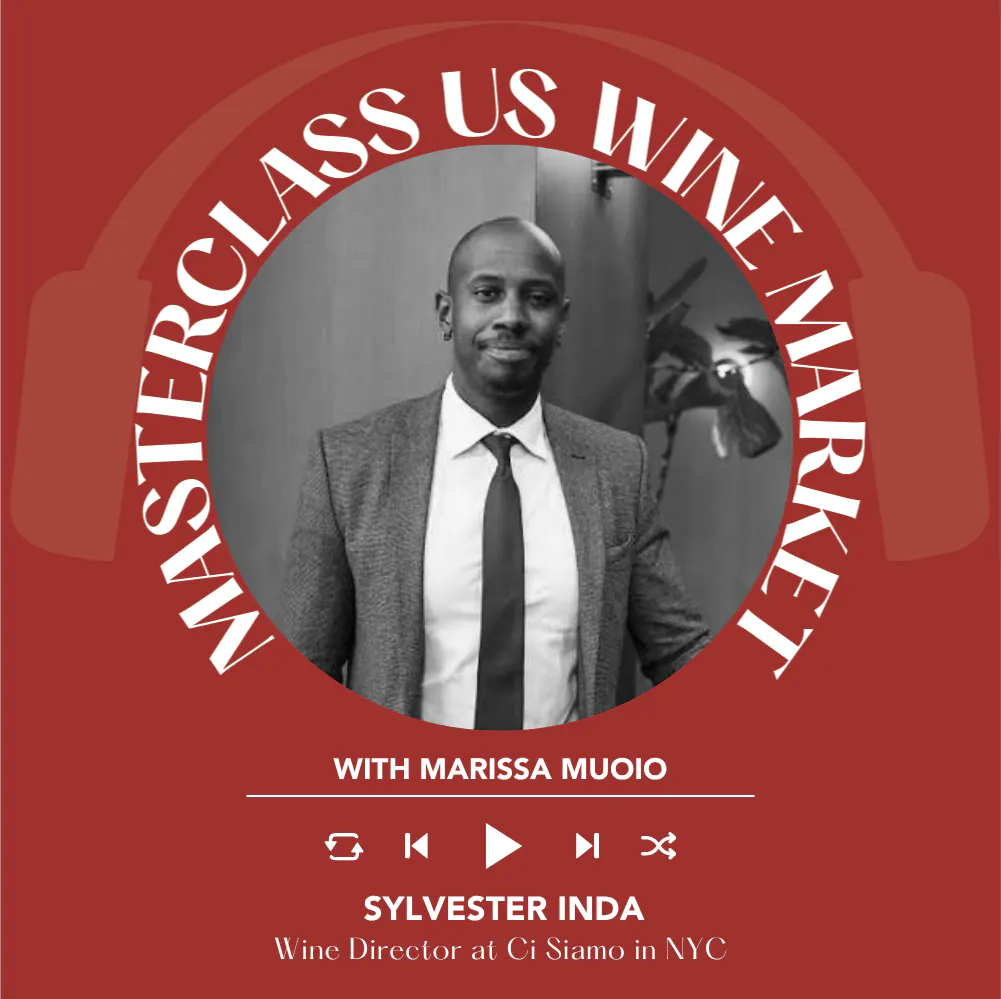
Ep. 2760 Winning the Restaurant Floor: Training, Education & Italian Wine with Sylvester Inda of Ci Siamo | Masterclass US Wine Market
Episode 2760

Ep. 2751 From Montalcino to Kazakhstan with Francesca Arquint of Collemattoni | Asia Wine Market
Episode 2751

Ep. 2748 Florida Wine Market & Vinitaly USA with VIA Italian Wine Ambassadors Stefano Campanini & Daisy Penzo | Masterclass US Wine Market
Episode 2748

Ep. 2746 From Almaty to Verona: Inside the Italian Sommelier Challenge with Leonid Kirsanov | Asia Wine Market
Episode 2746