

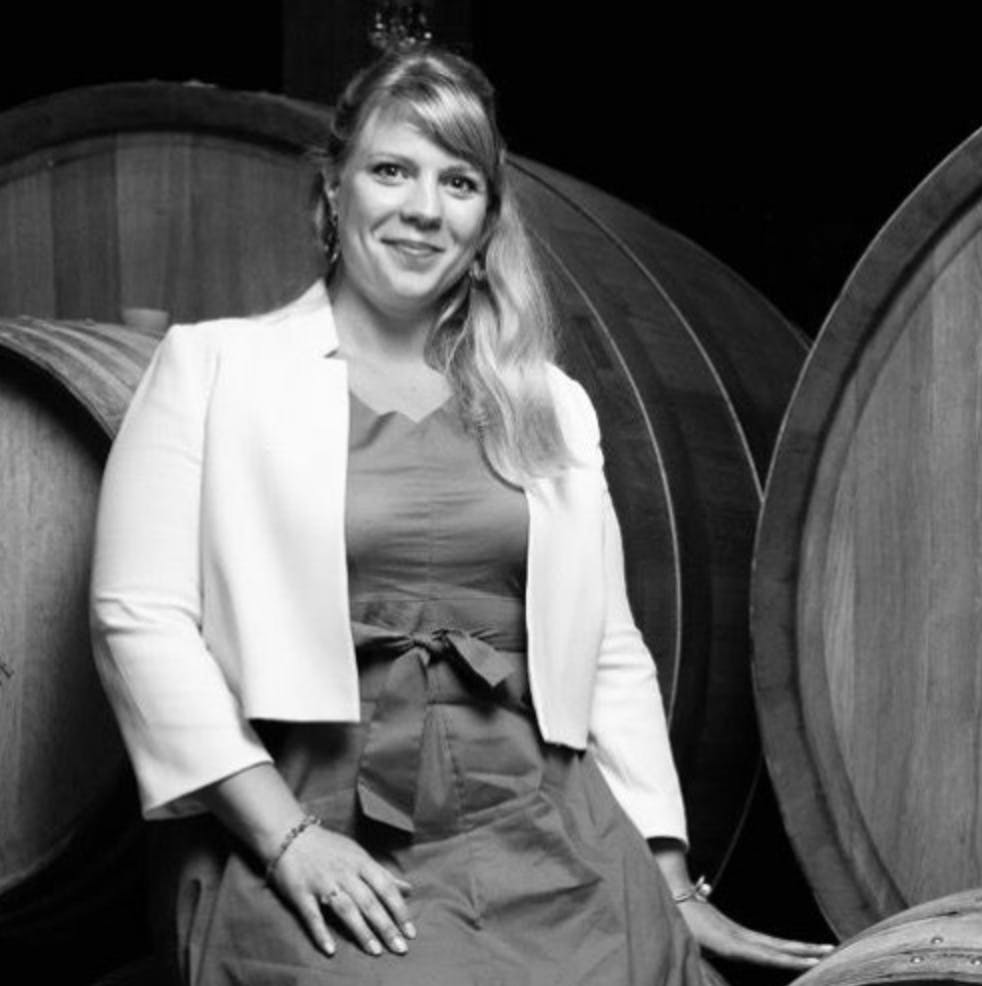
Ep. 129 Monty Waldin interviews Debora Bosoni (Cantine Lunae) | Discover Italian Regions: Liguria
Discover Italian Regions: Liguria
Episode Summary
Content Analysis Key Themes and Main Ideas 1. The history and operations of Cantina Lunae Bosoni, a multi-generational family winery in Liguria. 2. The unique Ligurian terroir, highlighting the influence of mountains and sea on grape cultivation. 3. Focus on native Ligurian grape varieties, particularly Vermentino and Albarola, and their characteristics. 4. Traditional winemaking practices and the philosophy of preserving natural methods. 5. The challenges and opportunities for family-run wineries in Italy, including market focus and export growth. Summary In this episode of the Italian Wine Podcast, host Monty Waldin speaks with Deborah Bazoni of Cantina Lunae Bosoni, located in Luni, Liguria. Deborah shares insights into her family's four-generation winery, emphasizing their dedication to native grape varieties like Vermentino and Albarola. She vividly describes Liguria's distinctive terroir, a narrow strip of land influenced by both the Apuan Alps and the Tyrrhenian Sea, which creates a wide variety of microclimates and soil types, from stony hills to sandy flats. Deborah also details their traditional winemaking approach, which minimizes intervention and avoids new oak, focusing on pure varietal expression. While the majority of their sales are domestic, Cantina Lunae Bosoni is actively expanding its export market to countries such as the USA, Germany, and Japan. The discussion underscores Liguria's status as a beautiful, traditional, yet often overlooked wine region in Italy. Takeaways * Cantina Lunae Bosoni is a four-generation family winery located in Luni, Liguria, a region rich in Roman history. * The winery primarily cultivates native Ligurian white grapes, with a special focus on Vermentino and Albarola. * Ligurian terroir is highly diverse and complex, characterized by close proximity to both the Apuan Alps and the Tyrrhenian Sea. * Cantina Lunae Bosoni adheres to traditional winemaking, avoiding new oak and chemical products, and prioritizing the natural expression of native grapes. * The winery's market is predominantly domestic (80% Italy), but international export is identified as a growing area. * Liguria is highlighted as an ""overlooked"" but culturally rich and diverse Italian wine region with distinct food traditions. Notable Quotes * ""We are the last part of Liguria. Just a few kilometers from Tuscany. Our villager is called Luni... because there is an ancient archaeological site from the Roman period."
About This Episode
The speakers discuss the famous wines Tuscany and albarola, with Speaker 1 asking about the current wines and potential privacy. They also talk about the location of their business and the use of new equipment for farming. They discuss the importance of tourism and the traditional winery industry in Italy, with Speaker 0 expressing their passion for helping winery members produce wine and thanking everyone for their passion. They mention the use of Kugenie and preserving the tradition.
Transcript
Italian wine podcast. Chinching with Italian wine people. Hello. This is twenty one, but first, my name is Monty Woodin. My guest today is Deborah Bazoni. How do you pronounce it Bazoni? Bazoni. Yes. He's got it. My guest today is Deborah Bazoni from the Cantina Luna Bazoni in liguria. Which village are you in liguria? We are the last part of Liberia. Just a few kilometers from Tuscany. Our villager is called Louni. Ah, Louni? Yes. To Moon. Yes. About the Moon, because there is an ancient archaeological site from the Roman period. This city of Looney was. City of the Moon? Yes. And, this village was very important about, tradition to cultivate vineyards and grape. And there are also some references, some out a good quality wine just in this roman age. So what main what are your main grape varieties? We try to preserve and increase the the value of the native grape. Our first love, of course, Vermentino grape. That is also the reason that we are at opera wine. Okay. And a lot of native grape, like albarola. Which is a red or white wine grape. It's white. And what what are the typical flavors for albarola? Albarola. It's very mineral. A little bit salty. It's interesting because you have more acidity than vermantino grape, more exotic fruit, flabbles. Or like peach, yellow fruit, that kind of thing? Yes. Some and vermantino is always fruity, but more delicate, more soft, less, strong acidity, less exotic fruits, more peach, white peach. Which is the which is the heaviest one, which is the fullest body of those two wines? Which We work with these two grapes at the same way. So there is, a selection of the best grape before the harvest and of the vineyards, and a second selection of the grape in the in the wine cellar, and then called maturation on the skin. Okay. So the body is almost the same. Okay. But But you've re you've verified them apart, the two for grape varieties. Yeah. Alberola and the vermantino. We work with them separate and, pure vermantino or pure alberola, alberola. We different label. Okay. And you don't make a blend between the two? We have also some blend with Alberola, Vermetino, Greco, or Malvasia, that are our most typical white grape. And I imagine you're you're not using too many new oak barrels. Never? No. We, mainly, we use only stainless steel tank, but we love, try some new experiments. So sometime we use some barrel, but never, knew some first or second use and just soft time in in the burial. How far away are you from the sea? From the Tarenian sea? We are very near to the sea just a few kilometers. Our land is very particularly because we pass from upon Alps just behind us that are like a shield, for us and, the sea in a round of twenty kilometers from the upon Alps to the sea. So we can enjoy a very big variety of terroir. Is that quite complicated sometimes with climate, is it very changeable? Cause you've got mountains on one side with coal down, and you've got the hot, hotter winds from the sea, potentially from the other side, from the western side. Is it? Is it a bit complicated? Is enough complicated, but There's a big smile there from you, and a and a little pause. Go on. Spell the beans, Tommy. Yeah. Because in Liberia, we are just enough. We know that we have some difficulty just about the space at the first, and, this, terroir that changed so fast. For us, it's our most best prerogative because we can enjoy of, strong white wine or red wine on the hill and, very light and mineral, wines on the flat area so we can joke a lot with this. Okay. So you have vines on flatter ground and vines on the slopes as well? Yeah. So does the soil change a lot between those two areas? Yes. We we separate three different terroir. Okay. The, hills with, very mineral and with a stone, terroir. So they'd like big stones, smooth stones? Yes. Not not so big, but very mineral and, void, very wet. So that's the that's the hill. So then you do have the bottom of the hill? Soft hill Mhmm. With the clay Mhmm. And, flat area with sandy terrier, with a very do you now. So wine's very mineral. Free fruity. Yes. So is that the first area that you pick? Yes. And then you go up to the lower slopes? Yes. Depends of the exposition of every vineyards. This vintage, we we start earlier. In two thousand and seventeen. We need to start earlier because it was very hot with no rain. What are your main markets? Do you have a lot of tourism, or do you export a lot? At the moment, our market is, concentrated to the, it, Italy, for the eighty per percent. Right. And, about twenty percent of our market is for the world. Abroad? Yeah. For market? Yeah. And, for USA or Germany or Japan, and, but it is a market that will be bigger in during the year, of course. So how is it, is it working for a family winery with the family? Yes. There was a pause? Yes. No. Yes. It's not so easy, like, every, every work because we start for generation ago, and today. You have Kugenie and things like that. Yeah. Yeah. Okay. Cousins. Alright. Grandfather before, and today, my father, keep to work inside the wine cellar. He starts the the professional activity. So you started bottling the wine? Yeah. Of course. With, very simple but efficient idea just to preserve the tradition and then don't use any chemical product, just keep a simple work in the land and, try reserve the native grape. So we try to help him, and, it's a new passion for us, and it's very interesting because I can welcome people in our winery, my brother, help father to produce wine and sell the wine, in Italy and in the world. So it's a big job, but he can do a very great job great work. I just wanna say thanks very much to Deborah. Bosoni, for the Bosoni family, the Cantina lunai, very nice name that lunae Yeah. The moon. The moon. Yeah. The sort of moon cellar, in a very beautiful and unexplored part of coastal Italy, I think Liguri is very overlooked. Yeah. It's fantastic. People just drive past it on the way to, the Malfi coast or going up to France definitely worth a stop, very interesting, and a very traditional area, I think, in terms of, food and the way you guys go about stuff. Yeah. There are some, many different tradition about food in few kilometers Okay. Thanks very much, Deborah. I look forward to visiting you in the new audio. Thank you so much. Yeah. Thank you. Follow Italian wine podcast on Facebook and Instagram.
Episode Details
Keywords
Related Episodes
Ep. 395 Milena Pepe | Discover Italian Regions: Campania
Episode 395

Ep. 306 Monica Colangelo (Nativ) | Discover Italian Regions: Campania
Episode 306
Ep. 232 Diego & Debora Bosoni (Cantine Lunae) on the Vermentino and Albarola wines of Liguria | Discover Italian Regions: Liguria
Episode 232

Ep. 190 Monty Waldin interviews Federica Capobianco (Silvio Carta) | Discover Italian Regions: Sardinia / Sardegna
Episode 190
Ep. 187 Monty Waldin interviews Chiara Meloni (Tenute Olbios) | Discover Italian Regions: Sardinia / Sardegna
Episode 187
Ep. 171 Monty Waldin interviews Angelo Peretti (Consorzio Bardolino Chiaretto) | Discover Italian Regions: Veneto
Episode 171