
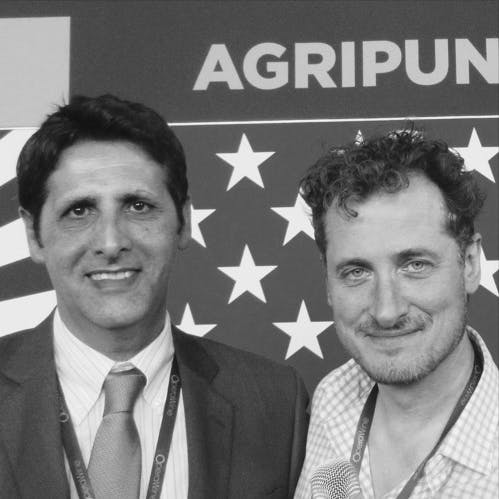
Ep. 123 Monty Waldin interviews Salvatore Santus (AgriPunica) | Discover Italian Regions: Sardinia / Sardegna
Discover Italian Regions: Sardinia / Sardegna
Episode Summary
Content Analysis Key Themes and Main Ideas 1. The history and unique terroir of the Solchis region in Southwest Sardinia. 2. The founding and philosophy of Agri Punica, including its key figures like Giacomo Tachis. 3. The significance of Carignan as the indigenous grape variety of Solchis, its cultivation methods (bush vines, sandy soils), and its DOC appellation. 4. The role of other grape varieties like Vermentino and the strategic use of international varietals (Cabernet Sauvignon, Merlot) in blends. 5. Agri Punica's export strategy and main markets for its wines. 6. The historical context of Sardinia, particularly the Punic influence, as reflected in the winery's name. 7. The personal connection of Salvatore Santos to the Sardinian wine region and his background in viticulture. Summary In this episode of the Italian Wine Podcast, host Monte Gordon interviews Salvatore Santos from Agri Punica, a winery located in the Solchis region of Southwest Sardinia. Salvatore details the company's founding as a joint venture with input from renowned winemaker Giacomo Tachis. He explains the historical significance of the name ""Punica,"" reflecting the ancient Carthaginian presence in Sardinia. The discussion heavily focuses on Carignan, the region's primary red grape, highlighting its resilience in sandy soils, cultivation as ungrafted bush vines (Alberello), and its Carignano del Sulcis DOC status. Salvatore also mentions Vermentino as the main white grape. Agri Punica's winemaking philosophy involves blending local Carignan with international Bordeaux varietals (Cabernet Sauvignon, Merlot) in wines like Barrua and Montessu to create approachable wines suitable for export. The winery exports to approximately 30 countries, with significant markets in the USA, China, and Switzerland. Salvatore also shares his personal connection to the region, having grown up near the winery and worked in vineyards as a teenager. Takeaways * Agri Punica is a Sardinian winery in the Solchis region, founded as a joint venture with the significant involvement of winemaker Giacomo Tachis. * The winery's name, ""Punica,"" is a nod to the ancient Carthaginian history of Sardinia. * The Solchis region is renowned for its Carignan grapes, which thrive in sandy soils and are often cultivated as ungrafted bush vines. * Sardinia's diverse soil types, including sand, limestone, and clay, contribute to the unique characteristics of its wines. * Agri Punica strategically blends Carignan with international varietals to produce wines that are both distinctive and approachable for global markets. * The winery has a strong international presence, exporting to numerous countries, with key markets in the USA, China, and Switzerland. * The quality cooperative Cantina Santadi is a co-owner of Agri Punica, demonstrating a commitment to quality wine production within the cooperative model. Notable Quotes * ""Given we are based in Southern Southernia in southwest action in a sub region called, Solchis. And Solchis has, you know, ancient origins from definitions who became later on Punix."
About This Episode
The speakers discuss the history and potential risks of a joint venture between Italian wine podcast and Agribusica. They talk about the use of coffee, the use of soil, and the potential for Karignano to grow in a hybrid way. They also discuss the use of stone and the importance of local variets for better taste and diversity in wine. They express a desire to make the wine more approachable to foreign markets and mention potential returns to a previous project.
Transcript
Italian wine podcast. Chinching with Italian wine people. Hello. This is the Italian podcast. My name is Monte Gordon. My guest today is Salvatorisantos from Agri Punica, which is on the island of Sardenia or Cartenia in the right Irenean sea. Correct. Welcome. So tell me a little bit about the the estate. How was it founded? When was it founded? It was a tap in and in two, let's say, by two important investors who decided to to create this, this joint venture to put all their, you know, knowledge and expertise together, and, they came up with this, this company, Agripunica, first, so let's tell me about the name. So Puneke, when I was young, I had to think I had to study the punic wars, but you're gonna have to remind me what that was all about. Correct. Given we are based in Southern Southernia in southwest action in a sub region called, Solchis. And Solchis has, you know, ancient origins from definitions who became later on Punix. Carta Genians. Let's say. We destroyed it then, afterwards by the Romans with the three punic wars. So that was roughly what was before Christ? Was it yours before Christ? Yeah. A couple of centuries before before Christ. And they definitions arrived in Sardinia around the ninth century before Christ. So colonized good part of the island, especially in the south, coming from Africa was obviously the, the near location for them. And then, you know, all the all the history we everyone probably knows, especially in Italy. So who are the two major parties involved in this joint venture? The winemaker, let's the Wayne consultant was the man that has put together these two companies. Jacob Motakis, probably one of the most famous winemakers in in Italy. He passed away a couple of years ago, unfortunately, but you still, well remembered by by everyone in the wine, sector, let's say in Italy. Any other people? Particular love for Sardinia as well, isn't he? Yeah. He kinda fell in love for Sardinia in the beginning of the eighties when he's started, you know, doing consultancy for a consortium first and then soon after for Cantina Santari, who is one of our, mother companies, let's say. Cantina Santadia owns fifty percent of the shares of Bunica. And that's the cooperative. And that's the cooperative. Though, you know, it's a kind of, we can call it quality cooperative because they produce quality binds mostly, which is quite unusual in the in the cooperatives, let's say, generally speaking. Psychology, you mean like bottled wine? Yeah, bottled wine, but, you know, with also bottles which are, which represents Sardinia and yet cellents of Sardinia. As a matter of fact, today are present here at wine top of wine today, which means they were selected among the hundred best Italian wineries. Tell me a little bit about the that area of southwest Yeah. What is it? Is it? Is it obviously very hot? What about soil types and the climate and the grape varieties that you your company is dealing with? Yeah. Surges, they were Southwest of Sardinia. Let's say specializes, kind of specializes in producing carignano grapes. And then Carignan wines, of course. It's a varietal, let's say, I'll talk to those varietals, though, you know, some may argue that the the the grape was imported probably by definitions, but that's a theory. Not yet proof probably was out talked on us even and was that even before the the definitions anyway. Because many people think it's a French grape under the name Carignon. Yeah. But also in Spain, you find it as Carignana. So it's in all the Mediterranean area. You you find it and, you know, their roots are are the same. Well, this grape grows very well in Southwest, Sardinia. Actually, is the most vacated area of Sardinia for producing carignan wines. It has its own denomination, doesn't it? Carignan or del Sulce? Correct. Correct. That's the only DOC appolation, which is Karignanodic soldiers, and, to produce wines with that DOC appolation, you must have your vineyards to correct that. So it's not allowed to produce the the DOC So when, I think of Carignon in the in the south of France, often the vines are Alberlo, bush wines. Is that the same in your region? Yes. Not just at Alberlo, but it's, especially in the coastal areas. They are still the old, vines cultivated with this, the, the, the so called Latin bush, let's say, Alberlo, as is well said, because we found, we find a soil which is predominantly Sandy. That's why they survived, to Filoxa. This way that you, you don't need to to do, you know, crafting the the the woodstock. They could be they can grow on graft, and they need for a rootstock. Absolutely. So you can find the venues, as old as a hundred years. So, does that attract investors there? I mean, I, I love Karen York. I know some very famous wine writers, which we won't name. Absolutely hate it. I don't. I think when it's well grown, it's a delicious wine, very refreshing. But the sort of thing, hang on. These hundred year old Karen your advisor, maybe I could just buy a few hectares and, you know, studying is a pretty nice place. It does that happen? Let's say in the last, in recent, years or even months, there are there been something moving on, which regards other wineries, nearby wineries, but yes, there has there has been, some people investing and buying, you know, preexisting winners and so on. Do you see that as a good thing or as a bad thing? We think it's a good thing. As long as they, you know, are really interested in, giving the added value to the pro product to Calignan, and also the other the other varietals we we cultivate. So the other process that you have, well, let's say it's the white vermantino. Vermantino grows in all the region on in North Sardinia. It's cultivated. That's everywhere. And do you make that as a dry wine or as a sweet wine or as a fizzy wine? Mostly as a dry wine. Mostly as a dry wine. There are some, you know, fizzy wines as a as a as a okay. Container, something that actually as one. So what sort of soil does the Vermontino find? Let's say it's it's a medium texture of limestone clay and and sand. That's that's always the sand then. Yeah. There's a good percentage of sand. You know, because such is anyways, not too far from the coast. So, the the the soil has this component, important. That sounds like a wonderful mix of soil, and you've got everything. You've got clay for water retention. It is. My stone for backburn of acidity and the sand for that sort of sparkly brightness in the wine. Absolutely. And probably is this the main thing, which allows Karignano to grow so in in a very good good manner in a very in, you know, in in the, in the best possible way, which doesn't happen in, in elsewhere in Sardinia. Sardinia from mid to north is more granitic. And that's why probably there, grows very wet the canon now, which is the other, famous variation. Exactly. But southern Sard has this, this, let's say, specific quality of, grape and soil and, and obviously, the climate, the weather also has is influenced by the by the sea. But you're from Sardinia? I am. I'm from Sardinia. Yes. Where where was your family from in the same area? Oh, yes. I just live about ten minutes drive from the winery. So I was, grow up there. I was born there and grew up there. Did your family have a vineyard? Yes. My dad used to have vineyard, and Did you you succeed him? Because he said that you, you know, you're wearing a very smart suit. I I You're like an armani model I have to say, tall guy, you know, very chiseled features. You're very, you're very kind. I used to work in the vineyard as well. We used to have, you know, something like, a bit more than one hectare of of vineyard. So it was something's more, but when I was a teenager and and and I'm a bit more than teenager, I used to work there as well. But that's helpful for your job though because you when you were explaining just now about the sores, and that's why I asked you the question this guy. He's not just wearing a smart suit. He really knows what he's doing good for help. He's obviously done it and worked in the vineyards. Did you which when you worked in the vineyard, did your your your your friend had the Alberello as well, the bush vines? He was every hole at Alberello at that. What was your favorite job in the vineyard? Well, let's say work in the vineyard is a is a hard job. And, because maybe because I was too young, you know, I wasn't at that time, very passionate, as I am now, but, I loved, you know, working in the vineyard in the good season or so in spring. So in this season, April, May, and, you know, briefing that they did the atmosphere and then then, with this, the lovely sun and then the green, which will start thing to, you know, to everything was starting to blossom, to blossom, and and so on. Yeah. It's a nice start of the year in the vineyard. What about, so tell me about the sales of the wine, the main markets for Agaripunica, the wines. Where do they go? Who buys them? Yeah. We're gonna actually exporting the wine in about thirty different countries in the world. So West Western Europe almost everywhere, United States is a very important market for us. Definitely one of the big three markets. And the other there are two I can mention, China and Switzerland. I'm really. Yeah. They love our red wines, especially the reds. Is it the fact they like a wine? Cause Kareneur does have quite a lot of acidity. They like that sort of wine that's quite ikie quite fresh. Yeah. They're quite zippy. This this might be one of the the things they love. I think also, they like this, let's say, I can use this expression of wine with muscles. Okay. Let's say, has a good body. It's a bit tonic at the beginning. It needs to to age a beating bottle and then it becomes really, really interesting. Really fills the mouth very well. This velvet and, you know, this long finish, which is, it's really a pleasure, matching the the wine with good fruit, and, it's predominantly a wine to be drank with food, obviously. So we got the Vermentino and the carignano. Yep. Any other main varieties that you work with? Our company, let's say, produces three wines. Two reds. One is called Baroa, which is a blend of carina about eighty five percent of carignano completed with about ten percent of cabernet sauvignon and five percent of Melro. Just to make it a little bit softer and a bit more. Yeah. Gives, let's say, a touch of of international feeling, let's say, given we export the wine, you know, eight percent of the production goes abroad. So we thought it was good for exporting the wine abroad to make the wines a bit more approachable to a foreign market. And that's why it's blank. The second line is called Monteso, and it's a blend again of Carignano about sixty percent. And the remaining forty percent is made of French varieties again. Cabernet sauvignon Caberry marlosa. Yeah. Five different varietals, well blended together. So it's it's the result is, let's say, powerful but yet, in yet, fine wine. Not overpowering. Yeah. Not overpowered. Did that blend stemfroome Chacamotakis' idea of Of course. You said it. He was, you know, arguably the the main expert in Italy of Bordeaux's tag wines. So when he made the wines, Barouin two thousand and two and Monteiso in two thousand and five, he had this idea in mind of, you know, taking advantage of, the local varietal, Karigna, but in blend with the the bordeaux varietals. So he, he has given her burdo style to a sardinian one. But we really take pride in saying that, we produce still, a terroir, something that grows there. So also, the French varieties are cultivated in our vineyards, in, in the searches area, which, let's say, give the wine in and and these bariatos as well are specific identity. I don't think the merlot and the cabernet sauvignon growing there is exactly the same as the one that grows in bordeaux. There are differences. Yeah. But you're not trying to copy are you? You're just using it as little ingredient to soften the caron yaw. Make it a bit more approachable. That that was the game of Jakomatakis when he made the wine. And, you know, after he he stopped being the main maker for for a griponika because he was, he was unfortunately was, old and, he was healed. And then, his pupils, his, the winemakers, they were working with him for for a long time, took him after and, are continuing the the job now. Good. With the same, following the same path. Thank you very much, San Antonio. For telling us about Agli Purnaga in the Soutchis region of Sardinia. Been great talking to you. And, I've haven't, yeah, pleasure. You, you know, you just the Armani suit, we're just talking about Viticulture a lot, which is fantastic because often wine people with suits can never talk about Viticulture and, have the passion and knowledge that you do of your of your particular region. Do you think you'll ever go back when you're retired and old? You go back and have a little plot of Karen y'all behind the house. Oh, you know, your kids all look at you. Oh, damn. It's just crazy. Yeah. If not exactly like that, I would like doing something. I don't know if, you know, vineyard or, but, why not? Why not? Probably will be in a very long time, but, let's see. It's something that it's, it's, appealing again for me. Salvadoris Santos from Agri Punica. Thank you very much for coming on the Italian White podcast. Thank you. Thank you. Follow Italian wine podcast on Facebook and Instagram.
Episode Details
Keywords
Related Episodes

Ep. 202 Monty Waldin interviews Vincenzo Ippolito (Ippolito 1845) | Discover Italian regions: Calabria
Episode 202

Ep. 194 Henry Davar (Vinitaly International Academy Faculty) on Verdicchio | Discover Italian Regions: Marche
Episode 194

Ep. 190 Monty Waldin interviews Federica Capobianco (Silvio Carta) | Discover Italian Regions: Sardinia / Sardegna
Episode 190

Ep. 189 Monty Waldin interviews Renzo Erasmi (Cantina Arvisionadu) | Discover Italian Regions: Sardinia / Sardegna
Episode 189

Ep. 188 Monty Waldin interviews Luca Fontana (Cantina Mesa) | Discover Italian Regions: Sardinia / Sardegna
Episode 188

Ep. 187 Monty Waldin interviews Chiara Meloni (Tenute Olbios) | Discover Italian Regions: Sardinia / Sardegna
Episode 187