
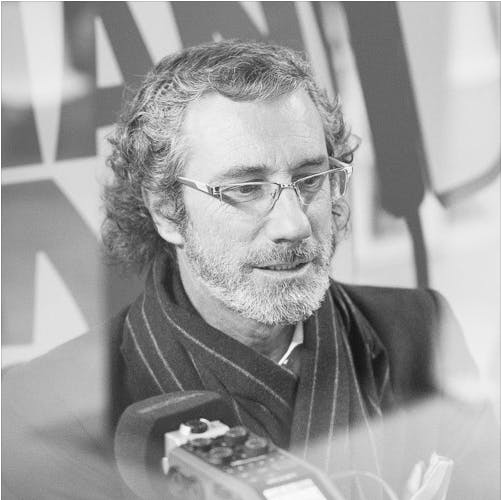
Ep. 168 Monty Waldin interviews Luca De Ferrari (Poderi Boscarelli) | Discover Italian Regions: Tuscany / Toscana
Discover Italian Regions: Tuscany / Toscana
Episode Summary
Content Analysis Key Themes and Main Ideas 1. The history and unique characteristics of Boscarelli winery in Montepulciano. 2. The specific terroir of Cervignano and its influence on Vino Nobile di Montepulciano. 3. Winery practices: soil management, organic transition, fermentation methods, and blending. 4. Challenges and marketing strategies for Vino Nobile di Montepulciano and its position in the market. 5. The use of Sangiovese and local grape varieties in Vino Nobile. Summary In this episode of the Italian Wine Podcast, host Mark Millen interviews Luca de Ferrari from Boscarelli, a family winery in the Vino Nobile di Montepulciano region of Tuscany. Luca shares the history of Boscarelli, which his grandfather started in the 1960s, focusing on the unique Cervignano sub-zone known for its red, sandy, and clay soils and the influence of Lake Trasimeno. He details the winery's extensive work on soil management, vineyard practices (including a single vineyard called ""Notcha""), and fermentation using indigenous yeasts. Luca discusses the challenges Vino Nobile faces in market perception compared to nearby Brunello and Chianti Classico, advocating for clearer communication about the appellation. He also touches on their transition to official organic certification and the importance of Sangiovese and indigenous grapes in maintaining the regional character. Takeaways * Boscarelli winery, founded in the 1960s, is located in the Cervignano sub-zone of Vino Nobile di Montepulciano. * Cervignano's unique soil types (red, sandy, clay) and the warming influence of Lake Trasimeno contribute to distinct wine characteristics. * Boscarelli employs detailed soil management, separate harvesting for different soil types, and fermentation with indigenous yeasts. * Vino Nobile di Montepulciano is perceived as undervalued in the market compared to neighboring appellations like Brunello and Chianti Classico. * Efforts are underway to simplify the appellation's name (focusing on ""Nobile"" on labels) to reduce confusion with the Montepulciano grape. * The primary grape for Vino Nobile is Sangiovese (Prugnolo Gentile), often blended with small percentages of local grapes like Canaiolo, Colorino, and Mammolo. * Boscarelli is in the process of becoming officially organic, with some vineyards already managed organically for years. Notable Quotes * ""His [Luca's grandfather's] goal was to make with passion a bottle of Vino Nobile of 2020."
About This Episode
The speakers discuss the Italian wine culture and its use of different soil, including the use of different types of wines and the importance of balance and elegance. They also touch on risotto and its power on a dish, as well as the use of traditional and organic regions for varieties and the importance of balancing taste. The use of different soil types for the production of wines is discussed, along with the need to manage vineyards and improve balance. The speakers thank the others for their work.
Transcript
Italian wine podcast. Chinching with Italian wine people. Hello. This is the Italian wine podcast. We brought you all to my guests today. It's Luca de Ferari Lucas family wine. It's called Boscolelli. Boscolelli wine, who is in the Vino Noboli region in Tuscany. Thanks for coming in Luca. Welcome to everybody. And right. Listen, just give us a little bit of history. Your family is not originally from Tuscany, is it? It is true that we have lived out of Tuscany, a part of our life, but our grandfather that start with his idea to produce a Villanoblete was born in Montepo Chán in Aquaviva, exactly where we have the estate. So he was a wine lovers and he has the habit to drink the good Villanoblete. And so his goal was to make with patient a bottle of Inonoblete of twenty twenty. When did he start making wine? My grandfather started the sixty one to both the state. He bought it. And with the project to plant nine actors that we have completed in the and the the of the sixties. Why did he choose that particular zone? He didn't buy it just by chance. He really targeted where he was gonna go. Why? Yes. Yes. Yes. Because he has the habit to buy the one in the region, but in his opinion, the area of Shervignano, in his opinion, was the best to give the taste of the personality of the Villanobili. So Chervignano is is a little sub zone if you like of, Vignanobili. Is little sub zone. Yes. It's a zone just on the limit of the hills between the Valdiccan and the top of the hills of Montepuciano, around three hundred meters on the sea level. And this is the part of the area of Montepuciano that had received more influence from the lake trasimena. So you have a part of climate, a part of the war, particularly. So you said, and what does the trasimena lake, that body of water? Does it make it cooler, warmer? The influence of lakes trasimena makes the influence that make a breeze little bit humid, but a little bit more warm. So Monque Cervagniano has a climate a bit more warm and early in the ripeness compared to other parts of multiple channel. And so it makes the thing that sometimes makes the sea on the coast. Okay. So I know you've done an of work as a family on soil, how you pick, and how you manage your vines. What are the difference of the main three main different soil types that you have, and how do you work them differently in terms of picking or pruning, or anything like that? Yeah. There are big difference. We made a lot of experiments in the last twenty five, twenty five years almost because we start around in the 90s to make liter couve picking the grip of the single part of the of the vineyards of the rose to in the to keep to pick in the right moment. And we see that the wines are different from many things. The three main soil that we can find in multiple channel are the sandy, the clay and red soil. The red soil. Most in multiple channel is the clay. But in Cervoniano, you have a little bit more of red soil that is from alluvial origin. It's ancient in period to confirm the other two that it is easy to find the top of the hill, like Sandy and clay. And this is the soil that characterizes the production of BOScarelli, spatially. So what does that soil give to the wine? This wine, this is, this soil is a really powerful soil that allowed the roots to go really deep in the soil. So they have no stress in the water. It's a really deep wine that sometimes has too much character, and so you have to dominate this. But the strong things is that with this kind of soil, you can reach the is complete, but you still have a good point of acidity and not too high in pH. Right. So, basically, the acid strength of the wine is is good enough for the wine to age well and to develop well over time and open slowly. Yes. Develop slowly. Is not to show that, the character of the age is really the only thing to the goal of the production, but it's good at Can age well, but the one should be good from the beginning. And so we look to find the balance and the elegance from the beginning production. So what about verification? Are you fermenting in stainless steel in cement tanks or in wood? Yeah. The most actually is in wood till the nineties. In that period, we made the experiment also in steel, but the most of the production in this moment happens in coming, in cask of, forty four liters just because allowed also the little couvettes coming from different vineyards. That's about four thousand liters, which is about, five thousand bottles, four and a half thousand bottles. Yeah. Exactly. Exactly. Tell me about you make a single vineyard wine? What's that called? The single vineyard is notches. It's our special Say that again. Not sure is the name of the vineyard, the special vineyard. What is a notcha? Notcha is a walnut tree. Because we have the habit to call these vineyards, vineyard, the notches for the reason that we have this big walnut tree aside the vineyards. It's just off the top of a hill with the olive tree and Genaster and, exposed to the south is a vineyard that we have both in reality in the eighty eight, but we know from the beginning from the sixties because of our farmer that the beginning, I'll pass to follow the the state. And since when we were a child, we went to to the Notio, taste the grape because it's the the vineyard that has reached the ribbons for the first. It's the early spring. Yes. And it's really more windy. And, so special vineyard with three three soil. In particularly, the percentage is one third, one third, one third, and so we make the harvest in different moment. So that's what just go through those soils again? The soil has to be important. You explained before about the right soil. The sandy soil is more light soil. So sometimes means more elegance and spicy fruit. So you pick them separately, but you blend them all through. Sure. Absolutely. So you've got the we have three moments that we make the harvest. So the sandy soil gives fluidity to the wine. The red soil gives a bit of ice. And the the the clay is the classic, you know, nobela deepness, color, concentration, and, and fruit. Do you think, as a vena nobela reproduce, obviously, you're not too far away from Bruno mellow. You have Canti Classicco to the north. Do you think Vinanobili is underestimated in the market? And in terms of its offers tremendous value, and your producer there, seem to work together fairly well. You got a mix of very large juices and smaller art, artisanal producers. And you're somewhere in the middle, you're like a medium sized artisanal producer. Do you think Vina knoboli is a little bit unfairly ignored? The Vina knoboli is, yes, honestly, has not the the the reporting value for one it is and the price. So we're not sure. We are convinced that the the value of the vinylobula, it should be its up. So how can you have that? You add value then? We have to to understand how is the managed to to communicate to the people, this. We have not to change many things. Of course, we have to increase the quality and the style of the wine, but also is to communicate this. And, it's difficult to defend the two fights compared to the other region close us, especially Montaccino that is closer, but they can be classical too. That's a really big. They make really good wine, and so sometimes we remain in the middle. And, and so this is the task that we have, for the producers with the with the consorts also. But you're doing a lot of work on things like soil. Aren't you? You're looking at your soils, you're as a group. You're you're really trying to up your game and improve things, better communication. Did you think it's just a steady process? No. There are many parts, but the part that we have made the study recently, and there is a part also in the communication that is confusing and not clear. So this is the the whole thing about Montapulciano, Vignanobbly, the town is called Montapulciano, which is also the same name as Oh, great. But you're moving towards just got a call in the wine, the noble wine of the town of Montipuliano, you're just gonna call it Vino Noboli aren't you? Yes. That's true. Applied to the government. The focus is this, you know, there is this controversial with, Montebuciano, the confusion on the market. So the goal is to make understand to the people the difference between the two wines that one come from Tuscany, one comes from Babruzzo, one is Sanjuvezo, and this Montebuchano is a grape. And the task is to put in evidence. There was no biller. And so in the label, we are deciding with the assembly to allow to put no biller big in the in the label to confusing less with multiple channels. So it would just be, yeah, eventually will just be called Vina knoboli, won't it? Yeah. So when you make your Vina knoboli, the main grape is SanJavelles, but you can add up to fifteen percent of, other grapes, Muro cabinet. More than fifteen percent historically, the percentage of the Appalachian is around minimum seventy percent sangiovese and the rest in the history in the past forty years ago was only local grape and apart also of white grapes. In the evolution, we have more free. We decide to leave more free the producers. So we have keep this seventy percent of SanJurveza, and they leave the people to complete this percentage. They could just make a hundred percent centralized. They can have it. Two hundred percent. Two hundred percent Sanjuveza or thirty percent are agreed. Which do you prefer? In absolute no. In absolutely, we prefer the traditional, if you can say traditional, that is sangiovese with the local grape like canayola, Cororino, and Mamolo, or sangiovese a hundred percent. But we are sure that the goal is to have the main quantity. It's possible of sangiovese to keep the character of the area. You know, the sangiovese is really sensible to the soil and the climate source. Sensitive. Is help to put in the bottle, the the bouquet, they perfume the character of the area more than an international grape that is more stable and represent less the character of a region. So if you're not to have not to advantage of this international grape, you don't confuse too much the people, and so you can use if you like. But, of course, if you manage if you manage to make sangiovese or local grapes, it's more characterized. So what is a good, dish to match with a Vena Albany Honestly, in my opinion, for the vino nobile, it's interesting also to match with the an entry dishes like a a pasta risotto, a part of the the cheese, like people say, the strong beef I like to match, anyway, needs a dish with fat, complex dish anyway, because the the the category, the is energy wine. It's really deep and powerful for what we're trying to find the balance and the pleasure so needs to balance with this power on a dish. So interesting you say risotto? Yes. I like risotto. I like risotto. With what? They just with the Oh, also risotto milanese. They should be able. Okay. So, but it is auto. What kind of risotto? Like, Alta two for truffle? Or Yes. Yes. Or Sobuco, for instance, the risotto with the sobuco. That's quite a strong fish. Yeah. Okay. Yes. And got forty or some pasta. I I don't remember now another dish that recently, I remember that should be a good match, bad luck. You're very tall and slim, so I don't know. You you're coming out with all these really rich dishes. I think your secret risotto eat, I don't think. Because you're, okay. What about organics? We are organic, honestly, not officially, but we are many of that we work in this direction. For instance, the vineyard, the Notion that we've spoken before, have a system of the organic, system still ten years ago. But the problem is that we have to be all the state in organic. And so we are now we have in conversion. So in two years, we'll be officially organic. Right. So we made the experiment. It takes time to to learn to manage how manage the vineyards. So what are the changes you've seen in the vineyard? Do you slightly smaller berries, lower yields, more consistency. It's changed a lot because we make a lot of things, especially my brother, Nicola, that follows this part of the production, dedicate a lot of time to force the vineyards and to find the balance in the beginning because the wise need balance. The need a season in balance. I need also a ripeness, the spring and the summer that is, and so Nikola following the season, the character of the season, work on the green part of the of the vineyards. Are new to on the production of Bosalica from the most from new vineyards that we have replanted in the last thirty years with new food, selecting old clone. Luke's yes. And, keeping the part fifty percent old clones of the, my grandfather, preneurogenteel, especially. Which is the local nine percent of Evese in Vietnam. Exactly. And, all other grapes of sangiovese. We have an average of six thousand of plants per hectol. So needs to take love kept keeping ballast this part of. You've also done a huge amount of work on getting to know your soils, haven't you? Yeah. You were one of the first really to maybe you'd have a plot of vines, like a a a an oblong of vines. And you just actually, we've got three different soil types here. So need to prune these vines differently and find them in this vine. Yes. Absolutely. Yes. We we make it different from from the pruning. We start from the fertilization of the soil. Yeah. Cover crops. Many things. Yeah. You're in your head. And, oh, course. What is more steady and is the same as the fermentation. We have in our natural east. We make a pedicuvée at the beginning of the harvest. So it's an indigenous yeast. From the two thousand, we have this system. So every harvest, we make thirty, thirty five different to Kuwait. And the aging is similar for all. Of course, maybe for the the entry level, maybe you are you are ten, twelve days in spite of fifteen, eighteen days. But, this is the most steadily things. We we make to make a fermentation more clean possible, stable, and natural is possible. We control just the temperature at the beginning at the end of the fermentation to complete the sugar fermentation, but, we try to follow what the grape can give in that here. Yeah. Your consultant is, married to Castell. He's really into keeping things simple and keeping things as natural as possible. You're right. And you've been doing a few long times. He's a great technologist. He worked with us to the till the eighty three that my mother had chose to to this cooperation. I start to cooperate with Mauriza from the eighty eight. That is the first harvest that I made personally. And we have worked together for ten years. Now from the two thousand, have also made Ferara, a younger andologist that I like very much. And we shared the with the task with Castelian. Yeah. Mary works about it as well. I just wanna say thanks to my guest today, Luca de Ferari from the Boscadetti winer in Vino Nob in Tuscany. It's a family, I've got a huge amount of respect for you've been ahead of the game in Vinanoble for for quite a while, and it's so nice to see that the work that you've put in back from the eighties and even from your your ancestors' time is now being appreciated by the market. Really well run, really well run winery in the vineyard, very, very coherent way of working in the vineyards of breaking the vineyard down into individual pieces and from them according to their merits and their potential and then fermenting everything with wild yeast as we've just heard so that have a real, you have many, many different elements to the blend with these complex little parts, the puzzle that you put together in a blend. And if you taste these wines, you can really see that. There you go. I'm gonna become your publicity manager. Thank you very much. He's a pleasure for us. Wanna say thanks to Lucas. Say hi to your brother from me and see you in Tuscany soon. I have Take it easy. Thank you. We wait for you. Nice for your video. Thank you very much. Follow Italian wine podcast on Facebook and Instagram.
Episode Details
Keywords
Related Episodes
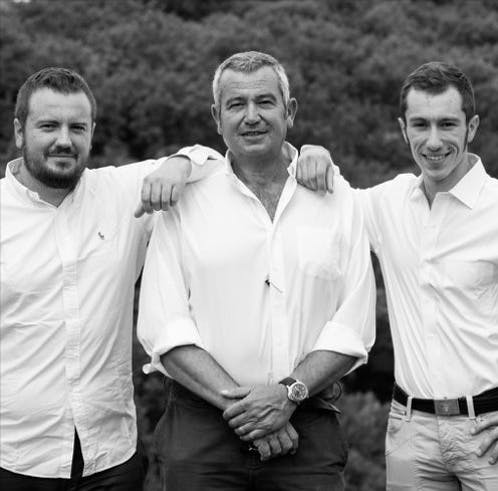
Ep. 293 Gianlorenzo Neri (Casanova di Neri) | Discover Italian Regions: Tuscany / Toscana
Episode 293

Ep. 179 Monty Waldin interviews Giovanni Mazzoni (Podere Forte) | Discover Italian Regions: Tuscany / Toscana
Episode 179

Ep. 174 Monty Waldin interviews Caterina Dei (Cantine Dei) | Discover Italian Regions: Tuscany / Toscana
Episode 174
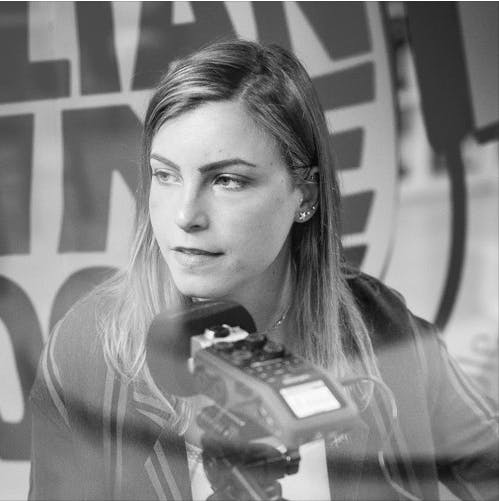
Ep. 164 Monty Waldin interviews Bianca Ferrini (Podere Giodo) | Discover Italian Regions: Tuscany / Toscana
Episode 164
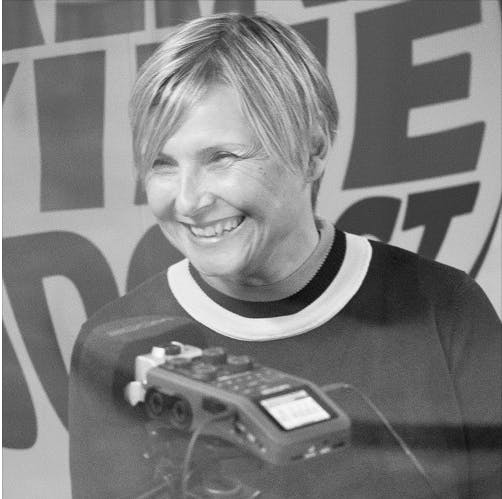
Ep. 158 Monty Waldin interviews Jeanette Servidio (Campo alle Comete) | Discover Italian Regions: Tuscany / Toscana
Episode 158

Ep. 157 Monty Waldin interviews Elisabetta Geppetti (Fattoria Le Pupille) | Discover Italian Regions: Tuscany / Toscana
Episode 157