

Ep. 9 Monty Waldin interviews Giuseppe Mazzocolin of Felsina Berardenga Winery in Chianti Classico | Discover Italian Regions: Tuscany / Toscana
Discover Italian Regions: Tuscany / Toscana
Episode Summary
Content Analysis Key Themes and Main Ideas 1. The personal journey and philosophical approach of Giuseppe Mattio Colinn to winemaking. 2. The evolution and contrasting styles within Chianti Classico wine production. 3. The deep cultural and historical connection between Italian wine, agriculture, and the land. 4. The importance of authenticity and tradition in Chianti Classico, particularly for Sangiovese. 5. The call for future generations to reconnect with nature and agricultural roots. Summary In this episode of the Italian Wine Podcast, host Mark Millen interviews Giuseppe Mattio Colinn from Felsina Berardenga, a prominent Chianti Classico winery. Giuseppe shares his unique path into the wine industry, which began unexpectedly after studying Italian language history at university and marrying into a winemaking family. He discusses the historical evolution of Chianti Classico, highlighting how wines were once authentically consumed in family homes and trattorias, often being ""rude"" but deeply connected to the local culture. Colinn champions a return to this ""peasant tradition"" of refreshing, savory Sangiovese, contrasting it with more modern, heavily oaked, and internationally-styled Chianti wines. A central theme is the profound, almost spiritual, link between winemaking and the natural world, emphasizing that humans are inseparable from nature. He appeals to new generations to rediscover this connection, drawing parallels with past farmers whose lives and work were seamlessly integrated within the estate. Takeaways * Giuseppe Mattio Colinn's entry into the wine world at Felsina Berardenga was unconventional, stemming from personal connections rather than a direct wine-focused education. * Chianti Classico winemaking has experienced significant evolution, with some producers like Felsina Berardenga maintaining a traditional, un-oaked style of Sangiovese. * There's a philosophical divide in Chianti Classico regarding traditional versus international winemaking approaches. * Wine in Italy is deeply rooted in culture, history, and a strong, almost spiritual, connection to the land and agricultural practices. * The speaker advocates for a renewed focus on agricultural reality and reconnecting modern generations with the land. * Historically, life and work were inseparable for Italian farmers, a concept Giuseppe believes holds valuable lessons for today. Notable Quotes * ""Wine is never cannot be separated from a cultivated story or to be present in the agriculture in the vineyards in the contact with wine."
About This Episode
The speakers discuss the Italian culture and the impact of the pandemic on people's lives. They touch on the importance of identifying the right people and being in touch with them to avoid cultural misunderstandings. They also talk about the impact of the pandemic on people's lives and the potential for hybridity in the wine industry. They thank their audience for their time and hope to interview again sometime.
Transcript
Italian wine podcast. Chinching with Italian wine people. My name is Monte Walden. I'm with Giuseppe Mato Colin from Felsina Bedadenga, which is a fantastic winery in Canti Classic, one of my favorites. Been for many, many years, one of my favorite wines. I'm really thrilled you are here. How did you get started at, Felizinabella Denga? When I meet, Gloria Pordale, my wife. She was going to become my wife, but we were students at at the university in Florence. And she was coming with small bottles and three not yet at three seventy five, the smallest. And, was my direct contact the first impression with San Jose. Of course, it's a story of love. Yeah. You do not love for your wife or love for the Sanjuvezi? Both. Sanjuveza became something that was in relation of a good relation with people, with my wife, and then with her father. Mhmm. My future father-in-law. What were you studying at university out of interest? I was started. Yes. I was oriented to continue my career at the university. Which one? He was a little later at all. Right. Okay. Which is, the story of the Italian language, history of the Italian language. When, I received from my father-in-law, the invitation to to be involved in that work was not easy for me to, to say immediately, yes. I accept them to start to start the work, but without losing the moment to teach in my my was my real objective since when I was student with very young, the idea to become professor or a teacher in the school. Do you, actually, do you still teach it? But as well as making wine, do you still teach? Do you have any time for that or not? No. No. But, I changed work because I was a teacher for nine years. But, for me, it was a great occasion to introduce something different in the world of the wine. The idea that wine is never cannot be separated from a cultivated story or to be present. In the agriculture in the vineyards in the contact with wine. I mean, I'm going to ask you, I mean, you know how literature, maybe a book gets written in a certain period of time and the critics or the reviewers say, oh, this book is signifies something. And then as time passes, we we go back to that book and we have a different interpretation of the of the language used and the words used. How do you see that happening with wine? Maybe how Canti Classico was twenty years ago? Was interpreted and how Canti Glasgow is now because you've been there throughout this whole journey. In that time, the way to approach Canti Glasgowi in the best contest was in the in the families of our farmers in the houses. To talk about the wine in the trattoria, when wine was something in the between was a connection. I started to learn something about San Jose in that contest. I'd realize what doesn't mean a good activity, good tenants. In the sixties, in the seventies, was not possible to have a perfect identification. Sometimes there was a little bit rude in the in the but there was there was an there was an authenticity and the love for extensively from from the Kianti was possible to perceive directly from the eyes of the people. I learned when I started to be in medicine a full time. I learned a lot from the farmers, especially Remijo and Agostino Burac. Agostino was the the chief was the real responsible really facing at the moment in that moment. Okay. So he was he he was making the wine then on the estate. Was he? Yeah. But, Augusta was responsible over the administration on the vineyards. Mhmm. And for me, it was much easier to see his face to understand how I was going and harvest. The new vintage. So the contact the human contact with the people was the the best occasion and the best opportunity for me to understand something about that, world. I was coming from Venice. My and from Treviso where I was born, my family from Venice. I'm I'm a venetian of terra firma. Do we say any in Italy? Yeah. Terra firma, we say this. Yeah. Not. Yeah. Not from the sea. And, I arrived in a different totally different contest close to Florence, close to Sienna, that for me, ideally are ideal cities and in the perspective of the renaissance of another, when human being was in the center, was in the center of the world. And this microcosmos was possible to identify something that was connected to the microcosmos, very close to the stones, to the calcareous soils, to the way to organize the vineyards, and I So what you're talking about is this is this peasant tradition almost of of making wine for the family table from grapes that you were allowed to keep from by your landlord because the peasants in those days had, they had had to give most of their grapes the landlord, and they kept a little bit to make for themselves from the fan. And you're saying that is the true Tuscan tradition. That for you is is absolutely where it starts. And that's and you want your wines to be like that. These wines are the drinkable that are the cantiglas that's refreshing and bright and savory. San Jose is a very versatile gray. Mhmm. Very when it's fresh, when you enjoy when it became more natural. In the past, it was normal to approach only the youngness of San Jose. And, we learned that San Luis has a great opportunity to be engaged in the battle for the long for a long time. But I always very clear in my memory the the way to to being in relation with this kind of grape the perfumes and and is a cultural story. Do you think, everybody in Canti Classic shares your vision or do they want mainly to focus on, say, these bigger, brasher, deeper wines that have been heavily oaked with the taste of new barrels and maybe a bit of French scrapes like cabernet Merlo to make them more international. It's another story. We are in contact with that way to be on time and moderni. And, I think it was useful. To be in relation with my world wide that was growing also in Italy. Mhmm. When I started it was much was much difficult to sell the wine also in the cask in Damijamas. The idea of the Mizam boutte was not bottling was not so, yet present in the conscious in the in the people living in that moment in the areas. We were learning stuff. I mean, obviously with mechanization, we're seeing less. More of us live on in cities now than in the countryside globally. That is the goal, and we're and we're all gravitating towards the cities. And obviously, there's more people gravitate this is there are less people to work on the land. Do you think it's time with all the issues we're facing with health and obesity and the rest of that more people actually started getting back onto that and physically farming? I think we'll be a great opportunity to go to go back, perceive the reality of the agriculture. It's a very strong subject. Do you feel as do you do you feel like a spiritual connection almost with with nature? When you go out into the vineyard, do you does it energize? Beautiful is a strong word. Yeah. But I'm not I'm not a religious person at all, but you feel some kind of connection with the natural world. Is something that belongs to ourselves. It's it's something that we have inside. I don't want to use names to identify this human way to be part of the nature. Mhmm. We are not separated. Absolutely. Everything that is in the cosmos is part of our ourselves. And so we are not separated. But I think that, new generations will appreciate the opportunity to remember to be part, member also of a great project that was in the mind, the hearts of the people working before. Mhmm. I remember the people living in the in our state because facing is a farm. Living working the same time. So life and work never separated. It was a full time. When they became workers, the farmers, for them to stop the to work at the eight o'clock, at five o'clock was not the reason to stop the work. Because they went to at home and went home to and and work in the garden. I think new generations need to find again disconnection with the past. I think that's so important. I agree with you one hundred and fifty five percent. I mean, if we lose, if we lose our connection with the natural world, we're really a new way to be agriculture, ready to stay in the vineyard and in the vineyard, you can go to the theater and see, capuliete, Montecic. So in the past, there was too much the wall that separated the city and the agriculture. Mhmm. Now I think there are great opportunities. And for me, when I see Diana from Branza, from our vineyards, is a great way to understand that we are connected. Mhmm. So the real contribution that is coming from the city is always a parrotactic way to be in contact, to be in relation. That for me, that's that is for me the the connection, the real strong connection with the agriculture today and the future of the agriculture. Giuseppe Matt's going, we could talk about this for several days, I think, and hopefully we'll get the chance to do that next time I see you. Well, you're a wonderful speaker, and you do make, I think, one of my favorite wines on the planet, and the two are not unconnected, though. So it's been a real privilege talking to you. And, what can I say? I'm honored. I really thank you. You've great interviewee, and I, and I'd love to interview again sometime. Over a glass of wine next time. Oh, the best. Thanks very much. Thank you. Bye bye, Tom. Follow us at Italian wine podcast on Facebook.
Episode Details
Keywords
Related Episodes
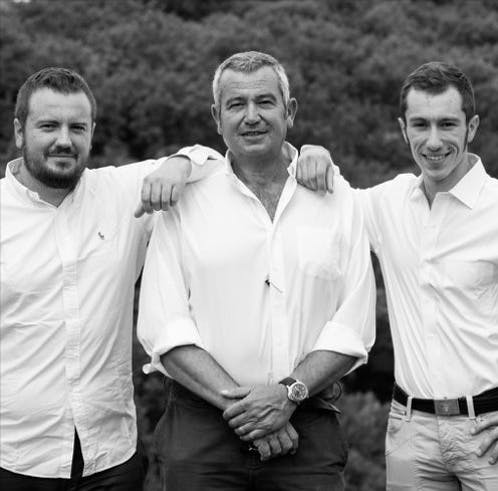
Ep. 293 Gianlorenzo Neri (Casanova di Neri) | Discover Italian Regions: Tuscany / Toscana
Episode 293
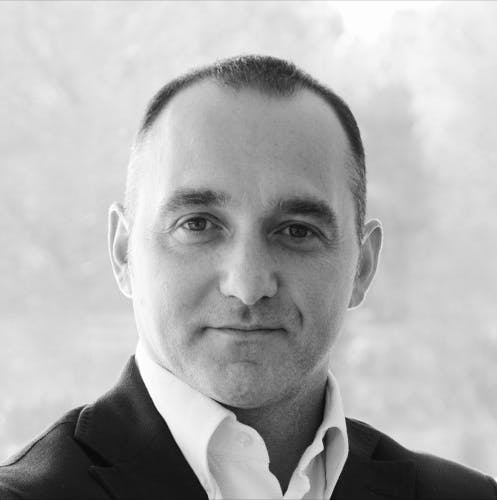
Ep. 179 Monty Waldin interviews Giovanni Mazzoni (Podere Forte) | Discover Italian Regions: Tuscany / Toscana
Episode 179

Ep. 174 Monty Waldin interviews Caterina Dei (Cantine Dei) | Discover Italian Regions: Tuscany / Toscana
Episode 174
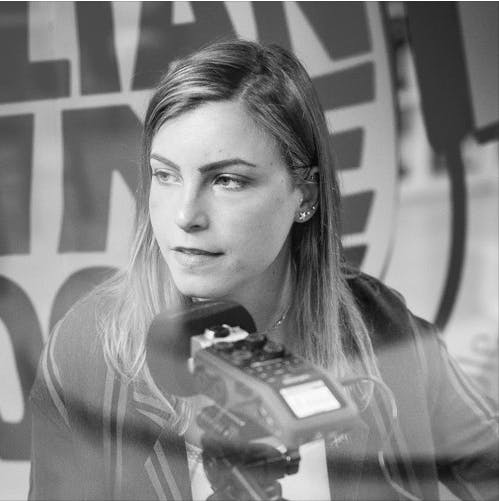
Ep. 164 Monty Waldin interviews Bianca Ferrini (Podere Giodo) | Discover Italian Regions: Tuscany / Toscana
Episode 164
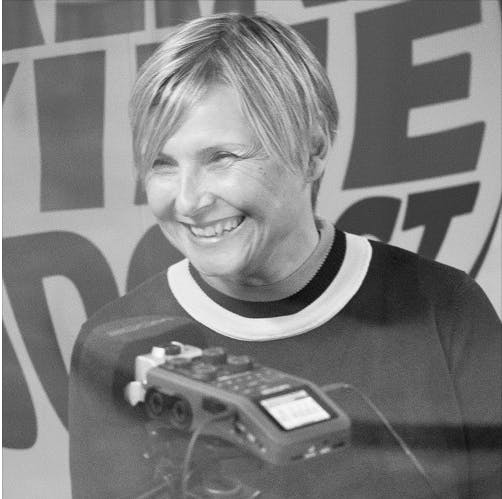
Ep. 158 Monty Waldin interviews Jeanette Servidio (Campo alle Comete) | Discover Italian Regions: Tuscany / Toscana
Episode 158

Ep. 157 Monty Waldin interviews Elisabetta Geppetti (Fattoria Le Pupille) | Discover Italian Regions: Tuscany / Toscana
Episode 157