

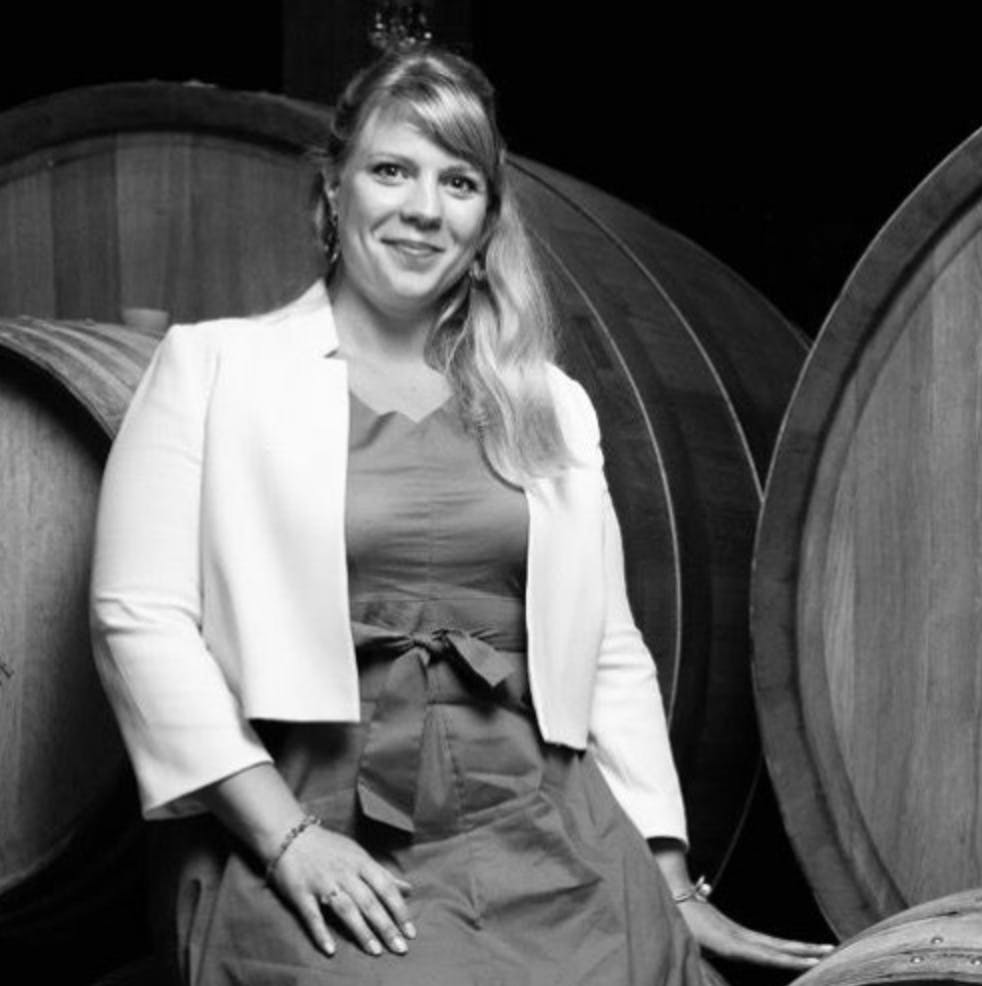
Ep. 37 Monty Waldin interviews Marilisa Allegrini of Allegrini Estates | Discover Italian Regions: Veneto
Discover Italian Regions: Veneto
Episode Summary
Content Analysis Key Themes and Main Ideas 1. The legacy and innovation of the Araglini family in Valpolicella winemaking. 2. The importance of terroir and specific grape varieties (Corvina, Sangiovese, Cabernet Franc) in defining Italian wines. 3. Innovation in traditional winemaking techniques, particularly the controlled drying process for Amarone. 4. Strategic expansion and diversification into other prestigious Italian wine regions like Bolgheri and Montalcino. 5. The changing landscape of the wine industry, including organic practices and the role of women. Summary In this episode of the Italian Wine Podcast, host Monty Waldin interviews Marilisa Araglini, representing the sixth generation of her family's winery in Valpolicella. Marilisa recounts her family's history, emphasizing her father's pioneering focus on hillside vineyards and the native Corvina grape. She details their innovative approach to producing La Polla, a single-varietal Corvina, and their controlled grape-drying process for Amarone, which has resulted in a benchmark style known for its balance and lack of oxidation, broadening its market appeal. Marilisa then discusses the family's strategic expansion into Tuscany, acquiring estates in Bolgheri to work with international varieties like Cabernet Franc, and in Montalcino (San Paolo) for Sangiovese, highlighting their commitment to organic practices. She concludes by expressing strong optimism for the future of women in the wine industry, drawing from her own experience as a respected pioneer. Takeaways - The Araglini family boasts a six-generation legacy in Valpolicella, with a strong focus on quality and innovation. - Hillside vineyards and the native Corvina grape are fundamental to Valpolicella's unique terroir and wine quality. - Innovation in Amarone production, specifically through controlled grape drying, has created a balanced, non-oxidized style that has become a market benchmark. - The Araglini family strategically diversified its portfolio by investing in renowned Tuscan regions like Bolgheri and Montalcino, exploring both international and indigenous grape varieties. - Organic viticulture is a key focus, with the San Paolo vineyard in Montalcino soon to be certified. - Marilisa Araglini is highly optimistic about the increasing and respected role of women in the global wine industry. Notable Quotes - ""My family has been living and making wine in Valpolicella for many, many years. And in fact, I am the sixth generation in the wine business."
About This Episode
Speaker 2 talks about his success in the wine business due to his family history and his father’s success in the wine industry. He explains that the wine is made from dried grapes and has a low humidity and good ventilation, and that the advantages of a controlled environment have been improved. They discuss the benefits of their approach to producing a wine with a low humidity and good ventilation, their interest in the cabernet defendense, and their desire to participate in a new wine production area in Bruno. They also discuss the challenges faced in creating a traditional fruit-wash wine and express a desire to visit the vineyard, but are hesitant to invest in another company. They end by discussing the future of women in the wine industry and the potential of women in the wine industry.
Transcript
Italian wine podcast. Chinching with Italian wine people. This is the Italian wine podcast with me Monty Walden. With me today is Marilisa Araglini, whose family winery is in Val Pollicella in Northeast Italy. Welcome, Marilisa. Thank you for coming in today. Thank you very much. Just tell us a little bit about your family history. My family has been living and making wine in Valpolicella for many, many years. And in fact, I am the sixth generation in the wine business. And, let's say that, it was my father who in the fifty expanded the winery by buying new, vineyard, increasing production and focusing on the concept of the single vineyard. Since then, the company has grown, my brother Franco took over in the vinification process when my father passed away. And it was a big challenge for us for the entire family to carry on what my father did, trying to be as successful as he was, but I think that, we could count on the best location of the volatility area. And so we succeed. Your father was very interested. You talked about when he was buying vineyards. He didn't, select his vineyards randomly. He deliberately chose the best sites on Hills slopes. Why was that important? He selected the vineyard up on the hillside because he strongly believe in the quality of Corvina cultivated up on the hillside rather than in the alluvial plane. And this was the first lesson that we learned from him. And Corvina, what's that, please? Corvina is the most important grape variety in Valporicella is our native grape variety, and Corvina is for verona, what enobioolo is for Pierre Monte and what sangiovese is for Tuscany. So Corvina cultivated up on the hillside give you much better aromas and more concentration than when it is cultivated. So what sort of flavors are we talking about in the Corvina? Corvina has two characteristics, one is aromas of cherries, very fruity, and, sometime fresh, like in the Balicella, sometime very intense, like in the Marona. And the second characteristic is that Corvina has very soft finish, so soft tannins. This is the most important characteristic of this grape variety. And do you make a hundred percent corvina? We make. Yes, sir. We started in nineteen eighty three with La Polla. Which is our iconic wine and is the most important wine that, we produce. And then La Polla is, another single vineyard, and this vineyard, which has the best location is, planted only with Corvina grape variety. So when you launch the single varietal, single vineyard Corvina wine, did your neighbors think hang on. The Alagini family's doing something completely crazy. Nobody's ever done that before? Yeah. We we we launched the La Polla in nineteen eighty three. And at the beginning, people, really thought that from the best vineyard, we could make, amarone, and not, a Table wine. At that time, La Polla was a Table wine. So but we focus on this concept. Single grape variety and single vineyard. Okay. So, obviously, two of the famous stars in the Balpala region is Erecciotto and Amaroni, and then involve, dried grapes. Yeah? Yes. They are both made from dried grapes, and this is a technique that is historical for the Balicella, but also in the drying process, we did a lot of innovation because in nineteen ninety eight, we built this facility that was the creation of my brother, Franco, together with a professor in Enology's name was, Roberto Ferrini, and, we built this facility to be able to control the process. So not to have risk of mold or botrytis during the drying stage. And this was another big improvement for the company because we were able to make the style of a maroona that we really like. So with concentration, but no oxidation. Okay. So what's the difference between drying the grapes? Picking them as as grapes, normal grapes, and then laying them on in a in an area where they can where they can concentrate and shrivel a little bit. What's the advantage of doing that in a controlled environment as opposed to a sort of natural environment. What's the advantage for you as a producer and and for the consumer who's gonna drink the wine? You know, we we don't control the in a sophisticated or a technical way the drying process. The only thing that we do is, to have a, low humidity and to have good ventilation. And so by doing this, the grapes can manage the first stage of the drying process in, being healthy. And so not to have botritus. And what's the resulting wine like? Why is it different from say a normal red wine? Alegini Amarone is a type of wine that, have a concentration balance in term of alcohol content and the residual sugar. And the the characteristic is that, we prevent any kind and any touch of oxidation. And I think that, our amarone has become a kind of benchmark in this, style. In fact, you know, Ameroni's become a real, a cult wine almost, hasn't it? Yeah. Definitely. And, the the traditional style of Ameroni was, drank by a small percentage of high end consumer. This kind of a marrone that can match with food and can match with a wide range of dishes, including Italian, but Asian, etcetera. And so this is what changed completely market for amerone. Okay. Your family has also invested in Tuscany in two of the most famous regions in Tuscany, Bruno, of, Montalcino fame, and also the Tuscan Coast Bulgary. Yes. Why did you do that? You know, sometime you want to be to go out for your comfort zone. And so you want to challenge and, you know, that, we like the challenge, but, what, really inspired us, was to deal with other wine producing area. And we choose a bulgari first because Bulgaria was kind of, different thing from Paris allies and new area. It's not as old as the amarone. And also in, bulgari, you have, what are called, international grape variety. So we like to deal with a very historical indigenous grape variety like, Corvina in one side, and with the international grape variety in another one. And we fell in love at first sight because Pulgar is so beautiful and, we invested heavily. What I found interesting about your work in in Bulgaria was you really believed in the cabernet franc grape, which I love cabernet franc grape. Why did you do that? Why did you see its potential before many other people did? I was impressed by the first vintage because I think that Cabernet Frank is a great variety that if you cultivate at the wrong latitude, you don't have quality. If you cultivate Cabernet Frank, where you can achieve the phenolic maturation. You have spiceness. You have concentration. You have very exciting and very good flavor. So from the first vintage, I realized that the cabernet franc cultivated at forty three degrees, latitude was possible to achieve this, maturation. So what flavors does a ripe company front grapes gift to your bulgary red wines? It has this, the the spiceness, licorice? Do you find licorice? Things like that in there? Liquoritzia? Liquoritzia. Yes. Liquoritza. Very good. Okay. And also sage the Mediterranean herbs that make, that give the complexity, very interesting complexity to the wine. Okay. Let's talk a little bit about, Brunoo de Montaccino. Why did you want to get involved in Bruno? You know, Bruno, we purchased this company that was already established. So in Bulgaria, we started from scratch. And in Montecino, the company was already there. And the name? Sam Paulo, San Paulo. And, I decide to buy this property because, of the location. Montecino is, one of the largest common in Italy is, more or less, three hundred square kilometers. So it's very large. You have different soil, different exposure, different climatic condition. San Paulo, in my opinion, is, on top of the hill, and, is facing east and south. So it's a fantastic location for the Sanjuveza. And then Sanjuveza was a a grape variety that I always love. And, I think that Sangiovese in some way, some similarity with the rigorous, what I call rigorous grape variety, like, the biolo, and, and it is completely the opposite of a maroni. So I like this kind of, different situation. They're sort of savory wines as well, aren't they? Yes. Yes. Yes. You know, you do, your your vineyard in in Montecino has a fantastic view. Yes. I have to say. It's a beautiful beautiful site. Yeah. It's a very nice location. Very good soil. Very good ventilation so we can do the organic, protocol. And in fact, this year, Apollo will be organically certified because we started five years ago. Do you think you can extend that to your other estates well? The organic management? I don't know if my daughter will do something like this, but I think that, I am okay. And your daughter's name? Your daughter's name? Carlotta. I have two. Carlotta and Katerina. And, I don't want to invest in another company because I like to take care of everything. So I like to visit the vineyard. I like to go in the cellar, to taste the wines. And, the day is twenty four hours. So we cannot, extend to thirty six final question about, women involved in the in the drinks business, the wine industry. Are you worried about the future of your two daughters in the wine industry or do you think, is becoming less of a sexist environment? I, I'm sure. I'm sure. I see a very bright future for women in the wine business. And I must say that when I started, I was one of the the very first women. Was it hard for you then? I don't know. I I was always a respect. I it was hard when I was, seventeen, eighteen years old, but, my father didn't make any difference in gender. So I didn't feel any difference between myself and my brother. Brilliant. Thank you very much for coming in today. I wish you ever success with all your projects. And hope to see you in Bulgaria or Molataccino or even in Balpola cheddar, one of those beautiful hillslides that you've got. Thank you very much. And also, the people that listen to this, they are very welcome to come. Both of them. Thanks. Thank you very much. Follow us at Italian and wine podcast on Facebook.
Episode Details
Keywords
Related Episodes
Ep. 395 Milena Pepe | Discover Italian Regions: Campania
Episode 395

Ep. 306 Monica Colangelo (Nativ) | Discover Italian Regions: Campania
Episode 306

Ep. 190 Monty Waldin interviews Federica Capobianco (Silvio Carta) | Discover Italian Regions: Sardinia / Sardegna
Episode 190

Ep. 187 Monty Waldin interviews Chiara Meloni (Tenute Olbios) | Discover Italian Regions: Sardinia / Sardegna
Episode 187

Ep. 180 Monty Waldin interviews Andrea Sartori (Casa Vinicola Sartori) | Discover Italian Regions: Veneto
Episode 180

Ep. 171 Monty Waldin interviews Angelo Peretti (Consorzio Bardolino Chiaretto) | Discover Italian Regions: Veneto
Episode 171