
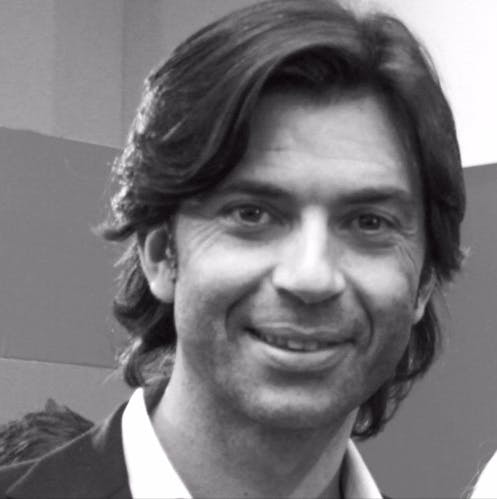
Ep. 64 Monty Waldin interviews Francesco Zonin (Zonin 1821) | Discover Italian Regions: Veneto
Discover Italian Regions: Veneto
Episode Summary
Content Analysis Key Themes and Main Ideas 1. The historical presence and evolution of Italian wine production in the US (Virginia). 2. Cultural differences in wine consumption and perception between Italy and the USA. 3. The increasing importance of storytelling and producer personality in wine marketing. 4. The impact of social media on wine communication and the challenges of information overload. 5. Opportunities and challenges for Italian wine producers (both large and small) in a global market. 6. The unique strength of Italy's diverse native grape varieties and appellations. 7. The need for collective promotion and a unified ""country"" approach for Italian wine on the global stage. Summary In this episode of the Italian Wine Podcast, host Monte Walden interviews Francesco Zonin of Zonin1821, Italy's largest privately owned wine company. Francesco discusses the Zonin family's historical involvement in wine production in Virginia, USA, beginning in 1976, and how the state has since become a significant wine region. The conversation shifts to the cultural differences in wine consumption between Italy, where wine is intrinsically linked to food and social settings, and the US, where it's often perceived more independently. Francesco emphasizes the evolving role of storytelling and producer identity in wine marketing, particularly in the age of social media, and the challenges posed by vast amounts of information. He highlights Italy's unique advantage with its vast array of native grape varieties and rich history but argues that Italian producers need to overcome individualistic tendencies and collaborate more cohesively to promote Italian wine globally, especially in large, emerging markets like China. Takeaways - Zonin1821 played a pioneering role in establishing modern viticulture in Virginia, USA. - Italian wine culture views wine primarily as an accompaniment to food, in contrast to a more independent perception in the US. - The modern wine market demands transparency, local sourcing, and a compelling story behind the producer. - Social media has revolutionized wine communication, creating both opportunities for direct engagement and challenges due to information overload. - Italy's vast diversity of native grapes and historical heritage are unique marketing assets. - Italian wine producers need to foster greater collaboration and present a unified front to effectively compete in large international markets. - Learning from other countries' promotional strategies is crucial for Italian wines despite their rich heritage. Notable Quotes - ""If you ask an Italian, just imagine a glass of wine. In his mind, the glass of wine is on a table surrounded by bread, maybe some pasta or some food. If you ask an American, maybe there is a glass of wine, maybe in the middle of a vineyard, and food is maybe there, maybe not."
About This Episode
The speakers discuss the Italian wine culture and how it is different from the UK. They emphasize the importance of food and wine pairing, open communication, and accepting criticism. They also discuss the need for a flexible and agile approach to sharing stories on social media and the potential for a revolution in wine consumption. They acknowledge the challenges of being a small and small wine producer and emphasize the need for a more flexible approach to sharing stories. They also discuss the challenges of the industry and the need for a new way to communicate and tell stories, as well as integrating different wines into their own brands and focusing on learning from each individual.
Transcript
Italian wine podcast. Chinching with Italian wine people. This is the Italian wine podcast. My name is Monte Walden, and in the studio today is Franchesco Zounin of Zounin eighteen twenty one with your Italy's largest private owned wine company? We are. He says very modestly. No. I just read it on the newspapers, so it must be right. What we thought we do today is talk a little bit about, because you've lived in you have, the zoning family have interest in Virginia in the USA. Correct. And you've lived there? I did. Yeah. It's a we didn't buy a winery. It was seventy nineteen seventy six. So it was actually one of the first attempt, modern multicultural in the East Coast and especially in Virginia because the first real attempt was done by president, Thomas Jefferson, thanks to an Italian from, from Tuscany. So how did, sorry, how did that happen? It was my father because I was two years old at the time, but my father was, in the 70s, he was already traveling around the world to discover different wine places around the world. So Australia, New Zealand, Brazil, Argentina, Chile, Chile, Chile, California, and on the way back from California, at the time, there was no direct flight. So you had to fly to London, and then DC and then to San Francisco. So on the way back, he had a friend from it. We lived in Charlotte's field. So it's okay. On your way back, anyway, you have to stop. So why did it come here? And remember that Virginia has a big part on the on the history of it culture in, in the US. So he went there, fall in love with a place. He saw a great potential in terms of quality. So it was a sheep farm at that time, and then we transformed it into a wine in states. And it's, now the leading winery in, in Virginia, Virginia is now two eighty five wineries. So it's more or less as big as Montalcino in terms of numbers, and it's, it's growing in terms of perception and, and, and overall quality. So when do you fly to the USA, but with your selling Zonian Italian wine hat on? Yeah. We also have an import company. So we import all the wines, but my family producing the nine wineries in Italy, and it's based in Miami. So in terms of, obviously, in Italy, wine and food, it kinda happens automatically. How is it different in the USA when you're presenting potential consumers with wines made from Italian grape varieties that possibly are unfamiliar to them? And how are they gonna match that with, with American cuisine? It's a very interesting question. I think it's, I wouldn't call it a big difference, but it's, a psychological difference, I think, the way we live wine in Italy compared to US because if you ask an Italian, and I'm not talking about the wine lover, the three, five percent of the market. But if you ask an Italian, just imagine a glass of wine. In his mind, the glass of wine is on a table surrounded by bread, maybe some pasta or some food. If you ask an American, maybe there is a glass of wine, maybe in the middle of a of a vineyard, and food is maybe there, maybe not. So I I think one of the things changing around the word that even the style of wine, it's going toward the wine and food pairing. Wine is not perceived anymore as something but it stand on its own. But it's more part of of a food culture. I think we cannot think of a wine culture without the food culture. And, the way it's evolving, the food culture, and the same way it's evolving the, of the wine culture. So we're more careful on what we eat We wanna know where the food comes from. We're eating more locally organic. And I think the wine consumption is doing the same thing. We wanna know who the producer, who we can trust. We wanna know the story behind because the difference is we're in Verona right now. If you get out an mean, you pick twenty restaurants for all very good. One of the main differences would be who's the chef? What's the story of this chef? What's his philosophy? Because then the dish, it's good. Wine is the same thing. Now, we can blind taste fifty wines and they're all good. So what wine would I buy? And I think Ben that the history and the personality of a producer or or or the winery is is is gonna play a a major role together with the style that has it it's gone into a direction of a more drinkable and a more food friendly wine. Do you think this need for the story is something that's always been latent is the potential for that, but we didn't have the way to communicate that easily before we were relying on wine magazines that are heavy and have to be put in the post. And now we can get any piece of information we want from anywhere in the world at the click of a button. Do you think that's making it easier for winemakers to communicate their story either visually or with audio, with photography? It's, potentially easier because now do you have the opposite effect? There's too much information. Tell me. Maybe thirty years ago was twenty magazines around the world, ten newspaper. Now it's twenty magazines, ten newspaper, and one point five billion people on Facebook and on, So I think the revolution now has been done, which is by social media. Now everybody can say something about it. Everybody needs to be open to hear anything about himself and his wines. It's a small revolution. You need to be able to open up and accept critics, positive critics, meaning that it's a creative, but you need to digest and understand in order to do a better job. On the other side, there is so much information, so much noise, then you need to understand better yourself, your company, and your wines because the piece of information you're about to give away, it's fundamental because there's so much noise, but everything you say has to have a meaning. You're not allowed anymore to say something just because you need to say something. Now, you say something if it makes it different, if it has a meaning. Because people now on the other side, there is so much noise, people are not willing to hear you anymore. They wanna listen to something interesting. So if you only have something interesting, a good one is not enough anymore, a good story is not enough anymore. You have to tell it in the right way, and it's, it's challenge because it's, completely new because you're, you know, wine has always followed a market opened by many different companies or or bigger company compared to the wine industry. So we always follow an example. Now, basically, we are entering a new word social media or communicating every day your product, and it's never been done in the past. It's a challenge for everybody, being procter and gamble, and being a very small retailer, and being a very small wine producer. And I think it's a fantastic I mean, how could Italy in general and zone in eighteen twenty one in particular take advantage of some of the opportunities and potential complexities of of how, journalism and distribution kind of almost coinciding now. This idea need to tell a story to get distribution you need to tell a story. Right? How do you see opportunities in the future arising for for both big producers like you guys, your family, and also for say smaller producers? Well, I think being an Italian, I think we had to to gold nuggets that we need to play. And one is basically our wines, six hundred local varieties, four hundred and some appellation. It's complicated, but it's unique. So either you can look it at the negative way or in the positive one. Positive means that you can tell something new basically every day for the next ten years. And if you look at Australia, South Africa, Chile, Argentina, they have a great potential, but not in in this area. The second one is the store you can tell because you can taste a very good wine especially a new word. What's the story behind? It's a first generation story. Here is, I don't know, I think payoff or Santinori's twenty sixth generation. The base in Italy, it's, what, three, four, five So we have, an amazing story to tell on so many different topics. The area, the appalachian, the variety, bitty culture. So this works for a big company, like ours, for a small company. Problem is, again, this amazing noise. So even a nice story from a nice, fifty culture, a nice, wine producer, it's not enough because it's breeze too much outside. So I think what we are missing in Italy and that we're probably much better than us in, other countries is how to merge these different stories into, like, a chorus. So how you have ten, twenty, thirty, fifty amazing producers. Okay? But if you put them together, then you can make a statement to the word and say, okay, Italy is also this one. Come, and you can spend two months Whatever areas or country, you can spend two months in Etna to understand, and then you drive half an hour, and you do the same for Crilo. When you drive half an hour, you spend two months talking about in solar, and many can spend six months talking about, and then once you're done, you take a ferryboat and you go to Calabrio, and you do the same, when you go to Pulia to Bazili Carta to Mauriza. I mean, it's never any potential. The only problem, the only limitation I see is if you leave it every producer on its own, he's gonna do a good job because we always demonstrate it, but we can do it, but doing it in a different way that is the opposite of our philosophy. The first time I went to a university, a study business. One of the first lessons my professor told told us the class that, you know, in Italy, the number of shareholders in a company, it's always odd, and three are too much. I think it's the the only big limit that Italy is facing, right now. We need to work as a country, we need to make a statement. And China was, really is a good example. If you wanna turn the Chinese market around for Italian wines, we need to go there as a country first, not just as individuals. It's too big. More than twenty cities with more than twenty million people. It's something we as Italian, we cannot even think about it because if you put together three cities in China, they're bigger than Italy itself. So the market is too big. If you wanna make a statement in this noisy market, you need to be extremely focused. You should not. You get there somehow, some way in a certain time, but we need to learn sometimes because, again, a great thing we have, every producer from around the world, they cannot learn how to grow. Just because it's not they're not sure that the third wire they have, it's it's good for this for this variety. So they cannot get where we are, but we can get where they are in terms of promotion. So we need to, you know, make a step down. It's okay. We're Italy, we're number one. We're very good. We have thousands a year of a three on winemaking. In terms of promotion, let's learn something from our neighbors. Francesca Zurnin of Zurnin eighteen twenty one. Thank you for those insights on, on marketing Italian wine in this ever changing and ever more complex environment of communication, global communication. Sure, you individually and your family, collectively, will be able to crack it and, enjoy, even more success. Thank you very much. Thanks for coming. Follow Italian wine podcast on Facebook and Instagram.
Episode Details
Keywords
Related Episodes
Ep. 395 Milena Pepe | Discover Italian Regions: Campania
Episode 395

Ep. 306 Monica Colangelo (Nativ) | Discover Italian Regions: Campania
Episode 306

Ep. 190 Monty Waldin interviews Federica Capobianco (Silvio Carta) | Discover Italian Regions: Sardinia / Sardegna
Episode 190

Ep. 187 Monty Waldin interviews Chiara Meloni (Tenute Olbios) | Discover Italian Regions: Sardinia / Sardegna
Episode 187

Ep. 180 Monty Waldin interviews Andrea Sartori (Casa Vinicola Sartori) | Discover Italian Regions: Veneto
Episode 180

Ep. 171 Monty Waldin interviews Angelo Peretti (Consorzio Bardolino Chiaretto) | Discover Italian Regions: Veneto
Episode 171