
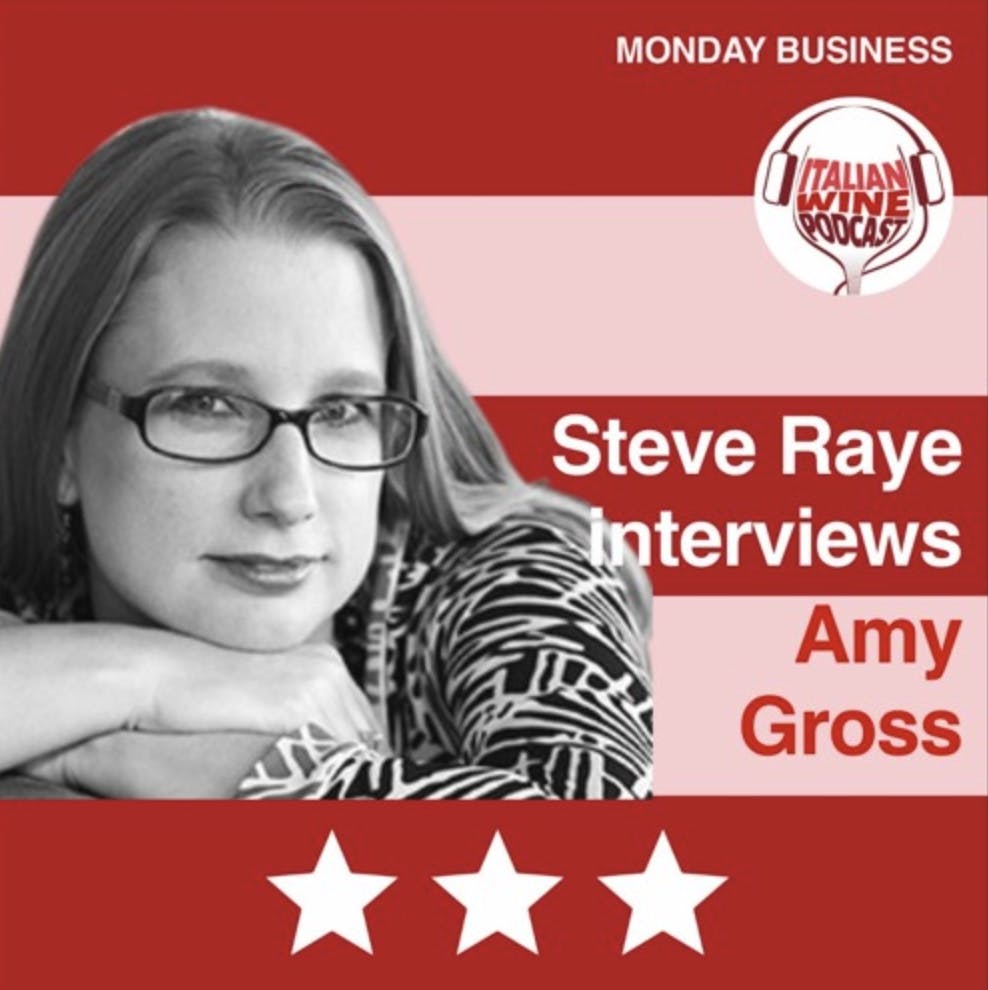
Ep. 689 Amy Gross | Get US Market Ready With Italian Wine People Clubhouse
Get US Market Ready With Italian Wine People Clubhouse
Episode Summary
Content Analysis Key Themes and Main Ideas 1. Bridging the Gap Between Wine Industry Jargon and Consumer Understanding: The core problem addressed is the intimidating and often confusing language used in the wine industry, which alienates casual drinkers. 2. Flavor-First Wine Recommendation Technology: Introduction and detailed discussion of ""Wine for Me,"" an app (primarily web-based) that uses sensory science and simplified flavor profiles to help consumers find wines they enjoy. 3. The Evolving Landscape of Wine E-commerce: Exploration of the dramatic growth of online wine sales catalyzed by COVID-19 and the challenges and opportunities this presents for retailers and wineries. 4. Data Ownership and Consumer Insights in Digital Sales: Emphasis on the importance of retailers and wineries owning consumer data to understand purchasing behavior and preferences. 5. Critique of Traditional Wine Scoring and Recommendation Systems: Discussion on why conventional wine scores and detailed flavor wheels are often unhelpful for the average consumer. 6. Strategic Shift from Native Apps to Web Apps/QR Codes: The advantages of mobile-responsive web applications for wineries and retailers in terms of cost, accessibility, and data analytics. Summary In this episode, host Steve Ray introduces his new podcast series, ""Get US Market Ready with Italian Wine People,"" focusing on personalities in the Italian wine sector in the US. He interviews Amy Gross, founder of ""Wine for Me,"" an innovative technology designed to help novice and casual wine drinkers find wines they like based on flavor rather than complex jargon. Amy explains how ""Wine for Me"" uses simplified ""sliders"" (e.g., sweet to dry, body) developed with sensory scientists, avoiding intimidating terms like ""sautéed gooseberries."" The conversation delves into the rapid growth of wine e-commerce post-COVID, highlighting the consumer shift from physical stores to online purchasing. Ray and Gross discuss the industry's ""lexicon bugaboo"" and the limitations of traditional wine scores for general consumers. Amy advocates for web apps accessed via QR codes over expensive native apps for wineries, emphasizing their mobile responsiveness and superior data tracking capabilities. They also touch on the critical importance of data ownership for retailers and wineries to tailor offerings and improve customer experience. Ultimately, ""Wine for Me"" aims to integrate with existing sales platforms to make wine discovery and purchasing easy, minimizing consumer disappointment and fostering broader wine adoption. Takeaways * The Italian Wine Podcast is launching a new series focusing on Italian wine professionals in the US. * Amy Gross's ""Wine for Me"" simplifies wine selection by focusing on sensory-driven flavor profiles for casual drinkers. * Wine e-commerce has seen significant growth, projected to reach $20 billion by 2024 in the US. * Traditional wine jargon (e.g., ""fried gooseberries,"" ""tobacco notes"") is a major barrier to consumer accessibility. * ""Wine for Me"" uses approachable descriptors and interactive ""sliders"" to communicate flavor. * Web apps (accessed via QR codes) are a more effective and cost-efficient digital strategy for wineries than native apps, offering better data tracking (e.g., Google Analytics). * Wine scores and medals often do not correlate with a consumer's personal flavor preference. * Minimizing consumer ""disappointment"" with wine purchases is crucial for fostering engagement. * Data ownership for retailers and wineries is key to understanding consumer behavior and product preferences. * The goal is to integrate flavor-based recommendations into existing sales channels (marketplaces, winery websites) to facilitate purchases. * Wineries should focus on describing their wines in consumer-friendly terms to attract a broader audience. Notable Quotes * ""Basically, what we do is use flavor, to help people find wine."
About This Episode
The speakers discuss the challenges of finding the right wine wines and the use of labeled language to make them more user-friendly. They also discuss the use of Tannic and native app usage, as well as the importance of taste and scores in determining the value of wine. They also mention the use of sensory science to create recommendations for wines and how it is used to simplify the connection with consumers. They suggest helping retailers with their app or website and expanding their services to other countries. They also discuss the importance of maintaining a commercial process and knowing the taste of wine in a way that people understand.
Transcript
Thanks for tuning into my new show. Get US Market Ready with Italian wine people. I'm Steve Ray, author of the book how to get US Market Ready. And in my previous podcast, I shared some of the lessons I've learned from thirty years in the wine and spirits business helping brands enter and grow in the US market. This series will be dedicated to the personalities who have been working in the Italian wine sector in the US, their experiences, challenges, and personal stories. I'll uncover the roads that they walked shedding light on current trends, business strategies, and their unique brands. This episode is proudly sponsored by Vivino, the world's largest online wine marketplace. The Vivino app makes it easy to choose wine, enjoy expert team support, door to door delivery, and honest wine reviews to help you choose the perfect wine for every occasion. Vivino download the app on Apple or Android and discover an easier way to choose wine. Hello. This is Steve Ray. And I wanna welcome you to the wine to wine two thousand twenty one Clubhouse marathon produced in collaboration with the UK wine show, interpreting wine and my company, Bevology Inc. Today I'm pleased to be joined by Amy Gross of wine for me. Amy's been working on a, on a line app for a number of years. She's had a number of major companies including IBM supporting what she's been doing, and it has evolved, over time. And I think, you know, contemporary with all of the major changes that are happening around the world, obviously, for COVID. So later today, I'm giving a presentation on e commerce. Earlier today, Amy gave gave a presentation to the group on Earthing. So why don't you give us a a nickel summary of what your thing's all about, and then, we can start making it far. Basically, what we do is use flavor, to help people find wine. So I worked with sensory scientists from Your Alma mater, Cornell University, and winemakers, data scientists, and such to come up with a way to analyze wines based on flavor principles using tasting, not chemistry, and then an accompanying recommendation engine with that. Now once when we started launching this, people said to me digital menus. So it's been quite a journey, but we started with, an iPhone app and we've evolved from there to technology used in tasting rooms and on websites, again, just to help people find the flavors that they like. We wanted to kind of meet novice and casual wine drinkers where they were in finding a great way to find new wines. Okay. So that raises the, the, the, the elephant in the room question is we've got e commerce now, which is, has grown dramatically during COVID. The numbers I've seen is from, e commerce of wine in the United States, and I'm diff including domestic wineries to consumer shipping. Was it about two percent before COVID? It went up to about four to eight percent during COVID. It's projected to be up to twelve percent within a year and maybe twenty percent and twenty billion dollars, by twenty twenty four. The challenge is people have changed the way they do shopping. They're no longer exclusively in one particular channel. They don't just go into a store. And even if they do go into a store, they'll often take a photograph and using label recognition technology to access more information on the line through tools, such as Vivino, and add, I mean, I know he's at Verizon, here before, I think the big bugaboo I keep finding is the lexicon, the jargon, the language that people in the wine industry use, and then the, the language that is used by people who think that's the language you should be using, and I use the metaphor of it's like fried gooseberries, so I never had a regular gooseberry meal. And to make wine, it's almost off putting it so what you're trying to do, and I think all the people that we're talking to at this conference today are all trying different versions of that, is to make wine more user friends or accessible. Accessible. I would say accessible. And yeah, vocabulary was definitely a challenge, and especially because we started working with sensory scientists and winemakers who wanted to analyze seventy plus characteristics and get so granular that we had to say, you know what? Let go back to what the sensory scientists have to say as to what things are really important, what we should measure, but then what you said, how do we communicate that? So we went back and we have a lot of options that our users can select to indicate the flavors that they like after testing, at wineries and the finger lakes, we found that the fewer things, the better. So we start with sweet to dry, full bodied, light bodied, long finish, short finish, those sorts of things. That are easier to understand. People still body is a question that a lot of people struggle with. And so we try to explain, you know, using the milk analogy, skim milk to to whole milk to cream, and sometimes people get that and sometimes they don't. Another one though that's a real challenge is sweet to dry because a lot of people will say they like dry. When in actuality, they like a little bit of sweetness, a little bit of sugar in their wine. Yeah. One of the things I've heard people say Americans have two flavor preference crunchy and sweet. Well, when you're raising our kids on mac and cheese, you know. But but but the issue with sweet is it's a relative term, and I think when we talk about wine, there's also a point of confusion that a lot of people misconstrued fruit. For suite. And so once again, it has to do with the definitions and what people are comfortable with. So one of the things you guys are using, it's this, you called it a slider. Basically, it's a toggle, like, on a, on an audio board or something from one side to the other. It's a continuum within there, you can describe sweetness. We might talk about something that's having programs of residual sugar per liter, which would speak to us and tell us what we're expecting with that. Well, actually, it doesn't really tell you what you're expecting with that because what we're finding is something might have a definite amount of sugar, but that's not what your flavor and taste buds are going to perceive. Why is that? It's it's because all the other ingredients and all the other characteristics of the wine can make something with two grams residual sugar taste one way or taste another way because all the other things you really need to get, and I'm gonna start using my hands here. This is the Italian part of the podcast, I think. I don't think people are gonna say. Every aspect of what you're tasting and what you're experiencing comes in to make a difference. So you really have to get the holistic analysis of the wine in order to help. Now that's a really big fancy word. But what we have found is that regular consumers are able to use our sliders and end up with the wines that they want. My goal for my technology, quite frankly, is not for the aficionado. It's not for the connoisseur. It's for the person and the people that want to have a lovely bottle of wine that they're going to enjoy, and they don't wanna study. They don't they don't know what regions they like. And quite frankly, they don't care what kind of grape it is. They may not know the difference between a grape or a region, but they have a nice idea of what they like, or they can pull up another wine and look at its flavor characteristics and then go in. At one of the wineries we were working with, they would serve as of course pre COVID. They would serve a welcome wine and then show you the flavor profile of that wine to kind of give people an idea of how then to use the sliders, and then people would use the sliders and get a custom flight. Okay. And I think one of the early vineyards winery that you were using was Fox Runards? Yes. Run by Scott Osborne, who's a good friend. I think of both of us for a long time. And, and I think New York state, certainly, the finger lakes had been leaders in that because even stemming from riesling, not that anybody in Italy really is about two. There's a lot of riesling been too thorough. But there's this misconception that recently this week because when my generation grew up, we tried things like leaf brown milk and, the Bishop riesling, and it was. It was very sweet. Most of the riesling wines coming out of Germany now that are popular in Germany are a best off dry, you know, but mostly bone dry. But there's this conception in the US, even though it's maybe three generations removed from people ever having tasted one of these old wines that is sweet. And my personal feeling, because recently, it's one of my favorite parietal since that's what's holding recently back. People don't understand it, and their response we always get is sweet. Then I go into the lecture, but let me explain sweet to you. And if I preface that by saying, do you want to hear the lecture? Somebody explain, sweet. The answer is no. No. Thank you. Can you use or me a glass. Exactly. But you bring up you bring up something that it's when people have a perception or when they have no knowledge. And I think that, you know, we see Italian wine doing very well in the US. But yet, there are so many grapes that I think that people are still a little intimidated to try something new. And so I feel like Italian wines could do even better if people were discovering these wines. Based on flavor and not so intimidated by what what is the grape? What is that the grape? Is that the region? How do I pronounce it? I don't know what I'm ordering. The more tools that you can give a wine casual person, a wine curious person, to find a new wine they're gonna enjoy, the more opportunities you're giving them to try your wine. Okay. I agree with that in principle. I think the question on the table, which is what you're work for is this is is a commercially acceptable way and functional way for people to learn about So I'll put you on the spot and ask you a hard question. Okay. Okay. There's a line. I presume you're familiar with Segrantino de Montefalco, which is extremely tannic, more tannic than it's almost as tannic as Tannate from Uruguay. Okay. Right? People don't have a really good way to describe Tennet. We Tennet, we talk about it as a tooth coding or grippy or those kinds of things. But in the case of Sacramento, it's the first, and in many cases, the only thing you're gonna do is like liquor should so overwhelming. How would you describe that wine to somebody else so that they're prepared to get kicked in the teeth with, a piece of wood? Well, I actually have not tasted that wine that I can recall right back to back. But because we have so many other characteristics, There's gotta be something going on with the other things that are there. Of course. Another thing that we do whenever we have we haven't used this as much, but we can build a flavor profile. So as a user comes back, and it does things more and more frequently. Once we start saving those preferences, we can start making recommendations without even moving the sliders. Now this is obviously for in in the in the technique that they've developed an account they're coming back. They're using the application and wherever it's being deployed, whether it's an account with a winery, account with a retailer, account with a bar or a restaurant. And then we can start making suggestions, and we're actually analyzing the wines based on many more things and what you see in the location. But dumbing it down in those that people just see, oh, here's an easy I have three things that I have to touch. You may wanna be able to adjust it with ten things, but they don't have to see it. It's behind a green curve. Exactly. So we whenever you first open up, you've got four from which to choose any of which you can turn off or on before or on, and then they're an additional six that you can also turn on, which we found that people would rather turn things on and turn them off Tannon is not one of them. So you are, of course, asking because it's not commonly used term by consumers to define more. Right. Right. So we actually put little tidbits of our Tannon evaluation in other things. So you'll find it kind of hidden and other things. We find that some people think even though it's not accurate that Tannan's gonna have something to do with acid. And so we use a little bit of our Tannan profiling in acid because we found that consumers can understand that. And so as a wine professional, you're thinking, no, it's gotta be completely honest. Well, not completely honest. But what we're finding is consumers are using these words, and we wanna relate with the consumer. And so we have a little bit of that in that, but it would it would call on the other characteristics as well to make the to make the call for that first recommendation. So in terms of user friendliness, and this is one of the things you talked about in the presentation this morning, is Native apps versus app apps. Can you touch on that? Yeah. Okay. So native app is an app that you download from an App Store, whether that be Google Play or whether that be the Apple App Store. And so those are apps that live on your phone. And so there was a real trend whenever the App Store launched and the iPhone launched that, you know, every winery felt like, oh, I have to have my own app, and I'm gonna be behind the digital times if I don't build one, but that was a very expensive notion. Well, so if you didn't build one, good for you. Because what we're finding now is people aren't really using those native apps so much. We are using digital. We are using mobile, but not so much the apps. Whenever the app stores were launched, mobile browsing was really hard. It was very difficult to do. It was slow. It was clunky. The design was bad. Now whenever people are designing web applications and even websites, they're building them so that they're mobile responsive. And our mobile data travels so much more quickly. So it's a very different experience now than it was in two thousand seven when the iPhone came out and then later that year whenever the app store was launched. So People are downloading apps kind of, but even when they're downloading them, they may or may not use them. But one thing people have learned through COVID is the, you know, how to access a digital menu. And so the QR code, which, you know, we thought was never gonna take off, is now extremely popular. And so whenever you're using, you know, your scanner or your your your camera to go on a QR code, you're actually opening a web app, which is a mobile responsive application. And I would like to encourage wineries and retailers to not necessarily work so hard on that native app, but on the web app. Because if a winery has their information on a web app, They can track it better who's going to that site, how long they're staying, and they can track it with something so simple as Google Analytics. Yes. If you wanna get more detailed, you can, but let's, you know, wineries are in the business to make delicious wine and get it to the mouths, the people that are gonna enjoy it. So let's just use Google Analytics and see what people are doing. You can track how long people stay on your site. You can track the demographics of who they are. There's so many things. Where they came from, where they went to after they left. The whole path that they were on your site, are they on your, you know, then If you get them to your site, you get them to sign up for your newsletter, then that's even more information that you can whether you can sell directly to that consumer or not. So a lot of it, you know, if you're a whiner here in Italy, you're not gonna be able to sell directly to that consumer in the US, But there are channels which you go through so that you can. And if you can still capture that relationship of them visiting your winery website, you can still keep track of them, engage with them, help them to learn more about your brand, your offering, so that then they can go buy it where it's possible to buy? A good metaphor for that. I think I watched this whole thing develop when nineteen crimes came out with what I call an animated legal recognition hat. So it wasn't identifying the line so much. But when you hold your phone over it, some guy or woman, in an Irish accent who kicked out of England for, you know, stealing bread sent over to Australia. It was called being transported. And I, I thought it was brilliant at the time, but it's also kind of, passive entertainment like TV. You're not engaging with it, right? It's animated. There's some movement going on there, but there's a limited script of what you're going to hear. And after the second or third time, which are not so interesting anymore. Each wine they came out with had a different story, but still in all, my point of view was, look, what's going to come next is some sort of interaction, some sort of engagement through that tool. So while a QR code is this kind of dumbed down version to connect things in some, you know, electronic way. Just to get you to a website. Right. But at the end of the day, my point being is, it's all about selling that people might do their investigation, through their phone, through recommendations from their friends on social media, through the millions of different ways that they access and acquire information online, influenced by the, the phrase I use is to get other people to tell your story in their words to their friends. And that's to me the definition of social media when we look at it from a marketing perspective. Now comes in tools like Levino, which, up until two years ago, did not sell wine. They were a destination site for information, much like buying pair was and is, and like many other wines, I think they can make recommendations that make connections. Now we're seeing the Veno growing, you know, a thousand fold, and it's all related to the sales at the end of the day, people might wanna know about wines, but the, the end result is I wanna buy it. Absolutely. So where does your name get in with the, I wanna buy it? Right. So in the where to buy it, we actually are also we just launched a marketplace as well at wine four dot me, wine and number four dot me, and people can come to that site. They can move the flavor sliders. And we have a small collection of just really fantastic wineries that are innovative, and make delicious wines. And if you're in the US, you can then purchase directly from those wineries and have it shipped to you. Now we can also expand this to sell from other places because I am not taking inventory. I'm not, you know, like, well, I put the consumer in contact with the seller of the wine to get the specific wine, but we're engaging them to find out what do they like, and then how can they get that wine easily and quickly. And then we share this data with the winery. So the winery knows how long people are spending on the site, what they're doing, where they're going. They own the consumer data and the purchase information. We own the purchase information so that we can work together to build a better experience for them. And speaking of owning the data kind of segway to another subject that's dear to my heart, because I'm deeply engaged in it now. One of the fundamental things that differentiate suppliers of direct to consumer, or I use the umbrella phrase e commerce, meaning some part of the transaction that's taken place online is who owns the data. So you take, a supplier like drizzly, which came to the world as a essentially a purchase, but they were a third party facilitator. So people they would come into drizzly, drizzly would then send that name or that person to a store, which could then sell it to them and then deliver it in an hour. Drizzly is not in the wine business. They don't take ownership of the wine. They just live. From the retailer's point of view, who's trying to survive in a world where, big companies like Total Wine are challenging them because of, very competitive prices, because of limitations on inventory and physical stores, and the flip of that being the long tail. And thousands of wines that are legally available to be sold, in the United States, including the gazolians of Italian wines. How do you, how do you kind of close that loop? And there are a number of tools that are we're seeing that retailers are using where they own the, data. So they're able to then use the data. You were talking about e commerce. I'll give you a practical example. There's a retailer in Los Angeles. Who was looking at his dashboard of information. So the system turned data run numbers into insights charts and graphs and turn that charts and graphs into information and insight into what action can I take to capitalize on whatever these three or four disparate points of data in Formium? So he found one, and he saw, look, here's a guy who purchased fifty five times in the last year and a half. The average purchase price was thirty five dollars He spent two thousand dollars, so probably the best customer at the store. He had never walked into the store physically, right? The guy was just not a lurker and not a, a squatter or anything, but he was comfortable buying through that store because that store had access to and specialized in verbiids and RISE and things that were kind of hard to get. Right. His network, it turns out, this one customer, he's the influence where everybody else looks up to, to find out what's new and what's cool in bourbon, He's not a blogger. He's not on this. It's his own internal, not formal in any, you know, app or tool or anything else like that. But he's the definitive guy for knowing what's cool and vergen and what's new. The only way that that would have been seen was if the the standard app on the tool that, the particular retailer was using, it's called cityhive, which feeds about two thousand five hundred retailers in the US. Enabled him to do that. You would not be able to get that kind of information or access frame, Trisley. And so as the US's retailers are trying to stay alive in this onslaught of we select the three tier system and all the problems that are happening at e commerce is challenging everything, how do you progress with something like that? And there are tools like this that are happening. So long story short, how does that integrate to what you're doing? And do you see those two ways of communicating with consumers or providing information to consumers? Providing or, connecting. So I think you're actually talking about information to the the resellers, and again, not necessarily the consumer. So, you know, what we wanna do is anyone that is using our technology, we want them to an understanding of what people are doing on it. Because the more that they know what people are doing on our technology and what choices they're making, the better choices they can offer that shopper in the future. So the more data that we can share them, if we were working with a retailer for example, and we're sharing what flavor data is being accessed, that helps them with their product selection. So they might say, okay, it looks like we're getting a lot of people that wanna buy this flavor you know, profile. So what else can we add? Or another thing that, you know, I tried to use drizzly favor and instacart one time. I'm in Texas and favor is, a delivery company that's there. And so I thought, alright, I wanna get I'm with the I was with a friend and she liked a specific Sobeamian block and I and so I got on. I'm like, alright, I'd like to buy this Sobeamian block and have it delivered at this house right now because we are, you know, we're out. We couldn't find that specific brand. And this is a very widely distributed brand. So it just killed me because I thought, gosh, if they have this flavor data that someone could very easily say, oh, you like this, Here's something that you might we don't have that, but we do have this, which is a similar flavor profile. Also, that retailer could have saved the information of my search for that flavor profile and then known, okay, if I'm the only one, well, maybe that's not that important. But if they start to see a lot of people requesting that, then they can see what other wines they need to bring in. That day, nobody made a sale. Nobody gotten, you know, no one told me. Not the one that we were doing. So Amazon, I think, was one of the early, creators of this if you like this, try this. Which is kind of the way people think about wine. I had this really, really great wine yesterday. I probably can't remember the name of it. It was ink a blue label. Right. Right. And, and I want I had a picture of a house. I want something like that. And oftentimes, it's, well, why don't you just buy the one that you just had? Because we wanna know what else is there crank enough what this one was. Just it it's an experiment and it's a journey. It's exploration, if you will. That's kind of a fundamental challenge. Well, it is because Amazon doesn't have flavor data. Right. So there, if you, you know, you might other people that bought this bought that doesn't say anything about was that purchase a gift for somebody else? Was it something that they had before? Like, you have no idea why they bought that one and what the flavor profile is that could help you leap to another wine. So Amazon has tried the recommendation. Amazon is pretty darn good at the recommendation engine. I'm not gonna say they're not, but when it comes to a flavor based product, they've not been able to crack it because it's a very different animal. It's completely different. So further to that point, in my experience, trying to really simplify down the connection with consumers helping them, trying to understand from a a supplier manufacturer and quarter perspective how to how to provide the information that consumers want. It's not formal market research, but it's lifetime experience. People wanna know the answers to two questions when either they walk into a liquor store, line store, they're in a restaurant, or they're searching for something online. What does it taste like? In words that I understand, and, you know, sauteed gooseberries is not in the lexicon. And the second isn't gonna go in, but I'm having it for dinner tonight because most of the wine purchased is gonna be consumed within twenty four hours. That's exactly the problem that we are solving. And that's exactly why I built this technology. People, it might be that your waiter is twenty one or twenty two and has no clue, or it might be that you have a sommelier who's using the satay gooseberries. You might have a sommelier who's fantastic, and there are some really, really great beverage tractors. And psalms out there. But in most cases, in most times that you're dining out, you're not going to have a great beverage structure because you're eating at a restaurant that's not at that price point, but you still don't have a lovely bottle or glass of wine, and this is a way that You can find that in a simple, no sauteed gooseberries, no bramble, no leechy, but things that people under understand, and they're able to figure out a shorter long finish. Sweet to dry. You know, these things they're able to figure out, and people, I like a fruity wine. I don't like a fruity wine. It's been really interesting to see people use it that don't have the wine background and end up with exactly what they wanna. So one thing I've seen in the industry for over thirty five years, and obviously not unique is a flavor wheel. That a lot of people, not just the wine industry, you know, with flavor wheels, they have kind of outer rim, and outer rim, you've got, you know, fruits, and then they talk about white fruits or blue fruits or black fruits or favorite apostasy. And I've always found whenever I see something like that, even when they have those, you know, circular charts that you can spin around and match one thing up again. I'm not gonna take out something like that when I'm in a restaurant. No. I mean, they're super fun when you're sitting at home for us because we're wine geeks, but no, it's not the regular. So the description of the flavor is of little value other than something like citrus y normally means acid. Let's see the cast for something like that, such a acid. You've taken the, the direction of using sensory scientists to consolidate the definitions and understanding amongst and across this group of people who are defining things for you. It's kind of like taking the flavor wheels a couple of leaps forward. Wow. I guess, yeah. I mean, what we did is we worked with them to figure out What do we need to measure? So you started from scratch? We started from scratch. You didn't start from the flavor with. No. No. We started from and and it was really interesting because the team that we had in place came from so many different perspectives of winemaking and then the sensory scientists that said, okay. Do we want it to be chemically accurate? Do we want, like, where are we going with this? And I said, I wanna try and vote? Like, I wanna see what was really gonna give us the right recommendations. And I said, I don't want to, you know, first, they're looking at at different grids. And I'm like, no, I don't wanna use that grid because all these other methodologies help point to what's the vintage, what's the region, what's the grape type, and that's not we only care about flavor, and you don't need to go as precise as all the things on the flavor wheel. To get people to the wine they're gonna enjoy. Because all those things are lovely, but most people when they're drinking wine are not picking up. Is it black fruit, or is it Yeah. Red fruit? I still don't get tobacco. Is that is that yeah. Right? It took me a couple years to figure out what stone fruit was. I'm like, oh, okay. That's okay. Don't you remember pomology? I miss that. Totally missed that. So it it it's baffling to me that we're expecting regular consumers that have so many other things of so many other decisions to make in life. They just wanna get a bottle of wine they're gonna like, and we're gonna make them study. No. Let's get the I guess more of the pro the fundamental problem with wine is we we make it academic and we make it hard for people to just, you know, just drink it. Do you like it? Fine. You know, when I listen to music, I don't care what kind of wood the guitar was made out of. I don't care where the songwriters from. I just want to, you know, dance along. So another way people entrepreneurs have addressed this is the concept of curated inventory or curated items that people can purchase. So there's one variation, which is wine clubs, New York Times wine club, most eternal wine club. And we talk as though, well, if if you align your, if your palate aligns with a person who's buying for one particular club that Well, there is in one particular club. I know how those wines are bought and sold on their experience. And you can make a great, great, well, this is the way that's not the way it works at all. But what it does is takes risk out of the equation because you have somebody else choosing for you. But you're limited to the inventory and the product, that they have to sell. And most of the time, it's private label stuff that you could look up online and never find it so you don't know. It it's even worse. You don't know what I'm drinking. We can all go to, whether it's Vivino, whether we go to wine searcher, and consumers do the student, not just the trade, to look at things. And one of the tools that we all use, either, proactively or by default is scores. Can you talk a little bit about scores and how they relate to flavor rather than, I like I don't like or good and bad? Yeah. So it's The thing to me about scores is you've gotta know what what does the score mean. Right? How much how much of that score is reserved for ageability of the wine? Now if you're aging your wine, that's important. If you're not aging your wine, that's not important. How important you know, what is that score measuring? Is that score measuring, whether they think a retail or a regular consumer is going to enjoy it, or is it going over what is the quality of the wine? So or is it quality plus flavor, or is it determining how accurate it is to what the variety of grapes should taste like grown in such and such region? And quite frankly, so many people don't care. A very, very high selling pinot noir in the US does not have the varietal characteristic of what your typical pinot noir tastes like, but it's it's a really big seller. So people are buying wines based on and that's another reason why you can't just say, oh, you must, like, chardonnay or Puna noir or covering so long. There's so many different ways of making any given variety. Exactly. So scores can be great if you're trying to be impressive. Or if you align with somebody who's reporting those scores, creating those scores, but it doesn't really say much about the flavor. And that's actually why I started working on this project is I was on vacation in Napa with my husband, two other couples, consumer, they're to have fun. And of course, I thought, you know, in my four days in Napa, I was gonna learn everything about wine. And I was sure of that. At the end of the second day, my husband and I were chatting, and we said, do you feel like you know anything more about what you like in wine? Today than you did two days ago. No. And I'm like the questioner. Like, I ask all the dumb questions so that I can learn something. And we said, you know, these are all wines that have high scores. They're well made. They're pricey. But you like that one. She likes that one. I didn't like that one. We all liked that one. What's the deal? And that's when we've got scores, medals. It's different than flavor. Often a proxy for which one should I buy, but explaining nothing. And it's some, it's based on some one person or whoever created the scoring systems, perceptions like Robert Parker, if you pick both ritz from Australia twenty years ago. I I notice a lot of the wines that have become very popular, particularly coming from the United States, West Coast. The level of sweetness is is very off putting for me almost to the point that I don't drink domestic wines anymore because They're too sweet. And, and, that much sweetness puts me off of the whole thing. The disappointment that somebody has when they just spent eighty dollars in a restaurant, forty dollars to bring a bottle home to find out I suppose the wine's good, but I don't like it. This is a, a sauvignon blanc, and I don't like the citrus just strikes me as acid. People have different, you know, taste profiles for acid, super tasty, and all that kind of stuff. It could be overwhelming. Isn't one of the things we wanna do is to kind of minimize the errors that people are making? Absolutely. Whether it's, I mean, you're in that example that you got, you've wasted time. You've wasted money. You've wasted alcohol content you've wasted calories on stuff that you're not gonna enjoy. And it's not that the wine was bad. It's that you don't like it. But you're not gonna remember what that was. I mean, some people take pictures of the label at maybe there's a way for them to retrieve that in the in the universe of things I wanna remember the next time. But what do you remember? I don't like that one. Right. No. No. You're not. No. And that's why if we can if we can help get people into a bottle of wine, if they're gonna enjoy based on the flavor of the wine, And then we're also gonna give them some words that they can use so that whenever they're out, out to dinner or at a grocery store or at a liquor shop or a wine store, and they can ask questions and who do you see as your competitor? That's a really good question. I do know that there's another company that uses, flavor analysis by chemistry. So that's a company called Tastory, but Okay. But we use sensory science to do it. Communication with consumers. We're on clubhouse now, and, you know, for a long time, clubhouse was I'll be available on iPhones, and so I had to buy an iPhone, which I really didn't like at all. Steepy Kim made me do it there. I've said it. Okay. But you can take your pictures faster with your iPhone. Yeah. Yeah. I get all that. So, Clubhouse has a tool. What, what are other related apps correlate with what, wanting for me is doing or may support that or add value to it? It's been interesting because I've seen lots of talk about recommendation engines in the last probably three years. We've been working on this since twenty ten. We got real serious in eleven. So, you know, we're looking at ten, eleven years of building a recommendation engine tweaking the recommendation I would love the opportunity to work with other applications and other websites. So I have found that rather than having our own app, but it would be better for an for integrated into a winery's website or into a retailer's website or something that we can help where people are going. Having people download yet another app or go to yet another website is not really the best way to go. I wanna be where people are doing their shopping and guiding them into the right thing. You know, Vivino, Hyundai was saying earlier what what his price point is, and and he's got a more higher end shopper there. I would love to help him with the the mid range and the and the starter shoppers. Right? Let's let's get them on e commerce too. Buying some wine and giving them the confidence to do that. I think that we're a great compliment to any site that is selling wine or to a winery who is suggesting wines for people to buy from another place, even. Yeah. That's kind of exactly where I was going is that, on its own, yours does not answer all of the questions that they ask, but if it can answer the questions that they ask that are decision critical ones at the right moment in time within the context of the screens that they see and the shopping journey on these things. And when we look at things like, Gisley bought, Uber is bought drizzley for one point one. Just Uber Uber. Because they own Uber Eats and everything. Whole Uber empire. It was a billion dollar. Yeah. Yeah. That was that was a nice purchase. And a lot of the other, the the sites are nan tools and things like your work. Is there some anybody knocking onto a door with a check for, you know, I haven't I haven't, accepted to be those checks at this point yet. No. No. I I can't say that. Sorry for that. In the background, it sounds like, they're cut in tile or something. We don't know what that is. Well, you know, it keeps things exciting. I haven't started to keep going with you. So, yeah, I feel like I I'd know that where we would okay. I forgot where you were going, but the the place that we would be better is for an integration with something else to help people find the line that they want and then make that purchase. One of the things I think that we could really help would be different regions in in banding together to keep people within a region or an area or some sort of collaboration that if you know that you like, you know, this wine and a consortium is trying to keep the shopper within that consortium, then let's get a bunch of wineries together, analyze their wines, have the data, and then have the click to where they can make that purchase of the wine. So that they're staying within that consortium and then you're sharing the data amongst each other so that you can see what people are enjoying and then sending them to other wineries within that place or other wines within that. There are a couple of other apps that are in, development. Some, I mean, progress more than yours and some less, and people are choosing different tools that, that kind of drive them. One of them is, the monetization tool, whether it's, an auction type model or it's a clip a ticket, get a, commission effectively on purchases of wines. Do you have any comments on revenue models for line apps? Well, I mean, again, I I think the integrations are better than apps. Marketplaces are better than apps using the web apps within those. The marketplace that we have, we charge marketing fees on sales to the winery. So when a sale is made, we are compensated for that sale by by putting by facilitating the sale. But again, we don't touch the wine. We don't fulfill the order. We don't do anything along those lines. We found that the wineries that we wanna work with are happy to do that. We're happy to work with them, and we're work back and let you know how it goes. So are you do you are do you have a bias towards, domestic wineries versus, exported, imported brands for US? Well, right now, we've started with the domestic wines because it's just a whole lot easier. I mean, as you know, there's a lot a lot and getting a wine across that ocean and then figuring out where it's being sold and that sort of thing. Does that mean I only wanna work in the US? Absolutely not. And I'd love to expand this into other countries and start there and then also work with their wines that are coming across. The situation is that we need to know where the wine is being sold and work with their partners as to where the wine is being sold so that we can make that link. But once we know that, we can make it happen. Oh, okay. So that reminds me of story I'd like to tell. A buddy of mine told this story, but I've taken it upon myself. I get asked a lot, what is the best bottle of wine? Oh, you're the wine expert. Yeah. Tell me what? Right. Right. And my answer is pretty straightforward. It's the one I just sold. And I, and I, and I think what you were just talking about it, let's not lose sight of what we're trying to do here. Okay? We're not, we're not trying to save the world. We're not trying to save, you know, while talking to this great varieties that are about to die out. We're not trying to get people to drink. Six hundred different varieties of Italian wines, and I think there are that many. Yeah. We're just trying to keep the commercial process flowing so that people can enjoy it and people can make a living. When I do price structures for my clients. It really is amazing when you look at how much the winery puts at risk and invests, and how little they get when you look at the retail price of a wine in the United States. Right. Right. Right. It's pretty sad. One, one last question for you before we, sign off. It's a question I'll ask you all my broadcasts. What's a big takeaway from this conversation? Of all the things that we talked about is, is there any one thing that someone who's been missing this is will they be gross of wine for me that they can take away and put to the use immediately. And I'm thinking more about the the trade. Well, I think I think you said, you know, the two questions people ask is, you know, what's good with the taste like and is it gonna pair with that? Wineries can start answering that, what's it gonna taste like question with or without my technology? Of course, I would love to work with them, but start describing your wine in ways that people understand. Make it easy for them to find you based on taste and easy to stay with you and, and enjoy more of your wine. Make it easy. Yeah. Easy to say. Listen, just start by describing the taste. So let's just start there. Amy, thank you very much. Fantastic. Thank you so much. Cheers. So that's all the time we have for today. I wanna give a big shout out. Thank you to our guest, Amy Gross of wine for me, and we'll see you soon on another episode of wine to wine. Twenty twenty one Clubhouse marathon. This is Steve Ray. Thanks again for listening on behalf of the Italian wine podcast. Hi, guys. I'm Joy Livingston, and I am the producer of the Italian wine podcast. Thank you for listening. We are the only wine podcast that has been doing a daily show since the pandemic began. This is a labor of love and we are committed to bringing you free content every day. Of course, this takes time and effort not to mention the cost of equipment, production, and editing. We will be grateful for your donations, suggestions, requests, and ideas. For more information on how to get in touch, go to Italian wine podcast dot com.
Episode Details
Keywords
Related Episodes

Ep. 2772 A Surprising Partnership between Japanese Sake & Italian Wine with Monica Samuels | Masterclass US Wine Market
Episode 2772

Ep. 2770 China’s Wine Market: From Misleading Import Numbers to Today’s Consumer with Fongyee Walker MW - Part 1 | Asia Wine Market
Episode 2770
Ep. 2760 Winning the Restaurant Floor: Training, Education & Italian Wine with Sylvester Inda of Ci Siamo | Masterclass US Wine Market
Episode 2760

Ep. 2751 From Montalcino to Kazakhstan with Francesca Arquint of Collemattoni | Asia Wine Market
Episode 2751

Ep. 2748 Florida Wine Market & Vinitaly USA with VIA Italian Wine Ambassadors Stefano Campanini & Daisy Penzo | Masterclass US Wine Market
Episode 2748

Ep. 2746 From Almaty to Verona: Inside the Italian Sommelier Challenge with Leonid Kirsanov | Asia Wine Market
Episode 2746