
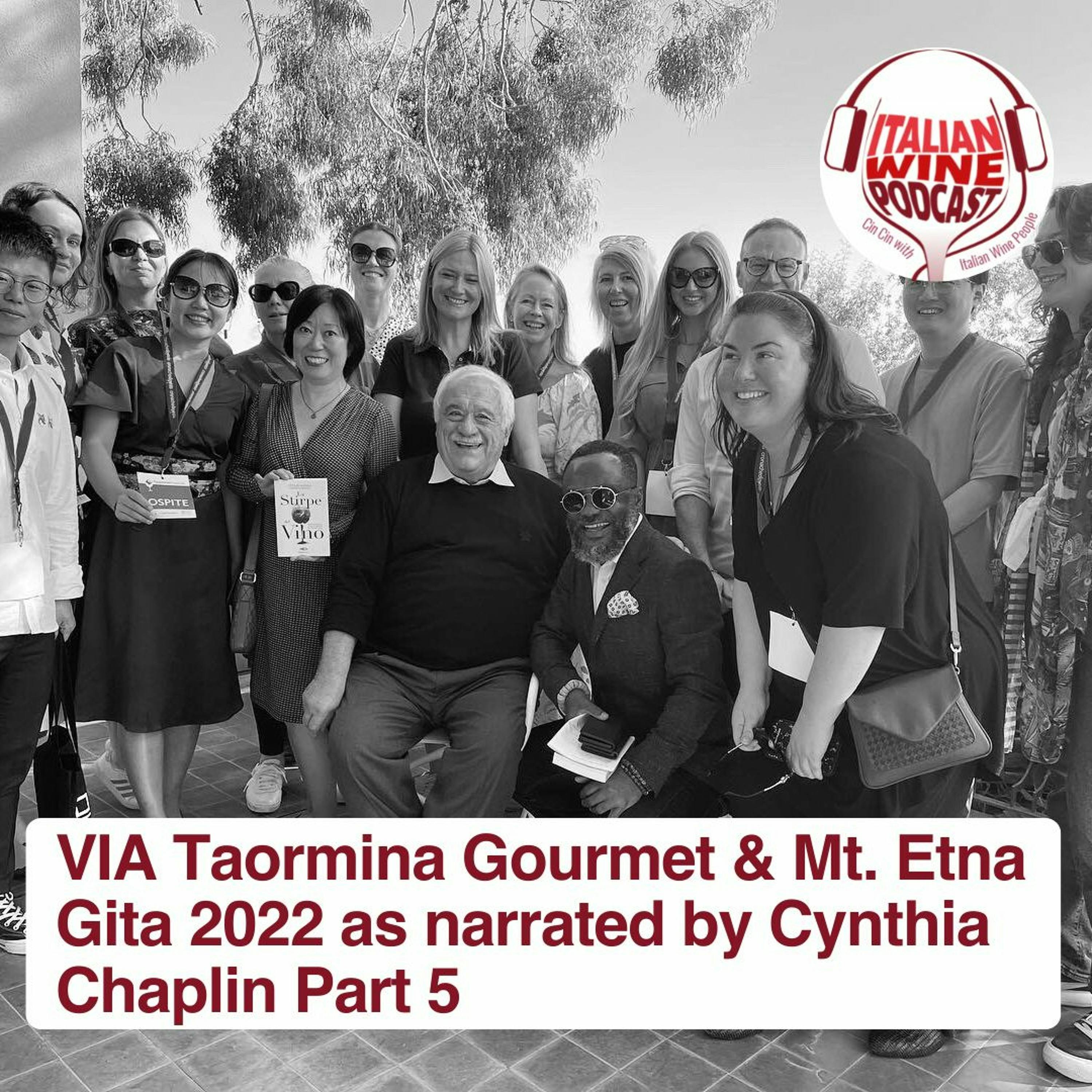
Ep. 1193 VIA Taormina Gourmet & Mt. Etna 2022 Pt. 6 | Gita Scolastica 2022
Gita Scolastica 2022
Episode Summary
Content Analysis Key Themes and Main Ideas 1. The Italian Wine Podcast's fundraising initiatives and community engagement. 2. An immersive journey into the unique wine region of Mount Etna, Sicily. 3. Exploration of diverse winemaking philosophies through visits to specific estates (Chiarra and Barone di Villagrande). 4. The influence of volcanic terroir, high altitude, and traditional methods on Etna wines. 5. Highlighting the distinct characteristics of indigenous Etna grape varieties like Nerello Mascalese, Carricante, and Catarratto. Summary This segment of the Italian Wine Podcast begins by announcing a donation drive, ""YMI Fan,"" encouraging listeners to support the podcast through GoFundMe or Patreon, with incentives like t-shirts and books. The primary focus then shifts to a special report from the Vinitaly International Academy's (VIA) trip to Sicily, specifically an exploration of the Mount Etna wine region. The narrative details visits to two distinct wineries. First, Chiarra, founded by Steph Yim, where his unconventional, spiritual, and clean winemaking approach is highlighted, including amphora aging and a disregard for DOC regulations. The visit describes the vineyard's high-altitude location, unique wild flora, and the tasting of unconventional wines like ""Uluando a la luna"" and ""Bres."" The second visit is to Barone di Villagrande, a tenth-generation estate led by Marco Nicolosi, showcasing a more traditional, yet equally passionate, approach. Here, the focus is on the use of chestnut barrels, dense planting, and a detailed discussion of vintage variations based on pH, acidity, and sugar levels for wines like Etna Bianco and Rosato. The narrative emphasizes the distinctiveness of Etna wines, shaped by volcanic soil, altitude, and local grape varieties, while also touching on the generational legacy and future prospects of wine production in the region. Takeaways - The Italian Wine Podcast is a publicly funded enterprise seeking listener donations through its ""YMI Fan"" campaign. - The Vinitaly International Academy organizes experiential trips to significant Italian wine regions, such as Mount Etna. - Mount Etna offers unique winemaking conditions due to its high altitude, volcanic soil (pumice ash), and diverse microclimates. - Winemakers on Etna, like Steph Yim of Chiarra, embrace unconventional and spiritual approaches, sometimes eschewing traditional DOC regulations. - Traditional practices, such as aging in amphora buried in the vineyard or using chestnut barrels (as seen at Barone di Villagrande), are employed to express terroir. - Etna wines, particularly those made from Nerello Mascalese, Carricante, and Catarratto, are known for their distinct characteristics like minerality, acidity, and unique aromatic profiles. - The history and generational legacy play a significant role in Etna's winemaking, with families like Nicolosi maintaining traditions for centuries. Notable Quotes - ""If it sucks, at least we'll have damn good vinegar."" (Steph Yim, on his first amphora-aged vintage) - ""Chiarra wines are made my way. I don't give a damn about DOC."" (Steph Yim) - ""It was from my heart. It was a wine for the grandmothers, and we made one thousand five hundred to two thousand bottles. But now we love it all year. The acid and fruit are in harmony. We make twenty thousand bottles a year and sell out."" (Marco Nicolosi, on his Rosato) Related Topics or Follow-up Questions 1. How do volcanic soils in other wine regions (e.g., Santorini, Canary Islands) compare to Etna in terms of wine characteristics? 2. What are the long-term benefits and challenges for wineries that prioritize a ""holistic"" or ""spiritual"" approach like Chiarra's? 3. How do winemakers on Mount Etna adapt to the challenges of climate change, such as hail and difficult vintages? 4. What is the current market perception and growth potential for unique, high-altitude Italian wines compared to more established regions? 5. What role do international wine academies and educational initiatives play in promoting lesser-known Italian wine regions? 6. How do producers balance adherence to DOC/G regulations with individual winemaking philosophies and innovation?
About This Episode
The Italian wine podcast introduces YMI fan, a new drive to encourage regular donations. They visit a vineyard with wild plants and wild fens, using organic ingredients and creative breads. A wine garden with wild plants, including saffron, wild mint, and wild fens, is featured, and a successful wine tour is mentioned. The success of Aetna's winemaker Marco Nikolosi's approach to harvesting wines is also discussed, including the use of chestnut barrels and regular reversion of the acidity in wines. Viewers are encouraged to donate through the podcast's website.
Transcript
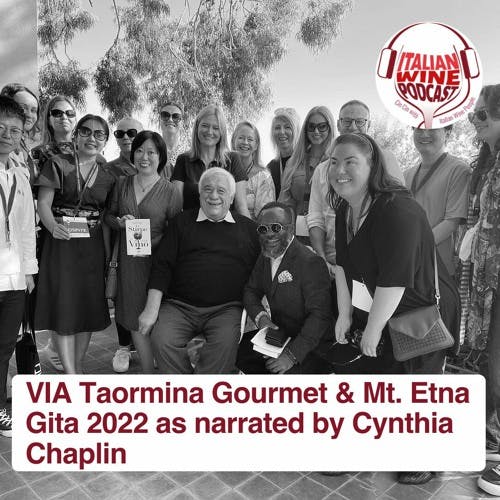
The Italian wine podcast is introducing a new donation drive this month. It's called YMI fan. We are encouraging anyone who tunes on a regular basis to send us your ten second video on why you are a fan of our podcast network or a specific show. We will then share your thoughts with the world, with the goal of garnering support for our donation drive. Italian wine podcast is a publicly funded sponsored driven enterprise that needs you in order to continue to receive awesome pre wine edutainment. Seven days a week, we are asking our listeners to donate to the Italian wine podcast. By clicking either the go fund me link or the Patreon link found on Italian wine podcast dot com. Remember, if you sign up as a monthly donor on our Patreon, we will send you a free IWP t shirt. And a copy of the wine democracy book, the newest mama jumbo shrimp publication. Welcome to this special in Italy International Academy twenty twenty two, Taourmina Gourmet, and Mount Aetna Giteskolastica series. The last week of October took a team of our staff and fifteen Vine Italy International Academy ambassadors to the annual of Taourmina Gourmet event hosted by Konica Dicusto, and then on to explore several vineyards and wines on Mount Aetna. Of course, we documented the whole experience. Listen in as Cynthia Chaplin narrates her travel adventures And remember, if you prefer written content, just go to our blog on italian wine podcast dot com. Now onto the show. The last day of our unforgettable via Gita to Mount Aetna began with an incredible visit to Shiara, the brainchild of inimitable Steph Yum, the so called Johnny Dup of Aetna raised in California by Hong Kong Chinese and Japanese parents Yim grew up in Los Angeles, became a sommelier and eventually a winemaker in Northern California. After some time spent in France, he ultimately bought his vineyard in Sicily. The answer to his dreams of high altitude, pre phylloxera vines, and great climate. His idea was to make clean wine with character and a spiritual approach to understanding and nurturing the plants. The visit began with a roadside stop waiting for Steph to meet us. We were enchanted by cows and goats meandering back and forth across the busy road from field to field without a care in the world. But soon, we were tramping up the side of the volcano to the Sierra vineyard in Contrada Dineve, one of the highest vineyards in Europe at twelve hundred meters above sea level. Grenache is the name of the game here, growing in sandy soil and full sun, but benefiting from the cooler temperatures and breezes at this altitude. Despite losing thirty percent of his grapes from hail and wild boars this year, Steph harvested twelve days ago and is looking forward to a good vintage. The vineyard is filled with an abundance of wild plants, including saffron flowers, wild mint, and wild fennel, all contributing to a gorgeous healthy environment for the grapes. The vineyard lies in the crater between Monte espagnolo and Monte Malletto, both extinct volcanoes from over five thousand years ago. The soil is rich with pumice ash, needing no chemical treatment, and step is using a combination of old vines and clones from Spain and Sardinia, grafted with American root stock. He likes the diversity, explaining his wines end up with differing head, heart, and tail notes. He's aging some of the wine in amphora buried in the vineyard for twelve months, so the wine can see all four seasons in the place where it was grown. The first vintage using this method, twenty twenty one, will be released in twenty twenty three. Steph remarked, and I quote, if it sucks, at least we'll have damn good vinegar. Back at his home cantina, we were able to see the pressing going on and the giant tubs where he's conserving the pressed grape skins from Nerella Moskaleza to make Grapa. He also makes his own compost from a pungent mix of grape skins and various poops, which is sprayed back on the vines, keeping his system holistic in nature. Step said to us, Chiarra wines are made my way. I don't give a damn about DOC. He laughed as we tasted his Uluando a la luna, howling at the moon, a blend of carracante, minella, and Katarato, with notes of sage and pickled lemons, dark green olive brine and Mandarin Peal. His series of breads named for the altitude of their respective vineyards are all made with spontaneous fermentation and have common threads of fine, sticky tannins, gunpowder, pomegranate cherry, and orange. They're textural and unusual, sometimes benefiting from recorking and shaking the bottle, making the report wines feel as if they had taken a deep breath, opened up completely, dialed up the sound to eleven. Of course, the theater of watching stuff crack lava rocks together and holding them up to everyone's noses, plus the vigorous bottle shaking, the joking and larking around, all added to this joyful experience of examples of Granache and Norella Maskalese like we had never tried before. Undoubtedly, Steph's adventurous and restless spirit will continue to create unique and fascinating lines for years to come. In a one hundred and eighty degree contrast, the infinitely calm and refined resort at Villanari served as a stunning lunch buffet under enormous white umbrellas spread on the lawn, water shining on the perfect pool, and the merest wisp of white rose and lavender floating on the breeze. The DOC rose one hundred percent Narela Moskaleza. Kerecante and Katarado blend Contrada Arrigo twenty twenty one and twenty twenty introduced us to Nari's work with many thanks once again to Federico for his explanations and patient answering of all our questions. The twenty twenty initiated a discussion of anchovy Brian. Colatura de Alicci between a bunch of us sitting with some of the Italian journalists who generously turned up later with a small gift of a beautifully packaged tin for us to try. Arigo Roso twenty twenty and twenty nineteen were both one hundred percent Nerella Moskaleesi and showed notes of sweet and sour cherry with twenty nineteen more herbal and twenty twenty more floral. Both were fermented without stems and aged ten months in French oak. Lunch wrapped up with a divine cinnamon ice cream and canolis after which we had to wave goodbye to half our group headed back to the airport and their real lives. The lucky last ones carried on to Barroni de Vila Grande, where Marco Nikolosi is the tenth generation winemaker, passionately involved with production of his forty hectare estate in the Valle de Bove, a collapsed crater with many differing stratus of lava. Collapsed and slipped on their way to the sea below. Organic clay, minerals, sea breezes, and lots of rain all combined to make exceptional wines in this tiny region on the east side of Mount Aetna near Milo. Italian wine podcast brought to you by mama jumbo shrimp. Nikolosi is using a combination of Alberillo and GEO training, with seven thousand vines per hectare, a very dense planting. He makes forty percent red wines and sixty percent white using chestnut barrels and changing them for new ones every five years, which creates a constant rotation between one, two, three, four, and five year old barrels. He believes the chestnut stabilizes the color in Nero la Moschile, and produces a more authentic and pure wine of Aetna with no French oak. His goal is to make wines that get better every year, With this in mind, he's putting thirty percent of the wines in chestnut, seventy percent in Acacia. The Aetna Bianco superiority twenty twenty one showed green sea salt, white blossom, and a note of unripe apricot with a deep lemon color, around and soft mouthfeel and texture of thin cream. Andrea Ebe, our newly minted past of her theory for MW, commented that the acidity here is not as piercing as in other Caracante wines we'd been tasting all week. We were very lucky to taste the Aetna Bianco Contrada Villagrande twenty nineteen, which has not yet been released. The paler wine was greener, more herbal, more acidic, with a tighter phenolic textural grip on the palate. Chatting later with Marco. He told us that twenty seventeen was the best harvest in the last twenty years. All the grapes were perfect due to various brief periods of rain and milo throughout the hot summer. The harvest came early in twenty eighteen after a difficult rainy vintage that saw hail. Good for whites and Rosay, but disaster for the reds. A nice year, very typical for Aetna, said Marco, characterized twenty nineteen, and finally, twenty twenty was a bad year with a lot of heat and a lot of rain. Truly amazing to listen to a winemaker recount vintage after vintage in detail off the top of his head only because a casual question was asked. It was as if he were remembering everything he ever loved or hated about every girlfriend he'd ever had since he was a little boy. He also filled us in on his approach to harvesting based on pH, acidity, and sugar levels, checking and rechecking until the perfect balance was achieved and harvest could begin. We tried his Aetna rosato twenty twenty one, a blend of ninety percent Nerella Maskaleesi and ten percent Cartarato in Karicante, which he harvests specifically to make Rosay. He told us Villa Grande always made Rosato. Quote, it was from my heart. It was a wine for the grandmothers, and we made one thousand five hundred to two thousand bottles. But now we love it all year. The acid and fruit are in harmony. We make twenty thousand bottles a year and sell out. The luminous medium salmon color and notes of orange blossom, yellow peach, apricot, and pink Himalayan sea salt, combined for a wine we could all see drinking all year round. We couldn't ignore the grandfather in the story either, and Marco shared Shiara EGT from seventy year old Merlo Vines, which his grandfather made only for friends using French Operique, truly a piece of family history on this beautiful and elegant estate, where we could hear a little voice calling, papa, papa. The future generation of Aetna is already on its way. Listen to the Italian wine podcast wherever you get your podcasts. We're on SoundCloud, Apple Podcasts, Spotify, email ifm, and more. Don't forget to subscribe and break the show. If you enjoy listening, please consider donating through Italian wine podcast dot com. Any amount helps cover equipment, production, and publication until next time. Chichi.
Episode Details
Keywords
Related Episodes
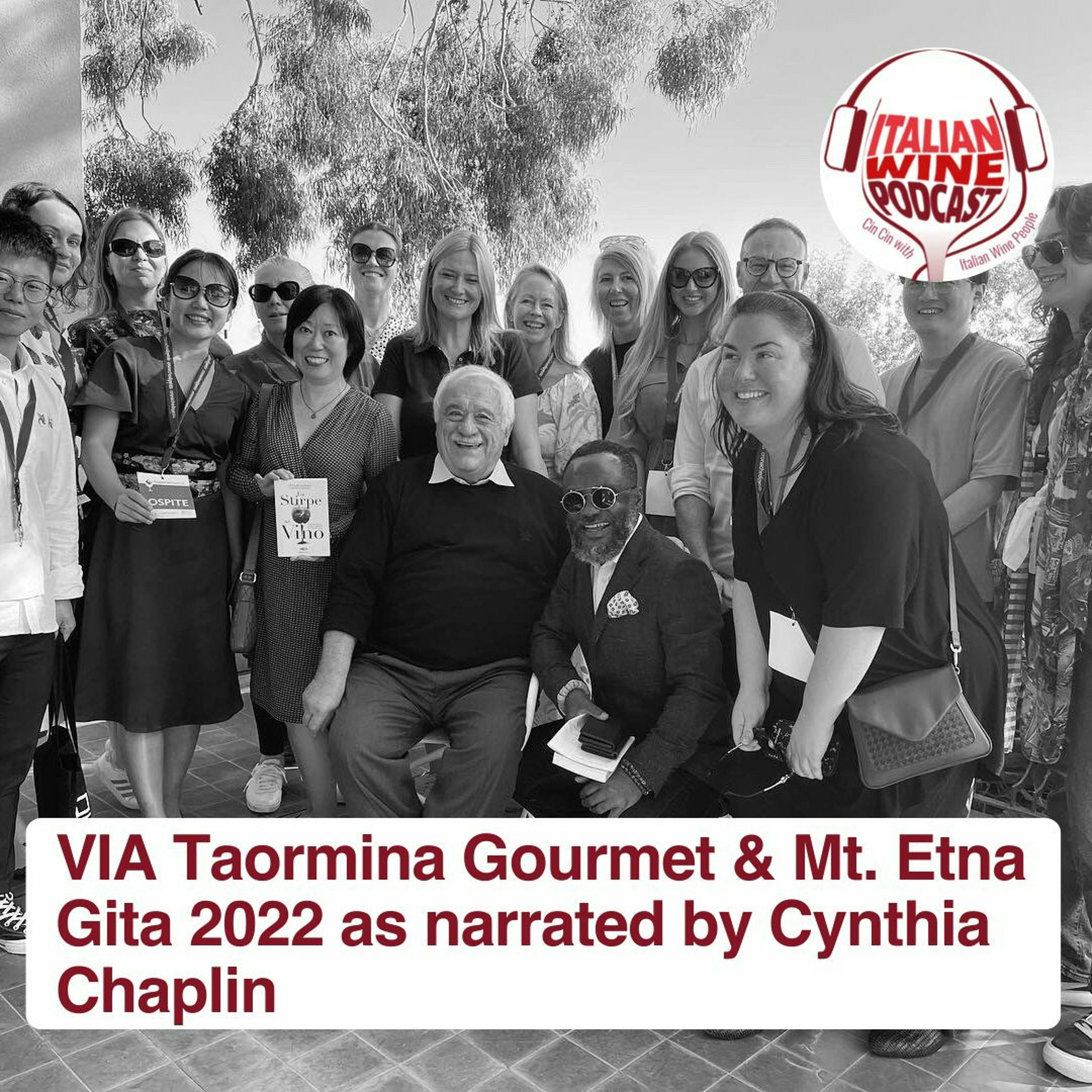
Ep. 1175 VIA Taormina Gourmet & Mt. Etna 2022 Pt. 4 | Gita Scolastica 2022
Episode 1175
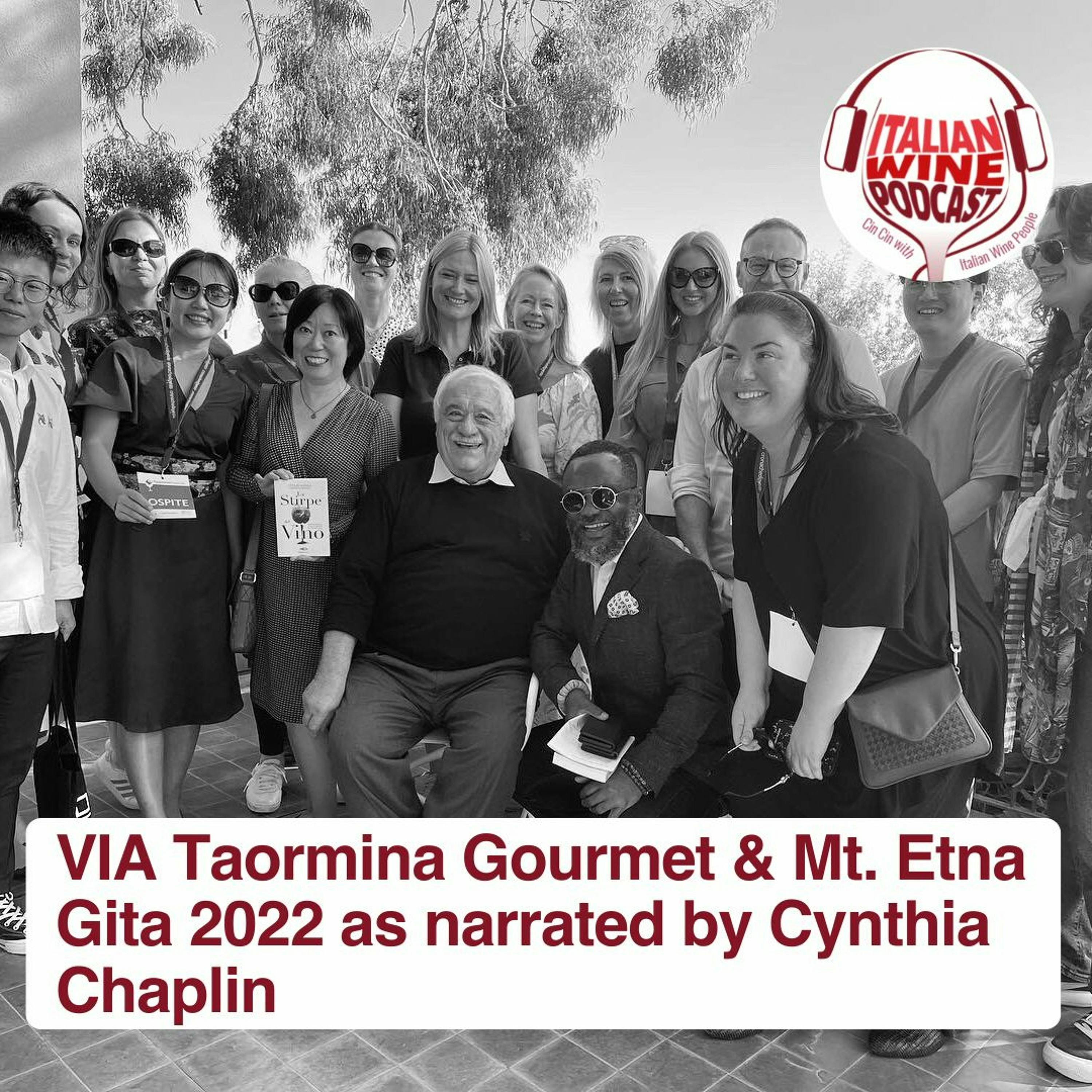
Ep. 1166 VIA Taormina Gourmet & Mt. Etna 2022 Pt. 3 | Gita Scolastica 2022
Episode 1166
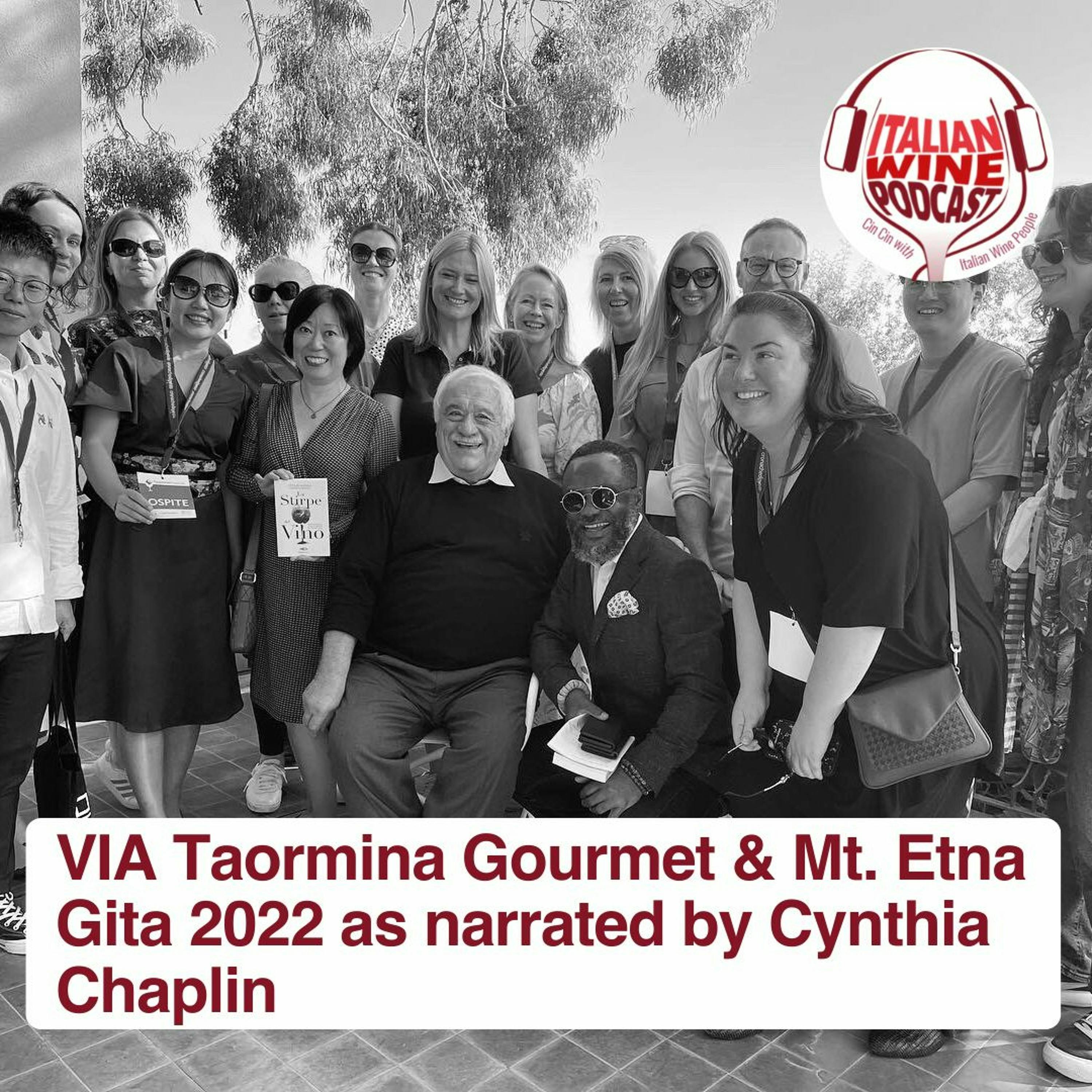
Ep. 1157 VIA Taormina Gourmet & Mt. Etna 2022 Pt. 2 | Gita Scolastica 2022
Episode 1157
Ep. 1148 VIA Taormina Gourmet & Mt. Etna 2022 Pt. 1 | Gita Scolastica 2022
Episode 1148