
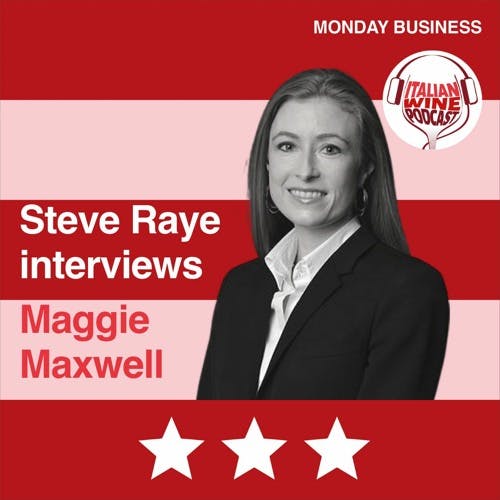
Ep. 1125 Maggie Maxwell | Get US Market Ready With Italian Wine People
Masterclass US Wine Market
Episode Summary
Content Analysis Key Themes and Main Ideas 1. The evolving role of wine sales representatives and the strategic importance of consultative selling in the modern market. 2. The unique characteristics and regulatory complexities of the New Jersey wine market, including its ""franchise state"" status, high number of independent retailers, and BYO establishments. 3. Challenges and best practices for wine suppliers in collaborating with distributors to penetrate and grow within the US market. 4. The critical role of ongoing education (e.g., WSET certification), data analysis, and digital tools in empowering sales teams. 5. Effective strategies for marketing and promoting wine, from targeted ""work-withs"" and in-store tastings to leveraging digital content and understanding the utility of wine scores. Summary In this episode of ""Get US Market Ready with Italian Wine People,"" host Steve Ray interviews Maggie Maxwell, Vice President of Corporate Wine Sales at Allied Beverage Group in New Jersey. The conversation deeply explores the dynamic landscape of wine distribution and sales, particularly through the lens of the unique New Jersey market. Maxwell explains how Allied, a result of multiple mergers, operates various sales divisions catering to different market segments. She highlights New Jersey's distinct features, such as its ""franchise state"" status, strong Italian heritage, retail-centric focus, prevalence of BYO restaurants, and dominance of independent retailers, which together make it a complex yet significant market. The discussion emphasizes the evolution of the sales representative's role from a mere order-taker to a consultative expert. Maxwell outlines Allied's commitment to continuous education, including WSET Level 2 certification for its entire sales force, and the use of data to inform sales strategies. They delve into the effectiveness of ""work-withs,"" General Sales Meetings (GSMs), the nuanced importance of wine scores, and the challenges suppliers face in providing comprehensive digital product information. Maxwell underscores the power of ""liquid to lips"" through in-store tastings and advises suppliers to deeply understand and adapt to local market preferences by actively listening to retailers and reps. The interview concludes by stressing the ever-evolving nature of the wine industry and the paramount importance of a well-educated and passionate sales team. Takeaways * New Jersey is a highly unique and complex ""franchise state"" for wine distribution, with a market driven by independent retailers and BYO establishments. * The role of a wine sales representative has evolved significantly, requiring them to be consultants who provide market insights and build strong relationships, rather than just taking orders. * Distributors are heavily investing in sales force education (e.g., WSET Level 2 certification) and providing data access to enhance reps' effectiveness. * ""Work-withs"" (producer-rep joint sales calls) are still essential but need to be targeted and focused on meaningful connections rather than ""milk runs."
About This Episode
The Italian wine to wine business forum will focus on wine communication, with interview with wine people making a difference in the Italian wine market in America. The speakers discuss the history of the wine business and the current position of the VP of wine sales. The importance of working with sales representatives and creating targeted meetings to promote the product is emphasized. The importance of social media and the use of QR codes for in-store tasting is emphasized, along with the importance of updating online and building a strong educational background for retailers. The speakers also discuss the importance of consistency and being a consultant to the trade.
Transcript
Welcome to the Italian wine podcast. This episode has been brought to you by the wine to wine business forum twenty twenty two. This year, we'll mark the ninth edition of the forum to be held on November seventh and eighth of twenty twenty two in Verona Italy. This year will be an exclusively in person edition. The main theme of the event will be all around wine communication. Tickets are on sale now. So for more information, please visit us at wine to wine dot net. Thanks for tuning in to Get US Market Ready with Italian wine people on the Italian wine podcast. I'm Steve Ray, your host. And this podcast features interviews with the people actually making a difference in the Italian wine market in America, their experiences, challenges, and personal stories. And I'll be adding a practical focus to the conversation based on my thirty years in the business. So if you're interested in not just learning how, but also how else, then this bond is for you. Hello, and welcome to this week's edition of Get US Market Ready with Italian wine people. My guess this week is Maggie Maxwell of allied beverage group in New Jersey, one of, those unusual or unique states. Well, not really unique, but it's a franchise state, which makes makes the world function differently in the world of beverage alcohol. Maggie welcome to the show. Thanks, Steve. We've talked before to prepare for this. And, One of the things I really wanna focus on is is how the world of distributor sales is changing. So we're talking to the horse here. So, that's kind of gonna be the focus of today. But before we get into that, Can you give us a little background on your history in the wine business and your current position? Yeah. Sure. Sure. So, I actually started out, I came to the New York area to go to grad school. I was going to NYU for a master's in food studies at the time. So I started out working in the editorial space. I was working for some food magazines while I was working my way through grad school and doing a little bit of researching and back checking for them. And as I was working for them and in that environment, I got more and more interested in the world of wine. And that's when I started taking classes W SAT doing a little bit more training in that whole space. And absolutely just fell in love with that industry. So to get into the industry, I I worked for a retailer. Came out here to New Jersey, and I worked for one of the retailers here, for five years. I started out just doing some sales and, marketing, and then eventually did some of the buying for him. And after five years in retail, that's when I made the jump to the distribution side. So I've been with Allied for about ten years now. I worked my way up from field sales up to a director level position, and I'm now vice president of corporate wine sales. So oversee a little bit of the sales, a little bit of the marketing, really kind of the bigger picture, broader picture when it comes to our wine portfolio and our education efforts. For one. Collaborate on that a little bit. Are you the person who makes the decisions on new brands coming in? Are you the onboarding person? Are you managing the the, you know? Well, no decision has made a bubble. We're able to make for things like that, you know, but Yes. It it usually when it when wine is involved, it it starts with me. And I collaborate with a couple of my colleagues in, sales and marketing, to figure out, you know, we have different divisions within allied So we always kind of look at each brand coming in and where it where the perspective fit is, with one of our divisions and where it might fill a hole or a niche that we don't already have covered. So we work on that together. Yeah. Okay. Well, talk about that because I think that's that's something that a lot of people don't realize that it's not just allied or southern or breakthrough, whatever, that not only other individual state operations in the case of New Jersey will get into New Jersey being unique. But you have divisions which have focuses. Okay. Don't need the detail on it, but, you know, how how are you guys structured in that regard? What are the focus? What is the focus for some of these divisions? Sure. So, we're the product of a number of mergers over the years. Several mergers happened, and the most recent one was with us in breakthrough beverage in New Jersey. So, as a result of that, we have more than one Salesforce. It's really eight or ten separate Salesforce is all wrapped in one company Some of them more focused on spirits. Some of them more focused on wine. Some of them, more focused on the multicultural space. Some of them more more focused on, the on premise space. So, we have separate sales divisions each with each has their own portfolio within our portfolio so that they can focus, their time and energy on, a specific set of suppliers. So we've been working in recent years to balance those books out a little bit more. And so if, for example, one of our divisions is already pretty heavy in Italian wine, but another division doesn't have much in the in the Italian wine space. That's where we would look first to slot somebody new and and whether they kind of fit with the the DNA of that division. Well, since we're talking about Italian wise, give me a sense of, and it's New Jersey, and imagine everybody's seen the surprise. Give me a sense of the relative importance of Italian wine in the state of New Jersey. Yeah. It's it's pretty important here, you know. Yeah. So we have a we have a pretty big book, but, you know, New Jersey, although it's the most ethnically diverse state in the country, there is a really strong, Italian heritage in our state, obviously. I think something like one point five out of the nearly nine million people in New Jersey identify, as having Italian heritage of some sort. So, yeah, so we we have a huge Italian American contingent here. And, you know, obviously, a lot of Italian American restaurants And, so it's very important here. You know, it's, it's it's a it's a big piece of the pie. So let's talk a little bit about New Jersey and what makes it unique. We've seen tremendous consolidation on the distribution side the the top ten now represents something like seventy eight percent of all the value that's going through, America. And both you and Fedway, allied and Fedway are in the top ten, and yet you each of you only operates in one state, New Jersey. What makes how is New Jersey different from other states? Not what makes it so. We don't need the explanation of why it's the way it is, but tell me how it's the way it is. Well, you know, I every time I talk to a supplier that you know, works nationally. I think New Jersey is one of the most unique markets, to adjust to. You know, as I said, we're very multicultural. So you have to speak to a lot of different audiences. We're very retail centric. We have great on premise here, but, you know, we don't have, really a main city hub the way a lot of states do that they're based around. And, we have a lot of BYOs. So for that reason, retail is is a big portion of, our volume when it comes to both lines. So b is that BYO because of COVID, or it has always been that way? Oh, no. It's always been that way. Yeah. So there there are, license limits here. And there are only the the number of on premise licenses are capped, based on population. So it's very difficult, very expensive to get an on premise, beverage alcohol license. And for that reason, there are a lot of BYOs and and a lot of, retail servicing the BYO areas. I didn't know that. Okay. Learn something new every day. And then there's some limitations on, well, talk about the chain market in New Jersey and how that's open. Is instructor. Yeah. So we we do have a we have a license limit here. So chains are are limited. They haven't broken into New Jersey quite as strongly as they have in, some other states. So there are there are chains here, but they're they're much fewer and, were still dominated by independents in this market. So you really do have a lot of points of contact to to reach this market. You know, you're selling to each individual store and each individual store owner, very few larger corporate calls in the state. Well, okay. That's a good lead into what I really wanted to focus on in this conversation is how the role of the sales rep has changed. So certainly in New Jersey, there's a structural reason and function that, sales has had. But we've also seen, tremendous evolution to electronic ordering b to b ordering through seven fifty and other similar systems. So I'll start with a bigger question. How has the the role of the sales rep changed and and speak not only pre and post COVID, but where it was going, even pre COVID. Yeah. You know, we've always had, we've always had great sales reps with great relationships in the state, you know, and and you need that, to survive I think right now, more than ever, the role of the sales rep is to be a conduit to information, flow of information, you know, better access to information. So we're engaging with those kinds of platforms so that we can be everywhere that tsumer is. But without the sales rep to kind of, make the connections, I I don't think it's it's a it's a fully automated system. I don't think you can do everything without that connector. Are you speaking in terms of being able to present brands or to highlight brands or focus on particular brands and categories? Yeah. You know, I mean, it's kind of back to basics for us now that we can post COVID, you know, our sales reps are are going out and meeting producers on the street again introducing them to their accounts, you know, making personal connections with the producers because there's so much out there that the accounts have access to that you really have to have a point of differentiation. You know, and I think that point of d differentiation sometimes is having that access and and that knowledge, you know. So the more the sales rep knows, the more information they can offer them or find them or connect them with, that's really the key these days. It's interesting. I I'd like to I use the phrase, a POD that MAD, a point of difference that makes a difference. And and on the trade side or on this side of it, it's a a big function of how you go to market. And less about the product itself, but how you're structured and how you're integrated into the state. So as an example, you were alluding to what I call work with. And there was a period of time. I remember when I was a brand manager at a large liquor company, and, you know, you would go to a market and you'd do the work with, and you'd be taking on a milk run, and, then report back that everything's hunky Dorian, you know, nothing really happened. I've heard that work with now have, declined in in importance. And, the allocation of the time of the rep is now looked looked at differently. Can you speak to work with us in their role? Yeah. Yeah. I think that I think the sales reps have more to do in a day than they've ever had. You know? And, you know, they're they're trying to get to these accounts. They're trying to not only make presentations for new products, but they're trying to clear up any, you know, billing discrepancies, address any out of stocks, any inventory issues, you know, what's happening with the supply chain that's happening with I guess that's a long conversation right there. Yeah. You're speaking to a lot these days. So I believe that, I believe that work withs are still essential. They're still very important to making connections in the market, but we have definitely, encouraged them to be a little bit more targeted than they used to be. We don't like the sense of milk runs. You know, it's just It doesn't do anybody any good. Right. Yeah. Yeah. So, you know, we send people out on real work with, and and a lot of our, producers that have local people. We We encourage them to high spot with the reps. You know, maybe you don't even need a full day on the street. You just need a couple of really targeted meetings, you know, where you really, make a connection, get something done. I'd I'd rather see a work with where they make a few meaningful connections than you know, check the box on getting to ten different accounts in one day. I I think that's the critical issue, isn't it? That, you know, in in some cases, if if if all it is is reserving a full day of a rep's time because the winemaker or somebody, the owner, whoever is is in the market and wants to be shown the market as opposed to providing value, which is to help sell your product and educate the retailer so that longer term, they have the ability to promote your product, feature it, and understand it better, and therefore, provide better service to consumers. But that's a change, isn't it? Well, you know, I I think the value is just as much in the time that they spend with the rep as it is with the accounts as well, you know, because this is a rep that's going to be presenting and representing their product every day after they've left the market after they've moved on, you know, So sometimes half of the value really comes from the day they spent with the rep and what the rep learns from that producer, or that ambassador so that they can continue to work. Okay. One of the other standards in the industry is the GSM or the general sales meeting when a new brand, comes into a distributorship. I've done many of these. I'm sure you've been at them as well. And, you know, they have their own unique, energy or or lack thereof. Is the GSM still an important thing, with new brands and does it have any value for existing brands? I think it does. Yeah. We still do them. You know, during the COVID times, we had to go to virtual with them. And that can be a challenge in and of itself keeping everyone engaged for that sort of compressed It's hard to do it in person. They really hard to do it on Zoom. As things open back up, we're starting to do more of them. We're getting back into the office with them, but we're also doing them off-site, you know. And, I think we've learned to get a little bit more creative with the GSMs, you know, some of them instead of having one, having each of the producers sort of line up and have their fifteen minutes and then the Gong. Some of our divisions have done more of the speed dating style GSM where, you know, they move around the room and have conversations with the different producers for a little while so that they can They can really talk one on one about, opportunities. Further to this subject, you know, the the trope in the industry is oh, distributor salesman are just taking orders. And now that orders are being taken differently, they're it's not by paper. It's not by fax. And some of the electronic tools that that started as just putting some earpiece to a public phone. I remember those days. Now they're facilitating ordering, not necessarily even taking the orders themselves because the orders can go into some central receiving thing. How how has the whole process of processing orders changed? Oh gosh. It's changed a lot. You know, I to me, our most savvy sales reps have never just been order takers. You know, there are a lot more than that. A lot has changed in the process, so we're we're trying to streamline a lot digitally right now in our ordering systems to make it quicker and easier for the rep. As well as quicker and easier for the customers so they can get to us by whatever avenue they need to get to us for the order. So we're doing a lot on that end, but we're also streamlining a lot when it comes to the reps access to data. You know, our product info systems. You know, so that they can more quickly access the data on what their account history has been, what they've bought in the past, you know, how often they might need to repurchase something or what might be, you know, similarly suited for them. So we're trying to make that data more accessible to them than ever so that they can be great consultants. Yeah. It's consultative selling and providing value and analysis as as a peer. No. Understanding the store, probably better than anybody else with the exception of the store owner and the people that work work Exactly. Yeah. That's the goal. So where do they go for information and what kind of training do you guys provide? For them? Well, so we are, we are streamlining our systems in our in our website to make that easier for them to use. And we're on a number of the different platforms that they can search, scores and information. But we're also we've made a renewed commitment to to wine education at our company. So a recent effort we've made is, we've pledged to, give each of our sales reps access to WSTT level two certification. We're hoping to complete that access by the end of twenty twenty three. So we have a Salesforce of over three hundred reps, and then quite a few managers on top of that, that we're quite trying to put through that process right now. And it's going great. We're about halfway through the reps, right now. We have a little ways to go on getting them all signed up, but that's that's to me the foundation of it. If we can put them through that level two training to give them even better confidence, even the reps that, you know, frankly have been doing this for a number of years and already have a great foundational knowledge. Just that brush up and the intensity of of going through that course together has really been great for not just our our education level, but sort of our our wine culture internally. No. It kinda gets more excited about it again. We have this great wine educator, Mike McNellis, who's leading them through this and He just gets them so passionate and and so amped up about it that they're talking more about it every day. And, it's just it's great to see. So Yeah. I had, one of my mentors in the wine business unfortunately, he's passed away. Philip De Bellardino was was one of those iconic people who was more entertainer, I think, than teacher. But through the process, you learned a lot. How does the WSET thing actually function? So does does Mike function as the the lecturer on this, or is it just a a reading thing and people come for testing and testing? How does that work? Yeah. So he's gone through the whole process so that he's certified to teach it internally. So they can do it within our building. He sets up the the WSET trainings. They all have some reading to do some homework leading up to the class. And then they come in once a week, take the seminar with Mike. He leads them through a guided tasting so they're They're getting liquids or lips, you know, practicing with our own product to learn each region that they go through, and then they take the test at the end. And it's it's proctored to WSET standards, and they see if they if they passed. Italian wine podcast. If you think you love wine as much as we do, then give us a like and a follow anywhere you get your pods. Okay. You alluded earlier to something that's, well, it's a subject I get involved in a lot, and that's scores. And the importance of scores and you utility of scores and the meaning of scores and the value of scores. Can you kind of just talk about what your perspective is, as running the the wine divisions in in Ally? I think the importance of scores is that, you know, they're one element of information that's available to the trade, and everybody values that information differently. You know, I call on accounts that love to know about the scores. It might be the first thing they ask you about. And I call in accounts that couldn't care less who scored it, and they just wanna taste it themselves. You know, so the importance really varies account by account, and obviously consumer by consumer. It's one point of differentiation, you know, among many. So the more information you can put out there, the more validation of a product you can put out there, I think it's it's all positive. But we have we have pretty savvy retailers and consumers nowadays, and I don't think anybody goes just on the score. I think it's it's all the information at hand that it makes the sale. But to consumers, beyond what's written on a label, and oftentimes there's nothing written on a label other than the required government warning and and so on and so forth. There's not scores are one of the few pieces of information that are available to them sometimes if they're, you know, got shelf talkers on those things. And so it's kind of devolved to scores become real important because it's the only piece of information they have absent them, you know, using the cell phone label recognition technology to go directly to it or to look something up overtly. So to the trade, it may or may not be important to consumers. It's what they're given. It's the only tool they have. So, you know, if you if the only tool you have is a hammer, everything looks like a nail. Right? Yeah. Well, it's one form of validation. You know, if they don't feel confident making their own choice, you know, this is somebody that's supposed to be an expert said this is one of the best wines out there, you know, but we have a lot of forms of validation now. You have your local retailer might be your form of validation. You might really trust their palate in their opinion, so you might ask them for theirs. There's also, you know, there's influencers out there now. You know, we have Instagram and Facebook influencers who might promote a wine and say that they love it, and maybe that counts more to certain people than than a score from some guy they've never met. You know? Okay. And one of the other areas that that I'm active in is the is the concept of optimizing your content online that I think I I used this number with you before. The wine dot com was, Mike Osborne was quoted as saying only about five percent of the wines are are fully fleshed out, if you will, all the high res images and different logo ass back ratios and black and white and all the rest of this stuff to enable both the trade and consumer to know more about about the wine. But it's a hard thing. It's a very hard thing for me to convince suppliers that it's a priority for them to do. Even though it doesn't cost a lot of money, it's relatively easy to do. And when it's done correctly, it's evergreen, and it's a forever selling tool. I tell them the burden is on them. What do you how do you what what role does this the distributor have in getting that information online. You know, I think more points of contact that take a piece of that, responsibility, the better. You know, so we're trying to do a better job of updating what we put out there online. You know, it's only in the last few years that we've really updated our website to have product info. And, you know, monthly we'll put up new products and, you know, the the full, information that we we can about them. But there's just so much out there that I think every brand has to do whatever they can to maximize that visibility. And the more you can put out there, the better. So when you have a new brand joining, you will use new brands as an example, and through the onboarding process, does anyone do an audit see what they have is there as part of the onboarding, the request for information to be uploaded, not necessarily give it to me, but here's how to work with our system. How does that work? Sure. Yeah. Definitely. So we we have a new item committee. And, all of that information will be part of the decision to bring it in, you know, what assets are available. How do we get this up and running, quickly and in the more that they can offer in that arena? I think the faster the market becomes aware of it. Do you agree that that, a huge opportunity, the ninety five five is, one dot common referenced? Oh, absolutely. Yeah. Okay. Back to the the subject of reps and maybe on the side. It's the other side of the the of the same coin. And We use the term feet on the street. It could be called brand ambassadors, market managers. There's a whole bunch of different terms, but essentially it's the supplier paying for somebody to be out there calling on accounts selling their particular brand. Also advocating, but selling and really working either alongside with the knowledge of and collaboration and cooperation with or separately completely apart from your salespeople. What's the role of a brand ambassador recognizing that it's not really, scalable and it's not really affordable, and it's duplicating the efforts of, much what you guys do as an institution Well, every brand's different, and I think there are varying levels at which they need that kind of representation. If you're a really small brand, you don't have a whole lot of wine to sell, you know, it it might be okay if you don't have somebody in the market all the time. If you're a bank brand and you have a lot of wine to sell and you need to make a lot of points of contact, then the more people out there telling your story the better. Yes. Our sales reps and our managers and our own internal people can start that conversation and have that conversation but having one more point of contact is sometimes what pushes things over the edge and, you know Okay. So if someone's presenting a brand to you, being able to say, yes, we're gonna put a body in, New Jersey or Bergin County or, you know, whatever it happens to be. But, you know, one person in the entire state of New Jersey. It's still a plus. We'll we'll send all the help we can get. Let's turn our attention to, social media. We know how important that is to millennials and gen z. TikTok becoming even more important with with gen z, which is something I don't really understand, but I think that goes with my age. But but in any case, what kind of programs do you guys have that you're generating or are you working with and collaborating with or facilitating what your suppliers are doing? To be able to connect to and drive those consumers to don and off premise retailers who actually buy this stuff from you and on whom you make money. That's a great question. So during the COVID era, when people were trying to get in and out of source as quickly as they possibly could. We turned a lot more to visual and and virtual communication. So we started working more with our wineries to create QR codes where people could, you know, kind of scan and get some information on the line on their own without speaking to somebody one on one and get the backstory and learn a little bit. And that's been successful. But I think now as we're kind of coming out of this whole COVID era and people are getting back into stores and spending more time in them, we're getting back to live tastings. That's been something that people really are excited to re embrace, and we're trying to do more events, live events in stores to connect people with the product again, because that was just not an opportunity for a while, and it it feels good to to actually see people pouring wine again in stores. Yeah. I've been a big proponent of it, and I that's the way I've been taught that, you know, liquid to lips and getting people to taste it, is the best way to sell a product, a food product, food and beverage product. Do you have recommendations to suppliers on on how they should approach in store tastings, the frequency of them, how they staff it, how they execute it. There are so many different ways to to execute it, but the closer the person who is conducting the in store tasting is to the product the better. You know, you can you can hire all manners of of people to represent your brand, but nobody represents your brand better than you. So the more we can get somebody who's directly connected with the winery into the store, to tell the story, that's always fast. Obviously, that's not scalable. I mean, I can't do the you know, they can only do when they're when they're traveling. No. That's the ideal. You know? But in terms of frequency, one of the things I tell my suppliers is, you know, if you're gonna do a tasting program, offer up the opportunity of doing it sequentially that, you know, we'll we'll do this every weeks or something like that rather than they're just a once in and then walk away. Why is that important? Well, you know, it's consistency. It's getting in front of, the customers repeatedly and, you know, solidifying it as as a favorite of theirs. You know. From my perspective, I look at it as as a way of telling the retailer we're supporting your business that it is not so much only about my product. It's about this partnership that we have with your business because I only make money if you sell it. And you only make money when you sell it. Absolutely. Well, and and every time they get in there to see the retailers, it's I I think it also goes a long way to hear what they have to say too, you know, not just tell your story, but ask questions. About what works or what doesn't, you know? That's a great segue to the next question. So I deal with a lot of Italian producers as well as people from other countries who are not really familiar with the US market. Can you tell us what's the best way? What are some tips for them to do a better job working with and collaborating with distributors. I think get out there and, get out there and ask questions. Ask questions of the reps, ask questions of the retailers, ask them what's already working for them, what's not. You know, because, you might think you know exactly how to go to market with your brand. And, yeah, these are the people that are living it and selling it every day. So they they're the ones with some perspective on you know, that one thing that could really turn around your business. And every state is different. I mean, just use the the the concept of reps. Can you explain what a rip is in New Jersey? How long do you have? Maybe you could do it simply. A RIP is a retailer incentive program. So, essentially, it is a way to, rebate the retailer, a portion of the price without that being applied to the frontline price per sale. So, it essentially preserves the the shelf price that you want to see while still offering them some margin for for whatever quantity that they're buying. So say, a supplier comes into yours, he's doing a work with and and one of the retailers says, well, what's the rip? And he doesn't recognize what that word is. What's the impact of that? Well, that's what that's what the the reps are there for. You know, this is it's it's not the simplest market to navigate. You know, so that's that's why we still advocate, you know, doing something like we work with, you know, where they can be with the rep You know, ultimately, the producer is there to speak to the product and the rep is there to speak to the the pricing and the the system that we have to bill it through. So, they're they're pretty savvy about explaining whether it's know, we have rips in the state, but we also have quantity discounts. You know? And, some retailers prefer one over the other. And, and, at the end of the day, you know, they can they can speak to what's available and what works best for them. So if you had to give advice to somebody about here's two or three things that if you're going to work with allied in New Jersey, what makes a a good supplier different from a great supplier and the net result being better sales for everybody? For allied for the supplier and for on and off premise retail. Yeah. This is a really diverse market, and, you'll hear a lot of diverse opinions. So the more that you're willing to go out there and be open and really listen to each retailer for what they have to offer. You know, a small retailer might have a very different perspective than a large retailer in this market or, you know, from North Jersey to South Jersey, you might have very different preferences in the consumer buying habits. So the more time you can spend in the market, just sort of, listening to the different perspectives and and being open, I I think that's that's your best bet. You know, don't make assumptions about you know, there there are a lot of people who come to New Jersey and they just wanna see the top five retailers. And they're great, but there are a lot of independents in the state with a lot of different angles. So Yeah. I mean, fundamentally, New York and New Jersey are are are different in so many different ways and yet for many people, it's one market. They look at it as as one market. One of the characteristics of New Jersey is buying groups. Can you explain how that's structured? That varies a lot too. There are very rigid buying groups, you know, and there are very loose buying groups. There are buying groups that overlap with other buying groups. You know? So just identifying who's in a buying group can be a challenge sometimes. You know, so there are buying groups where they're officially, you know, vying for a set of stores. And then there are buying groups where they are more sort of sharing information and affiliation. They're not necessarily under the same ownership or leadership might not even have the same name on the stores, you know, but they collaborate with one another and, and, you know, electively buy together. But Yeah. So while there are no chains per se with formal names in New Jersey, that doesn't you you have to I've always felt that you have to approach New Jersey in really every other state with a a thorough understanding of how they work. With with all its differences, and New Jersey has probably more differences than most. Yeah. And the last point is, a franchise state. Can you explain a franchise state from the perspective of a distributor in a franchise state as opposed to the definition that I usually tell to, my suppliers that, well, it means you can never fire your distributor. I don't know if it means that. I think from the perspective of a distributor, it means that if, with it, once you put in, the time, the energy, the resources to help build a brand, there's some protection there from the brand walking away from you tomorrow. You know? So once you've you've input your resources to help build it in the state, it doesn't mean that you can't select a new partner. We actually do have tool situations in this in this state, but it does mean that you can't pull that resource away from a distributor overnight. Which is fundamentally different from a state like New York and similar to a state to states like Connecticut. Massachusetts, and a couple of others. I like to end my interviews with, this question out of all the things we discussed and all the things that make New Jersey unique and all the things that make allied unique in the state of New Jersey. What's something that someone listening to this can take away and recognize that most of the listeners to this show are in the US and are presumably in the trade because I can't imagine who else we wanna listen to. And, you know, forty minutes of us talking about rips. What's the big takeaway here? You know, I I think it's for me, it's really just that this is such an ever evolving industry. Part of the reason I'm in it is because you never know everything. There's always a new vintage. There's always a new winery. You know, there's always a new there's always something new happening in it. And we've had to be so we've we've had to be so nimble in the last few years and changing our our market strategies and how we get out there. But for me, it's all about having a really savvy, really educated Salesforce. If you have that, and if you can build that passion and that educational background and that awareness of of what's out there and what's next. That's everything to me. Ultimately, we can only be consultants to the trade. And if we can do a good job of that, then then we're doing our main job. Okay. Big thank you to, Maggie and, Maggie Maxwell of, allied beverage group. So if somebody wanted to, learn a little bit more about Allied or reach out to somebody at Allied and present their brand, What's the preferred process? How should they do? So they could start by going to our web page, which is w w w dot allied beverage dot com. And from there, we have several portals, for, the trade to contact us, whether they might be a supplier or a retailer restauranteur. It's a big shout out, Maggie. Thank you for being a guest this week. I enjoyed it, and I learned a lot. So, which is what happens every time I cross over that bridge. For any reason. I was there just the other day. In any case, this is, Steve Racing. Thank you for listening to the show, and tune in next week. We'll have another interesting episode of Get US Market Ready with Italian wine people. We hope you enjoy today's episode brought to you by the wine to wine business forum twenty twenty two. This year, we'll mark the ninth edition of the forum to be held on November seventh and eighth twenty twenty two in verona Italy. Remember tickets are on sale now. So for more information, please visit us at wine to wine dot net. Hi, guys. I'm Joy Livingston, and I am the producer of the Italian wine podcast. Thank you for listening. We are the only wine podcast that has been doing a daily show since the pandemic began. This is a labor of love and we are committed to bringing you free content every day. Of course, this takes time and effort not to mention the cost of equipment production and editing, we would be grateful for your donations, suggestions, requests, and ideas. For more information on how to get in touch, go to Italian wine podcast dot com.
Episode Details
Keywords
Related Episodes
Ep. 2790 Italian Wine in the US: Building a Narrative and Reaching Asian American Consumers with Susan R. Lin MW | Masterclass US Wine Market
Episode 2790
Ep. 2783 The Suburban Gold Mine: Insights into New Jersey’s Wine Market with Brittney Abell | Masterclass US Wine Market
Episode 2783

Ep. 2772 A Surprising Partnership between Japanese Sake & Italian Wine with Monica Samuels | Masterclass US Wine Market
Episode 2772

Ep. 2770 China’s Wine Market: From Misleading Import Numbers to Today’s Consumer with Fongyee Walker MW - Part 1 | Asia Wine Market
Episode 2770
Ep. 2760 Winning the Restaurant Floor: Training, Education & Italian Wine with Sylvester Inda of Ci Siamo | Masterclass US Wine Market
Episode 2760

Ep. 2751 From Montalcino to Kazakhstan with Francesca Arquint of Collemattoni | Asia Wine Market
Episode 2751