
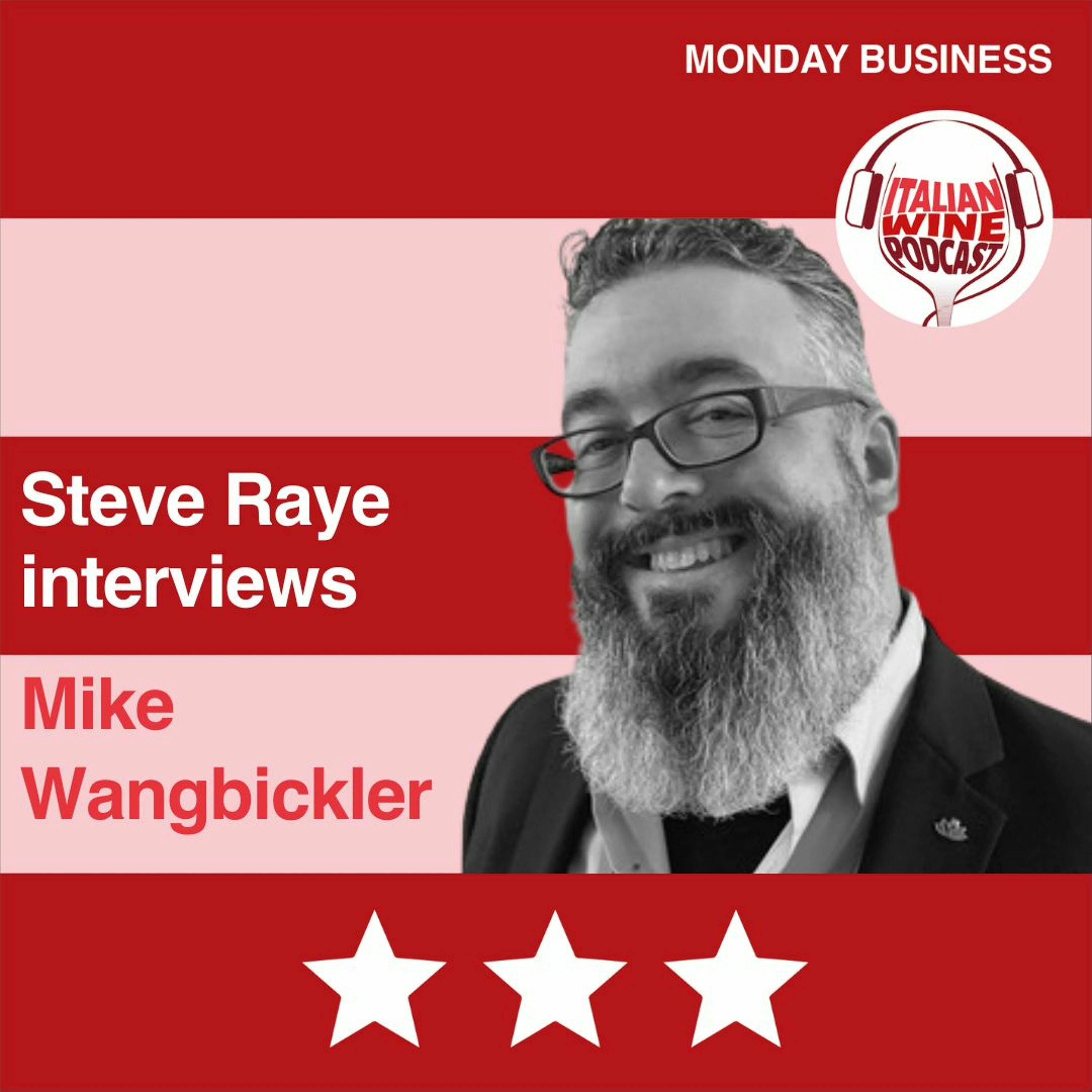
Ep. 1177 Mike Wangbickler | Get Us Market Ready With Italian Wine People
Masterclass US Wine Market
Episode Summary
Content Analysis Key Themes and Main Ideas 1. The evolving landscape of public relations and marketing in the wine industry, particularly the blurring lines between them. 2. The critical importance and integration of digital marketing into overall PR strategies. 3. The shift in measuring PR effectiveness from ""exposure"" to actionable metrics like ""engagement"" and ""conversions,"" acknowledging the long-term nature of ROI. 4. The strategic use and effectiveness of different types of online influencers (organic vs. paid, nano, micro) for targeted audience engagement. 5. The widespread inadequacy of winery websites and the urgent need for optimization as central digital hubs for information and media assets. 6. The necessity of tailoring communication messages for distinct audiences, specifically trade versus consumer. Summary In this episode of ""Get US Market Ready with Italian Wine People,"" host Steve Ray interviews Mike Wangbickler of Balzac Communications about the transformation of public relations in the wine sector. Wangbickler asserts that the distinctions between PR and marketing have largely disappeared, with digital marketing now an indispensable component of any effective strategy. He discusses the evolution of measurement from traditional metrics to modern digital engagements and conversions, highlighting that while tangible ROI can be elusive, PR demands a long-term, patient approach. The conversation delves into the strategic utilization of online influencers, differentiating between unpaid ""organic"" influencers and paid counterparts, and categorizing them by audience size (nano, micro, etc.) to emphasize their targeted effectiveness. A significant point of discussion is the widespread poor optimization of winery websites, which Wangbickler identifies as a critical failing. He stresses the need for accessible, updated digital asset libraries on websites for media and trade, suggesting a systematic approach to content management. Finally, he underlines the importance of customizing messaging to resonate with different audiences, such as trade members versus general consumers. Wangbickler's key takeaway for listeners is the immediate necessity for wineries to update and optimize their websites. Takeaways * PR and marketing functions are now largely integrated, with digital marketing being a mandatory element. * Effective PR measurement has shifted from broad ""exposures"" to specific digital ""engagements"" and ""conversions."
About This Episode
The hosts of the Italian Wine podcast discuss the importance of collaboration between public relations and marketing to ensure success. They emphasize the need for digital marketing and the importance of faith in investing in a long term marketing strategy. The speakers discuss metrics used in media advertising, including engagement, conversions, and ROI return on investment, and emphasize the need for a deep need assessment and a tailored craft approach to things. They also discuss updating websites and updating content for businesses, including updating websites and updating content for businesses. The speakers emphasize the importance of updating websites and finding someone to do it, and mention a new guest, Steve Ray, who will be hosting a podcast.
Transcript
The Italian Wine podcast is introducing a new donation drive this month. It's called y m I f on. We are encouraging anyone who tunes in on a regular basis to send us your ten second video on why you are a fan of our podcast network or a specific show. We will then share your thoughts with the world with the goal of garnering support for our donation drives. Italian wine podcast is a publicly funded sponsored driven enterprise that needs you in order to continue to receive awesome free wine edutainment. Seven days a week, we are asking our listeners to donate to the Italian wine podcast. By clicking either the go fund me link or the Patreon link found on Italianwinepodcast dot com. Remember, if you sign up as a monthly donor on our Patreon, we will send you a free IWP t shirt and a copy of the wine democracy book, the newest mama jumbo shrimp publication. Thanks for tuning in to Get US Market Ready with Italian wine people on the Italian wine podcast. I'm Steve Ray, your host, and this podcast features interviews with the people actually making a difference in the Italian wine market in America. Their experiences, challenges, and personal stories. And I'll be adding a practical focus to the conversation based on my thirty years in the business. So if you're interested in not just learning how, but also how else, then this pod is for you. Hi. This is Steve Ray, and welcome to this week's edition of Get US Market Ready with Italian wine people. We're recording this, at the wine to wine forum that took place in verona, Italy, a month or so ago. And my guest today is Mike Wangbickler of, Balzac Communications. Mike, welcome to the show. Thanks, Steve. Great to be on. Give us a little, overview of of you and your company and, what you guys do? I own an agency called Ballite Communications in Marketing. We've been around for, thirty years, specializing in the wine and spirit space. And, so we do public relations and marketing. For winery, winery regions, distilleries, some food companies, etcetera. When we offer all kinds of services, we're pretty pretty much full service at this point. So we offer digital marketing, public relations, advertising, event marketing, influencer marketing, you name it. And, you're in headquartered in California, but I understand we've gone almost nine percent remote. That's correct. Yeah. So when COVID happens and shut down pretty much the world. I've already been thinking about moving towards a more remote model for the agency. And with COVID, it basically was the opportunity for me to do that. So, while other people were looking at COVID as a disaster. I was looking at it. That's an opportunity. And so what that enabled me to do was to find great talent wherever they were. They didn't have to be working in my office. And I so, honestly, I can find better talent elsewhere. And get exactly what I need to meet the needs of my clients without having to compromise. Okay. Great. Let's cut to the chase of the, you know, issue on the table, and that is how PR for wine is changing. And, I should point out that while a lot of the work that ball's actions is American companies, you do a fair number of export markets, promotion groups, consortcy, and individual wine and spirit companies. But give us some perspective of how has PR changed and not just with COVID, but journalism and technology. Oh, boy. Where do we start? Right. We may not have enough time for that. So, firstly, once more time, we would consider publish and marketing to be separated entities. You know, there were definite different functions within a company or even within a different agency. The thing is is now those the lines between public relations and marketing has blurred to the point where there really isn't much of a difference. And so when when we're looking at how public relations works today, it's not only sending out press releases and reaching out to media, but it's also reaching out on social channels. And maybe it's, you know, putting together email marketing campaigns, and maybe it's a little bit advertising. You never know. So but the thing is is that it all needs to work together. Right? Because, you can't, you know, for a long time, I think that digital marketing kind of sounded vacuum. Right? It was basically that thing. Like, oh, I grew out of social media marketing. So it was a separate thing, but now people have realized that it needs to be integrated with everything else. Right? So when you are, for instance, putting on announcements, about some major news that you have at your winery or your distillery, you're not just putting that on the press release. You're putting that on every channel that have, and that includes digital channels, it includes email marketing and etcetera. So I guess one of the statements I would make there is digital marketing is no longer an option. I say that we get I work with a lot of different people, companies entities around the world and in the US who that's, a scary statement because they don't know how to approach it. And how do you guys help people become comfortable with social media integrated into the whole PR? Well, Marketing in general is just like any other business function and that you need to stretch a different crunch. Right? You need to develop marketing strategy. And when it comes to digital marketing, that has to be included in your marketing strategy. So, sitting down and determining, okay, what is it we wanna accomplish? What is it that we need to do here in order to help promote our company? One of the big issues I've seen in my career in PR, that's what I started in is metrics. And the only metrics we had were exposures, or impressions. And that's a poor end poor proxy for the effectiveness of of a PR program. Has that changed? Well, it gets hit. There's even there were reports metrics. Like, Davey, like Davey Eads. Right? So it which is which is, well, it's equivalent add value or add value equivalency. Right? So the idea basically was that, you know, if you got a a a article published, you know, depending on how much space it took up in the peer article, you know, that would be the equivalent of an ad. Go ahead. That's a reach. Yeah. So but it was but it was but it was a a metric that was used in, you know, for for many, many years decades. Nowadays, It's still because because especially in the United States, we have we have a little bit of, space between the consumer and the producer. Right? So we have a three tier system there, which means that a lot of the producers up until digital marketing emerged didn't have that direct touch with the consumer. And now they do. And so you can use metrics like you know, engagements. And, actually, you can also do conversions. So conversion basically is this, you've you've put out some news when you sent out a digital, you know, the digital post and, if somebody takes action on that post, whether they, purchase something, or they click on it, and what have you, that's all measured. And, that's pretty powerful for PR and marketing. Professionals who, up to this point, haven't had that option. One of the big issues with public relations has always been ROI return on investment. Now we have better metrics. We don't need to go into the details of what those are. But even still, there are metrics of people's actions, but there's no necessarily straight line connection between stimulation and action if the action you wanna measure the sense. So how do you guys do it? Well, we don't. When when it comes right down to it, we can't. Right? So, clever relations, requires a bit of faith, requires a bit of faith knowing that what you're doing will, in the long term, have a positive effect on your overall business on these sales. Right? So, there's a couple of full one of those was by by famous, newspaper managers who said, you know, I know that at least fifty percent of my ad dollars are wasted. I just don't know which fifty percent. Right? And PR really can fall into that. Right? You know, you need to you need to invest in PR. You need to invest in these different marketing channels, but at the end, you can measure that to a certain extent. You're not gonna be able to measure the entire impact. It's almost like you're measuring indicators of progress on a linear path from, awareness all the way to eventual us. There's a lot of things that we teach in marketing classes about that, and there are equivalencies on the social media side. But at the end of the day, the stimulation and the final thing that you wanna count requires faith, and you had said the other day, patience, where we've said patience. Yeah. Patience. That's a real challenge for a lot of producers. Yeah. It's it's it's hard it's hard to invest in something that could take years to actually come to fruition. And that's, you know, that's what PR is about. It's it's a long game. When you have to have the commit to do this for the long term knowing that eventually it's going to be off. Well, and and even that has changed dramatically too. It used to be, the olden days when we had things like magazines and newspapers. Whose papers were published daily or weekly and magazines were published monthly. Article were written months in advance of the date of publication. And so there was, like, time to do these things. Now with social media, if you're doing advertising on Facebook or Google or Instagram or anything like that or using influencers. It's an immediate stimulus, and generally you're looking at an immediate response. How do you react to something like that when it's more than just doing an article? Yeah. You know, we we we look at these measurements, brilliant proxies. Right? You know, it it it doesn't honestly, it doesn't really measure how much impact it's gonna have on your business. But what it does is it gives you an idea of what could lead to business. So, you know, for instance, with social media, you know, the proxies could be, you know, engagement percentage, or how many people have engaged with your, with your posts, depending on, you know, like, what's what's your total user base? Your total number of, like, our your followers would have you. And, like, how what percentage of those are actually reacting to your pups, whether they're, you know, reacting with comments and what have you taking action of some sort And you know that over time, if that increases, if that percentage increases, that what you're doing is working. So the absolute number doesn't matter what the change over time is. And most of the people that we deal with report to somebody else in a company and they need to justify what they're doing. And so I look at the history of this and think what we came up with exposures as a metric because it's something we can count and it gave us a big number. Nowadays, the the big number is not so much that matters, especially when we're talking about influencers. Let's move the conversation there a little bit. All kind of the what's your definition of an influencer? Oh, that's a good question. The way that I would answer that is is, there are different kinds of influencers, especially in the wine sector, and we treat them differently. So there are what I generally refer to as the organic influencers. So those are basically, you know, your SonyAs and, people who are trade essentially, but have a presence, in digital channels, those people, can have real influence, purchasing behavior of of consumer. So they're the equivalent of a magazine in Cincinnati. Yeah. I mean, you know, if you're if you're getting a rating in a magazine, what have you, it's it's it's the same thing with one one with one of these influencers. It's just that they may not have as large an audience by themselves, but in aggregate. Like, just like with blogging, you know, once upon a time, you know, individual bloggers don't have much of an impact, but together, you know, if ten bloggers are writing about, your product, then it makes an impact. It's the same thing, with these kind of micro influencers as well. Well, yeah. So you use the word. There's kind of a hierarchy of of impact, and different. It's not that a nano, which is less than ten thousand, I think, followers. You can talk about the numbers, isn't as valuable. In fact, it's more valuable because our audience is so narrowly focused that the people who are involved in it are seriously engaged. Yeah. You know, it's a a more targeted audience. I know that people don't like to use Target anymore, but, the fact is is that, you know, if a nano influencer with a smaller audience, that audience, you have a pretty good idea that's going to be the very kind of tip of the tip of the iceberg of of all the potential people who could be following them. But those are the people who are like the early adopters and those or really engaged in the particular subject that they're covering. So give us a, you know, a picture of the hierarchy. We mentioned Nano. We mentioned micro. Can you tell us what they learned? Well, let me let me take a step back and go to the to the second way I define influencers. So the first one's organic influencers, and those are basically people who are unpaid. Right? They're basically doing it because, you have some sort of relationship with them. You've established it and what have you, just like with a writer. Right? And a journalist they're generally not gonna be paid by you to write an article. And so that's where the organic exposure comes in, but there is also paid influencers and paid influencers, are here to stay. You know, it's one of those things. I think there's been some resistance to it, especially being in the land spirits area. But the fact is is that they have their place. Right? And again, it's it's you kinda you have to kinda look at it with terms and advertising. Right? And in fact, if you look at it that way, it's way more effective as an advertising solution than putting a a some an advertising communication. Right? Because that's very passive, whereas an influencer, they're gonna they're they have they've already built their audience. They already have, established their credibility with that audience. And then when they say, this is a this is a product that you should try, people are gonna listen. Right? A lot more than if they're just glancing through a publication and they have to see your ad. Italian wine podcast, part of the momo jumbo shrimp family. So organic is one side of it, and then the page is the other. Yeah. They're both you're saying they're both effective. They're very effective in different ways. And probably I would imagine on different people Yes. And how people then use that information. If it's something, you know, one of the things that we focus on a lot is the idea of discovery, gen z, millennials, everybody who think fits into this category. They like to discover something new, and they like to share that information, whether it's whether it's a new wine or a a fact about a new, an existing re region or something like that. Now with social media, that empowers that kind of sharing and discussion and conversation. Tell us about the difference between organic and paint, and you just told us about organic. So Yeah. So, a paid influencers is is somebody that you were actually going to pay. You basically hire them to do a post or read an article or what have you, in their social channels. And it can it varies between, inflows is what they do. So, you know, for instance, so maybe it's an Instagram influencer. So with Instagram, it's videoing photo, right, whereas with, you know, maybe they're a Twitter, influencers. So it's gonna be all mostly taxed. Maybe some photo. But the the benefits of using paid influencers and their heard was that, you know, it it the fact is is that there's been some resistance in the wine business when it comes to paid influencers. But when you look at it and its effectiveness, it's proven to be very effective as an advertising. Right? And and you have various levels of influencer. Like, you know, when when we say paid influencer, I think a lot of people think of, like, the credentials. Right? You know, they're, you know, they are paid influencers, but they they literally bring in millions of dollars, doing that. Right? Those are not probably the best influencers for you to go after as as a winning spirits producer. You really wanna go after what's turn what's the next tier down, which is what we call micro influencers. Like, that's basically like between ten thousand and the two hundred thousand, you know, essentially, you know, people define different ways. Our dashes would be millions. Right. Yes. Exactly. The luxury is generally gonna be millions. And the micro influencer is gonna be, you know, for ten thousand to hundreds of thousands. So that's not it today. Right? Because, you know, the fact is is that, you know, if they have two hundred thousand followers, that's more than many publications. So and then we've then we go down to what we call nano influencers, and those are people basically. Who are under that threshold and, are really small, but focused. Right? Their audience is engaged with them at a much higher level than you know, a production is gonna be. Somebody was giving a presentation earlier, and they made a what I thought was really interesting insight, which was there's a cultural context for this. So if you're working with somebody from Napa Valley, who went to Stanford and as an MBA from Harvard, they're gonna understand, advertising marketing PR and all the differences on this interweb thing, very clearly and and accurately. That we're dealing with, say, a farmer, an employee. Who's heard about all this stuff doesn't really use his cell phone for, that doesn't engage in social media. How do you help a company like that? Who recognizes the value PR, not how to do it. That's what they pay other people for. How do you educate them on on what it's all about, how it works and figure out which ones are the right tools for you to use for them? Wow. That's a great question. And I will say that our approach on evolves of communications is to take a very tailored craft approach to things. And that is basically we do a deep needs assessment with you as a clients when we're first getting to know each other. We determine, okay, what is it that you actually what are you trying to accomplish? You know, what what strategies can we put in place? And then from that, let me just develop, you know, okay, what services and tactics are we going to suggest to you as a as a customer to basically get the most bang for your buck. Keep it simple. Keep it simple. So in terms of providing help for influencers, journalists, anybody who e commerce outlets that is going to be, using repeating or, referencing this kind of information. One of my call it a pet peeve. It's not a pet peeve. If it's a big gaping hole, in everybody's marketing plans, which is you need one central source where someone like an influencer can get the images, the the short video clips, names, whatever it happens to be without jumping through hoops so that they don't have to create it all or search for it on their own. Yeah. Nobody does that. Why is that? Let's let's call it spade to spade. Shall we most winter websites suck? For great. Right. You know, the fact is that, you know, they're just, you know, I mean, for one reason or another, they're just not up to standard. Right? And so when you say a central location for for a journalist or an influencer, whomever, to find that information about your winery, It's gotta be on the website. I mean, it's gotta be accessible and it's gotta be easily accessible. And And not behind not behind a firewall. That's another thing I see that you have to register to give a a email. Eric Adusa gave a presentation this morning that I thought was brilliant. I'd recommend to anybody who's listening to this that access, her presentation. Erica used as an example not because of her client, but just because they have a good site. Tapolis Creek, TAB LAS. And you can go on it, check it out, and you can see the the, assets that are available, not behind the payroll, they become the go to place for her and a lot of other journalists because it's easy to get. And the the, logos are in black and white, and in color, they're vertical on the horizontal aspect ratio. There's high resolution pictures, not just crappy little JPEGs and all that. The the here's a quote from my Gosborn, who is the president of wine dot com. Only five percent of the brands that they have on their website or what he would call fully optimized. Wow. That's terrible. This this is really terrible. But it raises the issue that it's an opportunity for people to do something that's really very simple, very easy, really is and not only can have immediate impact, but it has evergreen impact. Why don't more people? Why don't more agencies lead their clients to provide this information? Your agents. Yeah. So, well, we do actually make that recommendation to every client that we have. And, you know, one of the first things we address with them is their websites, and telling basically, you gotta you gotta update this. You gotta do that. You know, one of the first things we often do with clients to develop with them key messaging is because a lot of times they just don't have it where they don't know it. So coming coming to an agreement on what that is, helps us to update all their channels including their website. But in terms of functionality, yeah, you know, it's, there should always be a trade section, or trade media section on your website where people have access to your fact sheets, your photos, you know, anything that they would need or to either sell your product or write about your product. It's just it's a no brainer. So there's a case where everybody, whether you have a PR agency or not can't do this. Again, there's a cost of money to be done as it needs it as evergreen because you can load up the, the most recent. That's it. Don't just put it up there. So get it by. Right? Because because yeah. Because I've I've seen a lot of wider websites. So, basically, they have the section, but then it's still on a date that it's useless. Right? So it needs to be updated every time you put out a new new release, you gotta update the images, you gotta update the factions. On your website to make sure they allow. So that would suggest that somebody needs to be given the responsibility, not just the assignment, the responsibility to digitally optimize content about the winery online so that anybody who might talk about it can, and we'll talk about it. Yes. Nobody doesn't. No. But there is there there is a way on streamline that. That is putting a system in place. Right? And, if you've heard me talk all at any time, I I beat the system source, you know, continually because the fact is is that we're black you know, in the way that we build systems, in in the wine business. We substitute with labor. Right? So you don't actually have to have a bunch of employees to do a lot of this stuff. You have the systems in place. Right? And so basically what the system means is, okay, you know, when we do x, y used to have. Right? And so, for instance, when we release a new one, this person is responsible for putting the new factory and the and the photos on the website. MSRP scores. Yep. Yep. And you have a list of like, here's all the things that need to be done. Right? And you have that you have that system codified. And when you get to that point, we're like, okay, I got a new product, okay, pull out the system. What do we need to do? So it doesn't require it doesn't rely on just one person to do something. Right? Because if you have the system in place, anybody can do it, if they have obviously access to the to the website, which is another issue. We have a lot of web awareness. Is that is that guideline, the template, for whatever you wanna call it, generally available to people? Is that something that's only available through the audio agencies? Well, you can build it yourself, but there's no there's no standard per se. And I think each, agency's gonna do it a little differently depending on, you know, how they how they feel, is most effective. But, for us, you know, the the idea for us is that we're trying to get you successful. We're trying to make you, efficient. And, you know, we want you to make money and save money rather than waste money. So I that was a real leading question if, it's in my book. Cages two fifty nine to two seriously. Two fifty nine to two sixty three, and there's the templated list of all the assets and prioritized by what's really important to the people who make the difference. Like the guys at wine searcher, Vivino, drizzly, and all that. Who want this information from you. They're not objecting to it. They actually they need it because they need to update their content. They just don't wanna spend a lot of time doing it. Yep. One last subject that will go, to the last question. And that is differing messages for trade versus consumer. Mhmm. Could you just comment on that? Yeah. You know, when you are, considering hover relations, canceling your, system, You have to consider that not every audience is equal. Right? You're not talking to the same audience across the board. So each audience is gonna have different requirements and different messaging and resonate differently with that. So for us, like a general consumer audience who doesn't really know much about wine, they're gonna wanna know, different information than the trade person who needs to know, where the where the bedroom is and what the soil type is and, you know, what the training is. Honestly, nobody really cares about that beyond that anyway, but but it but what it does is it gives the third person an education in terms of, so they could talk knowledgeably about the wines that they're trying to sell. Right? So I find this to be a real challenge and it's kind of validated when you look in, some of the print trade magazines where they put consumer ads. And the audience doesn't wanna see that they don't wanna know about your grandfather or, you know, wonderful. The line is what they're interested in is what's the MSRP? What's the, APV? Where can what distributor is carrying in Yep. Margins in those kinds of things. Yeah. Which, of course, is terrible at think when No. But you could have somebody to capture their attention that you use a QR code to Yeah. Exactly. Exactly. Yes. Yes. You can you basically say, you you can have something that's gonna resonate with the trade audience, you know, by the glass. Or specials or something like that, and then have a QR code or a website address where they can go to get more information. Okay. So, reach the end of our interview here. One of the things I like to do is send each interview with a a requested? What's the big takeaway? If somebody was listening to this, you know, say a winery and Julia were interesting were listening to this. What's the one thing they can take away and actually put into use immediately? Well, I think the first thing is is, you know, update a website, you know, or find somebody to do it. That's that that's, you know, you have to consider that. Today, a website is basically grounds here for everything you do. Right? It is the one place that you can keep everything. And it's the one place where everybody's gonna go to find the information about you. Right? So, it's your, in many, in many cases, it's your first line, of of content. With with a customer. Sometimes it's it's on the shelf, which isn't which is why it's important to have a good label and package design. But if it's not the first and the second, the website is where people are gonna go to find more information about the wines about the background or the winery and any other details that they're gonna want. And this is something everybody can do. It doesn't once again, updating the website, you don't need to hire an agency and spend fifty thousand dollars to redesign the thing. It's just within the confines of the structure of the website, populate it with content that people, you know what? You can tell what that is by looking at your Google Analytics and seeing what people are looking for. I mean, that they have Google Analytics. My guest tonight is Mike Wangler, president of Ballsat Communications, Mike, I wanna thank you for being a guest on the show and, coming to, one to one and sharing your time with us. Yeah. It's been a absolute pleasure. I mean, coming to Italy and doing the podcast. There's nothing better. But you left that with Steve. Right? Cool. Thank you for listening. This is your host, Steve Ray, tune back in next Monday for another edition of Get US Market Ready with Italian wine people. And Mike, before you leave, If people wanted to contact you, where would they go? Thank you. It's real easy. It's ball zach dot com is our website. Your website. Yeah. L c a c dot com. Super simple. Great. Thank you for your time, Mike. Thank you. Thanks again for listening. This is Steve Ray with Get US Market Ready with Italian wine people on the Italian wine podcast.
Episode Details
Keywords
Related Episodes
Ep. 2790 Italian Wine in the US: Building a Narrative and Reaching Asian American Consumers with Susan R. Lin MW | Masterclass US Wine Market
Episode 2790
Ep. 2783 The Suburban Gold Mine: Insights into New Jersey’s Wine Market with Brittney Abell | Masterclass US Wine Market
Episode 2783

Ep. 2772 A Surprising Partnership between Japanese Sake & Italian Wine with Monica Samuels | Masterclass US Wine Market
Episode 2772

Ep. 2770 China’s Wine Market: From Misleading Import Numbers to Today’s Consumer with Fongyee Walker MW - Part 1 | Asia Wine Market
Episode 2770
Ep. 2760 Winning the Restaurant Floor: Training, Education & Italian Wine with Sylvester Inda of Ci Siamo | Masterclass US Wine Market
Episode 2760

Ep. 2751 From Montalcino to Kazakhstan with Francesca Arquint of Collemattoni | Asia Wine Market
Episode 2751