
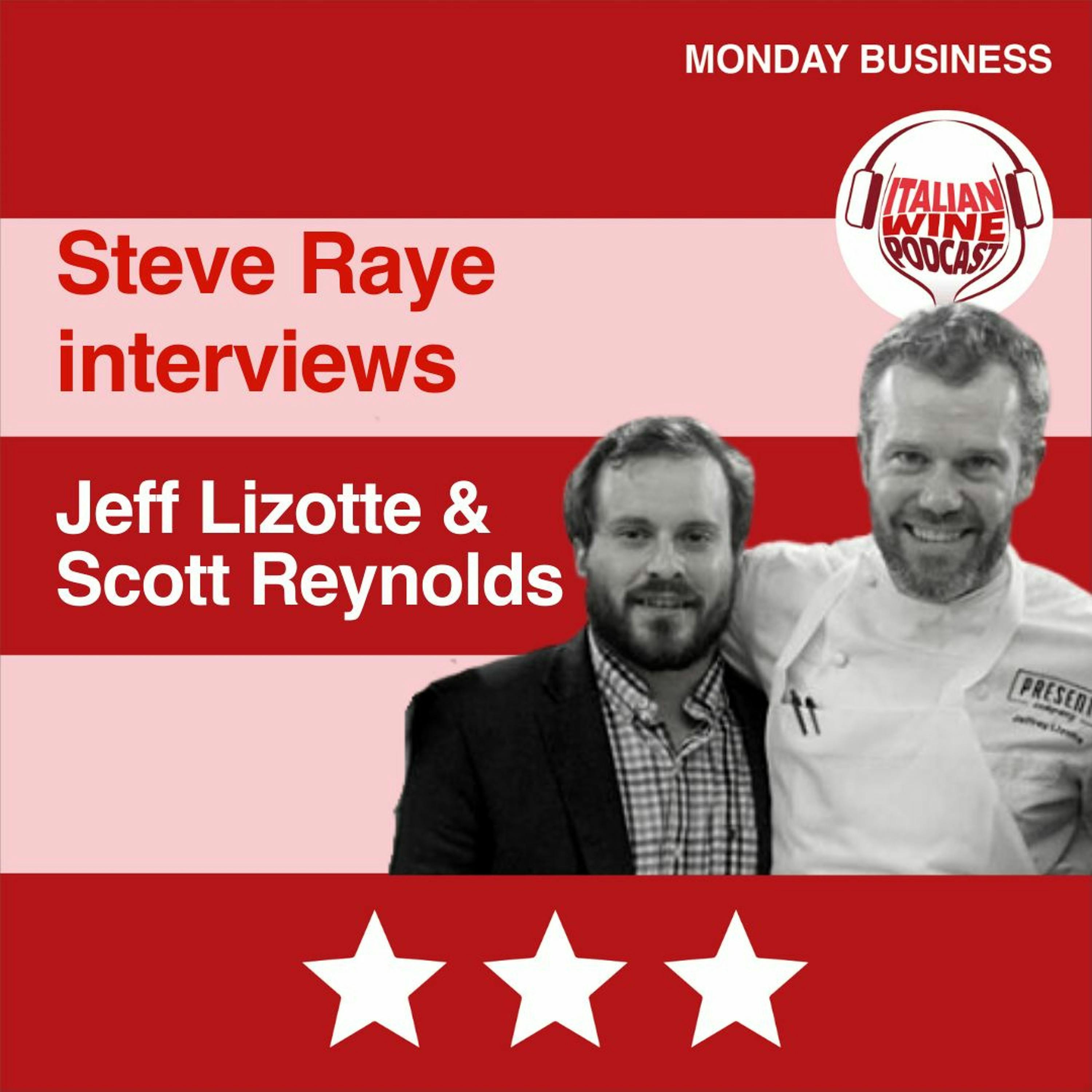
Ep. 1252 Jeff Lizotte & Scott Reynolds | Get US Market Ready With Italian Wine People
Masterclass US Wine Market
Episode Summary
Content Analysis Key Themes and Main Ideas 1. The unique philosophy and operations of chef-owned, single-location restaurants. 2. The development and management of an eclectic and approachable wine program. 3. The importance of customer interaction and a transparent dining experience. 4. Strategies for navigating the post-COVID restaurant landscape and market trends. 5. The role of strong relationships and continuous adaptation in the hospitality industry. Summary In this episode of the Italian Wine Podcast's ""Get US Market Ready with Italian Wine People,"" host Steve Ray interviews Jeff Luziat (owner and chef) and Scott Reynolds (general manager and wine director) of Present Company, a chef-owned restaurant in Simmsbury, Connecticut. They discuss their restaurant's ""old school"" approach, emphasizing its unique single-operation model and the interactive experience provided by its open kitchen design. Scott shares his journey from dishwasher to wine director, highlighting his self-taught approach to developing an eclectic wine list that prioritizes unique varietals like Lambrusco and less familiar Italian and Chilean wines, making them approachable for customers. The conversation also touches on the challenges and resilience of the restaurant industry post-COVID, their strategies for sourcing wines in a franchise state, and their use of technology like Resy and Campaign Monitor for marketing and customer engagement. They conclude by emphasizing the importance of continuous improvement, adaptability, and the core essence of hospitality in their business. Takeaways * Chef-owned, single-operation restaurants offer a distinct, personalized, and ""old-school"" hospitality experience valued by customers. * An interactive kitchen design fosters engagement between guests and chefs, enhancing the dining experience. * An eclectic wine list featuring less common varietals can differentiate a restaurant and encourage customer exploration, especially when presented accessibly. * Building strong, long-term relationships with multiple, diverse distributors is crucial for sourcing unique wines, particularly in franchise states. * Approachable language over ""wine geek speak"" is more effective for educating and engaging consumers with diverse wine selections. * Small, adaptable restaurants demonstrated resilience post-COVID by pivoting to takeout and strengthening community ties. * Flexible wine pricing strategies, rather than strict formulas, can optimize sales and allow for a more varied selection. * Leveraging reservation systems for data analysis and email marketing campaigns helps understand customer behavior and promote new offerings. * Continuous self-analysis, willingness to adapt, and a focus on core hospitality principles are key to sustained success in the restaurant industry. Notable Quotes * ""I think what distinguishes most Steve is, is that we're chef owned and it's a single operation, and this is it."" - Jeff Luziat * ""I kinda attribute that to wanting to learn. I never said I never said no to anything."" - Scott Reynolds * ""Strategy behind that was, you know, so many places do Preseco and Kava and and that kind of thing. And when Busco is just something different. It's one of the things I look for when I look for new wine, something different."" - Scott Reynolds * ""I don't necessarily know what that tastes like. So how can I Yeah? We're mineral or sapid... I've hear I've heard concrete before, which is a a weird thing to describe wine as."" - Scott Reynolds * ""So our our smallness is what really saved us, I think, and made us unique."" - Jeff Luziat * ""I think a lot of people start, you know, I hate to say it, but they go, you know, California Cabernet. Oh, I like California Cabernet. Okay. You know, there's a lot of other wine out there. And that's part of the thing I like to do is is people that maybe don't know wine that come in. I I I'll love to have a conversation with them and say, well, let's try something else."" - Scott Reynolds Related Topics or Follow-up Questions 1. How do chef-owned restaurants effectively scale or replicate their unique experience without losing their original charm? 2. What specific training methods are used to help staff communicate complex wine nuances to customers in an accessible and engaging way? 3. Beyond Lambrusco and Primitivo, what are some other ""up-and-coming"" Italian wine varietals that are gaining traction in the US market? 4. How do restaurants in ""franchise states"" manage the complexities of working with numerous small distributors to maintain a diverse wine list? 5. What technological advancements (beyond reservation systems and email marketing) are expected to most significantly impact the high-end casual dining experience in the next 3-5 years? 6. How do you balance the desire for an eclectic, unique wine list with the need to offer familiar choices for less adventurous customers?
About This Episode
The speakers discuss the Italian wine industry and its association with French cuisine. They share their experiences working in French restaurants and their love for Italian cuisine. They also discuss the language of wine and how it affects the future of the restaurant industry. The speakers emphasize the importance of culinary appeal and the use of words like dirt and dirt earthy to describe wine tastes. They also discuss the importance of being flexible in pricing and the use of a chef's tasting menu. They emphasize the importance of being a different customer and the need for exposure to new wines. They also discuss the success of their wine tasting menu and the use of resi service to improve customer satisfaction.
Transcript
Coming soon to a city near you, Vineita Lee Road Show. Have you ever wondered how to attend Vineita Lee for free? Are you a wine trade professional interested in a sponsored trip to Vienie to the International Academy, or Vien Italy, the wine and spirits exhibition. Coming soon to Princeton, New Jersey, Harlem, New York, and Chinatown in New York City, Cardiff in Wales, London, in England, and Roost in Austria. We'll be giving away our new textbook Italian Wine Unplug two point zero. Find out more about these exciting events, and for details on how to attend, go to liveshop. Bn Italy dot com. Limited spots available. Sign up now. We'll see you soon. Thanks for tuning in to Get US Market Ready with Italian wine people. On the Italian wine podcast. I'm Steve Ray, your host, and this podcast features interviews with the people actually making a difference in the Italian wine market in America, their experiences, challenges, and personal stories. And I'll be adding a practical focus to the conversation based on my thirty years in the business. So if you're interested in not just learning how, but also how else, then this pod is for you. Hello, and welcome to this week's edition of Get US Market Ready with Italian wine people. I'm your host Steve Ray. And with me today are Jeff Nizat and Scott Reynolds of present company in, Simmsbury, Connecticut. Scott? Jeff, welcome to the show. Thank you for having us. Thank you very much, Steve. Well, give us a little background on present company. What kind of a a restaurant it is and and how you distinguish yourself from, competitors both in in this little town that we both live in. Or all three live in. Present company opened in two thousand sixteen, which I did with a former partner of mine. And we bought it from a restaurant that was already in operation called a military attorney who had really created a path. Forward for a restaurant of this caliber of this concept. So that was a wonderful way for me to become an owner operator from just a chef. Previous was working both in, New York, and in France. And always dreamed of having my restaurant and sure enough happened to open it in my hometown. So we've been operating since two thousand sixteen. We've been growing. Scott Reynolds, my general manager, and wine director here started with us in two thousand sixteen as well and started his way up from, an unlikely position, as a, what we call a dish dog or dishwasher here, in the back kitchen. And now he's he's running the show pretty much. Yeah. Well, we'll get into a little of Scott's background in a moment. But one of the things I wanna point out about present company is, I guess you would call it a high end restaurant, but it's much more of a foodie restaurant in terms of farmed table, in that vein, and also the the quality of the food and the cuisine and the creativity the dishes served and so forth. So it it stands apart, you know, from the rank and file of restaurants both in this little town and in this part of Connecticut. But I I think there's something more that distinguishes the restaurant beyond just the quality of the food, which I found to be distinctive. Tell us about what your philosophy of, service and presence Yes. I think what distinguishes most Steve is, is that we're chef owned and it's a single operation, and this is it. I think that's a really unique and rare we're at once, so I think was maybe taken for granted. And, you know, people always associated restaurants for this. We're run by the people that owned it, that's very different picture now with these groups and these sort of corporate mentality when it comes to, which is a very simple trade and old trade and hospitality. So it's kinda old school. I think people really like that, and it goes along with our concept of, providing a European old fair, with excellent service and wines in a in a charming setting. I think some of the best compliments we get sometimes from our grass is when they say it reminds them of some place in Paris they ate or a place in New York that they love, that really is a great, you know, great compliment. Yeah. Yeah. No. I I just think that leads to kind of our culture and our ambiance that we've built over the past six plus years now, both with our staff and our guests. It it really has has come a long way. So, Jeff, you spent a couple of years in France, and I guess we would say that you're more French oriented. We'll we'll get to the Italian side of things, but did you comment on that? Yeah. I worked at, you know, pretty much as a young cook working in French restaurants. I was always interested in French cuisine, ended up landing me in La Bernadette in in Manhattan shortly after I graduated from Cornell, the hotel school. And while I was there, you know, an opportunity to actually tour Bordeaux for two weeks and learn about, the wine production. It was through a wonderful foundation that's still around called the Jean Louis Paliden Foundation. And that was a very, you know, enlightening trip for me and I had made up contact with the former, you know, Petrone. I will call him and chef, owner of of Latupino was my first job in a Bistro in Bordeaux for this man John Pierre. Sarah Dakis. And, and we started there, and then I I worked for him for a year, another year at two star Michelin restaurant in Grass called Lev Estice Santein Puan. So all in all, I had about two years of iconic, amazing experience working abroad in France, which then brought me back to Connecticut in hopes of opening up my own little French version of a restaurant here. Okay. And in terms of old school, Cornell is a great connection. I went there and also do a lecture there. Every year, some I'm glad that we have that connection. You talked about La Bernadette. Did you know, Aldosan when was he there when you were there? Unfortunately, I was there, before he started with with the with Eric and and Maggie. But, yeah, I mean, I've met him and what he's done with the wine program is incredible. Yeah. He has. I had a lot of experience with him. I'm remiss that I didn't get to work with. Yeah. He's, a special character in the wine business, particularly when it comes to Austrian wines, but certainly, National and Star restaurants. Well, let's talk a little bit about Italian wine, and Scott, that's your specialty. So you started as, pot washer, and now your general manager. How long did that take and what do you attribute your, meteoric rise to? It took about four years, I guess, I would say. I I kind of attribute that to wanting to learn. I never said I never said no to anything. You wanna watch dishes? Sure. You wanna learn how to how to do some prep work? Sure. You wanna serve. Sure. You wanna learn some more about wine? Absolutely. I'd love to. And that's that's kinda led me to hear, you know, where we are French at heart. So I I I wouldn't say Italian wine is my specialty, but with this, menu, we just did recently. I was an Italian wine, so I had to I said yes to tasting a lot of, a lot of Italian wine. So when I first came and I saw that menu and you started out with a Lambrusco, you had a barbera there. You had a bunch of wines that most Most Americans would not be familiar with as Italian wines. I think people who are into the farm to table on an high end cuisine probably are, but still in all, it's particularly the Lambrusco. That's kind of like the unusual one. The feature. What was the strategy behind that? Strategy behind that was, you know, so many places do Preseco and Kava and and that kind of thing. And when Busco is just something different. It's one of the things I look for when I look for new wine, something different. And and that really I can't think of anybody else around that has a Lambrusco kind of by the glass. It's sort of their their starting sparkling wine too, and we'll offer that to guests as, you know, for celebration or something like that. It's you know, the uniqueness of it was what I liked a lot about it. But it's also on the cutting edge. If if you read all the articles about, you know, what they're projecting and what's happening in in the wine world, then Busco is is coming up. And unlike Reesling, which has been doing that for thirty five years and never arrived, I think Marisco is is definitely, on the way there. But you don't have any formal training in mind. A lot of the people that I talked to, if they didn't, you know, grow up at a winery or in hospitality or something, had a passion for wine, and that's what brought them in. And then they studied whether it was WSET or some other type of courses and and went and came in from a, academic perspective, such as that applies to wine. You didn't. And yet, as case in point, you know, about a couple of these less than familiar varietals, how did you get educated when you're running a business at the same time? It was, basically, by by tasting, we have a couple of our reps we use, from our distributors helped me out a lot at the beginning with offering to to taste things. And and that's continued to today. They they kinda know me as as, you know, bring me the the eclectic things, the stuff that maybe is harder cell or, not many people know about, I I love tasting those. And, it it comes to having a good relationship with with some of your reps too is, you know, they get to know you and what you might like. And, that's what led led me to a lot of these kind of varietals and and stuff that most people don't have. So when you say chasing notes, are you the one who's writing the, descriptions of the language? I think one of the great things that Scott has going in in in favor of him is a lot of these reps and relationships we've had. We've had since we both in. So they're almost eight years now, and and a lot of these people are the same. And they saw you when you started as a dishwasher and saw you expand and really grow. Yeah. And, you know, I think it's different from a rep site. I mean, I don't know. I've never been, but must be great to work with, you know, young, moldable and excited minds rather than someone that thinks that they know better or know that they're not gonna like this, the minute you break it out, kind of thing. So the open mindedness is a great great thing that we have here too. Yeah. Yeah. I think there's a lot of closed mindedness because, you know, everybody's always selling something and that is the essence of what we're all doing. But so there's a conference coming up in the next week or so in San Francisco that a friend of mine is speaking at. And it's all about the language of wine. And so it it's there are journalists there, their wine writers, their critics, bunch of different people, and there's certainly no answer to the question, but the idea is There's like two different languages. There's the the wine geek speak language with the, you know, expressions of sauteed gooseberry and notes of this, that, and the other thing, which I I don't think means much to many consumers. They wanna know what it looks like in words that they they understand. But I think if I'm kinda jumping the gun here, but that's kind of what you bring to the party is you're not tainted. Yeah. By by all the the Geek speak. Oh, no. I I find it frustrating too. And, you know, like, I I don't put too much, stock into these online ratings and and what the websites are saying. Oh, I look at it, of course, and just to see and and kind of get an idea of things, but it frustrates me when you hear, you know, cisces and and all these things and you look it up and you go, heck, it's deceased. Oh, I try to I try to do it as approachable how I would like to talk about wine. You know, I hear these things sometimes and it just, you know, what the heck does Flint taste like? You know, I don't necessarily know what that tastes like. So how can I Yeah? We're mineral or sapid. That that's one that holds those mace as high stupidity. I've hear I've heard concrete before, which is a a weird thing to describe wine as. Well, well, there was there was a great TV blurb that I saw where Gary Vaynerchuk of wine library was on the Ellen show, and he was addressing this term about what his wine tastes like. And people saying dirt. Right? So he had some dirt there and he made Melanie dirt earthy and all that kind of stuff. And I think, you know, we use words like that or people use words like that as metaphors or similes as opposed to something else. I mean, at the end of the day, it's a particular chemical. Right? So the the taste of bananas is this isohexyl whatever it happens to be. And the taste of peanuts is is this that the other leather and tobacco and all the same thing. But that isn't the words that people use. Tied that in with the, layout of the restaurant and and for listeners, the unusual thing there is this restaurant is designed with about six seats. At the kitchen. So it's essentially in the kitchen. There's like a bar on one side of the kitchen and no no wall. And you sit there as as a guest and you can interact with the the chefs and watch what they're doing and see the magic happen and all that kind stuff. But it takes the concept of kitchen visible restaurants a little further. You didn't need to change that. It was there. How did you guys capitalize on that? Yeah. The biggest thing I I think you said is the interaction. It's it's it's so unique. I I can't think of any place, you know, quite like, what we have here. It's it's very much in the style of, of, sort of a Japanese style, sushi bar. Kind of thing. I mean, you can talk to our our chefs, our cooks that are that are cooking your dish. And you guys have three three chefs on the line that you can interact with that our guests can are basically sitting right across from. So, you know, imagine having a sommelier come over and and recommend someone or something. You can do the same exact thing with, you know, Drew who's cooking your your your beef or whatever it might be, which can't get many places and, people love that. I think that's that's what draws people in is that they feel a part of the show. They feel a part of what's going on. They they hear, you know, us calling out at each other, which you can also feel like because it's just a small space that you can be sitting in the dining room in the corner and still be looking at the books preparing your food. So, anywhere you are inside the restaurant, is is a dynamic experience where the walls have been taken down. Everything's transparent, and it's a show, and you can see all the cool stuff that's happening. And it's fascinating. It's people just love it. So who is your target audience? Is it affluent college educated? Yes. Suburban. You sell it. Yeah. I mean, that's our target. But but who does that appeal to the idea of of art? Is is it a very limited audience of just foodies or people who watch the food channel or people who cook or maybe people who watch the what's his name? It's Stanley Tuchis. Yeah. It looks a great show. I love. Yeah. I think you got a you got a mixed bag of everything, but I'm sure we definitely cater towards a a little more sophisticated clientele, especially those who are into whether cooking at home or follow restaurants and and cuisine, you know, that that is such much more prevalent than it was, I think, even when I was growing up, So, yeah, I mean, I think the restaurants that have done well have have grown with that, you know, with the American fascination of the restaurant and cuisine. So one of the things that's been in the news, we'll get back to the wine list in a minute. Of the things that's been in the news was reported last week that Noma is closing and, you know, that was arguably probably the best known restaurant in the world, hardest to get a reservation, most expensive, el bulli closed in, in Spain, similar thing. What do you see as the future of not those guys, okay, but your type of restaurants. Like, four or five levels above fast casual, but not Michelin Star fancy pretentious. How are the rest how is the restaurant world changing post COVID? You know, what do you see as trends or realities that you're dealing with and how are you coping with them? Yeah. I well, I think we have a pretty nice niche. And in in Simmsbury, especially, I think, Michelle I I think we have Michelin quality food. We we can only really forecast what we can control what we know about us. I think the industry in general has an amazing amount of complexity and it can go in so many different ways. You know, the wave that we're on post COVID, for some reason, worked, we pivoted. We did take out We appealed to the families in this community, and we kept the caliber of takeout food higher than a pizza joint or something else, which gave us that competitive edge. And that transgressed back to when we opened up the Donny room. And we've got a a nice rebound where today we've opened up an entire outside deck patio area with a full bar and still continue to do our takeout. So I think if you asked us, where do we see us going? I I see us going big and growing. But I think there's a lot of problems for a lot of different operators. And, you know, I think just for example, on the drive from Hartford to here, you could see a ton of major chains and groups and when I thought of when I was starting my small little restaurant, big guys that could never get, you know, taken out are all out of there. It's empty. So our our smallness is what really saved us, I think, and made us unique. And it's it's just this thing that we've continued to ride. Yeah. Absolutely. Italian wine podcast, part of the mama jumbo shrimp family. Alright. So let's, shift on over to the wine list. It's a very eclectic mix. Obviously, I can't show it to everybody on a podcast, but, I was very impressed the first time I saw it. I imagine anybody who knows anything about wanting to look at it and say, wow. Now there's some weird shit here. There's some there's some good weird shit here. Somebody knows what they're doing. If they don't know a lot about wines, they have an eclectic taste. I I think as a consumer, you look at that and if you're dining in this kind of restaurant, you probably have that or approaching that in terms of levels of familiarity with wine. What is the philosophy of the wine list? I look for a few things. When I select wine, first off is a good. I mean, very basic. The second thing I'll look at is sort of you know, the price point, and will it sell? That's another factor. And then the other thing I'll look at is kind of the accessibility of it. Like I said, I I don't put a lot of weight into, you know, what Vivino or, wine searcher. And, of course, I'd look at it, but, I've gone on. I tasted really good wine and gone on there and go, oh, that's a three point five. I mean, that's ridiculous. That should be way higher. And I don't put too much stock into it. But I I'd like it to be on there, and I like, you know, a lot of people come in. And the first thing that if they like something, they'll take picture of the bottle and scan it right on the app and they look it up and they say, okay. Where can I buy this? Is it around? So I like I like eclectic wines that, you know, not everyone has, but at the same time it's tough to find. Kind of that that balance. And then, I like using wine searcher a lot. Yeah. Yeah. When he when he brings in wines that I don't know, and he's not around for us to sit and talk. I just the wine searcher app is my favorite. Yeah. Yep. And then I always come back to the, is it good? And what's the price point? Can we sell it? Just kind of what it always boils down to. What what about matching the food? I would think that would be up there. You know? That of course, that is well. Like for, you know, when we when we change menus frequently, like we do. That that it gives me a lot of freedom to to do different pairings. And that's that's a big part of what we do too. We offer a chef's tasting menu that we offer pairings with. We will, you know, we'll pair your your pre fee menu. If you'd like to do that, that kind of thing. So we look for that as well. Gives me a lot of flexibility too, but there's a lot of good wine out there that a lot of people might think is harder to sell. And I like to I like to bring that in. That's that's we've kinda found our niche there. Okay. And you also do you have a fair, very good selection of wine by the glass and and not just like the cheap stuff, which which brings me to the question of pricing. How do you guys price? Typically, it's double your wholesale price. Is that what you do? And is that all the way through from, well, price bottles to higher price bottles? Or how do you calculate price? No. It it depends. It depends on the wine. Typically, the higher it goes is kind of the less markup typically. But I'm also, you we're also kind of in a unique spot here where I am able to charge maybe a dollar or so more per glass for things that other places might not be able to just based on our clientele, based on the type of food we have, based on everything like that. So there's it's not an exact formula, I would say because it will, you know, it depends on the wine. Three It's flexible. Because then, otherwise, if we do multi course, you know, it's three course menus or four or sometimes people are doing the chef's stacing, which, you know, as I shouldn't say, sometimes it's quite often, you know, trending more and more our guests will do a five course tasting menu, which we offer. And then there's you're talking five different pairings. So Yeah. It gives Scott the ability to open more wines, float more wines, and be more flexible with how he then, goes about price Yeah. I think some people get kind of locked into, like, a formula, and you can kind of miss out on some good wine that way. So there there's a a philosophy out there of, it was an article in the times not too long ago about, you know, by the the second lowest wine on the list or trying to outthink the strategy of whoever was doing the wines. I got the sense looking at your wine list that, you you were cherry picking cherries, pearls. I mean, you know, wonderful things there. So it was not just, hey, this is an interesting Italian IGT or, you know, nontraditional wine, but it's a unique one within the confines of that category. So, Connecticut's a franchise state, and for those of my listeners who don't understand that, it means that the the the actual definition is you can't fire a distributor once you hire them. The practical application of that is you find a different lineup of distributors in franchise states. And franchise states include not only Connecticut, Massachusetts, New Jersey, Georgia, Nevada is is a franchise state. So if you just go a few miles west or more than a few miles, sixty miles west. And be in New York, you'd have a completely different set of, wholesalers in Connecticut. There isn't anybody really that even covers the whole state. It's kind of a patchwork quilt. So you're not going to just one big guy like Southern or breakthrough or or something like that. But that's what you know. That's kind of the way things are. How do you get more exposure to these new things when you can't just say, oh, well, I'll call my southern guy and they'll bring over whatever's new. Yeah. The the key for me is, sort of variety. I work with six or seven different distributors. Some of them, you know, really small to maybe a hundred different wines in their book. And it's a really boutique y, maybe small French profile that I really like. So it just I I get a lot of different variety of of of things. And so when I'm looking for new stuff, I'll text, you know, four or five reps, and I'll say, here's what we're thinking about the new menu, here's what I'm thinking. Let me know what you have. Come by with an appointment when you're ready, and I'd love to sit down and taste. And if you wanna bring some things that are on there that you maybe think I'm missing, I'd love to do that. I I try and taste jesus, you sound like an ideal customer. I haven't seen that happen very often, but okay. Yeah. I try to taste everybody loves skin. Yeah. Maybe not once a week, but, you know, oftentimes once a week. You have the ability too. You have the time. And I always advocate for him to do so and sit down the more exposure he has, the better it is, and the more experience he's gonna gain. And and the better this, the wine list, the restaurant's gonna be. So giving him the time in in the in the freedom to do that, I think. He's So do you get involved in a tube, Jeff, or do you guys collaborate or just when you have a moment? Or Not as much as I would like to. I, you know, talk about me all day long, but I won't get into it. That I I float around a lot between the kitchen, between administrative stuff, between new projects, you know, I'm kinda all over the place. So I wouldn't be a a a good candidate to sit down on a regular I I was speaking more about your knowledge of wine experience in France and palette, ability to, obviously here at the chef. So, Sure. Yeah. Flank racing. Yeah. I mean, yeah. I mean, I have I have a I think a pretty consumerate professional level of wine, and I think, you know, not to toot my horn, but I think Scott started off his whole wine education with my partner, Tom, and myself Mhmm. And continue with that. And, you know, so he, you know, we introduced him to a lot of a lot of things, you know, I think the first time you ever had non vintage champagne was probably with us here. Yeah. You told me once I always have to have a sunset on the menu. Yeah. Well, sure. But Yeah. That was one of the first things I remember. I don't know why, though. That that that that that was before Stephanie and Blanc became a thing. Yeah. Did no. No. No. No. I don't want to answer. I want something to unlock. Oh, okay. Yeah. But, well, to answer your question, you know, more or less, I give Scott the line up the freedom, do that. I don't get involved unless he asks me to. Okay. So when you buy, are you typically buying in broken cases or you're buying in full cases are you buying for a three month period? How how how does that work? Typically, I will buy I usually will buy whole cases. The more expensive the bottle. Typically, I'll I will break up a case then, just because you know, we have about sixty, sixty five seats. Some could go through a ton of wine, but, you know, anything by the glass I'm buying by the case. And usually, before we've been limited with space, and since we we have expanded and gotten bigger, we've increased kind of our storage power and our buying power a little bit. You know, so stuff in the summer, you know, when Whiterine and Rosay is going, you know, I'll bring in cases, a few cases at a time of of some things. But typically, I I stick to cases at a time, which lasts us depending on the line, anybody, anywhere between a week and a month. Okay. So one of the issues on the table with a lot of people that I deal with in Europe is this question about six or twelve bottle cases. Actually, it's more on the spirit side than the wine side, but it still holds true. Do have any comments on that or observations? I I love six bottle cases. Six packs. Six packs. Just the the flexibility, you know, because a lot of times we'll have, you know, we'll get case breaks for for more so liquor than wine. But it winds sometimes as well. So we'll get case breaks. I prefer to just do six packs at a time. It just gives you more flexibility, you know, especially with new stuff that I'm not quite sure will sell. I'll I'll start with a six pack. If I if that reps, you know, I'll bring in a couple more. It just gives me a little bit more kind of flexibility. Okay. And how long does a typical wine stay on the menu during one, I think you say three month periods where you you change menus. Yeah. Within that three month period of time, is is it basically the same core wine list, or do you shift in and out? I shift in and out kinda always There'll be a few on there that'll that'll remain constant that I've that I've grown fond of and that that sell really well. You know, for example, I always have a California cabernet on by the glass. That's just kind of a necessity or, a California chardonnay always have on by the glass. And those those will go, you know, I go in and out of those a couple months, and I'll switch it up. A couple months, and I'll switch it up. I may go back to something. I just I like the change. I don't want. Our guests have the same the same thing over and over. What is the balance between imported and domestic? Just a point of reference, imports represent roughly twenty six percent of the overall wine business in the US. Now you you really gotta put a lot of salt in there because we're not talking about supermarket wines and that kind of stuff. But generally speaking, it's, definitely a domestic oriented market country. In terms of the East Coast and then specifically Connecticut and, Connecticut is called the land of steady habits. What kind of Is it? You didn't know that? Yeah. Okay. So the question on the table was What is the important domestic balance in your, restaurant and do you see that changing at all? I think we're kind of an outlier. My list is, probably eighty five percent, yeah, import. That's, again, based on our our French kind of background. It's just sort of my palette. It's it's it's Jeff's palette. We're just kinda growing that way. But, But like I said before, there's a few on there that I will always have. You know, I'll have that domestic cabernet. I'll have that domestic chardonnay. People come in and before even looking at the list, they'll say, oh, whatever your cabernet is or whatever your chardonnay is by the glass. But I think that's I think that's changing. I think imports will will become a bigger a bigger part of of everybody's list. I think, Is that part of the consumer's journey? I think so. Yeah. Absolutely. I think a lot of people start, you know, I hate to say it, but they go, you know, California Cabernet. Oh, I like California Cabernet. Okay. You know, there's a lot of other wine out there. And that's part of the thing I like to do is is people that maybe don't know wine that come in. I I I'll love to have a conversation with them and say, well, let's try something else. You know, I know you like cabernet, but, you know, let let's let's maybe I'll come by with a little sample and you can try this. And, you know, if you like it, great. We'll go from there, and that's that's kind of the fun part to be on. And that's that's where people can experiment. I mean, because, buying at retail, you're buying a bottle, the on premise, you're buying by the drink and, you're not making that big of a commitment. So people are more open to that. Do you see any, new varietals or styles coming, that are distinct here in Connecticut or in the US as a whole? In Nebraska, like you said, I've been a big crew of enrollment in Nebraska. I I mentioned Sancerre before. Samuel Blanc in general has exploded primativo. Yep. Yeah. We keep hearing about that. We'll pull your wines in general and from the Tivo in particular. Mhmm. And then, South America Chile. Oh, really? Chile has some wonderful wonderful wines. One of my favorites, time, and I'll chore. And that's, great value for a fabulous wine. I see cormoneers that are phenomenal. Do you find them hard to sell? I've worked with wines of Chile for many years. And, That was a tough one. Yeah. Yeah. More so. I, you know, more so than We don't carry that many. So Yeah. I don't I don't. Yeah. I don't do it often. Oftentimes, I I will use it on tasting menu. That's that's my kind of special spot for it. Because it's very it is very versatile too. Well, contrast that with Malbec. Now one of the good things was Malbec became very popular, and and Argentina became very popular because of it. But then everybody associated with Malbec with Argentina and Argentina only. With Malbec. So, success became a problem. Oh, hopefully after they won the World Cup, it might help. Yeah. So I think it's more of a beer market for that, but, That's that's just me. You use the, resi service. Yeah. Tell me how you use that from a marketing perspective. Obviously, it gives you a much clearer idea of who's coming. You have a pretty, aggressive follow-up with customers to make sure not to make sure that they show up, but to make sure you don't end up hosing the bag on a lot of things. How else do you use resi and what do you think of it in comparison with Open Table? Yeah. Rezy, I've found to be a lot more user friendly on my end. And on the, guest end, I feel like for first of all, I've always we we used to use Open Table a couple years ago, and then we switched, But they they have some really big break day on break down data very well. So we use, we use a separate service campaign monitor. It's called for our email kind of correspondence. We do promotions and stuff on there. And we, you know, we'll tie that into resi what is drawing people in or what isn't drawing people in, you know, what are the best times to be doing sort of our our our promotions and stuff like that during the day and also day of the week, for example, things like that, is all very important. You know, we the the campaign monitor, service that we use. We use we try to do one or two kind of things a week, just blasting new information, new menus. That's a big one, different promotions, stuff like that. We we just, you know, we're continuing to evolve and get the word out. Loyal clientelebase is huge for us. And so, we rely on the community and the word-of-mouth kind of still. And I think we have a very sustainable, healthy community support a small restaurant like us with plenty of room to grow. If we stick to what we're doing, it's just, you know, it takes time. You know, I was naive to think that a few years after buying the restaurant, I would have, you know, things figured out. And, it really takes time to, especially in this, you know, which is a lovely community, but is very hard to penetrate from a market standpoint. Based on some of just the, you know, trends that are that have done well here. We're different. And we've we've proved that proved that to everyone, and we're continuing to evolve, I think, in a in a best way One of the things I like to do is to end my interviews with, a question about what's the big takeaway we've just touched on a lot of different subjects here, but most of the people who listen are in the trade. So they're in, you know, in the wine business, the restaurant business, hospitality business, both on the buying and selling and shipping and all that kind of side of what we talked about to thinking about a trade audience. What would you say is the biggest takeaway from our conversation? Biggest takeaway for us is, you know, honing in on our beverage program, you know, sitting down with you and talking with you and discussing, gave us a really great way to self, self analyze and, you know, reflect upon what we're doing right now assessing where we're great at, what we could do better at. Because there's always room for improvement in this business. And what's great about us is we're still so young and eager to get to get going that we we can adapt quickly. We've proven that. And we we're, you know, always bringing in something new to the experience of dining with us at present company, whether it be something from the beverage world or something from the kitchen, and plain old hospitality. That's what it's all about. It's Scott does a great job of of of creating that atmosphere and that vibe that is so essential to what present company is. Cool. I guess this week, Jeff Luzat and Scott Reynolds of present company, which is in Taraville, which is a a little hamlet in the in the village or the town of Cincinnati. Thank you for being a guest this week. We really appreciate your time. Thank you, Steve. Thanks, Steve, for having us. So that's, Steve very signing off for this week, tune in again next Monday, and we'll have another interesting discussion on get US market ready with Italian wine people. Thanks again for listening. This is Steve Ray with Get US market ready with Italian wine people on the Italian wine podcast.
Episode Details
Keywords
Related Episodes
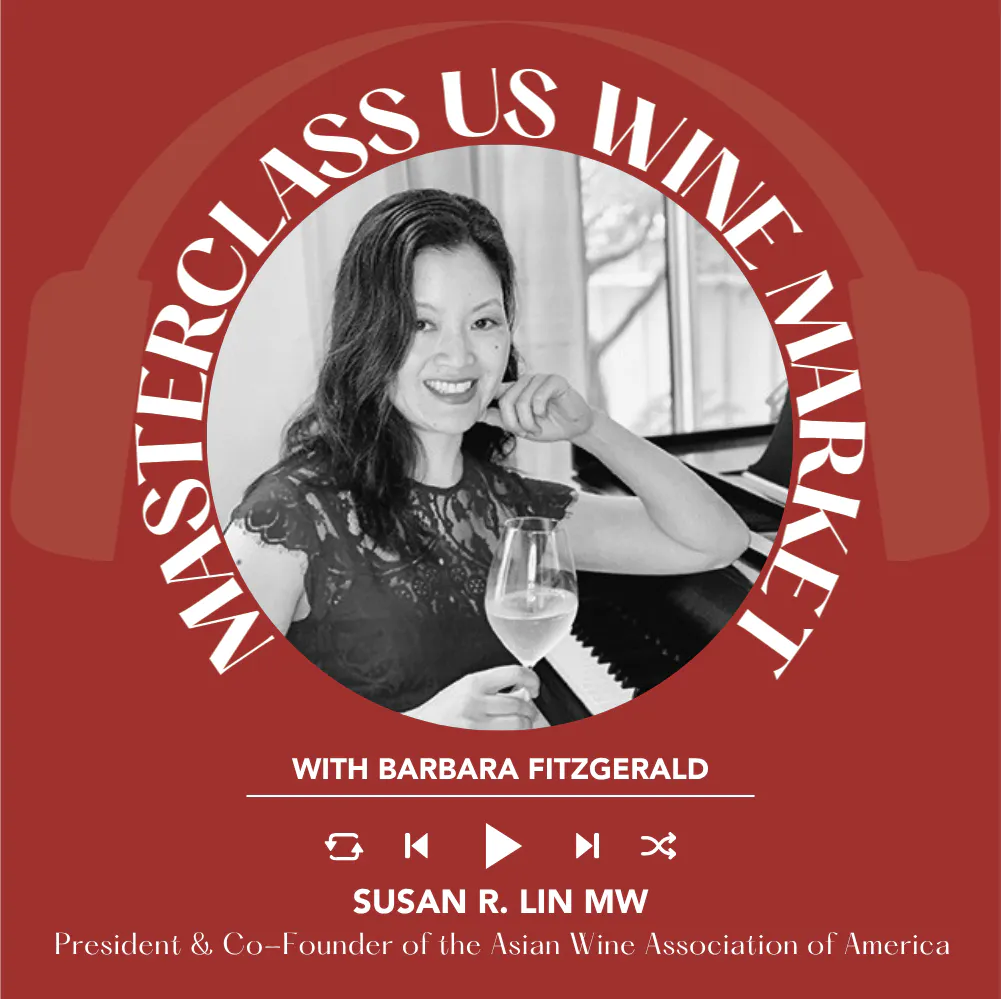
Ep. 2790 Italian Wine in the US: Building a Narrative and Reaching Asian American Consumers with Susan R. Lin MW | Masterclass US Wine Market
Episode 2790
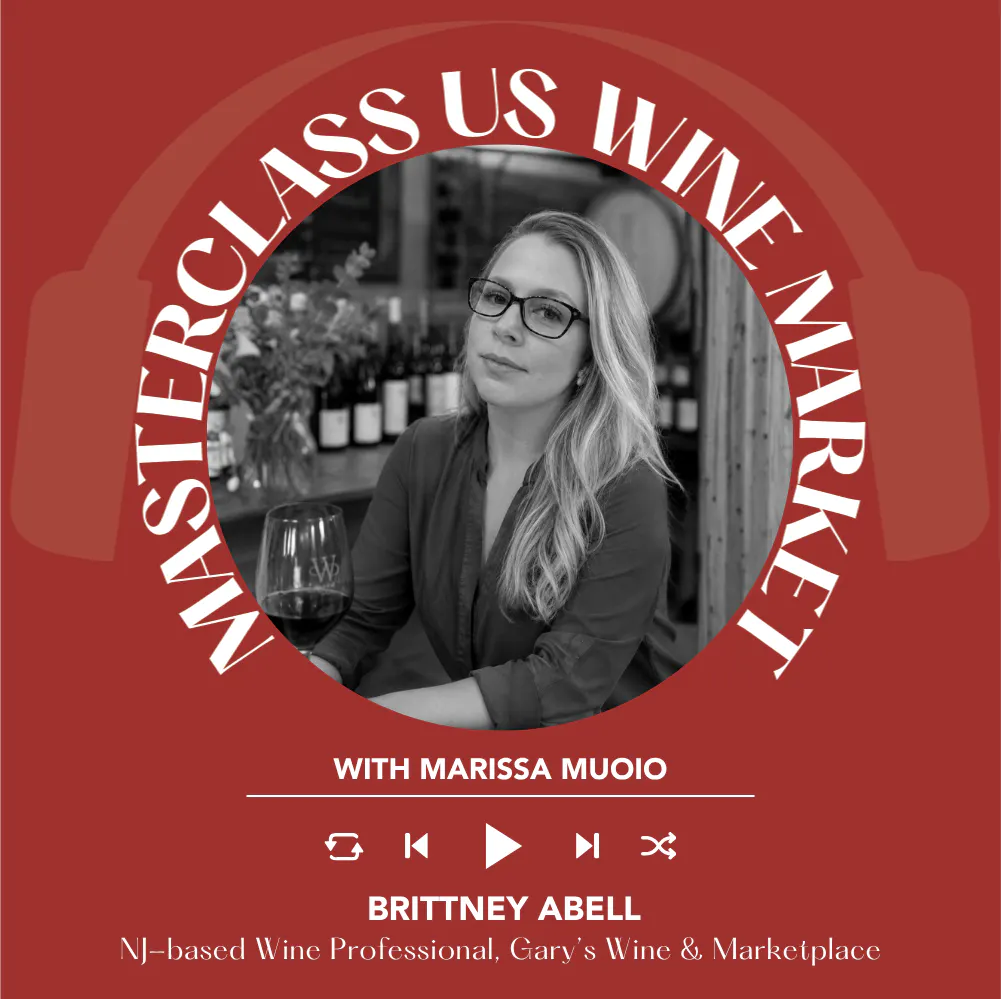
Ep. 2783 The Suburban Gold Mine: Insights into New Jersey’s Wine Market with Brittney Abell | Masterclass US Wine Market
Episode 2783

Ep. 2772 A Surprising Partnership between Japanese Sake & Italian Wine with Monica Samuels | Masterclass US Wine Market
Episode 2772

Ep. 2770 China’s Wine Market: From Misleading Import Numbers to Today’s Consumer with Fongyee Walker MW - Part 1 | Asia Wine Market
Episode 2770
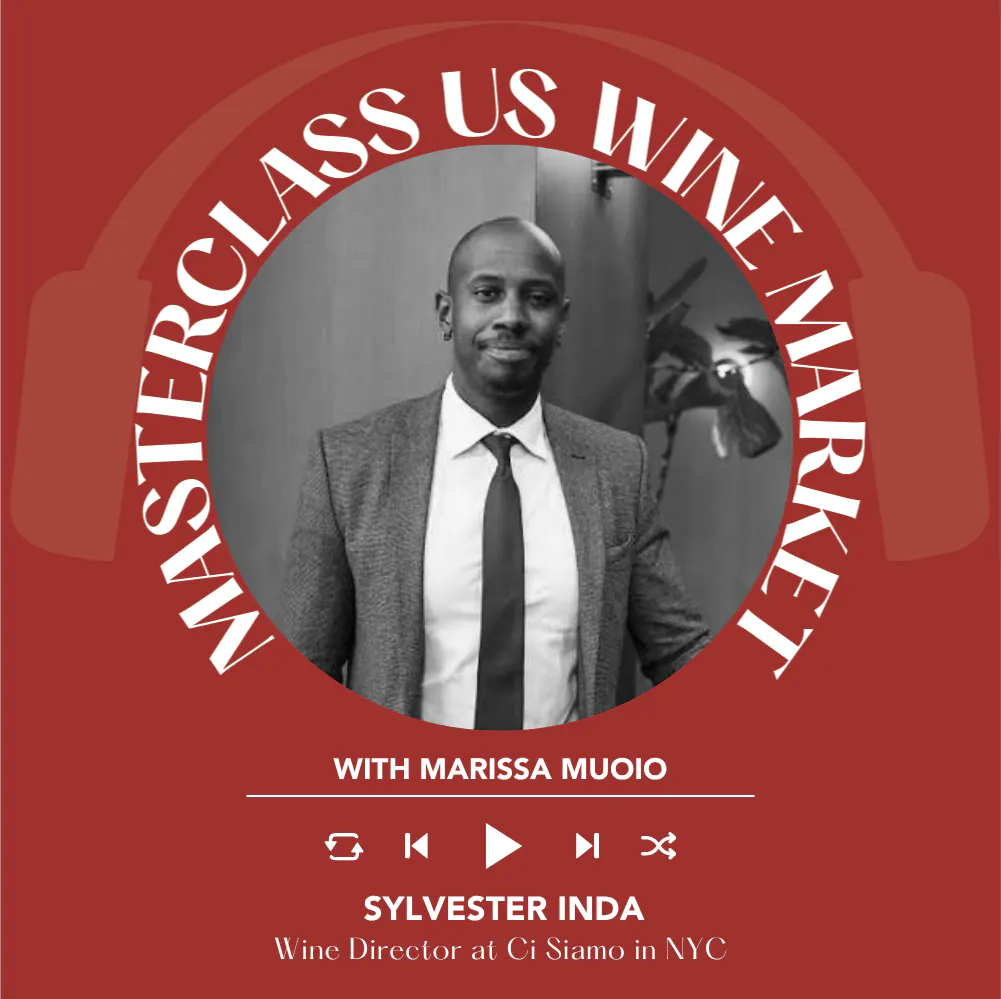
Ep. 2760 Winning the Restaurant Floor: Training, Education & Italian Wine with Sylvester Inda of Ci Siamo | Masterclass US Wine Market
Episode 2760

Ep. 2751 From Montalcino to Kazakhstan with Francesca Arquint of Collemattoni | Asia Wine Market
Episode 2751