
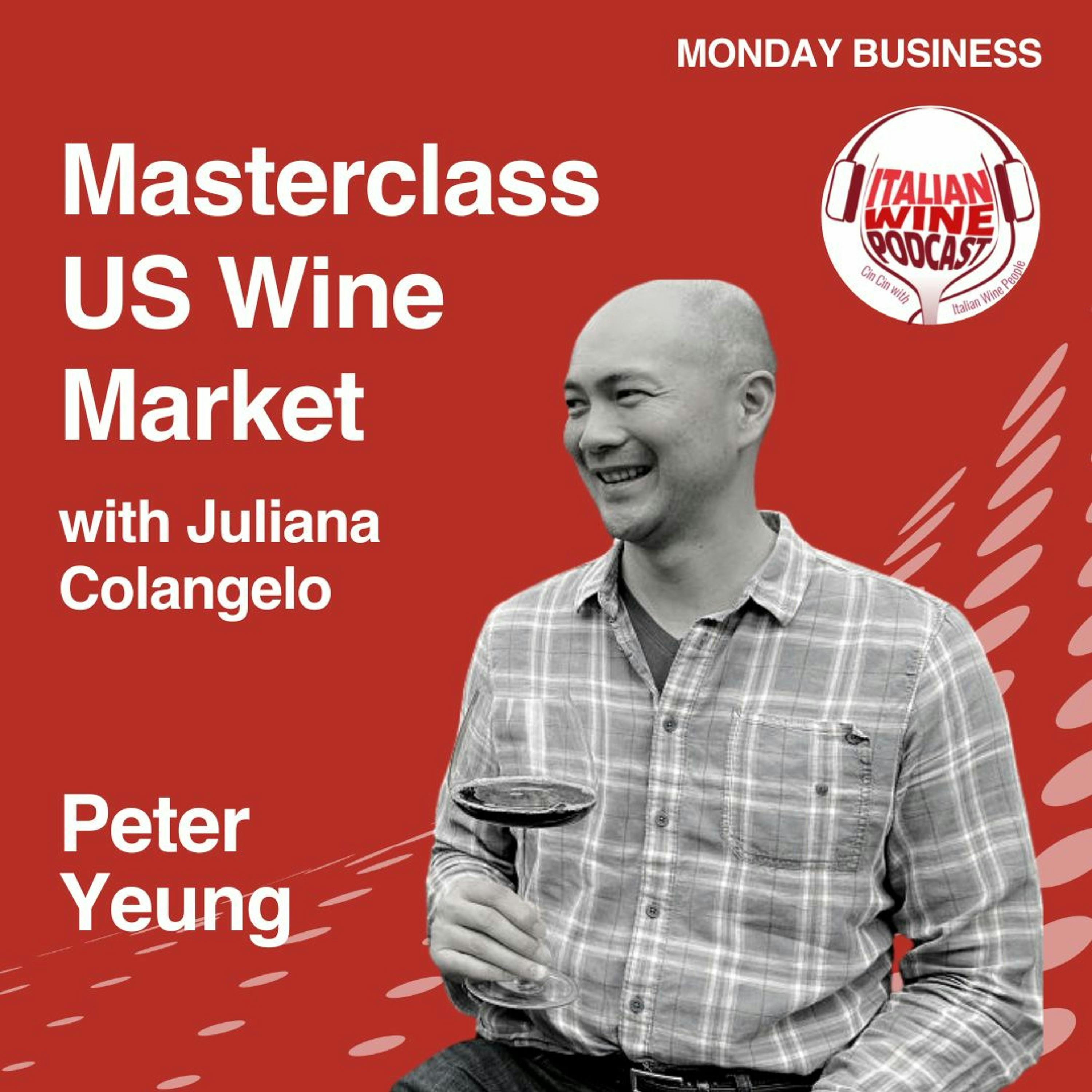
Ep. 1324 Peter Yeung | Masterclass US Wine Market With Juliana Colangelo
Masterclass US Wine Market
Episode Summary
Content Analysis Key Themes and Main Ideas 1. Defining luxury wine and its core characteristics. 2. Analysis of the US market for luxury wines, including consumer demographics and emerging trends. 3. The strong historical and current performance of Italian luxury wines in the US market. 4. The multifaceted role of price in communicating value, quality, and brand for fine wines. 5. Effective marketing strategies for luxury wine brands to reach evolving consumer bases. 6. Distinguishing between ""luxury"" and ""fashion"" in the wine industry for long-term brand building. Summary In this episode of ""Masterclass US Market,"" host Juliana Colangelo interviews Peter Young, a leading wine business consultant and co-author of ""Luxury Wine Marketing."" The discussion focuses on defining luxury wine, understanding its US market, and opportunities for Italian brands. Young defines luxury wine by its high quality, special origin, scarcity, elevated price (often $100+ retail), and the sense of privilege and pleasure it provides. While baby boomers and Gen X currently dominate the luxury wine consumer base, millennials are increasingly entering this segment, and the market is seeing growing diversity with more women and people of color. Italian wines, particularly Barolo and Super Tuscans, hold a historically strong and appreciated position in the US, with significant import percentages from regions like Piedmont and Tuscany, often being perceived on par with top French and domestic luxury wines. Young elaborates on five elements price communicates for fine wine: value proposition, expected quality, brand reputation, relative quality, and customer willingness to pay. Emphasizing that luxury building is generational and timeless, unlike fleeting fashion trends, he suggests strategies for reaching new consumers. These include leveraging mass media (pop culture), promoting wine education (like WSET or Vinitaly International Academy), and improving direct consumer engagement through follow-up and relationship building, even for international brands. Takeaways * Luxury wine is characterized by high quality, special origin, scarcity, elevated price, and a sense of privilege/pleasure for the owner. * A retail price point of $100 USD or more is generally considered the threshold for luxury wine in the US. * While baby boomers and Gen X are current primary luxury wine consumers, millennials are an emerging segment, and the market is diversifying to include more women and people of color. * Italian wines, especially from Piedmont (Barolo) and Tuscany (Super Tuscans), hold a significant and historically appreciated position in the US luxury market. * Price for fine wine is a powerful communication tool, conveying value, quality expectations, brand reputation, relative market positioning, and consumer demand. * Luxury wine brand building requires a long-term, generational perspective, focusing on timelessness rather than short-term fashion trends. * To attract new and younger luxury wine consumers, brands should utilize pop culture and mass media, promote wine education, and implement effective direct-to-consumer communication and follow-up strategies. Notable Quotes * ""We define [luxury wine] as a line of the highest quality coming from a special place on earth, has an element of scarcity and elevated price, and provides a sense of privilege and pleasure to the owner."
About This Episode
The Mastercross US Market discusses the importance of understanding the meaning behind luxury wine and the market for luxury Italian wines in the US. The shift in buying patterns for millennials and the success of Italian wine in the luxury wine market in the US are also discussed. The importance of price communication, setting prices for brand reputation, and customer willingness to pay is emphasized. The success of wine education in mass media and the importance of staying connected during wine dinners and promoting brand awareness through technology like VINConnect is also discussed.
Transcript
By now, you've all heard of Italian wine Unplugged two point o. The latest book published by Mamma jumbo shrimp. It's more than just another wine book. Fully updated second edition was inspired by students of the Vin Italy International Academy and painstakingly reviewed and revised by an expert panel of certified Italian wine ambassadors from across the globe. The book also includes an addition by professor Atilio Shenza. Italy's leading vine geneticist. The benchmark producers feature is a particularly important aspect of this revised edition. The selection makes it easier for our readers to get their hands on a bottle of wine that truly represents a particular grape or region to pick up a copy, just head to Amazon dot com, or visit us at mama jumbo shrimp dot com. Welcome to Mastercross US Market with me, Juliana Colangelo. This show has been designed to demystify the US market for Italian wineries through interviews of experts in sales and distribution, social media, communications, and so much more. We will quiz each of our esteemed guests at the end of each episode to solidify the lessons that we've learned to sharpen your pencils, get out your no books and join us each week to learn more about the US market. Hello. My name is Juliana Colangelo, and I am the host of the masterclass, who has wine market, a new series on the Italian wine podcast. Today, I'm thrilled to welcome our guest, Peter Young, to the Italian wine podcast for this new series. Peter is a leading wine business consultant, the author of the book, luxury wine marketing, and the co host of the X Chantro podcast, another great wine podcast. He was previously vice president of strategy and business development at ground sellers in Napa and cost of ground winery and Singapore. Peter is in the master of wine program currently and holds the w set diploma as well as the CIA's certified wine professional designation. Prior to wine, Peter led strategic marketing, market development, and sales for a clean technology company in Silicon Valley. That was the management consultant with the McKinsey and Company. Peter also holds an MS from the London's School of Economics and a BA from University of California, Berkeley and Economics, and is currently based in San Francisco. Welcome to today's show, Peter. Thanks for being here. Thanks for having me, Julian. You're making me feel like I need to cut down my, bio a little bit. Sofia, you've had an impressive resume both in and outside of the wine industry. Tell us a little bit if you're up to now. Yeah. Right now, my focus has been on business consulting for the wine industry more broadly. It's all parts of the value chain from producers mostly, but also brokers, retailers, and e commerce companies, and even private equity firms, or other investors looking to invest and transact in the space. There's really, like, two areas of focus. One is sales and marketing strategy. Okay. And the other is more like long term strategy financial planning and M and A or financing. So kind of both with a sales and marketing and a finance strategy angle at the same time. Very interesting. And are you working mostly with wineries in the US or are you also working with wineries internationally? Primarily wineries in the US and primarily California. Actually, Northern California, we're in based. So it's a little easier to connect and have meetings. But, I do a little bit of work, in New York and a little bit, internationally, but the majority is in the US. Okay. Fantastic. Well, you were the co author of a book that was, released several years ago called luxury wine marketing. So our focus for today's episode in this series is really gonna be about the US market for luxury wines today. And how luxury Italian wine brands can reach the new consumer of luxury wines in the US. So our three key takeaways for today's episode, and we'll review these again at the end in a mini quiz are how is luxury wine defined today? Number two, what is the market for luxury Italian wine in the US? And finally, what are the opportunities for luxury Italian wines in the US market? So lots to dive into, and we're really excited to hear all your knowledge and expertise on this subject. So, let's just dive right in because I've got lots of questions for you. So, let's start first with some terminology and definitions. Because I always think that's, you know, important to set the stage of what we're talking about. So can you define for us in your own words? What what is luxury wine? How do you define luxury wine? Well, we have a definition in in our book luxury wine marketing. That's probably the the easiest and the most structured way to look at it. Otherwise, I would probably be skipping things, but we define it Liz and I who put the book together as a line of the highest quality coming from a special place on earth has an element of scarcity and elevated price and provides a sense of privilege and pleasure to the owner. So each one of those pieces is actually important and we talk about it in the book as how to define luxury wine because just because a winery tries to or believes that they're luxury and or sets, you know, a really high price doesn't mean that they're actually a luxury wine. Right. Because often people confuse luxury with, like, what a brand projects outwardly, like, oh, the, you know, the packaging is so luxury or that that event or whatnot. But it's more about what that brand represents to consumers in general. So luxury products in general have been used historically to differentiate people from each other. Whether that's a good thing or not is another issue, but to be a luxury product, other people besides the people who even buy it need to know about it. Right. So, you know, if you owned a a birkin bag, but no one else knew what that was, I would say that's probably not a luxury product. So there's external factors at play, right, that that define what a luxury wine really is? Yeah. Well, there's there's market factors. So that is to say, like, I've seen some people try to define it as, this is just what the brand or the winery tries to project themselves as, and that's how you define luxury and create luxury. And it's There's can be an element of that, but it also includes the feedback back from consumers and society to say, no. This actually is special. You know, one of an example I'll give is that in general, for the entire region, Burgundy thinks of themselves as non luxury, they hate the term luxury. And they, you know, they wanna portray themselves as farmers and dedicate the land, which they are. I'm not saying that they aren't. But if when you drink and own bottles of burgundy, they're for the most part, the high end stuff, very rare, very expensive, and other people take note when when you have that. I mean, the probably most well known luxury wine in the world is DRC. Right. Right. So even though they don't necessarily want to be, they are a luxury product. Right. Yeah. That's interesting. Okay. In terms of, you know, you mentioned price is one of the factors, and I think that's something we often think about when we think about luxury goods. Would you say there's a price minimum or a ceiling, or do you prefer not to look at luxury wine using that that lens of price? No. Price price is definitely a factor and important. And, you know, when we wrote the book, we put in these bands. And so the bottom band for luxury that we put in is a hundred dollars. And Okay. You know, it's not in the US market, and it's not, you know, ninety nine point nine five and, you know, a hundred and one don't make that much of a difference. But when it's when you're getting to that triple digit range, you're getting to a point where it's a different consumer. You're not getting consumers that are you know, buying wine from the supermarket and also buying those wines. I mean, there might be a small percentage, but for the most part, these are different people buying from different places. So they're buying from Right. You know, specialty wine margins, auctions, etcetera. They're not buying from the grocery store where most, you know, ninety percent of wine, you know, volume is sold today. Right. Exactly. And that leads me to the next question I wanted to to put out there to you was about the consumer today for luxury wine in the US market. Who who are buying these wines priced at a hundred dollars and more in the US? Right now, it's still mostly the baby boomers and Genex who live in the suburbs and and buy wine. Millennials are starting to get to this phase in life where, you know, they're having families, having more wealth. They were sort of delayed by the financial crisis or the the mission, great recession. And We're making a comeback we're getting there. Exactly. Exactly. Making come back. And, you know, people, especially in the US, have been having kids a little bit later in life. And so all those things start to and that that delays, you know, I just had a kid who's two now and the amount of money, not just that time and energy, but money that goes into that is delays the ability to buy luxury wines for a bit. Right? Right. But so having that accumulation of wealth and other things is coming a little later for millennials, but they're starting to get into that phase where they're they're starting to buy luxury wines. Okay. You know, and traditionally, it's been your sort of white male professionals in that forty to fifty five age bracket, you know, who make good income and and all that sort of thing. What's interesting about that is, like, ten ten years ago, I did a project with a data scientist friend of mine, and we took a luxury wineries database and tried to see if there were patterns between which customers were good and and not as good customers or because the hypothesis was, like, maybe for this brand, if, you know, there's lawyers in Dallas, for whatever reason, you know, lawyers in Dallas really love this wine, then we can go to the bar association in Dallas or some sort of association and Right. You know, collect customers because customer acquisition is always a difficult thing for wineries. But when we pulled demographic data, we pulled, you know, education and, you know, work data from, like, LinkedIn and things like that and try to run correlations through, you know, data algorithms. And we got there was no correlation. All the good customers in the back ups, they all look the same. It was all all like How interesting. It was all middle aged professional white guys. Alright? Right. Fortunately, I think it's starting to change. Just in the over the course of the last decade, starting to change, we I hear that women are getting more and more into collecting wine and participating in auctions and doing more wine education. I know you just got the Italian wine ambassador Thank you. Designation. So that's a that's a big one. Yep. And, you know, we heard from, like, Jamie Rishi at Sotheby's and all the auction houses that women are becoming more into the auction space. So that's exciting, and that's, you know, new. It's very exciting. And e probably even more further back in that, more nascent than that, but I think more people of color are beginning to get into wine and explore the category. Right. And so they're often inspired by some famous people, like, you know, basketball icons like LeBron James and Steph Curry who have their are famously into wine or have their own wine brands. Mhmm. And they're starting to explore the space, Wayne Wade has his brand brand. Right? Right. Weight sellers. Yeah. And even more than basketball players with football and and and celebrities, etcetera. But all these people are starting to broaden the reach of wine into other demographics of people, and they're as they get into wine, they're also getting into luxury wines. And especially when these iconic people who happen to drink a lot of luxury wines, get it the wines that they see and hear of do tend to be the hiring, hiring wines and not the sort of more everyday wine. Right. And like we talked about with luxury wines, a key factor is is the market and how the market perceives the brand. So a lot of time oftentimes, the luxury wines are some of the more famous, well regarded wines that these celebrities and athletes are getting into. So I I think that's a really interesting factor for the future of the luxury wine consumer in the US as well. But, what I'm hearing from you is it's still largely you know, boomer, gen x, getting into the older millennial white male, but we're seeing a change. We're seeing more women. We're seeing people from different backgrounds, more diverse backgrounds getting into the luxury wine market, which is exciting. Exactly. And and as gen x is much smaller, cohort than the boomers and the millennials, it's almost imperative in this sort of bridging period between them that we do expand the space to more diverse audiences like women and and people of color because they the people in the gen x base have the money and the ability to buy the ones. They have the desire, but they just need the comfort, the spaces, and, you know, the relationships to start start doing that. And they're underrepresented. So if we can broaden that out there, then we can manage, you know, the the drop off of the boomers. Right. Right. That's that's super important. So it's important for brand, luxury brands, especially to start thinking about different types of consumers, in their approach to marketing. Which kinda leads you to my next question, which would be about the Italian wine category specifically, and how is the Italian wine category performing in the luxury wine market in the US? Whether it's, you know, maybe what what regions are performing well, which wines are performing well, just give us a kind of general picture, of that space. Yeah. I think in the US, Italian wines have a historic place. That give it a bigger share than than what it performs globally. There's a history of Italian immigrants. I think you may run into that category. I sure do. There's a prevalence of Italian restaurants in the US, So Italian wines do pretty well in the US versus, you know, the the big dog of France and other major wine producing companies. So when we I I did a little preparation for this, and when we looked, at when we built the luxury wine database for luxury wine marketing, I looked at how much wine was imported into the US versus the total production of all the major regions of the world that uses kind of a scaling factor to do some estimation, for that database. Okay. And for all wines, not just luxury wines. For Piedmont, we import twenty one percent, of the wines into the US and Tuscany nineteen percent. Wow. And when you compare this to Bordeaux and Burgundy, it's only four and ten percent. Super interesting. So we we do as a country have a great appreciation for Italian wines. And so I think that's I think, you know, I think the US the brunello Calery was built on the US market with bompey initially and and everything else. And US consumers often view top Italian wines as interchangeable with some of the top lines of Bordeaux and Burgundy and even domestic wines. I you know, I I don't know that some singular brands maybe rise up to the d r c's or first gross of the world. But in general, I think when people bring a barolo or a super tuscan like Susakiya or an Alaya to to a dinner, it it gets a lot has an has the same amount of gravitas as if they brought, you know, a colon saguar or Kaz internel or something like that. Yeah. Absolutely. And and thanks for doing your homework and that research. And with the numbers you shared, tell tell us, are there's more wines available. I imagine in the US market within those tiers as well Mhmm. Than coming from burgundy and Bordeaux based on, export percentages. And, generally, we see more imported wine on the coast, like in New York and California, particularly and more domestic wines in the middle of the country. And I think that also applies Italian wine, but but I think Italian wine, and I don't have the, you know, detailed data on this, but has a strong pull across the country because of you know, the connection with people of Italian heritage and the and the Italian food culture. That's everywhere. Just I mean, you look at, the Fraska group in in Colorado, but they're mostly Italian lines. So Yep. Absolutely. Look at the proliferation of Italy. Right? They've been opening up all around the country and All around the world. In Italy, surprisingly. Right? That's true. Exactly. So Peter, you joined us in in a verona last year for wine to wine and and spoke on, what pricing communicates for fine wine. Can you tell us a little bit more about this concept and and maybe some of the the key takeaways from that presentation? Sure. Yeah. The basic idea is that for fine and and luxury wines, price is a lot more than just what is the market price you can get for it. If you're buying, you know, commercial wines or you have a San Diego crew class a or, or ground crew or, you know, a board class a, oftentimes, you're just fitting into a marketplace and a price point, but it's a lot more than that for fine wines. And so I think there is five key elements that price communicates for fine wine, and that's what I went through my presentation. One is, like, the value proposition for customers, what what value are proposing to your customers. So sometimes higher price can be an expression of that value, or sometimes it could be a lower price. Like, one example is, Costa Brown that I I helped manage for a little while. They historically had their most limited wine for barrel priced the same as the other single vineyards as a thank you to their customers, so their customer base. Cause they the so there was a value proposition for that particular wine to say you know, even though this is special and there's a ten year wait for it, I'm just gonna charge you the same as the other wines because it's thank you. Right. Because they're so based on a membership model too of where they have that direct communication to the consumer. Exactly. And then there's level of expected quality. So, you know, price and quality should generally speaking be positively correlated with wines. And actually when I did some of the research for luxury wine market, I I did for fun, like, a correlation of wine spectator scores and price. And, generally, it is positively correlated, like, the more expensive the wine, the higher the the average points, score you get. Okay. But when you charge someone a hundred dollars or more for a bottle, they expect to get, you know, a hundred dollars worth of quality. Right. There there's limits to that and brand comes into play and we'll get into that. But when I see, I often see wines that score, you know, get a hundred points from Parker, And no matter how they're originally priced, usually, they end up trading for around three hundred dollars a bottle. So to me, that's kinda Interesting. The limit of where just quality takes you. And wines that are priced above that often have a lot of brand value that are above just the quality of the line that represent that price. And so, you know, the third element, I think, that price represents as the brand reputation. Setting your price tells others how you see your brand and the value that it has. Right. So for example, Harlan Estate in Napa when they priced their wines when they first were launched, they came out at the top of the range of Napa to emphasize the, quote unquote, first growth nature of of what they were trying to accomplish. And, you know, and sometimes it's you setting the price as a brand and other times it's the market reflecting that in the secondary market and saying, I'm gonna pay, you know, two or three times the amount you sold it for because, you know, I believe in in the the value of this brand and they're it's there. Right. Sometimes it's out of the brands kinda control too. Right? It's the market's gonna take it. Yeah. There there's both. And eventually, they should equilibrate to each other. Right? Over time, you would think that, you know, they would start to get closer and closer together. Italian wine podcast, part of the momo jumbo shrimp family. And then the fourth element is relative quality. So price gives us a sense of not just quality overall in the absolute sense, but relative in position to other wines either both within your portfolio if you have a range of wines and of other wines of the world. And one of the good examples of that that's mentioned luxury in my marketing is in the early seventies, Gaia and Italy, increase their, prices to match the top wines of Bordeaux and Burgundy, because they believe their wines should be compared to those and not to the rest of Piedmont or the or to Barbaraco. And so even though it took some time to, you know, get everyone on board with that and be willing to pay the prices, that's how One of the ways that they were able to establish themselves as a global player and a global luxury brand and not just the best of feedback. Right. Right. By putting themselves on that more of that global stage. That makes sense. Yep. Yep. And then lastly, the fifth element is customers willing to pay. Right? In the end, you have to sell the wine and have a sustainable business. And so people have to be willing to pay that price that you that you said and you have there. So one one extreme example of this is, you know, when you only have five hundred fifty bottles like, liver potter, I don't know if I'm pronouncing that right in Bordeaux had, I think it was their twenty fifteen vintage, and they have a great story around making wines that are sort of pre phylloxera, Bordeaux, they were in a Dutch auction with their customers to to set a price and they were able to charge, you know, a record. I think at the time, like, thirty thousand euro bottle for for each of those five hundred fifty bottles. But you know, but the customer willing to pay also is something that is being communicated with the price of a fine line. So, Peter in marketing, we often look towards other industries like the fashion industry, automobiles, cars, other luxury goods and what they're doing when it comes to marketing. And I think, you know, there's a lot that the wine industry can learn. What do you think wine and brands can learn from other luxury goods when it comes to marketing? Well, that's a really interesting question, Julian, and really good choice of words because fashion and luxury are actually really different quarts and really different things. Fashion is of the moment versus luxury is timeless. So that's how they're they're different because, you know, fashion has seasons and brands that that change over time. And so you have to be careful about thinking, about learning from one versus the other because luxury takes time. It's not something that happens overnight, and it takes years to establish the brand reputation and customer base and reputation from the population as a whole. So when we think about wine, you know, some wine trends, like, we have the Rtd trend and seltzers, low alcohol, and stuff, they might be fashionable today, but they aren't necessarily luxury. That doesn't mean you can't make more money, you know, following trends in fashion than doing a a luxury line, but, that you need to think about it differently. And you need to think for luxury in terms of decades and generations, not months and quarters. Right. Well, what if, you know, we look at a a luxury brand, like, like a Gucci, you know, or money? Do you think there are things that the wine industry can take away of what they're doing in terms of marketing? Well, I think there's definitely some similarities, for example, like, for take armani, they have the different brands and secondary brands, which would be similar to wineries having, like, a second label or a third label. And so that could be one element of how do you connect those brands and leverage the halo of the luxury brand without destroying it. Right? So you have ones like Mandavi kind of had some issues with Woodbridge by Mandavi kind of taking the the core brand down for a while. It's sort of trying to rebuild itself, versus others where they're not quite as connected, you know, so far, at least, Duckorn and decoy seem to be disconnected and and feeding off each other as opposed to doing better, not that I would say that Duckhorn's a luxury brand, but it's, you know, got a second label that isn't taking away from the first label. Right. That's a really good example. Good good reference. You know, in this series, we're talking a lot about the new consumer in the US market, millennial gen z, the the new consumer, the new gen the new generation. How do you think the luxury wine market can reach this new audience of US blind consumers. Yeah. I think there's a few ways that we've seen people really reaching that new consumer and younger consumer. One has been sort of mass media, or in media in general, but more not wine media per se, but mass media, if you look at the success of this is older, but sideways, and more recently, the Psalm movies and now the Psalm TV streaming channel, their the Psalm TV streaming channel, their audience is actually heavy millennial based. More than Gen X or or baby boomers. And so it's drawing more people in the wine and getting them interested. And not really for the US market, but in Asia, the popularity of the drops of god, make a comic book, really amplified the market for luxury wines, and you know, being featured in that that comic book had had the wines sold out, you know, throughout Asia. Wow. So these aren't really, like, wine specific media, but they're human stories that appeal to everybody and get people interested one. So more pop culture channels. Like, I know there's also a couple shows that came out earlier that, you know, last year, like Grand Crew and a couple others that were wine focused. So you're seeing success for the next generation in more mainstream pop culture media. And even being mentioned or featured, we, you know, recently the I think I think I saw that you also watched the last season of White Lotus and that, you know, had some benefit for Sicily I had a there's a brand in Napa that was mentioned for, in, one of the, reality TV shows selling Beverly Hills or buying Beverly Hills or whatever it is on Netflix. And that actually got them a decent bit of traction as well. So even the the sub areas, it's so similar to that celebrity Right. In influence that we talked about earlier. So I think that you know, mass media helps to broaden the audience to people who weren't thinking about or collecting wine or or even drinking those types of wines before. Now it broadens Mhmm. Into a a new audience that gets it in people's minds. And then, you know, a lot of the younger generations are very interested in a lot of the details and knowing more about the store not just the story, but how things work and all that. And so Right. Wine education has gotten really popular. And so you have that book, corkdor, from Bianca Bosker, which shows her journey with the CMS and being in that culture, but also programs like the Wine Spirit Education Trust or WSTT has really exploded in terms of popularity, even at the, especially at the entry levels. And that wine education gets people more interested in all types of wine, including the higher hiring things people aren't just settling for, you know, what they can find at their eye level in the grocery store. What's closest to the the door handle, the refrigerator, but they're exploring more and exploring more higher end wines as they get more educated. Right. Even apps like Vivino, right, that are used for education, but also discovery. I know are popular among friends of mine, outside of the wide industry. Mhmm. Mhmm. Yeah. Some some of those apps can can be helpful as well. And but I I think that just even that structured education, just more people are interested in Right. You know, and and getting smarter about it and wanting to understand it better. And that's that's really, I think, driven some more consumption of different styles of wine. I mean, you see the even between not just like the called sort of like the natural white movement, but just all sorts of hipster wines or sommeliers, people falling sommeliers. Right? I think that's a Right. Mhmm. Another way, not that sommeliers always had an influence because trying wine at a restaurant and the curation from the Sommelier and the recommendation may be some storytelling at times has always been important, especially for luxury wines, but now people are actually following Sommelier's on, like, social media and other things and getting more recommendations from them and that broadens their influence more. And, you know, we talked to to Hector Chateau with, Doug Frost, and he was saying about wine competitions, and he still said that we're still in the area of the era of the Salmoyais because some ways talk to each other, whereas other people, like, retailers and others don't talk to each other. And so that they talk to each other so they spread the knowledge around some cool brand that they're really into, and then it starts to get more traction that way. Yeah. And then that's how we see trends emerge exactly. So within these different channels, you mentioned, you know, pop culture, education. Do you think there are any particular opportunities for luxury Italian wine brands to reach this new consumer in the US market? I mean, I you know, I think there's so many, obviously, education, but, you know, Van Italy is doing with the Italian wine ambassadors. That's an interesting way to promote, and the trade organization is doing that promotion. As well, with pop culture, I mean, we we talked about an example with the white lotus and and Sicily and and all that. And, before I went to wine to wine last November, I I never been to Veronica. I didn't know anything about it, and I saw, a movie on Netflix about, it was like a romantic comedy. I I can't remember what it's called, but it, it taught me all about Ronan was, like, centered around Van Italy and all that. And so I think you know, it gave Oh, wow. It certainly gave people and some insight into the wine culture and and things of that nature. Right. You know, like, there's Emily loves Paris, right, which is more about French wine culture and champagne, but that that could be big. I know, like, getting engaged in some of these other areas that aren't just sort of for wine Geeks, but, like, I know in sports, f one has been pretty big amongst people in general, but especially people who really love to collect wine. You know, champagne has always been good at at sponsoring things. I know Piper Heitzig has often sponsored product for show TV shows and and movies, and they sponsor the Australian Open Tennis tournament. So there's And the award shows. Yeah. Yeah. Those are a lot of ways that with the I mean, those are for bigger brands, right, that have that kind of budget to to do that. You know, there are a lot of smaller ways, of connecting with people just even thinking about wine dinners and, you know, which is a common thing and people do them and you connect and have a wine dinner at a restaurant or at someone's home or something like that. You connect with ten people, but I think one of the things that a lot of, wine brands in general and especially Italian wine brands are people coming from, you know, overseas what they don't do is necessarily get people's contact information and follow-up. Right. And build a connection with them that lasts a long time. So, you know, you may go to a wine dinner and, you know, have a great experience and meet the winemaker and all that. But if there's no way to stay connected that memory is gonna start to fade and and not, you know, be as good. So, you know, it obviously, you can't sell direct to consumer from Italy to or you can Right. From Italy to the US, but there are technologies or or systems like, VINConnect that enables you to sell sort of DTC in quotes to to American wine consumers. And even if you're not selling that much wine, but it getting them on the system and being able to communicate with them. So sending them a message, not every day, but every month or every quarter or a couple times a year even helps keep your brand awareness in their minds from the experience they had, whether they had a wine dinner with you, whether they visited you at, you know, the the winery in Italy or any of those sorts of things, just building that base of fans and not letting it fade away as quickly. Will help people get in front and and build your fan base more and more. And that's, you know, I think one of the cores of, you know, business and and marketing in general is just to keep that flow of fans growing and building. Yeah. So capturing information during the event and then the follow-up, the email marketing, you know, the post event follow-up is is really key and and really, really important. I think that's a really great reminder for all our listeners So as we wrap things up here, we like to, on this series, do a little quiz just to hammer home our main takeaways from our our master class in the in this episode. So I'm gonna ask you if three questions. And if you can answer in one sentence or less, we'll make this kind of rapid fire. That would be great. So let's get started. So question number one, what is the price floor for luxury wine? I'd say, hundred dollars, US retail. Hundred dollars. Okay. Question number two, which demographic or market has the highest share of luxury wine consumption right now in the US? It's still the baby boomers. Alright. And finally, which Italian luxury wines are selling the most in the US right now? It's a barolo and the super tuscans. Okay. Great. Thanks so much, Peter. We learned a lot on today's episode and really appreciate you taking the time to speak with us about the luxury wine market in the US and the opportunities there are for Italian luxury wines. We learned so much. So thank you again for being here, and thank you to all our listeners for tuning in. See you later, Peter. Thanks for having me. Absolutely. Thank you for joining me today. Stay tuned each week for new episodes of Master Class US wine market with me, Juliana Colangelo. And remember if you enjoyed today's show, Hit the like and follow buttons wherever you get your podcasts.
Episode Details
Keywords
Related Episodes
Ep. 2790 Italian Wine in the US: Building a Narrative and Reaching Asian American Consumers with Susan R. Lin MW | Masterclass US Wine Market
Episode 2790
Ep. 2783 The Suburban Gold Mine: Insights into New Jersey’s Wine Market with Brittney Abell | Masterclass US Wine Market
Episode 2783

Ep. 2772 A Surprising Partnership between Japanese Sake & Italian Wine with Monica Samuels | Masterclass US Wine Market
Episode 2772

Ep. 2770 China’s Wine Market: From Misleading Import Numbers to Today’s Consumer with Fongyee Walker MW - Part 1 | Asia Wine Market
Episode 2770
Ep. 2760 Winning the Restaurant Floor: Training, Education & Italian Wine with Sylvester Inda of Ci Siamo | Masterclass US Wine Market
Episode 2760

Ep. 2751 From Montalcino to Kazakhstan with Francesca Arquint of Collemattoni | Asia Wine Market
Episode 2751