
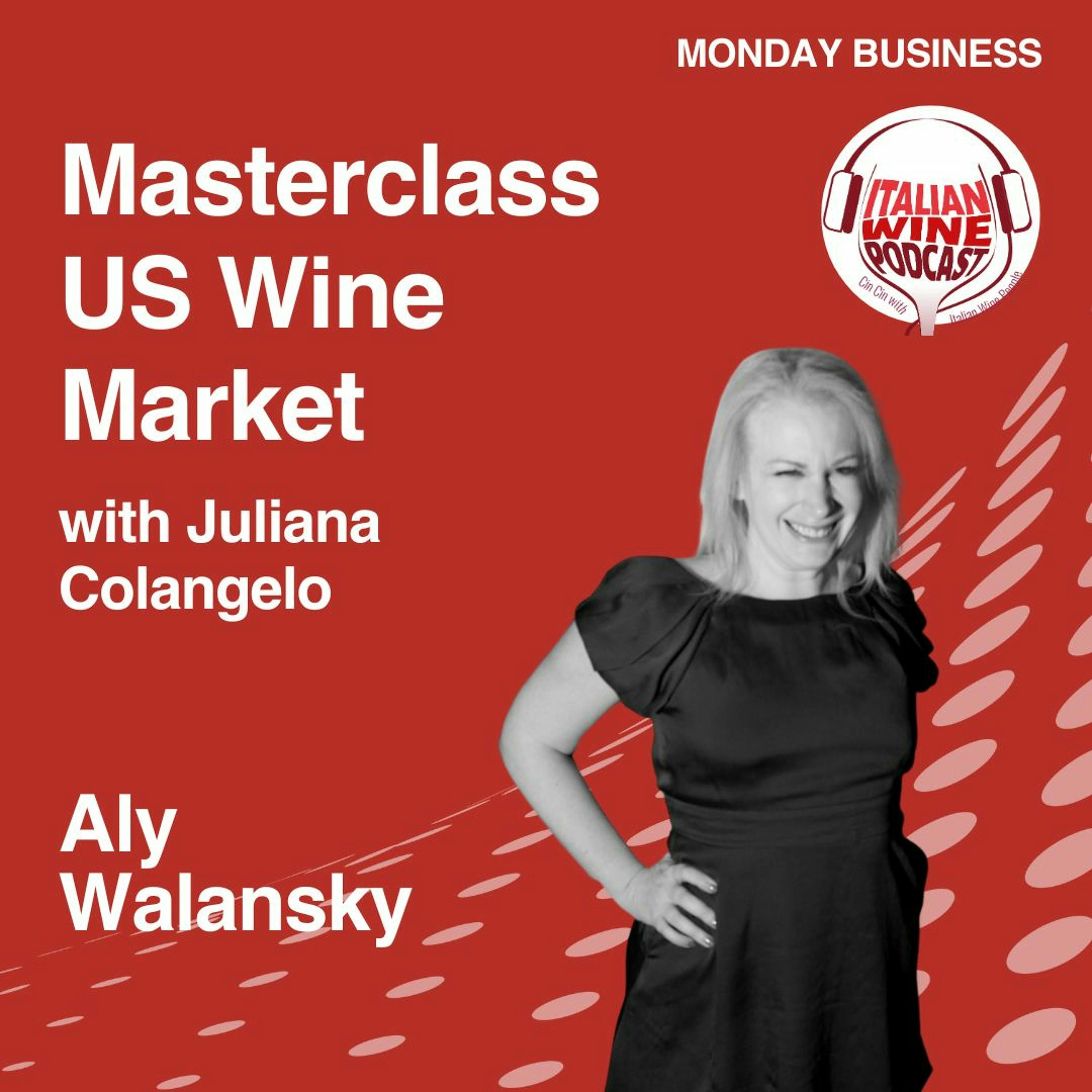
Ep. 1405 Aly Walansky | Masterclass US Wine Market With Juliana Colangelo
Masterclass US Wine Market
Episode Summary
Content Analysis Key Themes and Main Ideas 1. The functionality and benefits of Substack as a publishing platform for writers and brands. 2. Ally Walanski's experience and insights as a food and travel journalist using Substack. 3. Strategies and opportunities for Italian wineries to leverage Substack for brand building and media relations. 4. The importance of authenticity, personal connection, and relationship building in the digital media landscape. 5. Discussions on the intersection of generative AI with content creation and traditional journalism. Summary In this episode of the Masterclass US Wine Market, host Juliana Colangelo interviews award-winning food and travel journalist Ally Walanski about Substack. Ally explains Substack as a versatile publishing platform that allows creators to connect intimately with their subscribers, offering more control and direct interaction than traditional media. She discusses how she uses her Substack for ""one-stop shop"" updates for publicists and shares insights into free versus paid content models. The conversation then shifts to how wineries and brands, particularly Italian ones, can utilize Substack – either by following influential writers to understand their needs or potentially by creating their own content to share stories, pairings, and build direct consumer relationships. Ally emphasizes the critical role of authenticity and personal connection in an age of increasing AI-generated content, advocating for genuine human interaction to beat the ""robots."
About This Episode
The host of the master class on wine and spirits industry discusses the importance of Subrows and their use of a platform like Substack for brand marketing, communication, and creating a connection with audiences. They emphasize the benefits of Substack for creating a personal and engaging experience for consumers, including a one-stop-shop for writing content and a focus on authentic stories. The speakers also discuss the potential of traditional media to enhance traditional media and encourage listeners to subscribe to their sub stack.
Transcript
Hey, guys. Check out Italian wine unplugged two point o brought to you by Mama jumbo shrimp, a fully updated second edition, reviewed and revised by an expert panel of certified Italian wine ambassadors from across the globe. The book also includes an addition by professoria Atilushienza. Italy's leading vine geneticist. To pick up a copy today, just head to Amazon dot com or visit us at mama jumbo shrimp dot com. Welcome to Mastercost US Market with me, Juliana Colangelo. This show has been designed to demystify the US market for Italian wineries through interviews of experts and sales and distribution social media, communications, and so much more. We will quiz each of our esteemed guests at the end of each episode to solidify the lessons that we've learned to sharpen your principals, get out your notebooks, and join us each week to learn more about the US market. Hello. Welcome to master class US wine market. Today, I'm thrilled to welcome Ally Walanski to the Italian One podcast. Ally is an award winning travel and food journalist with over twenty years of experience in the field writing for many outlets from wine enthusiasts to food network, for it, and so many more. Machack actually rated her the number one food journalist of twenty twenty two, which is a huge accomplishment. And her sub stack, which she sends out six days a week, was recently rated a sub stack bestseller, it reaches thousands of people each day. We do a lot of work with Ali in our day to day as an agency in the US pitching stories, our wine and spirits clients, and Ali's always been a really fantastic collaborator to our agency. So I'm super excited for today's conversation and to have her on the show. Welcome to the show, Ali. It's great to have you here. Thanks so much. I'm so glad to be here. So we're gonna dive into all things SubSack today because for our master class US wine market, we're focused on giving our listeners tips and tools about things they can do in the US market to build their brands. But before we dive into that, tell us a little bit about how you got into food writing and your background. Of course. So I was a journalism major in college. And straight from college, I was doing more copy editing and like proofreading and fact checking, and then I started to do a little bit of freelance writing on the side. So at first, that was beauty and style, and that segued into spa and then travel. And travel, of course, takes you to food and wine and spirits because that's the most fun part of travel. And I've stayed there because it's definitely the most fun writing I've done so far. That's fantastic. And you've traveled now the world writing about food and wine and spirits, which is awesome. Where have you been traveling to recently? Recently, I was actually just in London last week for the coronation, which was Wow. Mind blowing because I'm obsessed with all things royal. So, absolutely, like bucket list moments. Before that, like, two weeks before that, I had been in Dublin. I went on a trip to go foraging for botanicals, the Go and gin, which was wild and different because I'm honestly not that athletic. Putting me in hiking boots in a field is a feat that they should be, like, honored for. That sounds fun, though. What a what a cool trip? It was so fun. I'm like, I'm really into Martinez. I might as well learn about what goes into the glass. Yeah. Work up an appetite for the Martini too while you're out there foraging. Very cool. Oh, absolutely. Yeah. So, you know, you for in person traditional media outlets, you know, in the wine and and spirit space, like wine enthusiasts, also in the lifestyle space, like Forbes, Today show, etcetera. You know, as we talked about in your intro, but recently, you've gotten really into sub stack. So that's what we're gonna focus on for today's episode of master class US wine market. So our three key takeaways with Ali are gonna be number one, what is sub stack and how does it work? Number two, what are wineries and companies doing now with Substock to share their stories? And number three, what are some key opportunities for Italian wineries specifically with Substock? So, you know, first things first, let's talk about the basics. You know, a couple weeks ago, we did an episode on Genative AI, and we talked all about how that works. So let's just start with the fundamentals. What is Substack? Sure. So, at its core, Substack is a publishing platform, and it supports a wide variety of newsletters. You'll find everything on there from chefs' hearing recipes that finance writer is talking about the stock market to I follow a celebrity stylist whose chats about what the royals are wearing and where you could get their outfits. Course. Yeah. It's it's basically anything in the world you're interested in. You could find a newsletter and subscribe to it and read about it. And these newsletters that delivered via app, via email, on Subsec website, whatever is easier for you, and it has all sorts of authors and genres and scopes. What I like about it is that it lets, like, whether you're a blogger or journalist or a published author, it lets you connect on a way more intimate level with your subscribers Mhmm. Versus when I write an article, it goes out into the world on, like, a magazine's webpage or magazine's print pages, and then I no longer have a relationship with what I write. But when I write it in a sub stack, people could comment. People could email me back and give their thoughts. And I know this has existed before. Like, I had a live journal many, many years ago, and, like, obviously, email marketing and newsletters have existed, but this seems to be, like, the next generation. Like, you could do a podcast through it if you want. They have a notes feature, which is sort of like a social media platform. It just gives you a lot more control over your writing and your publication. Like, how often you post? Where are you post? When you post? Like, it's you own what you're writing in a completely different way. Right. And I love the what you said about, interaction with your your readers and your listeners as well and learning from them about what do they wanna read about? What do they wanna learn about? Did they like your last article? Did they like your last podcast? Like you said, that's not something we get a lot of in more traditional media platforms. Right? So, absolutely. Like, yeah, of course, if I write an article about, like, a Bartini that I had or a wine that I tried, people will tweet at me and give their opinion, but it's less direct it's less, like, to the stores. Right. Exactly. Exactly. When did Substack become a more viable medium as a platform? When did you say it really hit its stride as something that is being more widely used? I would say I started using it about two years ago. And when I did, I feel like it was less popular at that point. I was one of the very first journalists that I knew that started to use it. Obviously, there were already thousands of members on the platform, but very few people in my immediate circle. Right. When I started doing it, it was mostly just I wanted a one stop place where people could go to my sub stack, see what I'm working on, pitch me, and not have to chase me down. It would everything that they need would be right there. Right. So it's kind of a one stop shop for not only your articles and your content, but also putting up calls for what you're working on. So would you say that, you know, you're getting a lot of interaction on sub stack from publicist, or is it more people reading your content as consumers and consumer content. It's hugely mostly publicist. Before I started my sub stack, publicist used to reach out to me very often and either to ask what I was working on that week or to ask if I had any sort of distribution list that they could be added to. Right. And I did not have a distribution list. And then I realized it would actually probably be really helpful to people if I did do something like that. And that gave me the idea. So my sub stack yet, what I'm working on, I share links to recently published stories, So that way, everything that people need and are looking for, they don't have to search for it. They don't have to hunt after it. It's right in their email inbox every morning because I know how busy everyone is, and I know how sick the day. Look Yeah. Like, why should they have to chase after information? Right. Exactly. Play exactly. That that that makes a lot of sense. I I mean, you said you're posting every day on Substack. Is that the norm? Are our creators posting daily or is it what would you say is the most common frequency of posting? It ranges, I would say, among my inner circle of right or friends, most pub most write once or twice a week to their sub step. Okay. Some sometimes they do two or three. I do it six days a week. Honestly, because my workload changes every day, I might send the newsletter out Monday morning at ten AM and then get another assignment that afternoon. So I wanna be able to on Tuesday morning share that assignment with Right. That makes a lot of sense. So you might even be updating it more than once a day to share an assignment. So you're using it. It sounds like as a combination of a content platform and a social media platform in a way just to communicate what you work hang on. Right. And I try to be, like, add value. So I'll share, like, you know, commentary about industry issues, like, you know, chatty, BT, like the media layoffs recently. Whatever is going on, I try to chat about that. If there's anything in the news, sometimes agencies will send me their job leads and I'll include it. Or sometimes I just share, like, what I had for dinner last night. I I wanna make it very personal and approachable. I hate when these newsletters, they read as preachy or condescending because That defeats the whole purpose of why I'm doing this. Right. Absolutely. No. That that makes a lot of sense. And, you know, we know with with Substock, what's interesting about it is there's there's content that you can consume for free. As a consumer, but also paid content. So talk to us a little bit about the differences between the free and paid content on sub stack. Absolutely. So my Monday through Friday newsletter is completely free. That's where I share the story leads. I would never ever charge for that. But I have an optional supplemental weekend edition that I call the industry insights edition, and that's when Okay. It's more like consulting where, like, I let people ask me questions or I do a deep dive into some sort of industry issue. I do sometimes do, ask me anything zooms. So there's added value in that. And everyone's version of added value for their paid edition will be different. Like, I follow some steps that have a subscription model where they share recipes behind the paywall. So how you use it is differently, different, but I try to have as much value as possible and actually more value for the public version because I'm not trying to profit off this. I'm just trying to, like, make everyone's job easier. Yeah. Absolutely. Because, I mean, I know sub staff in its mission is a platform that allows independent writers and podcasters to reach their audiences directly and get paid. Right? Because we've seen a lot through the years that publications and the rates are paying contributors and freelancers have gone down significantly. So it's trying to give creators more value for for their work, which I think is really important. But I think what you're saying is interesting too that it you also wanna provide value without payment as well to your followers. Absolutely. Yeah. I think the autonomy aspect of it is so important that you could have control of what you put in in, where you put in it, and make it a sense of community. And I do have the paid version, and Yes. I do charge for that, but I charge roughly the amount of, like, going to Starbucks for a lot today. Like, no one's getting ripped off that. Right. And let's talk a little bit about who are the creators on Substack. Obviously, you're a writer. There's writers on sub stack. You know, Alison Roman has a sub stack. Jose Andre, so chef personalities have sub stacks. Have you seen much in the way of brands having sub stacks? I haven't seen so much of that. I wouldn't be surprised though if that starts to change because question. A lot of brands could benefit by having a blog of sorts. Like, this is what's happening, like, at our headquarters. This is what we're launching. I think it could be amazing. Right. And then again, there's that indirect interaction with your followers that you're able to share with them something new that's coming out. How to maybe, like, let's say with a wine, how to pair the wine, what to drink it with, how to serve it, you know, any notes on the vintage, things like that. Oh, absolutely. During the pandemic, when everyone was doing things on Zoom. I went to a lot of virtual tastings with vineyards, and that was also building a personal connection. And I think an extent of that could be something like Substack where you do have that intimacy, but you could talk about pairings or how to plan your own at at home tasting, just make it more approachable. Right. Exactly. And make it more, you know, interactive with the consumer as well. You know, there's it sounds like Substack. There's a lot of great benefits to using it as a as a publicist, as a writer, potentially as a brand too that maybe aren't being tough. But we know there's so much out there to keep up with as a brand. Right? You've gotta keep up with social media. You've gotta keep up with everything you're doing with your own channels, with your website, your blog, You've gotta keep up with your outreach to the traditional media and submitting your wines for scores. There's there's a lot to keep track of for anyone running marketing for a wine company. So as we think about, you know, sub stack as yet another platform. How do you see it, like, fitting into the ecosystem of what a brand marketer might be doing for a wider spirits brands? Italian wine podcast. Part of the mama jumbo shrimp family. I think it could help in a lot of ways. Like, if they're following the newsletters of wine writers such as myself, they could have immediate intel about stories working on, whether it's trend stories or gift guides, which they could get their wine into. And they could build that relationship with us, get to know us, get into our stories. And also a lot of wine writers who share a lot of trend commentary, they're looking for experts to speak, and they will post about where they're eating, and traveling, and drinking in their thoughts. So it's a way of getting a pulse, I think, on an industry that's constantly changing. Right. I definitely think in my experience, and I've chat with publicists and brands all the time, and everyone always is speaking about how the relationship building part of our jobs is so hard. And I think this is a way of, like, increasing the relationship and skipping to the head of the email inbox and not just being an anonymous name or email. Yeah. I think that's really critical to remember for for anyone listening about their relationship building aspect because that's one thing that, you know, generative AI can't replace hopefully. Right? Not yet at least. So I'm saying. Exactly. And, you know, think speaking of generator of AI and how marketers and communicators are now using that platform to generate content as a as a start maybe for a blog or a social media post, how do you see content that might be being generated through generative AI being able to be used on sub stack? What are your thoughts on the intersection? I mean, it's theoretically possible. Yeah. I mean, people could do it in the same way they're using AI for their pitches or stories, which is totally not kosher. I'm sure people are gonna use it for their subsets too. But the thing is, Substack, like any other platform, like Instagram or Twitter, you're definitely gonna find the outliers who are going to try to exploit it. And you're gonna find the people who are legitimately using it for their own for, like, you know, their own expansion and good reason. So, yeah, I'm sure people will probably try to find AI into it because AI seems to be infiltrating every single area of our lives. No one you should be following will be. Right. Yeah. That that makes that's a really good point. I think I a really good follow-up to to the episode we had a couple weeks ago about Jennifer Avai to hear your perspective as a writer being on the other end of pitches. Are you starting to filter for pitches that you feel like might be being produced through generative AI? How are you fighting that? Is there anything you're doing to to to stay away from content that's being generated by AI? Well, if it's obvious, just avoiding it, like, you know, sometimes stuff that's generated by AI, it always has that look of being, like, poorly translated material. Like, the grammar isn't great. It doesn't necessarily have the right context. Right. So you could sort of tell when something is generated by a human versus a robot. Mhmm. Honestly, if you want someone to write a, like, a personal real, authentic story about your clients or your brand, send them a personal real authentic pitch. Yeah. Yeah. I think that's a really good reminder. And, you know, something that we all need to be, you know, we wanna be ahead of the curve. We wanna adapt new technologies. We wanna stay on on top of our game, but there's some fundamentals in our world of publicist writer brand that I think are really important to keep in mind like you just said. So thank you for for that reminder, Ali. I think it's a it's a really important one. Absolutely. Yeah. I'm all about, like, you know, genuine authenticity. I think there's so much noise and gray area around us, and that's the way to beat the robots. Not to sounds all brave new world or nineteen eighty four about it as long as we're authentic true selves, we win. Right. Yeah. I I think I love that reminder. I think that's such a good one. And I think that, you know, that speaks for a lot of our listeners in Italy. I mean, there's so many authentic, unique, beautiful stories in Italian wine and and highlight those stories. Right? And SubSack just gives another platform for which to find writers that can highlight those stories. Or to share your story directly potentially. We talked about the potential for brands to get on Substock to share content, which I I think is, which I think is great. Oh, absolutely. There, I think there's so many options of getting their voice out there. And the beauty of Substack is even if you don't know who to follow and you don't know what wine writers are on there or what wine brands, they you could it's so searchable. You could write in a word like wine or Italy or whatever you want, and it will tell you you, you know, sub stackers that you might wanna follow, and you could check at them out without subscribing. If you just wanna see if this is has a feel for what you're looking for. Yeah. That's really cool. I just typed in Italian wine into sub stack, and it's giving me list of publications. And, you know, I could see Italian wine podcast on here, right, and us sharing our episodes directly through that. But I'm I'm seeing writers. I'm seeing the bold italic. I'm seeing some personalities. So very, very cool. So cool. You it's it's endless in everything that you could find on there. It's constantly expanding. It's expanded so much. And I've heard stories of people getting book deals out of sub stack. So No. I think it's just gonna continue to get bigger. Yeah. That's really exciting. And And speaking of continuing to get bigger, what do you think's the future for Substock? How do you think it's gonna affect traditional media as well? I see it as a co pilot or a powerful asset to enhance traditional media. I think that as earned media journalists are looking for a way to connect with audiences and especially in this day and age when, you know, the landscape is changing and freelancers, they're losing outlets or going to new outlets and they're trying to, like, capture their audiences and make their work be seen by more people. It gives them a sort of it puts them in the driver's seat. It gives them some control, and it gets and what I like about it is I can go into more depth and get more personal with the content. If I write a story, about hot sauces, then I could go so much more in-depth in the notes on the Substack app or in my own Substack newsletter and really, like, you know, get into the juice of the matter in the way that a five hundred word or eight hundred word story just doesn't allow me to. Right. And then you can also get even more into it in the comments. I'd imagine. Like, if someone comments on that hot sauce story and is like, well, have you tried this one and then kind of creating a dialogue again with with your followers. Oh, absolutely. That happens all the time. I think that a lot of the publications have started to make the shift throughout towards a lot more e commerce nowadays. And I realize that's important, but it's taken away from the nuts and bolts reviews. When I was a beauty writer, if I wrote a round up of red lipstick that were great for New Year's Eve. I was sitting there with ten red lipsticks and trying them on and removing them and seeing how they felt nowadays, people go on Amazon and they just see which ones have the best seller ratings, but just choosing. And that's not the reason we got journalism degrees. So I think anything that makes you have more of a relationship with your content and your audience and dive a little deeper, that's doing your job. That's the job we're here to do. Definitely. Yeah. Or today, they might be using chat GPT to give them some recommendations. I will admit I was buying some new towels the other day, and I just typed in best towels on on chat GPT, but actually I ended up buying the towels that my friend recommended. So for me, it's still about the personal relationships. So See, it's all about the person at the end of the day, I'd much rather know that there's a really good martini at a bar you recommend than the chat GPT tells me to go to. Agreed. Agreed. Well, I learned so much in this conversation, Ali, and I'm sure our listeners did too. So before we wrap up, time for our rapid fire quiz. We're gonna review the key takeaways from today's episode. So, Ali, if you can do your best, answer these questions in one sentence or less, please. Okay. So question number one, what is sub stack and how does it work? Substack is a publishing platform of subscription based newsletters. Fantastic. Number two, how can wineries and brands and companies use Substack to share their own stories? Follow the wine writers that you love or don't know yet and learn their stories and get to know them. Fantastic. And number three, what are some of the key opportunities you might identify out there for Italian winery specifically on some stock? Connecting with writers, getting into their gift guides, being in their print stories, just making that connection and then furthering it as much as you can. Great. So what I really walked away with is sub stocks a way to further your relationships with the media, understand what they're writing about, what they're looking for, what they're interested in, and it's a great platform to do that. So thank you so much, Ali, for joining us today on Masterclass US wine market on the Italian wine podcast to share all your knowledge and insights and sub stack as well as some of your thoughts and some of the current trends out there in journalism and can be application. I learned so much from our conversation, and it was so fun to have you on the show. Of course. How can our listeners connect with you? On sub stack and other platforms? Yes. Please, please subscribe to my sub stack. I would love to get to know you all on there. I'm also on Instagram where I my dinner live on my Instagram stories almost every night, which is another way we could be friends. Oh, fantastic. Wonderful. Well, thanks again, Ali for joining us. Have a great rest of the day. Thanks. You too. Bye. Bye. Thank you for joining me today. Stay tuned each week for new episodes of Master Class US wine market with me, Juliana Colangelo. And remember if you enjoyed today's show, hit the like and follow buttons wherever you get your podcasts.
Episode Details
Keywords
Related Episodes
Ep. 2790 Italian Wine in the US: Building a Narrative and Reaching Asian American Consumers with Susan R. Lin MW | Masterclass US Wine Market
Episode 2790
Ep. 2783 The Suburban Gold Mine: Insights into New Jersey’s Wine Market with Brittney Abell | Masterclass US Wine Market
Episode 2783

Ep. 2772 A Surprising Partnership between Japanese Sake & Italian Wine with Monica Samuels | Masterclass US Wine Market
Episode 2772

Ep. 2770 China’s Wine Market: From Misleading Import Numbers to Today’s Consumer with Fongyee Walker MW - Part 1 | Asia Wine Market
Episode 2770
Ep. 2760 Winning the Restaurant Floor: Training, Education & Italian Wine with Sylvester Inda of Ci Siamo | Masterclass US Wine Market
Episode 2760

Ep. 2751 From Montalcino to Kazakhstan with Francesca Arquint of Collemattoni | Asia Wine Market
Episode 2751