
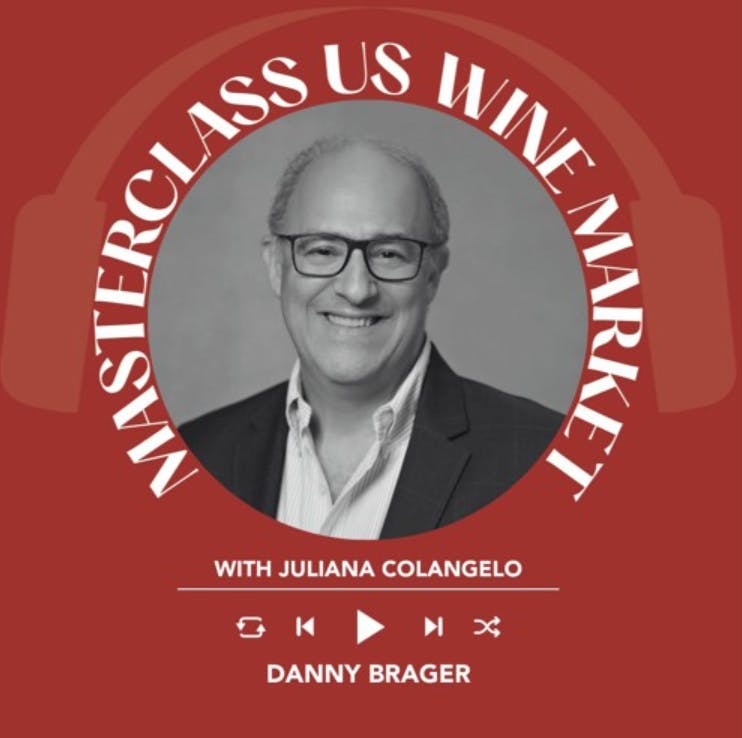
Ep. 1677 Danny Brager | Masterclass US Wine Market With Juliana Colangelo
Masterclass US Wine Market
Episode Summary
Content Analysis Key Themes and Main Ideas 1. Current trends and challenges impacting the US retail wine market. 2. The influence of economic factors, changing consumer behaviors, and inter-beverage competition on wine sales. 3. Specific opportunities and strategies for Italian wineries targeting the US market. 4. The critical importance of understanding and engaging younger and multicultural consumer segments. 5. The role of data-driven insights and market complexity in strategic decision-making for the wine industry. Summary In this episode of the Italian Wine Podcast's ""Masterclass US Market,"" host Juliana Colangelo interviews Danny Brager, a seasoned industry analyst. Brager provides an in-depth analysis of the evolving US retail wine market, highlighting challenges such as inflation's impact on consumer spending, the shift to at-home consumption post-pandemic (which still saw overall wine decline), and intense competition from spirits (especially RTDs) and even cannabis. He notes that overall alcohol consumption volume is flat, meaning growth in one category comes at the expense of another, with spirits gaining share from wine. A significant concern is the trend of ""social moderation"" among younger consumers, who are increasingly choosing to drink less, opt for low/no-alcohol options, and are not necessarily ""aging into"" wine as previous generations did. Despite these hurdles, Brager identifies opportunities for Italian wines, particularly the sustained success of Prosecco. He also suggests leveraging Italy's strong cultural appeal and targeting specific states where Italian wine has underdeveloped market share. A recurring emphasis is the industry's need to better understand and authentically connect with younger and multicultural consumers, an area where other beverage categories have demonstrated greater success, and to cultivate a more diverse workforce within the wine industry itself. Takeaways - The US retail wine market is experiencing significant shifts due to economic pressures, evolving consumer lifestyles, and heightened competition from other beverage alcohol categories. - Wine consumption volume is down in both on- and off-premise channels, particularly long-term in on-premise settings. - Younger consumers are driving trends towards ""social moderation,"" low/no-alcohol options, and embracing a wider variety of beverage choices beyond traditional wine. - Italian wines have specific strengths, such as the consistent growth of Prosecco and the inherent cultural affinity Americans have for Italy, which can be leveraged for market expansion. - A key challenge and opportunity for the wine industry is to effectively reach and engage younger, multicultural consumers, who do not necessarily ""age into"" wine as assumed in the past. - The US market's complexity, with its 50 different state regulations, necessitates a deep, data-driven understanding for successful market penetration and growth. Notable Quotes - ""If one [category] is going up, something else is going down."
About This Episode
The Italian wine industry is impacted by the pandemic and the shift in alcohol consumption habits. The speakers emphasize the importance of interpreting data and bringing it into the market, as well as the need for responsible legal communication. The industry is also experiencing challenges such as the shift towards off-premise consumption and the importance of educating consumers about the benefits of the Italian wine category. The speakers emphasize the need for understanding the diverse workforce and workingforce in the wine industry, as well as the importance of diversifying the workforce and workingforce in the wine industry.
Transcript
The Italian wine podcast is the community driven platform for Italian winegeeks around the world. Support the show by donating at italian wine podcast dot com. Donate five or more Euros, and we'll send you a copy of our latest book, my Italian Great Geek journal. Absolutely free. To get your free copy of my Italian GreatGeek journal, click support us at italian wine podcast dot com, or wherever you get your pots. Welcome to Mastercost US Market with me, Juliana Colangelo. This show has been designed to demystify the US market for Italian wineries through interviews of experts in sales and distribution, social media, communications, and so much more. We will quiz each of our esteemed guests at the end of each episode to solidify the lessons that we've learned to sharpen your pencils, get out your notebooks, and join us each week to learn more about the US market. Hello. Welcome to Mass or class US wine market. Today, I'm thrilled to welcome Danny Brager to the Italian podcast. We're here today in verona, wine to wine. So it's exciting to have you here in person, Danny. Thanks for joining me. Okay. Yeah. That's good. Danny has a wealth of experience in the beverage alcohol industry analyzing trends for many years. He formally headed the Nielsen beverage alcohol practice area in the US for over twenty years. And in his current consulting role, Danny provides data driven analysis to beverage alcohol companies seeking to translate information into authoritative fact based insights. In support of their corporate or brand goals. Danny is also a special advisor to the White Market Council. Danny, you just presented today this morning to one of our opening sessions, a full house, and you provided a really in-depth analysis on the biggest trends that are currently shaping the US retail wine market. So that's what we're gonna focus on today in our interview, but it should be a breeze for you. You already did it this morning, but for any of our I forgot about it. For any of our listeners who were not here at wine to wine this year, this is gonna be a great recap of Danny's presentation. So before we dive in, Danny tell us a little bit more just about your journey and how you ended up here in a recording booth in Corona talking about retail trends. Okay. Well, let's see. I started in Toronto, married a lady from Southern California ended up in California, but, on the work side of things, I actually had been working for Nielsen covering all sorts of other categories that weren't very exciting, like, canned fruit and vegetables Mhmm. Night person and stuff like that. But I was lucky enough in early, sort of the early two thousands to be asked to lead their beverage alcohol area, which was fine. I didn't know a whole lot about it at the time, but that involved working with all of Nielsen's beer wines, spirits, suppliers, importers, distributors, retailers, industry associations, and so on and so forth. So, and I had done that her up until mid twenty twenty. And again, not covering just wine, but beer wine and spirits, which I actually think is really important given the competitive nature of Right. Industry. And then I left in mid twenty twenty. Didn't exactly know what I was gonna do, but I thought maybe I could sort of help, especially medium and small sized companies figure out what data that might need, how to get the data, how to interpret it. And I've been doing that ever since then. And in addition to that, I also work with Azure Associates, which is a strategic advisory firm involved in M and A activity, route to market solutions. Okay. And as you mentioned, help out the wine market council from time to time, and love to speak at different industry events and talk about what's going on with numbers. Right. That's my thing is what what are the facts with the data Definitely. Not so important because I think a lot of us, and I'm talking about myself here too interpreting numbers, right? And putting them into digestible information that then we as communicators, as marketers, as salespeople, as anyone running a company can then take an action on. I think that's what we're here to talk about. Yeah. Today. So our three key takeaways for today's master class are number one, how the US retail market has changed in recent years for the wine industry specifically. Number two, how Italian wineries can better master the US retail market and what opportunities there are and finally some predictions for the future. So much is changing constantly. And I know that's a tough question to ask, but no one would be better to answer than you. Yes. I'm gonna ask you anyway. And you have numbers to back up your opinion. So that's always valuable. But, you know, just going back to again, and things have changed so much in the last four years, we've had a pandemic, couple world wars going on, economic strain, lots of external factors that are impacting everything, but talk a little bit more to us about how these external factors have impacted the US retail market specifically for the wine industry. Sure. So like you said, just a ton of change that I suppose that always happens. Mhmm. That's change. It just feels more monumental these days. Mhmm. But I'd say, I mean, the economy has changed things. Inflation is, is tough on people. And I kind of think of the average person, and they have to, have to buy their food, buy their gas, stay in their homes, or rent, or whatever they're doing. And then, hopefully, if they have some money left over, they like to indulge in things like wine, but all those economic pressures of putting strains on consumer budgets. Right. That impacts how much they can buy, how often they can buy it, drink it, etcetera, etcetera. So that's that's certainly one thing. You know, just even thinking of, like, why isn't the cheapest beverage around. No. Mhmm. I keep thinking like a glass of wine is two dollars and fifty cents. A beer, twelve ounce beers, a dollar something, and, serving of spirits is in the dollar range. We're talking about retail here again. Probably we get what I was gonna say. I mean, I wish a glass of wine was fifty two dollars and fifty cents in the restaurant. You and me, that's what we have to pay when we're going out. Right. Or we're buying something and ring back home. So we've got all those things. You know, we've had the pandemic, which I think one of the impacts of that is it's trained people to do more things at home. Yes. And that's having its impact along with pricing and on premise. So look at the numbers, there are less people on a relative basis. More people are buying stuff and bringing it into their homes as opposed to going out that certainly puts pressure on both the operators of on premise, but also people are suppliers that do a lot of business in in restaurants as far as. Right. So we'd expect that to have a positive impact in retail, right, or see some of that business moving to retail? Or You see the shift. Yeah. There's proportionally more being done on off premise than there is in on premise. So we definitely see the shift, but one of the problems is that the wine category is down in both on and off premise. Yeah. But it's it's down more on the longer term in in on premise. The other thing that I think is increasingly important is just competition. Yeah. For wine. And when I say competition, it's from all sorts of different places, it's within the category, within the beverage alcohol category. So everything in the spirits and or beer world, it's alternative things like cannabis, which I actually think is having a larger impact, and maybe we think. And it's just coming from also people, especially younger consumers who are choosing to drink less often, whether that's because of pocketbook issues or or their preferences, probably both those things. But Totally. And then the core wine consumer older folks, there's less of them every year. Definitely. Beautiful. Right. So that's the change that what's happening whether we like it or not. Right? That's true. Yeah. You can figure that one out. Yeah. Yeah. You'd be a billionaire. So Danny speaking of younger consumers, we know a lot of the work at the wine market council. We spoke to Liz Tosh, a few episodes back, is around consumer consumption habits when it comes to the wine category. So can you summarize for us some of the biggest changes that are happening for the consumer when it comes to how they're consuming wine? Younger consumers in general, I think we're the wine market council and the members certainly want the focus of the research to be. So, again, that's where I think all the competitive aspects come into play. Because I look at, again, beer wines and spirits and see what's growing and what's not. And and I start with the fact that if you look at overall consumption over years and years and years, it hasn't really increased, like, on a volume basis, total alcohol. Yeah. So therefore, if one if one is going up, something else is going down Totally. Yeah. By definition. Right? And now dollars are going up because people are trading up at the same time, generally. The volume is is pretty flat. And if you look at the, sort of, the world through that lens, spirits has been gaining share pretty consecutively for quite a period of time, and Beard has been losing share for quite a period of time. Right. The wine was also doing well. So the old adage was that wines and spirits are growing and beers declining. That was the adage. And that started to change a little bit in two thousand sort of made team way wine growth rate started to slow down. Okay. I think got a bit of a bump in twenty twenty, early due to COVID. Right. I'm buying a lot of stuff and Mhmm. Stocking up. I can buy my five liter, three liter box. It's just the case, the little bins. But then I think where it's settled down into is that spirits continue to grow, and there's a few segments we can talk about that are really behind that. And some of that is coming out of wine buying and consumption, and younger consumers are really leading that. It kinda started, actually, even before spirits with, like, the heart seltzer craze. Right. That's way down now, but now there's the Rtd cocktail craze Mhmm. Which I think has longer legs. And Yep. It will grow for longer than heart seltzers really did in retrospect. Mhmm. That's one big change. And then I think this whole social moderation, which is really led by younger people, and it's all about whatever I'm gonna eat or drink, how is that gonna fit in with my desire for healthier lives? Right. And some of that involves less drinking It involves no drinking. Some involves low alcohol, no alcohol. All these things have tracking calories, you know, needed to apps to track, yeah, consumption. We didn't. Totally. We didn't do that ten years ago. But even people like me actually Yeah. Have my little Fitbit and check check what's going on. Tracking our steps every day. Yep. Exactly. So what are some ways you think we face this as an industry? And as a as a one industry specifically? Yeah. Well, I think there's a couple things. One is product. Yeah. I mean, there are if you look at some successful brands, they've evolved into lower calorie versions, either launched a new brand, or taken an existing brand and extended the brand into a light version. So Right. No sugar, locale, so on. There's a lot of low elk brands that are out there. There's some RTD wine based thing spritzes and stuff like that. Okay. Aren't as big as spirits, but, you know They're out there. They're out there. They're out there. So part of it is products. And and I think as science evolves and technical aspects evolve, things like non alk wines, some are good, some may be Yeah. Improve. But they they will improve. And I look at beer as an example, Definitely. Non Algarit tastes pretty good. Kinda like the alcoholic version. So I think that'll change over time. Then I think there's the aspect of how do we communicate that in a responsible legal way, which is difficult to talk about, health and drinking. Right. But how do we communicate that in that responsible way that, you know, wine in moderation can be part of a healthier lifestyle? Right. And I thought it was interesting. The wine market council research when you ask people, like, what wellness means to them? They'll give you answers like, well, the calories and so on and so forth, but they'll also say relaxation, social connections Yeah. An appropriate work life balance. And I think mine can fit into all those things. Social wellness. Right? Yeah. That's a part of wellness. Mhmm. But I I don't think as an industry, we've kinda figured out that message and Yeah. Voiced it collectively Right. With enough force and power. And collectively, and like you said earlier legally and figured out ways in which to legally and respond responsibly communicate some of those benefits of drinking wine specifically and following that moderation topic. I've seen some things which I thought were quite novel. There's catalogs like better for you, which I think the idea behind is really great. I'm just not sure if It's okay to say drinking is better for what they're talking about across as products that are in quotation, we're expecting. Right. I'm not sure if the right tagline is better for you. Maybe it is. I'm not sure. Right. They're coming up with ways to communicate some of the benefits that you mentioned or the reason, you know, and also the lifestyle aspect too. Right. Absolutely. Yeah. So now that we've talked about some of the challenges, let's try to flip and and talk about some of the opportunities in the other side of the coin, what are some of the opportunities that lie for the Italian wine category specifically in the US market. I know you covered a bunch of them today in your session. So tell us a little bit more about some of the opportunities there are for the Italian wine category. Well, again, numbers wise, I look at just stated to say, like, where are we doing really well, well? Yeah. The best example, like, if someone says what's doing really well in in wine, my first example is Persecco's doing awesome. Mhmm. It's sustained growth, which is really tough in in wine. So Perseco Rosay, we learned. Right? Perseco Rosay, which is an opportunity to build on top of just, you know, Perseco before Rosay. Italian wine podcast. Part of the mama jumbo shrimp family. So there's opportunities like that. I think there's opportunities in looking at when I say we am talking about Italy. Where we are strong and where we could be stronger. Yeah. So I had the chance to look at the top import states and where it and Italy share the top thirteen import states Mhmm. And Florida, for instance, then there was a class after me all about Florida, but Florida. Right. It was a state where our share is much less than it's a huge import state. Obviously, our share is much less than in some other states. Interesting. Now what, you know, then, obviously, you wanna dive into why is that? What could we be doing better for? Is a big Hispanicic Latino population. Probably not doing well with Latinos. Yeah. Some other countries are, their Spain is doing quite well. Taj Marigas. Yeah. Mhmm. So there's, you know, look at things like that. And then you know, then it's back to Jesus, like six million visitors from the US to go to Italy every year. What are we doing with them to make them ambassadors when they come back? Keep them engaged in the categories. Yeah. Just fifty thousand Italian restaurants in the US. I mean, there's just Yeah. I think there's just and people love there's just a ton of opportunities for it. People do love Italy. Absolutely. Absolutely. Yeah. I think the Italian wine category has a huge upside there and a big benefit that a lot of other categories just can't claim is the Italian love affair, American love affair with Italy. Also, the American knowledge of Italian culture, Italian food, the they understand it. Right? It's so proliferated and so huge across the US market. I mean, anywhere you go, from a major city to a tiny suburb, but you know, there's there's some form of an Italian restaurant, and you'll find it. I don't see them for the savvier travelers. I mean, it's not just Italy. They know the different regions, and which give opportunities for those regions within Italy to market themselves. As a part of the Italian. Right. Exactly. Do you think, you know, previously we're just we're talking about, you know, wine and health and what's happening with con younger consumers cutting back? Do you think when it comes to, let's halt the wine and wellness messaging or opportunities that the Italian wine category in particular might have opportunities of how to market to this new consumer when it comes to that aspect that other brand that maybe other regions don't. I mean, there are obviously aspects of the Italian industry Like we know the lighter styles, if you look at again, the numbers, the data says lighter styles, white whites are doing better than red, so on, and so forth. Right. I see italy has seen lots of great white white wines and Yeah. Regions. And so on. So, yes, yes, by looking at, obviously, each supplier has to look at their portfolio and do they have the kinds of wines that American consumers, younger ones Right. Seem to be looking for. But beyond that, then I think Italy falls in step with collect. I mean, some of the problems of the issues that we're talking about, wine industry demand is falling. I'm merely among young consumers. They're not specific to the US, Italy. They're a problem for the industry. Yeah. They're collective. Yeah. For sure. I wish we could. Yeah. Let's embark on a massive global camp. Yes. Exactly. You know, you you present all this really valuable data information at conferences like white to white, and I know you speak at a lot of other conferences as well. What are some of the follow-up questions you get? Are people coming up to the stage to talk to you after you present? Like, what are really resonating with the audience, or what are they wanting to know more about? So the first thing is can I get a copy of the presentation? Yeah. Of course. All the numbers. Yep. There's a lot of numbers to digest. I think, you know, I certainly have a lot of people who come up and they have an idea about something. And they're I love them because, you know, they got these great ideas and they just want my opinion. Like, do you think that would work in the US market? Yeah. So that's a common question. I think the biggest common question that's sort of from everybody is back to that. How do we engage with a younger consumer? Yeah. I think we know now that we have an issue. I'm not sure that if we go back, and I, again, I've been at it for twenty something years. I'm not sure if I go back ten or so years that people even thought that there was an issue. But as we see older people, like, we're losing, we're losing Yeah. Every day. So and then we see the numbers as well. Right. And we're seeing falling demand. So I think there's more of a recognition that we have an issue. Yeah. What do you think about the argument that's out there or the opinion that's out there that people will age into wine? Like, that a lot of people are just not old enough yet to appreciate wine and that as millennials and gen z get older and buy houses and start families, that they'll start drinking more wine. Do the numbers show anything pointing to this? We have the numbers So here's first one, I hate hoping the strategy. That's not a great way to go about it. Well, first of all, some numbers suggest that if I look at in the wine market council data, they break out wine consumers by age group so I can look at, you know, twenty one to thirty year olds and so on and so forth. Even when I'm looking at forty to forty nine and fifty to fifty nine, I can see that the percentage of core consumers there are people who drink wine at least once a week or more often. Is less than sort of the seventy plus. That worries me because if I'm forty or fifty, I'm not sure if I'm gonna change my drinking habits all that much. Right. Right. Reset. Mhmm. So that worries me and I'm drinking less than the seventy plus year old. Is that surprising? Yeah? That's worrisome. The other thing that I think has changed so much is the diversity of choice is just so much broader than it used to be. So there are just so many more choices and younger people certainly are enabored with the broader choices and they're taking advantage of it. I'm not sure that we should rest on the fact that they will, you know, as soon as they turn thirty, they're gonna, I don't like those cocktails anymore. Right. I'm gonna switch to wine. I mean, so that will happen that I just think the world's changed. And the the third part which is more, I guess, specific to the US market. I'm pretty confident we have not done a great job with understanding not just the younger, consumer, but the younger multicultural consumer. Yes. Mhmm. Who are sort of one in the same? And we've talked a lot about that on this show and, you know, and the Italian wine podcast in general, that topic, or I'm reaching not just younger consumers, but consumers are different demographics. Absolutely. Yeah. And even in Hispanic, that's the really broad term, but there's Mexicans Right. There's Cubans, they're central Americans, and and they're not all the same either. Yeah. You you need to go pretty deep. Totally. And a few weeks ago on Saturday and live, Bad Bunny performs, and he was the host. And several of the skits were done in Spanish without subtitles. Oh, my Which to me, I mean, that yeah. You have NBC SNL is putting out content in Spanish without English subtitles. That sends a huge message to me about the demographics of our country. Absolutely. Yeah. So that's huge. And I think what you're saying about understanding that consumer, understanding they're not monoliths, and diving into how to best reach those consumers authentically is is really key to winning those consumers too. The other categories we're competing against, again, I think they've done a better job. Yeah. You know, there are a lot of big companies For sure. Resources, a lot of money to to understand it. But, that also means, like, as an industry, we need to diversify representativeness of those consumers and workforce and leaders and so on. Absolutely. I think it starts with having a more diverse workforce in the wine industry, right, that understand for sure. Definitely. Danny, as we wind down, we do a little rapid fire quiz at end of every don't worry. No numbers involved. We ask our guests the same three questions. So question number one, and please try to answer one sentence or less. What is your number one tip for mastering the US white market? Can I give you two quick things? Yes. Okay. So two quick things are understand the size of the opportunity. There are numbers generally that you can get to, but sometimes you have to be creative or ask the right people, but figure out what the real size of the opportunity is. And number two is hugely complex market. You really gotta figure it and like understand it. Whether you do it by sending people, send yourself, work with the right distributors. Yeah. Absolutely. Question number two, what is something you might have told your dungare professional self about working in the wine industry in the US. Actually, they sort of gets back to the one b because I used to think that the wine market I thought it was ordinary consumer, I think. Yeah. Pretty simple. You're right. Boy, you know, I started to learn it. It's like, oh my god. You got fifty states, and they're all different Yeah. Different things. It's like hugely confusing. So I feel bad for anybody trying to Yeah. Definitely. And finally, we all travel a lot. We're here in Italy and have traveled here from California. So what is your favorite travel hack when you're traveling for work? Well, a couple years ago, I finally got somewhat smart and said, I gotta figure out how to get into some of those airport lists. Oh, yeah. So that's that I figured out how to do at least a couple of those. Yeah. And I don't know if this is a travel hack, but I'm a tremendous like, good sleeper. Well, that's lucky. I can get I usually miss take off. So Oh, wow. Good for you. It just feels like I'm in my mother's womb Yeah. Holding on the tarmac. Yeah. So I'm out for a couple hours. Oh, good for you. Well, that's lucky. Yeah. Well, Danny, thank you so much for joining us today, on the Italian wine podcast here in Verona. How can our listeners connect with you? Brager danny at gmail dot com. It's the best way. Okay. Pretty simple. Last name. First name. Separation. Okay. I'd love to talk to people and get anybody's questions feedback. Alright. Fantastic. Thanks for being here. Thank you for joining me today. Stay tuned each week for new episodes of Masterclass US wine market with me, Juliana Colangelo. I remember if you enjoyed today's show, hit the like and follow buttons wherever you get your podcasts.
Episode Details
Keywords
Related Episodes
Ep. 2790 Italian Wine in the US: Building a Narrative and Reaching Asian American Consumers with Susan R. Lin MW | Masterclass US Wine Market
Episode 2790
Ep. 2783 The Suburban Gold Mine: Insights into New Jersey’s Wine Market with Brittney Abell | Masterclass US Wine Market
Episode 2783

Ep. 2772 A Surprising Partnership between Japanese Sake & Italian Wine with Monica Samuels | Masterclass US Wine Market
Episode 2772

Ep. 2770 China’s Wine Market: From Misleading Import Numbers to Today’s Consumer with Fongyee Walker MW - Part 1 | Asia Wine Market
Episode 2770
Ep. 2760 Winning the Restaurant Floor: Training, Education & Italian Wine with Sylvester Inda of Ci Siamo | Masterclass US Wine Market
Episode 2760

Ep. 2751 From Montalcino to Kazakhstan with Francesca Arquint of Collemattoni | Asia Wine Market
Episode 2751