
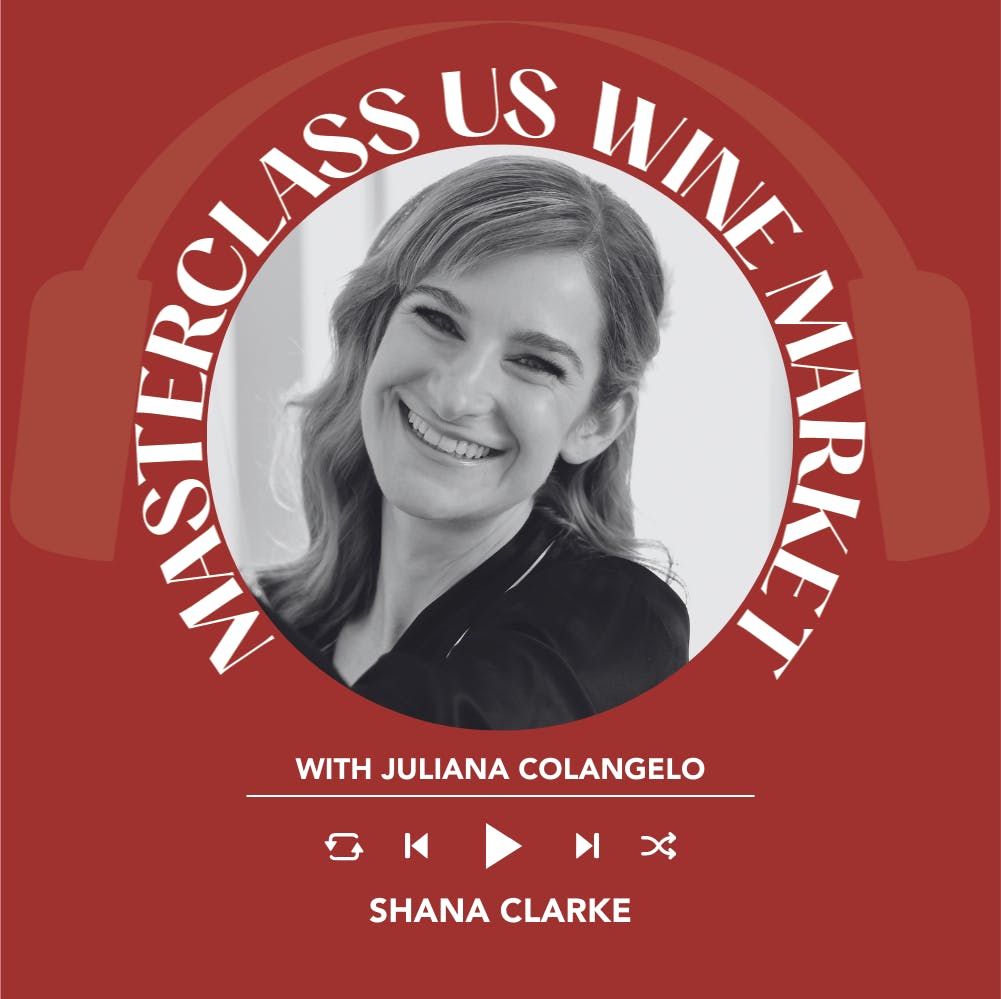
Ep. 1776 Shana Clarke | Masterclass US Wine Market With Juliana Colangelo
Masterclass US Wine Market
Episode Summary
Content Analysis Key Themes and Main Ideas 1. Understanding and defining press trips in the context of wine journalism. 2. Best practices for wineries and regions when planning and executing press trips for US wine writers. 3. Journalists' expectations and needs before, during, and after a press trip. 4. The importance of logistic details (travel, accommodation, itinerary, meals) for a successful trip outcome. 5. Setting realistic expectations for coverage timelines and the value of non-traditional forms of exposure (e.g., social media). Summary In this episode of Masterclass US Wine Market, host Juliana Colangelo interviews freelance journalist and wine writer Shana Clark about the intricacies of wine press trips. Shana defines a press trip as an opportunity for journalists to gain in-depth knowledge and generate story ideas. She emphasizes that wineries should focus on providing comprehensive information and context, rather than pre-confirming stories, given the fluid nature of journalistic discovery. The discussion covers pre-trip planning, advising on a three-month invitation lead time and the necessity of a rough itinerary. Crucially, Shana stresses that featured wines must be available in the US market for articles to be relevant to US-based publications. During the trip, she highlights the importance of incorporating breaks, providing comfortable travel and accommodation, balancing meals, and ensuring a diverse representation of wineries. Post-trip, Shana advises providing detailed wine lists and emphasizes that traditional print coverage can take a long time to materialize, often up to a year, urging patience from wineries. She also touches on the immediate value of social media engagement during and after the trip. Takeaways - A press trip's primary goal for journalists is to gather information and generate story ideas, not to pre-confirm articles. - Wineries should research journalists' interests and tailor trips, ideally inviting writers with a track record relevant to their offerings. - Invite journalists at least three months in advance and provide a comprehensive, albeit rough, itinerary. - It is essential that wines featured on press trips are exported and available in the target market (e.g., the US) for journalists to secure relevant placements. - Successful press trips prioritize journalist well-being with scheduled breaks, comfortable travel arrangements (including preferred airlines and safe drivers), and balanced meal options. - A diverse itinerary showcasing both large and small producers, along with cultural activities, enriches the journalist's understanding and potential storytelling angles. - Post-trip, provide detailed wine lists (with SRP and importer information) and be prepared for traditional print coverage to have a long lead time (potentially up to a year). - Social media engagement during and immediately after the trip offers valuable, immediate exposure. Notable Quotes - ""The ultimate goal [of a press trip] is to gain a greater level of knowledge about the subject and generate story ideas to pitch to publications."
About This Episode
Speaker 1 and Speaker 2 discuss the importance of a successful press trip for writers and wine writers, emphasizing the need for accurate information and thorough research. They stress the importance of knowing the writing process and finding a good itinerary schedule. They also emphasize the importance of being mindful of social media and bringing up relevant topics. Speaker 2 provides personal and professional links for listeners to follow and emphasizes the importance of being in the right place for the right experience.
Transcript
The Italian wine podcast is the community driven platform for Italian winegeeks around the world. Support the show by donating at italian wine podcast dot com. Donate five or more Euros, and we'll send you a copy of our latest book, my Italian Great Geek journal. Absolutely free. To get your free copy of my Italian GreatGeek journal, click support us at italian wine podcast dot com, or wherever you get your pots. Welcome to Mastercost US Market with me, Juliana Colangelo. This show has been designed to demystify the US market for Italian wineries through interviews of experts in sales and distribution, social media, communications, and so much more. We will quiz each of our esteemed guests at the end of each episode to solidify the lessons that we've learned. So sharpen your pencils, get out your notebooks, and join us each week to learn more about the US market. Hello. Welcome to master class US wine market. Today, I'm thrilled to welcome Shane o'clock to the Italian wine podcast. Sheena is a freelance journalist, content writer, and copy editor with a focus on the beverage alcohol industry. She was named one of the top twenty wine writers that wineries can work with by Bradford Trade Network in twenty twenty one. Welcome to the show, Shana. It's so great to have you here. Thanks so much for having me. Absolutely. It's always fun to interview long time friends. I think you and I have known each other for gosh, almost a decade at this point. I think you're right. That's crazy. It is crazy. It is crazy. So it's it's really nice to have you here. So, Chana, today, we're gonna dive into all things press trips. I think it's gonna be a really popular topic for our listeners. But before we dive into today's discussion, tell us a little bit more about your background and how you ended up in the position as a wine writer. Sure. There's no real straightforward path, so I always kind of laugh whenever I get this question. I was actually working in fashion when I became interested in wine. So I started taking courses, different classes, and the interest just kept growing and growing. Eventually, I did WSET and a few other different coursework kind of, classes. And then eventually, it was a good time to get out of fashion, and so I was trying to figure out my best path into wine. So I tried a bunch of different things kind of going on my strengths of being interested in writing and marketing. So I was doing PR work. I was doing marketing work with wineries. I was working with an importer distributor, but the whole time I was also really interested in writing. So I started a blog post that I shared with absolutely nobody, but it taught me discipline. It taught me to meet deadlines. I then eventually I took, had a pitch class, which was really pretty instrumental in getting my journalism career off the ground. So once I started getting more bio lines, it became easier and easier to pitch. And I also realized writing was really where my passion was, and it's what I wanted to do. And from there, I was able to segue into working in content, work with different brands and wineries and wine companies too, which is another nice avenue to have when it comes to wine writing. Yeah. Absolutely. To have something consistent while you're out there pitching great stories and working with various publications. Absolutely. So tell us just a little bit more about where you sit today as a wine writer, the main publications you're working with and what you work on primarily in terms of your contact. Sure. So right now I'm very focused on wine, obviously. Travel has also been of interest. And pre pandemic, I was doing a lot more wine travel sort of writing, and that's starting to pick back up now that people are truly fully out there traveling again. I'm also a certified sake, Samalier, so I do write about sake, and I'm very interested in what's happening in that space is another kind of alcohol beverage that's in the market these days. Primary publications, I write a lot for a vine pair, seven fifty daily, which is a trade site. In BIVE, I've written for fortune. I've written for NPR. The big joke is anyone who will take me essentially. But some amazing biolines there. Congratulations. Thank you. Yeah. Of course. So, Shanna, we're gonna focus in on press trips, which are a big part of any wine writers' trajectory and things that are coming up in your day to day. And what US Journal's expectations are of these visits when they accept a press trip as well as best practices for wineries when organizing a press trip and how to make them ultimately most successful for both parties, the winery, and the winery that's attending the trip. So our three key takeaways for today's master class and what we're really excited to learn from you are, number one, how to plan a successful press trip for US writers and and wine writers specifically. Number two, the do's and don'ts of hosting successful press trips. And then finally number three, the expectations for press trips from the winery side when can they expect coverage and just all those things in terms of the post press trip. So we're kinda talking here pre during and post in terms of what we wanna discuss. So for starters, let's define a press trip because I think it's always important to get on the same page about what we're talking about. What's your definition of a press trip? To give it a real dictionary definition in my world, I would say a trip where journalists travel to a place with the intention of learning about the culture, wine industry, winery, and other aspects of the region. The ultimate goal is to gain a greater level of knowledge about the subject and generate story ideas to pitch to publications. Love it. Straightforward, accurate. I would have very much agree with that definition. Okay. So and I think I wanna harp a little bit on that second part that you said a Shareboard journalists are attending to gather information that they can then pitch to publications. Talk to us a little bit of what that means and just explain that a little further for our listeners. I know that there's always different expectations when going into a trip. For law a journalist. We're going to a place that we've never been before, or we're working with a winery that we've never seen before. It's really challenging for us to go into a trip knowing exactly what we're gonna write about. I really strongly dislike trying to go into a trip knowing that I need to have a story confirmed. And I'm honestly, I know journalists and myself included will turn down trips if that's the expectation because we may go when we may realize that what we thought we were going to write about is completely wrong. We may find something that's so much more exciting that we'd so much rather be talking about to our publications. And it's, you know, it's very hard to just go into something so blind and to feel like you're gonna become an expert right away. So it's an opportunity for us to really soak in what's happening to really put into context how we're seeing it in terms of what else is going on in the wine world. And I think that that's gonna give us really the fodder to create great stories. Right. So would you say from the wineries perspective or let's say it's an agency that's pitching the wine writers for the trip that the focus should be less on pre confirming the stories, but instead of getting to know really the writer themselves and giving them as much information as many different angles, ideas, tidbits on the trip as possible so that they have as much information as they need in order to go and pitch stories post trip. Absolutely. I think it's key to kinda know what peaks to journalist interests. I know that people have certain specialties that they really kind of hone in on. Sustainability might be one. People might be a little bit more interested in personal profiles. People might be interested in what's the next generation coming up. I think everyone kind of gravitates towards different ideas and the goal is to make sure that you're working with the journalists to help speak to what they really wanna write about because that's gonna get the best story in the end. Absolutely. And I think that leads to doing your research before you're inviting writers. Right? Yes. Yeah. And their their beats, their profiles. I mean, there's so much information out there these days. I know writers like yourself are really active on social media, sharing what they're writing about, where they're going, where they're traveling. I'm always very envious, like your trip in Uruguay last week when it was freezing here in New York, which I know we'll get to talk a little bit more about that. But, yeah, I mean, there's plethora of resources out there to really get to know the journalists before you pitch them. And I also just coming from the agency background too. I think there's nothing wrong with picking up the phone or asking for a call with a writer, talking to them about the trip and learning about them a little bit more personally before, you know, making any kind of final arrangements. Absolutely. And one other thing I will say is the group of journalists who travel together, that really does impact the quality of the trip. So I think that you wanna make sure that you have people who are gonna be comfortable traveling together, who might be of a similar mindset I mean, it's a small industry, so oftentimes a lot of us will already know each other, but having a good group that gels really does create make for a much better experience for everybody too. Cause if you have that problem person who's going to drag the group down, who's gonna be super demanding. It's gonna it makes it hard on everybody to kinda get their work done. Totally. So feel free to talk to journalists, maybe ask them for recommendations of other writers that they like to travel with. And I think getting that good group really just makes the whole experience elevated. Yeah. That's a great tip. And No. For anyone listening, that's wondering how they even start doing this. If you'd say you're based in Italy, and you don't have the knowledge of the landscape of US wine writers, that's where I think agency or consultant can really come into play that knows the writers and help you with that. But you know, just on that note of organization of the group, let's talk a little bit about the organization of a press trip and what's your expected advance. So how far in advance do you expect to be contacted about going on a press trip? I prefer three months. To me, that's kind of the sweet spot between have enough foresight into kind of knowing what my workload is going to look like down in the future. I've noticed a trend recently about getting invitations five or even six months out, which, to be honest, can be quite challenging. I think that for people with families, that might be a little bit better for them. But for me, and I think for a lot of other people who, you know, we can work on the fly a little bit better, I feel like three months is a good amount of time. Okay. Three months. Okay. That's solid. And then in terms of the information you need leading up to that press trip. What kind of information do you need to even make a decision if you're gonna accept a press trip? Let's talk about that. I love to see a rough draft of an itinerary. It doesn't have to be fully complete, but I do wanna understand what we're gonna be focusing on, who are gonna be visiting, what's the cadence of the trip. It's really vital, I think. The more trips that I do, I do wanna understand what I'm gonna be experiencing when I'm there. I also wanna make sure, and this is another point that we could talk about later, but For a wine writer, especially, we need to make sure that the wineries are exported to the United States. It's really challenging because it's very hard to get an editor interested in a story if the readers cannot get the wines, and I really can't impress this enough. I think for travel writers, it's a little bit different because it's about getting the people there. That isn't as necessary of a step. But for us that are working with US based publications, especially, we really need to know that the readers are gonna be able to get those wines. Totally. That's really important and not to be overlooked for sure. And also, I mean, from the wineries perspective too, the value, I mean, it's not cheap to five people across the ocean or, you know, across country. So you wanna make sure that, you know, you have product in the market that can be bought so that the impact of that resulting press coverage is really helping build your brand. I would also say knowing the number of journalists that are gonna be on this trip is also important. I think that people work differently. Some people really like big trips where they can get to know lots of different people. Some people prefer to work in small groups, maybe just three or four other journalists. So that's something that I would always like to know as well. Yeah. Absolutely. That's a really valuable point. And again, that's where getting to know the writer a little more personally. I think really comes into apply. So, Shannon, now, talk to us about during the press trip itself. You mentioned you wanna see a rough draft of an itinerary before you even accept. So for you, what's an ideal itinerary for a press trip? Well, honestly, and just taking one step back also something that I do wanna say. I think it's really important to make sure that you're putting journalists on their preferred airlines. This probably goes back just the pre planning part of it, but to me, that's really vital. Because travel is very hard. Travel is very hard on the body. And for a lot of journalists, we partner with, you know, we have loyalty to certain airlines. We get you know, status. We have art, which gives us access to a lounge if necessary. If something were to happen mid trip or our flights change, we would be able to quickly change something. To me, that's just always a really big, big thing that's really vital in terms of my travel. I know. I really get a lot out of my United Access. I have to admit you try to fly as much united as possible. It makes a huge difference. Absolutely. And it saves money too. Like you said with changing plates, extra bags, you know, you name it. It really does. Okay. So definitely just even before the itinerary getting there, you know, working with the journalists on their preferred airline. And then how about the itinerary itself? You've been on many press trips. So what do you find ideal in terms of an itinerary schedule? One thing that I think all journalists are always gonna kinda look for is we just wanna make sure that we get some breaks every day at least or a break at least every day just within the schedule because we're still working the entire time that we're there. So we do need time to be able to check-in on emails. We do need time to decompress and to be able to kind of think through everything that we've been seeing just to address all the day to day stuff that's kind of piling up as we're as we're out there in the fields and out there in the vineyards. So that's really pretty vital for us. I would also say, you know, when we get there. Okay. It'd be nice if we can have some time to settle in. Sometimes you hit the ground running, and that can be really challenging when you're getting off an eight hour, nine hour flight to suddenly, you know, you're off to the first one. Right? That's that's challenging for a lot of people. So it's nice to have that data kinda acclimate and to just kind of get settled. If that can be done, that would be great. In terms of content, I mean, I really like to see I really wanna be educated. So I really want the itinerary to show me something that's going to teach me something. You know, I'm really very excited to get a deeper understanding of where I am and, you know, why it's so important to bring us there. What are the stories that we can learn from there? What is, you know, what where the challenges that the region is facing? Where are they seeing opportunities? I think just the content of the winery visit is so it's so key and to see something diverse. You know, I'd like seeing the smaller up and coming producers as well as the really big established ones. I think that you kinda need to get a good overview if you're doing a regional type of trip. Right. So make sure you're really giving an authentic representation of the region by mixing up the types of wineries. What about non wine related act activities thrown into the itinerary. What do you think about those? That was on my list, and I'm a big advocate for that. Because, again, if we're really trying to understand the place, we need to see the culture too. So I love it. They do give us a little bit of a city tour, or we get to see, I mean, one time, there's one trip, and we went to go see, like a tapestry factory, which was really just ingrained in the culture, and I just thought was really quite interesting. So just to give us more of a sense of place is always really helpful when being on a trip. Yeah. Definitely. That makes a lot of sense. And again, for storytelling, right, you wanna really understand the region you're in. And, like, those activities can give you that that broader context for how the wine fits in. So that makes a lot of sense. And for someone who does a little bit of travel writing like myself, I need that context to be able to added in. So if someone, you know, some of the itineraries that I'll write for one of my travel pieces, like, for Kanye ass traveler, they're gonna wanna know where can people go if they're not doing a winery tour? Here's, like, this little interesting factor tidbit about the region that people may not know. All these cultural things really tie together and make very rich comprehensive pieces. Absolutely. Okay. Anything else you'd add about, like, what works best when it comes to the itinerary itself or the winery visits? How about, like, how many wines to taste. I think that that's always kind of a I would say, like, don't super overwhelm the palate. You know, I've been to some things where we go to a winery, but then there's ten other wineries there and we're tasting all their wines. And by the end of the day, it's like palate fatigue. I mean, I know that sometimes that there is the structure where a lot of people the way the consortiums work, you know, everyone wants to have a say and everyone wants to be able to show their wine. So I understand the politics behind it, but I think that we do need to be mindful about the journalist is gonna be able to get out of that and what kind of tasting experience is gonna be optimal for everybody. Coming back to America, Van Italy International Academy, the ultimate Italian wine qualification will be held in New York City from four to six March twenty twenty four. Have you got what it takes to become the next Italian wine ambassador? Find out at benitely dot com. You know, for the end of the day, and it's, you know, you're facing down another, like, thirty wines. That's it's not doing anybody any favors. Yeah. That's not ideal. Yeah. So be mindful of the number of wines you're presenting within the rules of the consortium, as you said. I think we know that that can get political, but that's definitely a great consideration. Yeah. Anything else you'd add about during the trip itself? I would always say also please stay on schedule because that's really hard when we're running over and we see that break time just diminishing. That can be really challenging. I would also say be really mindful only until you experience it. Do you understand it, but to be really mindful about the meals, because it's really it'd be nice to bet do a balance where you have potential a lighter lunch and, like, a fuller dinner or, like, a fuller lunch and a lighter dinner. I think that we understand hospitality, and I know that people really wanna show off. Like, there's really wonderful restaurants in this amazing cuisine of the places that we're at, but it can be really hard on the body. And then as a journalist, I always feel terrible if I'm leaving so much food behind because I feel like I'm insulting the chef. But it's just that I've physically hit my limit. So to be able to just, you know, be mindful about mealtimes and things like that, you know, I think that's just really vital just to our general, like, health and well-being. Totally. I agree. I was on a trip in November, and I don't think I had, like, a vegetable or anything like that for like four days. And I was definitely starting to feel it. So, yeah, I think that's a great point, Shana. It's not every meal needs to be three courses, give options, and, you know, obviously too. I think it might help your budget if you're cutting things back a little bit, but, yeah, I think that's a really good good point. I would also say, please make sure that everybody actually properly introduces themselves and if possible gives us business cards because I wanna always make sure that I have the right person and the names correctly and sometimes people don't introduce themselves. It gets a little bit awkward halfway through the tasting when you're like, what was your name again? So I think just making sure that everyone's very clear in their introductions. It's such a minor thing, but you don't think about it until you're actually into it. Probably. I would also say whenever we're being transported from place to place to make sure that we're actually in a sort of roomy and comfortable vehicle, I've been in places where I've been stuck in the middle seat for three hour drives and it's really uncomfortable. And I think a lot of journalists also kind of use these transportation moments to work on social media. I know a lot of us kind of sit there and we're posting and whatnot during that time. Some people are actually trying to finish up articles, bless them. Whoever can type and not that car sick on a bus, but people people do it, downtime, you know. So anything that's just roomy and comfortable, and ideally if there's wifi that we can get on that vehicle would be fantastic. And also just kind of piggy backing on that, just making sure that we also always have a safe and secure driver been a couple instances where we've been at a dinner and then a winemaker drives us home, and I'm not very comfortable with that if they've also been drinking so that everyone is that there is a safe and secure driver. That's really important. I would say make sure that there's really good translators, if not everybody is is fluent in English. Unfortunately, the US school system is not great. And so a lot of us don't learn other languages, which is really a shame, and that's, you know, that's definitely partly on us. But so it would be really beneficial to have numerous translators if needed or a strong translator. Mhmm. If you know, if if the winery or the region or whoever we're meeting with is not a fluent English speaker. I would also say what Zap groups are wonderful. So that way, everyone can keep communicating throughout, you know, for all in our rooms, we can just be like, hey, guys, downstairs in five minutes, whatever it is, I just think that it's really useful for everyone. Probably just the last thing that I would also say is kind of like building on the idea of a comfortable vehicle. Same with hotels. I know that, you know, it's obviously these trips are expensive, and I totally get that. And I understand that You wanna find something that's gonna be reasonable with the budget. But for a lot of us, we need to sleep. And so to be in a really comfortable hotel is great. And again, kinda going back to the idea of travel writing and wine experiences that way, our editors want to know good hotels to recommend to readers. So if we have that, that's really helpful in terms of building out article ideas. Great. Well, those are a lot of really, really helpful tips, some things that might just kinda slip. So WhatsApp group, good translation, keep the meal's balance, comfortable hotels, comfortable transportation with WiFi if possible safe drivers. Those are all really, really great tips, Dana. So thanks for brainstorming and being so thorough. Yeah. Absolutely. So now post press trip, your back home. You've had a great trip, hopefully. What are the expectations of communication between you as the writer and whether it's the wider agency that you're communicating with in terms of follow-up coverage, etcetera? What I love, and this is a couple of times, and it'd be great if it happens more is post trip to be able to receive a whole list of every single one that we tasted with suggested retail price in the United States as well as their importer. You know, we'd all take our notes. We take our bottle shots, but to really be able to make sure that we have the accurate wine that we tasted noted and the contact information for it is incredibly helpful. In terms of post communication, knowing that I can reach out to the winery to the agency, whoever organized the trip with any follow-up questions, data points are also really important. I tend to go back to them looking for data points. When I'm pitching articles, the most important thing that an editor wants to know is why now. And so if I have a statistic to show that this is significant and important, that's really helpful with working with them to get a story. And, also, I would just say in terms of expectations, it takes a while to get a story up. I know that a lot of people really do hope for a really fast turnaround. There are definitely people in the way that they work with media that they can do that, but like, especially more of, like, influencers or, you know, people who do work in other mediums, but for writers, it can take a long time. Because we first come up with the idea, then we pitch an editor, and that can take maybe two weeks for them to get back to us hopefully with a yes, but oftentimes we may not even hear a no, which means then you're on to the next publication, which means you then have that next waiting cycle for them to get back to you and on and on. And then there's the time to actually write it, the time to work with your editor to edit it, and then for it to actually publish. So in theory, it can take sometimes it can take a year. I mean, it can really take a while. So I just wanna make sure that everyone's cognizant of the fact that it's not that we've dismissed this. It's just that it takes a long time. And sometimes it's also because you're tying it into some other knowledge that you have or some other thing that you've been working on. It's a perfect pitch with this with this, you have to compile the different stories together to get there. Totally. And, you know, getting the type of feedback from the editor as well and that timing. So Yeah. I think that's that's really important, Shannon, for listeners to keep in mind that press trip coverage is often not immediate and be patient and typically better print stories, more feature style stories, longer stories in my experience come with time. So to have that patience, And also one thing I always, you know, would tell everyone to consider is that, you know, think about the value you're getting during the trip itself because, like you said, you're posting on social media the day of and after the visit and all that content, you know, that shouldn't be taken for granted, and that should be counted as a KPI in your estimation of the success of the trip as well. Absolutely. I get the most responses to any of my posts when I'm traveling. That's when I actually get people liking and commenting and responding. People see that we're out there in the world, and they're really excited about that. Totally. Okay. Shana As we wind down, I definitely wanna ask this question because you've been on a lot of press thread, and I'm giving tell us about some of your most memorable that could be positive or negative experiences on press trips. Sure. I'm trying to think because honestly, for the most part, I would say travel is absolutely amazing, and I've been on some of the most incredible press trip. So I think that it's kinda hard to pinpoint, like, what was so amazing when everything is great. I think sometimes, like, the bad stuff kinda sticks out a little bit more just because they're so, like, few and far between. You know, there was one trip where there was a lot of politics behind it, and it got very strange. So there was We have a lot of people from the organization there, but they kind of clustered together the whole time and just interacted with themselves. Didn't really talk to the journalists at all, which was strange. Pretty much none of the wineries that we saw were in the United States. They're very dismissive of our questions. There were certain occasions when they wouldn't actually even service any wine, even though we were on a wine trip, but the politics of that. No. Yeah. So eventually, the agency stepped in and bought wine for us. So we could have something during lunch to taste and try. So I think, you know, I I understand everyone wants to get in front of journalists and be able to show what they're doing because there's so much special stuff that is happening, but I think that you really need to make sure that the hospitality aspect is going to be there. And if you're bringing journalists there, make sure that you're giving them the information that they need and giving them an optimal experience. Absolutely. That sounds like a pretty odd experience. To be honest, it must be crazy. Like, It's a little strange. Pretty strange. That's why I think also having, again, that sometimes that mediator agency is key can be really important in this scenario. So at the end of every episode here, we do our rapid fire quiz where we ask our guests the same three questions that'll help our listeners better understand the US market. So, Shane, number one, what is your number one tip for mastering the US wide market? Personal relationships. One hundred percent. I think you need to get into the market and you need to connect with people. Absolutely. Okay. Number two, what is something you might have told your younger professional self when you're making that transition from fashion to wine about working in wine in the US? Maybe take more risks. I think that there's so many different paths that I could take. Take more risks. Take more risks. I like that. Okay. And then finally number three, what is your favorite travel hack? Speaking of a press trip traveling traveling. I'm sure you got many, but give us your favorite. Oh gosh. That's such a hard one. Earplugs and an eye mask. Yep. That's That's a good one. Definitely. You never know where you're gonna be. So alright, Shane. Thank you so much for joining us today on Masterclass US wine market on the Italian wine podcast. How can our listeners connect with you? You can follow me on Instagram at shayna speaks wine. I'm on threads at the same handle, Shanea speaks wine. LinkedIn is also a great place to find me. I'm at shayna Clark. My website also shayna speaks wine dot com. I think that those are pretty much the major places where I'm at right now. Sheena speaks wine dot com, and that's Clark with an e. Correct. Alright. Well, thanks, Dana. Thanks again for joining us today. Thank you so much for having me. Thank you for joining me days. Stay tuned each week for new episodes of Master Class US wine market with me, Juliana Colangelo. And remember if you enjoyed today's show, hit the like and follow buttons wherever you get your podcasts.
Episode Details
Keywords
Related Episodes
Ep. 2790 Italian Wine in the US: Building a Narrative and Reaching Asian American Consumers with Susan R. Lin MW | Masterclass US Wine Market
Episode 2790
Ep. 2783 The Suburban Gold Mine: Insights into New Jersey’s Wine Market with Brittney Abell | Masterclass US Wine Market
Episode 2783

Ep. 2772 A Surprising Partnership between Japanese Sake & Italian Wine with Monica Samuels | Masterclass US Wine Market
Episode 2772

Ep. 2770 China’s Wine Market: From Misleading Import Numbers to Today’s Consumer with Fongyee Walker MW - Part 1 | Asia Wine Market
Episode 2770
Ep. 2760 Winning the Restaurant Floor: Training, Education & Italian Wine with Sylvester Inda of Ci Siamo | Masterclass US Wine Market
Episode 2760

Ep. 2751 From Montalcino to Kazakhstan with Francesca Arquint of Collemattoni | Asia Wine Market
Episode 2751