
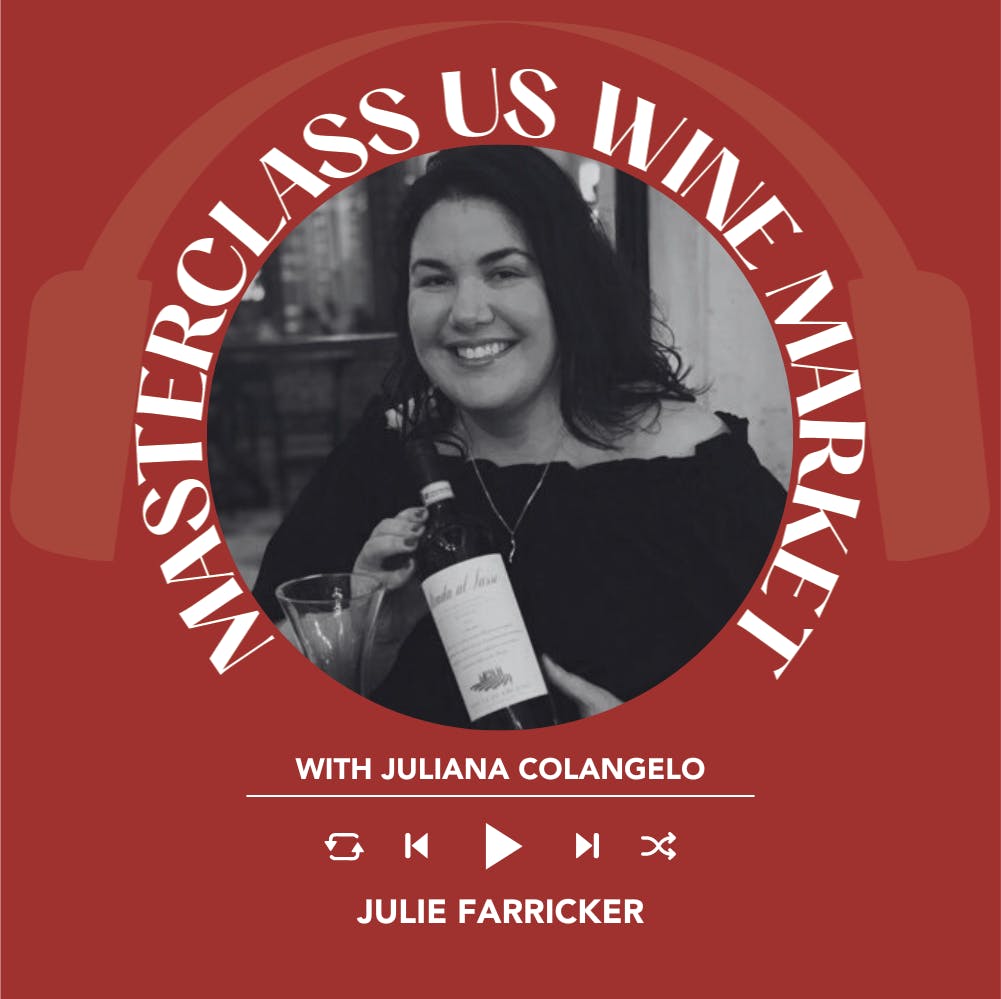
Ep. 1872 Julie Farricker | Masterclass US Wine Market With Juliana Colangelo
Masterclass US Wine Market
Episode Summary
Content Analysis Key Themes and Main Ideas 1. Demystifying the US Market for Italian Wine: The podcast's primary goal is to provide insights and strategies for Italian wineries targeting the US market. 2. The Role of Education in Italian Wine Sales: Emphasizing the importance of educating US consumers about Italian wine regions, varietals, and culture. 3. Connecting Wine to Italian Culture and Travel: Highlighting how consumer interest in Italian travel and heritage can drive wine sales. 4. Identifying Emerging Trends and Regions in Italian Wine: Discussing which Italian wine regions and varietals are gaining popularity or have growth potential in the US. 5. Strategies for Engaging Novice Wine Consumers: Practical tips for introducing new and lesser-known Italian wines to a broad audience. Summary In this episode of Master Class US Market, host Juliana Colangelo interviews Julie Ferreker, a Vinitaly Italian Wine Ambassador and co-owner of The Italian Cellar, a shop exclusively selling Italian wines. Julie shares her journey from a high school teacher with deep Italian roots to a passionate Italian wine educator and an entrepreneur. She discusses how her business, The Italian Cellar, focuses on bringing the full ""Italian experience"" to customers through curated wine boxes and educational events. The conversation delves into current trends in the US market, noting a shift towards consumers seeking ""off the beaten path"" Italian regions and researching wines before their trips. Julie identifies Sicily (boosted by ""White Lotus"") and Roman wines (Lazio) as areas with significant growth potential. She offers practical advice on educating US consumers, suggesting starting with a ""gateway wine"" like Montepulciano d'Abruzzo, teaching basic tasting elements, and using common benchmarks like Pinot Noir or Chardonnay. Julie predicts continued growth for regions popular with tourists, like Sicily and Puglia, and champions specialized educational programs like Vinitaly International Academy for fostering deeper knowledge and consumption. Takeaways * Educating US consumers about Italian wine is crucial for market growth, especially regarding lesser-known varietals and regions. * The growing interest in ""off the beaten path"" Italian travel directly influences consumer curiosity about regional Italian wines. * Sicily and Lazio (Roman wines) are currently showing strong growth potential in the US market. * Using accessible ""gateway wines"" and comparative tasting to familiar varietals (e.g., Montepulciano, Pinot Noir) helps introduce new Italian wines. * Connecting wine to broader Italian culture, geography, and personal heritage enhances consumer engagement and sales. * The Vinitaly International Academy and other dedicated Italian wine education programs are vital for fostering wine knowledge and consumption. Notable Quotes * ""This show has been designed to demystify the US market for Italian wineries through interviews of experts in sales and distribution, social media, communications, and so much more."
About This Episode
The Italian wine industry is a hot topic, with representatives from Masterzik US Market and Master offline sharing their experiences with the Italian wine industry during COVID-19. They discuss the importance of educating consumers about Italian wine and the trending of Italian wine in the US market. They also discuss the challenges of traveling to Italian wines and the potential growth potential in the US market. The importance of tasting Italian wines and promoting their brand is emphasized, and advice is given on how to be proud of one's roots and brand. The segment ends with a rapid fire quiz and a recommendation for a number one tip for mastering the US Y market.
Transcript
The Italian wine podcast is the community driven platform for Italian winegeeks around the world. Support the show by donating at italian wine podcast dot com. Donate five or more Euros, and we'll send you a copy of our latest book, my Italian Great Geek journal. Absolutely free. To get your free copy of my Italian GreatGeek journal, click support us at italian wine podcast dot com, or wherever you get your pods. Welcome to Mastercost US Market with me, Juliana Colangelo. This show has been designed to demystify the US market for Italian wineries through interviews of experts in sales and distribution, social media, communications, and so much more. We will quiz each of our esteemed guests at the end of each episode to solidify the lessons that we've learned. So sharpen your pencils, get out your notebooks, and join us each week to learn more about the US market. Hello. Welcome to Master Class US wide market. Today, I am thrilled to welcome Julie Ferreker to the Italian wine podcast. Julie is a Van Italy Italian wine Ambassador and a co owner of the Italian seller, a wine shop that exclusively sells Italian wines. She's also traveled to all twenty regions of Italy, and her next goal is to try every DOCG, DOC, and I GT wine. Very ambitious. When she's not keeping track of that list or educating her customers about Italian wine and gastronomy, she's also a secondary English and social studies teacher specializing in European history. Welcome to the show, Julie. It's so great to have you here. Thank you so much. Welcome. Thank you. I appreciate you recording from your hotel room in Marina on your your trip in Italy. So we appreciate you taking the time. Your precious time over there trying all the DOCGs. How many have you made it to on this trip? So it's funny. Right now, I'm in the area that specializes in Lambrusco, grasparosa. And that's a really particular type of Lambrusco. So at at lunch, I made sure to try, like, the, which is one hundred percent, Lambrusco verasparosa. And then I also had, you know, multiple courses, of course, for lunch. Of course. And then I also had tried where they do the Laporusco verasparosa, and then also with a blend. With, salamino, because salamino's also from this area as well. So this trip, I also, I was in Guidensei before, and then also at Oma. And every time I travel, I try to stick to regional wines, of course. That's the way to do it. Yeah. But, right now, I'm in Lumberusco country. Oh, exciting. I'll be at Lumberusco country next week. So I'll Perfect. Look out for your suggestions. So, Julie, today, we're gonna talk about, you know, how we can inject this Italian line bug that you so clearly have into more US consumers sell more Italian wine in the US. Because that's what we like to talk about in this show. But before we dive into that, tell us a little bit more about your background and how you got so deeply entrenched into Italian wine and education. Okay. So as noted, I am a secondary English and social studies teacher. So I'm about to finish my twentieth year teaching high school. And it's been quite a journey because as a teacher, you know, we usually have summers off. I've been traveling to Italy since I started teaching. The reason why Italy specifically is because of my mother and grandmother from the island of iskia. And then my grandfather had come from the island of Stromboli. So two volcanic islands. I love iskia. I was there a couple summers at work. Yes. Incredible wants and beautiful places. So I grew up with Italian culture, you know, very entrenched. My father, his family, it comes from Ireland, but it was something with my mother and always emphasizing Italy and the culture. So when I had started teaching, with my summers off, I had started visiting Italy. And, you know, I just I was hooked. It may be maybe it's just because of my roots, but then it was this quest to kind of conquer every single region because when you talk to most people, They haven't been to all twenty or twenty one depending on which source you're reading because of the administrative gazones. And they haven't been to all twenty one, and I just wanted to do that. So my I had reached the last region in two thousand nineteen. And it was, actually, if you were leaving at Tia, Julia, because I had visited the USA. Okay. Yes. And so, of course, while, you know, I've been traveling, I would then be wanting to, you know, immerse myself in all the different foods. And then with the foods comes the wines. Because, of course, when you're, let's say, when I was in Rome, I wasn't going to be ordering, you know, a brunello or a barbaresco. Right. I'm going to be ordering a Chezones. There's something regional So after I'd reached all twenty regions, a friend of mine from college, he had said, hey, what if we start doing something with Italy, with traveling, and Italian wine? So it really this idea was born during COVID, which, of course, we knew what COVID was. It was a it was a slowdown for everything. And it also allowed some time for these projects, I find. I find a lot of people, like, I started this thing during COVID because Right. I think it was, like, finally you had time at home to, like, really think about a project and put something together. So I feel like that was one of the silver linings that came out of all that time we all had at home. Yes. See you and your friend decided to work on this project. Yes. And then because of that time at home, because I was always used to being gone during the summer, I really and I saw something for, you know, the Italy International Academy. And, of course, you know, the Italian wine Ambassador. And I'd always read about it, and I'd heard about it. And I said, you know what? This is the time. Because I've, you know, I already knew Italian geography. I have a background with the language. So it's like, okay. And you know, and I was familiar with the grapes, but I really wanted to, you know, kind of master that. So I took the test. I believe it was July of twenty one in New York. And I was very fortunate to have passed. Okay. And that was we had already opened the Italian seller. So it was that was really like the benchmark of it. It's just like, you know, the people you're dealing with the Italian seller Like, we've traveled to Italy often. We know a lot about Italy. It's kind it's like bringing the Italian experience to your door. And that's really what the Italian sellers because we only sell Italian wines. Right. We try to reach all regions. It's just, of course, as you know, with distributors and importers sometimes our wine portfolio has to change based on availability again because of COVID and shipping issues. So that's really how I got involved. So my main day job is teaching. Florida because I actually live in Florida. Florida was really a spearhead with virtual education. So I've been doing the virtuals for a more hybrid. Got it. So that's why I'm able to have some more flexibility, but the Italian seller itself, the actual business is in Virginia, but then I travel to Virginia and then other I'm responsible for doing many of the things online. Okay. Got it. So tell us a little bit more about the Italian seller, just the format. You know, I know, obviously, we know it's focused on Italian wine. But just what what makes you stand out for maybe other wine shops with that regional focus? So because we are exclusively into Italian wines, we try to do the entire Italian experience. So besides just selling wine, we offer we call it a wine passport. And so every single month for our customers who are subscribers, they are sent boxes from different regions. So for example, this month is, and so we send based upon preferences or it could be a mix of red and white or it could be all white or all red. That's, you know, very customer focused. And with the wines, it's we make a little booklet. So I had written a booklet basically like a passport to Italian wines, It explains everything from the wine label to also how to know each region, to recipes and tasting notes. And so I'm responsible for the tasting notes as well. And so we have a large database of all the wines that we've been dealing with over the years. And so when we send that, it's basically as if the person is going on a trip to Italy without leaving home. Because there is an interest I've noticed because as you can see on Instagram, or anything else that has reels involved that Italy's hot when it comes to tourism. I mean, everybody wants to go, you know, for the amount of things that I see based in Italy. And so people are starting to get more interested It's just Italian wine itself, and we can talk about that too later that, you know, it was very considered like it wasn't well, like, the wines weren't well known. And it's, you know, because, obviously, people knew French wines, but Italian wines, if it's not the huge the three b's, Brunoo, Babaresco, and Barolo. It's the others tried to have besides Pianti. It was really hard for them to break into the market because people just didn't know what they were. Italian wine podcast, part of the momo jumbo shrimp family. Right. There's a lot of education needed. Yes. And so what I've done is quite a few different seminars about Italian wines. And we've done some I've done some of those in person because the Italian seller itself has a location that's called, like, a taste house. It does have a physical brief, brick and mortar. Mhmm. And then at the tasting house, you know, we've had Italian wine nights or people would do private tastings or private parties. And then with that, there's always an educational piece. So it's let's try the different wines. So really, it's about focusing on Italy and not just the wine itself, but, hey, let's talk about the cultural aspects of Italy. Let's talk about geographical influences. Basically, everything about Italy that you'd want to know. As well as one. Very cool. Amazing. So we're gonna focus on this episode a little bit deeper. How do we engage US consumers in the category of Italian wine and learning some of the tricks and tips that you've developed over the last you know, four or so years since you've opened the Italian wine cellar to really imbue that passion for Italian wine. So our three key takeaways for today is master class. And what we're excited to talk about are number one What is exciting US consumers right now about Italian one? April twenty twenty four, we're sitting in this time where people are drinking less wine, but what are they drinking, especially in Italy? Number two, what are some tips for educating US consumers? You're an educator. By trade. So we're really excited to learn from you how do we educate US consumers about a complicated topic like Italian wine. And then finally, number three, what do we think about the future for Italian wine education for consumers specifically? So just to get started, let's talk a little bit about what's trending right now in Italian wine for your customers and the Italian wine seller. Where are you seeing some really keen interest or excitement in the Italian wine category? So I find it very interesting that as more people are trying to book trips to Italy, they want to know more what to expect when they get there. Whereas maybe in the past, someone would, you know, book the Italian tour and go to Venet Seattle, La Ferre, whatever. But now I've noticed that consumers are really trying to find more of, like, this back road part of Italy. Off the beaten path. Right. Off the beaten path. And then, of course, with that, it's what do they need to expect. So for example, where I am right now, it is outside mold. Now, which mold in, I usually isn't very much a hot spot for American tourists, but it's really funny because when I checked in today, because I just came from Fidelity this morning, I had noticed about three other American couples here, and I never see Americans here. I've only seen Italians and maybe other European tourists in the past. And so this further, like, it made me think, like, okay. And I come to this location at least twice a year, Like, this is really interesting. Because anyone I've talked to lately within the past few months, it's, hey, I'm going on a trip to Italy. Can you talk to me about Italian wines and maybe send me some Italian wines that I might be trying while I'm there because I'd really like to know the menu. So it's that's where I come in because it's perfect because then it's like, okay. Based on your itinerary, for example, there's someone going to Italy next week. And besides the major cities, also going to Lake Machore. Mhmm. And we'll be coming to this area that I'm in right now. So it was perfect to talk about Limbrusco, which we do offer Limbrusco. It's not a Lambrusco, but as federal. So, like, let's make here but it's another Lambrusco. And then, of course, for Lake Majorie, talking because it's right here, the hot area of Piamonte with, Barolo and Barabaresco, I was able to, you know, to introduce that. So it's more like, okay. Well, if you have this interest in Italy, let's further talk about why you can learn even more, not just about the food, not just about geography, but what you're even going to encounter. So I've noticed that because maybe in the past, You know, even before I was in wine specifically, people would just think about, you know, Rome and Venice and Florence as such. But now it's more like where what am I going to get into and let me know more cultural bits, which I actually find very encouraging. Right. So you're seeing people wanting to get information before their trip doing a lot more research. It sounds like before they visit and also visiting some of the more off the beaten path places even like where you are right now, you know, in modern hour, normally you may not have seen Americans traveling. So what do you think, you know, there's also the challenge and and you touched on this earlier of the wines being available from those more far flung regions. So thinking about those two things, like people traveling to areas that are a little more off the beaten path, but also availability of the wines in the US market, What do you think is a region right now that maybe has a lot of growth potential in the US market that is a little under the radar? Well, I find if you'd ask me this maybe a few, maybe a year ago, I would have said, still c Chile, so Sicily. Yeah. But I think when the show had come out, what was it called? Because I watched it. Was it White Lotus? Yes. White White Lotus made Sicily just like really come back on the map. And I had noticed that I would make references to the white lotus because everyone had seen the show, and they would ask about, well, what were the wines that they were trying during one of their little, you know, they did a Giro where they did a wine tasting? And so I said, well, because they were in the Aetna region, and I'm Mhmm. Quite the fan of Aetna, also. So we talked about that also at Bianco. But then I said, okay. Well, besides those, if you were going to travel to the western part of the island, then we're going to be introduced to Frapato. I mean, because you can find Farapato in the southern part too, but really, like, I have we have a producer that makes it in the western part of the island. So, Frapato, and then even Zhibbo, So those are two usually very, like, lesser known wines, but I've been able to sell quite a few Sabivo because we sell a a drier version. It's not like the the sweet version. Because it's like, look, the Zabibo is perfect for summer. Pop, you know, put it in the fridge. And then if you're making seafood, it goes well. If you're making a fresh salad, it goes well. And so, surprisingly, we've done really well with Zabibo and then frappato because Frappato is a perfect one that you can put in the fridge. So cecilia really is taking off, but I even think that some of the Roman wine Roman. Okay. Are really getting more exposure because we're thinking because we also sell So cesanese by Casa del gio, which is great. And then even Belone as a white wine. Right. So, you know, people sometimes will think of Brascati, of course, you know. But I've been really able to focus on Belone because it's not well known. And when I tell people, like, if you're able to go to Rome and you're going to find this on a wine list at some of these, you know, at the different Roman restaurants, but this is something special because this is from thirty minutes outside of city center. So I think those Roman wines are really starting to come back. And I and I crept, but I also credit producers like Casaleito gio for really, you know, fine tuning those wines to give them a place on the map again. Right. Right. You need those champions of the region right, that, are gonna be in the market too, right, and investing in the US to get the wines, you know, distributed and get them onto more lists so that they gain more recognition and awareness as well. Mhmm. Exactly. So, you know, I'm thinking a little bit more now. So you you mentioned Satilla, but also the wines outside of Rome and Latcio, how do we educate consumers about these grapes? You know, I know you talked about explaining to them the regionality and where they're grown and and how they relate to perhaps some cities they might know or some regions in the country they might have just visited to. But what do you think are some of the most effective ways to educate them on what the wines taste like? I find often with consumers, and my friend is like the first question they want. They ask. It's like, well, what does it taste like? Like, am I gonna like it? People are always the one day before they invest in that bottle of wine. They wanna have some sense of whether they're gonna enjoy it. So how do you think we educate consumers about these lesser known Italian varietals? So I tend to start with if we're talking, let's say Italian reds. I always start with a multifulciano di abruzzo. I call it the Gateway wine. And the reason why is because, you know, so many people are familiar with peyancy, Counti Glasgow. That some people have some type of, like, an image of what that is. You know, they think of the red checkered tablecloths. They think of the, you know, the different types of restaurants. So that's why I'd say we're not gonna start there. Let's start with and I will have a glass of that ready for them. And I'll say, okay. And it will cover the basics of tasting. And I call that a gateway because usually people will like it Like, they'll say, oh, well, this is really nice. And as or they if they say they don't, I'll say, well, what is it because, you know, the different elements of tasting? Is it that you would like a wine that's not as tannic? Is that what's bothering you? Cause we'll talk about what, you know, we'll take a sip and okay, let's talk about what tannins are. Let's talk about acidity, and then if that's pleasant for you. So it's like a it's kind of like a scale. Alright. So based on the acidity and the tannins in this one, would you like something that's maybe not as fuller bodied, or would you want something that's even fuller than this? And I can gauge from that conversation. So I really think it's important to start with something because I have really also I should have mentioned this earlier. Had sold a quite a few bottles of Skiava. And the reason why is because something, again, went down to multichannel del luzo. Well, maybe because, you know, even Virginia and Florida, because Florida is the big a big market for us because of living there. Florida is very hot in the summer. I also sometimes call Italy, Florida, you know, with it without air conditioning in the summer. That's, like, the best. Right. And because of that, people are not usually looking for very panic, very heavy wines. Because it's just but you it's just not feasible. So I think Kiava is a really good way to start even for people who aren't familiar with red wines or maybe they say, well, I don't like red wines. And it's like, well, really? Because Right. Let's try this because a schiava is so light bodied because it has some of those candy undertones, red candy. So it's really, you know, starting somewhere, going over the elements of tasting, which sometimes people are very you know, sometimes they're uncomfortable. Like, what if I'm wrong? I'm like, well, it's your preference. Yeah. I'm just asking you because after going over with Tannan's and acidity, you know, it might not be the same for every person, but I think we can have a general consensus. And then if you like it, you like it, and if you don't, you don't. So if you do Right. Some benchmarks too of like how to think about the grapes that they're trying as well. Right. Yeah. Because then I'll take it from there with the berries. Like, for example, if we want to go fuller bodied, and then we're thinking of notes of berries. We're gonna go into the darker berries. Let's talk about black berries, you know, Frutie de Bolisco. But if we're gonna go to the other side, then we're thinking of strawberries, we're thinking of raspberries. So it's maybe it's the teacher in me, But it's like, let me see where you are, which is, I guess, what I have to do in the classroom. Let me see where you are. Right. And then gauge it. And then based on your preferences, okay, well, maybe you'd like something on this end versus this end. So that's why I say multi personality of boots was a perfect place to start because that's very readily available. Like, that's one that can always work out. Yeah. Like teaching them a benchmark like a multiple channel And then when you're introducing them to a new varietal, using that as the benchmark to say this wine is less panicked, less full bodied than the mocha Pochano and say if we're describing a, you know, a Skyava or something lighter or describing it, you know, a bigger wise, but using that as like that baseline, it sounds like what you're saying. And that has worked really well because especially with many customers I've met, it is like teaching because they might just know Kianti. And then, of course, it's like, well, okay. Well, let's talk about Kianti versus Kianti classical. And then so it's really, really just gauging where people are and never overwhelming. Yeah. Because Italian wine, as you know, can be so overwhelming. Totally. So that's why I like to try to stick it at the beginning to three. Mhmm. Because and then it's the range. And then it's like, okay. Well, then if you're really interested in that, like, let's say they like Scaba, I'd say, okay. Well, how about let's try a funopatto because that could be in between a Skyab and then we'll Right. Exactly. Getting giving them something else. Okay. That makes a lot of sense. Yeah. How about benchmarking against, like, pinot noir or chardonnay? Like, how do you feel about that? Yes. Because some of the customers will come in, and that's what they'll know. Right. Because, of course, Chardonnay, you know, especially California, Chardonnay. And then when we talk about Chardonnay, I'll say, well, Italy has Chardonnay as well. And sometimes we have producers that, you know, I've sold them in the past. Where different producers, especially in Tuscany, or even one in, Piamonte was selling, like, you know, a dry version or still dry version of Charminet. But then that gets makes a really good conversation talking about And I think you would know as a wine person when people talk about champagne and they're like, excuse me, is it from the champagne region I'm like, or is that prossecco? Like, I really enjoy promoting Prancha Corta because it's to me, you know, Italy champagne or actually, you know, I would say it's better than that. Of course, I'm gonna say that. Of course. That's the thing too. It's like, let's have okay. Do you like champagne? Well, really, let's try a financial quarter because we're dealing with the same grapes just, you know, We're in a different location, change your soil, change your grape. Right. So it's it's really interesting because if they come with that background and then pinot noir, Italy makes quite a few with the pinot noir. That's another good place to start. It's, again, it's all about let me have a conversation with you, see where you are, and then we'll go from there. Right. Get a baseline, and really meet there in order to to make them feel comfortable, maybe trying something new or exploring a new region or a new grape or a new wine. Yes. Because I've had quite a few customers who did not, who told me, I don't like red wine. I don't like red wine. I said, well, have you tried Sciaba? And then all of a sudden they're buying bottles of Skiava. Very interesting. I love Sciava. I do too. I love it. He's not as an entry point, or like an introductory wine to your your customers. Right. Because, and then it's so unique. Because it's like, well, what where is this? And then I always, as a teacher, you know, I have maps everywhere. I'm always, you know, I have the map with me. And it's like, well, really, we're focusing on this region in northeastern Italy. And then it starts a conversation. And then with we're talking about, let's say, Sandroveza. You know, it's well, look, Sandroveza is not just tuscany. It's really all over Italy. So like I said, that's why it's important for people selling Italian wine. It's know get to know the customer a little bit and then also really sell Italy itself because selling Italy is what also sells the wine. Right. Absolutely. Because people like you said earlier are in love with Italian culture. So especially Americans and really using that as a selling point. Absolutely. You know, as we're winding down, Julie, you're so in touch with the the customer about also, you know, you travel to Italy quite a bit. You're so knowledgeable about Italian wine. So I'd love your predictions. Like, what do you think in the future? Let's look even, like, five, ten years from now. Obviously, we look at, like, Nielsen numbers, and Pino grigio is still eating up, like, you know, over forty percent or something along those lines of the Italian table wine market. Know, multiple channel is still big. Persecco, of course. But, you know, what categories do you think might really take off and become more mainstream in Italian wine for the US consumer? I really think going back to certain regions as a tab because right now, I believe Italy's number one in for European travel. And I'm pretty sure it surpassed Spain and France. According to, like, some of the recent. I forgive me if I'm wrong, but I'm pretty sure there's things I've been reading. And I think as people are still interested in going to Italy, it's let me find what else is out there. And because we do have consumers who are willing to spend money as well. I think that's when, you know, we can really focus on, like, really selling financial quarters. You love champagne, like I had mentioned earlier. Let's try some financial quarter. But I really think focusing on certain regions. Like, Sicily still. Like, there's still so much more to do with Cecilia. But summer's coming. And you know everyone's probably going to Tardomina. They're probably going to want to visit Hetna and the, like, the headbutt also and to Bianco and try those wines. I really think focusing on Pulia. Pulia to me, because when I talk to people about, okay. So where are you traveling? Pulia seems to be a really popular destination. So, okay. Well, what is Pulia really known for as well? It's also known for making, like, most of those opto wines, in the Italian market. So, you know, it's not it doesn't have to be Rosay every day. It could be those opto every day. Let's just expose you to it. So I really think it's all about exposure. And the reason with, let's say, Conogidro, is even I know, like, different of wine study programs when they focus on Italian wines, like, not, of course, if you need to lean international academy, because the whole point of that is focusing on Italy. Many of them bypassed it. I remember that too. Like Douglas said, it was like, and it's, you know, three pages in a two hundred page book. It was so French dominant. Yeah. And I didn't understand that because it's like, how can you do that with one hundred native grapes? So we have so many pea wine professionals running around, and I'm not, you know, with the course promoting the French wines, but then it's well here. I can offer you Pianti or Pianti classic or I can offer you Varola if you're willing to open your wallet. And then here's some Pino good each. So I think as we need to lead something like we need to lead international academy as that gains momentum because it is a popular program, that will then feed more Italian wine. Knowledge. And then, of course, with that comes consumption. But I really think focusing on that Italian travel. And I'll I'll even have the conversation. Sometimes I'll start with people, you know, especially people will come to me with Italian backgrounds, you know, their grandparents, great grandparents. And I'll say, okay. Right. So where was your grandfather from? And I'll start the conversation there. Because I'm like, really? Well, if they were from, let's say, pull you. Okay. Let's have you heard about Moto D'Toya? Have you heard about this one? Have you heard about that? Like, you know, won't be no narrow. Like, let's let's introduce you to these. So I think it's focusing on certain regions that are very popular. That's really focusing on on on those regions. Like you said, continued focus on Sicily. You know, styles like Frederick Corta. And then, you know, we know there's a lot of Italian Americans with Southern roots in the US. So, like you said, Polla. You know, Bruso, Compania, you know, those regions are where so many of our Italian American heritage is is coming from. So it makes sense to also really connect it to to people's identities too. Awesome. Yeah. And and it's a really good conversation to have, especially with southern the ones with the roots in the south because that's where my roots are, and I am very proud to say that and very proud to promote it. Of course, I love all the regions, you know, but will someone say I'm somewhat, you know, favoring to Componians, Julia, probably, but there's a reason for that. And that's for my passion. So well, Julie, thanks so much for joining today. I mean, this has been great. I've learned a lot, and I think our listeners will too. But, you know, as we wind down, we'll do our rapid fire quiz. We do at the end of every episode. If you can try to answer these in one or two sentences, please. Question number one, what is your number one tip for mastering the US Y market? It's education, education, education, not just as a teacher that I say that, but the more that we know about the market, whether what the wines that we sell in our consumers, the easier it is to reach our market. Yep. Absolutely. Question number two. What is something you might have told your younger professional self about selling wine in the US? I would say, you know, really because I happen to come into this, you know, in a very odd way. I'd say you know, really be proud of your roots and really make your grandparents and your parents proud because you're really showing where they came from. Now that's really what you're doing and really promoting Italy and everything of it. And finally, number three, we all travel a lot. I know you travel back and forth to Italy quite a bit. What is one of your favorite travel hacks in doing, work travel for work or for pleasure? Oh, okay. As I mentioned, many people will come to Italy during the summer, and it is rather warm. So I always carry my own set of fans. I have a fan that I carry in a tote bag, and I have personal fans that I even wear around my neck because those summer temperatures are very hot. And I also always tell people this is what I do. I bring an empty suitcase and I am buying everything made in Italy that I can to come back home with because there are so many good made in Italy products and you name it. If you come into my house from the toothpaste, to even cups made in Italy. And so really good prices. And of course, you're I'm supporting a local economy. Yeah. I love that. Even their beauty products, I have found, like, I try to stock up when I'm there too. So great tip. Oh, boy. I just bought some lip glosses today while I was waiting for my train. And I went into the Fatamachia and they didn't say in this the train station. I was like, well, I need some new lip glosses, and I'm in Italy. Okay. So I I just think everyone needs to do that. Jul, Julie, thank you again for joining us today in the Italian wine podcast. How can our listeners, follow along with everything you're doing in the world of Italian wine? So please, yes. Please follow us at the Italian wine cellar LLC. That's our handle for Instagram. I'm also on Instagram as Julia Far, but Julia the Italian Way. So g I u l I a f a r r. And then, of course, email, if you come to our website at the w w dot the italian seller dot com, we have a contact part here. Email me any question you have about Italy, and I will make sure to tell you everything you need to know and then some. Thank you. Amazing. Thanks again, Julie. Thank you. Thank you for joining me today. Stay tuned each week for new episodes of Master Class US wine market with me, Juliana Colangelo. I remember if you enjoyed today's show, hit the like and follow buttons wherever you get your podcasts.
Episode Details
Keywords
Related Episodes
Ep. 2790 Italian Wine in the US: Building a Narrative and Reaching Asian American Consumers with Susan R. Lin MW | Masterclass US Wine Market
Episode 2790
Ep. 2783 The Suburban Gold Mine: Insights into New Jersey’s Wine Market with Brittney Abell | Masterclass US Wine Market
Episode 2783

Ep. 2772 A Surprising Partnership between Japanese Sake & Italian Wine with Monica Samuels | Masterclass US Wine Market
Episode 2772

Ep. 2770 China’s Wine Market: From Misleading Import Numbers to Today’s Consumer with Fongyee Walker MW - Part 1 | Asia Wine Market
Episode 2770
Ep. 2760 Winning the Restaurant Floor: Training, Education & Italian Wine with Sylvester Inda of Ci Siamo | Masterclass US Wine Market
Episode 2760

Ep. 2751 From Montalcino to Kazakhstan with Francesca Arquint of Collemattoni | Asia Wine Market
Episode 2751