
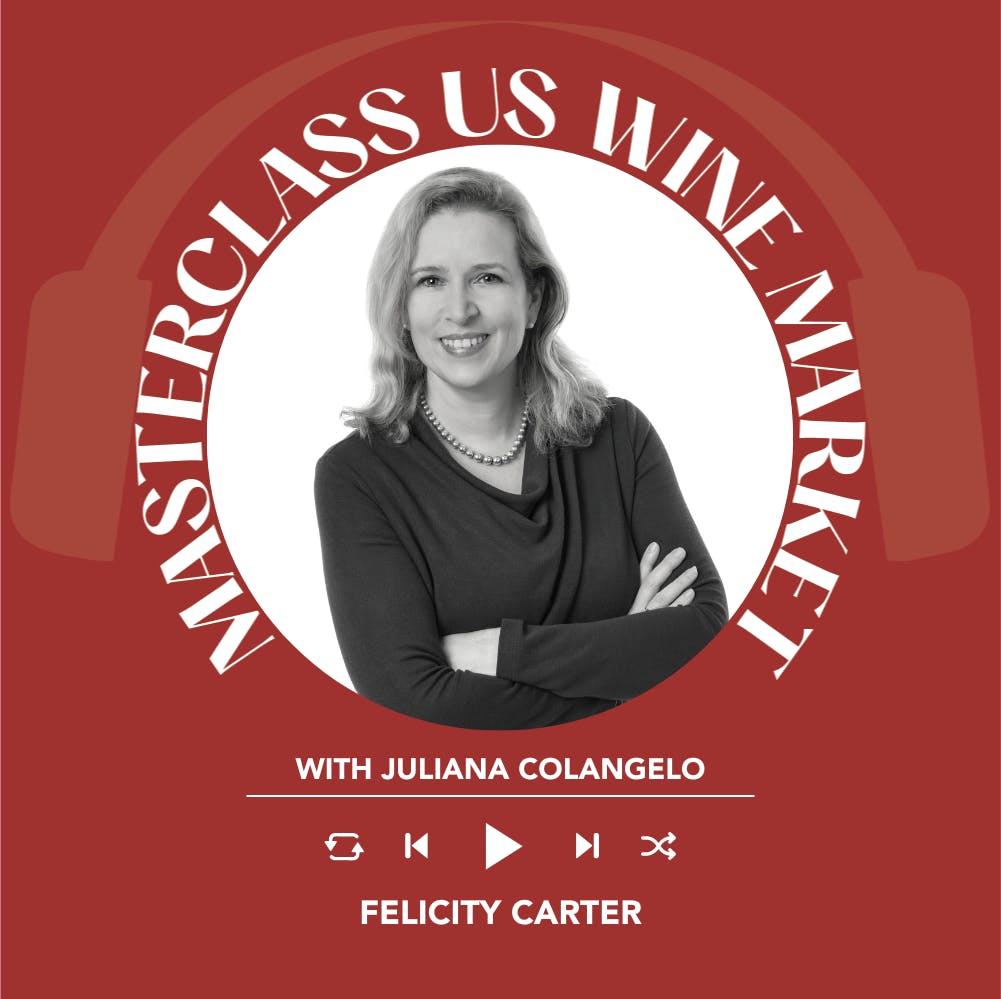
Ep. 1992 Felicity Carter | Masterclass US Wine Market With Juliana Colangelo
Masterclass US Wine Market
Episode Summary
Content Analysis Key Themes and Main Ideas 1. The definition and emergence of the neo-prohibitionist movement. 2. The key players and motivations behind this movement, including public health officials and historical temperance groups. 3. The perceived threats of neo-prohibitionism to the global wine industry, such as warning labels and shifting consumer perception. 4. The appropriate responses for individual wineries and the broader industry to these threats. 5. The importance of emphasizing wine's role as a cultural and food-pairing beverage rather than its health implications. Summary In this episode of Masterclass US Market, host Juliana Colangelo interviews Felicity Carter, a prolific wine writer and host of the Drinks Insider podcast, about the rising neo-prohibitionist movement. Carter defines neo-prohibitionism as an effort by a segment of the public health lobby to restrict substances like alcohol, sugar, and meat, often driven by former anti-tobacco campaigners seeking new focuses or by historical temperance movements. She highlights the significant threat these groups pose, citing impending alcohol warning labels (like in Ireland) and the influence on consumer perception, particularly among young people who increasingly view alcohol as inherently bad. Carter advises individual wineries to refrain from discussing wine and health benefits, instead focusing on wine's inherent quality, role with food, and natural origins. She suggests industry-level organizations engage in research and political lobbying based on sound science, while also addressing issues like wine accessibility and pricing to maintain market relevance amid a structural decline in wine consumption. Takeaways * Neo-prohibitionism is a growing movement driven by parts of the public health lobby and reinvented temperance groups, targeting alcohol among other products. * Its origins can be traced to former anti-tobacco campaigners and a focus on non-communicable diseases. * The rise of personal health tracking (e.g., smartwatches) also contributes to self-optimization and reduced alcohol consumption. * Threats to the wine industry include mandatory warning labels (e.g., ""alcohol causes cancer"") and a shift in public perception, especially among younger demographics. * Individual wineries should avoid marketing wine based on health benefits and focus on its deliciousness, natural qualities, and pairing with food. * The industry should collectively lobby governments for legislation based on sound, debated science, not politicking. * Industry responses should include consumer research, addressing pricing accessibility (e.g., wine by the glass), and modeling responsible consumption. * The interview suggests a structural decline in wine drinking that the industry must proactively address beyond the neo-prohibitionist threat. Notable Quotes * ""Neo-prohibitionism really, is being applied to a part of the public health lobby that is attempting to, to crack down on things like alcohol, sugar, meat, dairy, vaping, processed foods, and so on."
About This Episode
The Italian wine podcast is a community-driven platform for Italian wine Geeks around the world. The neopro pride movement is increasing due to news about public health, and consumers are changing their merits based on news about public health. The " warning labels" movement is affecting the wine industry, and individual wineries should focus on these issues and leave conversations at the organizational level. The "assurance" of health benefits of alcohol is becoming more real and the industry needs to make wine more accessible and affordable.
Transcript
The Italian wine podcast is the community driven platform for Italian wine Geeks around the world. Support the show by donating at Italian wine podcast dot com. Donate five or more Euros, and we'll send you a copy of our latest book, my Italian Great Pete journal. Absolutely free. To get your free copy of my Italian GreatGeek journal, click support us at italian wine podcast dot com, or wherever you get your pods. Welcome to Mastercost US Market with me, Juliana Colangelo. This show has been designed to demystify the US market for Italian wineries through interviews of experts in sales and distribution, social media, communications, and so much more. We will quiz each of our esteemed guests at the end of each episode to solidify the lessons that we've learned. To sharpen your principles, get out your notebooks, and join us each week to learn more about the US market. Hello. Welcome to Masterclass US wide market. Today, I'm thrilled to welcome full C Carter for the Italian wine podcast. Firstly needs no introduction on the show, but for those of you who haven't had the pleasure of hearing her on the podcast before, Felicity is a prolific wine writer contributing to Meiningers, already global and more. She's also the host of the drinks insider podcast. Today, Felicity is especially well versed on the neo Prohibitionist movement that is happening around the world, which is what we're gonna dive into more today. Welcome to the show, Felicity. It's so great to help you here. Great to be here. Before we dive in today's discussion, So let's say, tell us a little bit more about your knack for, let's call it investigative journalism in the wine industry, and and how you came to enroll you hold today. My first attempt at a degree was actually a science degree. I didn't complete it, but I did two thirds of it. So my earliest writing was actually editing medical texts and scientific texts, and I did quite a lot of medical and scientific writing. So it's always been something I have been very interested in, and I never told editors about the that I only completed two thirds of the degree. So I could pass myself off as a science writer. As for investigative reporting, it's really interesting. I used to think like most people in investigative reporting is is sort of like spying and involves crawling through ducts and things like that, but actually just being patient and obsessed and sitting googling things and looking up names and then looking up where that name comes from and how it's connected to other names. That's actually a really good investigative journalism. Interesting. Okay. So the science degree definitely embedded that or the partial degree, I just say. I'm sorry. How for science degree? Yeah. I have science degree. Definitely embedded that. That intrigue in that investigative sense. So, let's let's dive in then, because there's a lot to cover. We're talking about the rise of the neo proficientist movement that we're seeing this year that started over the last couple of years that you've been diving really deep into. So our three key takeaways for today's master class are number one, what is neoprobritianism? Where does exist today and who's behind the movement? So some definitions. Number two, how are consumers changing their conception habits based on this news that is coming out, and and what's the future look like as well? What's next? So let's just start with some basics and some definitions and lay the groundwork. You know, what is neoprovisionism and where does it exist today? Okay. So I've been struggling to find out where the term near prohibition comes from. It doesn't come from the wine industry. It comes much earlier from a group of economists and libertarians who are very concerned about the spread of what appear to be public health officials into areas that are getting more and more extreme. So near prohibitionism really, is being applied to a part of the public health lobby. That is attempting to, to crack down on things like alcohol, sugar, meat, dairy, vaping, processed foods, and so on. And what's really interesting these groups is most people who've talked to me about this go, well, public health people are great, you know, shouldn't shouldn't we care about them, but, it's public health. And then there's a group of people who, rely on the grant system for their economic well-being. So particularly in Europe, you see people who, have joined non governmental organizations who themselves have no medical background. They may be sociologists or psychologists. Oh, interesting. And they they are interested in what's called non communicable diseases. Now what happened is all of these people were involved in the fight against tobacco, in the late nineties and early two thousands. And some of the the people involved became very famous. They did they did the world a favor. They were really good. But of course, they they kind of won the battle against tobacco. And so a lot of people have moved into other roles, and they're taking the anti tobacco playbook with them. And you can see this even in the names of some of these organizations, you know, used to be the tobacco Institute, and now it's the tobacco and alcohol or tobacco alcohol and junk food. So that's that's a really big part of it that it's it's very much like charities that go off to do something and then when the the thing they've done is accomplished, they don't go home because they've still got mortgages to pay. So they find something else, to focus their attention on. So that's really what's driving that, but there's a second part to this as well, which is that there's, the the rise of the smartwatch, actually, as as, you can see all of your sort of personal statistics on the smartwatch. A lot of people have noticed that. They don't sleep as well or they have a a bad day the next day if they drink alcohol. And so, this sort of self optimization is also causing people to drink a lot less. But that's a quite different thing from what you would call the neo prohibitionists. Which is, one section of the public health group that is is looking to lobby governments to make changes on around legislation to do with all of these products. Right. Right. Interesting. So you know, part of it is a need for for work for for these lobbyists and and these lawyers and these organizations. And then there's the individual health component of everyone being more hyper aware of how their body is reacting to alcohol. Yes. The other part of this is there are some historic temperance movements that have existed for a very long time who have reinvented themselves as public health NGOs. And and have actually been quite successful in getting grant money and so on. There there's actually groups that have there's one in London, for example, which has, as a a front group, it has doctors and scientists talking about alcohol, but it's actually funded by a temperance group. So the temperance groups have entered the public health arena as well. And some of them have become very influential. They've become advised to the WHO. Now I wanna be really clear. I'm not spinning a conspiracy theory here. These aren't all powerful groups. They're one of a number of people who lobby on different issues, who have, you know, a stake in what's going on. They're not themselves you know, doing legislation or doing nefarious things, but they're they're recommending, quite draconian legislation. Right. So, you know, based on, that last point you said, Felicity, I mean, how real do you think this threat is to the wine industry globally? Extremely real. So One of the things that's being touted at the moment is the possibility in various jurisdictions of putting, alcohol causes cancer warning labels on on bottles. Okay. That's already been done in Ireland from twenty twenty six. It's being floated in Canada. There are politicians in America who are thinking about doing it. And and then the question would be, does the label go on the back or does it go on the front and how big is the label? Now I I have to be really clear about this there there are problems with alcohol. Alcohol does have deleterious health effects, and at certain quantities, you are at higher risk for, for, you know, for cancer and for dementia and all sorts of terrible diseases. The the fight is over whether, moderate drinking is is health neutral or not. And there's a lot of evidence to say that at a a moderate level, you know, drinking wine can either be health neutral or have some benefits. The warning labels are are particularly scary for our industry as we know. But where what are some of the other threats that you see out there from this movement besides the warning labels? Like, what are other some of the other potential effects that are happening or or could happen in the future? I think one of the threats isn't so much of the wine industry as it is to science, actually. The the evidence around the health benefits or impacts of wine are very contentious. There's a lot of real scientific debate going on about what those are. There's a whole bunch of new research techniques. One of them is called Mendelian randomization, which are calling into question some of the the previous research that's been done in alcohol. And There are some really, you know, some of this is is genuine debate, but the debate is not being recognized. The the some of these people are speaking as though the science is completely settled and any amount of alcohol, even at tiny amounts, will give you cancer. And that's just not true. Right. And that's where it's becoming extremely misleading for our industry as a whole. And how do you think consumers are reacting to these reports and these news? I mean, Sometimes we see a lot of news that's internal baseball, right, and and industry speak, but I'm seeing a lot of these headlines in mainstream publications, like the New York Times and the Wall Street Journal. So how do you think the this media, the the writing around this topic, is starting to affect the consumer perception of wine. We know we know in some markets, particularly the North American market that it's having a really big impact. Gallup did a poll last year, and they discovered that a growing number of young people particularly think that alcohol is just just bad for you and you shouldn't touch it in any quantity whatsoever. So, you know, as these as these messages get louder, particularly if we start to see cancer warnings on on bottles, I think, you know, course, you'd see a massive drop in consumption who wants to touch. Right. That's gonna give you better. Right. I know. It's it's quite scary. Italian wine podcast, part of the mama jumbo shrimp food. Let's talk a little bit about what we can do and what some of the solutions or the ways as an industry, we can respond to to what's happening. So what what do you think an individual winery for for starters can do when it comes to this this situation? Well, first Well, it's really important that individual wineries don't talk about wine and health. And and I think from my point of view, the wine industry should never have got into this in the first place. There was just far too much promising of astounding health benefits, which weren't supported by science. People should pick one because it's delicious, not not because of any purported health benefits. So at that at that individual level, people should just stay well out of this as a collective if there needs to be, lobbying done at a political level. But fortunately, some of the, some of the different groups around the world are actually starting to to jump on that. And I think the other thing is what people can emphasize is they can emphasize that wine has historically been drunk with food. That's its proper role. And that it's a it's a the ultimate farm to table beverage. It's an absolutely natural beverage that that fits into all of the goals of sustainability and tradition and authenticity that people are craving. Right. Exactly. What do you think about, you know, the the epidemic of loneliness? You know, on the other end of the spectrum, I've seen lots of articles about how, especially in in North America, people are lonelier than ever before due to remote working, due to social media due to a lot of factors. So do you think there's an opportunity for the wine industry at, I don't know, maybe perhaps more at an organizational level to your last point to talk about the ability of wine to bring people together and to connect people. I've thought a lot about this, and I'd be very wary of going down that road. Certainly in continental Europe to to make any suggestion at all that that alcohol is convivial and can bring people together. It was actually illegal. It would get you into lots of trouble. Oh, wow. I also I also think that it's for a good reason that alcohol should never be presented, as the solution to any kind of problem at all. I think that would be. And that would be something that the public health lobby would jump on unbelievably fast. And they would be right to do so. I do think on the other hand, you can point out that the bottle of wine is the perfect, you know, it's the perfect serving size for sharing, and to present wine as something that should be shared, and it should particularly be shared in the context of food. But I I would certainly stay away from any discussion of of wine and, and any sort of potential social benefits. And as a solution to you said to to a problem, especially a a a a a problem that could be framed as a mental health problem. So, absolutely, that's a that's a great watch out. You know, how do you think as an industry, you know, this happened around five or six years ago? We were all talking about millennials aren't drinking wine, and then that conversation spread to mainstream media, like, articles in the New York Times, and then I, as a millennial, had friends saying to me, well, what's going on? Young people aren't drinking wine. Should I not be drinking wine? Like, it leaked to the consumer and perhaps swayed the consumer when really it should have perhaps been more of a internal conversation for us as an industry to to talk about solutions. Do you think we risk the same thing with with what's happening here? Perhaps it's already too far gone. Yeah. It's an interesting it's an interesting point you're raising, and it's something I've actually thought a lot about, about this. I I don't think there's any solution. I mean, the the the wine trade need to discuss this, maybe not get, you know, too fixated on it. But this is definitely something where people need to to lobby government that that if they are going to make changes to guidelines, for example, that it has to be based on really good science, not on, you know, politicking, which is where it's going at the moment. But I I do think there's nothing that individuals can do about this. I think the best thing is just to model model good practices, which is moderate wine consumption in the company of other people and with food. I do think there are some things that the wine trade could do though, which is, be much better about, defining what moderate actually is, like posting on cellar door walls and stuff. And by having more water available, I've been really shocked at going to cellar doors and things on how often how little water there is available. So I think there are lots of small measures that people could do. That doesn't really answer the question, but I don't think I don't think there's any way of the wine trade not having this discussion leak out because it's a natural discussion. Yeah. That's a great point. It's the nature of discussion, and it and it it happens. So, you know, at an organizational level, what do you think is some of the best solutions to respond to what's happening? Oh, so the California Wine Institute is doing fantastic work, they're at the at the moment of, they're in their research phase of of researching consumers and trying to really understand what people are looking for, what they're scared of, what they they don't want. So I think that kind of research based approach is really important. The other thing is to also focus on some of the other real problems around wine and to fix some of those, which is the fact that, at the moment, wine is just really, really expensive compared to, you know, lots of other things. And I think if a lot of, people cleaned up their wind by the glass list and made it much more accessible. That would do a lot. Yeah. I mean, I've been in restaurants where it's cheaper to order a cocktail. At the wine by the glass starts at twenty two to twenty five dollars a glass and a cocktail is sixteen. And I look around the restaurant and sure enough, there's lots of cocktails on the table because, hey, it's it's value, right, and looking at the menu. So that's that's a great point. Yeah. I think there's a lot of, if I may say so I think there's been a lot of profiteering as well. You know, sometimes those glasses of wine that you can get at hotels or whatever that are twenty two dollars each are not very good wine. Sometimes they're just, you know, tricked up bulk wine. And and I think there's, you know, there's a lot of that that could be sorted out. Right. Exactly. Like, getting rid of some of those layers, that are that are built in there that are adding to that cost and making the product more accessible and from a price point for starters, for sure, and not to mention, you know, what we can do as an industry in terms of marketing and making it easier to buy one online the way people shop for everything these days, making marketing more appealing and inclusive as well. I think are some other topics that I know we've talked about on on the podcast here with with some of our guests as well. So, Leslie, what do you think's next? How do how do we go forward? You know, this this this threat is becoming more and more real. The alarm bells are going off. People are responding. As you mentioned, the California wine institutes come together. They're doing some great work. There are responses happening. At a at a global level. But what else can we do moving forward as, you know, the listeners of this podcast and the Italian wine podcast community? I think there are bigger threats to focus on at the moment. I think, you know, we're we're seeing what a peers to be structural decline in wine drinking that, you know, we've got older cohorts that, you know, are tempering off their wine consumption just because of age and and lifestyle and we're not seeing people at the other end, you know, adopting it. I I think, you know, it's gonna be really hard getting through the next few years, and I think people just need to do good business. They they need to make sure their business is in good shape, they're making the best possible wine that they can be, that they're they're, you know, getting out to the market and talking to as many people as possible and being very, very proactive. As as for the health thing, that's that's going to sort itself out at a political and legal level, not something that individuals should really spend too much time thinking about. Right. So having the individual wineries really focus on the on the other problems at bay and the other issues and and and continuing to make great wine, but also making great wine more accessible and leaving, you know, maybe these conversations to at the organizational political level. It sounds like it's your your recommendation. Yeah. Yeah. No. That that makes a lot of sense. And like you said, it's it's not up to an individual winery to be touting health benefits or or fighting that that fight so to speak in that way. So that makes a lot of sense. Well, felicity, as we wind down, we'll do our rapid fire quiz. We ask our guests three questions at the end of every episode. But this has been a really fascinating conversation, and I think a really, incredible overview of what's happening in this situation, what's being done to address it. And and re great recommendations and advice for our for our listeners. So thank you for that. Thank you. So for our quiz, question number one, what is your number one tip for mastering the wine market and working in the wine industry? Okay. So I have no personal experience of trying to enter the US market. It's just based on all of the people I've interviewed. The thing they say over and over and over is you've got to be in the market. You've got to be absolutely there present being seen all the time pounding the pavement. Don't just you know, put a salesperson in there and expect them to do all the work. You've gotta show up. Absolutely. I think that's a great piece of advice. What is something you might have told your younger professional self without writing about wine? About writing about wine. To learn to learn to pronounce French better, I'm ashamed of my French pronunciation. If I was if I was gonna tell my younger self to be a wine writer, first of all, I'd say, you know, save off, but second I was saying that they're better at other languages. The more that you can speak other languages, the more successful you'll be. Yeah. That's a great tip. That's a great advice. And then finally, we all travel so much in this industry for work. What's one of your favorite travel hacks or travel tip? Oh, I've become obsessed with packing cubes. That's my travel hack. You gotta have packing cubes. Yeah. Those are helpful for sure. Well, fluency, thank you again for joining us today in the podcast. How can our listeners follow along and connect with you if they're not already? Well, you can email me at felicity at drinks insider dot com, or you can listen to the podcast, drinks insider, which is on Spotify. Fantastic. Okay. Thank you again, Felicity. Thanks. Thank you for joining me today. Stay tuned each week for new episodes of Master class US wine market with me, Juliana Angelangelo. And remember if you enjoyed today's show, hit the like and follow buttons wherever you get your podcasts.
Episode Details
Keywords
Related Episodes
Ep. 2790 Italian Wine in the US: Building a Narrative and Reaching Asian American Consumers with Susan R. Lin MW | Masterclass US Wine Market
Episode 2790
Ep. 2783 The Suburban Gold Mine: Insights into New Jersey’s Wine Market with Brittney Abell | Masterclass US Wine Market
Episode 2783

Ep. 2772 A Surprising Partnership between Japanese Sake & Italian Wine with Monica Samuels | Masterclass US Wine Market
Episode 2772

Ep. 2770 China’s Wine Market: From Misleading Import Numbers to Today’s Consumer with Fongyee Walker MW - Part 1 | Asia Wine Market
Episode 2770
Ep. 2760 Winning the Restaurant Floor: Training, Education & Italian Wine with Sylvester Inda of Ci Siamo | Masterclass US Wine Market
Episode 2760

Ep. 2751 From Montalcino to Kazakhstan with Francesca Arquint of Collemattoni | Asia Wine Market
Episode 2751