
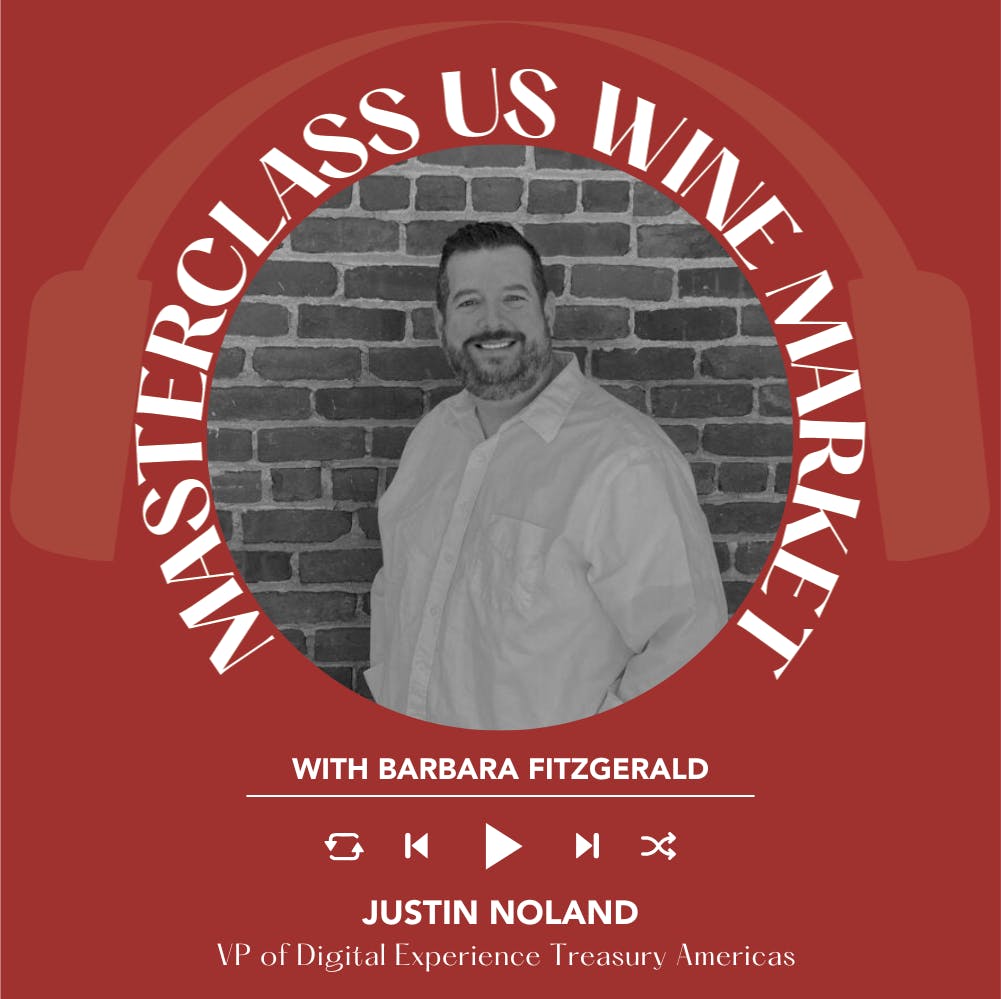
Ep. 2262 Barbara Fitzgerald interviews Justin Noland | Masterclass US Wine Market
Masterclass US Wine Market
Episode Summary
Content Analysis Key Themes and Main Ideas 1. The transformative potential of AI in wine industry marketing strategies. 2. Justin Nolan's expertise in digital experience and AI for the wine sector. 3. The distinction between digital experience (external, customer-focused) and IT (internal, operational-focused). 4. Leveraging advanced AI tools beyond basic ChatGPT for personalized marketing. 5. The role of Agentic AI in enhancing customer interaction and streamlining internal operations. 6. The ethical considerations, transparency, and data privacy involved in adopting AI. 7. AI's capacity to democratize content creation and improve consumer data analysis. 8. AI as an enabler for human efficiency and augmentation, not a job replacement. 9. Strategies for maintaining brand authenticity and personality while embracing AI innovation. 10. The utility of AI for language translation and fostering better internal communication. Summary In this episode of Master Class US Wine Market, host Barbara Fitzgerald interviews Justin Nolan, VP of Digital Experience at Treasury Wine Estate, to explore the impact of cutting-edge AI trends on wine industry marketing. Justin explains the difference between digital experience—focused on external customer engagement—and internal IT functions. He details how AI tools can facilitate personalized wine marketing beyond simple ChatGPT applications, introducing the concept of Agentic AI as a means to automate routine tasks, improve customer service, and enhance operational efficiency, thereby allowing human teams to focus on higher-value activities. The discussion also covers AI's role in democratizing content creation and refining consumer insights through data analysis, while dispelling fears that AI will replace jobs, instead emphasizing its function as a powerful tool. Justin provides actionable advice on maintaining brand authenticity and leveraging AI for multilingual communication. He concludes by stressing the importance of ethical AI use, data privacy, and transparency, encouraging wineries to thoughtfully embrace these new technologies rather than fearing them. Takeaways - AI is a significant tool for personalizing marketing, democratizing content creation, and enhancing data analysis in the wine industry. - Emerging AI tools like Sora (for video) offer cost-effective ways for wineries to create high-quality content. - Agentic AI can automate mundane tasks, freeing up staff to focus on more complex, fulfilling, and value-added work. - Understanding and leveraging AI for consumer insights is crucial for customer retention and adapting to market trends. - AI is primarily an efficiency tool that augments human capabilities and does not pose an immediate threat to jobs; rather, it will become a mandatory skill. - Wineries can maintain brand authenticity by training AI with specific brand language, history, and style guidelines. - AI can bridge language barriers, improving both external marketing messages and internal team communication, especially in diverse markets like the US. - Ethical AI adoption requires careful consideration of data privacy, transparent usage policies, and internal conversations about what data can be used. Notable Quotes - ""AI trends and how they can be embraced by the wine industry as a transformative force in marketing strategies."
About This Episode
The speakers discuss the importance of digital transformation in the wine industry, including the use of AI tools for personalized and personalized experiences for consumers. They also discuss the benefits of AI technology for creating high quality video content, including personalized ad campaigns and creating relevant content for consumers. The speakers emphasize the importance of data privacy and the use of conversational language in improving customer service and reducing time and labor. They also mention the use of AI tools for marketing campaigns and the importance of content and the use of it in marketing. They emphasize the need for thoughtfulness and being thoughtful about data privacy.
Transcript
Justin is widely regarded as one of the foremost experts in digital marketing. So we're really lucky to have him here today, and we're actually gonna focus this episode on some cutting edge AI trends and how they can be embraced by the wine industry as a transformative force in marketing strategies. So in this episode, our three key takeaways, and what we're very excited to learn from Justin about are first leveraging some emerging AI tools for personalized wine marketing. So kind of like going beyond just chat, CPT, the rise of AgENTIC AI and its role in customer interaction and third staying ahead of AI driven trends and ethical considerations. Welcome to Masterclass US wine market with me Barbara Fitzgerald. In this show, we'll break down the complexities of selling wine in the US by discussing the relevant issues of today with experts from around the globe. Each episode serves up three key insights to help elevate your winery's presence in the US market. So grab a pen and paper, and let's pave the way for your success in the US. Hi, everyone. Welcome back to Master Class US wine market. Today, I'm thrilled to welcome Justin Nolan to the show. Justin is the vice president of digital experience at Treasury Wine Estate, which is one of the global leaders in wine. From the start of his career in wine, he has worked to bring digital transformation to marketing and consumer experience it. He working with his incredible team is helping to enable new technology and build better ways to connect with customers online. Vast experience in marketing, Justin specializes in a channel agnostic approach to digital marketing, giving brands the opportunity to deepen their engagement with a consumer, try new things online, learn through data, and support the customer towards the purchase path of their choice. He's a marketing leader with a vision to drive positive change in the wine industry and help new generations of wine drinkers engage with brands through digitally native channels. Well, if that is not, like, the most relevant topic of the day, what is So welcome, Justin. It is so great to have you here. Thank you. Thank you so much. Thanks for the invitation. I'm I'm glad to be here. Yeah. Absolutely. And some of you may have already heard had the opportunity to hear Justin speak at wine to wine in Verona last year. So we're happy to have you back up with Italian wine podcast in Vineitili International again. And before we dive into the discussion, Justin, can you just tell us a little bit more about your background and how you came to work in wine? Yeah. A lot of people think about me today as being very, very technology heavy, but I actually started my career in pure marketing, in brand marketing, working in agencies, but with always that kind of bent towards the digital side of things. And this was kind of early on when digital first kind of started to become a thing, and it wasn't certainly wasn't the buzzword that it is today, but it was like, We're starting to see things on computers. You know, do we need a website? Like, those are questions that were actually being asked such a a long time ago. I moved into marketing and the sort of medical health care arena you know, there's a huge opportunity for digital transformation there and how we see medical records and how we see information flow and how we connect with with patients. Went into these sort of nonprofit space and health care, realized after, you know, probably too many years that it wasn't gonna be for me. And what I really wanted to do was find an industry, find a product that I could connect with on a deeper level, and that people when they think about the product, it usually it brings up positive experiences. It brings up connection with humans, and and that's where the wine industry really kind of sold me on. This is something that's interesting. I grew up in Northern California, so I grew up around wine. I grew up around the hospitality of the wine industry. But in my kinda early stages and looking at it, I I realized too that I was a good fit because the industry itself was in need of digital transformation. Was in need of new ways of connecting with consumers and understanding how we might be able to change the way we think about data and about how we tell our stories in a completely new way online. Awesome. I really like this correlation that you just mentioned though between, you know, the digital transformation in the health world and how you how you could bring that to the wine world. Because again, a place where people really obviously want to feel supported, seen heard, Yeah. Pretty good. Yeah. And and and trust. Right? Like the that's the whole thing is it's difficult to to drive trust and drive authenticity and drive a personal connection when you think about being online and, you know, connecting in new ways. Right? But that's a lot of what digital transformation is about. It's less about, hey, let's just implement this new technology. And it's more of how do we convert the things that we do really well? Like in medical, it's how do we convert bedside manner? How do we convert the, you know, the fact that we care about our patients, but do it in a way that's online that we can reach a broader audience that we can, you know, that people can more efficiently interact with us. And with wine, it's it's a lot of the same you know, there's people all over the country and all over the world that want to interact with your brand that want to know more that want to engage deeper that are not necessarily gonna be able to make it to your tasting room. Right? They're not necessarily gonna be able to make it to a winemakers dinner, but They want to have that authentic engagement and and Digital is a way of doing that. Yeah. Awesome. Well, as we already mentioned, Justin is widely regarded as one of the foremost experts in digital marketing. So we're really lucky to have him here today, and we're actually gonna focus this episode on some cutting edge AI trends and how they can be embraced by the wine industry as a transformative force in marketing strategies. So in this episode, our three key takeaways and what we're very excited to learn from Justin about our first leveraging some emerging AI tools for personalized wine marketing. So kind of like going beyond just chat, CPT, the rise of AgENTIC, and its role in customer interaction and third staying ahead of AI driven trends and ethical considerations. So I know this can feel like a very overwhelming, maybe even kind of scary topic for some wineries. So we'll really try to break down each key takeaway with actionable insight. So we'll call those out when the time comes, but Let's start very simple with a basic definition. Back up from AI for just a moment. What is a digital experience and why why should we care about it? And I'll try and keep that simple too. Digital experience is how you interact or engage with anything in the online world. Right? How a consumer or a customer interacts with a brand, how they interact with their friends, how they they see field do things in a way that is connected to a screen, whether it's phone, a computer, or in most cases today, even televisions, and how all of those pieces can be connected together through technology, through data optimization, and through personalized experiences. Essentially, when you think about digital versus you think about the broader technology infrastructure that people work, like, the digital teams aren't working on the software that runs our wineries. Right? We're not working on the HR software, the payroll software, stuff like that we're working on those marketing technology pieces, those elements that allow our brands to connect with consumers that allow us to better engage our retail partners to really connect in a really meaningful way. And as long as it's being used through technology through some kind of screen, some kind of audio, some kind of anything that that delivers it through technology, that's a digital experience. Yeah. A great call out that the IT department is like the internally focused one, but the digital department is really the externally focused one. Yeah. And and we have to be great partners because we are dealing with a lot of you know, personal information from customers. We're dealing with a lot of different things. So we're really great partners with our IT team because they help us with security and and data compliance and all of those kinds of things while we really think about how do we tell those stories and how do we make this engagement beautiful? Yeah. Alright. Well, let's shift now a little bit more to AI specifically, which is like, you know, it's like the AI race right now. There's so much conversation. Today is January thirtieth. DeepC has just upended Chat GPT. We have Sora coming out. So I'm sure you could even share more with us. But how do these new tools go beyond chat GPT to really help wineries better understand their audience and create some of those personalized digital experiences? There are new tools coming out every single day. Right? So they may not be the huge ones that we hear about Life DeepSeq or or Sora, but literally new tool sets, new pieces, new things that are happening. A lot of those are actually powered by Chat GPT. So I don't know if anything's surpassing chat GPT at this point, but there's definitely a new breed of things that are happening. Sora is the video engine, the video creator by OpenAI. It runs on that chat GPT platform, but it's just next level video creation. You know, think about, like, chat GPT is this really, really robust system. Right? But there are others that are being built by saying, hey, we could probably do this with less computational power that could be more specific to like technical building and coding that could just be more efficient and faster. And I think the the biggest component of it is open source. So people can actually get a look a little deeper into that black box So it's it's not quite as opaque so that developers and real tech nerds like us can say, I understand what it's trying to accomplish here, and now I can build something that works with that in a different way. So it's really the emerging trends are having a clearer understanding of the technologies that are being used so that we can all start building tool sets that go beyond the regular capabilities. You know, talk about like agentic AI and things like that. That's really starting to get us into this next level, this next step. You know, and if anybody that's kinda looking at those things, just just look at what an AI generated image was twelve months ago versus an AI generated image today. And it's remarkable how far we've come that quickly. Yeah. Amazing. And as, you know, you mentioned also Sora, like, the ability to create this, like, pretty high quality video content, which, you know, even two years ago was not really accessible for a winery with a small budget. Maybe they only make, you know, five thousand cases or sixty thousand bottles or less than that. And, you know, all of a sudden is kind of democratizing the content that you can put out into the world. Right? Yeah. Absolutely. I mean, especially as you start getting creative with short scene, you know, cuts, you know, between, like, the b roll footage that you could have at your winery and of the vineyards. And just some basic things that you can put together in a, in a program like Sora, you know, overlay that with with a winemaker talking, and you have some really interesting content, you know, incredibly, you know, reasonable So I think that's one of those cool things where we start looking at it and that cost per content element of marketing starts to be driven way down and gives people a lot of opportunity that maybe, you know, they're they're not great at video editing. They're not great at shooting. They're not great at other stuff, but they have a story to tell. It gives you other opportunities and ways of doing it in really cool and meaningful ways. Yeah. Awesome. Okay. So here's, like, a really, a good actionable insight, but How can wineries kinda stay ahead of these or AI, excuse me, help wineries stay ahead of emerging trends and consumer preferences? Yeah. So this is a a tough question. Right? Because I think emerging trends and consumer preferences are one of those things where the more you're listening to customers, the more you're out there engaging with customers, not just customers in your tasting room, but more broadly in thinking about it. That's where you're gonna start. That's where you see your trends. Right? However, AI does a really great job of crunching data in different ways. So being able to upload, you know, information coming back from retailers, information coming back from your own systems around what people are buying and how they're buying and what are they buying with. That can help you pretty easily, you know, get a sense of what your consumer trends look like. And that's something chat GPT can do immediately. Right? You can upload systems. You can upload you know, owner's amounts of data and then ask questions about that data and it can sort of give you some insights right back. That being said, you know, this is where you kind of get into some of that agentic AI and start thinking about how you can use some of those tool sets to maybe not necessarily even focus on that aspect, but it could take away some of the other mundane things that you're doing so that you can spend more time looking at consumer insights that you can spend more time with social listening tools and understanding kind of what is being said out there right now at your brands? Definitely. In such an important call that I think, we don't need to be looking externally so much to understand what drives consumers. We need to know what drives our consumers, and that's in our data. Absolutely. It's far easier and far cheaper to keep one of your customers and keep them happy than it is to find a new one. And if you're looking at your data and understanding what those customers care about, you'll see the trends of where they were before and where they're heading now and you can get a sense of whether it'll take to get ahead of that, you know, whether that's, you know, new experiences at the winery or a varietal shift or or anything along those lines. And again, kind of taking it back to somebody with a small budget that maybe doesn't have the capacity hire a human data analyst suddenly has this available to them. Absolutely. I mean, again, we have some really amazing data analysts, right, of, Brendan Lee on the broader digital team looking at all of this owned first party data that we have to better understand how people are interacting with our website and our properties and things like that. But AI tool sets have come a long way in being able to do that for you. So if you don't have that or you don't have a budget for that, AI can certainly support you. Okay. So then can you share an example of a successful AI driven marketing campaign? Obviously, you've had many of your own that have really improved customer engagement Yeah. So first and foremost, and and and this is where I think a lot of people get kind of scared about, AI campaigns. AI has been involved in marketing campaigns for years already. Many many years. Right? So all of the data analytics side of the platforms like meta, where they are optimizing what copy goes with what image. That is all AI driven through essentially machine learning, which is part of the broader space of AI. So it's not that we haven't been using it already. It's that we are getting better at understanding the insights and getting able to generate new stuff. So that if there's, you know, product copy that seems to be working, AI can generate copy that is similar to allow you to create better ads and and stronger campaigns. But it's long been the case that we've been using an optimization and those kinds of things. Right? So this is where I would say it's the greatest thing that you can do from a marketing campaign is be able to use AI without anybody knowing. Without anybody being able to see it. Right? It's if the customer is looking at it saying, oh, I think they built that with AI, you did it wrong. That's not the point of it. The point of it is to create something that feels authentic that feels part of your organization feels part of your brand that feels like it's coming from you. It just allows it to be more personalized because you can create a wider breadth of things, you know, and it goes beyond the content itself. Right? So when we look at digital marketing programs, it's all about the riches or the niches. Right? So if we can create segments that are much much smaller, but are much more relevant to consumers, then we can create the content that works with that. But sometimes that's hard to do. And AI allows you to say, okay. I wanna do thirty different segments. Give me all of the things that would match with, you know, I want a segment that likes Dwayne the Rock Johnson. Right? Okay. What are all of the things that those people would also like so that I can get that a little bit more closely under, you know, we can create copy. We can create things that are much more relevant to that. So then the AI can just give you all of those personas. And so now we have a very clear understanding. And then you can drop that AI. You know, you can drop that output back into AI and say give me copy for my product that matches this target segment. So that's the copy that we then put in there. Right? So if you look at holiday programming, holiday programming, you know, just this last season where, you know, you're running a campaign in Southern California. You're running campaigns in Texas in Florida. Those demographics, if you think about them, are very, very different. You know, we're all American, but we're all very different in how we do things. So that's where the use of AI can be really strong because you don't have to expend an enormous amount of time to create personalized message, you create personalized, you know, copies, you can do that with those tool sets. And we've been successful in that, but I've seen and and talked to a number of my colleagues and peers kind of you know, across wine, but across the the broader, you know, consumer packaged goods segment. And it always comes back to could you tell we did it? And if the answer is no, then they did a great job. Right? And then that's really the goal. I was gonna ask you this at the end, but you're kind of speaking to it now. So I kinda, like, let's get your hot take. Is AI coming for our wine industry jobs? No. I just so definitely not. Right? And I I kind of equate this to the same thing. You know, I'm old enough to remember when Photoshop first came out as a popular thing. And I remember agency friends and things like that saying, oh my gosh. Photoshop is going to take all of the photography jobs that are out there. And it's just it's just not true. Right? Like, but it can make photographers who maybe aren't great. It can make them better. And it can make phenomenal photographers into just utterly incredible. Right? So, like, there's tool sets that you use and and do things. All of these different AI tools are just that their new things to put into your tool belt, to allow you to be more efficient, to be better, to be faster. We have, you know, there's a lot of smaller wineries where there's a limitation on the number of people that can work there anyways. Right? Like, they just don't have the staffing. That's one of the top things I hear is we don't have the staffing. So you're working to hire other people anyways. Now these tool sets can allow you to sort of have that assistant that happens to be good at accounting, happens to be good at crunching data, can write you some copy, can help your brainstorm stuff can do a lot of different things. So it's it's it's almost like it's going to ensure that your job is easier, better, faster. So, no, I I don't think it's coming for anybody's jobs, but what I will say is these are tool sets that are going to be mandatory in the future. Right? These are things that you're going to need to know. So and this is any job, not winery specific. This is kind of thinking more broadly. You go into work today, into an interview. And if you don't know how to use things like, you know, Microsoft itself. Yeah. Or PowerPoint. It's like, this is weird. We're going to get to a point where using AI tool sets is like if you don't know how to do it, it's it's going to be like, that's sort of strange. What are they doing? Where do they come from? And you kind of already called it out that it's a tool that requires still fine tuning by a human because who understands how to connect with a human better than a human? Absolutely. Help you expand, you know, the things that you're doing, help you with your own internal bandwidth. I mean, there's not a lot of people that go to work saying, man, I have so much extra time today. Right? So, like, it's thinking about those kinds of things and, you know, if you have the opportunity to spend more time on something that you really love doing unless time on some of the other stuff. Like, don't you think you would be better at that one thing that you actually enjoy and love that you get better output? And that's the thing that I that I'm really hopeful with AI that we can we can accomplish. Yeah. Good plug. I'm here for it. Okay. Let's move on to agentic AI, which is some pretty exciting stuff. Maybe first, you can quickly define what that is if somebody doesn't know. And then do you think that systems like cloud, for example, can improve customer services and streamline operations for wineries? Yeah. So, in fact, I was having a conversation with my good friend, Shemz work as he was He's often the brains behind the operations that treasury, you know, the guy can sort of make anything work, learn anything and and do it. And we're talking about this specifically, a couple of days ago. So AgENTIC AIs essentially taking that generative AI component and making it feel more human. Right? So it's the technology that powers AI agents to be able to act autonomously without a lot of human oversight in order to do tasks, certain tasks. Right? And this is where, you know, I when we talked early on about generative AI, most people were thinking the, you know, creating blogs for you, right, or writing content or something like that. Agenta AI, this component of it, this this sort of, I don't wanna say offshoot. It's just another evolution is actually what, like, when I was talking about, that's the romantization of of AI. This is what I start kind of like saying, oh my gosh. This is what actually changes the world. And the reason for that is kind of what we're just talking about. Right? Agenta AI is is an AI that can sit on your desktop with you. And say you get a task if somebody drops you an email because it's a new vendor or something like that and like, hey, I need you to fill out this seven page form with all of this information, with all of these things. And of course, you could do it. Right? Like, you could go and look up each of those different answers. You can go find the data sitting in this other Excel sheet of all the addresses. You need to ship something to whatever it happens to be. But that's gonna take you forty five minutes that you would much rather be spending on something else because this is just dull, droning kind of work. Right? The objective AI is the AI that can do that work for you. That you can say, Hey, I need you to fill out this form. Go find the information. And information's out there. You know, it'll look through, you know, it's looking at an Excel sheet. Maybe it's looking through other stuff. And if it can't find something, it'll say, pop up. Be like, hey, I can't find this. Where should I look? Just like, you know, an intern at a company might be, just like a new hire might be. If I can't find this, where should I look? You answer that question, they go look for it. Right? So that's the level of thing that, again, if you can get that tool set to work for you and you'd feel comfortable with it and it all the the parameters work that might save you a couple hours a day. Right? And if you think about saving you a couple of hours a day so that you can work on something else that you can do something else so that you can be more productive in something else. If that's not changing the world, I don't know what it is. For people like me. So this is one of those things. How does it help in customer service? How does it help in wanting to re operate? This is part of AI that can help in every single aspect of every business that we have. Whether you're using it specifically to answer customer's questions, which I think you can because there's going, you know, the vast majority of customer questions kind of boil down to, you know, eighty percent of the questions are a very small number. And then there's twenty percent that are a little more, you know, specific to their needs and their sets. So, you know, building programs that allow a very human feeling conversational AI to answer all of those basic questions so that your team doesn't have to do that. Is great. And again, does that mean that the team gets smaller? I don't think so. I think it allows you to start outreach. It's to say, how do we proactively make this even better? How do we make our, you know, We're always talking about luxury experiences and how do we create better and better experiences. It's that high touch personal stuff, and that's what customer service could do. Right? Like, that's what our, you know, customer care teams can be really thinking about as, okay, I don't have to answer these kind of Let's say nonsense questions. Right? Because it it is. It's, you know, they're they're repetitive, they're constant. Like, that's gone. Now how can I make these other ones that are really unique and really specific? How can I make them feel special and how I'm answering those questions? So, yeah, I I think there's a lot of different ways that we can do that. That it'll enhance the customer experience, which is always a good thing. You experience, experience, experience, that's how people see products today. But, yeah, I mean, even into winery operations, again, take it back to those the same things that I was just talking about. Everybody in the operations team has those same dull tasks, has those same things. If they could take an hour or, you know, that away and then be able to refocus on How do we make our jobs safer? How do we make, you know, ourselves more productive in in ways that make sense? Then we we really start impacting the lives of everybody across the organization. Definitely. And it sounds like basically it's about, like, delegation and prioritization. And, you know, what are your skills and where do they bring the most value to your company? Is it spending forty five minutes filling out the most boring form that, you know, every compliance thing needs or is it doing something a little bit more specialized? Yeah. It's, you know, like, I was thinking about, like, that whole, if you're doing tasks that sort of, like, bring you energy. Right? Like, that make you feel good, that make you smile. Like, those are the things that you're super passionate about, and they will drive you to do exceptional work. If you could do more of those every day and less of those tasks that, again, everybody's tasks are different. There's lots of people that like this sort of drone work. Right? That's fine too. But if you can do less of the work that zaps your energy that, like, you know, it's like, this is my will to live is like, just gone because of this thing. Right? Less of that and more of that super high energy, high focused passionate stuff. Not only do you create better output for the organization in the company. That's a great thing, but you enjoy it. Right? And and you have that level of happiness goes up, and that's really what we want to accomplish with technology. Yeah. Make our lives easier, better, and, you know, more able to actually be also connected to, like, like you said, passion, success. Absolutely. Okay. Another, I think, important, actionable insight how can wineries maintain their brand personality and their authenticity while also embracing AI driven innovation? This is great. So this is I I think we get back to the generative AI. Start here. Right? And this is where we start to get a little bit more complex with how we might use generative AI. Instead of just going in to chat GPT and saying, I need you to create this for me, it's much, much deeper than that. To the point where you're providing or even to some extent, you could be creating a GPT within a particular system that you are providing brand language that you're providing brand history, the background all of the details associated to your brand so that when somebody wants to create something new and build something or or do brainstorming, the GPT that the AI that you're using has all of those details to be thoughtful about and to have as parameters so that the blog it creates, the email copy it creates, the imagery that it's creating is utilizing all of that brand message that those things that sort of hold that all of the keys, right, the the flags that come up and say that's who we are. That's the red we use. That's the style of language we use. These are our focus, you know, points. And quite frankly can even support, you know, a brand team or or somebody who's leading that marketing to make sure that the rest of their teams are not jumping into an area that they maybe shouldn't be. Right? Right. It's not necessarily even that the AI is creating the content, but you can create content and then plug it back into an AI and and say, hey, does this meet my brand standards? And if it doesn't, what are some suggestions to change it that could help me get there. So that you're more consistent with that story and that's consistency with the story. A kind of across the board is really kind of what drives that authenticity and what drives that feeling of connectedness to a brand. Yeah. Definitely. And I think when we talk specifically about Italian wineries, you know, for example, there's a language barrier. And, you know, you used to be able to just go to Google Translate, but we all know that Google Translate doesn't do a good job at translating into like the cultural vernacular. Like, it can translate word for word, but maybe AI can do a little bit of a better job as, you know, how would somebody say this in the US versus the way sentences are put together in Italy is in Italian is very different than how we do it here in the US. Totally. A conversational language is different than technical language. Right? So like Google's Gemini with the the language model that it's built on is exceptionally good at conversational language. So that it's using words that we would actually use in the real world. And you can still build parameters so that you can say, you know, act as if you are a, you know, a knowledgeable expert in wine. So that it starts to use that vocabulary that's a little bit more focused in the wine world where you might not necessarily see your average everyday person using that language. So, you know, kind of creating that avatar in the first place, but still using a conversational model like Gemini can give that those kinds of things to you so that when you're translating it, it still comes across in that translated conversational language as opposed to the technical language. Yeah. No. It's it's definitely it's being used. I mean, quite frankly everywhere, whether you know it or not, even a lot of the tools, even a lot of the tools now that are about translating websites and building new websites are all using AI models to make those things better because even that direct level translation can be a little funky so that it's more of let's input this information into an AI translator that's conversational so that it can be like Yeah. That sentence by itself isn't gonna work, but let me give you another sentence that is more like the thing that you're trying to say, and I'll pull it in here. Or there's just stuff that's okay. That's never gonna work. We're just gonna dump it out. And it helps make all of those kind of things better. You know, being able to communicate multiple languages, I mean, especially here in the US where you want to deliver in English and in Spanish and quite frankly in lots of other different languages because of know, how multicultural we are is super super important. And that's both external and internal. Right? The broader the the more that you can communicate with your own teams in multiple languages so that everybody feels, you know, essentially welcome, but they're all getting the right message as opposed to that, you know, old school telephone game of I delivered this message to you to that message. By the time it gets down to the fourth fifth, six person, it's it's definitely a different message. Right? So how do you control that narrative and and make it interesting. And AI definitely helps with that. Yeah. I love that call up for the internal importance too. I think I was listening to Cynthia Laura talk about how they run all of their team meetings bilingually in Spanish and in English and, you know, especially for those of us here in the US wine industry like that is so important for everyone to understand where we are, where we're going, company mission, goals, challenges, Like, I thought that was so cool, and I'd love to see more of it. So maybe AI makes that possible now. Yeah. We we we had some, I think, it was back towards the, the, the beginning of our fiscal year, our our CEO, Tim Ford actually did some internal messages to broader different teams where he was, you know, it's a video that gets, you know, posted on our, on our workplace. And he, you know, it was in English, but he also posted in a number of other languages. And You know, we all kinda joked internally, like, hold on. Like, is this an AI thing or no. He he actually did just actually do it in the different languages, which was awesome. That is so cool. But I think it was one of those things that Again, just taking that extra step to, like, connect with your team and connect with the people that are working there is huge. Yeah. And and if you can't be, you know, as awesome as him and do it in all these different languages, then, yeah, if using AIs isn't the next this thing. And how you connect internally reflects and how you connect externally. Right? Love that. Alright. One final question here before we wrap it up, but another important piece involved with using AI, how can wineries be sure that they're using the tools ethically and responsibly, particularly when it comes to, you know, transparency and data privacy. Yeah. Data privacy is huge. Right? It's definitely, it's something we take super, super serious. And I do think that every company, every business will treat this a little bit differently. I think it's very, very important that every winery be thinking about what is their data policy as it relates to AI, you know, thinking about what are we allowed to put into an AI that, you know, even from an insights perspective, are we stripping out personally identifiable information so that we can still gain insights but we're not putting our customer or our business information or employee information or anything like that into a broader system. You can also be really thoughtful about the tools that you use. Right? So, you know, we we use Microsoft a pilot for a lot of different things. And one of the reasons for that is because we have an agreement, you know, with Microsoft around how our data is, you know, is used there. Right? So there's there's a lot of different things that can be done, but I do think every single organization should have their own conversation about how do we think about data? How do we think about what data is allowed to be put into an AI to be able to be use it? You know, what tool sets are we going to be okay with the broad team using versus maybe this a few different people that are doing some, you know, innovation and thought process stuff. Right? Because those are the things that can really start setting it up. You know, from an ethical standpoint, I mean, there's there's certainly, you know, as you get into really niche topics, the likelihood of there being an expansive library of content for an AI to learn from gets lower and lower. So, you know, thinking about ensuring that, you know, we're not plagiarizing text. We're not, you know, just literally taking its There's only one person who's ever written about this topic and, you know, you know, the AI is now seeing it. Right? Like, so being thoughtful about some of those things, you know, there are tool sets that can help you, you know, determine whether or not something is maybe a little too play your eyes, maybe to taking it too clearly or, you know, in in some instances, you know, companies have said, look, we can build with AI. We can be, you know, keep it brainstorming, but we're not actually gonna publish the things that come on. And that's fine too. Every company has their own way of thinking about it and and way of delivering on it. What I would just suggest is that it's we don't get too scared of it. Right? We'd be thoughtful about it. We understand the implications of data and data security because that's super super important, but we don't let that stop us from from trying things that are new and learning new tool sets and being innovative as an industry. Yeah. But there's a lot of re things that we should have a little less fear around when it comes to trying out these new things in our industry, but that one too. Like, we wanna make sure we're doing it ethically. Absolutely, but there are ways to do that. So you don't need to be scared to try. Yeah. I mean, you know, some examples, again, not a treasury thing, but we have conversations with other people and, you know, you start hearing like, oh, you know, I'm I'm putting my, you know, all of my notes from my team member into an AI to help write their quarterly review or something like that. It's like, to me, it's like, maybe you should do that yourself. Right? Like, but at the same time, you know, I definitely have people that their communication style may not jive with broader organizations. So they'll be like, look, I'm gonna write an email. I'm gonna put it into AI and be like, can you soften this for me a little bit so that I don't come across as hard. I get that. I understand where those things are. I think there are definitely tools that can be used by anybody. And if we're thoughtful about what makes the most sense for us, what, you know, company wise we're comfortable with. We can do, you know, just be open and have to have those good open conversations. Oh, my gosh. There was so much really juicy, important, helpful information in here. And, you know, for me, every time I talk about AI, I leave the conversation feeling like, I'm so excited to go see, like, what I can do now, what I can make happen, What kind of cool content I can create or campaign I can get going on. So I hope other people feel that way too. Definitely armed with all your knowledge. But now as we start to wind down, it's time for our rapid fire quiz. So we'll ask you three questions to help our listeners better understand the US market and specifically this episode. So please just answer in a couple sentences if you can. First, what is your number one tip for mastering digital marketing to the US wine market? Don't worry about being perfect, especially when it comes to the content that you put out, both from an ad perspective, but also, you know, written copy, things like that. There's no expectation that things are perfect in the digital world. You know, you shoot a video with your iPhone talking about something and use that as an ad. It's fine. Those are the kinds of things that I think could be really, really helpful both, you know, from an organic, what you post and what you put out there, but also, you know, what helps expand the brand because there's there's nothing more authentic than simplicity. Love that. Love that. And content is so dynamic. Right? And, I mean, it's important, but it's also kind of fleeting in a way. Like, it doesn't live that long. It cycles through so fast. I saw a spirits brand. And again, it's a celebrity led spirits brand, add the other day that they're using both in digital programs, but also like in, like, movie theater preview kind of stuff. So they're using it in those from bigger, bolder, broadways. And it was literally that celebrity on a cell phone video while he's on a plane talking about the new product and saying thank you for trying it. I mean, I mean Awesome. Yeah. It's a celebrity, but they're not worried about all of the other aesthetics that come with it. They just want you to know that they're, you know, a, here's what it is, here's who's behind it, and thank you for trying it. Yeah. Great. Awesome. So what is something you would have told your younger professional self about selling wine in the US. It's hard. Again, it's not easy. Right? You know, we we have a product that is identifiable all over the world. It's heavily segmented both in variety and in style and brands and all of the things. It is driven by experience, driven by that association of memory and things like that. So creating that, you know, with people that haven't experienced, right, is tough. It's hard to ship. It's heavy. Right? There's there's lots of different things that kinda come along with it. But also that it's an incredibly fulfilling industry because of all of those things as well. There's a lot of challenges that are gonna be associated to it. But a lot of really, really great people. So just, you know, know that it's tough, but know that change does happen, that digital transformation does work, and that people really, really enjoy the products that you put out there in meaningful ways. I love that. It's tough, but it's worth it. Alright. Number three, what is your favorite travel hack when doing market work? Enjoy the place you're in. Too often again, you you get to be a busy professional and the idea of flying in and flying out where you're literally dropping in for a meeting and flying out two hours later sounds good, but I hate it. I I've regardless of where I'm going, whether it's some random, you know, middle America city or, you know, flying to, you know, wine to wine in verona, and it's absolutely gorgeous. You know, take some extra time to walk around and see the place and see the city and understand the people. You'd be surprised what levels of perspective that you can get just by engaging with, you know, a broader group of people. Totally. A fantastic form of market research. Absolutely. And just, you know, you can enjoy it. Right? Yes. You're gonna see the world, see the world. Totally. Totally. Don't don't take that privilege, for granted. Absolutely. Well, Justin, again, you have really offered us so much valuable insight information. Thank you so much for joining us here on Master Class US wine market. If anybody has further questions for you or just wants to connect with you, where can they find you? I don't spend a lot of time on social media, which is, you know, kind of the the antithesis of the job. But LinkedIn, I read every single message that gets dropped into me to LinkedIn, connect with as many people as I can because I like to see the other work that people are doing that are out there. So, yeah. No. I'm I'm easy to find on LinkedIn and and would love to connect to people. Awesome. Alright. We'll find Justin Nolan on LinkedIn, and thank you again so much for joining us here today. Thank you so much for having me. You're welcome. Take care. And that's a wrap for this episode of Master Class US wine market. Thank you so much for joining us. If you enjoyed this episode and want to stay up to date with the latest industry trends, remember to like, follow and share our podcast. And if you find value in our conversations, please leave us a review to help others discover the show and grow our community. Stay tuned for new episodes every Monday. Until then,
Episode Details
Keywords
Related Episodes
Ep. 2790 Italian Wine in the US: Building a Narrative and Reaching Asian American Consumers with Susan R. Lin MW | Masterclass US Wine Market
Episode 2790
Ep. 2783 The Suburban Gold Mine: Insights into New Jersey’s Wine Market with Brittney Abell | Masterclass US Wine Market
Episode 2783

Ep. 2772 A Surprising Partnership between Japanese Sake & Italian Wine with Monica Samuels | Masterclass US Wine Market
Episode 2772

Ep. 2770 China’s Wine Market: From Misleading Import Numbers to Today’s Consumer with Fongyee Walker MW - Part 1 | Asia Wine Market
Episode 2770
Ep. 2760 Winning the Restaurant Floor: Training, Education & Italian Wine with Sylvester Inda of Ci Siamo | Masterclass US Wine Market
Episode 2760

Ep. 2751 From Montalcino to Kazakhstan with Francesca Arquint of Collemattoni | Asia Wine Market
Episode 2751