
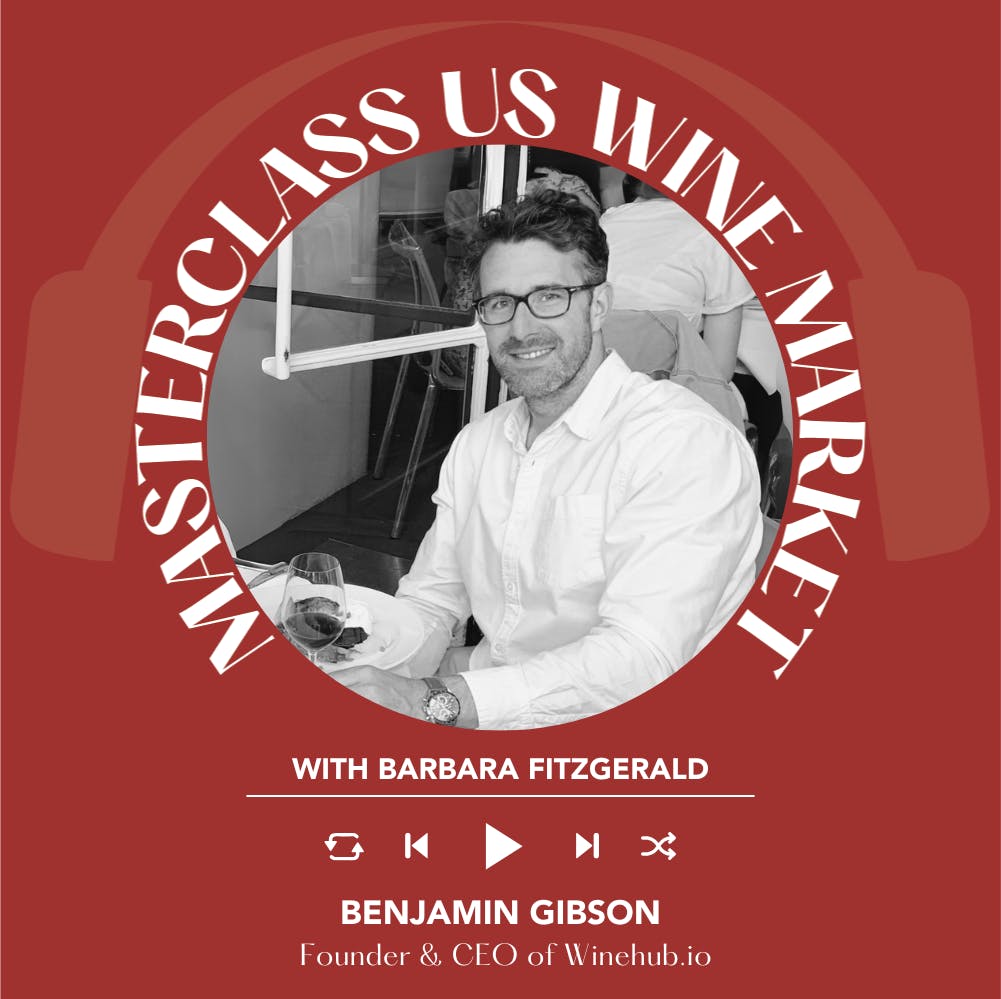
Ep 2313 Barbara Fitzgerald interviews Benjamin Gibson | Masterclass US Wine Market
Masterclass US Wine Market
Episode Summary
Content Analysis Key Themes and Main Ideas 1. The evolution and growth potential of Direct-to-Consumer (DTC) sales in the wine industry. 2. The role of technological innovation and ""tech stacks"" in enabling successful DTC programs. 3. Best practices for customer retention, automation, and personalization in DTC. 4. Ben Gibson's journey and contributions through Winehub, a Shopify plugin for wineries. 5. Addressing common challenges and myths associated with adopting new DTC technologies. 6. The complementary relationship between DTC and traditional wholesale channels in wine sales. Summary In this episode of Masterclass US Wine Market, host Barbara Fitzgerald interviews Ben Gibson, founder of Winehub Commerce, a leading e-commerce platform designed to optimize direct-to-consumer sales for wineries. Ben, a recognized expert in DTC e-commerce for the wine industry, discusses his background, including developing software for UK wine bars and later creating Winehub as a wine-specific Shopify plugin. The core of the conversation revolves around the significant room for growth in the DTC channel, positing that outdated structural and technological foundations have been bigger impediments than marketing capabilities. Ben highlights key challenges such as adapting to younger generations' buying preferences and the need to evolve from traditional wine club models to more flexible loyalty programs and anniversary-based subscriptions for consistent cash flow and enhanced customer engagement. He cites impressive Italian DTC growth statistics to underscore the channel's immense potential, even in previously traditional markets. A major focus is placed on the vital role of an effective ""tech stack"" – the combination of software platforms used to run a business – in aligning with a winery's strategic vision. Ben also debunks common fears about technology migration, emphasizing modern tools simplify transitions. He stresses the necessity of robust automation and deep personalization for customer retention, advocating for tailored offers based on customer preferences and buying habits. The episode concludes with Ben expressing excitement about the rapid adoption of innovation and increasing bravery among wineries in embracing digital strategies for the future. Takeaways - The DTC channel in the wine industry has significant growth potential, particularly by modernizing existing technological infrastructures. - Winehub, developed by Ben Gibson, is a prominent Shopify plugin specifically designed to enhance DTC sales for wineries worldwide. - Wineries should consider dynamic loyalty programs and anniversary-based wine club subscriptions to attract and retain diverse customer segments and improve cash flow stability. - A strong and integrated ""tech stack"" is crucial for a successful DTC program, as it determines a winery's operational capabilities and its ability to execute its vision. - Automation and personalization are essential best practices for effective customer retention in DTC, allowing wineries to scale their customer engagement efforts. - DTC and wholesale channels are complementary and can support each other, with DTC data providing valuable insights for strengthening wholesale partnerships. - Common fears surrounding technology migration (e.g., data loss, credit card transfers) are largely outdated; modern platforms offer simpler and more secure migration processes. - Wineries should be proactive in asking for the sale, as simply browsing is not conversion, and direct encouragement is often necessary. Notable Quotes - ""I actually think that wines got some of the best marketers in the world. And I just think that they've been largely stuck by the tools that they've been using."
About This Episode
The founder and director of Winehub Commerce, Ben Gibson, discusses the complexities of selling wine in the US and the importance of technology and the wine industry. They emphasize the need for technology and automation to facilitate business growth, and emphasize the importance of loyalty programs and loyalty programs for customer retention. They also emphasize the importance of personalization and personalization for customer experiences and personalization for international sales. They provide advice on selling wine and emphasize the importance of encouraging customers to spend money on it.
Transcript
Ben is recognized as one of the top platform engineers in DTC e commerce. He developed Winehub as Shopify's primary plugin for alcoholic beverages, helping hundreds of wineries worldwide, enhance their online sales, streamline operations and improve customer engagement. So in this episode, our three key takeaways and what we're excited to learn from Ben about are, first, is there still room for growth in the DTC channel? And if so, how? Second, what is a tech stack? And why is it a key success factor for direct to consumer? And third, we'll talk about some best practices for your DTC program like automation and personalization. Welcome to Masterclass US wine market with me, Barbara Fitzgerald. In this show, we'll break down the complexities of selling wine in the US by discussing the relevant issues of today with experts from around the globe. Each episode serves up three key insights to help elevate your wineries presence in the US market. So grab a pen and paper and let's pave the way for your success in the US. Hi, everyone, and welcome back to master class US wine market. Today, I am thrilled to welcome Ben Gibson to the show. Ben is the founder and director of Winehub Commerce, and it's a leading e commerce platform designed to optimize direct to consumer sales for wineries. It's recognized as one of the top platform engineers assuming Ben is recognized as one of the top platform engineers in DTC e commerce. He developed Duinehub as Shopify's primary plugin for alcoholic beverages, helping hundreds of wineries worldwide, enhance their online sales, streamline operations, and improve customer engagement. So with a deep understanding of both technology and the wine industry, Ben is a sought after expert in DTC strategy, e commerce growth, and digital customer retention. So welcome, Ben. We're really lucky to have you here today. Thanks for joining us. Oh, well, it was my pleasure. If I could wheel you out and do that introduction at all of my walks, I would ecstatic. That is the best introduction I have ever had from anybody. So thank you for such a war on a board. You're welcome. Well, and you really are everywhere right now speaking, you know, on Minagers and at the DTC, Symposium in California. So Yes. You get lots of introductions. Yes. My end mile points, climbing by the week, it seems notes. It's in a very, very busy time for us as, you know, since we launched the platform and, yeah, lots of interesting developments. Thank you very much for hosting me on your show. I've been really looking forward to having this discussion. Obviously, you and I have met a number of times over the last couple of years. This is the first time we've actually sat down to how to have a proper conversation. So, yeah, thank you for having me. Oh, absolutely. I'm especially excited too because, you know, DTC is is, like, really the lifeblood of what I've done for most of my career. So it feels extra exciting. And before we dive into that today, can you tell us a little bit more, Ben, about your background and how he came to work in the wine business? I mean, I don't wanna sound like a broken record because I feel like, you know, this story may ought to be out there, and I wanna make sure that If I ever get fat checked in the future, it's always very instant. So, you know, ah, you remember that time you said this was different to this time. So I'll give you the sort of the high level summary. I've actually been building really complex systems for the wide industry for over fifteen years, right, and sort of A friend of mine in the UK started the the UK's first ever enigmatic wine bars called Vagabond wines, and is, you know, you could go into these locations and you could try hundreds of wines by the glass using these bottle based dispensing machines. But they didn't have any software to kind of run that business at the time. And he said, you know, do you think you could kinda help us come up with something that we could run our business with because where there's nothing off the shelf? And I said, look, yeah, I'm pretty sure that we could put something together because I had a, you know, a big development agency back in London at that point in time. That was extremely successful for that business. They then, you know, blew up and they had twenty two. I think it was locations around the UK, pouring, you know, hundreds of thousands of glasses of wine, every single month so we could get a really interesting picture of what Londoners would drink. It was actually a really interesting time to be in the wine space. But fast forward a number of years to the beginning of twenty twenty, it was another friend of mine that lived on my street. I sound like I lived on a street with lots of different wine people. And that was the case actually. They had land in Alentesia, which is a beautiful wine region outside of Lisbon in Portugal, and they wanted to launch Portugal's first ever wine club. What the issue was is they had Shopify. And, you know, I'm very honest to say that if you'd have looked at Shopify a number of years ago, you would have thought, mhmm, it's not really wine specific. It doesn't do what I need. And that's sort of why you had these built for niche platform, that were very successful. And I found that to be the case as well. So we actually interviewed some of, you know, what you would consider to be our now competitors to see if we could API together a solution, and it just didn't work into the architecture that we wanted to kind of develop. So we commissioned a budget to start building WineHub commerce as you see it today, which is the the premiere DTC plugin for beverage alcohol globally on Shopify's App Store. We launched officially, unofficially, we launched a number of years ago, but officially on the App Store, we launched at the very end of twenty twenty three, and our growth has been absolutely explosive. So hence the air miles and traveling around the world to meet customers and talk to people like you, which is fun. Yeah. And congratulations. Because, you know, I think you and I chatted a couple of years ago right when you were right when you were launching. And every time I see wine hub growth, I feel I'm like a cheerleader. I'm like, woohoo. I feel this little. We're omnipresent, apparently. Yeah. Well, as I mentioned, Ben's really deep understanding of the wine sector combined with his technological acumen really positions him as a truly qualified expert in wine DTC sales, which is really an exciting channel to be working in right now. So in this episode, our three key takeaways and what we're excited to learn from Ben about our first, is there still room for growth in the DTC channel? And if so, how? Second, what is a tech stack? And why is it a key success factor for direct to consumer? And third, we'll talk about some best practices for your DTC program like automation and personalization. So I mean, let's dive right in, you know, as I probably don't have to tell you or anybody else twice. It seems like numbers about sales are bleak, but is there still room for growth in the direct to consumer channel, or do you think it's reached a saturation point? Well, if it had reached a saturation point, I wouldn't have a business. So I definitely think that we have lots of room and scope for growth. And, we're certainly seeing we're certainly seeing the opposite of that. So I know there's there's a lot of stress factors that are happening in the wine regions and wineries around the world as I look to sort of, you know, where is the next block of profit going to come from? So I'm just gonna take my glasses off. I've got a bit of glare on my screen. I think in immature territories, you know, let's call them the angler regions, you know, the US Australia, South Africa, New Zealand, and to a degree the UK and Canada. I think a lot of what has prevented or has sort of stalenated and halted growth recently has been more structural And I mentioned this sort of at the direct to consumer one symposium a couple weeks ago in Monterey. And I said, I I actually think that wines got some of the best marketers in the world. And I just think that they've been largely stuck by the tools that they've been using. So I think what they've managed to achieve from a revenue perspective with the tools that they had available to them to use is absolutely astounding, but now it's getting more competitive. And so the structural foundations from which your software is built on, from which your automations are built on, that now starts to matter. Because as we get ubiquitous consumers that are, you know, wine consumers buy things in other verticals as well, like, we're all out there buying cosmetics or buying coffee. We're going for dinner. We're shopping at department stores where often the purchasing experience is much sleeker. It's much more streamlined. It's much easier. And then they go and transact at a winery location where you know, you've got to fill in thousand credentials. I exaggerate, but maybe ten credentials before you can even buy something. I think what we're seeing now is sort of taking apart those barriers and moving on to more modern structures. That's where the growth is coming from. And for you know, for want of a better term, the old world, it's it this is completely virgin territory for them. So this is, you know, really looking at how do we dial into this for the first time ever. So there's growth coming from both pockets, but for different reasons. Yeah. I think that you're right too when you say that really as an industry, the wine the wine industry has been really slow to adopt new technologies. Right? And so talk about something like direct to consumer, which really does require these kind of updated technologies. Maybe there's been there's been a little bit of reticence. Well, it's just worth constant rip days. Right? I have a dog We can cut. I'm very needy at the moment. So I'm lazy. We could just thank you. Oh my goodness. Sorry to all your listeners. I hope you cut that part out. But if you don't little brutal named Daisy, you just see next week on the ground, she goes with me everywhere. Yeah, I think it is any change is always going to have a level of intimidation because, you know, even if you're changing to improve, you still got all the change management that goes with that. So how do you get the people on board? How do you make sure that, you know, it's one thing for me to sit here and, you know, provide a demonstration of what we do and tell you. It's the best thing ever, but it's another thing for your people to sit down and use these new systems and get the most from them. And it's like anything, you know, everything comes down to return on investment, including great software and great platforms. You're only going to get a return if you're willing to make the investment. And that comes both from a financial perspective, and also from a time perspective. If you learn the new tools and you really dial into it, then you can get the results, but you have to do it. Okay. So GTC is really promising. And, in a moment, I can even share specifically for our Italian wineries what the numbers look like. But what would you say are some of the biggest challenges wineries facing growing a direct to consumer channel today? Well, I would probably divide that up into regions or into maybe even cultural, culturally specific regions. So if we look at what's happening in your strong CDC regions, you know, your US, your Australia, but let's, you know, again, the Anglo regions because they are different. Right? Structurally, they're culturally different to some of the European countries. I think you've got a generation of baby boomers that for the most part are still propping up the bar of most of the world's biggest wine clubs. So that in itself is a generational issue because you've got to look at the replacement. Where is this revenue that may come to a standstill in, you know, the next couple of decades? Where how is that going to be replaced? And also what mechanisms do you need to have in place from a platform perspective in order to capture some of these younger generations who just buy differently. Right? Like, they they have different buying preferences. So one of the things that we're seeing be incredibly successful is obviously maintaining the importance of your wine club is critical. You have to maintain the wine club. But then you've got two things that you need to do. How do you put in place the right structures so that, you know, let's call them gen z. They're less wine club prone than their parents are. Right? My dad had, you know, I've told this story before, but my dad had nine wine club memberships in two thousand and eighteen, and that dipped to three in twenty twenty four. And as of January twenty five, it's one. But he and I went out for lunch, you know, a couple of weeks before I flew to California recently, and he spent over a thousand dollars on wine after lunch. So his bend have changed. It's just the way he's doing it has changed. So I very much see loyalty in combination with the wine club as the next bastion of growth. And that's this does really two things, primarily. First of all, it lets you up anybody who's coming to your tasting room or just buying from your website or, you know, buying buying the wine generally from a direct to consumer transaction perspective, it allows them to get into your funnel very early. So if you have, like, a bronze silver gold platinum style loyalty program, and you make the bronze program very easy to get into. Spend a hundred dollars, you're a bronze member. Once you've got them in your funnel, it's much easier for you to get them to go from bronze to club member than it is from zero to club member, especially if they've never really tried your product before. And what we're really pushing at wine hub and where we're seeing the success and the growth is this idea of spend your way to silver. Right? So, you know, you can spend your way to silver benefits. You can get access to certain things, but if you want the best access and you want the best wines and the best benefits, you've gotta join one of the wine clubs. And that does two things. It preserves the integrity of the wine club. So it doesn't make it too attractive for wine club members to cancel and just buy ad hoc on a loyalty program. But simultaneously, it gives People that are not confident to join in one club are halfway to a club, and it gives a very soft equipment landing for anybody canceling their one club into that silver membership. So they don't lose all their benefits. They lose some of their benefits And a lot of the platforms that are in the wine space now, there's nowhere to put those people to cancel. Once they cancel, they're gone. And that's a very dangerous position to be in. So we're really sort of seeing the growth come from dynamic loyalty in tandem with one club strategies. I think that's a really great call out too because it's a big step. It's a big commitment to go from visiting a winery to being a club member at a winery. So giving them runway to continue to connect with your brand to have a reason to be in conversation with you goes really far. And when we talk about, you know, further in this conversation about the need for technology, you can't maintain conversations like that with hundreds of people at a time. You need some form of technology that can help facilitate that for you. You are absolutely correct. All of this stuff at scale needs to have very, very slick automation. And I think probably that's probably the number one thing that we hear whenever we're talking to wineries is, oh my god. There's the manual stuff that I have to do to get the outcomes that I want. You know, and business is looking to grow. You know, really need to consider the technology stack from, like, how do I do this at scale and how do I make my life easier so that I can spend my day and my time doing more meaningful things. And also, from a different perspective, where we're also seeing growth just straight up in wine club. So if we just leave loyalty, let's say, okay, loyalty is not appropriate for my business. If I'm a winery listening to this, and I really wanna dial into a wine club. Right. Well, where we're seeing the biggest number of changes or the biggest amount of change is in the rebilling structure of a wine club. Most wineries, because they built their clubs many years ago on software that had this parameter at a time, They are billing everybody on the same time where they're batch processing within the same week. I'm sorry. We've got people often parked. Daisy, now if we're having a serious conversation here. She'll be fine in a second as she calms down. We're seeing a big shift towards a billing structure where instead of it being based on the wineries requirements, so I would like to bill my customers during this week because it suits me. We're seeing a major shift towards anniversary based subscription. So based the interval for wine club delivery would be when I sign up, when I discover your brand, because that's when the most effective communication fits in. And what that does is if you've got a larger club, you could have sign ups every week, and you could have dispatches every single week and month. Now that obviously has logistics impact that you need to consider, but the marketing benefit is it turns every single week and month into an opportunity to upsell rather than saying, I've gotta send out four or five thousand emails or two or three hundred emails to try and get my club to buy more product, three times a year, four times a year. I can AB test my marketing strategy, you know, every single month of the year. And I think there's something to be said for being able to do that. And what a benefit for cash flow too? I mean, I've worked with wineries per year where it's like, yeah, you know, like, in February, April, in October, you're gonna get this big influx of cash, and then January is difficult. So if you have this structure, you're getting to see a little bit realize a little bit of that revenue constantly. Absolutely. You know, CFOs didn't know they loved cost based software until we came along. I think we sort of Oh, I can get cash flow every group. Amazing. So, yes, it it is you are right. That's actually a very, very salient point. Cash flow. You know, if you're having lots of revenue spikes, you've also got lots of credit card declines as well. So you're constantly chasing those people whose credit cards may have line, and it's much easier to chase one or two fail cards in the week that it is potentially hundreds that, you know, fatal in a particular week. So, yeah, very good point. I would love to share some data with you about Italy specifically since this is the Italian wine podcast to get your expert opinion. So this data comes from wine suite, which is a product of Divinaia, a CRM DTC POS software platform in Italy. They put together a DTC impact report every year, and so their twenty twenty four report shows for curiosity's sake, the sample sizes, their three hundred and fifty winery clients which represent the entire Italian geography, about seventy two percent of those wineries make about twenty thousand cases or less. So pretty, you know, mid to small size. Their average POS order is at a hundred and forty euros. So visiting, you know, to the tasting room that's up, nineteen percent from the year prior. It's an average of eight bottles that are people are purchasing after a tasting room visit, and their average e commerce order is a hundred and eighty four euros, which is up thirty percent from the year prior and for an average of twelve bottles. So just hearing that, what do you say? Well, I'd like to thank them for paving the way. That's a excellent statistic. So, you know, I have the unenviable task in a couple of weeks of presenting the mining as international conference a piece on direct to consumer sales specifically targeted at engineering and enthusing European wineries on DDC sales, which is historically lagged behind other markets. Right? So they hear that statistic coming out of Italy, which is a very traditional market, typically, is phenomenal. And, you know, the fact that you know, the average pause order is a hundred and forty euros, but then you have an even higher average e commerce order. That's exceptional. I mean, and they're coming from a zero start, which is amazing as well. So that tells that should tell everybody really that there's there's certainly mileage in this channel. And if they're not thinking about direct to consumer sales, then, you know, they really ought to be because, you know, obviously, the profit benefit from being able to sell directly, but also just the consumer connection benefit as well, understanding who is buying your wines. If you understand that piece, that then helps your trade sales and your wholesale channel as well because you can feed this information back to your distribution network. So bravo to them for for putting that together. Yeah. And to your point about understanding the customer, it gives you control again, you know, once again, about the messaging that you're putting out there. And then you can, like you said, share that with your wholesalers to make that relationship more fruitful. I think it's really important for anyone to realize that DTC and wholesale do not stand in contrast to one another. They actually can really support each other in a very healthy way. I've always thought that. And I think that's been That's probably been the biggest feedback that I've had amongst, you know, the European winery base is that they don't want to engage either at all or too much in the DDC sales channel space because, you know, they obviously value their trade relationships and their wholesaler and distribution relationships, and they feel it could be disruptive to that. And it's getting them to be confident enough to say, hey, actually, this is a really this is a complimentary sales channel that are conflicting you know, sales channels. So, you know, the proof is in the pudding. And if, you know, if these numbers, as you said, a hundred and forty, Euro's average post order backed up by a hundred and eighty four Euro's average online order, I mean, that's fixed volumes to change. So that's excellent to hear. Yeah. Absolutely. Well, you've already led up to this a little bit talking about technology and how it enables all of this. So let's let's break that down a little bit more. So we talk about Tech stacks, technology stacks. So what exactly is that? And why is it so critical to a successful DTC program? Well, the technology stack simply put is just the different platforms that you use to run your business. So, you know, obviously, wine hub being exclusively on the Shopify platform. Our recommended technology stack is is Shopify, for your e commerce engine, and then you would have wine hub plugged in in the back end to do the wine specific things. And then we tend to sort of have a good relationship with Klavio for your email automation. But you can combine anything. Like, it could be, you know, it could be wine suite, for example, in Italy, and, you know, that would probably have a suite of plugins as well that you can you can look at. So it's any platform that you think serves the needs of your business, and, you know, you will combine that with other things that will help you achieve your outcomes. And the importance of a tech stack is that it's going to define what you can do. So if you have these amazing ideas and you get to work the next day and your tech stack prevents you from execution, then that's a problem. That's why I would say TxTag has really a massive, say, and a massive influence on how successful you can be. I remember being in the back of a taxi with one of our agency partners I was trying to think of an elegant way to put a graphic to this concept. And we kind of mentally I drew a line that went from, you know, here to here. I don't know how that's gonna display whether I should go that way on your screen, but anyway, say it got worked right, and it goes up Right? And this is your strategy. This is your strategy on your marketing line. So strategy and creativity. So a line that goes this way represents strategy and creativity. And the line that's going the other way represents structure and platform. Right? So if you have amazing ideas, but your platform intersects here, you have all this extra, you know, creative capacity that you can't tap into. So a tech stack, a good tech stack, really should be as close out to the top of that line as possible. And I think that's what's, you know, really separating good platforms from, you know, rudimentary platforms is how close they can deliver your vision. No platform's gonna give you every crazy idea that you think of. And I've heard some crazy ideas in the wind industry about, wouldn't it be cool if it could do this? I'm like, yes. Probably, but no one's gonna be able to deliver that really nice thing that only you want. But as as close as you can get to that top of the you know, the triangle, I think that's where you need to be striving for. So make sure when you're looking at tech stacks, you really do your interviews and you really have your demos. Looks so important. What would you say if people are shop or even just kind of reevaluating the system they have right now. What are, like, the must have tools or integrations for a winery to do DTC well? I think that they've got to have lots of different options for wine clubs. I think that they should have loyalty You know, I have views on loyalty. I can't I despise points based loyalty systems. I think, you know, they work in some sectors. Groceries is an example of where points work because it's so frequently purchased. I think in wine, it doesn't work because there's the frequency it purchased from a perspective, it's not every week that you're out there buying wine. So I think a better metric is either spend or bottle quantity or something like that, makes more sense. But I think we have to have functionality across all of those deliverables. Like, I know, especially in Europe, back into allocation management. So you've got twenty ten wine that scored a hundred points, let's say, and you want to control the distribution of that to your best club members that have spent five hundred euros outside of their club schedule to have a variety of preference towards, you know, multiple channels where at least twenty percent of their orders contain multiple channels, you know, your software needs to be out of very swiftly give you those lists of people so that when you're doing your, you know, automated targeted offers, it's only sending relevant offers to people that meet those relevant segment cohorts. So I think make sure that whatever you're looking at, and, you know, obviously, I hope that one hub's in the conversation, but you know, please make sure you do your research outside of us as well to make an informed decision. Absolutely. And being, you know, in my own experience working with wineries and Italian wineries in this transition, I think it's it feels daunting to talk a lot about technology. If you feel like, you know, you're not air quotes a techie, but remember that the teams at these companies are there to support you during this transition because if you're not successful, they're not successful. So this is very much like a a collaborative effort to get you, you know, feeling comfortable to use the system to the best of its capabilities. Look, it's it's incumbent upon people like myself and, you know, other owners of platforms to educate. Right? Like, we here to educate just as when I go to your tasting room or your cellar door, I wanna be educated potentially on your wine. Sometimes I just wanna have a glass of wine and relax and not be bothered at the door, but sometimes I get really into it, and I'm really, really interested. And how much I want to know, I'll tell you that. I'll tell you what I met. What do I wanna know about your your products? And that should be the expectation when you're interviewing potential technology partners. Let them guide you through it. If there's something that you don't understand, ask the question that there's no such thing as a dumb question. We don't expect winemakers to know everything about how to set up a technical platform. We don't. We're we're very open to receiving those questions, and I think that that really, you know, really critical. If you don't understand, ask, that's important. Yeah. Definitely. So what would you say are maybe some common myths or fears about kind of, you know, upgrading to technology of this kind that wineries need to overcome? Well, I think all fears tend to start out as valid. And then again, it's our job to sort of, you know, calm the situation and, you know, pour some cold water on those skiers and hopefully get people feeling a little bit better. The first comes usually from migration. It's like, well, you know, what am I going to lose if I migrate? What am I going to gain if if I migrate? You know, what does the customer journey look like as a migration? And, you know, ten years ago, fifteen years ago, that was more challenging. Migration came with, you know, significant risk, which is why not a lot of businesses did it. It was a very serious decision. Now it's much, much easier. So, the migration pathway would be look at, you know, looking at if you've already got an established wine club, it's or how do you export the customer wine club information into your new system, make sure that's got a very clear, well defined pathway, which it does. Like, you know, not just in wine hub, you can migrate to any one of our competitors, and it's, you know, should be a fairly simple journey no matter which direction you go to. And also, how do you migrate credit cards and store payment information? That's the other big one. It's like and thankfully, the payments industry has come along leaps and bounds, and it's actually very simple to move tokens, payment tokens. We call them in between systems. So Those are the things. Then, obviously, that's the structural side of things, the boring element. Now we've got the website redesigned. So there's always going to be a design element when replatforming. It's like, can I replicate the look and feel of my current website and my current pause experience on the new platform? For the most part, you probably can. And I would always encourage anybody considering this, you know, look for a creative agency that can help you with this process. If, if you feel confident to do it yourself, great. You know, I think Shopify's are great to what's called lots of things that you can kind of prepopulate. You don't have to be an expert on it to to get going on it. Yeah. It had its origins really in supporting the small time entrepreneur. It's obviously scaled to a different level now, but its origins were really in, you know, small businesses. So have a look at doing it yourself. And if you run into any trouble, there are lots of brilliant agencies that you can engage to have a conversation with. No obligation to use one, but it's it's certainly simply worth considering it's for sure. I will say first time I used Shopify was helping a client do some stuff with Shopify, and I had never used it before. And I couldn't figure out how to do something. And I just went to chat to PT. And I said, Hey, how do I in Shopify do x y z? And it gave me the instructions to make the change I wanted to make. And it was simple. So even if you don't have the budget maybe to employ another agency, like, there are ways to, you know, to learn how to make it work best, best for you. I think there's no better platform, and this is just taking wine out of the equation. Right? Like, pretend I'm not even wine hub, but it could I could be anybody. I I think there is no easier platform for, online, e commerce, and now point of sale with a new post product and Shopify. And and the resources that they have. I mean, this is an this is a eight thousand strong workforce, hundred and thirty billion dollar market cap product as of today. I mean, that well, that many people that are continuously every day working to improve a platform, it's going to be very, very slick. And, thankfully, their documentation's amazing. So being able to chat GPT and get an answer for that, that's the result of their investment into making sure that, you know, that's all there for you. So that's cool, though. I didn't know you had done that. So that's good. Yeah. So, okay, best practices. Let's move on to that a little bit So what are the most impactful ways? We've talked about it a little bit, but automating the customer journey and how important that is for retention. So what are some impactful ways that wineries can do this to improve their their DTC revenues? Yes. So I, mistakenly, co tried to compare cost per acquisition, CPA. And, in a talk, I mentions, said, well, you've gotta look at the cost per acquisition of a cuss, you know, of somebody for client of a a buyer. And then you have to look at the cost per attention, then I foolishly used the acronym CPR, and I didn't realize at the time that it was, you know, we're not trying to rep replicate anybody here. This is just a cost per retention. So I think having really good retention strategy is as important as having really good acquisition strategy because, you know, certain platforms make it easier to retain and certain platforms make it easier to win back. But if you are using a platform that doesn't have great win back automation, then the cost of losing somebody is basically the cost of acquiring somebody. So usually the cost of retention should be significantly, you know, several orders of magnitude lower than the cost per acquisition. So just make sure that, you know, when you're looking at your cost, it's very important to have automations built in. So if someone's not purchased from you for a while, they should be getting a reminder if they've, you know, purchased something that was at a lower value and you're trying to get them into a higher peer band, having these structures in place that just work for you where you set up the rules that you want to, you you want your business to be guided by. I'm not set and forget, but it's sort of set and forget for a little bit until you maybe need to adjust and attenuate. Your platforms should be working for you, right, at the end of the day. They're there to enhance your business and to make your life easier. So I think best practice would be, you know, really know your cost per acquisition from a through the door perspective, and also your cost per acquisition from an online only perspective because not everybody can get down to a tasting room to buy a product. Some people are going to buy from your website and those CPA's will look a little bit different. So it's important to be able to understand what that number is and also understand the cost per retention for those two revenue channels as well. So just make sure that whatever you're looking at and using gives you those numbers very clearly. Yeah. Absolutely. And I would say, you know, again, kind of thinking from the perspective of Italian winery even though tourism is growing so fast, you know, the way technology exists now is we don't need to get people to the winery to start a relationship with them, to get them engaged with our brand, So we need to figure out ways to deliver this hospitality that, you know, again, I'll speak for for Italians. They're kind of like some of the best in the world that's delivering great hospitality face to face. And how can we now translate this to digital interactions at a way that is manageable on a broad scale. So I think look, personalization really matters here. Right? What we're talking about is is scaling the personal experience. Right? And I'm gonna give you a few examples. So first of all, Knowing my preferences is a great place to start. There is no point sending me a riesling offer if I've not purchased riesley from you in the last twelve months. If I'm a really if I'm a cab savvy or I'm a Zinfandel put buyer or a or I, like, you know, super tuscans, you need to know that about me. So having Having preference analytics is really important. Having purchase analytics is really important. So looking at my buying cadence and marrying it with my preference and purchase analytics is a really good place to start. Right? So I come back to sort of something that we develop for allocations. Right? So there's no point in offering, as I said, a reasoning to some of the buyers, cabernet sauvignon. So that's one thing. Making sure that you've got personalization as standard And I'm going to speak. I'm gonna plug something else that I saw recently. I've got no financial investment in this. I just thought it was really cool. Was that a a warehouse recently in the US having a tour? And I looked down and there were some one clubs being packed. And every single package had an a four folded out personalized sheet. And it said, you know, dear, whatever the name was, let's say, dear, Ben, this is your latest wine club delivery. It had every single wine you know, with an icon printed out with tasting notes, you know, had VAVino reviews connected to it. And it also told me how much I'd saved in my year to date and with this shipment by being a club member. And I just found that that level of personalization, I'd never seen that before for any one club. I'm sure there must be clubs in the world that are doing that. But to get a little handwritten card that is automated, right, let's be clear. Like, the orders coming through to a third party logistics platform, and instead having, you know, these brochures printed out on demand at the warehouse. But I thought that was very slick. I'm trying to I I will have to think of the name of the company. I can't remember the name of the company was offering that service, but it was absolutely brilliant. So being able to get a personal touch, world class or Sunpressed. Yeah. That is very cool. And I think too, you know, when we talked about having these more personalized relationships and also earlier how we talked about that DTC is not in competition with your with your distribution. I'm gonna bring these two things together now. Like, so how can we translate this to more engaged consumers in the US? This relationship isn't about making a direct sale necessarily. It's about making a door having a direct relationship that facilitates sales from any of your channels. So if you know you had a customer visit your winery that loved your, Barbara, and they're in a market that your Barberas, and you can then send them the information about where to find it in their market. They don't even need to buy it direct from the winery, but you're still facilitating that engagement with your brand in that way. Yeah. That's it. So one of the things that we collect is, the geographic sales information right. So, we sort of heat map things. So from a generalistic perspective, if you know that you have a lot of buyers in a particular state or buyers in a particular city, and you don't have a distributor in that region, that is ammunition for you to go and say, I've got this many customers in this region. We are looking to expand our reach in this area. We obviously can't do that everything there to see, but we'd like to be on the Warts of restaurants. We'd like to be at the bars of of, you know, the best hotels that we'd like to be at the student, you know, on campus, if UCLA, if that's your demographic. Right? You know, if you have that information, you can then go armed with that firepower to a distributor and say, I already have demand in this region, and I would like to deepen our connection with locals, and I'd like to do that with you. And anybody who's in wholesale who doesn't appreciate that that approach, be very surprised. I think that's, you know, not many wineries are probably and also offer that. Hopefully, you can export this information from whatever platform you're using, and you can look at zip code and state by state and regional information because, you know, it it really helps. Yeah. You're you're right. You're basically delivering them what they need on a silver platters. I wonder, have you ever heard of anybody doing that at all by any chance? I know a few I know a few wineries that have done that, but not only on a small scale. Yeah. Same on a small scale. And I know some that have also done it in reverse, you know, they see that they have a really strong wholesale presence in this area. So then they come to the market to do more, you know, consumer private experiences. That's not really being inflammatory. Well, but it's not because they're not selling the same wines that are so many wineries. You have you have what you put into distribution and you have kind of what you make for direct sales. Yes. And even if you don't have that model already set up, I mean, chances are you probably do have a run of something that was, like, too small that your wholesaler isn't willing to take. That's actually a good point. Yeah. Yeah. No. You're right. I think if someone who came along and replicated the wholesales good work, then you would have, you know, an eruption of emotion, but, yeah, you are right. If you're just growing a different product line, that's probably also a good reverse strategy. Yeah. Yeah. And then you're there in the market for your distributor. So again, it's still that partnership. It's still that collaboration. If those people that are at the event are gonna go back into their grocery store or their local wine shop and see your label, and it might not be the same line, but they're still gonna make the connection. Like, I should get this. I really liked it when they came to visit. Well, it's a jump back. Right? You know, I think I'm even I'm guilty of it. I loved her. I love to experiment in trying new wines, but if I've got friends coming for dinner, that's not the time that I'm going to experiment or take something that I've tried and I trust because I know it's gonna be a hit, you know, at least for me in the way I'll enjoy it. Yeah. Okay. I'm gonna ask you one final question before we wrap it up. What excites you the most about the future of DTC in the wine industry? The the rate of innovation adoption for stuff for such a historical marketplace that has been very resistant to technical change. The conversations that we're having, the ideas that are coming at us from D2C, your managers around the world, from CEOs of great, your large wine businesses around the world. You know, being able to think in a different in a different way now, that's really exciting. And and and to feel like we're part of that tide change is also very it's really gratifying because, you know, we work I've worked so hard on my team. We work so hard to be part of the conversation than to to have that recognition is so exciting. But also from a market perspective, just the things that people are now thinking about that they would never have even considered even a couple of years ago. There's a lot of bravery happening. There's a lot of, like, people are getting very excited and very brave to make the changes. So that for me is probably the most exciting element is watching people go, oh, I can now do this. Oh, I'm gonna try this. And and sort of they're becoming very very attuned in digital marketers. And I think whereas before that, we're, they were very focused on, you know, what they could do within, you know, the confines of access that they had, and now it's something. Well, you know, the world is changing and their world is opening up. So that's really cool to see. Yeah. That is really exciting. The innovation is it feels very, it's it's alive to be around it. Well, that's it. And, you know, after a period of, you know, relative challenge, in the wine industry. It's like, well, the cocoons now splitting when people going, do you know what I'm ready to give it another go? And there's there's a lot of interesting stuff that's happening yet. We're just very pleased to be part of it and be at the table. Awesome. Awesome. Well, as we start to wind down, I feel like I could have this conversation with you for hours, but we should be respectful of our listeners' time. So as we start to wind down, it's time for our rapid fire quiz where we ask our guests three questions to help our listeners really better understand the lessons of this episode. So please just answer in a couple sentences if you can. But first, what is your number one tip for using technology to convert your DTC customers into more engaged consumers? You'd like me to answer that question. Rapidly. Yes. Rapidly. Okay. I'll grab a print of our hand. First of all, have the demo, learn the tool, put the effort in, get some case studies. Make sure you're talking to other people that are using the platform. That would be my number one piece of advice. Just go and get the social proof. Wonderful. So find a platform and then get proof proof of the platform. Exactly. Make sure make sure that whatever you're doing, whatever you're thinking about, go and validate it. That's the only way to make an educated decision. Great. Great piece of advice. What is something you would have told your younger professional self about selling wine? My younger professional self about selling wine. Oh, god. I've never had to sell wine to myself, but I was I've always well, it's easiest consumer. I would have said to my younger self, don't be afraid to encourage people to spend that little bit extra on a bottle of wine that is for an occasion I would have also said make sure you encourage people to think outside the box than just come in and buy the same bottle of wine that you've always purchased. Always try and encourage people to taste, try, sample, and experiment with it, Alec. I love that. I will say, again, working so much with Italian wineries. That's a great piece of advice and don't be afraid to ask for the sale. I think culturally, like, we're very used to that in the US, and maybe that's not the same for cultures around the world, but the worst that people are gonna say is no. So don't be afraid to ask them to buy something. Well, absolutely. And I I come back to a point that I make often. Someone is not your customer until they've actually purchased something from you. Otherwise, they're just known as a browser. So you really need to have no point having a great browsing experience. If at the end of it, you're not converting someone to an actual customer. So you're dead right. There is some cultural challenges there. Ask for the sale. Would you like to send some wine home with you today? It's a very easy question. Yeah. And and polite and kind and not pushy in any way. Yes. Exactly. Alright. Number three, I know you've been on the road a lot lately as most of us in this industry are. So what is your favorite travel hack when doing market work? My favorite travel hack? Never forget your you know, the three point five millimeter jack on a plane for headphones? Never forget never forget the converter that converts it from one to two. That would be number one gravel hack. So that at least when you're on your flight, we can watch a good movie. And and the second one would be wherever you're going, find a wine bar that's well recommended. Good good suggestion. Definitely. Well, Ben, you have offered us so much insight today. So we can't thank you enough for joining us here on Master Class US wine market. How can our listeners connect with you or wine hub? Well, I'd love to hear from your listeners, and thank you very much for having me. It's always really nice to sort of sit down and and talk to someone in a non sales y way where I'm not doing a demo or a pitch. It's just having a nice conversation about, you know, the industry It happens all too rarely, unfortunately. If any of your listeners would like to get in touch with me, they can jump on our website, w w w y hub dot I o. So that's y hub dot I o. And if you send an email or contact form, I will certainly see it. So as long as they fill out the contact form, that will get through to me and my team will some respond to you straight away. Amazing. Yeah. Well, thank you again so much. Like I said, I've been seeing headline hub has grown since you officially launched it, and it's been really, really exciting. I know, your ex teeth and also the dedication you put behind it. So all warranted, and I'm giving you a little round of applause over here. Well, and she's free. Mess up my mic, but I really appreciate that. And, again, thank you so much for having me and, you know, the point of recording this, so I hope I have managed to give you, you know, your listeners a lot of value and something to take away. That's what we're we're here to do and explore, but, you know, they have a takeaway that they go, that's interesting. I'm gonna investigate that a little bit further. Absolutely. Well, I hope to see you again very soon, and thanks again. You will do. Thanks very much. Take care. Bye bye. And that's a wrap for this episode of Master Class US wine market. Thank you so much for joining us. If you enjoyed this episode and want to stay up to date with the latest industry trends, remember to like, follow and share our podcast. And if you find value in our conversations, please leave us a review to help others discover the show and grow our community. Stay tuned for new episodes every Monday. Until then
Episode Details
Keywords
Related Episodes
Ep. 2790 Italian Wine in the US: Building a Narrative and Reaching Asian American Consumers with Susan R. Lin MW | Masterclass US Wine Market
Episode 2790
Ep. 2783 The Suburban Gold Mine: Insights into New Jersey’s Wine Market with Brittney Abell | Masterclass US Wine Market
Episode 2783

Ep. 2772 A Surprising Partnership between Japanese Sake & Italian Wine with Monica Samuels | Masterclass US Wine Market
Episode 2772

Ep. 2770 China’s Wine Market: From Misleading Import Numbers to Today’s Consumer with Fongyee Walker MW - Part 1 | Asia Wine Market
Episode 2770
Ep. 2760 Winning the Restaurant Floor: Training, Education & Italian Wine with Sylvester Inda of Ci Siamo | Masterclass US Wine Market
Episode 2760

Ep. 2751 From Montalcino to Kazakhstan with Francesca Arquint of Collemattoni | Asia Wine Market
Episode 2751