

Ep. 639 Gary Fisch | Get US Market Ready With Italian Wine People
Masterclass US Wine Market
Episode Summary
Content Analysis Key Themes and Main Ideas 1. The entrepreneurial journey and expansion of Gary's Wine and Marketplace, highlighting its growth from a small New Jersey store to multiple locations, including Napa, California. 2. The distinct dynamics and challenges of wine retail markets in different US states, specifically New Jersey's stringent regulations versus California's more open environment. 3. Current trends and emerging preferences in Italian wine consumption among US consumers, including specific varietals, regions, and categories. 4. The pivotal role of e-commerce in modern wine retail, with a focus on the advantages of retailer-controlled platforms (like City Hive) over third-party marketplaces (like Drizly) for data ownership and customer relationship management. 5. The importance of strategic partnerships, technological adoption, and a forward-looking mindset for success and growth in the competitive wine trade. Summary This episode of ""Get US Market Ready with Italian wine people"" features an interview between host Steve Ray and Gary Fish, founder of Gary's Wine and Marketplace. Gary shares the story of his business, which grew from a small operation in 1987 to a multi-store enterprise, including a new location in Napa. He discusses the challenges of opening stores during economic downturns and navigating diverse retail landscapes, highlighting the unique aspects of the New Jersey and California markets. Gary emphasizes the invaluable contributions of his specialized staff, such as his wine director Brooke and Italian wine expert Chezrae. The conversation also explores Italian wine trends, noting strong sales in traditional regions like Tuscany and Piedmont, significant growth in Southern Italian wines (especially Sicilian), and increasing interest in non-Pinot Grigio white varietals and Prosecco Rosé. A key part of the discussion centers on the dramatic shift to e-commerce during the pandemic, with Gary explaining his preference for City Hive, which allows his business to maintain control over customer data and product presentation, as opposed to third-party platforms. He concludes by stressing the importance of looking forward, leveraging technology, and building strong commercial partnerships to thrive in the wine industry. Takeaways - Gary Fish's ""Gary's Wine and Marketplace"" evolved from a small, part-time venture into a successful multi-store retail chain. - Operating wine retail businesses in different US states (e.g., New Jersey vs. California) presents distinct regulatory and market challenges. - Specialized staff, especially those with in-depth knowledge of specific categories like Italian wines, are crucial for a retailer's success. - Current Italian wine trends in the US include continued strength in Tuscany/Piedmont, significant growth in Southern Italy (e.g., Sicily), increasing popularity of diverse white varietals, and the rise of Prosecco Rosé. - The COVID-19 pandemic significantly accelerated the adoption of e-commerce in the wine and spirits industry. - Retailers benefit from e-commerce platforms that allow them to own customer data and control their product offerings, fostering stronger direct relationships with consumers. - Technology and data analysis are essential tools for wine retailers to understand customer behavior and optimize sales. - There is potential for smaller wine producers to gain market access in the US by leveraging retailer-focused platforms and establishing strategic distribution partnerships. - Businesses in the wine trade must continuously adapt, embrace new technologies, and look to the future to remain competitive. Notable Quotes - ""It was a part-time job, which became a lifetime passion."
About This Episode
The speakers discuss their success in the Italian wine and spirits industry, including their open stores and success in attracting customers. They also discuss their plans to open stores in various states and their plans to introduce Italian wines to customers. They express their interest in e-payments and controlling customer relationships, and discuss challenges in targeting smaller producers through the company's ad revenue model and the use of technology to serve clients. They also mention their plans to open stores in New Jersey and California and their interest in e-payments and controlling customer relationships. They emphasize the importance of being ahead of competition and optimistic about their technology and data capabilities.
Transcript
Thanks for tuning into my new show. Get US Market Ready with Italian wine people. I'm Steve Ray, author of the book how to get US Market Ready. And in my previous podcast, I shared some of the lessons I've learned from thirty years in the wine and spirits business helping brands enter and grow in the US market. This series will be dedicated to the personalities who have been working in the Italian wine sector in US, their experiences, challenges, and personal stories. I'll uncover the roads that they walked shedding light on current trends, business strategies, and their unique brands. So thanks for listening in, and let's get to the interview. Hi, guys. I'm Joy LIVings Denon. I am the producer of the Italian wine podcast. Thank you for listening. We are the only wine podcast that has been doing a daily show since the pandemic began. This is a labor of love and we are committed to bringing you free content every day. Of course, this takes time and effort not to mention the cost of equipment, production, and editing. We would be grateful for your donations, suggestions, requests, and ideas. For more information on how to get in touch, go to Italian wine podcast dot com. Now back to the show. Hi. This is Steve Ray. Welcome to this week's edition of Italian wine podcast. Get US market ready with Italian wine people. This week I'm pleased to have as a guest Gary Fish, who is the founder of Gary's wine and marketplace. With four stores in New Jersey and a new one in Napa. Gary, welcome to the show. Steve, thanks for having me. A little background on on Gary for those of you who are unfamiliar with him. He's probably too proper to say it, but he's he's really a luminary in the industry and done some extraordinary things in one of the toughest retail markets in the US New Jersey particularly and now expanding to California. So, Gary, Can you give us a a short profile of when you first got into the industry, some of the, stores that you started and how you got to where you are in Napa. Now? Well, this this show, Steve, is only an hour or so. Maybe even less. So I'm not sure I could say it all. I actually got into the industry. In my senior year in college, I I became a sales rep for Fedway in New Jersey, but to try to cut it shorter, We opened our first store in Madison, New Jersey in nineteen eighty seven. And it was a twelve hundred square foot store doing about seven hundred thousand dollars a year. And it was kind of designed to be a part time job. Which became a a lifetime passion. And we, moved that store a couple times. And in nineteen ninety four, we ended up in our thirteen thousand square foot location in Madison. And since then, we've opened stores up around New Jersey. Yeah. And then just recently in, in that, we'll get to that in a moment. But you you have a a great support staff, and Brook Sable and also, Desiree Martinez. Can you tell us about them in the role that they play? Yeah. Sure. But, you know, first, when I first started, I bought and sold everything. Right? We had one store. It was easy. If I liked it, I bought it, then I sold it. As we've expanded, we've looked to bring in the best of the best. And Brooke is my wine director and oversees wine purchasing in New Jersey and she works with Chris in Napa Valley. And Brooke comes from, the mostly the restaurant background is Asam. And what I love about Brooke is she's got this passion for wine as wine. She leaves the business side up to me. But she brings to my attention a lot of great wines. We love to taste wine together. We taste an enormous amount of wines together. Actually, through the pandemic, when we weren't hanging together tasting wine, she would taste wine in the store in, or at her house, core of in it, drop it off if she liked it to my house, I would taste it, and then we would compare notes. So even though we weren't necessarily together, we've we've developed a system for tasting together. She's a geek, and I'm a businessman. And I think the combination of the two is fantastic. She checks me every now and then, and I check her. So it it's a good balance. Chezrae is a story of of passion. Chzrae came to us probably ten years ago, looking for a little work in between import gigs. His family has been in the wine business in Italy for for generations, and he came to the United States, and Chazare is all things Italian. He's he's passionate about Italian wines. He's passionate about Italian food. Italian soccer. Oh my god. This last couple of weeks. That was pretty cool, you know, to to try to have a conversation with him about anything other than soccer or with was challenging. But having people like Chesrae, like Brooke, like Rick in our Madison store who's who does helps us with spirits. Lex in our Wayne store who oversees Gourmet and runs our Wayne store. You know, so I'm surrounded in New Jersey by long standing in, team members, with passion about what they do. So it's been, you know, I'm very fortunate in that way to have that support. Well, let's talk about the individual stores, and you don't have to go into depth in each, but, can you categorize them and how they differ, not just in terms of square footage, but also in the community that they serve and the types of customers that you get and therefore the kinds of wines that you stock and how the store is structured or laid out. Sure. And I'll do it with, a little history of timing. So Madison, as I said, we opened in eighty seven. It was our first store I lived in the store. You know, I was there every every morning at seven o'clock, and I left at eleven o'clock at night after I finished cleaning up and putting everything away. So as we grew, I knew every customer. And Madison is on the main train line to Manhattan, We've we have three universities in in between, Madison and, Florham Park, and we have a huge corporate center. So we have a a good population base very good demographic and range of consumers and ability to hire people through the colleges. So Madison is is the quintessential town for wine. It was a great launching pad for our retail business. And it continues to be. Burnsville's Forest Country. So I live, in Mars Town, which is three minutes from the Madison store, maybe five minutes if there's traffic. Burnsville's about ten minutes from my house. And fifteen minutes from the Madison store. And it's in Somerset County, which is beautiful area. It's, you know, the there are huge homes, a lot of horse farms, and the demographic goes up, but the population goes down. So in in Bernardville, our customer count has never been Madison, but the check average is always higher, a great consumer. And that we opened in two thousand and one. And to give a little history in in eighty seven when we opened Mattis, and there was an economic meltdown. In o one, when we opened Bernardville, that was when we had the tech stock market crash. Our third store we opened in two thousand and eight. Can't catch a break. And that's our biggest store by far, twenty four thousand feet on a highway in Wayne, New Jersey. And that's the most that's very different for us in many ways. One is it even though Wayne is a big community, it's really more about the north south commuter, that is on Route twenty three. So the range of of consumer we get is from every day to very high end depending on where they live and where they're going. We have a lot of corporate business out of that store because, again, it's a highway destination store. So it's it's very different for us. And that's about a half hour from my house. You're gonna see a pattern. Of course, now I have three stores that open during an economic meltdown. We opened our fourth store, which is my wife's store enclosed in New Jersey, which is the northeast part of New Jersey. It's in the hard, you know, the tip of New Jersey to New York, Berg County, an hour from my house. And that's in a, in a strip center where the whole foods, where the largest Starbucks of the region a lot of health oriented stores, you know, Lululemon, a spin studio, a fitness center, you know, a lot of great, lifestyle center, I call it. And that store is fantastic for it. We opened that in December of two thousand and eighteen. So, you know, that was a break from the pen a break from economic meltdown. So do you adjust the well, Napa was another one. Right? It was not get there. Okay. Back to New Jersey though. For some of our listeners who aren't that familiar with, the US market, New Jersey has what we call a franchise state limitations on the number of, accounts, who are number of stores that you can have limitations on the number of stores chains have. Total line is new to the market. It's a unique state and very different from New York. You can sell food, and that's a big part of a couple of your individual locations. And you've been very successful there within the that's no strictures. Now comes Napa, and you're doing business in California, which is most open of open states, I think. You know, you can even self distribute if you want there. Was that a lesson, or did you know all about it, or were there things that you've learned? Wow. You know, what I'm telling people is it it's the most expensive desire for coffee I've ever had in my life. I used to go to Den and Deluca every time I was in Napa. I love the space. I love the location, and I love the coffee. And so I'd come in, you know, between wine tastings and meetings, and I'd stop in, I'd get a coffee, I'd walk around the store, see what new wines they had, see what was going on. And in February of of two thousand and nineteen, I was in, in in Deluca, and the coffee was bad. And the store started looking skeleton, like, lacking product, lacking energy. Then I called a friend of mine. He said he heard Dean and Delick was having financial troubles, but from what he knew, they were paying the rent. I came back in May for another cup of coffee when I was in Napa, and it was it was death. There was no product. They were faking it by putting empty boxes on racks. And I I called back the same guy, and he said, They'll let me know if they go out. And they went out July fifth, and we signed Belice the end of July. So to say it was a a long term well thought out plan, I I would be lying. It was a it was a passion play. It was I love Napa. I love the energy, and I loved the coffee. And it being an open state is an understatement. Right? So in New Jersey, it's traditional three tier. We we go through the wholesalers. Even if we have direct products, we use wholesalers. Our competition is limited. Even total, you know, they currently have four stores, you know, the two brother, Trone brothers each own too. You know, I hear their daughters looking at New Jersey to open stores with their father's money, which I'm not sure how they do, but they can do that. I own two stores in New Jersey. My wife owns two stores. Our point of difference in New Jersey has always been you know, the marketplace feel, you know, cheese, food, ery, wine knowledgeable people, expertise. In Napa, you can buy wine anywhere. And from anybody, so in many cases, wineries that are are walking distance to the store, we call. We order a case of wine or they come in for lunch, and we talk about wine, and they in the afternoon, they drop off a case of wine. In some other cases, it's same three tiers you know, it's actually, you know, three tiers in New Jersey. So it really depends on the the product who we're buying it from. So it's more open because it's a grocery, the chain state, it changes how we who we talked to and how we have to buy. So that's been educational for me. But the biggest challenge, really, is is the environment that we came into. You know, we opened October third of nineteen. And they closed us. They turned our power off October sixth. Right. They turned our power back on, and then we had a fire. So we lost power. We regained power. And when the fires ended, And then our best week ever was March first through March seventh of two thousand and twenty. And then the state completely shut down March fifteen. So so it's been, you know, a challenge that we finally, last week, had the best week we've ever had from a customer count point of view. So it's taken a long time. You know, I say we're we're it feels like we're open a week when we're we're closing in on two years. Are you gonna open another store? Are you a a glutton for punishment and do this for another economic crisis? Well, if I open another store, everybody should take their money out of the market as quickly as humanly possible. You know, I I was talking to a a a gentleman the other day in in the store. He came by for lunch. And he's oh, if you wanna open, I have I have some great locations for you in California. And the the point is we came here, so because we are connected to Napa Valley. We're connected to wine country. Right? That's what we do. We do wine. We do it as well as anybody in the country. This connects us directly to the soil and to the people of Napa Valley. And it allows us an insight, a behind the scenes look at everything. It's not just a sale. When they come into our store, they're buying lunch, they're buying wine for their personal consumption, we're chatting about everything. So it it's it's changed dramatically how we're seen and what we could provide for our guests because of our relationships in Napa and in New Jersey. Will we open another store? The potential is definitely there. From a synergy point of view and in economics, it would be beneficial if we had two or three stores here. Mhmm. But at this point, we need we need the a year of no fires, no pandemics, no worth regards before I would even consider, doing more. Let me know how that works out for you. So let's switch gears, that's a sad commentary. Let's switch gears and and talk about Italian wine. You're deep in Italian wines and and have your stores. Talk about the trends that you're seeing in terms of what whatever you wanna talk about in terms of varietals, regions, pricing, or even variances and preferences by store, at least between the ones that in New Jersey Hampshire, California. Probably domestic, Debbie. It's it's funny when we've talked about doing his podcast, I went to Cessire, on the for the Italian part, but he's actually in Italy for the next three weeks. Now I know we had a business plan meeting plan there. But I think, you know, with them, and soccer, I I think he extended how long he's gonna be there. But I, you know, as I said, I let Chezire do everything Italian. But because of that, I believe we have, by far, the best Italian selection in New Jersey, and one of the best in the country, considering we're a store that has great, product from around the world. And Italian, even though we're dominant, you know, I would I would say, we're domestically focused. Italian wines for us represent between ten and thirteen percent of our total business, which is very, very strong. Our the hot category, you know, we're we're obviously very strong in Tuscany and Piedmont, Chesrae is a northern Italian gentleman, and clearly that's a strength. But we're also it's rapidly growing our sicilian portfolio in our Southern Italy. Portfolio as well as non non pinot grigio whites. You know, we we're in New Jersey. Right? Santa Margarita Cabot. Pinot grigio was the king of Italian White and it still is around the country, and it probably still is it is definitely in our stores. But we're finding some Corre Vernachius and Vermentinos and other spectacular, higher acidity, fresh, flavorful Italian whites, that we can introduce people to. And that's kind of been our mantra for everything is is finding wines we can introduce people to. And Desiree, with his family connections and his personal connections, has been able to keep us in front of the curve and keep us, you know, really growing in the right direction and discontinuing items that don't sell or aren't selling Vasna to replace them with what's hot and what's going on. So speaking of that, we've seen Prosecco, Moscado, pinot grigio, all have had a huge impact in the US. Well, what what do you guys see as what's coming next? You mentioned the whites, but yep. Well, well, before I get to next, yeah. Prosecco is still on fire. Right? And and what we've done is You know, we'd like everybody had the four or five, big name, big prosseccos at Domino. She's always helped us find a few more that are either really family owned and grower prosseccos. Oh, I hadn't heard that phrase. That's great. Like, Grow champagne, but grower, that's great. It is. And and they're, I mean, you know, they're smaller family on-site. They probably buy the fruit to growers, maybe not the right term for it, but definitely more boutique. And the price range is still most of what we sell is between ten and twenty five dollars. What's on fire is They're they're now allowed to have a rosette. So like Natalia Verga, Rosse prossecco is on fire for us, and it's gotten some great accolades, you know, letty Teek, you know, in the journal, mentioned a bunch of prosseccos, that she happened to grab a bottle and mention the the quality of it. So I would say a growth area, not in white, but in in bubbles is the prosseca Rosay. That is probably our biggest single growth category. Do you see Americans becoming more aware or interested in Italian wines? Do they recognize the incredible range of indigenous arrivals? That are there. I mean, we in the industry, and especially those focused on Italy, this is what we're talking about all the time. Yeah. And I've worked with, you know, brands like Masso Veradino, which have some fabulous fabulous ones that most people can't pronounce. Where's the American palette going and are they gonna be receptive to, you know, Feana Davalino and Delracy and Anianico? You know, we've always, you know, being from New Jersey. There's a very, strong connection, Italy. Yeah. I think I saw a TV show on that. There might have been. And so we've always done a lot of Italian business. So understand Italy is to understand the food, right, and having great Italian restaurants, you know, the the wine. I've always said, if you wanna drink great wine, you drink it from the place of origin. You you you eat the same food. It seems to work, and and they've done it. If it grows together, it goes together. Yeah. I mean, higher acidity wines. So to say is is that American public, embracing Italy, I would say, absolutely. But we're ahead of that. You know, I I couldn't speak to Dallas, Texas if they're if they sell as much Italian wine as we do. But having said that, it it's definitely growing beyond Chiante and and Renella de Machochino. You know, where Piedmont is really on fire for us. And you mentioned Tarosi, you know, Mestro Bernadino, you know, that whole area, has some great lines. You know, I said Sicily because I think that they're on fire and the price points are great. It's almost like the further from Germany, and Northern Italy, the lower the prices are. So if you can't drive there, it it's less expensive. So it's a great way to get value. Okay. Let's, change gears a little bit. More to explore there and come back to that at the end. But, in particular, what I'm most interested in is e commerce. Obviously, there's been a major shift towards e commerce, not just in the wine industry, but all over, but it's an been dramatic in the wines and spirits for that matter. Your site, which is very active e commerce site, I've turned a couple of friends on to it, and they love it, and they're discovering new wines. I always hear about those. That's great. And the back end is run by City Hive. And I know the guys Roy Klipper and, I am Chasmine, who had developed that. Tell me about how that's working for you and, particularly, the e commerce piece of that. We're we're very fortunate. My son as he was finishing his MBA, came on to work with us, and part of his first real job was to help figure out e commerce platforms for us. And he interviewed three or four people that had mobile devices, websites, and he he picks it out. He thought that they were by far light years ahead of everybody that they had great ownership and management structure. And so we went with them probably two years before the pandemic. So we had our mobile site up and running, but not active. I think, on March first of two thousand and twenty, we probably had fifteen hundred mobile users. Now we have over thirty thousand mobile users. And so what happened is when when the pandemic hit us hard, we decided on March twentieth, our stores were like Christmas. It was a zoo in all all of our stores. We decided to close. See, I remember you had had told me that you were closed and it was pick up only. Right? Yeah. Even though we were legally allowed to stay open, I just felt for the health and safety of our teams, that we needed to close. And so we closed. Literally, we were open on the twentieth. I said to Mike, and he was staying at our house. I turned him, and I said, do you can we succeed if we're closed. And he said he'll work with Roy, and he'll make it happen. So we shut the doors. We put up signs in the stores and sent out emails and and social media saying we're we're only open for curbside. Pickup or local delivery. So we went from a from ninety nine percent retail to a hundred percent not retail. And I gotta tell you the first two weeks were hairy to say the least, you know, switching ramping up the stores, City Hive, your mobile app was not designed for that kind of volume. And we were running on parallel tracks because it it had to then talk to our website, which was a separate website. So you could buy it on our website, and buy it on the mobile app, and it was drawing from the same inventory. So we had inventory issues. Michael converted us our website to City Hive in the middle of all this, which allowed us to save that step and and and cause it to be smoother. We bought more trucks. We rented trucks. We hired, I think, eighty people. We went to shifts so that we would have people come in at five in the morning, and then another crew come in late to stay till about midnight. So that we could pull and get all the orders ready to go, for pickup or delivery. And we're very fortunate because the technology was there to allow for us to do what we needed to do. At that time, well, when you started, they were relatively small. I remember I first met them at, the beverage alcohol retailers conference probably three years ago maybe when I was in, in the saga. I was impressed them and I'm impressed now. In fact, I'm doing an interview with Roy. Next, we had a sound problem. We had to reschedule it, unfortunately. But it brings up this whole strategic issue that I'm interested in. And that is how e commerce affects the role that each of the tiers play. And in particular with City I've, my feeling is that it empowers the retailer to maintain the relationship with the customer and control the relationship with the customer in comparison to third party sites where the customer relationship is through the third party site, things like drizzly, thirsty, saucy, and so forth. Can you comment on that? Yeah. And and I'll go I'll use the name drizzly. Is, e commerce platform that is wildly successful. We're part of the drizzly platform, but we we don't own the data. So wholesalers advertise on drizzly. And so the wholesalers control the products that the consumers see. Trisley has their way of getting the information to us. They're the guests, so they buy through us, but we don't own the data. With City Haw, if we own it. It's our it's ours. So we're doing the same thing with one hour delivery, but the products you see we control more. So whether it's our direct products, our our Napa wineries that we have better relationships with, our Italian wines that Chesire has found for us, whatever it is. We have much more control over what they see and then owning the the guest's information. So it's it's our business. And that we're building, not somebody else with business. And that's the big, you know, I'll do both of them and run-in parallel so that we benefit and and, have as many eyeballs as possible seeing us. Which is what I think is happening. But our preference obviously would be something that we can control the the flow of information and control the guest relation. And city high does that for us and does it extremely well. Great. So let's turn that around, though, and and think about the producers. You know, there are some six hundred and fifty indigenous varietals in Italy. And I've heard a hundred and seventy five thousand individual producers Very few of them are here. Everybody wants to be here. It's a challenge, especially with distributor consolidation and all the limitations on intra and inter state e commerce less so for wines than for spirits, but but still in all, I look at stores like yours and tools like City Hive and and there are others, we're doing some testing with a number of these players I see a lot of opportunities or potential opportunities for individual suppliers to leverage tools such as City Hive to deal communicate directly with retailers. Not bypassing the three tier system at all, but at least maintaining some level of control that isn't, interrupted by the noise or the friction at the importer and the wholesale Can you comment on that? You you bring up a great point. We're in City Hyve, we don't bypass the wholesaler. Right? But again, to go back to the drizzly model, the wholesalers or the suppliers are paying drizzly to advertise their brands. And those are big brands. Right? It's you're not seeing that little boutiquey Brunello or sicilian red advertised under his name. You're seeing cupcake and Santa Margarita and, you know, Josh sellers and what, you know, Jose Cuervo or whatever being advertised. With with City Hive, we're we're able to work with smaller producers and feature them. And then, you know, buy them through the three tier. However, we end up doing that and putting great content on. And we're working on doing more videos. Because they've gotten it, you know, so some of these smaller wineries, we will have a video with them. So it definitely allows us to work well with with City Hive as well as, the producer to provide our consumer great product and a way to get it and learn about it in a way that we still control their information, and we can direct to them. You know, if if we know they're buying Pina regios, and we have a program on a, an Italian white that we love, we could target them directly, so that they're seeing what they want to say and learning about what they wanna learn. One of the difference I see is that this is not criticizing it at all, but, drizzly and third party facilitators like that, they're generally ad revenue driven. So they make money off of transactions and and people paying headroom. In the case of, things that are more focused as we're talking about with city hive, on the retailers, its profits generated by selling wine. And that goes to the the retailer shop. My I'm a big obviously, it's it's a big issue for me. I'm gonna be talking about it at, line to one in, the virtual in Italy that's happening in October. And I I think is this is a great opportunity for some of the smaller producers, but how do they get access to somebody like you through city hives? How can they reach out to the you and say, okay, I've got an import solution but I don't have distribution. I only make five thousand cases of, biodynamic line from the Venetel. How can they work with you? It's it's a it's still a challenge, right, because they have to they have to get it here. Right? So, you know, my pie in the sky solution would be this five thousand case producer in the Venetau would bring a hundred cases to a hundred cases into the country through a, some importer. We would assign that we they would assign, a wholesale partner that doesn't take a a big fee because some of the big wholesalers market up thirty, forty percent. You know, they they take good markups. And then what we would do with them is we would promote their items and buy as needed. And maybe the City Hive network will all buy those products. Yeah. That's actually Kind of the idea that I'm I'm working on, which is great. Right. So that and that's that would be the great goal. You know, you get this producer. And, obviously, New Jersey is a hub for a lot of importation. And they bring it to, a warehouse in New Jersey, and then there's a network of of wholesalers that can sell it around the country. And we, we, you run a program on City Hive, for that brand, and they buy it through us because we're the local City Hive or whoever's on City High in New Jersey or New York or Connecticut, and we order it as it has so it's more of a real time inventory program, which would be great for everybody. Yep. Yeah. And immediate feedback on data and all that stuff is allows and some of the tests that we're doing, it's it's allowing us to make in program changes. In the case of when we're running some ad programs, we can see which ad is performing better and then put all the money in behind that. You had mentioned, Northern New Jersey being, and have the center for, warehouse. We have Western carriers. What are the other, New Jersey warehouses, that are there. Well, Western is huge. MHW has one. I think Well, they use Western. They use Western. You don't have to top them ahead of them, but I know that because the port is there. There's a lot of warehousing. Yeah. I've many times, I've I'm in Connecticut, North of Hartford, and I've driven down to, Western to pick up stuff just because it's easy. Let's, turn this around. We're coming to to the close. One of the questions I'd like to ask is, what's a big takeaway from what we've just talked about. Most of the people who are listening here surprisingly, the majority are from the United States. I think everyone is is in the trade. They'd have to be, and if they're not, would like to know why they're listening. But in any case, most are from the trade. What's a big takeaway for somebody in in in the trade, whether they're from the US or overseas about some of the things that we just talked about? You guys are on the cutting edge of what's happening. So you know, one of the things like I've always said is is You always need to be looking forward and not looking back. Right? You can't steer a ship by looking at the way. Right. You, you never see somebody running a race with his head looking behind them because they're gonna fall. And you you know, and for us looking forward and for any retailer importer, it's how do we use technology to support what it is that we're doing. Right? In our case, it's city high. If we have a partnership, the way I look at it, is, you know, we have a it's not an economic partnership. It's a partnership. You know, we say we have wholesale partners. It's a commercial partnership. Yeah. You guys make each other's businesses better. It's a commercial partnership with City High when we when we have an issue, we talk to Roy. Before I can't solve it, he finds somebody on this team that can solve it. And trust me, my son is constantly looking to improve our systems. And so it's using technology and the information we get from that to better serve our clients. And the better we serve our clients, the more they wanna do with us. So the more we wanna do with us, the more information comes through City Hive. The more information that the supplier partners that we work with can find the basket size. What else goes in that basket? You know, did did the people that buy my, pinot grigio, did they also buy an Italian red wine? Did they buy prosciut from you? You know, what else did they buy? So so as time as we build this network, and and normally, I would only I would wanna be exclusive. You know, I'd wanna be the only store that has city high, but that's not to my advantage, to be honest, because it's like having the only fax machine that exists. Yeah. Exact it's a great way to I want as many retailers on city high as possible and wholesalers to be working with them and suppliers. Because the more they become the hub of information and the flow of information, the better it we're good retailers. We're gonna get our our share. And and the more robust city hives system is, the better it is for everybody on that system. And as an independent retailer, multi generational independent retailer, we need solutions that help independent retailers. Drisley as good of a solution it is is not gonna help us grow our it'll help us do business, but not grow our business. This is not a commercial for City, but I feel the same way. I'm I'm met with them when they were first starting. I like the concept they fully understood the realities of the three tier system and the needs of of retailers in regard to technology and everything that's happening and put together a a tool, that actually addresses those needs, and and I thought that was great. So I'm not being a show for them. I think it's a great program. And the next one that comes along, that's better we'll talk about, but for now. So, I wanna bring this week's addition to a close and a big thank you to Gary Fish. And Gary, if people, you don't have to answer this if you want. If people want to reach out to you, do you want to say your email address, or is there a social handle that you'd like to communicate with them on, or is it on the, Gary's, online marketplace website? Steve, first. Thanks for having me on the show. I I appreciate. I had a great time. It's Gary at garys one dot com. Okay. Because you're you're very responsive extraordinarily so. And you should be proud of that. So thank you again. I'm thrilled to have you as a guest, and, look forward to continue working with you guys in the future. We're gonna have Chesray on, and we're also gonna have Roy on. So Well, if Roy doesn't mention us by name, he's off the he's out of my will So this is Steve Ray saying thank you for listening to this week's vision. This is Steve Ray. Thanks again for listening on behalf of the Italian wine podcast.
Episode Details
Keywords
Related Episodes
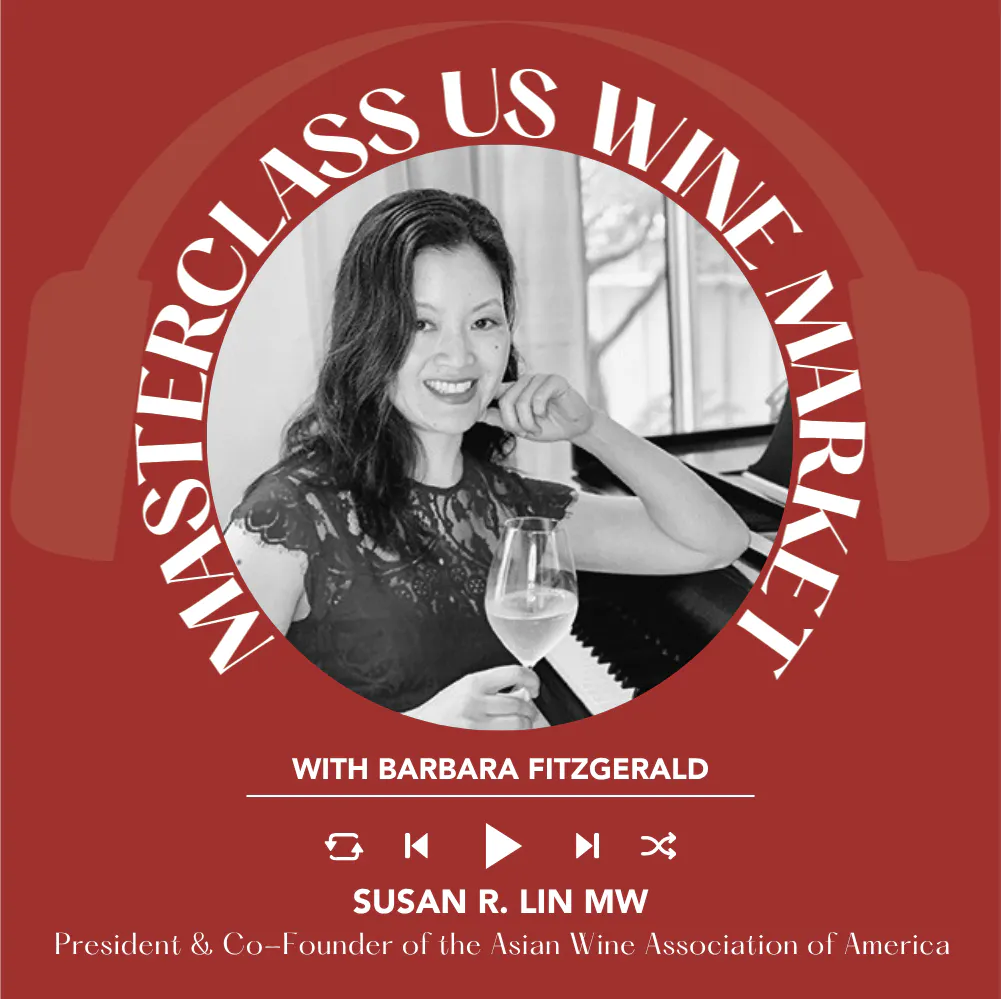
Ep. 2790 Italian Wine in the US: Building a Narrative and Reaching Asian American Consumers with Susan R. Lin MW | Masterclass US Wine Market
Episode 2790
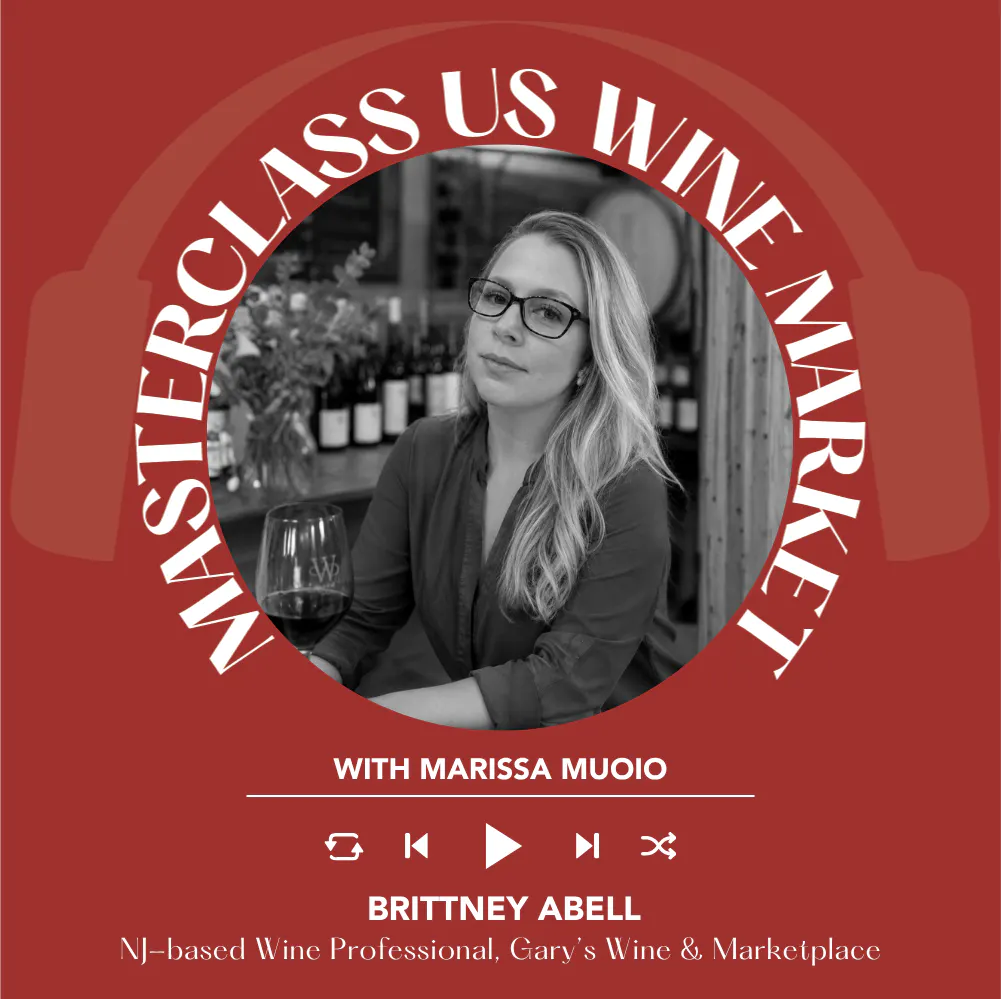
Ep. 2783 The Suburban Gold Mine: Insights into New Jersey’s Wine Market with Brittney Abell | Masterclass US Wine Market
Episode 2783

Ep. 2772 A Surprising Partnership between Japanese Sake & Italian Wine with Monica Samuels | Masterclass US Wine Market
Episode 2772

Ep. 2770 China’s Wine Market: From Misleading Import Numbers to Today’s Consumer with Fongyee Walker MW - Part 1 | Asia Wine Market
Episode 2770
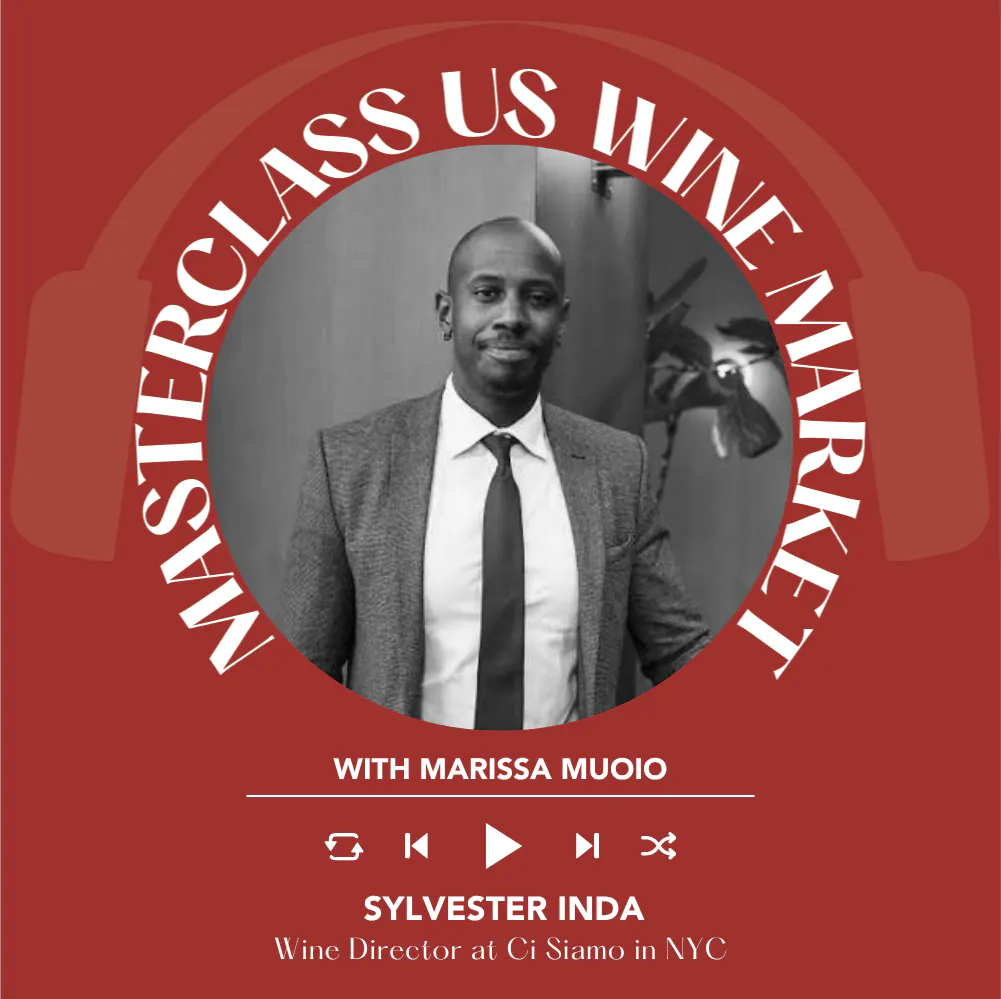
Ep. 2760 Winning the Restaurant Floor: Training, Education & Italian Wine with Sylvester Inda of Ci Siamo | Masterclass US Wine Market
Episode 2760

Ep. 2751 From Montalcino to Kazakhstan with Francesca Arquint of Collemattoni | Asia Wine Market
Episode 2751