
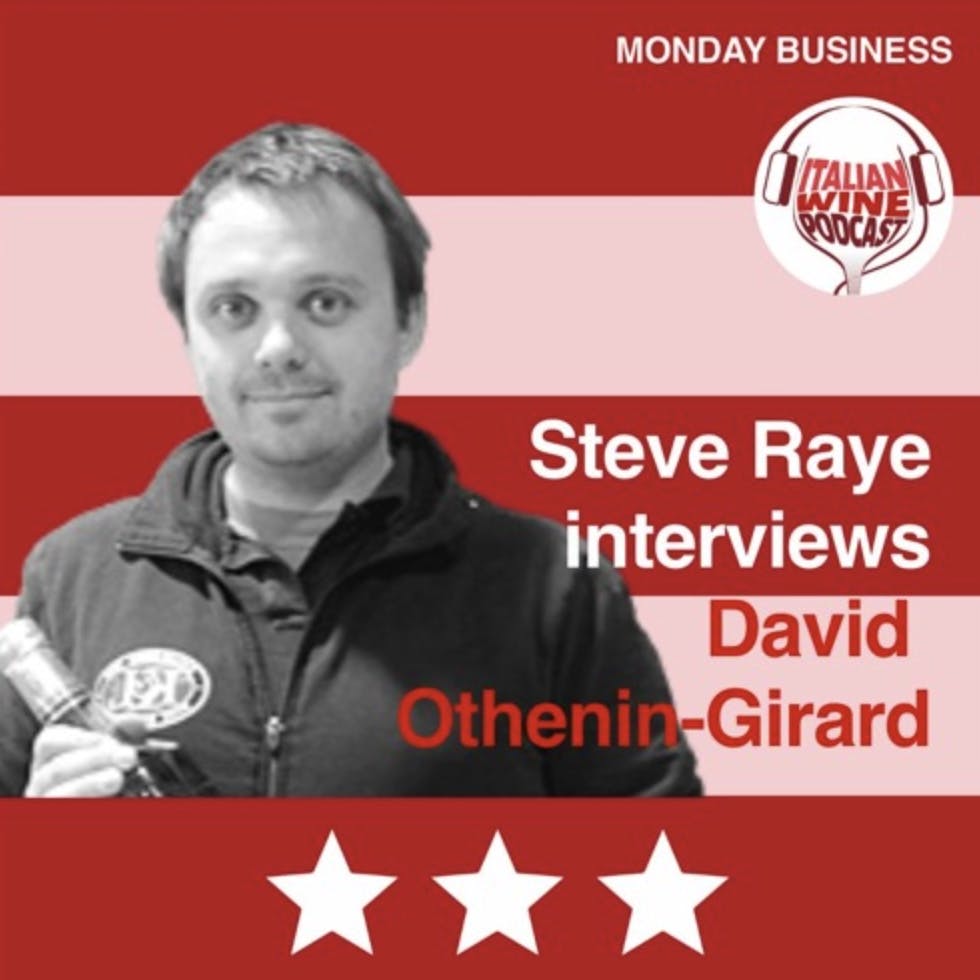
Ep. 664 David Othenin-Girard | Get US Market Ready With Italian Wine People
Masterclass US Wine Market
Episode Summary
Content Analysis Key Themes and Main Ideas 1. Introduction of the ""Get US Market Ready with Italian Wine People"" podcast and its focus. 2. The unique retail model and philosophy of K&L Wine Merchants, particularly its focus on value, exclusive sourcing, and customer trust. 3. David OG's journey and expertise in the wine and spirits industry, transitioning from wine to becoming a ""SpiritSpire."
About This Episode
The speakers discuss the Italian wine industry and its success in expanding its selection of small and medium sized businesses through online sales. They emphasize the importance of trust and quality in the sale process and emphasize the need for more information to help customers. The shift towards QR codes and NFTs is also a trend that is going to be important in the future, and the Italian wine industry is seeing a renewed love of bitter things and excitement for new things to try. The speakers also discuss the importance of bringing new things to the market and bringing a fresh perspective on the industry.
Transcript
Thanks for tuning into my new show. Get US Market Ready with Italian wine people. I'm Steve Ray, author of the book how to get US Market Ready. And in my previous podcast, I shared some of the lessons I've learned from thirty years in the wine and spirit business helping brands enter and grow in the US market. This series will be dedicated to the personalities who have been working in the Italian wine sector in US, their experiences, challenges, and personal stories. I'll uncover the roads that they walk shedding light on current trends, business strategies, and their unique brands. Hi, everybody. Italian wine podcast celebrates its fourth anniversary this year. And we all love the great content they put out every day. Chinching with Italian wine people has become a big part of our day, and the team in verona needs to feel our love. Producing the show is not easy folks, hurting all those hosts, getting the interviews, dropping the up house recordings, not to mention editing all the material. Let's give them a tangible fan hug with a contribution to all their costs. Head to Italian wine podcast dot com and click donate to show your love. Hi. This is Steve Ray, and welcome to this week's show. Today, I'm very pleased to have it as a guest, someone who is now becoming an old friend in the business. Most people know him as David OG, his formal name, that his parents gave him is David Otheonen Gerard, and he's the SpiritSpire at K and L before I go on further for you. Is that your title, Spirit Spire? Yeah. That's perfect. Absolutely. Yep. And for those of you who are not familiar with K and L is, a very unique group of stores with two retail outlets in Southern California and one in Northern California. It's the precise opposite, two in Northern California, one in Southern. I knew that. I was just testing to see if you were paying attention. K and L for those, listeners who are not familiar with it is, a very unique and, well regarded chain with two stores in Northern California and one in Southern California. The one in South Cal is on Hollywood and Vine or close to the corner, but we'll let David talk more about that in a moment. So David, welcome to the show. Thanks for having me, Steve. It's really a pleasure to be here. Give us a little background on you and how you got to be in the wine and spirits industry, and then we can jump it to K and L. Yeah. Pretty straightforward story. You know, graduated college with an economics degree. I had no desire to use. And, you know, everybody always said do what you love, and my parents wanted me to get a job. And so I applied for a couple of you know, sales type things from various retailers and ended up getting a job in the events planning department at a famous Los Angeles wine job called Wallies. And, yeah, so we were doing the, you know, we were doing bars and stuff for for big corporate events and parties and catering and all this stuff. And wine is my first love. So I I, you know, I I started in the business wanting to be, you know, a sommelier or to be a wine buyer. And, you know, I was very, very young. I was maybe twenty twenty one or twenty two when I got my first job in the industry and very quickly realized that Well, everyone around me knew a huge amount about wine. Very few of these very knowledgeable wine people at time, this is two thousand four or five knew anything about spirits or very just the most vague passing information. And this is, you know, well before the spirits boom of the last decade, obviously, and and a lot more interest in the category in general. But, you know, I'd have these master Psalm pin wearing gentlemen come in and, you know, and and point to the LeFroix and and ask me, you know, these are the same guys who would jump down your throat if you mispronounce batard or more richet, but, you know, mispronounced, you know, the le froy egg. It's quite Checo Telbo. Yeah. Exactly. It's quite, you know, it's quite smoky, isn't it? And, you know, it's just like, oh my god. It's from Islam. Right? And you're just like, okay. You know, I was twenty two. I was interested in whiskey because I like to drink it, and and so I researched it and learned about it because I just had nothing else to do with my life. So, you're and you were interested in it too. So, Exactly. And so, I realized quite early that was a a good niche in in the business for me and folk started focusing on spirits. And because I was doing the bars, you know, started getting to the cocktail thing and trying lots of different spirits, And their spirits fire left, and I was doing the most in the category, and they let me jump in there. And I just went straight down the rabbit hole, tasting every single thing I could get in in front of me, lots of single malts, bourbons, cognac, Armagnac, Grappa, just everything. And and transitioned a few years later to K and L. It just came in actually as wine sales, and the same thing happened that the spirits buyer left. And and my partner at the time, David Driscoll in charge of the category, and we built it from a tiny little portion of the store to, you know, the second largest category right now, for them, arguably depending on the month. But Interesting. So you've you joined the company and then the Spirit Buyer left. Is it that cause or effect No. I'm not sure. I I, was certainly wasn't, the Spears Buyer left at the time to start her own store. So, no. I guess it was, yeah, totally separate. She went and start a little convenience start wine shop whiskey store in her hometown and just lucky timing, I guess. Okay. So now let's talk about K and L. It's it's kind of hard for me to describe coming from the East Coast because we don't really have anything like it. Here, but kinda give us, a profile of what K and L is all about, who you service, how you service, and what products you carry and so forth. Yeah. I mean, can K and L, you know, it's been around for some time, you know, not the oldest wine shop in the country, but the general model is sell the best stuff at the best possible price. And we were very early adopters for the the e e commerce, you know, the the the website launched mid nineties. I mean, quite quite early before anybody was even thinking about selling stuff online. And, you know, we we specialize certainly in, you know, on premiere Bordeaux. We were one of the first ones to really, to really start doing that pre arrival thing and do it well And that attracted, you know, high quality, high, interest buyers across the country and, and certainly in California. And then, of course, our proximity to Napa, that's always been a huge part of our our portfolio is is, you know, highlighting the great producers of of that region. And from there, we sort of expanded realizing that there's a lot of great wine out there that's not being represented here. We, you know, we started to, you know, do it ourselves a little bit, you know, get get, obviously, you know, we we can't be importers. So we're we're finding various wineries connecting with them and bringing them in through our import partners, and and the result is a really diverse portfolio of special wineries, you know, across the world and specific buyers. So very knowledgeable staff who are creating content around the unique and exclusive products. And So that's it's interesting. It's a if it can simplify it and call it an exclusive label strategy, but different from the concept of exclusive label as it's commonly defined, which is private label. In this case, you're really talking about exclusive labels that you guys go out find source and figure out ways to bring them in so that the selection that somebody would see in K and is very, very different from what they would see in any other, traditional store for lack of a better work. Absolutely. And we'll have unique things, but not unique to us. Obviously, they'll be sold elsewhere in the world, even in, you know, in other markets in this country, but, you know, we'll take positions on things and work directly with wineries to, you know, get great pricing and offer our customers. So that's sort of the model is this, you know, and then of course, still have the blue chip, the the the classics, the the diverse category. It's not only stuff that we're bringing in ourselves or directly, but that is the sort of core mission is to to highlight. Because in the end, you know, a lot of these small producers, you know, for a medium size or even small importer, when we're talking fifty or sixty cases available, you know, that's a lot of work to build a brand and get it out there. And now you're shipping a case to this or that restaurant and, you know, like, what is it really worth their their time and money? So, you know, for us, fifty cases is great. That's that's easy to get through between three stores and an online operation. But for a small importer, that's a lot of work for not that much return. And and for the big guys, it's just a silly. So that that I think we've taken advantage of that and been able to connect with a lot of very high quality small producers in in all sorts of market. And that's really what I did with the spirits was to start to say what, you know, we we hadn't really done this before. Okay. Let's go to Scotland. Let's go to France. Let's go to Kentucky. Let's go find stuff that nobody else has and, you know, you know, bring that model to this category. So who is the K and L customer? I mean, you're living in Los well, I've only been in the Los Angeles store, and it's it's not huge. I mean, it's not tiny like a New York store, but it's not huge. Imagine the store's up in, Northern Cal or similar, probably what, three thousand, four thousand square feet, something like that? San Francisco was quite a bit bigger. The Redwood City store is pretty tight. They have a large warehouse area. Yeah. In that range. How do you handle having that kind of diverse assortment with limited retail space. And then where are you with warehousing of just your own stock? So we have an off-site warehouse where, you know, we're doing a huge amount of fulfillment. You know, the retail space is small ish, but not tiny. And so we we we're able to fit, you know, several thousand skews into each location. And then the other trick is we offer free transfers between our stores. So not every location has the exact same overlay. So we have trucks going back and forth between the stores, refrigerated transport, and so you can order a bottle in San Francisco that's on the shelf in Hollywood, and three to five days later, it shows up and good to go. So that's that's part of the the way we're able to expand the selection. And then you have buyers in each store. So we have people, you know, sort of catering to the local market somewhat, and San Francisco drinks differently from from Hollywood and and certainly from Redwood City. And so there is that. And I think that's part of why our e commerce platform has been so successful is that sometimes it's difficult to connect with people electronically and what you really want with wine because it's like any product. You want someone to tell you that you're making the right choice and someone you trust because it's not just about how it tastes, it's about how it looks, and how it how it's gonna age, and the seller, and there's so much more to it than just, you know, ninety points, you know, because everything needs to be ninety points or else we're not even talking about points. Yeah. You know, I think that having that front facing the store front has has really improved our ability to sell online. P. S. People build the relationship in the store, and then they trust us online. And then they see the faces of the people they know in the store, reviewing the wines online, and then they come and pick up their wines And then they come in and talk to us and buy more wine. And so it's it's a relationship, but it it all hinges around this idea of trust and and quality, and that's really what we're all about. So So let's back up a bit and and explore. So the stores are very different, the way you go about supplying your stores is very different. My suspicion is that the customer base is going to be different. And you just described that it's different, for each store. But how do they, in aggregate differ from people who shop at you know, the the supermarkets, in California or, you know, ABC in Florida or Yeah. I mean, we're we're really focused on we're niche. We're not a boutique wine store per se, but it's a very niche store. So we're offering the top tier of stuff. Of course, there's stuff under ten dollars. There's affordable stuff for sure, but we're definitely targeting customers who care about what they're drinking in a more complete way than, you know, someone who's grabbing a bottle of sauvignon blanc, the bottom shelf at the supermarket. You know, we we want people who are engaged with what they're drinking and seeking out the best. And that, of course, comes with, you know, you put you put the great bordeauxs and burgundies and brunellos and borollos on the shelf, and those guys show up if you've got a decent price. Like, that's easy. What's more interesting is taking people who are wine curious and making them into great customers who care about wine and come to you for guidance because you've opened them up to this whole world. You know, I think part of something that I didn't like about the wine world, and to be honest, this was even worse in Scotch when I first started, was, you know, this idea that, you know, the people who sell it have the knowledge. And you, as the consumer, are lucky to even get a part of it, you know, and and so we're we're willing to give you a a window into this world that you're not really part of, but if you spend enough money, you can poke your head in And, you know, that that may have been true when information wasn't completely available to anybody. Ubiquitous. Nowadays, anybody can be an expert on any particular topic, not not to say, like, you know, there isn't great amounts of knowledge and and huge, and and the need for someone to curate that knowledge, which is what we do. But ultimately, that whole style, it's really a marketing choice of of saying, okay, we have the knowledge, and we'll let you in, but, you know, you need to pay your dues, that's totally gone. And it's not effective anymore because that's not the way people like to be treated. You know, we wanna be inclusive and we wanna we wanna spread the love and the knowledge, and that's that's really what we're after, I think. So consumers, one of my pet beefs, if you will, but also in in what I teach and lecture and talk about is, marketing has has radically changed and not just because of COVID, but, you know, in the old days, we used to identify or differentiate or segment customers based on demographics, which is a meaning relatively meaningless metric. Behavior is a much better predictor of future activity, and you're talking with, and serving customers who don't fit into any traditional categories, their behavior dominates who they are more than anybody else. And it seems to me that the marketing that you guys do and particularly the the lists of current customers that you do and the kind of information you send out to them with the spirits journal newsletter and some of those things. It it's it's an entirely different way of retailer marketing than any other store that I know of in in the country. Yeah. I wouldn't disagree with that. I think that's, you know, and and of course, you know, listen, we attract lots of high net worth individuals because we're putting out incredible quality products. But I think, you know, you know, young people, especially nowadays, they're they're starting to be become more aware of what they consume and the label, the the brand essentially. It's brands are more or less dead in terms of, you know, yes, there's still people coming in, you know, Johnny Walker. Johnny Walker Black. You know, that's what we want. But we don't stop sharing with Equifax. So you can either leave or or I can offer you something similar. And those people are out there, but not young I mean, the young people, yeah, maybe they know a couple labels, and they'll say, they'll say like, oh, I want Casamigos or I want this big label that I've seen. But if you say, hey, this is this is more interesting. This is this is more authentic. This is more traditional. This is more old school. They're like, done. Whereas a lot of the old time consumers are like, meh, nineteen forty two were bust. Like, I'll just go somewhere else. So I think the the demographics are are such that the marketplace is changing, and and people are more open to to try new things. And and brand loyalty in, you know, in in all effect is in, at least in in my world is more or less dead. And so, you know, well, of course, you still have popular brands. Yeah. I mean, of course, it's all about quality now. What matters nowadays is is is the high quality products. Of course, again, I'm speaking for the niche you know, the niche market, the the people who are, again, who are thinking a little bit more. I I would object to that quality matters. Yes. Quality matters. But I think in the world we live in today, certainly on the side of wines, where, production methodology and technology can play such a role particularly in California with things like spinning cones and, remember, reverse osmosis and all that kind of stuff. Getting to to produce quality products is almost to give one, you may like one better than another. But while that's critically important, it is not solely important. And I think the, as you've said, the biggest part is how you tell the story of that quality and how that story resonates with me, the consumer, and how it's relevant to me. Well, I I think it depends a lot on your definition of quality. Just because you're making a sound wine doesn't mean it's a quality wine. If you're Oh, we're gonna get into it now. This is good. Go ahead. You know, wine is a product of place, and and wine without a place is wine without a soul. And so I don't really believe in industrial wine making in the way that you know, corporate wine production has accepted as the future. Again, I'm speaking for the minority. The five percent or seven percent of drinkers who care, most people just want something solid that's good, and it's that's smooth or whatever it is, the this ubiquitous term. Right. That's the only adjective we have that people use smooth and kind of a meaningless term. It means that the absence of alcohol burn. Yeah. It is completely meaningless. First of all, it means it it has nothing to do of it means one thing to one person, a totally different thing to another. It's the most useless term, but our brains are wired to sort of ask for this because people have had these experience. What people really mean is either sweet or, you know, or easy to drink, which is fine. You know, that's I mean, maybe I'm being a little harsh, but I I do believe it's very, very difficult to sell high quality wine, high value wine without that story as you describe it and without the the soul. Yeah. Totally. Well, that that was my point that it's the story behind it that if quality is great. Okay. But by itself is non it's necessary but not sufficient. Right. And yeah. And I guess my my only point is, like, to me, that isn't quality because if you can't, if you're not able to give that whole package, and the thing is, like, god, there's so much good, high quality wine in the world. You know, it's it's incredible that some of the stuff that's out there works at all. You know, there's so much, so much good wine. But and maybe in wine marketing, there there's it's a little bit more label driven, I I think, in the general sense. So let's talk a little bit about TransUnion. You brought up Italian wines. Obviously, this is the Italian wine podcast. One of the things that, just last week, or this this week, I think, Bulgaria had this big event. It looked wonderful. It was this. They had like a one kilometer long tasting in this row of Cyprus's. I was not invited. Just sand. But but what they've created there in an area that was just swamps is now the equivalent of bordeaux to the world of Cabernet sauvignon of these non traditional blends, which, you know, had to be called IGT or you know, the lowest level of, qualification in Italy because they didn't meet the definition of everything else. So we're seeing innovation. It has taken a long time in Italy, but they're doing some really cool things. What's your point of view on what's happening in the Italian wine industry, upcoming regions, new, blending, you know, indigenous with, international varieties and so forth. What what what's happening? What's interesting? Yeah. I mean, I think, you know, One thing that these Italian wines can offer is incredible value compared to what you're getting out of Napa or even Bordeaux. But for me, what's always the most exciting again about Italian wine in general is the extreme diversity of of wines being offered. And honestly, even with the incredible amounts of Italian wines that are available, there's just still so much out there. Things that I'm seeing every day that I'm just can't believe his new, you know, new grape varietals or very old grape varietals that have just never been sort of marketed here. And the country, you know, unlike France where you have, okay, yeah, there's wine making more or less in most places in France, not everywhere. But, you know, you have these sort of pockets of quality. Italy, almost not everywhere, but almost everywhere, there's there's something good being made, like, very, very interesting stuff. And I'm, god, Tima Russell. I'm, like, obsessed with, you know, this grape that was almost completely extinct. And, you know, now you're seeing Vietti put out Tima Russell, and it's just the whole category is changing there. And, in these these white wines from the ligurian coast and from from Pemonte. And and, yeah, I mean, just so much out there. It it's crazy. I I I had a bottle of pre phylloxera allianico. Last week, own rooted Alianico from Tono to San Francisco. And Sandy Rocky, yeah, straight into the, you know, it's also quite kind of separate from sort of the trade routes at the time. So maybe that's why it didn't get blown apart, but they are very, very unusual soil types, and the wines are just incredible. Like, who else is putting who else? What other country has has own rooted hundred plus year old vines? You know, it's just crazy. Okay. So, we're all limited by space. And in the case of, bottle of wine or a bottle of spirits, you know, there's only so much space on the label for you to tell that story. One of the things that I see, a dramatic shift back towards is QR codes and also these NFTs, the, the chips that allow smartphones now to connect the brand with the person who is literally holding the bottle in their hand at the precise moment in time when they're considering buying it. Do you see a, do you see that change towards QR codes? Yeah. Absolutely. I think it's, you know, all all about convenience and conveying that information. You know, obviously, you can easily Google a label in the same way, but there's something very easy about doing that, the QR code thing. And and particularly, you know, I've seen it for new brands, obviously. I don't you don't see a whole lot of the old brands rebranding to add a QR code. And and that stuff is, I think, is going to become more important because the way you deliver the information is important and that ease of access is key. And and now everybody's quite used to five years ago. Everybody was like, QR. This is stupid. Like, why are we even doing this? Can't you just, you know, type it in your thing? But now it's everywhere, and and it's it's simple, and particularly over the last year. So people are very, very used to it. So, yeah, I think it's it's gonna be important. And and I think what it'll offer also is a way for brands to connect consumers. You're sitting there, you know, now it just takes you to the website. But, you know, who knows in the future? It could be more experiential. It could be more there could be a lot more to it just than just product description and, could be connecting directly with consumers. Okay. We're running out of time, but I did wanna ask one more question on Italy particularly. What's the what's happening in with Italian spirits? You know, it used to be just grappa and now, April. But, there there's so much more to Italy than that. What what do you see coming out of Italy and where do you think Italian spirits might succeed? Yeah. I think it's a really exciting time for Italian spirits, not only because I think there is very few can argue that we are experiencing at least in this country, a renewed love of bitter things. And so the the amaro that, you know, where whereas the American market for for years was considered just totally averse of bitterness. We're seeing these traditional bitter repair tips and, you know, and a number of craft producers in both Italy and here recreating old recipes, creating new recipes that are becoming very popular. And I think the amaro thing is here to stay because it's such a diverse and complex. You know, it's like gin. It's like anything is possible in a lot of ways or maybe even more so. I think the other thing that's really, really exciting in Italian spirits and and that, you know, not something that I wanna totally share because I feel like I have a little bit of a a little bit of a head start is that, you know, a lot of people don't realize that the, in this country, in particular, it, that the Italian market was, you know, one of the very first to appreciate high end single malt and rum. And there's a history, fifty, sixty year history of great Italian importers going to Scotland, picking out barrels and bottling them for the Italian market. And you you you you you may see some of those here now, a Samarola in particular, which has incredible track record. It's quite the same as it once was because, you know, Sylvano has passed away, but there are all these great little importers, Italian importers who are out there, great relationships with with Scottish, bottlers, bringing them in the Italian market. And I think That is something that people don't realize that there's this whole other independent bottler market in Italy just for that market. And I, you know, what I'm trying to do is take some of those and bring them here because they have access that very, very few other people have, and and while they're not Italian spirits, they are Italian curated. And that that's that's I think the the next most exciting thing we'll be seeing, out of there. So Alright. So boil it all down. We do have to draw this to a conclusion. We're talking with, David, o g, David Othanan Gerard of, buyer at K and L. What's a big takeaway from this conversation? I mean, not everybody buys from K and L, but a whole lot of people can buy from K and L because you do an extraordinary amount of of the e commerce. But out of your philosophy of how you do buying and how the core does the store does business, How does the rest of the industry, what what can we take away from what we've all talked about here today and put to you immediately? It's hard to distill in, you know, into one sort of idea. Sometimes it's as simple as just like, just trying, like, just getting up and doing something extra, whereas most stores are happy to, you know, put out the supplier provided tags, the neckers for the points, you know, that's fine. But, and and sure surely will put the neckers on when they bring the bring them out, you know, into the shop. It's not that hard to do more than the next guy. And sometimes it just means working harder, trying harder, doing doing something rather than nothing, which sounds obvious. But, you know, in our industry, it's like a lot of, like, okay. We brought it in. It's it didn't sell. Well, what did you what did you do with it? Well, we just pointed to it. Like, that's not enough. So I think that, you know, it's giving a crap is sort of the key. Well, David, I wanna thank you for your time. It's always it's a always pleasure to to to chat with you. You bring a a very fresh perspective into, retailing of of minds and spirits in the United States, but we do need to bring it to an end. So big thank you for being a guest this week. Thanks for having me, Steve. This is Steve Ray. Thanks again for listening on behalf of the Italian wine podcast.
Episode Details
Keywords
Related Episodes
Ep. 2790 Italian Wine in the US: Building a Narrative and Reaching Asian American Consumers with Susan R. Lin MW | Masterclass US Wine Market
Episode 2790
Ep. 2783 The Suburban Gold Mine: Insights into New Jersey’s Wine Market with Brittney Abell | Masterclass US Wine Market
Episode 2783

Ep. 2772 A Surprising Partnership between Japanese Sake & Italian Wine with Monica Samuels | Masterclass US Wine Market
Episode 2772

Ep. 2770 China’s Wine Market: From Misleading Import Numbers to Today’s Consumer with Fongyee Walker MW - Part 1 | Asia Wine Market
Episode 2770
Ep. 2760 Winning the Restaurant Floor: Training, Education & Italian Wine with Sylvester Inda of Ci Siamo | Masterclass US Wine Market
Episode 2760

Ep. 2751 From Montalcino to Kazakhstan with Francesca Arquint of Collemattoni | Asia Wine Market
Episode 2751