
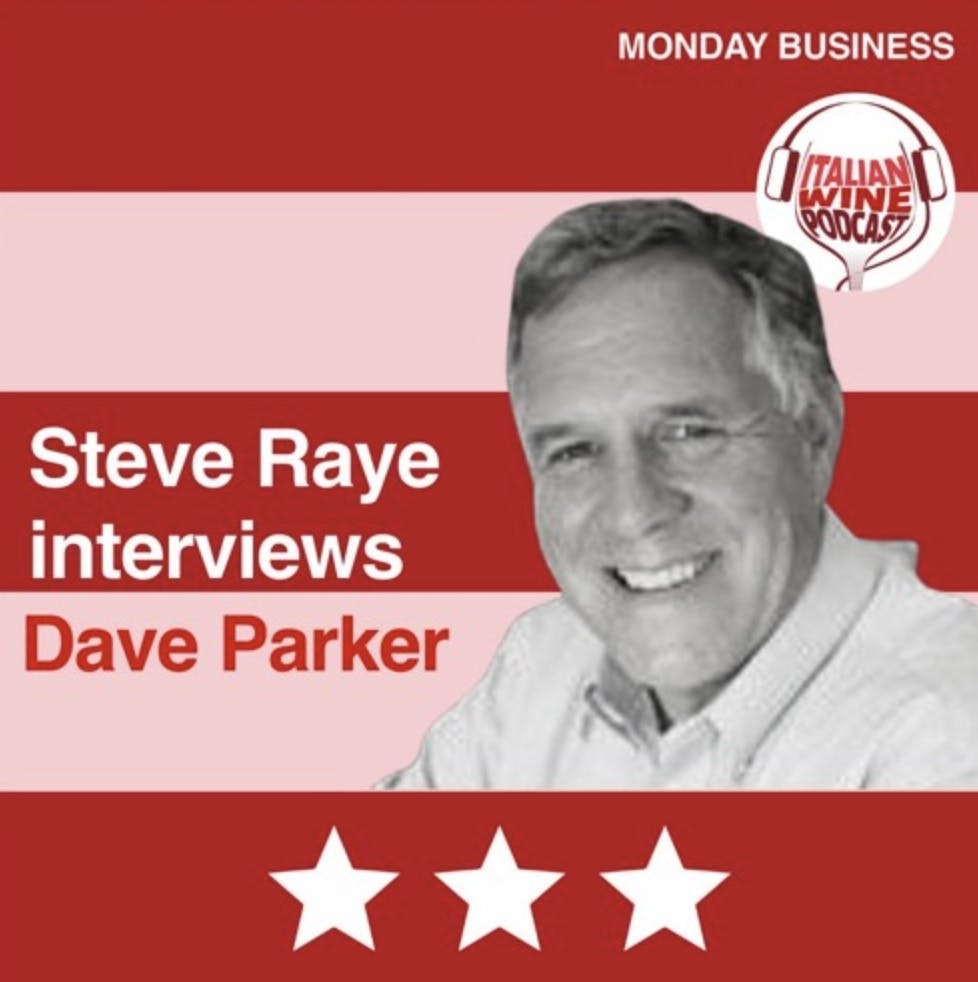
Ep. 762 Dave Parker | Get US Market Ready With Italian Wine People
Masterclass US Wine Market
Episode Summary
Content Analysis Key Themes and Main Ideas 1. The business model of Benchmark Wine Group as a market maker for rare and collectible wines. 2. The evolution and current state of the global fine wine collector market, including generational shifts. 3. The increasing collectibility and resurgence of specific Italian wine regions (e.g., Mount Etna, Super Tuscans, Brunello). 4. Challenges and solutions in authenticating rare wines, including combating fakes and the role of technology (RFID, blockchain/NFTs). 5. The complexities of the US three-tier alcohol distribution system and efforts to expand direct-to-consumer (DTC) channels for high-value wines. Summary In this episode of ""Get US Market Ready with Italian Wine People,"" host Steve Ray interviews David Parker, founder of Benchmark Wine Group. Parker elaborates on his company's unique role as a market maker for rare, perfectly aged, back-vintage wines, specializing in direct-to-consumer sales and acquiring collections. He discusses his background in Silicon Valley and how his engineering mindset led to building a data-driven approach to wine appraisal and sales. The conversation covers the impact of COVID-19 on their business, shifting from restaurant sales to primarily direct-to-consumer. Parker highlights the growing collectibility of Italian wines, citing examples like Super Tuscans, Brunellos, and the remarkable resurgence of Sicilian wines from Mount Etna, attributing their success to investment and collective marketing efforts. The episode delves into the critical issue of wine authenticity, sharing methods to identify fakes and the limitations of new technologies like NFTs in verifying contents. Lastly, Parker discusses the National Association of Wine Retailers' work to open up interstate direct shipping for retailers and critiqued the traditional three-tier system's inefficiencies for small-production, high-value wines, advocating for direct channels that preserve producer message and margin. Takeaways * Benchmark Wine Group acts as a market maker for rare, perfectly aged wines, offering an alternative to auctions for collectors. * COVID-19 significantly boosted direct-to-consumer sales for rare wine retailers like Benchmark. * Top Italian wines (e.g., Giacomo Conterno, Sassicaia, Ornellaia, Tignanello, Montalcino Brunellos, and Etna wines) are now firmly established in the global collectible market. * The Mount Etna region has transformed from abandoned vineyards to a source of complex, high-quality collectible wines due to investment and collective efforts. * Wine collecting habits vary by generation: Baby Boomers focus on Bordeaux/Burgundy, Gen X broadens to include Italians and cult cabs, while Millennials prioritize value, discovery, and peer recommendations. * Authenticating rare wines requires careful inspection of labels, capsules, and corks, with producers often assisting. Blockchain and RFID help authenticate the bottle but not necessarily the contents. * The US three-tier system is efficient for high-volume, low-price wines but often inefficient for high-value, low-production wines, diluting the producer's message. * Organizations like the National Association of Wine Retailers (NAWR) are working to expand interstate direct shipping rights for retailers. Notable Quotes * ""Benchmark Wine Group's the largest, retailer, and we distribute rare wine, which is primarily back vintage, perfectly ready to drink. Top lines of the world."
About This Episode
The speakers discuss the challenges faced by wine-wines in the US market, including the lack of pressure to sell old wine and the increasing popularity of wine. They also discuss the expansion of Italian wines in the inner circle, with younger generation being largely focused on the high-end and needing educational programs to market their products. The importance of authenticating wine and making sure it is authentic is emphasized, along with the use of technology to prevent fake bottles and the National Association of Wine Retailers. The speakers also mention their efforts to change laws and create a second channel market for international brands, and their goal to create a common audience and cater to individual demographics. They also discuss the importance of understanding the process to maximize business and offer a free podcast for wine and spirits podcasts.
Transcript
Thanks for tuning into my new show. Get US Market Ready with Italian wine people. I'm Steve Ray, author of the book how to get US Market Ready. And in my previous podcast, I shared some of the lessons I've learned from thirty years in the wine and spirits business helping brands enter and grow in the US market. This series will be dedicated to the personalities who have been working in the Italian wine sector in the US, their experiences, challenges, and personal stories. I'll uncover the roads that they walked shedding light on current trends, business strategies, and their unique brands. So thanks for listening in, and let's get to the interview. Hello. This is Steve Ray, and welcome to this week's edition of Get US Market Ready with Italian wine people. My guest today is, a gentleman who I met at wine to wine in Verona in October, I believe it was, and discovered he's got this incredible service for high end wines direct to consumer in the United States that I was totally unaware of, but was so impressed. We decided to have him on the show David Parker of Benchmark Wine Group. Soon to be benchmark wine and spirits group. David, welcome to the show and tell everybody why I'm so excited. Hi, Steve. I'm happy to be here. I well, I think you're really excited because you discovered where you can get perfectly aged wine, which is what we specialize in. So benchmark wine group's the largest, retailer, and we distribute rare wine, which is primarily back vintage, perfectly ready to drink. Top lines of the world. And, so you don't have to sell her for twenty years before you drink it. You don't have to take your chances at auction. We've got it available. You've got a very broad selection. And and you don't have to commit infanticide, which is what happens so often. With many of the brands that we work with. Well, that's right. Wine wines that are well aged, the top ones are just so much better and almost a different product than when they're young. Yeah. And and when that happens, it's back to that ethereal, incredible, that moment when you discover, well, that's why I like this stuff. Okay. So give us a a little more background though on your professional. You've had a a couple of careers prior to doing the wine thing, but they seem to have conflated to create something really unique and valuable. So tell us. Okay. Well, I was originally, an engineer in the Silicon Valley. I was trained as an engineer and worked, for for several top companies there founded one of them with some other people that was quite successful and kind of along the way. Wanna share that name with us, which which one that is? Yeah. The the company that got really big in a hurry was called Wise Technology. You'll still see that name. It's been sold to Dell, but you'll see them in the name of the little boxes behind the monitors in your doctor's offices, for instance. And, but it was a computer terminals at the time, our thin clients, and got really big in a hurry. Having moved to California and never really experienced wine. I figured I'd go out and learn something about it as a hobby. And the company got big enough fast enough that was able to turn a daydream about owning a vineyard into reality and bought a bought a vineyard during that era. Later on, decided to to move my career more in that direction. But what you're doing is is something very different from anything that that I've seen in the marketplace, you know, beyond just a traditional a retail store or even a retail store that specializes in collectible or rare wines. And I'm thinking of Zachis in New York, which also participates in auctions and so forth and and, on premor and all that kind of stuff. You you talked about you guys being a market maker for rare wine. Can you explain how that works? Sure. We, we maintain a separate company in mind maintains a database of all of the auction data and, for the entire industry. And with that, we can essentially strike a price or any rare wine in the current market. And so appraise collections almost instantly and very accurately. Go ahead and pay that outright if somebody wants to, but we also have an auction house and they can auction it. But we will we're essentially always in the market to buy rare wines can always strike a price and can always make those available immediately at the current market prices. So just like a market maker and stocks, is buying and selling all the time, a wide variety of things. We do the same thing with wine. Okay. So, not everybody is a collector. A lot of this, I imagine you've been active in dealing with restaurant inventories. Of lines during the COVID process? Yes. Absolutely. During the during COVID, a lot of our restaurant customers were more on the sell side. They needed the ready cash to keep operations going or or to to maintain. And so we we purchased substantial inventories from some of the top restaurants in the country, more frequently, their buyers, and many of the top ones have since bought back inventory. That's certainly an opportunity for them to to change, to change their stock more in keeping with with you know, what their current customers are consuming. Okay. Well, talk more a little bit about that. So I'm guessing that what they released was the the the burgundies and Bordeauxs and Barrolos that we're probably familiar with. But is that true and where do you see them changing or evolving too? Well, restaurants, I think their traditional stocks were top bordeaux's top burgundies. But I think they're they're broadening out certainly champagne, certainly grown certainly California collectibles in in in other areas of the world. I think that's parallels collecting habits where, you know, the First Growth Bordeaux is used to be everybody's collectible, and burgundies have absolutely grown to where they're equal, if not greater in terms of dollars transacted. Champagne have gone up tremendously. Italian wines, top Italian wines have joined that inner circle of of very collectible wines. So give us some examples of some of the Italian wines in that inner circle. Well, you've got, let's see. We we've got GIA in in the Piedmont area. You've got GIA. You've got Contano. You've got Gia Cosa. In Tuscany, you've got the Supertuscans in the Bulberry area, most notably SaaS Sakaya, Moseto, Ornelaya, Salaya Tignanello. You also have, brunellos that are that are widely collected, Montodey, for instance, but many others in the new hot areas, Mirama, which is south of Bulgaria, is an up and coming area as is, Mount Aetna area on Sicily. So Hearing a lot about that. And, you know, years ago, not too many years ago when you said sicilian wines, people would kind of turn their nose up just at the concept. And now all of a sudden volcanic wines and the the the the varietals that they have on the island are aveda and so forth. All of a sudden went from being rustic and of little interest to international buyers to, rustic and extreme interest to international buyers. Can you talk more about how that happened? What drove that? Well, yeah, that I think Mount Aetna or what you call in the volcanic lines is is a fascinating area. It was almost abandoned in the eighties, and I think the government was even giving land away at one point to get people back there. And that the soils are so rich and so complex. And there's there's altitude there to compensate for, you know, how far south it is that you really have got almost all of the ideal components of a of a complex high quality wine. What it took was investment from from top producers and modern methods to to bring that area back and and in terms of the the quality of the wines being produced. And now I think it's bearing fruit, so to speak, in terms of very complex, interesting wines there. And not so rustic anymore. Think a lot of them surely still are rustic, but, a lot of the the winemaking and, Viticulture techniques that are used for the best wines in the world are being applied there. So you're getting some very fine wines here too. Yeah. I was, some I was reading something about Moscow, and there was one thing I did not know about Moscow is that the Agave after it's cooked is crushed by donkeys and, and, like, they do in, TAquila, the donkey is connected to a big stone called a Tona stone. In the case of Moscow, it's the the the donkey, and he books in the do you know anything about that? No. I I won't say that I have heard that story. I don't doubt it. There are certainly lots of, things that can get into wine while you're making it. You know, certainly, a lot of the, the more modern techniques are are doing a lot of cluster sorting to get the, get the bugs and the sticks and, you know, the various things that really shouldn't be in line out of there. You remind me of Court where until, like, through the nineteen sixty three vintage, it was traditionally crushed by foot, the first crushing anyway. And, you know, at least some at some point, someone figured out that might not be the cleanest way to do it. And so, modern methods maybe take a little bit of the the the character in the color out of the the old wine making techniques, but sometimes it results in better wine. So when we're talking about Sicily though, I mean, it's been a a complete turnaround. Like, diametrically, from I would not even talk about those wines, much less drink them to their, great deal of, interest in them and also, at a collector level. How beyond the fact that technology was there to be put into place and the government trying to repopulate the area, which I'm sure was World War two was a was just reading history of what went on in Sicily. It's pretty amazing. What other factors have caused it to become a thing these days. Well, I think that the all of the sicilian growers and not just the ones on Mount Aetna have formed a consortium, I think, with the help of the EU and the government, and, are working together to share techniques to market their products together. I was party to a couple events sponsored by that consortium and got got an opportunity to taste wines that otherwise, you know, I never would have and got a perspective on them in a very quick way. And I think that's what it takes for a region to to get recognition is is a broad educational program and conducted throughout the United States. Okay. So what's changing beyond just the the the types of products or brands or wines and wine styles, in in the world of collecting. We have a new generation or a couple of generations of people who can afford these things, you know, tech, hundred billionaires, millionaires, and all those kinds of things. Is it an age thing? Is it a an income thing? Is it a new way to discover wine these days? What do you think is driving the expansion and interest in wines that are collected? Yeah. That's a good question. I think there are a number of factors. Collecting is going way up. We're seeing prices appreciate faster on rare wines in the last couple of years than they ever had before. We see the market getting broader in terms of the number of products. And, you know, the baby boomers have always been the leaders in collecting of wine. They're obviously the generation before them did it too, and and go back in history. But, the biggest collections still are held by the baby boomers. They hold the most they're big generation. They hold a lot of the wealth. And they've learned about wine, and and a lot of them are learned about the higher end of wine. A lot of them are holding it as an appreciative, collectible, you know, the appreciation value, certainly inflation is or the fear of it is driving some of the the collecting. Next generation down and and they're they're primarily Bordeaux and Burgundy focused, some champagne, some of the very top Italians. But, next generation, so called Jan Exers, Although it's a smaller generation are kinda moving into that time of their life where their income is going up. And they're following the baby boomers, but they're they're broadening out. They're also collecting the the so called cult cabs they're collecting. They're to a large degree driving the the trend toward collecting Italians was was especially the Supertuscans and and other areas, Rome's, and so they're, although similar in characteristic to the to the baby boomers, they're experimenting more, and they're more in the acquisitions mode, whereas a baby boomers are on average getting to an age where a lot of them are starting to dispose of their seller. Or thin them down. After both of those are the millennials, and that's an exciting and interesting new generation. You know, they kinda wanna do things their own way. They don't care quite so much about what a, critic says. They care more about what a friend says. They're absolutely in the in the mindset of, being interested in wine and wanting to learn about new wines. They don't, as a, in a general sense, have the disposable income yet of the of the older generations. So they're looking for for well priced wines, but interesting ones and ones that they're hearing, their friends that they think are very knowledgeable recommend. So that's that opens the whole world up and back to your question about Sicily, all the regions of the world now. Potentially can catch the attention of the millennials and as they age. Some of those become very, very popular and collectible. Okay. Talk about the customer base for benchmark. Who are they or what buckets do they fit into? And, how is that that changed recently. Pre COVID, about seventy percent of our customer base were collectors, consumers, and about fifteen percent were top restaurants, mostly Michelin starred or otherwise top award winning restaurants ten percent were Asian brokers and five percent were top retailers. Top retailers, the restaurants and the Asian brokers, all diminished in their buying, in some cases almost dried up. During COVID because people weren't going to restaurants, so they weren't traveling. But the consumers by far more than made up for that. So we reached a point where perhaps ninety percent of our sales were direct to consumers who weren't going out to restaurants as much, but they were cooking at home. Maybe felt like they had a little more money they could put into a nice bottle of wine to to compensate. As we've gotten toward the end of the pandemic here, we've seen those restaurant customers come back. We've seen the Asian brokers come back and the retailers come back. And the direct to consumer group really hasn't changed. So we've we've captured that growth in direct to consumer market as where we're gaining the other parts of the market. I think that's a healthy sign for the future. I don't know many of people with hundreds of millions billions of dollars. I actually have I've had a couple of clients that were in that category. But I I wonder, I mean, you're more involved. I presume in their social world. I mean, when you're having dinner at collector who has palettes of Mutan eighty two in in storage, is is it a different experience than when somebody's bringing, oh, here here's this Australian wine I just discovered. Well, yes and no. I think in both cases, you've got a sense of sharing and of socialization. That's what wine's all about. The higher end collectors, the people with, more valuable sellers, appreciate that and know why they're in the process of pouring a multi hundred or multi thousand dollar bottle, you know, as opposed to a lower end one. But there's always a sense of of sharing and and learning and and trying something new and and having an opinion that you can share with somebody else about it and enjoying it with a good meal in many cases too. So I think that in a lot of ways, wine, brings people of all different income levels together in that way. And I've certainly been in groups where the incomes of the various people sitting around the table varied all over the board. And, any of that same sense was there. One person might be pouring a thousand dollar bottle because he could, and maybe, let's just say it was, is showing up with a twenty dollar bottle of something he's super excited about, and everybody at the table pays equal attention to both those bottles. In my experience working in the wine industry, those are the the moments and opportunities I like the best where things that you would never not be exposed to or have access to and a roomful of people who get it and be able to share. Just before we came on the air, I was talking about a bottle of board that I'd let age and it went from being and SIPid to inspired, extraordinary. That's the kind of thing you do wanna share with others in that, I think everybody else in the in the wine world gets. And whether whether it's they have a a lot of money to start out with and can buy the good stuff, you ultimately learn how to appreciate the good stuff. And, boy, there's a big difference between the good stuff and the regular stuff. Yes. There absolutely is. I mean, there's wine that's specifically made to be high volume, low price wine, and to it has this place. It's a great thing to have casually. I I think people should be drinking wine every night, and you're not gonna always wanna drink an expensive bottle, but then the the wines at the top end of the market really have the extra care, the the perfect locations of the treatment. And when you get the ones that are perfectly aged, two, and you've you've got that exquisite epiphany moment all over again, the one that everyone's had once, and that's what's brought them into wine and got them so excited about it. And they continue to search to to recreate that experience. There you go. And I'm I'm waiting for my invitation over to your place for for dinner. But on the on the flip side, the technology impact, you know, obviously winemaking with spinning cones and all kinds of new tools and technologies have allowed people to have more influence on the final bottle of wine. There's still this world of fake bottles, the whole Rudy Owen thing. There's still some of those bottles out there. I saw one just got pulled off of auction last week. Tell me what you guys do to help identify fake bottles and where you think the industry is going technologically on this regard. Yeah. That so, yes. In fact, we just received a collection. We had to let the poor guy know that we were not able to authenticate it and had all the same indications. First thing is education. So we there's a small group. So you crushed him. He was just Well, no. We we all we can say is that we were unable to authenticate it. And we directed him to the the top line authenticator in the country for further discussion, but it had all the all the the signs. So, a, we were very much involved in in the Rudy Kearney one thing in terms of keeping it out of the market making sure that whole thing stopped. And, the wines that he created are very easy to spot. Now that you know what to look for. Very old bottles with brand new labels. He would stamp most of the Nicola seller, which was, a short lived storage facility. Alan, importer was his were importer tags he put on there. And when you see bottles with brand new, with labels and very old capsules, this just doesn't fit. But what we look for is and there's a fair there's a very large group of people within the industry that are continually communicating about these things. So that one experiences that everybody else learns from it, but simple things that can be done. You'd look at the look at the label with a with an eye loop If it's pixelated, it was done on a laser printer. It wasn't a lithograph, and all labels are done with lithographs. So you start to see dots there on the label. It's wrong. If you see capsules that look like they've been tampered with or look generic instead of having to produce your name on it. That's wrong. If you see fills or label conditions that are not consistent with age, that's wrong. If you line a bunch of bottles of the same lineup, and the labels are all at all different levels on the glass. That's wrong. And I I can keep going on. We can, in some cases, we will gently trim back the capsules so we can see the cork, and we'll look at the vintage on the cork. We and the and the producer name that stamped on the cork, and in some cases, we'll generally with the permission of the owner sacrifice a bottle to open it up and and and tell and we usually pick the least expensive bottle because that's usually the best canary in a coal mine kinda thing. And, that's also a good way to tell a storage condition, but there's a lot of visual cues on storage condition to make make that more opening a bottle more of a rarity than the common occurrence. So what are producers doing to help fight this problem. Well, producers are always the one the top ones are always available to help authenticate. If there's a questionable bottle, they'll get involved. We we received, a a bottle of bordeaux, with a a, a strain from a very top producer with a strange color capsule on it. So we contacted them. And they notified us that was an aftermarket add on capsule, specifically to indicate that French tax had been paid. So that was legitimate, but we wouldn't have known without their help. So they're always evolving. You know, you're you're familiar with, this the story of Ponceau coming over to to help make sure what Rudy was doing was stopped. And so it's to their benefit to make sure their brand is not diluted. They're also starting to put in chips RFID chips into the glass. I know that at least one top producer was doing that. That certainly helps authenticate that this is the right bottle. It still doesn't help you authenticate the contents. Somebody could have carefully removed the cork drank the wine and put something else in there, which really was doing. But it it does have, you know, some degree of value. And there's some other things that DRC, of course, numbers every single bottle differently, just another way Rudy was caught, bottles that we knew were sold to him with one fill showed up at the market again with a different shell. But if you take this further, and and the new, obviously, most people know about blockchain technology and the confidence that provides someone in the history and ownership and provenance to some degree of the bottle, but it's not gonna solve all the problems when it comes to quality collectors. Can you comment on the role of NFTs and, blockchain technology? Yeah. We've been we've been working with some people to try to get our arms around how it can and can't, benefit the industry. And you're right. Theoretically, it can help authenticate the bottle, the glass, you know, with the label, just as, the RFID chip discussion was a moment ago, but it's very difficult to authenticate the contents. If if you have an authentic bottle that's had the contents removed and something else put in there, I I'm not sure I understand how an NFT would help prevent that. I think there are a lot of people trying to figure that figure out exactly that question. How do I authenticate both the contents and the bottle that's surveillance of the capsule that's, potentially, looking at the cork if you have to, but it's it's not something I think that a an NFT will solve. Okay. Well, let's shift gears a little bit. A subject close to my heart is direct to consumer e commerce. The impact of the three tier system, the loosening of some of the regulations to go cocktails, for example, you're involved with the National Association of Wine Retailers. Can you tell us more about that organization? Its goals and, some of the successes you've had recently. Sure. Yes. The National Association of Wine retailers was put together a number of years ago after the Supreme Court Grandholm decision, started to open up, interstate shipping of alcohol. And its goals are really to provide services of all levels to, to retailers in the United States, but to this day, one of the the major, goals is to continue to open up, the interstate commerce, especially for retailers. Wineries, enjoy a broader range. Of privileges in that regard, domestic wineries who enjoy a broader range of privileges in that regard, and yet there was nothing yet because of the Supreme Court ruling. Yet there was nothing in there that, gave wineries any more privilege than than retailers. So we're working with various legal firms and with various legislators to change the laws. We believe that all the privileges of domestic winery has in terms of shipping around the country. Also belong to to to US retailers. One sign I heard about that was when the new shortened CBMA Craft Beverage modernization act came through and that was, I think, two thousand seventeen to eighteen or maybe eighteen to nine nineteen was when it was first instituted in regard to how, international brands or imported brands, can participate. When the CBMA thing passed, it also included imported wines in the call it the discount or the reduction in the federal excise tax. This was the first time that they were included in that kind of legislation. Is that just kind of a thing that happened or do you think somebody actually had a plan to leave that in? Yeah. So there's been a big push and we the MAW has also been instrumental in in opening up the market for international brands. We worked very hard to get rid of the tariffs that were in place and we were successful with doing that, the beginning of, of this year. That was huge for it was huge for Bordeaux for Burgundy, and in all all lines that were under fourteen percent. Alcohol were, you know, subject to a twenty five almost all subject to a twenty five percent tariff, Italian wines and champagne, unfortunately, we're not. But anyway, on top of that, we continue to work to, make it easier for, European brands or international brands to come into this country. My company benchmark wine besides being a distributor and a retailer is also a licensed importer. And we've been working with top brands to, custom import their product, right, to our customers, because a lot of their low production products don't move well through the current three tier system. The the big distributors and the big importers don't wanna deal in small quantities and aren't prepared to provide the service and brand development that those very top products deserve. So we've been working with some of the top, the biggest producers in the in the world, including two of the top, producers in Italy to to sort of create a, a second, channel market for those products. That was the talk you heard me give it one to one. Right. And that was I I thought that was really kind of interesting. And everybody, the it comes to me as this question. How do I get around the three tier system? And I'm sure you give the same answer I do, but as you can. But Yeah. Yeah. So I I would I would phrase that question ind differently. I would I would phrase it how do I make best use of all of the channel options available for me and my brands if I'm a producer or for the things I want to bring to my customers if I'm a retailer or a restaurant. And the the three tier system, has a very strong and valuable place in the market. They're ideal for moving large quantities of high volume product to large consumers of that product. That's what they're set up for. That's what they do a great job. Do I? The smaller importers and and distributors do a good job of of bringing some of the smaller brands out but nobody right now does a good job of handling the big producers, the big top producers that have high volume product and flagship high values. Tiny production product, which they almost all do. Those don't go to the same customers. Those aren't handled effectively the same way. And the that's one of the things that we're trying to to communicate. And it's complimentary to what the big distributors are doing it's not in conflict with them. And so this is one of the things the NHR is working to to communicate to the industry. Talk more about that. I mean, you kinda gave a headline on that. Can you dig a little deeper into? Because I think everybody we're all interested in how how else, right, can we do something? That's the way we're looking at this. Sure. And I won't name any particular brand, but you I'm sure one will come to mind if I say, think of a producer, you know, that produces a high volume wine and produces a very low volume, very high value wine. Okay. Now how is he or she going to effectively get that where they want it to go? Or where do they want it to go? They want their high volume wine to be on the biggest grocery chains shelves. They want their low production wine to be in the hands of the top collectors, the high net worth individuals, as well as on the wine list. Of the of the top restaurants. The same, importers or distributors that service one market really well don't service the other market very well. And either your warehouse, your your supply chain is set up to move massive quantities, move wine by the container load and the pallet load, or it's set up to move it by the case, not both, and certainly not by the individual bottle. And So when you when you've got the your your five hundred dollar wine and your five dollar wine, they don't go to the same people, and they it's ineffective for them to go through the same methods. I think, precisely stating or clearly stating what the challenges makes makes all the difference in the world. One example, a lot of people come to me, you're developing new brands, and they say, well, I I don't wanna give the importer or the distributor or in the case of the retailer, that level of margin because I don't feel they're providing, the added value to that. And my response is, don't try and manage somebody else's margin. That's not your business. That's their business. What you can do is find ways within the three tier system and navigate through them to take advantage of opportunities like clearing wholesalers, clearing distributors that allow a producer to get a little bit closer both to retailers and ultimately, the end consumer and not necessarily be in all fifty states, but service the people who may be scattered geographically and demographically across the US, but have similar needs and wants in terms of the products that they're looking And I think that's where the real opportunity is is to for people to identify themselves based on their behavior as opposed to their demographics. I think demographics is a very poor substitute for trying to bring an a common audience together. I look at it that it should be segmented and then cater to individually. So to your point, there's two different audiences in two different retail environments to be sold two different ways. How do you do that? And that's the ultimate question. I guess you gotta ask guys like Danny Watts and, Wayne Chaplin. Have you done that? No. I think that's right. And and and to your markup point and the whole multi tier system discussion as you move through more tiers, you're not only adding additional levels of markup, but you're you're adding installation of message between the producer and the consumer. The producer's message gets diluted every step of the way and response or behavior of the con ultimate consumer gets insulated from the years of the producer at each level that you go through. So in the ideal world, and and what they're used to in Europe, is to have one level, one good level in between the producer and the consumer for the higher value products, one that can carry the message, and that leaves more money in the producer's pocket and that resellers pocket to be used for brand development and communication. Just trying to push bottles through because your margins are so tight. One of the issues I find, call them higher end products that are gonna sell for over forty dollars, you know, upon release, not necessarily aged like yours. Our concerned about is information sources like wine searcher, which capture retail prices and do not necessarily reflect the way they would like prices to be viewed by people in the US. I'm thinking of one particular Brunella producer And he says, I I don't wanna sell it somewhere where wine searcher's gonna be able to capture the price because it undermines my ability to sell on premise and it undermines my ability to charge more for the wine. Do you have a comment on that? Well, I think wine searcher, like any source of transparent information, is both a a blessing and a curse. Okay? It serves, I believe, an extraordinarily high value in the industry in terms of price transparency. And consumers only get confident with their bigger ticket purchase choices when there's price transparency. That's just the way of the world. You're right that it doesn't capture the value add that a particular retailer might, might be bringing to a product, and it, may not capture those cases where someone doesn't really have the wine they say they have. Although, wine search tries to police at. I've heard lots of times their people putting out phony prices just to get the phone to ring and then sell them something else. Or they have one bottle, but they leave it listed in their their inventory for weeks or months. So So it, I think, like any other source of information is serves some purpose consumers should use it with a grain of salt. Certainly, the the least expensive bottle listed there may not be the best purchase choice. Certainly, a lot of those don't have service that the higher end your retailers like, like, benchmark have. But I I think just like scores, which are also controversial among European producers, they're they're part of the process. And it's just as important to understand the process and how you can maximize your business in it. That's more useful actually than sort of railing against the system. Okay. Of all the things that we talked about here, is there something, that a listener could take away and put to use immediately. I like to end my, interviews with this. What what's one thing somebody could take from this and find value in? Well, a consumer I think that is interested in understanding well aged wines moving moving up in their tasting experience that may or may not have started a seller, can immediately get almost any brand that they're interested in with with bottle age and not for significantly more than a brand new release bottle would cost. I I felt like a kid in a candy store when I was looking at your stuff. Absolutely. Yeah. We've got we've got over twelve thousand different different wines there and go and, so almost every top brand, we have quite a few vintages up in all in perfect condition, all all provenance guaranteed. So that's a great way to start to understand the extra complexity that age brings to it before having to build a big wine cellar. Now if you have built a big wine cellar, we're a great way to perhaps thin it the things that you find that you aren't drinking anymore. And instead, replace them with with more of what you find you are drinking. And then if you are a a producer with a top top brand that you're not happy with the distribution on, or you're starting a boutique brand very with very high quality methods and are being frustrated because no distributor wants to talk to you. We're a good place to to go. Interesting. That is one of the questions, I I get a lot. And I never thought that was a solution. It's interesting to hear that there is. Yeah. Okay. Okay. Once again, I've run too long, but very interesting, conversation. We've been speaking this week with Dave Parker of benchmark wine group soon to be benchmark wine and spirits. Dave, thank you very much for sharing your time. And, I hope to see you on the circuit again sometime soon. Okay, Steve. I enjoyed it very much, and I look forward to seeing you sometime and sharing a glass of wine. This is Steve Ray. Thanks again for listening on behalf of the Italian wine podcast. Hi guys. I'm Joy Livingston, and I am the producer of the Italian wine podcast. Thank you for listening. We are the only wine podcast that has been doing a daily show since the pandemic began. This is a labor of love and we are committed to bringing you free content every day. Of course, this takes time and effort not to mention the cost of equipment, production, and editing. We would be grateful for your donations, suggestions, requests, and ideas. For more information on how to get in touch, go to Italian wine podcast dot com.
Episode Details
Keywords
Related Episodes
Ep. 2790 Italian Wine in the US: Building a Narrative and Reaching Asian American Consumers with Susan R. Lin MW | Masterclass US Wine Market
Episode 2790
Ep. 2783 The Suburban Gold Mine: Insights into New Jersey’s Wine Market with Brittney Abell | Masterclass US Wine Market
Episode 2783

Ep. 2772 A Surprising Partnership between Japanese Sake & Italian Wine with Monica Samuels | Masterclass US Wine Market
Episode 2772

Ep. 2770 China’s Wine Market: From Misleading Import Numbers to Today’s Consumer with Fongyee Walker MW - Part 1 | Asia Wine Market
Episode 2770
Ep. 2760 Winning the Restaurant Floor: Training, Education & Italian Wine with Sylvester Inda of Ci Siamo | Masterclass US Wine Market
Episode 2760

Ep. 2751 From Montalcino to Kazakhstan with Francesca Arquint of Collemattoni | Asia Wine Market
Episode 2751