
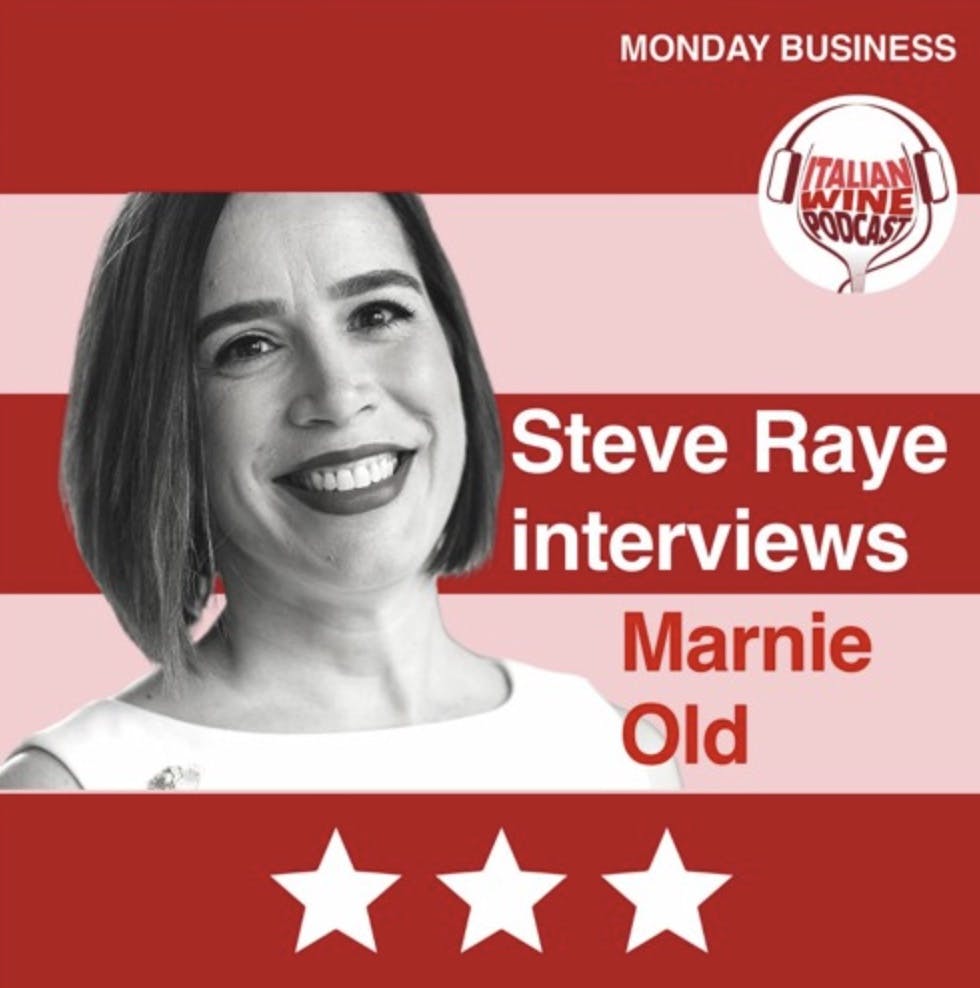
Ep. 778 Marnie Old | Get US Market Ready With Italian Wine People
Masterclass US Wine Market
Episode Summary
Content Analysis Key Themes and Main Ideas 1. Critique of Traditional Wine Education: The episode highlights how current wine education methods are often counterproductive, overly complex, and intimidate beginners, focusing too early on memorization (regions, appellations, varieties) rather than foundational understanding. 2. Marnie Old's Pedagogical Philosophy: Marnie Old advocates for a simplified, sensory-first approach to wine education, emphasizing practical tools and concepts that empower consumers to make informed choices without being overwhelmed. 3. Practical Consumer Guidance: The discussion focuses on tangible cues (alcohol content, vintage date, price) available on every bottle, which consumers can use to predict a wine's style and quality level. 4. Understanding Ripeness as a Flavor Factor: Marnie Old introduces the concept of ripeness (using the analogy of green, ripe, and sun-dried tomatoes) as a universal spectrum that explains flavor shifts across different wine styles, regardless of grape varietal or region. 5. Critique of Wine Scoring Systems: The episode strongly criticizes numerical wine scores, arguing they are artificial, misleading, and fail to account for crucial factors like price and individual consumer preference, often acting as a symptom of poor communication within the trade. 6. Inclusivity and ""Level of Ambition"": Marnie Old promotes an inclusive view of wine, encouraging appreciation for all ""levels of ambition"" – from affordable, cheerful wines to high-end luxury, emphasizing that all wines serve a purpose in a consumer's journey. Summary In this episode of ""Get US Market Ready with Italian Wine People,"" host Steve Ray interviews wine educator and author Marnie Old, who discusses her innovative approach to wine education. Old critiques the traditional methods, which she describes as overwhelming and backward, starting with complex memorization rather than basic principles. She advocates for a sensory-first, consumer-centric teaching style that empowers individuals to understand wine. Old provides practical guidance, suggesting consumers focus on alcohol content, vintage date, and price as key indicators of a wine's style and quality. She also introduces the ""ripeness spectrum,"" using a tomato analogy to explain how flavors evolve from herbal (low ripeness) to fruity (medium ripeness) to dessert-like (high ripeness). A significant portion of the interview is dedicated to Old's strong critique of numerical wine scoring systems, which she believes are artificial, do not account for price, and ultimately confuse consumers. She champions an inclusive view of wine, valuing all styles based on their ""level of ambition"" and encouraging pleasure and exploration over snobbery. Takeaways * Traditional wine education is often ineffective, focusing on rote memorization rather than understanding. * Marnie Old's method simplifies wine education by starting with sensory experiences and basic framing concepts. * Consumers can use alcohol content, vintage date, and price on a bottle as practical cues to predict wine style. * The concept of ""ripeness"" (e.g., green vs. ripe tomato) is a universal way to understand wine flavor profiles. * Numerical wine scores are heavily criticized as artificial and unhelpful for consumers, often obscuring meaningful information. * ""Minerality"" is a term often misunderstood by consumers and should be used cautiously in general education. * Wine quality should be viewed through the lens of ""level of ambition"" (value, efficiency vs. unique experience) rather than a simple ""good"" or ""bad."
About This Episode
The speakers discuss their approach to wine education, emphasizing the importance of learning and practicing framing concepts, language, and language to create memorization and knowledge of the wine industry. They use language and techniques to explain their approach to learning and encourage new students to learn. They stress the importance of understanding language and using sensory systems to create tasting checklists and create a tasting checklist. They also discuss the importance of ripeness, fruit and vegetable, and the use of tuns and scores in wine sales. They stress the importance of understanding the season and wines of each wine and the importance of understanding the sustainability of wine in the industry. They also discuss the use of points scores and the importance of efficiency and cost management in the wine industry. They introduce their Italian wine podcast and thank the speakers for their insights.
Transcript
This episode is brought to you by the Italy International Academy, the toughest Italian wine program. One thousand candidates have produced two hundred and sixty two Italian wine ambassadors to date. Next courses in Hong Kong Russia, New York, and Verona. Think you make the cut. Apply now at viniti international dot com. Thanks for tuning into my new show. Get US market ready with Italian wine people. I'm Steve Ray, author of the book to get US market ready. And in my previous podcast, I shared some of the lessons I've learned from thirty years in the wine and spirits business helping brands enter and grow in the US market. This series will be dedicated to the personalities who have been working in the Italian wine sector in the US. Their experiences, challenges, and personal stories. I'll uncover the roads that they walked shedding light on current trends, business strategies, and their unique brands. So thanks for listening in, and let's get to the interview. Hi. This is Steve Ray, and welcome to this week's edition of Get US Market Ready with Italian wine people on the Italian wine podcast. I'm excited to have Marnie Old on the show today. Marnie and I met at a a retailer's conference a couple of years ago in Philadelphia. I was really impressed with not only her knowledge and speaking ability, but also the way she approaches education and familiarization in the wine industry. So aren't Marni. Welcome. Thanks so much, Steve. I'm I'm thrilled to be here and to meet your audience. Tell us a little bit about yourself and kinda how you got to here, and then we'll get into what you're doing. And Oh, sure. I took the traditional restaurant path into the wine trade, started out waitressing, and loved it so much. I just, fine dining was to me a complete paradise. I just embraced it and and decided very early on that I wanted to move into high end restaurants and also into management. So my first wine buying job was at the tender age of twenty six, Steve, or or gosh. No. It would have been at twenty four. And, barely legal in the United States to be drinking wine and yet in charge of the entire wine list for high end restaurants. From there, after years of being being responsible for training staff, and helping guide people in their wine decisions in the restaurant. Of course, I ended up discovering that I had a flair for wine education in particular, and also a passion for it. I've I've found it to be sort of a necessary thing, almost a calling for me. And so my background really helped for that. My parents were both educators. My dad, a college professor in geography, my mom, a kindergarten teacher with, you know, childhood education. And the fact that I also spoke French because I was sent to Emergent School in Canada. That helped a lot. To be taken seriously as a twenty four year old Sommelier, it helps to be able to pronounce French wines properly. Yeah. Well, and especially in Canada, maybe not so much less, but, And so from there, I started actually helping organize volunteer groups in Philadelphia, the route, a few of them back to back, but we eventually joined an organization that was forming in New York called the American Sommelier, a association. And I was part of their original formation of the board, which didn't last very long, but for the first year and a half or two years of the American Sommelier Association in the mid nineties, I was their founding educate chairperson. And it was because I was really passionate about the a problem that we were facing in the United States wine trade, which was that at that time, the Court of Master Sommelier, the primary certifying body for those of us in the wine and restaurant side of it required a minimum two years experience as a sommelier before you could even register for their intro class. There was no zero to sixty beginner wine education available that was consistent at that time. And so I set about, you know, in my twenties, thinking very hard about what are the challenges inherent in wine education? Why do we fail so often in the wine trade with our traditional style of education? And because I had that educator's mindset, and I guess that explainer's gene from my parents, I think it became clear that that was my unique skill. I'm a great sommelier. I'm a fantastic wine buyer, but I'm a much better wine educator. And so I found my way to becoming an independent consultant on those topics, writing, and teaching, and talking, and speaking about wine, became a passion for me. I've now, let's see. I went independent in two thousand and one. I ran my own business called OldWines for seventeen years, and, have published five books. I have weekly columns in the newspapers here, the daily Philadelphia inquirer runs my column on Thursdays, and I have also columns in trade magazines like beverage dynamics. So I've been communicating about wine from this educator's perspective for a couple decades now. But recently, my biggest client, which was Bosse collection, the largest family owned wine company in France, brought me on board as a full time employee because I was designing content for them that they found to be very valuable in their outreach especially through their direct sales channel, and I'm now their director of you'll love this Steve. Technically, my title is at Wase collection, director of VIN Lightning because I find wine education to be a terribly boring way to talk about such an citing career path. And that's really the the fundamental thing about this whole conversation. I just, got a copy of Marty's book wine, tasting course. And one of the points that she she makes and and lives through in in the book itself is teaching wine we're we're kinda doing it backwards and that that's not the way people learn. So tell us about your philosophy and how people learn and and why we scare people. And it's not on purpose. I don't think, but it's kind of de facto what happens So how is your approach a little different? No. Of course not. Of course not. And and, you know, I understand why wine education has traditionally happened the way it does. And it's it's because we originally the wine trade was the only group that needed wine Right? We weren't in a position a hundred years ago or even fifty years ago where there was a demand for wine education on the part of the general public. Wine drinkers didn't need wine education because they went to consult with their local wine merchant, their local Sommelier was the person helping to guide them in their decisions. And so we have kind of a a wine education system that developed by accident without clear thinking as an educational plan. And as a result, we have, you know, people are taught one way, and they tend for the rest of their lives, for the rest of their careers to simply repeat what they were taught at the beginning. So we have an ineffective wine education system that drops people in the most complicated and hard to understand piece of it. You know, the memorization, learning the names of the regions, the produced wine, the names of all the appylations, the names of all the grape varieties. We start with this. Which is absolutely backwards. If you know anything about education, you may not know that you need to walk before you can run. Our problem in wine education, especially in the United States, is that we tend to skip elementary school and drop people straight into high school and college. Right? We are dropping them into the most intense memorization and knowledge right off the bat. Instead of doing the thing that we as educators know is absolutely essential. It is so much easier to organize classify and remember information, if you first explain the basic framing concepts. So what I do what I set out to do in my work first with the American Sommelier Association later in my books now with what I do at Westay collection is to give people the necessary framing information, the big picture concepts that help hold the wine industry together. Right? We have this bad habit in the business where we let people acquire those big picture concepts through experience, almost through attrition over time. Nobody ever stops and explains this stuff to new sommeliers, to new servers, to new staff in a wine store. Right? You're expected to absorb it, right, through repetition. What I do is different. I I set out with all of my work to do something that I think we should all be doing when we design training programs, and that's to really consciously think about your goals, what we're trying to achieve, and what are the barriers to get your students over the in in order to reach that goal. Right? So I sat down and I thought, you know, this is back in the nineties about what are the things that make wine confusing to a newcomer? Well, the language we use we call these wines dry when they're very clearly wet. We use words in one way, in wine that are often directly diametrically opposed to their normal plain English meanings. We have so many issues like this. There are What I think of as as kind of just basic ideas, making comparisons to things people already know in real life could be so helpful when you're a wine beginner. If I tell you that, hey, if you've ever bought a banana or a peach at the store before it's ripe, and waited for it to get sweeter and richer on your counter before you decide to eat it. Well, then you already understand the basic changes that you're gonna experience when you compare a cooler climate wine to a warmer climate wine that's made with the same grape variety. So that helps you understand, for example, the distinction between the style of making pinot grigio in Italy where they pick the grapes at a lower degree of ripeness, and the style that they make in France and alsace where they let the grape hang longer on the vine develop more flavor and concentration, richness, and alcohol. That is very much analogous to the change that you would have with a peach starting out kind of white and tart on your counter and getting richer and juicier and sweeter over time. And our reluctance to make sweeping generalizations in the wine business, our reluctance to start by sharing really simple big picture concepts like that with people at the very beginning of their wine lives. I think it is short sighted I think it's ineffective, and I think it has left us in a position now in the twenty first century where most of the wine professionals are people who have been sorted and filtered through the traditional wine education process. We turn off ninety per set of our possible audience at the very beginning by making it too confusing for them to move forward. And then we are stuck with a group of geeks leading the line business. And trust me, I am a certified geek. I use that term with pride, but we need to remember that if we wanna reach the entire population, we need to change our communication strategies, and we need to be more effective. We need to be more conscious and really think about the relevance of what we're saying to a customer before we say it. Okay. All of that makes perfect sense. Give me some examples of how the order of March goes in the way you teach as opposed to the Oh, yeah, essence of sauteed gooseberries that we see in wine spectator ratings. Yes. Well, I I have changed my approach to teaching quite a lot over time and through experience. I had the benefit of being the I I sort of an understudy to the Dean of wine studies at the French culinary Institute back in the nineties. I ended up taking over most of the day to day instruction and designing the curriculum there as their director of wine studies. So I just had a a continuous crop of culinary students and aspiring restaurant tours to practice these ideas on, and so I refined them over time. What I find to be the most effective is to start immediately with the sensory system of sort of creating a a a tasting checklist that goes sense by sense. So I always begin every book, every new training with this kind of wine one zero one where we talk about to tell the difference between what we taste with your tongue? What is an olfactory flavor sensation? What is a tactile part of wine's mouth feel? And so on, dividing it up sense by sense so that people can sort of keep track of each wine and begin to compare them with a useful system to one another. It relies on really giving simple language focusing on characteristics like sweetness and tartness, sugar, and acidity on the tongue. What I do with aromatics because they're so complex and confusing is that I divide them into two very basic buckets. There are fruit derived flavors, and there are barrel derived flavors, which we can call fruit and oak, and we can have assess those on a very simple power scale from low, medium to high in a way that makes sense to a customer who might not yet be able to distinguish the difference between, you know, a blackberry and a blueberry and a boysenberry. Right, in terms of flavor descriptors. And then we also identify certain tactile characteristics that are hugely relevant to wine style weight or body. We often use that term body in the wine trade, but I prefer to refer to it as weight when I'm dealing with customers who have not yet been introduced to that language because lightweight heavyweight makes sense to people in a way that full body does not. That that actually sounds like a comment on whether somebody's lost enough weight. So I divide up and and always tackle the sensory piece of it first. But from there, I've gotta tell you, Steve, I do something that most wine educators do not do. I jump straight into the things that I think that are most relevant to the customer. What are they taking this course about wine? What are they reading this book in order to achieve? Well, they wanna feel comfortable shopping. They wanna feel comfortable making decisions about what wine to drink with their dinner. So I had to introduce the basic concepts of that, the kind of outline of how we go about making wine decisions and exploring the wine world only right at the beginning. I I do that right after introducing the terminology and how we taste professionally. After that, I jump into what I think of as the big picture factors that affect flavor. So that includes everything in the grape growing process, everything in the wine making process. And of course, with a special emphasis on those things that are within human control and those things that are not because that can help you navigate the options in the wine world so well. And it's only when we've gotten to the very end of all of this process of what I think of as big picture wine education before I start really diving into things like grape varieties, regions of origin, and appalachians because they make so much more sense once you have the basic principles down. And I think that one of the things that we overlook In the wine trade, the most useful a framework to share with any customer, any the newcomer to the wine world that you're training is to talk about ripeness as as a hugely relevant flavor factor. We all know in the business that if you pick your grapes, below standard ripeness. Is it you might be making sparkling wine or rose or an unoaked white. You are going to get a different flavor profile. You're gonna get more herbal flavors and less fruity flavors. You're gonna get more acidity and less alcohol, you're gonna get more minerality showing through in those wines. Right? And we know that if you take that same grape variety and let it hang longer, let it achieve more ripeness on the vine, you're gonna get the opposite characteristics. You're gonna get fuller texture or more sweetness depending on the style of wine you're making, you're gonna get more development of dessert like cooked fruit, baked fruit flavors. You're gonna make the wine more suitable if you're planning to use new oak in the recipe as well. And so this basic Spectrum. I think of it as kind of a continuum of flavor from low ripeness through medium ripeness to high ripeness. This is what I used to help people make sense of the wine world. And the best possible analogy to use, I was talking about peaches and bananas earlier, think about tomatoes for a minute, Steve. Tomatoes are the best analogy you can use to explain the range of ripeness that occurs in the wine world. Tomatoes, if you've ever grown them, you know, you can pick them green. They're delicious in a salad. You can make pickled green tomatoes. They have a very different flavor, though. They're quite herbal, they have that chlorophyll taste of the green tomato. They haven't started developing the red tomato flavor yet, and they're also what? They're quite tart. They're not very sweet. This is a great analogy for the low ripeness styles of the world that we were just talking about for sparkling wine, for unoaked wines, for rosays, for even if the lightest red wines can have some of those characteristics as well, a little more vegetable and a little bit less sweet dessert fruit. Right? But as that same tomato ripens on the vine, it approaches what I think of as the standard level of ripeness. And this is what I use for wines that you might find in that normal range of, say, like, thirteen and a half, fourteen percent alcohol. Right? Those tomatoes, what's going on? They're sweeter and they're less tart. They've started to change color and they've started to develop more recognizably tomato flavors rather than the leafy taste you find in the green tomato, and this is a perfect analogy for the way that grape varieties start developing and showcasing their individual personalities at a certain level of ripeness Frankly, if you pick almost any grape under ripe, they taste pretty much the same. They don't start developing their distinctive varietal flavors until they get to a certain level of fairly standard ripeness, like that middle range red tomato. It even goes further than this. If you have ever left tomatoes on the vine in your backyard, like cherry tomatoes that start to shrivel on the vine and don't fall into the dirt, you're doing what? You're making sun dried tomatoes in your garden. Right? Well, sun dried tomatoes are very familiar to your customers too. And they know that when you roast or sun dried tomatoes, what happens? They start to shrivel. They start to get sweeter. They lose acidity, and they change in flavor. They start developing more of the flavors that you find in a cooked tomato recipe, like a tomato sauce or a baked pasta, and that makes perfect sense. If you can help people understand that flavor shift that you get going from a green tomato to a ripe red tomato to a sun dried tomato and apply that to the choices that they are seeing in the wine store in front of them, you have done that person a favor for life. And everything starts to fall into place and make more sense once you understand that fundamental flavor shift. It's irrelevant, really, whether we're talking about this grape variety or that grape variety, whether we're talking about French or Italian wine or California wine. This is a universal flavor spectrum shift that happens throughout everything that we produce in the wine world. It sounds like you were talking about a a spectrum, and really this is a point of reference or framework, if you will, of how to taste, and it's not just what we tasters do is so you can nose palate and, finish. Okay. But how does anybody know about ripeness? My my only knowledge about ripeness is German wines where they can label them, you know, Cabanet, spade lays, als lays, and so forth. Yes. Well, and and I certainly wish we made it easier for people to figure out ripeness on wine labels, but there is a clue. It's printed on every bottle of wine, usually in the small print, and it's actually where I start with beginners. Believe it or not, I I think it's easier for people to start out looking at wine's alcohol content as the primary distinguishing factor that can help you tell whether a wine is gonna be closer to the lighter and more refreshing low ripeness end of the spectrum more like the green tomato or whether it's gonna be close are towards the richer riper and more dessert like end of the spectrum, more like the sun dried tomato that we were talking about a moment ago. I usually right off the bat with all of my students start with this idea that alcohol content is your best indicator of ripeness on any bottle that you can think of the norm, the middle of the spectrum is being roughly around thirteen and a half percent, and that the lower the alcohol is below thirteen and a half percent, the more you can expect to find low ripeness traits in the wine. That means lower alcohol, so lighter texture, higher acidity, so more refreshment and food orientation. You're also likely to find milder, more muted flavors, more likely to encounter herbal flavors or mineral flavors, and you're far less likely to see new oak tastes and more likely to encounter a little trickle of carbonation in those wines when you're below that level. The further you get above thirteen and a half percent, the reverse is true. The wines get stronger. The wines get richer and riper in their flavors. They get fruittier. If a winemaker is going to use new oak as a flavor accent, they're far more likely to do that over thirteen and a half percent rather than below thirteen and a half. So if you like that kind of dessert spice and vanilla flavor that's imparted by oak, then Those are the wines you should be focusing on in the store. You're also going to get less refreshment and acidity, higher alcohol, and people already know whether they favor refreshment or richness in any given wine purchase is often driven by their own personal taste, or the time of year or what they happen to be eating for dinner. Right? And so that gives them news they can use. That's actually relevant directional information that's right on the bottle. On every bottle. So using that as a point of reference, you know, we deal with a lot of people in in developing labels and what goes on it and so forth. You're talking about cues that people can use in looking at every bottle of wine to figure out what it's going to taste like in in in a sense that they can understand. So alcohol is one. It's on every label. What else should they look for? Well, you know, when I'm dealing with the absolute beginner, and I'm often talking to consumers who aren't necessarily envisioning a future wine career, right, I like to try and help take some of the fear out of learning about wine instead of giving them a giant book and telling them to memorize all these grapes and all these regions, that seems just so overwhelming. Right? If you just wanna be able to get by in the wine store though, I tell them that there are three numbers they can look at. And if they do just a little bit of homework in in my book, or in my course, that can give them the confidence to have a sense of what it is that they're looking at and whether or not they wanna buy it. So the first number we just talked about alcohol content. The second number is one that I know people in the wine trade sometimes raise an eyebrow when I say this, but the vintage date is actually quite relevant to a new, comer to wine. And it's not because I expect them to have, you know, studied the climate charts and know which vintage in Tuscany was warmer or cooler. That's not what I'm talking about at all. I'm talking about Counting the number of years between today's date and when the grapes were harvested in the production of that wine because a wine's maturity when it's sitting on a retail shelf tells you a lot about what style you can expect. The younger the wine is, so for example, we're talking in early twenty twenty two. If I'm looking at a wine on the shelf that is from the twenty twenty one harvest, I know I'm gonna be getting youth. I'm gonna be getting freshness. I'm not gonna be getting any oak. I'm not gonna be getting any of that complexity of tertiary flavors that start to develop over time. I'm gonna be getting a wine that is young, fresh, and fruity. If I'm looking at a wine that has a little bit more time under its belt, maybe we're looking at twenty nineteen's or twenty eighteen's right now today. Ah, well, now I can suspect that I'm gonna get more I'm gonna start getting more of those. The the things that develop, people develop an acquired taste for those almost, cheese and fermentation like flavors that develop more over time and with slow oxidation in barrels or bottles. You can also suspect that you might be seeing a wine that has new oak flavor or at least neutral oak development in its history because it wouldn't be being released now from twenty eighteen or twenty nineteen if it didn't spend a little time in barrels. At the winery. And if you start encountering wines that are well older than that, like, maybe you're in the Spanish section and you're seeing reservas and Grand reservas that have five, seven, ten years under their belt. Well, that's gonna tell you something too. Generally speaking in the wine trade, we do not age wines that long unless they're already of pretty darn high quality, and we only do it if we're looking to develop those barrel characteristics as well. Wow. Okay. So vintage date is the second one. Alcohol is the first that's right. We were given a list weren't we? So number one, alcohol content. Number two, Vintage State. The third number that I tell people to look at and draw some conclusions from about what they're getting into is price. And I know that there are a lot of people who would rather focus on things like scores for magazines and such. I have very little patience for those. I'll explain why in a minute, but price is hugely relevant. And we actually, in those same publications, we actually run into a problem because so many of those reviews try to pretend the price doesn't matter. I'm sorry, but if you've ever bought shoes or a house or or a car, you know, the price is pretty damn important, and it's gonna tell you something about the level of ambition of the wine that you're purchasing. So stylistically, what does it tell us whether we're looking at a wine that is, you know, ten dollars in the United States versus fifteen dollars versus, I don't know, twenty five dollars or fifty dollars. Well, it tells us a couple different things. The more affordable wines tend to be of the cheap and cheerful variety. They are often oriented to people who are not necessarily choosing your wine around food. It's really more of a backyard barbecue kind of situation in that regard, and especially in the United States and new world countries people shopping at that price point tend to prefer a little more sweetness in their wines so that wines will very rarely be fully dry. As you start getting over fifteen dollars in the United States, this is the terrain of fine wine. This is the terrain of dry wine. This is where you start getting into more food oriented styles that are perhaps not going to give a beginner their their best experience just alone on for sip and might even need the salt and fat content of food to bring them into balance and and show them with their best foot forward, which is so often the case with Italian wine. As you must know, but this is where we start getting into the range of more acquired taste, of more diversity of style of of unpredictable flavor perhaps, but predictable quality orientation. And so this is, I think, a hugely relevant thing for people making decisions and and pretending that price isn't guiding them is silly. They're they're gonna make decisions based on their budget anyway. And I I gotta believe that the price is the primary factor that people shop. But in many cases, that's the way they're organized in the store, right, with the lower price ones on the bottom and the higher price ones, you know, eye level and then then then the reach level above that. You used to okay. So price, then you kind of made a mention of a word that's, I think, overwhelmed the industry and warrants discussion and that is scores irrespective of your own personal view of the value of scores. They're prominent. They're visible Yes. They are prominent, and I get this question from customers all the time. And when people have already usually, if I'm getting a question about scores, it's almost always from that guy in the audience who's already embraced scores already has the on his phone is already checking to get points on wines before they make a decision, and and it is disproportionately men, by the way, who rely on numerical point scores in terms of shopping. I I don't find that to be as strong with the female customers, but I understand the only reason the point system exists in our wine trade is because of the fact that we are doing such a poor job of communicating. We have created a system where our product set is so complex and so intimidating and so absolutely opaque to our customers that they are grasping at straws. They're looking for anything as a guide. Right? So to me, scores are both a symptom and sometimes a cause of the dysfunction that we have in the wine trade. We also have an added layer of problems here in the United States because of our three tier distribution system. It creates a situation where there are essentially gatekeepers at the state distribute distributor level at the individual importer or retailer level that are making decisions about the what the customer gets to see or not see that are not always accurate about what customers might prefer if they had the choices right in front of them and could taste the difference between the wines. So We have created a situation where we withhold information that customers want. They wanna know what does it taste like? Does it taste good with food? Right? And am I gonna like it really? Is is their primary question? Instead of letting them figure that out or make it easier for them for to figure that out, what do we do? We kind of stand back and give them these scores drive me crazy because they are so artificial. You can't judge wines without factoring in price. Like, the whole idea that you're going to evaluate the fifteen dollar wine on the same scale that you evaluate the fifty dollar wine and the five hundred dollar wine is just fundamentally absurd. And we wouldn't do this with any other consumer product category. It is really unfortunate. And I think that, sadly, I think our trade encourages this because in a short term marketing mindset, it's easier to give the customer a a little pointer that pushes them towards my wine that I sell. Right? And so if I can get this critic to give me this score. I can, you know, get ahead of my competitors through using the scoring system. I I honestly wish we could all, you know, wake up on New Year's day some year and and as a wine trade come to a resolution of no more scores because we are just polluting the communications to our customers and making the most confusing landscape for shopping you could possibly imagine through this scoring system. Wow. So we're using a bad proxy for a complex thing that that has so much variability in it that exceeds any of the information that you can have. You know, the the old story in the industry was back when Robert Parker started this whole thing that if you get above a ninety with Parker, you can't buy it. It's not available. Right? And if you get below a ninety, you can't sell it because nobody wants any wants And I'm not I'm not fundamentally opposed to metrics, but I would like those metrics to be determined by the customers. I would be much, much, much more open to a score if it was reviews. If it was customers saying I like this wine. I'm meh about this wine. I don't like this wine. That would be a useful number for me to consult. That I think would also make our business much healthier. Okay. Well, if that is happening right now, we've got the label recognition technology on wine searcher, Vivino, and a and a and a bunch of different places, which incorporate user reviews. Unfortunately, as I look at them, you know, if there's only two or three reviews, that's really not not very helpful. But it's also kind of a a default to dumb for somebody else to tell me whether or not this is good. Unfortunately, the only way to evaluate whether you're gonna think it's good or not is to taste it, which is one of the reasons that when I consult with brands that we target markets for launch only in those states where off premise tastings are allowed in retail stores because that's a primary. That that's the thing. Okay. All of these things are closed. Especially if you're off the beaten track and want to help people discover something new, it is very very hard to do that if you cannot let the customer taste your wine. I absolutely agree with that advice, Steve. Okay. So you use two words that I thought were kind of interesting that are moving you past the midpoint of wine geekiness. Okay? And I'm gonna challenge you on this. Okay? And you're gonna laugh for the first one. Minerality. You said it. I didn't. Now we can go on and on about, you know, is it absorbing the minerals from what does minerality mean? What do people think it means? How useful is that as a term? For consumers and also the trade. Most of the people listening to the show are trade people. Tell me about minerality. Well, and and I will tell you, I do not usually use the term minerality when I am speaking to a consumer group. For example, like, I you and I are are on a podcast for wine professionals. So I'm kind of using it as a shorthand and code for something I think most of us understand. And let's be honest. I think we all know now that it's not actually the presence of compounds from the soil present in the wine that we're tasting. We were we have plenty of research to understand where this is coming from. But everybody else thinks just the opposite. Correct. Which is why I don't use it. Using terms like minerality, focusing on soil in presentations, I mean, any winemaker listening to this who's heading to the United States to talk about your wines, you know, you can talk about your terrain, you can talk about your region, you can talk about its culture, you can talk about its climate, but getting down into the literally into the dirt into soil types when talking about wines with Americans is just not terribly productive because what you're doing is you're giving them the impression that there's dirt in their wine, which gives them a really unhygienic and unpleasant reaction to probably eighty percent of the audience listening. We know in the trade that the soil type is important, but it's important because of the types of nutrients that it provides to the microorganisms in the soil in the uptake the nutrients that are made available for the vines to uptake and bring into the fruit. So it's not actually dirt present in the wine that they're tasting, but there's no way to explain that properly in the course of a wine dinner in an Italian restaurant. I would just occur encourage people to focus more on the the vicarious travel story aspects of, you know, how amazing it is to visit a Broozy or Tuscany or Sicily or Trentino, right, rather than to focus too much on, you know, whether you have dolomitic limestone in your soil or not. Right? But when I'm talking about minerality, what I'm talking about is something that to me, it's almost like the skeleton that supports the flavor of the grape, and the riper the grape gets the more it's skewered. So to me, that earthiness, that minerality, that those qualities that we discuss with those kinds of terms in the wine trade, they're more apparent when fruit is less ripe. They become obscured when you start getting into fuller ripeness and more kind of juicy, jammy, dessert like wines. So it is something that you can help people learn to recognize and acquire a taste for. I do think that there is an audience of more educated wine customers who've already been drinking and already reading magazines and already, you know, experiencing that's more the kind of advanced and even into our trade and career level audiences that you can speak to those things about. It's just with the first touch audience I normally shy away from talking about that aspect of wine flavor. Okay. Okay. But but one other phrase you used, I thought was really interesting. I hadn't heard the level of ambition. Can you explain that? I think this is a hugely relevant piece of the wine story. And I we have a one of the things that drives me crazy about the score system is that it it kind of instills this idea that there are bad wines to be avoided and good wines to be sought out in this really simplistic black and white way when to me there's every reason why there should be an array of winemakers around the world in every wine region aiming for different things. Right? Why can it not be a good thing for a producer to be aiming to be cost effective to offer great value? That's a good thing as well. That doesn't mean that's a bad wine to me. There are plenty of customers out there who are gonna be thrilled to find something that tastes great in their price range, especially if they don't have a huge amount of disposable income for indulging in luxury wines. So to me, in my books, when I talk about these questions of quality, I try to avoid talking about them in this sort of low quality versus high quality way, and instead frame it around certain types of farming practices and certain winemaking methods are organized more around efficiency and managing costs while others are oriented more around creating a unique experience with distinctive character traits and things that, you know, are rare enough that people are willing to spend more to splurge for that experience. And I think that, you know, this this idea, it it's it's just a really unfortunate thing that we're kind of looking down our noses at people who are spending less on lower quality wines. And my real concern for this is about the future of the wine world. I mean, who among us didn't start with cheap wine? Who among us didn't start with, you know, sweeter, you know, like, in in the United States depending on your age? I can guess based on your age what you started drinking right out of college. It could have been Lancers and Matuce. It could have been whites in Clendale. We all start somewhere. And I gotta tell you, in the wine business, we, especially those of us who have the luxury of working with fine wine for a living. Believe me, I am out there representing grand cru burgundies in the market. So I have the most luxurious, you know, pedestal to be speaking about this, but there is no need and it's actually counterproductive to be talking down about entry level wines. There's a purpose for them. Everyone needs them. That's where you start out with your wine appreciation journey, and you learn to appreciate new and different things as you grow. And the more that we can start encouraging people, to taste wine. Even if, you know, you might wanna look down at Muscato, but to me, that's a potential wine drinker there. Why would I wanna turn that person off by telling them that their tastes are simplistic or It's the most popular varietal. Did you know it's one of the most popular varietals that Mondavi sells? Of course. Of course. And it tastes great. I'm sorry. You know, like, I I like to do things that make people feel like it's there's no stigma around having fun with wine. One of my one of my favorite things to do is to take a glass of sparkling muscato and add a scoop of vanilla ice cream to make a decadent adult float. It tastes fantastic. It looks crazy in the glass, and people just are so shocked that a wine expert or Sommelier might actually adulterate their wine by adding something to it. It's it's just a great icebreaker, and it helps people kind of shake off the the snobbiness of wine and relax and embrace the idea. That it's all about pleasure. It's all about having fun. The, I normally end my interviews with a a a big takeaway, but I don't need to because you just gave it to us. And I I I think this is absolutely so true that we we we we are a hundred and eighty degrees, damage opposed from the way people learn. And we're talking this week with Marnie Old, who's, an educator, author, and now evangelist for, the Boset collection. And it's, it was it was slowly. I learn so much from you, and I think you're right with the idea of simplifying things to make wine more inclusive. I think that's the woke word these days than exclusive. So a big thank you to, Marnie Old. If people wanna contact you, where can they reach you and if people wanna buy your books, where would they go go to get them? Oh, absolutely. Well, anybody can always find me at Marnie Old, the way my name is spelled in the podcast listing, m a r n I e o l d at outlook dot com for any questions about any of the things that we're talking about. And of course, they can look online to find my most famous book, which is wine a tasting course. It's only one of the five books that I've put out now, but it is by far my proudest achievement. Well, a big thank you to Marni Old for, a very interesting and inspiring presentation. So, Marni, big thank you for sharing your time with us and and your insights. That was great. Thank you. Well, thank you, Steve. This is Steve Ray. Thanks again for listening on behalf of the Italian wine podcast. Hi, guys. I'm Joy Living's Den, and I am the producer of the Italian wine podcast. Thank you for listening. We are the only me wine podcast that has been doing a daily show since the pandemic began. This is a labor of love and we are committed to bringing you free content every day. Of course, this takes time and effort not to mention the cost of equipment, production, and editing. We would be grateful for your donations, suggestions, requests, and ideas. For more information on how to get in touch, go to Italian wine podcast dot com.
Episode Details
Keywords
Related Episodes
Ep. 2790 Italian Wine in the US: Building a Narrative and Reaching Asian American Consumers with Susan R. Lin MW | Masterclass US Wine Market
Episode 2790
Ep. 2783 The Suburban Gold Mine: Insights into New Jersey’s Wine Market with Brittney Abell | Masterclass US Wine Market
Episode 2783

Ep. 2772 A Surprising Partnership between Japanese Sake & Italian Wine with Monica Samuels | Masterclass US Wine Market
Episode 2772

Ep. 2770 China’s Wine Market: From Misleading Import Numbers to Today’s Consumer with Fongyee Walker MW - Part 1 | Asia Wine Market
Episode 2770
Ep. 2760 Winning the Restaurant Floor: Training, Education & Italian Wine with Sylvester Inda of Ci Siamo | Masterclass US Wine Market
Episode 2760

Ep. 2751 From Montalcino to Kazakhstan with Francesca Arquint of Collemattoni | Asia Wine Market
Episode 2751