
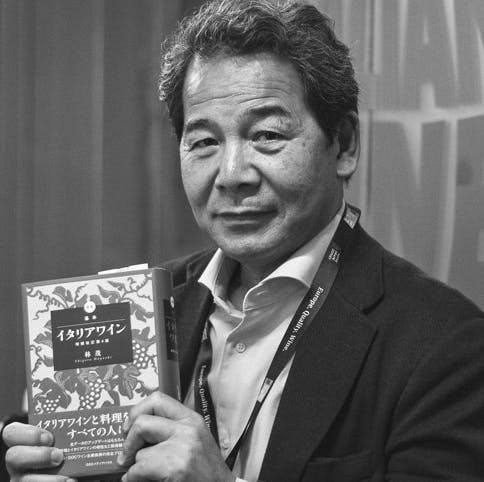
Ep. 245 Shigeru Hayashi (Solo Italia) on the Japanese market for Italian wine
On the Japanese market for Italian wine
Episode Summary
Content Analysis Key Themes and Main Ideas 1. The role of consultants like Shigeru Hayashi in bridging Italian wine producers with the Japanese market. 2. Challenges and strategies for Italian wine producers looking to penetrate the Japanese market. 3. The unique characteristics and size of the Japanese market for Italian wine, particularly the prevalence of Japanese-owned Italian restaurants. 4. The importance of education and tailored marketing in promoting Italian wine in Japan. 5. Cultural and geographical similarities between Italy and Japan influencing consumer preferences. 6. The perception of Italian wine as value for money in Japan. Summary In this episode of the Italian Wine Podcast, host Monte Wood interviews Shigeru Hayashi, a Japanese consultant based in Tokyo. Shigeru, who previously lived in Italy and worked for Suntory, founded Solo Italia to assist Italian wine producers in entering the Japanese market. He explains that many Italian producers struggle due to a lack of specific market strategies, often expecting general sales without understanding the nuances of the Japanese consumer or distribution channels. Shigeru consults on positioning wines for different segments, such as the HORECA (hotel, restaurant, cafe) market, which is significant given Japan's over 10,000 Japanese-owned Italian restaurants. He highlights that while French wines historically dominated, Chilean wines have gained market share due to their value. Shigeru emphasizes his role in educating Japanese trade professionals about the complexities of Italian wine – its diverse regions, grape varieties, and production philosophies. He also points out cultural and geographical similarities between Italy and Japan, such as being island/peninsula nations with four seasons and simple cooking traditions, which contribute to Italian food and wine's appeal. Crucially, Italian wines are perceived as good value for money by Japanese consumers compared to local options. Takeaways * Shigeru Hayashi's company, Solo Italia, plays a crucial role in advising Italian wine producers on effective market entry strategies for Japan. * Italian wineries often need to be more specific in their approach to the Japanese market, moving beyond generic sales expectations. * Japan boasts a substantial market for Italian wine, largely driven by over 10,000 Japanese-owned Italian restaurants. * Education on Italian wine's diverse regions, grape varieties, and production styles is essential for Japanese trade professionals. * Cultural and geographical parallels between Italy and Japan foster a natural affinity for Italian cuisine and wine. * Italian wines are perceived as offering good value for money in Japan, a significant factor in their appeal compared to other international and local wines. Notable Quotes * ""I'm a consultant for a Japanese importer of Italian wine. Consulting for Italian winemakers are in products."
About This Episode
Shigeru Hayashi, a wine producer in Italian wine, explains his experience in creating his company, Solidalia, to help Italian wine producers sell their wines. Japanese wine importers typically use a combination of price and quality, and they need to be more specific in their questions to help them succeed. The language and culture of Japan and Italy are discussed, with Speaker 2 thanking Speaker 3 for their time and asking about their business success. They explain that they are not only Italian, but Japanese, and that they use Italian wines and are not only Italian, but Japanese.
Transcript
Italian wine podcast. Chinching with Italian wine people. This podcast is brought to you by Native Grape Odyssey. Native Grape Odyssey is an educational project financed by the European Union to promote European wine in Canada, Japan, and Russia. And joy. It's from Europe. Hello. This is the Italian wine podcast with me, Montewood. My guest today is Shigeru hayashi. Shigeru is based in his native Japan in Tokyo. And he's gonna tell us how he got into the drinks business and what he is now doing in Japan. Welcome. Thank you very much for your invitation. It's okay. So you worked for Santori. Yes. Right. And you were living in Italy? Yes. Fourteen about fourteen years. Fourteen years in, Milan. I think you were Milan. Yes. And then, so that was just general drinks. That was spirits and whiskies and Yes. And then because you'd had the experience of living in Italy, you'd sort of fallen in love with Italy. Yes. Then you moved back to Japan. Yes. And you started your own company, which is called, I think. Solidalia. Solidalia. Only in Italy. Okay. Only in Italy. So what do you do? What what is your business? Are you buying one? And selling it or or consulting to people? No. I'm a consultant for a Japanese importer of Italian wine. Consulting for Italian winemakers are in products. So So you're helping Italian wine producers pen rate the Japanese market? Yes. That's right. What are the typical questions they asked or what are their typical needs? What do they always seem to find problematic? You know, the Italian for that, say, we have a lot of products, very good wine, and nice price, but why Japanese don't come to me to import for Japan? This is a problem. So So and how do you help them succeed? Okay. So I would like to explain for them, first of who you are, your product, and your position of the your wineries and the product, and which way to go to want to to to sell? Which part of the Japan, which oreca or family or which way. But normally Italian products will say it. It's okay. No problem. I want to say. This is a problem. Ah, because they're not being specific. Yes. That's right. So a news so having tasted their wines and looked at their prices, you're better able to tell them, look. Your I think your wines would be best for Horaka, or your wines would be best for No. Okay. Normally, I say because, you know, the in Japan, more than ten thousand Italian restaurant owned by Japanese. Really? So this is a big, market, but it might be, interest for for that for Olega market. But normally, product, mixed product, it's okay, all over the world and all over the departments say, but we have to device, on premise or or premise. So this is, important point first of all. So the need to really know the possibilities or the options for the best channels for for selling their wine. And we have to say, depend on the importers. So some importers are before or Italian restaurant. So they have not only wine and butter, but also foods. Another way, a big importer asks very, very serious information about products because for the they're selling directly consumer. And this is very, very expensive to to do analyze and, all things, packaging and other things. So, it is expensive. So if you have ten thousand bottles one way. If you have one million bottles another way. True. This is a difference. So So Japan also grows its own wine. Are the people that want to drink Italian wines in Japan are they Japanese or are they foreign tourists or business people in Japan on business? And they want to have an Italian mind because it reminds them of Europe. In Japan, French wines entered long, long before very long, long time ago. So I already had a market almost three fifty percent of the market, it's a airline. Okay. We have more than ten thousand detained restaurants, but but until now, we have fifty sixteen, seventy three percent of the the share. Now, Chile and wine have the almost twenty percent. Twenty percent of the share. Is that based on, value for money? Is Chile seen as a value for money the in to cheaper. Yes. And Italy seen as a bit more sophisticated or not? Yes. We can say on this scene because, you know, the very children wide and the variety said variety were very easier and the simple minds. So Yeah. So the But, you know, I lot of denomination, and the names, and, everything, and it includes Italian people. For that, there is a difference on us and ourselves, and the way we think, a little different form as a country itself. So are you also providing an edge educational service to your clients Yes. So that they understand the complexities of Italian wine and the opportunities that presents. First of all, I have to explain the differences over the south and the north than than the sun center of Italy, either the grapes, differences, and, types of wine. And not only this one, and the other thing is very important thing is products, the way of seeing is a little bit differences. For example, normally, for extra is one thing, but another cooperative is another way of thinking a different source. Sure. I have to first of all, I have to explain for Japanese the importance of these things. And do you also explain the, I mean, the grape varieties and the soil types and the terwaras. That's too complicated. Yes. You do that as well. Yes. So you do you have seminars? How do you do it? Do you go to in each individual, say, restaurant personally, or do you invite them and other restauranters to have, like, a seminar with you somewhere. Normally, I do seminars with a theme. One thing is, the piedmontese or c c g and wine. Region white region. Yes. And the wineries were everything. So I wrote my books, inside, explained very, very this way. Because over there, for example, the Eurya is this this way and the specifics, so on, and, this a beautiful book, by the way. I don't I'm afraid to say read, Japanese, but it's beautifully laid out, with each region having its own map and all the sub zones or denominations in that particular region are are are are clear to see. So we're in if I've opened the page at not just Piamonte, but the Monfera part of, in Montin, we have, maps of, where Babar del Monferato is grown, for example, because it's dark green. In Japan, Japanese, people is very, I was gonna say the, very curious. It's, yeah, in interested in, the the specific information. So, I have to explain the the all all all of them. So So your customers are trade people. You obviously do talk walks and presentations, but they are allowed to ask you questions. They can say, listen, you've been here, been to Italy recently. Can you tell us what it's like in, I don't know, Barolo or or something like that? Yes. They are, the very, theoretical people. So they want to know all the things. Anyhow, small information, for example, the name of the wine we have come from, the grape variety, the wine making, the wine, the wine, and, the the the the once the bottles, once the call everything is at all too long. So So you have the photo of the owner of the restaurant looks like? This is all. No. This is the one of the wine The winery. The winery. Yes. No. That's nice. So you've got the Japanese faces and and Europe PN faces together. Yeah. Sure. Yes. The lovely photos of all the dishes that you could dishes with, a Italian food, not Japanese food with Italian wine. So I say the Italian is, you know, very similar countries. Japan is Ireland. Italian is a in Ireland. The peninsula. Yes. And the four seasons and, mountains. And, saw around the, the, the sea, not of similar things. Not of similar things. When the the the simple way of cooking. So similar. Yeah. This is a different one. And then what I'd never thought of that, though, you're right about the geography that the presence of the sea has a tremendous effect on on the culture and on the diet of Japanese and and of course. This is the reason why we have more ten thousand different restaurant owned by Japanese. So I think in the in the military, it's such a very good boom, going to well, this is normal because the vast majority are very similar to the same. So contrast to there being a lot of Italian restaurants in Japan as you have a lot of sushi restaurants in Italy. Yes. And you do tastings as well with them. Do you? Sure. See. And so when when they taste, do they talk to each other, or or they just talking to you as the presenter. I'll be, most of them because, you know, testing and present a wines and positioning of this wine because, you know, the, for example, door chapter is a basic Italian wine. So pair of a multi people. Mhmm. But easy way. So position and another barolo is no every day, trying for every day. So, I have to explain that the positioning with the wine and the specific a characteristic of the wine, and, every wine producer, one producter, however, this way, his way. So from very large information to specific information. Okay. Final question, the you said there are a lot of Italian restaurant or in Japan, are they run by Italians who have emigrated or are they run by Japanese? Not only, I have to say in ninety nine percent, that's why a restaurant owner in Japan is Japanese. So more of them stayed Italy, studied after, studied to return to Japan and, his way. Really? So a lot of small lessons are very good. Sometimes nicer than Italian, normal restaurants. That's interesting. Well, I I must make a date next time in, next time in Japan. It'd be great to visit, an Italian restaurant and compare. Please. Yes. The cooking, with Italy. And it would be very strange to see Italian wines on our on a list, I suppose in Japan, but if it's an Italian restaurant makes sense. Do final question, do the Italian restaurants as well as having Italian wines and Italian dishes. Do they also include a couple of Japanese wines on the list or not? Japanese wines on the wine list in the Italian in. So it's really just Italian. Just Italian or some French wines. Because you know, or Italian restaurant owner or the somebody and the chefs, they knows where about Italian. It's a it's a wine. So and severe lives. So if we see the Japanese wines, good, not so bad, but expensive. This is the reason why they don't want to to to take, to have a a Japanese wine in, as a restaurant. So they see Italy is also value for money. Yes, sir. Brilliant. This is an important point, I think. Fantastic. That's the You know, the, Italian wine made for Italian fruits, I think. Yep. Abonated. Yeah. So, Chris is very similar. Why not? We cannot hibernate with Japanese foods with Italian wines? Yep. This is Aliso. Let's see. That's your US PIN. You've you've got a a niche there, and I hope your business continues to be successful. Thank you. Thanks very much to my guest today, Shigeru hayashi, from the Solo Italia company based in Tokyo in his native Japan. Thank you. Thank you very much. This podcast has been brought to you by Native Grape Odyssey, discovering the true essence of high quality wine from Europe. Find out more on Native Grape Odyssey dot e u. Enjoy. It's from Europe. Follow Italian wine podcast on Facebook and Instagram.
Episode Details
Keywords
Related Episodes

Ep. 2772 A Surprising Partnership between Japanese Sake & Italian Wine with Monica Samuels | Masterclass US Wine Market
Episode 2772

Ep. 2770 China’s Wine Market: From Misleading Import Numbers to Today’s Consumer with Fongyee Walker MW - Part 1 | Asia Wine Market
Episode 2770
Ep. 2760 Winning the Restaurant Floor: Training, Education & Italian Wine with Sylvester Inda of Ci Siamo | Masterclass US Wine Market
Episode 2760

Ep. 2751 From Montalcino to Kazakhstan with Francesca Arquint of Collemattoni | Asia Wine Market
Episode 2751

Ep. 2748 Florida Wine Market & Vinitaly USA with VIA Italian Wine Ambassadors Stefano Campanini & Daisy Penzo | Masterclass US Wine Market
Episode 2748

Ep. 2746 From Almaty to Verona: Inside the Italian Sommelier Challenge with Leonid Kirsanov | Asia Wine Market
Episode 2746