
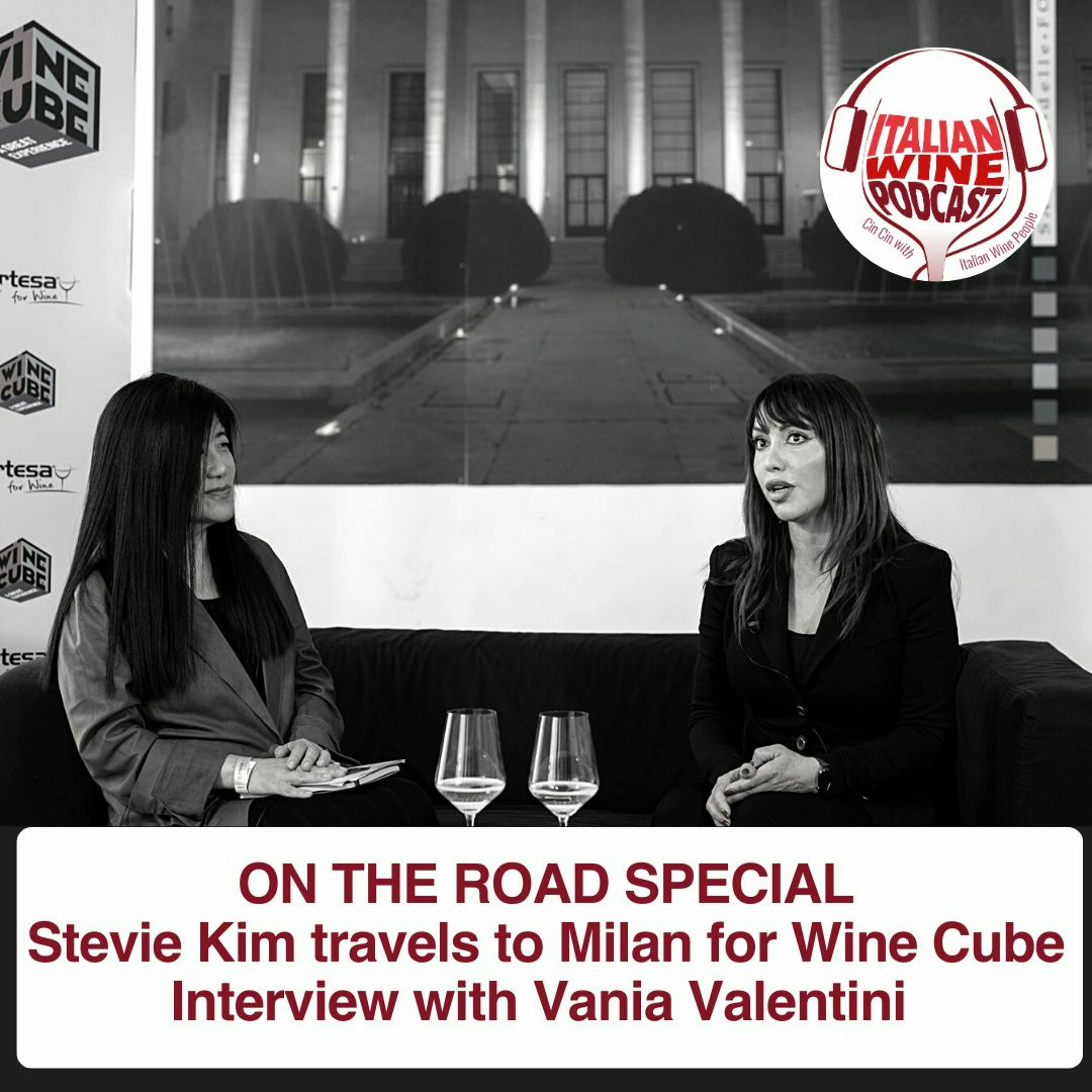
Ep. 1402 Vania Valentini | On The Road With Stevie Kim
On the Road with Stevie Kim
Episode Summary
Content Analysis Key Themes and Main Ideas 1. The expertise and role of Vania Valentini as a champagne and sparkling wine expert. 2. Comparative analysis of Italian sparkling wines and French Champagne through a tasting masterclass. 3. Exploration of diverse terroirs, grape varieties, and production methods in sparkling wine. 4. The versatility of Champagne in food pairings beyond just aperitifs. 5. Price point comparisons and market dynamics between Italian sparkling wines and Champagne. Summary In this ""On The Road Edition"" episode of the Italian Wine Podcast, host Stevie Kim interviews Vania Valentini, a renowned champagne expert and guide for Gault&Millau Champagne Italy. Vania shares her passion for sparkling wines, including her growing interest in Italian sparkling wines from her native Emilia-Romagna. She details a master class she conducted, featuring nine sparkling wines: three from Italy and six from Champagne. For Italy, she highlights a Durello from Soave, a Trentodoc from Trentino, and a Pinot Noir/Chardonnay blend from Alta Langa. For Champagne, she discusses various expressions from Côte des Blancs, Vallée de la Marne, and Côte des Bar, emphasizing terroir differences. Valentini also delves into the art of pairing Champagne with food, challenging the notion that it's only for aperitifs, and discusses the significant price variations within Champagne and compares them to Italian sparkling wines. Takeaways - Vania Valentini is a prominent expert in Champagne, also actively exploring Italian sparkling wines. - Italian sparkling wines, such as those from Soave (Durello), Trentino (Trentodoc), and Alta Langa, are diverse and gaining quality recognition. - Champagne offers a wide range of styles and expressions due to distinct terroirs (e.g., Côte des Blancs, Vallée de la Marne, Côte des Bar) and grape varieties (Chardonnay, Meunier, Pinot Noir). - Sparkling wines, especially Champagne, can be paired with a variety of foods, including red meats, depending on their structure, age, and grape composition. - The demand for Champagne is rapidly increasing, leading to challenges in supply and influencing pricing. - While Champagne prices range widely (from ~€40 to €1500+), high-quality Italian sparkling wines can be found at more accessible price points (e.g., €18-€45). Notable Quotes - ""I'm in charge for the Gita Grande champagne Italy, which is a guide. It's a guide concerning champagne. What I'm doing is I'm going champagne very often. Tasting, tasting, tasting a lot of champagne, writing about the champagne..."
About This Episode
The hosts of On The Road Edition discuss their experience tasting several sparkling wines, including a wine from Italy called amidio, a wine from Bulgaria called Dorella, and a wine from the Northern Italy region called Marco. They also discuss the history of champagne and how it is linked to hundreds of million years ago. Speakers ask about tasting different wines and pairing them with food, and explain that it depends on the length and structure of the wine. They also ask about prices and recommend a crystal wines and a master class with the champage.
Transcript
Hey, guys. Check out Italian wine unplugged two point o brought to you by Mama jumbo shrimp, a fully updated second edition, reviewed and revised by an expert panel of certified Italian wine ambassadors from across the globe. The book also includes an addition by professoria Atilio Shenza. Italy's leading vine geneticist. To pick up a copy today, just head to Amazon dot com or visit us at mama jumbo shrimp dot com. Welcome to another episode of On The Road Edition, hosted by Stevie Kim. Each week, she travels to incredible wine destinations, interviewing some of the Italian wine scene's most interesting personalities, talking about wines, the foods, as well as the incredible travel destinations. Hello. My name is Stevie Kim, and welcome to Italian wine podcast on the road edition. That means we'll be playing this video. Also on the mama jumbo shrimp, our sister channel, YouTube channel. So today, we will be going through some of the master classes during wine queue for Artesa. We've done this already in the past. We've done it in Milan. And today, we have a course, one of the lead speakers for one of the master classes, especially about champagne. So who doesn't love champagne? And here with us today is a truly a champagne expert Her name is Vania Valentini. Correct? Yes. Exactly. Okay. So, Vania, so tell us a little bit about yourself for our audience who may not know who you are. Where are you from? Are you originally from Rome? Actually, not. I'm from not. I'm from, Emilia Romania. Okay. It's a place where we drink a lot of sparkling wine, but the sparkling wine is red, bubbles, Lambrusco. So we are fight in our blood, the the bubbles. Don't know if this is the reason why I'm so passionate about, sparkling wine or champagne, but I'm in charge for the Gita Grande champagne Italy, which is a guide. It's a guide concerning champagne. What I'm doing is I'm going champagne very often. Tasting, tasting, tasting a lot of champagne, writing about the champagne, and then this guide, and also in my website, which is banjoalantini dot com. But in the last couple of years, I realized that also in Italy, we are growing very much about sparkling wine since we have a lot of different grape varieties, different soils in Italy as well. And so I'm starting to be passionate about also Italian sparkling wine in the last time. Okay. Skol champagne soup was the king. Yeah. Okay. You're highly specialized in sparkling wines. Yes. Is that correct? So today, you did a special tasting. How many wines did you taste today? I had nine different sparkling wine. Three from Italy, and, six from Champagne. Okay. So give us a little bit of the dry tasting what you did today. What I tried to do in a very short time because it was Tucson. So it wasn't so much time, but, try to let people concentrate on the glass and try to find out what terroir soil and grape variety was inside the glass different. So it wasn't a competition. You know, of course, champagne is champagne. Corte Blanca is different. And also Italian sparkling white wine, especially when they are coming from a very good producer or really organic especially organic producers. You can find different shades into the glass. So to describe to listen. So what are the three Italian wines you've tasted today? The very first one was amidio. Which is coming from, soave, which is famous for different, you know, Karagata, and it was really stunning because it was grape variety, which is called Duralo. Which is not so famous, but is impressive. It's not famous at all. Nobody knows. Yes. But it's on It's a secret. Yeah. Exactly. We have only four hundred fifty hectares of these great varieties is only there with volcanic soils. And it's impressive because you really can taste the fruits, the fluids, the mouth, or the Very high in acidity. Right? Yes. And also a lot of longevity. So you had one Dorella and what what other two retime was. And then we had, train to dock So we moved a little bit north in Trentino. Of course, you have a different soil. You have a dolomia, which is, where you have the tornmeties, montage, a chardonnay. And it was impressive because you had a sparkling wine with ten years on yeast. Mhmm. But it was so fine, so elegant, so delicate, but at the same time with a lot of body structures, so really good. Most of the people appreciate it. It was really, really interested in Ellegant as well, which was the, the catos, the name Okay. From a Cantina, Roweno. Oh, yes. Okay. And then the third Italian one? The third one was, Marco. Mister are in the north of Italy. We are in Nelanga where Barrolo comes for Varesco. This is a sparkling wine with seventy percent of opinion on water, thirty percent of the soil are from limestone. And it was so elegant with, some, better sense, more expressive. So that was your last wine. Right? That wine to go to do go over to the champagne. Yes. Then we moved to the cotta Blanc in a champagne. That's me, it's a chardonnay. One hundred percent, Krama, which is a ground crew and a cotter plant. The name of producer was a which is a small in your own, fifteen hectares. And it's, so beautiful because it's a perfect picture of the cotter plant citrus Cray, which is the white stone you have there, really, really fragrant, really fresh, and perfect picture of the coated black. We express, you really fresh, really straight. And then we still had a de mobile one with, vintage two thousand and fifteen. Which is very impressive and general vintage in champagne. Okay. And then do you recall? And then we move to the Valle de la march. You find a different, grape varieties, especially there, which is the So we had a with one hundred percent money. They don't call it anymore. No. Actually, they call it. Yeah. Because they've been saying thirty minutes for ages. So they call it but the Actually, the proper name now is Minnie, which is red grapes, generals, fruity, but with Eric Tayier, which is the name of the producer. You also have, even here, Freshnells, Elegance, a lot of a lot, a lot of morality. And there, you don't find the chop like in the in the valley demand. You find different stories. Play sense. They're also limos limo. Lime. So how does that translate into the taste of the wine? The bunet's really fruity. But, Ericaier, it's good because, sometimes it's too much. It's too heavy. You didn't even say that it's, manet, and you didn't even say it's very elegant, because it's too elegant. So it's fantastic in your own. I think because with the trees, rustic, grape varieties, it create a really elegant, expression. Okay. And what about the next one? The next one was still, with a different parts. So move structure. So you had like three champagne ounces and two labels from each champion. Okay. So different parcel, like, very old vineyards from the, so more special, more structure. And then we moved it to the caught a bar or over. Mhmm. Which is the south of Champagne, which changing again the soils. Are you enjoying this podcast? There's so much more high quality wine content available from mama jumbo shrimp. Check out our new wine study maps. Our books on Italian wine, including Italian wine unplugged, the jumbo shrimp guy to Italian wine, Sanjay, Lambrusco, and other stories, and much, much more. On our website, mama jumbo shrimp dot com. Now back to the show. It's more ancient. It's a chimney riches coming from one hundred fifty millions years ago. It's the same soil of Chablis, because the same soil of sainsel, and there you find the pin on mar. Especially pin on one, ninety five percent of pin on one in the or the same. Today, we are the drop here, which is a really old maison from the one thousand or one hundred century. The very first bottle we had was the sun's roof, without sulfide. Without those ads. So very pure pinot noir from the Uber, and it was the completely, opposite of the côte de Blanca because it was generous, wet fluids. At the same time, it was fresh. And salty. You can read the reservoir and the soil. And then we go to the, ground cindre, which is the cover the Prestigia of the Museum. And then you find, she only had ten years on East. Fifty five percent per annumal, forty five percent charlemagne. So elegance, so food bodies, or structure. It's like a a red wine. You can match a bit, red meats, or important dishes in, in the restaurant. So And that was your last wine. It's all here. So, Vania, for maybe some of us who are not as an expert like yourself in Champaign, how would you pair these wines with food? Of course, champagne, we all drink it just on itself. But does it go also with food? Absolutely. Yes. And what kind of like, how do you pair the champagne with food? Well, it's it all depends of the of the champagne. Course, with the nice thing about champagne, you can find champagne for aperitif. Really. Yeah. You like de beauvoir, blanche, they wanna say before, really fresh. You can drink it on the on the beach without sinking anything into freshness. And the one with more with more, with more fluid, red fluids, instructor. So you can even match her with fish, but also let me so it all depends of the years on the yeast. So the aging of the grape varieties of the area is coming from. It is important to know about champagne before to decide how to pair champagne because champagne is really complicated. Because people don't don't imagine eating, red meat with champagne. Right? I know about the pin on wire. For example, so a blanked in wire is a a red grapes. So you can you can even remove the skin in order to press it and to have a white sparkling wine, but the structure is from pin on wire. If you have a a blank day blank, if you have a blank day mark, you can taste and see and feel the difference. And especially when the pinion bar is, let's say the agent is on, on water, and also many years on yeast, it gets structure, instructor, instructor, instructor. So it's absolutely more parable with meat than some red, teeny wine. Okay. So let's say just one, like, practical question for our champagne consumers out there. If I have a budget, can you give us, like, a range of what kind of wines to choose? Because champagne, there's champagne and there's champagne. Right? So tell us, like, the ranges of the prices for the three houses that you've tasted today. So the six champagans And then compare that. So the very first line, the very first one we had, the the blanks, so just few years on Easter, just chardonnay, no aging on woods. So simple and straight. It was about would you like the price? Yeah. Around forty, forty five euros. And it's really honest because today, I have to say the chardonnay in a cottee Blanc is about nine, ten euro per kilo. Which is impossible to find a price like you know at work and is increasing. So inside the bottle of champagne, you have a thirty, fourteen euro, only of, raw material of the grapes. So it's a honest, really honest price, especially today that you don't find champagne. It's a champagne is, really impossible to to have it because, demand is really growing a lot. And then we have, Eric Tayier with the money. It was a little bit more complex. So I think it's about, You can find something like eighty euro, but more complexity, more structure, more, you know, research also of the aging. Until the COVID prestige, which is the most, the, and better expression of the Amazon, with a lot of years on the east and etcetera etcetera. And here, jahona's part price is like, grand cindre of trapeze. I think around eighty, ninety euro. But we know that it's on time you can find a really big name of the could cover the prestige also one thousand and five hundred euro. So it also depends. Champagne can, you know, the range is forty until one thousand five hundred two thousand Alright. What about, the Italian wines? What are the price ranges for those? Well, the red. Do I know, really, but I don't think it's much. I think I I don't wanna say something wrong, but something eighteen, twenty. Mhmm. The Reno, which is the rental dog. I think it's about forty five. And then Marcoberto, same forty, forty five. Okay. One last question, Vania. Okay? So if you had one wine to choose to go to an island, which wine would you choose? I I change it all the time. Nowadays, I would say crystal crystal. Yeah. Any particular Maybe the two thousand and eight. The vintage. Because two thousand and eight, it can age forever. So, you know, I just keep it with me, and I know that it's not going to you know, to get older. So Okay. Well, that's Sarah from here. We had a conversation with Vania Valentini, the champagne expert, and she did a master class with the champagnes. Six champagnes and three sparklers from Italy. That's it. Chinchin with Italian wine people, and see you next time. Thank you for joining us on another installment of On The Road Edition, hosted by Stevie Kim. Join her again next week for more interesting content in the Italian wine scene. You can also find us at Italian wine podcast dot com or wherever you get your pods. You can also check out our YouTube channel, mama jumbo shrimp to watch these interviews and the footage captured of each location.
Episode Details
Keywords
Related Episodes

Ep. 2772 A Surprising Partnership between Japanese Sake & Italian Wine with Monica Samuels | Masterclass US Wine Market
Episode 2772

Ep. 2770 China’s Wine Market: From Misleading Import Numbers to Today’s Consumer with Fongyee Walker MW - Part 1 | Asia Wine Market
Episode 2770
Ep. 2760 Winning the Restaurant Floor: Training, Education & Italian Wine with Sylvester Inda of Ci Siamo | Masterclass US Wine Market
Episode 2760

Ep. 2751 From Montalcino to Kazakhstan with Francesca Arquint of Collemattoni | Asia Wine Market
Episode 2751

Ep. 2748 Florida Wine Market & Vinitaly USA with VIA Italian Wine Ambassadors Stefano Campanini & Daisy Penzo | Masterclass US Wine Market
Episode 2748

Ep. 2746 From Almaty to Verona: Inside the Italian Sommelier Challenge with Leonid Kirsanov | Asia Wine Market
Episode 2746