
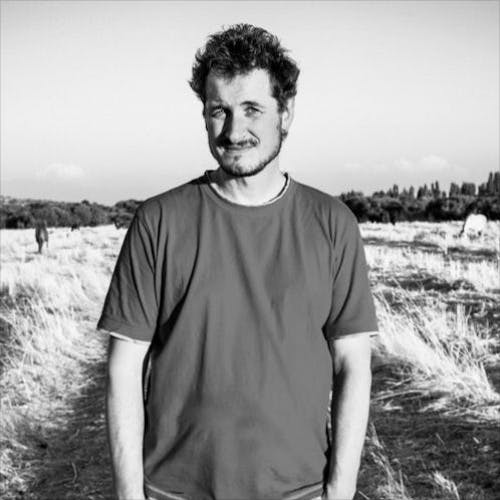
Ep. 326 Monty Waldin on Biodynamic Wine | Origins of Biodynamics
Origins of Biodynamics
Episode Summary
Content Analysis Key Themes and Main Ideas 1. The historical origins and evolution of biodynamic agriculture, particularly in contrast to organic farming. 2. Rudolf Steiner's foundational role and philosophical motivations for developing biodynamics. 3. The unique role and composition of the nine specific biodynamic preparations. 4. The holistic and self-sustaining principles of biodynamic farming, encompassing physical and spiritual well-being. 5. A critique of conventional chemical farming (e.g., Liebig's NPK fertilizers) and its negative environmental consequences. 6. Biodynamics as a sustainable, low-input agricultural solution for contemporary ecological challenges. Summary In this episode of the Italian Wine Podcast, host Monteu Walden shares excerpts from his book, ""Biodynamic Wine,"" to demystify biodynamics. He explains its origins with Rudolf Steiner in 1924, positioning it as the oldest alternative agriculture movement that even predates and influenced the term ""organic."" Walden highlights the core differentiator: the use of nine unique biodynamic preparations made from natural elements like cow manure, quartz, and various medicinal plants, applied in homeopathic quantities. The aim of these preparations is to foster self-sufficient, environmentally sound, and spiritually robust farms. The host strongly contrasts biodynamics with conventional chemical farming, detailing how practices like using NPK fertilizers (pioneered by Baron Justus von Liebig) lead to significant environmental degradation, including pollution, greenhouse gas emissions, and ""dead zones"" in waterways. He advocates for biodynamics as a free, safe, and universally accessible technology that works in harmony with nature, offering a vital path toward ecological health and sustainable food production in an era of climate change and resource depletion. Takeaways - Biodynamics, founded by Rudolf Steiner in 1924, is the pioneering movement in alternative agriculture. - It predates and influenced the global organic farming movement, including the very concept of ""organic"" as a self-sustaining organism. - A key distinguishing feature of biodynamics is the use of nine specific preparations made from natural materials. - These preparations are applied in homeopathic quantities to promote a farm's holistic health and self-sufficiency. - Conventional chemical farming, particularly the use of NPK fertilizers, has significant negative environmental impacts, including contributing to global warming, water pollution, and dead zones. - Biodynamics offers a sustainable, low-input, and holistic approach to agriculture, working with nature rather than against it. - It addresses both the physical health of the land and crops, and the ""spiritual"" nourishment of the human consumer. Notable Quotes - ""Biodynamics predated the global organic agriculture movement whose founding organization the United Kingdom's soil association dates from nineteen forty six."
About This Episode
The Italian wine podcast, Monteu Walden, explains the origins of the concept of biodynamics and its use in alternative agriculture. It discusses the nine known preparations used in achieving sustainability in agriculture, including biotic and cellular elements of the process of food preparation. The use of the biodargin preparations is a fundamental requirement for demetering the effects of the pandemic and improving the transformation of natural crops and animals. The more likely stewards of the world are those who work with the environment, rather than against nature, and are focused on the more essential elements of life, ecology.
Transcript
Italian wine podcast. Chinchin with Italian wine people. Hello. Welcome to the Italian wine podcast. I'm your host, Monteu Walden, and I've prepared for you some excerpts from my book Biodynamic wine. The idea is to clear up common misconceptions about biodynamics, draw some distinctions between biodynamics and alternative farming methods, and provide some details on actual biodynamic preparations, and how they can change our environment in ways that we find desirable, such as altering the soil to make it beneficial for the production of cultivated crops. And now, a short primer on the origins of biodynamics and one of the first and most prominent advocates of the movement Rudolph Steiner. For those interested in acquiring the full Biodynamic wine text, it's available from my publisher, infinite ideas, who right now, is offering a discount of fifteen percent through July thirty first twenty twenty. To get the discount, use the code, which is bio fifteen off. At infinite ideas dot com. That's bio, which is a b I o one five o f f. Biodynamic states from nineteen twenty four, and it's the oldest alternative agriculture movement. Biodynamics predated the global organic agriculture movement whose founding organization the United Kingdom's soil association dates from nineteen forty six. So just after a second of war. In fact, the very word organic was derived from the biodynamic ideal that each farm or small holding should always work towards becoming a self sustaining organism in its own right. The particular feature of biodynamics and where biodynamics differs from organics and indeed all other forms of alternative agriculture is the use of nine so called biodynamic preparations. These are made from cow manure, the mineral quartz, also called silica, which is the world's most abundant mineral, by the way, and seven medicinal plants These are yellow, chamomile, stinging nettle, oak bark, dandelion, valerian, and equacetam r vents, or common horsetail, These nine preparations are applied to the land or crops either by being first incorporated into a compost pile or by being diluted in water as liquid sprays. Biodynamic preparations are used in homeopathic quantities, meaning they can produce an effect in extremely diluted amounts, but they are not homeopathic treatments per se. Their purpose is to make the farm and farmer its crops and animals and wild habitat self sufficient, self sustaining, and socially economically and spiritually robust. These concepts may seem woolly in our world of smartphones and spacex exploration, but would have seemed less so to nineteen twenties, Europeans, coping with the ravages of both the first World War, and then it's even deadly a successor, an influenza pandemic. Shades of today, by the way, with COVID. The methods used to make some of the preparations may seem strange initially, but are neither high-tech, expensive, costly to the environment nor potentially harmful. Anyone from children to grandparents can and do make these preparations. The biodynamic preparations are not patented. So they can never realistically be made purely for profit. And they seem to get good results for farms and vineyards. The regular use of the biodynamic preparations is the fundamental requirement of demeter. The nonprofit organization, which has overseen and certified by a dynamic culture worldwide since nineteen twenty eight. Now, the biodynamic preparations were created by an Austrian called Rudolphsteiner, eighteen sixty one, to nineteen twenty five. And he gave the indications for these preparations shortly before he died. That was in nineteen twenty four when he gave the indications. His motivation in creating biodynamics was to remedy what he sensed was the arrested spiritual development of his contemporaries. Estiner believed the forces people needed to kick start their spiritual development would come from digesting food imbued with these desirable and necessary forces. And that getting these forces into food required a new way of growing food, biodynamic agriculture. And for this, Steiner developed nine biodynamic preparations to moderate and regulate biological processes in nature. This is the bio part of biodynamics, the dynamic part comes by understanding the preparation's role in enhancing and strengthening forces that form or shape material substance, both on the farm and within both the farmer and the crops. These forces are referred to in biodynamics as etheric formative forces. Like gravity, they are unseen, but have a tangible effect on both soil and on crop plants, as well as on the animals or humans who digest those plants. Steiners, nine biodynamic preparations can therefore be thought of as spiritual remedies for the human being, which are administered indirectly through the healing process of the earth. Biodynamic farmers accept that there is no substance or matter without spirit and equally no spirit without matter. So the point of growing biodynamic food and drink is not only to provide the substances, vitamins, carbohydrates, protein, fats, minerals, to nourish the human body, but also to provide the forces needed to form and nourish the human spirit. Most wine growers newly adopting biodynamics start by seeing it as I did initially, has a sensible, doable, interesting, inexpensive tool to produce tastier grapes to nourish the human palette. And if they also provide the formative forces to nourish the human spirit, so be it. The most obvious examples of concern to steiner were the inorganic soluble fertilizers popularized by Baron Justice von Liebich, who lived from eighteen o three to eighteen seventy three. Liebich was the German chemist regarded as the father of so called, in quotes, chemical farming. It was von Lieig who put forth the law of the minimum idea, the idea that whichever essential inorganic plant nutrient was least available to a plant would dictate or limit its growth potential. A consequence of von Dibich's idea was the development of soluble nitrogen, phosphorus, and potash, or NPK fertilizers. Even before he died, Justice von Lieby had begun to rue his attempts at playing chemical god to the soil, and the negative effect his work had had on farming. Where he alive today, von Lieby would have realized how plants are able to assimilate only about ten to fifteen percent of the nitrogen provided by soluble fertilizers. And at the excess free nitrogen, their leftovers contribute significantly to global warming via nitrous oxide, a more potent greenhouse gas than carbon dioxide, and one which hangs around for much longer, and also ozone layer depletion and acid rain, phosphorus, potassium and nitrogen, cause runoff from when used as fertilizers, and they also stimulate algae to breed frenetically causing algal blooms, which creates so called dead zones in rivers, lakes, and the sea. The dead zone in the Gulf of Mexico, for example, caused by runoff from Midwestern Farms is now larger than the state of Connecticut. The biodynamic alternative is a free, safe, unpainted, and therefore universally available, technology reliant on cows, some wild plants, and a few handfuls of the world's most abundant mineral. By working with rather than against nature to resolve problems, biodynamic farmers see themselves as but one tiny part of a much bigger cycle of life, both guiding nature and being guided by it, ecology is rapidly shifting from being a good idea to being a matter of life and death as we face the combined challenges of climate change and the depletion of both biodiversity and basic natural resources like fresh water. Our fellow humans can increasingly be divided up between those who eat way too much and eat the wrong stuff. It takes eight kilos of grain remember to make a kilo of meat, and those many more who get to eat way too little. Righter, Michael Poland's much quoted dictum that we should eat food, not too much, and mostly plants is a perfect starting point for improving the environmental and physical health of our surroundings. The United Nations reports that there is no more potentially farmable land left to develop and that the dramatic yield increases of the type witnessed since the, quote, green revolution of the nineteen sixties onwards are essentially over. This means we'll have to make do with what we have already, but without further degrading, eroding, or polluting the land will have to become better and more self sufficient stewards of what land we already farm. The Biodynamic Prince of low input, self sufficient agriculture, revitalizing both for ourselves and our natural surroundings seems useful, necessary, and perhaps most conveniently of all, easily achievable. Thank you for listening. And please join us next week for more on biodynamic wine, where we'll start to get into some specific biodynamic preparations or treatments. Until next week, this has been the Italian wine podcast with me, Montee Gordon. Listen to the Italian wine podcast wherever you get your podcasts. We're on SoundCloud, Apple Podcast casts, HemalIFM, and more. Don't forget to subscribe and rate the show. If you enjoy listening, please consider donating through Italianline podcast dot com. Any amount helps cover equipment, and publication costs. Until next time.
Episode Details
Keywords
Related Episodes
Ep. 376 Monty Waldin on Biodynamic Wine | Epilogue
Episode 376
Ep. 371 Monty Waldin on Biodynamic Wine | Certifications
Episode 371

Ep. 366 Monty Waldin on Biodynamic Wine | Celestial Rhythms
Episode 366
Ep. 361 Monty Waldin on Biodynamic Wine | Teas Decoctions and Essential Oils
Episode 361

Ep. 356 Monty Waldin on Biodynamic Wine | Other Sprays and Techniques
Episode 356
Ep. 351 Monty Waldin on Biodynamic Wine | Dynamizing
Episode 351