
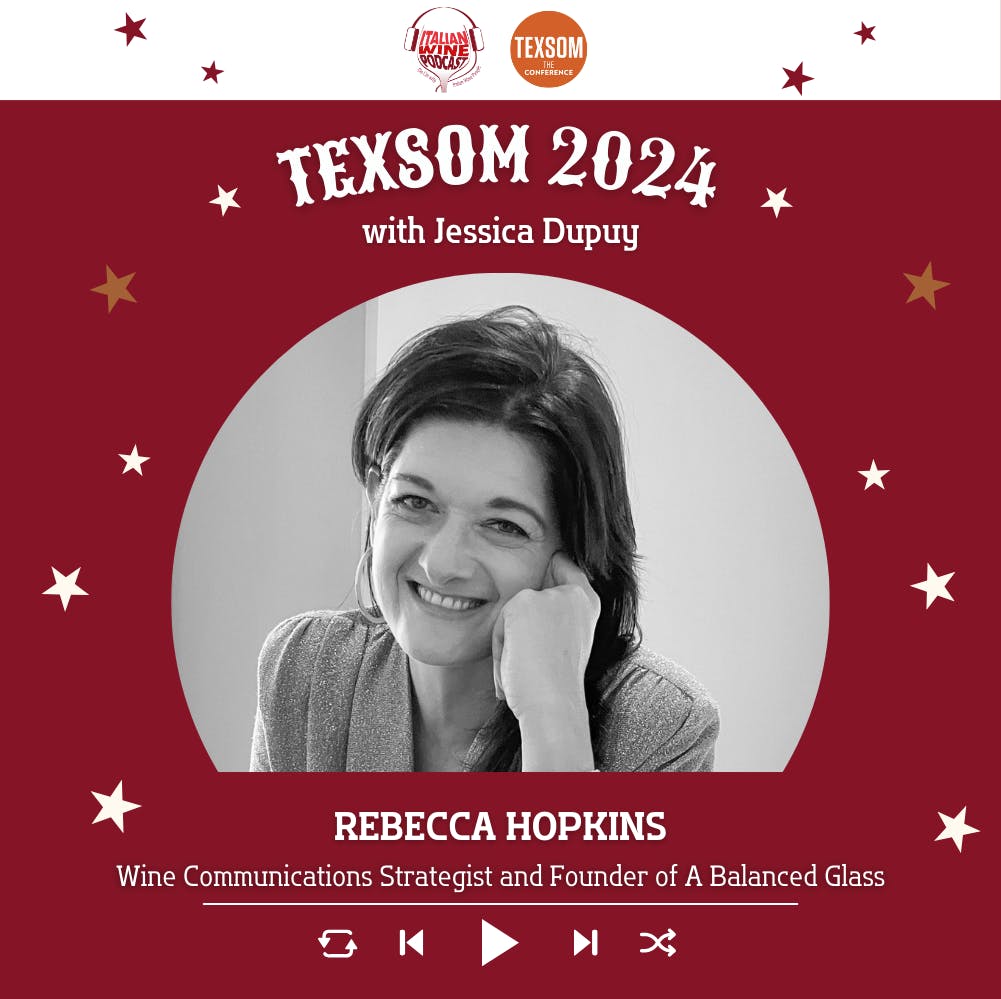
Ep. 2233 Jessica Dupuy interviews Rebecca Hopkins | TexSom 2024
TexSom 2024
Episode Summary
Content Analysis Key Themes and Main Ideas 1. The burgeoning market and consumer trends in non-alcoholic (NA) beverages. 2. The intersection of wellness, moderation, and the demand for NA options. 3. Challenges and opportunities for the traditional wine and spirits industry in adapting to the NA category. 4. The importance of ""radical hospitality"" and meeting diverse consumer needs. 5. Technological advancements and quality improvements in NA beverage production. 6. Distribution and regulatory advantages for non-alcoholic products. Summary In this episode, Jessica Dupphi, guest host for the Texsom Wine Conference series, interviews Beck Hopkins of A Balanced Glass about her seminar on ""A Changing Industry,"" specifically focusing on the rise of non-alcoholic beverages. Hopkins highlights that the NA trend is driven by a broader cultural shift towards health and wellness, with moderation as a key factor. She reveals a striking statistic from Nielsen: 94% of people who drink non-alcoholic beverages also consume alcohol, indicating that NA options are often chosen for specific occasions or as part of a balanced lifestyle rather than full abstinence. The discussion covers the evolution of NA products from low-quality alternatives to more sophisticated offerings, largely due to technological advancements and consumer willingness to pay for better experiences. Hopkins addresses industry resistance, emphasizing that while wineries don't have to produce NA products, they must practice ""radical hospitality"" by offering appealing alternatives to cater to all customers. She notes that sparkling and aromatic white NA wines are seeing more success than NA reds due to production challenges. The podcast also touches on the simplified direct-to-consumer distribution for NA products due to fewer liquor licensing laws, and the role of social media in marketing. Ultimately, Hopkins underscores the need for the industry to understand and adapt to this growing category to meet evolving consumer demands and avoid leaving money on the table. Takeaways - The non-alcoholic beverage market is rapidly expanding, driven by broader wellness and moderation trends. - A significant majority (94%) of non-alcoholic beverage consumers also drink alcohol, indicating a demand for NA options for specific occasions rather than complete abstinence. - The quality of non-alcoholic products, particularly in areas like cocktails and ""proxies"" (flavor builds), is improving due to technology and consumer willingness to invest. - The wine industry faces philosophical resistance to embracing NA products, but catering to this demand is crucial for ""radical hospitality"" and customer loyalty. - Sparkling and aromatic white non-alcoholic wines are currently more successful and palatable than non-alcoholic red wines due to production challenges. - Non-alcoholic beverages benefit from less stringent liquor licensing laws, facilitating direct-to-consumer sales and innovative distribution models (e.g., subscriptions). - Industry professionals need to educate themselves on the NA category, as traditional wine education does not cover it, impacting confidence in recommending products. - The younger demographic (under 25) shows a higher propensity for non-alcoholic consumption, making it a key customer segment for future growth. - Sugar content remains a significant challenge for many non-alcoholic products, impacting their palatability. Notable Quotes - ""Ninety four percent of people who drink non alcoholic beverages... are also drinking alcohol."
About This Episode
The conversation covers the shift towards "any other alcoholic beverages" and the challenges of creating a drink that is not alcoholic. The nonalcoholic drink category is growing rapidly, and the industry is helping to get up to speed. The importance of catering to customers and the nonalcoholic wine category is key, and the need for consistency and complete flavor profiles is key. The speakers emphasize the importance of creating a frame of reference for the category and provide radical hospitality to avoid confusion and misunderstandings. They also discuss the need for creative testing and customer feedback to improve the craft wine industry.
Transcript
What is important to people as they're going into, you know, in a Mhmm. Flavor. Okay. Period. So there you go. Flavor. And that is why you're seeing I mean, you're seeing a lot of change. Right? So if we if we think about Who's drinking these things? Yes. We have either a sober consumer who's not consuming alcohol, but ninety four percent of the non alcohol consumer drink alcohol. Yeah. So say that again. Ninety four percent, and this is a Nelson stat. Ninety four percent of people who drink non alcoholic beverages Mhmm. Are also drinking out. Tally y'all. I'm Jessica Dupphi, guest host for a special Texom series covering the twenty twenty four Texom wine conference from Dallas, Texas. Join me in the heart of the lone star state as we delve into the experiences and insights of key speakers and attendees, exploring career paths, challenges, and the latest trends in the wine industry. If you enjoy the show, please subscribe and rate our show wherever you get your podcasts. Alright. Well, Beck Hopkins, thank you so much for joining me on the Italian wine podcast. Cast. We are here at Texom in Dallas, Texas. Welcome. Thank you, Jessica. It's awesome to be back. Yeah. I mean, so this isn't your first Texom. Right? You've been a couple of times before Yeah. The history of it all. Gosh. I think the last time I was here was twenty eighteen. Okay. And that was still at the four seasons. Oh, yeah. And I was in quite a different role Yeah. Selling wine communications, but very much. It was a different vibe. So it's awesome to be here at the convention center. It's a different yeah. It's a different feel. It's a new TexOM, but it's it's great. It's grown upon itself over the years. Perhaps you could just do just to make sure everyone who's listening has a clear understanding of who you are. Maybe tell us a little bit about, your background or journey to wine and what you do know. Yeah. Sure. So I am actually from Australia. Okay. And I spent the first half of my career in Australia in various marketing sales and communications roles Okay. Before coming to the US in two thousand and seven. And, I've been here in marketing communications roles and specifically interested in health and well-being. Since twenty eighteen when I founded, a little website called a balanced glass Okay. Where we think about health and, well-being for wine professionals. Okay. Yeah. Which is what we're gonna talk about today because I think this is a really important topic. In fact, So important that the organizers of Texom wanted you to come and be part of this panel Mhmm. Which we may have to read because if there's a lot of words in the name of the panel. There's a lot of words. And it was a Monday morning. It was the opening panel of the opening tech song conference. They're like, no pressure. No pressure to get all of the words in there. Exactly. Alright. So let's do it. You had a seminar on A changing industry. And I and, first of all, I wanna say enormous kudos to the organizers for going down the path of tackling this this it's right. Yeah. So we really talked about a changing industry as it relates to overall meeting people where they are. So we discussed intersectionality. We talked about accessibility and unconscious bias as it relates to able and disabled people in our profession, health and well-being, which, you know, I I spoke about non alcohol in the rise of that category and neurodiversity Okay. Which is Jessica also really looking at neurotypical and neurodiverse, how people learn, how people engage, and how you can support your teams or your colleagues if they are neurodiverse and also normalizing those That there are different ways, whether audio visual or so many. Yeah. Exactly. Okay. And also mental health. And so cat Thomas for anyone who's met, wine goddess. Right? She does. Yeah. And it was really getting everyone grounded in their bodies to kind of spend an hour together having a pretty vulnerable discussion about things I've never seen it in another wine conference Yeah. Kind of Frank. Yeah. She's really great. It's so funny. I I actually didn't get to sit in on that seminars in a different one, but I did see a picture of her. I I was like, oh, that's leading. She's doing like a whole not yoga, but There was a breathing, calming moment where you guys all on stage were closing closing your eyes. Yep. Yeah. Looking really dorky, and it was awesome. It's awesome. And she's massive props to her because she's been a leader in that area. So let's talk about what you brought to the table for this because I do think, you know, nonalcoholic so many things, nonalcoholic beverages, whether that's beer, cocktails, wine. Yep. That whole trend has been growing quite a bit particularly in the US. Yep. And I wonder if could kind of talk about how that's come about? Is it related to wellness? Like, what are you seeing kind of in your findings? Yeah. So on a macro level, we certainly have seen a trend toward well-being on a cultural level. Really, of course, it's really been around probably since, you know, mid fifth so twenty fifteen, but it's really obviously exacerbated through COVID. And for bev, alcohol, I think, you know, moderation is a is a big part of this shift. Right? So We have technology now that allows us to look at our sleep cycles, what we're eating, we're transparent about what we're what we're drinking, what we're putting in our bodies, and on our bodies. And so the concept that people may want an alternative to an alcoholic beverage is part of that discussion. And really, in terms of how big that opportunity is, it's a two part discussion. One part of it is where non alcohol sits as part of the total beverage alcohol. And the second part of it is how do we as an industry help ourselves get up to speed so that we can meet consumers where they are Yeah. When they're coming into our retail stores or our restaurants. Okay. Yeah. It's a big topic. But Yeah. Are you seeing, like, a lean towards any particular category within that topic? Whether it's, I mean, we were talking just before we started about how I I'm seeing more and more at least that bars and restaurants are, least offering like a non alcoholic cocktail list, two or three at a minimum Yeah. To just show that they are thinking about it. Right? Yeah. Exactly. So kind of for context, beverage alcohol is a as a category in the US, it's about three hundred and one billion dollars. Wow. Beer is the majority of that at a hundred and fifty six billion. Mhmm. Spirits comes in at thirty eight billion, and wine comes in at about a hundred and seven billion. So that's total market size. Okay. Now non alc within that is last year was at seven hundred and forty million. So it's still less than one percent. So it's a really small part of the overall business. Yeah. The non alcohol is category is not new. Yeah. It's been around forty, fifty sixty years. Right. And the earliest brands within non art would be it, really. And a lot of it was either European or Saint Paulie Girl brands. I was gonna say, yeah, like, people who are pregnant. It, you know, it's like, I can't drink, but I can say Poly Girl. Exactly. Okay. Exactly. Right? Exactly. Yeah. And so so we had some traditionally non arc has been kind of the other category. Right? We didn't really talk about it, but as professionals, we had to have it. Yeah. We couldn't really, we didn't really know with put it. And also, traditionally, it was lower quality offerings. Yeah. Yeah. And so I think what's happened as we're at this kind of crossroad where the consumer is demanding more transparency, more information, they're happy to pay for it. Yeah. And I think this is part of the change we're seeing in Nonauk is we have now a customer who wants a good experience and they're happy to invest. Mhmm. And we also have a technology revolution happening in the Nonauk production methods Right. That are enabling companies to produce better quality Yes. Products. Right? So the NAB you have today is probably, you know, a heck of a lot better than the NAB much better. Yeah. Yeah. Yeah. I've actually, you know, again, Pregnancy is not the only reason people are not drinking at all. We'll talk about that, but I do have a good friend who is having her first child. And she was like, I'm gonna use this opportunity. We actually did our, W set diploma together. And she's like, I'm gonna use this opportunity to go through every non beer and never non out whatever that I can go through just because, you know, she's like, otherwise, I wouldn't force myself to do it. Yeah. And it's been kind of interesting. I'm like, you could write a whole article about this, you know, like what what cast, you know? Because the flavor is getting better. And I guess that's the question. You know, what is important to people as they're going into, you know, in a Mhmm. Flavor? Okay. Period. So there you go. Flav. And that is why you're seeing I mean, you're seeing a lot of change. Right? So if we if we think about Who's drinking these things? Yes. We have either a sober consumer who's not consuming alcohol, but ninety four percent of the non alcohol consumer drink alcohol. Yeah. So say that again. Ninety four percent, and this is a Nelson's staff. Ninety four percent of people who drink non alcoholic beverages Mhmm. Are also drinking milk. Okay. So when we think about the non drinker, it doesn't mean they don't drink. Yeah. It may mean one in three of their drinks as a nonalcoholic drink. Right. It also is sometimes the occasion. Maybe you're not drinking today. Maybe you're not drinking the ten months of pregnancy. Maybe you're not drinking post surgery or, you know, financial reasons you're choosing not to drink is you're saving money. Mhmm. Maybe you're having a life change. So there's lots of different reasons why people are not having that occasion of drinking. Right. So again, flavor is still the number one reason that people look for in a non alcoholic offering. Right. And so part of what we also see is the development of the cooler spirits, but the RTD, the mocktail. Yep. A category is because building drinks in the non alcoholic space is, quote, a little easier Absolutely. Then dial king, what might be a traditional product. Right. Yeah. And that's true. I mean, I've seen a lot of, you know, especially the more premium restaurants and bars. They're like, we're not gonna leave money on the table by just offering, you know, cranberry and soda. Yeah. We have chefs here. We we're a chef based restaurant. Why can't we treat our bar menu in the same way and build something? Mhmm. Which some of the spiritless nonalcoholic, I don't know what you'd call it spirit spiritless. Mhmm. I don't know. Yeah. Well, well, no. I just mean, like, there are, you know, whether it's non alcoholic tequila, non alcoholic bourbon, or whiskey, that kind of thing, obviously not bourbon. But those are there and built and made with certain texture and things that allow you to add the flavors because that's part of it too. The struggle with cocktails being that alcohol itself adds viscosity and texture in a way that when you're building something into a glass that doesn't have that. So there's definitely a way that you're seeing a lot of answers there, but it is and beer too. Yeah. But I do think wine is kind of the been the challenge, the big question mark, because there are a lot of non alcoholic wines out there. There are. I mean, there are eighty eighty odd brands globally. Right. Non alcoholic wine. In the US, we have about thirty currently during distribution. In fact, I tasted a new one yesterday from Broadvent selections. Oh, yes. It was awesome. Yeah. That one is actually one of the first where I was like, oh, I think we can do this. But but I've also tasted many that I'm like, what is this? Exactly. Yeah. Yeah. And that and I think going back to your question, it's that flavor profile and understanding that this is not a replacement for an existing product type. Got it. Yeah. So part of this discussion is about the the social cues for the consumer of holding the glass, having something in my glass that looks feels sounds like an alcoholic beverage that they may wanna have, you know, within a group without them feeling like the other. Yeah. Well, because in the end, most of what we're discussing at a place like Texom, is that hospitality is key. And so when you can make someone feel like I mean, people that aren't drinking also wanna feel like they've got something cool, like, whether it's a really great new dish that a restaurant is serving or something that looks really great in a class. Yeah. And so catering to that not only means that you're being hospitable, but as you and I said earlier, it also means you're not leaving money on the table a hundred sense. I mean, going back to your comment about the new product, there's Copenhagen Hargan sparkling tea company. Mhmm. Is an awesome brand. It's what's considered a proxy. Uh-huh. Tell me. Okay. Yeah. So within within wine so non alcoholic wine is category, you have traditional brands that make a non alcoholic version. Right? Right. So that would be Gieson sauvignon blanc Yep. Make a zero zero. Mhmm. Then you have new market entrants that are brand new brands that are making non alcoholic options, out of grapes. Right? So Cali is a Vazhu. It's a nonalcoholic Vazhu, and it's awesome. Sonoma County grown. Love it. They're just in harbors this week. Okay. The wines are terrific. Yeah. Then you have proxies. And proxies of wine are not meant to be a wine based product, but they are a flavor build, I call them a flavor build, based to create flavors like wine. Mhmm. So you have blackberries, cherries, coffee, yuzu. And what you're doing is you're building a flavor profile that has a weight, a texture, and, you know, some viscosity that would be, like, presenting like a wine. Okay. So Copenhagen Hugg and T company is was two sommeliers Mhmm. In Copenhagen who were doing post dinner service and serving tea and finding that they're a customer in fine dining wanted complexity flavor. So if you see that package, it's actually the package looks sounds and smells like a sparkling wine bottle. Okay. It's packaged like that. Yeah. It pause. They now do a low out, but they do a zero out, and it's on the flavors of tea. Right? So there's silver needle tea. Yeah. There's a UNT base. And so the idea being that you're getting if we think about the crossover between wine and tea, which is so great, because, I mean, that's where you can find Tannan, correct, and that texture. Correct. And okay. And they were interviewed last year about why they developed it, and they you know, we have people coming into the restaurant at lunchtime that don't drink. Yeah. So they're either gonna have a one dollar, one euro glass of water, or I could sell them a twelve euro glass of sparkling tea. So This is one example. Do you see this in the I'm sorry. I'm, like, selfishly. Is this in Texas? I think so. Yes, wow. Really wanna try that. So here's the beautiful thing about this non alcohol category. It doesn't have liquor licensing laws. So direct to consumer Yeah. Is it totally open channel Yeah. For this category. So I bought mine from Dragwood's beverage company Okay. Out of Napa. Yep. It's a x line maker, Jake, Jake, and his wife's name's escaping me. But she's a cocktail writer. He's a wine maker, and they started dry goods four years ago. Okay. But you can ship across state lines, lose don't need a signature. Mhmm. Right? So you can drop it at the door. Not a big deal. So you'll see a lot of development in this category of subscription models. Okay. So if you think of how we are buying Yeah. I subscribe for coffee. Yeah. Yeah. Oh, I'm gonna do this. So clubs and mix selections. And the other thing to know about this category is then a lot of them are globally sourced. Mhmm. And they're not vintage. Mhmm. So when we as wine professionals think about what we look for as markers Mhmm. Right? They don't exist in this category. So there's a lot more creative freedom. Yep. And, you know, there's just a lot more dare say innovation in making things that taste good. So what do you think are the barriers to entry coming into the market? And I what I mean by that is Are we having to convince consumers to try these things? Are we having to convince the gatekeepers to carry these things so that they can sell them to consumers? Like, is there still a or is there a resistance to wanting to give these products a try? I think it's a combination of all three in different ways, depending on the outlet. So as example, yesterday, I sat down next to a gentleman from H EB, and we got into discussion. And he's like, oh, yeah. No. We love non alcoholic category. We have it in our high end. I think it's called World Market. Mhmm. Yeah. Oh, central market. Central. So H and B being a large grocery store chain in Texas only, but a beloved one by Texas. So central market is kind of their offshoot where it's more high end, not high end, but, like, foodie driven. If you're a chef or a home cook that wants special ingredients, central market is the place you would go. Right. So that makes sense then because he was saying that a lot of they went hard on fast offering. Yes. And basically for their consumer, they're like trust us. You trust us with everything else in the store. A hundred percent. Trust us. This is going to be great. Mhmm. So part of his barrier was less about leadership. And I think leadership is still part of our biggest barrier. Okay. Industry English. Right? Either we don't wanna make it. It's not our core business, or why would we do that because then we sell less of what we make. Mhmm. Right? So that's a that's a philosophical resistance. But I don't okay. We're gonna top of that. Yes. Oh, we can. I'm like pinning it, but what is pinning that? Because and then what he was saying is he has all that access. His was more about where do I find this stuff? What distributors are carrying it? Can I get a consistency of supply? And because the it's still a relatively nascent space. Right. So Put your other hat on if you're a small non out producer and you're trying to grow quickly and service these markets, yes, of course, you can produce product quickly, but you probably have a limited infrastructure of what you're able to push out. No kidding. Right. And then you're you're still navigating who are the distributors in the markets that whether it's a food distributor, an alcohol distributor, an independent distributor. Right. So there's a lot of blocks that way. Yeah. And then you have a customer who really doesn't know. Right? For the most. And so they're looking to experts to tell them this is great. That's not. So you've actually seen a lot of that influence happening through social media channels. Right. Because in this category, there's no limit. On advertising. There's no limit on social media. So as a brand, you can pay an influencer to talk about your product. Okay. So, okay, journalist cap, though, because I I will say say, I've been resistance, not the right word in terms of, like, poor frame of mind, but I refuse to consider myself an influencer, but I am a journalist and I cover things, right, and I won't get paid for it. So I don't want to get paid for it. Mhmm. So, I mean, I wanna get paid by my editor. I don't wanna be an influencer in the sense that please, no companies come to me and ask me to to do it. But my point is is I do get sent certain samples to try to, you know, taste and try. And I will usually I definitely will taste it. And most of the things I've tasted just haven't been blown me away to where I'm, like, I'm willing to make choose that over a classic Coca Cola. Right? Mhmm. So if I mean, if I'm gonna drink non alcoholic, which I do all the time Yeah. What is the thing I'm gonna reach for first? Yeah. And in Texas, it's Doctor Pepper, if I want soda. I mean, like, you know what I mean? So with that in mind, I think that's a really good question because I feel like if I were to do a story Uh-huh. On non out Mhmm. I would I need a frame of reference. Mhmm. Yeah. Do you know what I mean? And so, because tea, I've got a frame of reference. There's a global history and heritage behind it. Same with wine, same with beer, all of that stuff. And so there is that kind of that's where I often come up dry as I'm like, I need at least in my brain. I'm telling myself I need some sort of frame of reference when I'm holding. I think the closest that they're they're getting to this is the sparkling and aromatic white categories. Ah, okay. So if you think about in terms of product quality and that context discussion, because That is where you will see, probably the the most successful technological advancement. Okay. I find it's still hard to recommend a red wine that's non alcoholic at this point. Yep. Or a heavier weight white fine. I mean, there's the occasional Shannon that might come through, but nothing that I say. Oh my goodness. Even if I'm not drinking it, I can't recommend that Yes. To someone. And that's that's changing so quickly. I mean, you might get samples in two weeks that have Right. It's a matter of time. Right. Yeah. Yeah. Yeah. But it is a real I think that's why this category is challenging for for those of us who come through traditionally learning about wine or through a structured education system. It doesn't hit the mark Yeah. That we might have learned. Right. And so part of, I think, our responsibility is to learn about the production methods, learn about the brands that are out there, understand the cues of what make quality flavor. And make decisions based on what's best for our customer. Yeah. Yeah. For sure. We may not like it, but, you know, we may have a customer that's That's willing. Okay. Willing to pay. So let's go back to this idea of, like, you know, we're not we're choosing not to produce it because it means that people will buy that instead of our other alcoholic products. Mhmm. What's wrong with that argument? I don't think no. I actually don't think there's anything wrong with that argument at all. In fact, I did a story on non alcoholics in tasting rooms. Okay. And part of the really, my position on it is you don't have to make it. You have to be aware of the category. You have to provide what I call radical hospitality, right, which is about your job. If you want repeat customer loyalty that love your brand, then you need to serve them. Now you're serving them is the greatest sparkling wine. Oh, sorry, sparkling water you've ever given them. Mhmm. For the fabulous garnish, may maybe that's it. Yeah. Right? If you have a partner, NA brand that you love, maybe you partner with them on something. So this isn't about you know, tell me around and going by spinning cone, mister. No. No. No. No. I and that's what I mean. I I didn't mean to lead the witness there. But I what I did mean is, yeah, I mean, it's either you cater to something by offering just a little something Yeah. Or you lose the customer altogether. Correct. You know, so there's that's what I feel like is the gap that's not being closed Correct. In that understanding. Yeah. And part of that gap is our lack of understanding that category. Yeah. Yeah. Yeah. Right? Because we're not taught this in our traditional wine educations. There's also we only have so much, you know, we have budgets to hit and cogs to manage. Yeah. Yeah. And these products are not cheap. And that's the other thing. So we have to get creative in how we weave it into programming. Yeah. And also testing and getting customer feedback. And I think this again is something that we need to get better at is How is it? Yes. How do you like it? Yeah. Do you not? Yeah. Because we can only learn from our own customers. Right. Because in wine, we are, you know, we've studied, we have the qualifications, but, you know, this is a this is quite a different category. You think about it, why we study it? We get qualifications not just to know about it because we're passionate about it, but to also give us confidence in it. Absolutely. You know? Yep. And that's the part where not understanding a frame of reference for it also gives us a lack of confidence. Yeah. And there's a couple of data points. I mean, it was IWSR, who international wine and spirits research company Mhmm. And part of used to be wine intelligence Yes. Have a stat that one in seven non alcoholic drinkers Sorry. One in seven diners in a restaurant. Drink non alcoholic. Uh-huh. One in four diners under the age of twenty five. Drink non alcoholic. Right. Right. So that skews slightly obviously because LDA in the US is twenty one. Different. Yeah. But what it's telling you is you put that combined with the overall data around younger drinkers either abstaining or switching between no out, low out, and out. Mhmm. We, you know, we have a customer to meet that honestly they are maybe so early in their wine journey. They don't know. They don't have a frame of reference about what great Yes. You know, Tus can send you a Visa test like. Right. Right. They'll just show. Yeah. You know, I'm supposed to know what this is. I should know that this is great or Right. Yeah. Someone told me. Mhmm. Yeah. How very interesting. I'm curious, you know, do you see I know you're not like a a fortune teller. How it was my other line? Yeah. Alright. How would you, you know, forecast where things are going? Are you able to see change based on these numbers that you had? Or Yeah. Look, I think I wish I was. I think I could like, please some really good bets. I think this space is changing so quickly. And, certainly, it's not a binary discussion. Yeah. So I think the more that we can step into this space, the more this space will accelerate as comfortable as we are as an industry to help a grow. I think one of the beautiful things about wine is ultimately we're a cultural product and moderation, and the cultural aspects of kind of being together are important. So the social cues in I was wanting to bring this category in a little easier than say the spirits category. Right. I would Right. Yeah. Biggest challenge. I mean, sugar is still a problem in this category. So For sure. That's actually been one of the biggest problems I've had in some of the samples I taste. Correct. So sugar is still something. And I think that until they can solve the flavor argument position around, you know, getting consistent and complete flavor profiles Yeah. And managing sugar and also distribution. To me, they're the three. I think adoption is gonna come. Yeah. So there's a prediction of from Nielsen that it'll be seven percent by twenty twenty seven. I think that's ambitious. Yeah. But what gives me interest is there's a lot of entrepreneurial companies out side of wine that are coming into this space. Mhmm. So that tells me there's money in it. Right. Which, which is a really good reason to kind of say it's not something to be afraid of. Absolutely. No. You know, which I think part of the initial resistance, maybe some of that. Sure. You know, like, what do you mean this means we're gonna have to change or do things? You know, again, not asking wine producers to all of a sudden, not be wine producers anymore, but offering, you know, the opportunity for people to feel like they can come and this is definitely more in that tasting room scenario, but, they can come and enjoy a space with others and have an experience without. Correct. And there's also, I mean, if we we're talking about Italy, if, you know, there are certain Italian regions that can do none out. Like, me and Eto have a non app for Secco. Prima Parve. Yeah. Yeah. Yeah. Right? Yeah. So it's not about saying, what you used to make borolo, and now you gotta make a non app. It's not about that. It's about and it's not about trying to relabel. Yes. The, you know, wine. It's about saying The beauty about the American consumers, we have an endless love affair with Italy. Mhmm. So we're always gonna wanna go and travel or experience or bring back. So this is just about, you know, expanding that experience, I think, for people. Yeah. Finding ways to do that. And if nothing else creativity is a strong point. Big time. So big time. Well, Beck, thank you so much for joining us for this. I have really enjoyed this conversation and have actually learned quite a bit, and it's kind of making me rethink some of the ways I've approached this. So, you know, you've you've already made a difference. Help in this world. But, you know, if people wanna find out more about you and what you're doing with the balanced glass, like, how can they be in touch with you, or or what? Just all my socials are at a balanced glass Okay. Or a Bet Hopkins wine. Okay. You'll get me on both. And I'm actually gonna write up all of my notes from this session and and put it out for people as a primer. Fantastic. Because, you know, again, it's gonna be wrong in six weeks, but that's okay. Yeah. No. But that's okay. It's something to kinda move towards. Again, if there is a reference point, these are the things that need to start creating those reference points. So I think it it's a great thing. Well, thank you again for joining us. You're very welcome. Thanks for having me. Alright. Bye. Listen to the Italian wine podcast wherever you get your podcasts or on SoundCloud Apple Podcast spotify, Himalaya FM, and more. Don't forget to subscribe and rate the show. If you enjoy listening, please consider donating through Italian wine podcast dot com. Any amount helps cover equipment, production and publication costs. Until next time.
Episode Details
Keywords
Related Episodes

Ep. 2769 The Younger Wines from the Volcano with Giulia Monteleone & Darya Nagornyak IWA | Clubhouse Ambassadors' Corner
Episode 2769

Ep. 2745 Discovering the "Rive" of Conegliano Valdobbiadene with Lucia Fragoso IWA & Alessandro Favaro of Rivaluce Winery | Clubhouse Ambassadors' Corner
Episode 2745

Ep. 2683 Alberto Rivera IWA interviews Andi Punter of Franz Haas winery in Alto Adige | Clubhouse Ambassadors' Corner
Episode 2683

Ep. 2660 Elena Barattini IWA interviews Ondine de La Feld of Tenuta di Tavignano in Marche | Clubhouse Ambassadors' Corner
Episode 2660

Ep. 2645 From Cheese to Wine: A Food Scientist’s Role in the Wine Industry — with Rebecca Siefring | Next Generation
Episode 2645
Ep. 2638 Ekaterina Vislinskaya IWA interviews Andrea Pieropan of Pieropan Winery in Soave, Part 2 | Clubhouse Ambassadors' Corner
Episode 2638