
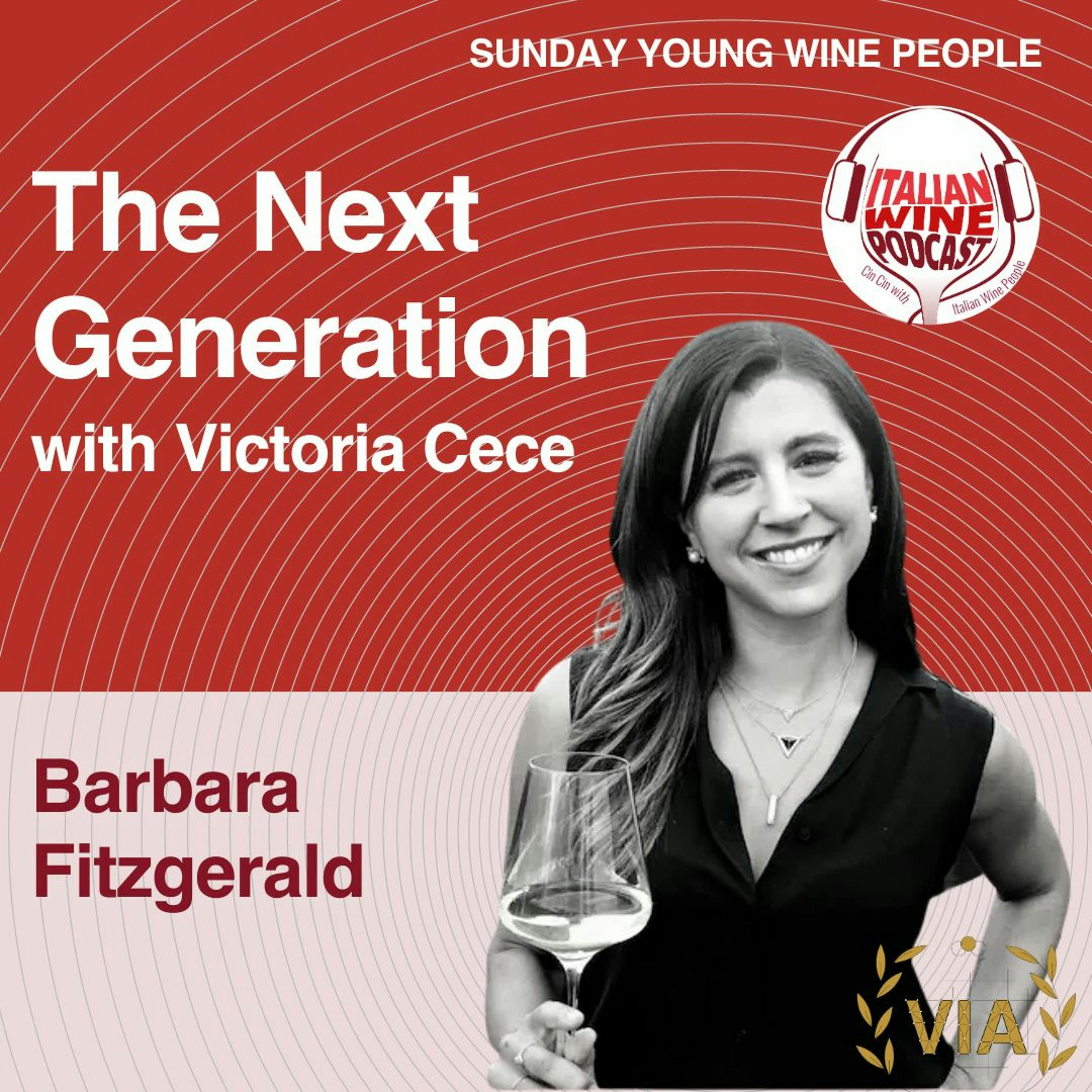
Ep. 1395 Barbara Fitzgerald | The Next Generation
The Next Generation
Episode Summary
Content Analysis Key Themes and Main Ideas 1. The Intertwined Histories of Italian and California Wine: Exploring the historical immigration of Italians to California and their foundational role in establishing the state's wine industry, contrasting their approaches and innovations. 2. The Diversity and Potential of Italian Grape Varietals: Highlighting Italy's vast array of indigenous grape varieties, particularly in lesser-known regions, and advocating for their wider recognition and adoption. 3. Puglia as an Emerging Wine and Tourist Destination: Showcasing Puglia's evolution in quality winemaking, its unique culinary traditions, and its appeal as a growing destination for wine tourism, deeply connected to its coastal environment. 4. Direct-to-Consumer (DTC) Sales and Modern Wine Business: Discussion on the significant opportunity for growth in DTC models within the Italian wine market, drawing parallels with the more developed California market. 5. Generational Shifts and Industry Values: Emphasizing how younger consumers' preferences for sustainability, equity, diversity, and inclusion are shaping the future marketing and practices of wine brands. Summary In this episode of ""The Next Generation,"" host Victoria Cachez interviews Barbara Fitzgerald, a wine professional from Sonoma County, about her multi-generational connection to wine and Italy. Barbara shares her family's remarkable journey as Italian immigrants who became pioneers in California's wine industry, holding the state's fourth winery license and navigating Prohibition with their company, Pellegrini. She highlights the cultural similarities and differences between Italian and Californian wine scenes, noting California's innovation despite a limited varietal focus, and Italy's extensive but sometimes overlooked diversity. The conversation deeply explores Puglia, a region close to Barbara's heart where she owns an apartment in Ostuni. She praises Puglia's rapidly improving wine quality, its unique local grapes like Verdeca and Bombino Bianco, and its inseparable link to fresh, seasonal cuisine, particularly seafood and local vegetables. Barbara also discusses her career shift towards consulting, focusing on the immense potential for direct-to-consumer (DTC) sales in Italy. She emphasizes the importance of authenticity and values-driven marketing in today's wine industry, driven by younger consumers' demand for sustainability, equity, and inclusion. Takeaways - Barbara Fitzgerald's family were early pioneers in the California wine industry, establishing Pellegrini winery in Santa Rosa. - California's wine industry was largely settled by Italian immigrants, sharing a similar culture of hospitality with Italy. - Despite its innovative spirit, California's North Coast appellation primarily cultivates only seven grape varieties, mostly French. - Italy possesses the world's most diverse range of grape varieties, many of which are underappreciated globally. - Puglia's winemaking is evolving, with a growing focus on quality, and its local grapes like Verdeca and Bombino Bianco are ideal for the region's climate and food. - Direct-to-consumer (DTC) sales represent a significant, largely untapped opportunity for growth in the Italian wine industry. - Modern wine consumers, particularly millennials and Gen Z, prioritize brands that demonstrate commitment to sustainability, diversity, equity, and inclusion. - Puglia offers exceptional seasonal cuisine, notably fresh seafood and vegetables, which perfectly complement its local wines and enhance its appeal as a tourist destination. Notable Quotes - ""My heart and my soul lies in Italy."
About This Episode
Speaker 1 and Speaker 2 discuss their love for Italian wine and the evolution of the wine industry in California. They talk about their experiences harvesting in Sonoma County and their desire to expand their palate and open up the opportunity to learn more about the country. They also discuss their love for the Italian wine industry and their desire to create a brand that is more sustainable and diverse. They express their love for the area and their desire to visit Poria, and discuss their love for the wine industry and their desire to visit a YouTube channel. They end the conversation with their love for the region and their passion for it.
Transcript
Hey, guys. Check out Italian wine unplugged two point o brought to you by Mama jumbo shrimp, a fully updated second edition, reviewed and revised by an expert panel of certified Italian wine ambassadors from across the globe. The book also includes an addition by professoria Atilushienza. Italy's leading vine geneticist. To pick up a copy today, just head to Amazon dot com or visit us at mama jumbo shrimp dot com. Welcome to the next generation. I'm Victoria Cachez, join me as we chat with young Italian wine people shaking up the wine scene. We're going to geek out on a grape or grape fam and then hear about all the wild wine things are best and up to. From vineyard experiments to their favorite wine bars. Good afternoon. Good morning. Wherever you are in this world. Welcome to another episode of the next generation with me. As usual, it's really funny because when I say it with me, Victoria c c, c c, my name pronounced in American English, it rhymes. Victoria jazha. Less rhyme. But I digress. Today, we have some fun things to talk about, and an awesome person to talk to, Barbara Fitzgerald, who will be on shortly. So before she comes on and talks all great things about wine in her background, which is super fascinating, by the way. We are going to take a little trip to Pulia. Granted, it is, currently almost summer. And, yeah, I just wanna see a beach and drink some nice, nice crisp white wine. Which grape are we going to be talking about from the Italian line? Unplug two point o book today? Can you guess? I'll tell you because it gave you so many darn context clues. Verdeca. Verdeca white grape varietal from pulia is also found in Campania as well, but definitely more in puglia. It's named after the green color of its berries. So verde, Natalia's green, verdecca. There we go. So some fun facts about verdecca. It is grown, especially in central Pulia, in provinces of Bali and Taranto, as well as in the countryside, Alvaro, Crispiano, Locorodondo, and Martira Franco. So these are different towns in the countryside. Vertega was and is almost always used in blends with Bianco de Alesano to make the DOC wines, locoratando, and Martina. It can also be part of the blend of the DOC, Lacresia, of Campania. So now we're going to another region. So don't get confused. And now we could see the decca in, more mono varietal wines. When it comes to the berries, you've got medium large sized bunches, it's vigorous, productive, and it's resistant to most diseases, which is a great thing to hear for the future of Viticulture, big topic. Italy, as we see temperatures rising, but I will save that discourse for another podcast. As I always say, so finally, the Becca produces wines that are fresh and crisp with delicately herbal and green apple flavors. That is called boat juice, my friends, and that is what we want to drink in the summer. On a pristine white sandy beach. Oh, well, not white sands. More Brocky Beach in Pullia. I mean, depends where you go. Either way, by a beach with blue water on a boat. Sorry to give you all these visuals. Let's get to our guest. Chal Barbara or Barbara, whatever you prefer. How are you? I'm great. How are you? I'm doing well. So I hear you're based in Sonoma County. You're in another wine region. Yes. Super cool. So what what brought you to love Italian life? Well, I was born and raised in San Francisco, California to an Italian family who was really wonderfully committed to their language and their culture. And I feel like I really have to call that out because, I'm just so grateful. I think a lot of Italian immigrants came to America and did their best to kind of assimilate and justifiably so. But perhaps maybe sometimes at the expense of their native culture. So I think one of the things my family did so well was to honor life in America, but not lose touch with their roots. So my family is actually some of the pioneers of the California wine industry. They have the fourth wine growers license in the state. And the those licenses are in the twenty five, maybe even thirty thousand. Now, so that feels pretty special. They've been selling their own wine in California since the repeal of Prohibition and planted their own vineyards, in the late nineteen sixties in Sonoma County. But for a long period, they also simultaneously owned and operated one of the largest import and distribution companies in the US. That was when I was quite young. So I didn't necessarily glean much professional experience from the distribution side, but culturally, it meant wine was always in our lives and always on the table. And what was so exciting is it was wine from everywhere, from Napa, from Sonoma, from Italy, from France. And my family actually used to travel to Ven Italy every year on buyers trips, so it feels very full circle that I found my way here. That is so cool. And it's also something that, like, we don't talk about as much I feel is, like, the immigration of Italians to California. At least, like I mean, I at least I don't hear people speak about that all the time. And that's that's That's incredible. So what when did your family come to California? Like, they came right away from, Luca, Italy to California. I have three sides of my family all from different little kind of townships of Luca. And, they all came at different times, but my it was my great grandfather that started our family wine business, and he came, right after World War one. And it's kind of the lore in my family that he came He came here after the war with, just ten cents in his pocket and a dream. Oh, that's yeah. That reminds me of my grandfather too. It's and it's so beautiful to see the evolution. Did they bring, like, well, did they, like, smuggle any vines with them, or was it, like, bring? So it's pretty fun. There's there's been some, you know, it's, like, they passed away before I was born. So I've never heard it straight out of the horse's mouth, but, like I said, they're kind of they kinda have this this really storied past, in the area, and he immigrated here with his brother. And immediately, they became grape distributors. So they were kind of buy buying selling trading grapes for people mostly to make for personal consumption because you were still allowed to produce, I think it was, like, up to two hundred gallons during prohibition, for your own personal needs and also for church services and things like that. But I've heard some crazy stories that they use to, like, smuggle moonshine around in the, gas tank of their car, which is so wild. And, yeah, and so it's kind of also the joke in my family that, we've owned a winery since nineteen thirty seven Legally. Legally. Oh, gosh. American alcohol history is is very fascinating. Yeah. It's wild. I mean, even current times of how alcohol is regulated. It's just feels like a hangover from prohibition. It's like, oh my gosh. Just wild. Yes. That's precisely the right word for it. Like, we still are in this giant hangover from provision. And it's affected our culture so much around drinking and, especially with wine because wine is I mean, I say this, like, obviously, when I say low low alcohol beverage, I mean, in comparison to spirits, like moonshine. You know, something that's, very easygoing. So does the does your family's winery still exist? Yes. In Santa Rosa, in the Russian River. Oh, good. Okay. So which which winery is it? Am I am I'm out of the loop? Pelegreenie. Ah, okay. Okay. And this brings us back to our discussion before, which is I fun fact about me is I did harvest in Santa Rosa. Yes. And I actually know where that is. Oh, my gosh. That is so cool. And, like, I know this is the Italian Mind podcast, but we always go as topic, but Sonoma County is okay. Everyone knows Sonoma County. But Sonoma County is such a hidden gem at the same time because people come, they do the tourist thing, but they don't really like I don't know. I feel like it it's such a special little place. It really is. And I think one of the things, especially for Italian wine fans is California wine industry here was really settled and started by Italian immigrants. So there is such this kind of, you know, ethos of a similar culture to to things that you might experience in Italian, even though there's not, unfortunately, a lot of Italian grapes here. Maybe we'll get into that a little later, but just the the kind of the the sense of hospitality. Absolutely. No. And I totally agree because I admittedly, when I went to harvest, there was that, like, East Coast girl, from New Jersey that, like, knew some folks from, like, San Francisco when I was in college and, like, I was, like, oh, you guys are, like, you know, the West Coast people. And I was just, like, you knew that dichotomy everyone talks about with, like, the personalities. And I'm I'm granted I was biased and and and and and completely wrong. And then I went to Santa Rosa, and I was like, people are really cool up here. Like, they the the in your right, it kinda has that for a lack of I don't wanna generalize Italian culture, but, like, in the Italian way of people are really, like, they're really focused on what they do, but they're really relaxed at the same time. And, like, I hate to say it's, like, way more direct than, like, you know, that's, you know, that stereotype of, like, the cow the forty people are so Yeah. So passive and whatever. And I was like, I don't everyone I've met up in Sonoma County is pretty not passive. So it was, like, for me, I just, like, was I, I mean, in I was so proven wrong, which was great. But no. And and speaking of the Italian varietals, I don't know if it's I can't remember the guy's name. But the Wymaker I worked with, his someone he knew was, like, planning a, like, a bunch of Italian varietals. I wanna say it was Alex Hander Valley, but I think I'm wrong. And it who's, like, but not, like, he's he was planning, like, Polyganaro and stuff like that, like, really out of the box. Yeah. Do you know what's funny is? I know exactly what you're talking about. I was the marketing director for the Swinery for five years. So it's called oh, my god. It's called Devero, and it's in Healdsburg. And, yes, we grow only Italian varieties there. So we have. Our main, our kind of flagship variety segmentino, but we also have San Jose, fiano, a little bit of Nebula, Monteppuccino, a little bit of everything. Look at that. See, I couldn't even remember half that story. This is a blessing. That is so cool. So how how is that going? Was that going? It was good. You know, I, I think being part of, so that winner is a hundred percent direct to consumer, which is great. But I think especially with the kind of full court press of direct to consumer that happened during COVID. I was just really burnt out, and I was feeling like I needed to be able to take a step back to really, thoughtfully craft my my next step and not just I was feeling a little zombie like. By the time I was I was wrapped up there. So I just I just resigned in the end of January. And Yeah. And then you took a little sabbatical and tell Ouscany. Is that right? Well, I've been doing some consulting work for a few, wineries, mostly here, but there is one out there that is looking to build, you know, DTC. That's kind of my area of expertise is direct to consumer. And there is such an opportunity for that in Italy. Like, they don't they have nowhere near, you know, the level of California direct to consumer, and it's such an interesting sliver of business. Sliver isn't even the right word. It could be the whole pie if you do it right. So, yeah, I just think there's so much opportunity to grow that. And people really want to travel to Italy and do wine tourism and things like that. And so It will be really interesting to see how that grows for them over the coming years, and I'm excited to maybe help help some wineries with that kind of my focus. The reason why I love being involved in direct to consumer so much is because I think that's where change really starts. We can start on the smaller scale and grow it as opposed to trying to kind of back into it on this bigger scale. So I think each generation is holding us all of us, like, more and more accountable to the ideals that make us not just a better industry, but also a better society. So I'm talking about, you know, more sustainable farming practices, minimizing carbon footprint, increased equity, diversity, and inclusion, And so not to say that the generations before us didn't care about these things, but the younger generations kind of, you know, from millennials on down are really showing us how much they care with their their purchasing power. So I think that brands that are already doing this should lean into their efforts more and share how they're doing this with their consumers. And brands that aren't might start to lose relevance here pretty, pretty quickly because I kinda think, you know, gone are the days where we're marketing wine as drink this wine. It's the best wine out there. It's kind of it's just not possible, right, in a world with thousands of thousands of wine brands and even more varied tastes them preferences among consumers. So it almost feels dishonest in a way to say that now. So I think that, we should be creating an authentic path for our consumers to connect to us on a on a deeper level. And start thinking about how we, as a brand, can have a positive impact on all of these things, and then how we can convey that to the people that we want to be connected to. Absolutely. Let's, like, actually, and I realized that it probably should have more formally introduced you in the beginning of this podcast, but now's a good time. Not just to introduce, but to learn a bit about you more. So you did the Via program e Italian ambassador Academy program. And but what what is your evolution in Italian wine? Like, I you're telling us a little bit about your specialty, but how did you get there? Well, I think I mentioned this before we started recording, but, I think that I my my really, my heart and my soul lies in Italy. And so I love wine so much. I love the wine industry. I'm also very classically, a middle child in that I have to march to my own drummer and, like, get so hell bent on, quote, unquote, making my own way. So I decided pretty early on that I wasn't gonna work for my family, and I actually decided, like, oh, I'm gonna leave the end industry altogether, and I was pursuing other career paths. And then I realize I'm just being hardheaded because I love mine so much. I'm so passionate about it. So to satisfy my head and my heart, I decided I'd work in wine outside of my family business. And like I said, I'm just so, I'm so in love with Italy, all things Italian. And I I think the world really needs to know about Italian wines and Italian grape variety and not just to be a telecentric, but I'm sorry to say. Maybe to just be something other than Franco centric. Right? Like, don't get me wrong. I love a good French wine. When it comes to Champagne, the limit does not exist for me. But here in California, you know, ninety three percent of the vineyards in the north coast appalachian, which is what where Sonoma, Napa, and Menocino are. Ninety percent ninety three percent of the vineyards are planted at just seven varieties. And If you if you're wondering if the most of them are French, you're right. The only non French one is infundel, but, you know, one of the most exciting things about making wine in California is we're not governed by strict AOCs or DOPs that tell us what we can plan and what our yields need to be. So that means we're, like, built for innovation here. We're built to be innovative, but we're only making mostly seven grapes. And so I just think that our consumers are missing out on a world of flavors and excitement just quite simply because they don't know the scope of what's out there. So It it makes complete sense, especially with your family's history and the history of, like, California, winemaking altogether. It it it it's a perfect place to try to expand people's palates and open up the opportunity to, learn more about, like, the the country that has the most great varieties, in the world. And I think that, no, you're absolutely right. And Wait. So where is your family? You said your family's from Luke Gabby. You spend time in Poria. So So I know that the, when I was in college, we did a service project in a town called Ostunee in Pulia. And my family, we would my family here in California, we would travel back to our family in Italy every year. And, for sometimes months at a time, and so we were very familiar with Italy and life in Italy. And then also while we were there, visiting our family, we would travel around, you know, as much as we could to the other regions. And then I went to Pulea for the first time in two thousand and six, and I just immediately fell in love. And I there was something about it right away that I was like, oh my gosh. I need to get back here at some point. I need to figure out, you know, so, yeah. Puia has so much magic. I couldn't have designed it better in my dreams. And, when I met my husband in two thousand and nine, I was like, gotta get to this place. Pullio with me. It's amazing. And then when he finally came with me, he was like, oh my gosh. It's wonderful here. We kind of started just, the actually, the first time we went we both got really sick. We had seen our niece before we went, and we caught some terrible, toddler disease that we so we were pretty sick there the whole time, and we were, like, he even my husband said, my gosh. This place is so amazing, but I was kinda sick. So I wanna go back when I'm not sick and experience it, you know, full throttle. And then this that started this chain of us going back every year. And we started making a lot of friends down there and kind of you know, integrating into the community a bit more. And, finally, somebody down there was like, you guys come here every year. Why don't you just get a place? And when we looked into what it costed by property and pooley at the time, we were like, oh, my god. This is actually doable. I thought it was the pipe dream or something that we worked towards in retirement, but it's it's so affordable, so approachable. So Oh, that's lovely. And is it do you still go to the same place, Oestunia, or do you? Yeah. Our apartment is in Oestuni. So where we spent most of our time. And then, you know, one of the well, kinda like most of Italy, but one of the wondrous things about it is find a town that's your home base, but then all the towns are so charming and kinda have their own unique traits that are worth visiting for a day trip or an afternoon or whatever. And but we love us tuning because it's kind of it's perfectly centered as, a town with not directly on the water. So it's kind of got this, you know, more of this old town feel, but then you're only six kilometers from the coast. And the coast down there is epic. So it's on the adriatic side. So it's pretty wonderful to get to the beach in like ten minutes. Are you enjoying this podcast? Don't forget to visit our YouTube channel, mama jumbo shrimp for fascinating videos covering Stevie Kim, and her travels across Italy and beyond, meeting winemakers, eating local food, and taking in the scenery. Now back to the show. That's the dream. That's that's what I, I there's it's such a, I think, and, obviously, Italy is in my heart as well. I have a a similar background to you with Italy, but it's, like, for me, it's one of the things I love is constantly being near the sea. And, like, even though Vadona obviously is not on the water, but, like, we are not far from, you know, Vanessa Adriatic. It's, like, just seeing seagulls when you're in a city. There's something magical about it. Even though they're they're, like, flying dogs in their size, sometimes they're huge. They're freaking huge. But it's still, like, it's like, oh, I know, like, like, the water is nearby. That's just amazing. Gosh, a place in Pulia. It's just a a dream. I mean, so do you feel a little bit torn though between California and Italy? I feel not torn. I think I know exactly where my heart lies, but that said, I love California so much too. And I'm so grateful that this is where I was born and raised. And, you know, I will always have such a soft place in my heart for California, but I definitely, you know, I think it's so funny. I think life really comes full circle, and I think I was lucky enough to grow up really understanding, my family's history and my family's roots. And, you know, my my family came here from Italy to kind of design the life that they desired, and then it all comes full circle. You know, I feel like I'm ready now to go back to Italy to design the life that I desire. It is it's it is really magical when that happens And like I said, I I totally understand with my family as well. It's, like, especially when you have these little moments where you reconnect with these stories you heard growing up or these experiences you had in the summer. And, like, especially as an adult, because we all have her kind of inner child in us. It, like, makes you so much more light and excited about life and, like, and even, you know, like, as if you're drinking wine, that kinda, like, light happiness, and it's so beautiful. And, that's I totally now you have me thinking, and I I always end up diverting to food on this podcast because I, like, what's wine without food, obviously? But what's your favorite thing to eat in Ostunie? Oh my gosh. Well, that's a really loaded question. I love food so much. I love I get such enjoyment out of eating for, you know, eating nourishing food, and also I get so much nourishment like, in my soul out of eating for enjoyment. So it's just kind of definitely, goes both ways, but, I guess I would have to say poo yet. One of the things I love most about it is there the typical dishes are quite seasonal. So you have they have like more typical dishes in the wintertime that go with the winter, and then they have more typical dishes in the summertime that really go with the summer. So I'm all about the summer, and I'm all about being near a body of water. So I have to say the is like mind blowing. So there's, raw, so the red shrimp that's local to the area. The sea urchin. I can't eat sea urchin in California, but I will eat it all day long in in Puya and, scampi. And then, oh my gosh, shoot yourself next to an ocean with a glass of Chris Verdeca or bambino bianco and I thought I think that must be what they do in heaven truly. Yes. Honestly, just looking out to sea, fresh fish, and, like, a good crisp glass of, like, local water. It's just there's really nothing else I I'd rather do, honestly. Like and I always end up I I say this too many times and I can count, but you ever, like, taste the, like, a perfectly, like, crisp, what, Italian, white wine, most likely from the south because there's a lot of great. They don't get as much attention, but they're great. Oh my gosh. Yes. And you're just like, I'm always like, this is my boat wine. Like, I need to be by this heat or, like, literally on a boat, like, drinking this. That's amazing. And so bringing it back to wine, being that puyo, obviously, people know puyo as a wine, but it's definitely up and coming in a lot of ways because there's more versatility and more diversity than people realize. Is there Absolutely. Is there a particular wine that's very close to your heart? That you wanna tell us about from Julia? Yeah. Well, let me just scale back really quickly and say I completely agree, you know, so I've been going to Poolia. Basically, every year now since twenty fifteen, and every year, the winemaking is getting better and better, and the wines are more and more enjoyable. I mean, they've always had a true sense of place, but I think, you know, they've obviously been making that, kind of market shift away from, like, a little they were in that space a little longer and still are in that space in many regards. But there's finally some people, you know, kind of making wine for the joy of it for the quality as opposed to the quantity, and it's been really exciting to be to be present for for kind of the evolution of it all. The local grapes there, it's so rare to find them even anywhere else in Italy, let alone outside of Italy. But like I said, they go so perfectly with what you're eating, what you're experiencing, the weather you're in. So, couple couple of my favorites are Verdeco, which is just, like, super, like, light crisp. Again, kinda like you said, boat line where it when it's forty to forty five degrees centigrade, you actually feel refreshed drinking this. I love Bambino Bianco. I love anything that they make in sparkling. So there's kind of a few sparkling negro amaros that are pretty fantastic. And then when it comes to the reds, like, the reds are really interesting too. Just Permitivo is not my favorite grape period. So I like to stick to more of the, like, and even, but they all just seem to fit so well with the the food and the place. And Absolutely. And I think there's, like you said, there's so much diversity and it also opens up a lot of people to realize, of course, pulledia being that it's its own peninsula in and of itself as a region. It also has a inland, rocky, hilly, area, especially when you go north, that, like, because a lot of people are often like, why does Pulia have these, like, intense red wines if it's, like, this hot and, like, you know, summer place, you know, but it it it also has, the other side of it. Right? And like you said before, like, in the history of the wine. And they do match the food too. Like, you know, there's so many delicious things for Puyah to eat even for non fish lovers. Even something that I I will never understand how people don't like fish openly. I do not get it, but I have to say two, you know, vegetables in Pulea. It's kinda like and I live in Sonoma County where, like, we can grow anything here, and it's wonderful. But I have never had just a like zucchini and olive oil taste so good as it does in puglia there. It's just like something about the vegetables that they grow that that, like, the flavor is taken up sip seven, eight, nine, ten notches. It's so it's, yeah, there's really something for everyone. Yeah. Especially with the olive oil, even though I know there's been issues with the pests, but it's, like, that the richness and, like, especially the freshness because it's not transported. It's, like, Yeah. Straight from the olive oil farm. Olive oil farms sounds so funny, but, yeah, the farm. I'm so glad we're spending so much time talking about Puleo because I hope anyone listening if you've never been Pulia is this incredible place that I think has often been, forgotten about, especially, you know, the south kind of in general sometimes gets forgotten about. But within the south, there's you know, there's definitely a Molfi and there's Sicily that had a little bit more fame, but Pulea's this really special place with that is especially in our town, Osuni, like, the number of young entrepreneurs doing really exciting things, like, whether They own a restaurant or, one there's a woman that I love down there who's a fashion blogger and, like, becoming really famous in this and, an amazing hairstyle, like, all of these incredibly, passionate and excited people. And again, like I said, they're they're young, and it's just so cool to be part of this place that, has so much innovation, but also a really solid grasp on, you know, roots and culture. Absolutely. So I can't recommend puglia highly enough. Absolutely. I know I'm happy. We're also, like, we're ending on a beautiful puglia is a note Well, thank you so much, Barbara. And I really enjoyed talking to you. And, Yeah. Thank you. Wish you all the best, and I hope to meet you in person sometime soon. And Thank you. You too. Chow everyone. Tell. As always, a big good option for hanging out with me today, remember you can catch me every Sunday on the Italian wine podcast. Available anywhere, you can get your pots.
Episode Details
Keywords
Related Episodes

Ep. 2434 Giulia Stocchetti interviews Alberto Sabaini and Sara Piubelli from Cantina Sabaini | Next Generation
Episode 2434

Ep. 2427 Margherita Andrenacci interviews Alejandro Fargosonini of Châteauneuf-du-Fargosonini | Next Generation
Episode 2427

Ep. 2415 Giulia Stocchetti interviews Claudia Bustos from Viña Raíz Criolla | Next Generation
Episode 2415
Ep. 2409 McKenna Cassidy interviews Riccardo Baldi of La Staffa | Next Generation
Episode 2409

Ep. 2402 Margherita Andrenacci interviews Erin Kirschenmann of Wine Business Monthly | Next Generation
Episode 2402

Ep 2396 McKenna Cassidy interviews Luca Paolo Virgilio of Caprera Winery in Abruzzo | Next Generation
Episode 2396