

Ep. 1730 Victoria Cece Interviews Giovanni Marchesini Of Monte Gradella | The Next Generation
The Next Generation
Episode Summary
Content Analysis Key Themes and Main Ideas 1. The journey and vision of a young, ""next-generation"" Italian winemaker. 2. The evolution and transition of family winemaking businesses in Italy. 3. The philosophical approach to modern winemaking, including low intervention and organic practices. 4. The cultural exchange and learning experiences gained from working in diverse international wine regions (France, California, Argentina). 5. The intrinsic connection between wine, food, culture, and hospitality in Italy and beyond. 6. The challenges and opportunities faced by young entrepreneurs in the traditional wine sector. Summary This episode of the Italian Wine Podcast features host Victoria Cetje interviewing Giovanni, a 27-year-old ""next-generation"" winemaker from Verona whose family has historically sold grapes. Giovanni shares his extensive international winemaking experience, including studies in France and Spain, and harvests in California and Argentina. He discusses his passion for wine and his project to revive his family's winemaking tradition by producing low-intervention, organic wines at their estate, Tenuta Monte Gradella. Giovanni emphasizes the importance of respecting nature, expressing oneself through winemaking, and the universal connection found in the global wine community. He also touches on the cultural aspects of food and wine, sharing humorous anecdotes about ""drunk food"" and the unique hospitality found in wine regions worldwide. The episode highlights the emerging trends and perspectives of young Italians in the food and wine scene. Takeaways - Giovanni, a 27-year-old from Verona, is a ""next-generation"" winemaker aiming to produce wine from his family's estate. - He gained extensive international experience through studies in France and Spain, and harvests in California and Argentina. - His family business, Tenuta Monte Gradella, currently sells grapes but plans to start producing low-intervention, organic wine within one to two years. - Giovanni's project is driven by a desire for self-expression and a commitment to sustainable, respectful winemaking practices. - The podcast explores the universal ""vibe"" and cultural connections within the global wine community, highlighting Italian hospitality and the integration of food. - The conversation touches on the importance of hard work and respecting nature in agriculture. Notable Quotes - ""My project is to start making wine in one year, one or two years."
About This Episode
The speakers discuss their love for Italian wine and the importance of the Italian wine culture in Italy. They share their experiences with wine and share their love for the natural wines. They also discuss their love for alcohol and the dangerous experience of drunk pasta. They express their interest in learning about the Italian language and how it is a job and a chance to express themselves. They also talk about their love for organic agriculture and how it is a job and a chance to express themselves.
Transcript
The Italian wine podcast is the community driven platform for Italian winegeeks around the world. Support the show by donating at italian wine podcast dot com. Donate five or more Euros, and we'll send you a copy of our latest book, my Italian Great Geek journal. Absolutely free. To get your free copy of my Italian GreatGeek journal, click support us at italian wine podcast dot com, or wherever you get your pots. Welcome to the next generation with me, your host Victoria Cetje. This is your podcast to learn about all the cool things Italians thirty and under are up to in the food and wine scene. And yes, that includes all the best things to eat. Hello. Hello. Hello. I got you. We are back in the podcast booth. Today, we have a lovely local guest We have Giovanni of Tanuta Monte Gradella. Yes. Correct. Today is not my day of remembering things, but I'm really excited to talk to him. He's young and apparently fresh out of Argentina. Exactly. Just came back in June. I did the harvest there. Amazing experience. I worked in Oco Vale. There is close to Mendoza. So a lot of Malbec, Caberna, Frank, and something on O'R as well. Oh, fantastic. And not to fuse anybody. Of course, Giovanni, you have a family business here in Verona. Exactly. Everybody child left. Wonderful. That's what brought you back here. And well, because this is the next generation, can you tell everyone how old you are? I'm twenty seven. Oh, you were a baby. Just like me, It's fantastic to talk to someone the same age because there's always so many moving parts, especially when you're doing so many cool things. So can you tell me that you're under thirty without saying you're under thirty? Like one thing about yourself I like natural wines. Okay. That one's that's the yeah. That I like natural wines. I mean, if they're well made, if they don't think too much. Yeah. No. But it it's such a good one because it's that's the age we're in right now. Is it's like, do you hang in the bar and drink natural wine? Mhmm. You you know, then you're totally over like thirty. I was like, okay. No. I'm kidding. In Rome, there's like a huge influx of, like, bars opening up that it's like music and natural wine. Mhmm. And it's quite fun because whether the, you know, you enjoy how the wine is made or not, it's still like this really convivial atmosphere and everyone gets together, and you're still happy. Even if you're your wine professional, I guess, it's you're like, okay, I know what's flawed with this wine, but you know what? There's other wines and there's cool people. Yep. Then it depends, like, everything you can find good natural wines, bad natural wines, but let's say my project is to make wine with low intervention. Okay. Yeah. So you have a project? Yeah. That's why I came back. So after I graduated in France, I went to California, Napa, and then to Argentina to learn and and be a winemaker somewhere else. And my project was to come back and take the family business. Now we just sell grapes, so we're not making wine. But my project is to start making wine in a one year, one or two years. Yeah. Awesome. And so what is that? Like, how do you envision that project? Like, what is it inspired by? It's inspired by. I will say from my passion, I like wine. I like to drink wine. I like to talk about wine. So Obviously, I like the the vineyard life and I like growing grapes, but I feel like that I'm not complete. Instead, if I can make my wine, I can express myself one hundred percent. So that's why I want to make my wine. I like that. I I really like that because it's there's so much obviously human intervention and winemaking, especially if you have such a passion for it that there has to be your essence in it, like, and without that. And so tell me a little bit. So you said that your family now just sell scrapes. So they did make wine in the past. They did. Yeah. My my grandparents Mhmm. But then they quit, and we continue selling grapes. And so I I still have the place, but I have to buy all the tanks and Yeah. Renew everything, you know. But that's the project too. That's fantastic. So what was it like growing up in a family that, was, you know, taking care of vineyards and producing fruit? Oh, amazing. I mean, hard work for sure. So hard times during the harvest, but it can teach you a lot, especially working in the agricultural field. You can teach a lot. I mean, you have to respect the nature. You cannot demand too much from the nature. Are yet to give in order to receive back something. So hard work always pays you back, I will say. Absolutely. And, like, I think you probably have, like, permanent calluses on your hands. Like, you're born with, like, these which is like, I mean, it's so good that once you get over the pain of the calluses and everything, it just you feel like kind of like the hulk, which is not taking it. Yeah. It's, like, you're, like, super strong. Yeah. I know. Because I've only I've done two harvests, and then one was, like, more about the picking, which is when I was in Tuscany. But then I did one in California. Actually, I was in Sonoma. Oh, okay. I was like the, you know, the intern. So I was doing everything. I was cleaning tanks. So I was in the And I swear I, but I can say I've never cut myself, but I've only done two hours. I'm gonna say. You've been lucky. I cut myself so many times. But even California was an amazing experience. I mean, the different approach compared to making a harvest in Italy was different, but super cool. Was that your first time spending, like, a long period outside of the van at all? Or No. And my first time was during my bachelor degree in Milan. I did a six month's exchange program in Spain in Indonesia. That was, really, really important for me because I understood how many people they are passionate about wine, they are around the world. So that was the first experience that I had, and I decide to have more experiences abroad because I can I mean, winemaking is the same everywhere, but the you can always learn something different, you know, and about the culture, the food, the the grape varieties, the the landscape and everything? So I think wine is a mix with everything. And Absolutely. Actually, you make me wanna go back to our, like, not physically, but, like, the discussion of Argentina, because, obviously, Argentina has, like, a huge history of the Italian immigrants. Right? They have a very different wine culture there. Oh, being in Argentina, was there anything interesting for you as an Italian? I know it, you know, Italy is not uniform in culture. Everything's different where you are. But, like, you went and you were, like, kinda surprised. Like, you're like, wait, this is something that reminds me of home. Of course. They are the people. I would say, yeah. Yeah. The people, the was hard work in Argentina, but always good vibes, you know, making fun of each other, but in a good way. So the team was amazing. The people as well. You can see Italian culture. I will say more if we talk about the food rather than the wine because they are they still have, like, big, French, influence, you know, international varieties. Like Cabernet, Pinot, Malbec. Mhmm. But I will say that the people, how they are in Argentina, it really remind me Italy. Are you enjoying this podcast? Don't forget to visit our YouTube channel, mama jumbo shrimp for fascinating videos covering Stevie Kim and her travels across Italy and beyond, meeting winemakers, eating local food, and taking in the scenery. Now, back to the show. Was there like, like, one story you can tell us about But I don't know. There are so many, but every time we we used to put music, have fun, work a lot, but the vibe was really it reminded me my harvest in Sicily, for example. Really? Yeah. Yeah. People are really welcoming. They will invite you home for dinner. So that's what I like. I think that's one of the most beautiful things, especially, like, in Italy is, like, the hospitality isn't something that's only to the hospitality industry. It comes from the family and from, like, wanting to share things and wine is such a big part of that, like, entering the door and, like, you know, there it's on the table and it's a way to open up and, like and I was just talking about this last night with one of my colleagues you don't wanna dive into too much of the details you want to see how people feel when they're sharing that bottle with you because that's ultimately what you remember. Like, of course, you'll respect the quality of the wine. You'll remember the details because of the experience. That's the beauty of wine industry you're going all over the world, and but you realize we're all this. Yeah. We're all the same, you know, at the end of the day. Agree. Agree. Agree. Because the culture, they can be different, obviously, Italy, California, Argentina, but when you're sitting at table and you're talking about wine with somebody that is really passionate about wine, you can see actually the same vibe, you know, you can feel the same vibe. So, yeah, I agree with you. Yeah. And where to do harvest in Sicily? In Sicily, I was working in Arapitala. So I was in between Chapon and Balerno. It was my second harvest, actually, really, really nice experience. I went there because, it was a suggestion by a friend of my Andrelon Arbi. He was kind of my mentor. I met him because of my uncle. And I did the first harvest of my life with him in Tuscany, and then he suggest me to go to the for the second harvest to Sicily. So I was really, really nice experience, and he helped me a lot. So through my inology, how can I say path? Yeah. He helped me a lot. So, yeah. And is that kinda how you found out about wine to wine? Wine to wine? Yes and no. I mean, I'm from verona. Oh, true. Okay. Fair. Yes. Yeah. That that helps. Fair fair. Fair. That's a big detail. I was trying to get a little bit more of a philosophical answer, but anyways, like, I live. I'm from here. I'm like, true. I obviously wanna stay on the wine but I do have one question going back to Argentina really fast. What are your thoughts on Argentinian pizza? Oh my god. I don't know what to say. I mean, I really To be honest, I want you to be honest. I think that They have their style. I respect that. I will still eat pizza in Italy, but they have really good asado. Oh, it's amazing obviously, but pizza, leave it to us, please. Yeah. I all the like, Argentina, do what you want, have fun. But then it's like, yeah, the pizza, you're just like, hhmm. Yeah. I'm sure there are some good pizza places, but I'm talking like average. Yeah. I will stay with Italian. Like, than a default. No. I totally understand, but the thing is though we all have to agree that when it comes to, you know, when you're a little bit drunk and it's two, three in the morning. Oh, yeah. No. You don't you don't see anything else. No. No. I can I could definitely eat a margina pizza? Absolutely. I always try to say that, especially, like, working in the wine industry because, you know, we go out and whatnot, you know, you get drunk sometimes. And it's like, every time someone's like, you hear your Italian friend getting really serious about a food, so what he eats at three AM. Oh, yeah. And then you just can't you can't talk it. Yeah. I agree. I agree. Sorry. I don't mean to like continue it, but what's like your favorite drunk food? I would say pizza or pasta. Yeah. Carb, so. Carb, of course. Yeah. Yeah. Pizza or pasta. Pizza usually, if I find that's why I I always say I love Italian pizza blah blah blah, but at three AM, I will eat every even frozen pizza, you know. Exactly. No. I I I get what you mean. Yeah. Pizza or pasta with some friends cooking drunk. It can be fun, dangerous. Oh, very dangerous. But fun. So, yeah, why not? I think, honestly, drunk pasta is one of, like, obviously, don't try this at home kids, but it it really is one of the best most creative experiences sometimes because you're just really into it. Definitely. Like, especially if you drink a lot of really good bubbles, like throughout the night. Oh, and then you're like that, like, you're like that tental duck high. So you're like, let's go. And then you just create, like, okay, obviously anything really tastes good when you're like very drunk at three AM, but sometimes you do create something, like, really good. Like, I created this, like, I love Induya. Mhmm. I discovered this. I will admit when I was very, very not sober. And I only had butter in Induya in my house. And I was like, I'm a little parsley, and I just got I put a lot of butter in there. And I didn't have found that. So I was like, Okay. And it was, like, the best thing, and now I eat it all the time. Like, Indui has never not in my house. Oh, you said you you discover a new dish? Yeah. It was so simple and affordable, a lot more affordable than, the Pamsittolti these days. Oh, yeah. Crazy. Especially here in verona, it's not like bulla in bulla. You can have really good pizza out there. The affordable price here in verona is the opposite. Yeah. They, like, look at how drunk you are and they're like, that's gonna be six euro. Yeah. And then they know how to make their business. So, yeah, definitely. Did you go to school here in Vodola? No. I studied. I'm in Bachelor and in Mimilano. I did my bachelor there. And then my master one year in Montelier France and one year in Madrid, Spain. Oh, wow. So that's a nice little, like, Southern Europe. Yeah. That was really, really interesting studying in France. I think every winemaker should go in France for at least six months because you really understand you know, new word is based on French varieties. So if you learn the varieties in France, then it's gonna be easier for you to travel and work in one industry abroad, you know. That's a hundred percent true. But then Italy is paying. They have their own varieties and so much history. So it's really important. I love Spain as well. I mean, I mean, my first, I experienced abroad studying was in Ambalucia, and I fall in love with Sherry wines, and Most of the people, they especially young people, I would say, they don't understand this kind of wines, or maybe they're they're not everywhere, so you don't have the opportunity to try them. But for me, they're amazing, Marcel as well. There are these kind of wines they they're more of maybe for old people, let's say, but, I think the the quality is is amazing. Well, that's an interesting point you bring up because some, like, dessert wine category is something that seems because it is very refined. Like, it is like, you know, you're not people, if you're not a wine professional or like somebody who's experienced certain dining, you know, establishments, you're not gonna immediately have dessert wine at home all the time unless someone gifts you a nice bottle. Even then, you're like, I'll save it for Christmas or something. But it is a really important category because not just, like, obviously, it's delicious, but the history and also the repurposing aspect of it. Like, it it's something that you'd if we weren't I hate to, like, this is a bit controversial to say, but If we weren't as modern consumers, like, so privileged to have, like, every, like, different kind of beverage, we'd probably be drinking more dessert wine because you'd have to save, like, what you have. Yeah. I agree. I totally agree, and even so darn is a beating. Now nobody drinks so darn, but the the quality is amazing. So I hope that this will will change. And I think if we teach to new consumers to appreciate quality, these wines are gonna come back for sure. Absolutely. And so through your new project, is there a way that you're trying to channel this to try to teach people like our age to appreciate wine in a new light. Yeah. I mean, I want to when I I'm gonna sell my wine, obviously, I want to to tell a story. It's not just, a product that that you have to drink while you are eating, you know, I want to to explain you how my family was cultivating the land, and we are organic agriculture. So, all these values, we care about the environment. So I want to obviously transmit all these values so that the customer will understand that it's not just a bottle of wine. It's buying, but it's actually giving a job, giving the opportunity to a young guy to express himself and and do what he likes. Absolutely. You know, and especially because you're in an area that has such a long line making history has a certain level. I mean, you know, Amerona de La Balicella is like a late like, it's like a Bruno. It's like no one it's a household Italian wine name. So, like, to have that fresh blood, and we see it a lot in Benatil. There are a lot of, like, awesome projects that have come up in the last ten years. And it makes me excited because, like, as an American, there's so much more to learn because oftentimes, like, people, especially when they travel, they're like, so, you know, they don't really put in perspective where they are, which is it they don't know. You know, it's new. They're learning. But, like, for people to kind of be like, oh, yeah, I'm going to Venice, but wait, now I'm learning about all these, like, cool places between Verona and Venice. It's really special. Because even for me, I I moved to Verona a year ago, and I was like, I had never I spin to the Ven at all once. It's on my phone background, Venice when I was like two or four, however old I was. And I was like, wow, I can't believe I just never really gave this area like time. And of course, not everyone has, like, all the time to go, but it opens up an opportunity. Yeah. But that's why communication is important. Yeah. If we I don't expect that, a young guy from don't know. New York knows every single place of verona, you know, because obviously you're gonna visit Romeo and Juliet house or the arena, but there are so many things to see and visit and So it's up to us to explain to the foreigners that they come to our country what we have to offer. Have you ever seen the movie Love in the villa? No. I know. I never saw the movie. I don't recommend it. But it's a Netflix movie based in Verona. Oh. That everyone was telling me to watch when I lived here. And I finally, I moved out of Verona now. I watched it. It's not very good, but they do talk about Valpolice. Oh, okay. Yeah. It's like they integrated that a little bit. Like, they couldn't, which I appreciate it. Like, they weren't gonna just stake with the Romeo and Juliet. I see. Well, it's super awesome. So do you have a name yet for your project? But, yeah, the winner will be named. Okay. Monte the property we have. So I'm gonna just keep it to, traditional name with its traditional name. Yeah. I love that. And you said it's organic. So Mhmm. Has it always been organic? We switched to ten years ago. Oh, wow. So we are organic since ten years. Yeah. That's awesome. Congrats. At work, but it's a philosophy. Absolutely. That's awesome. Well, thank you so much. Oh, you're welcome. Thank you. It was really fun. And it's also really nice to talk to somebody from Verona like, really from the Vadona and the wine service also. It's nice, but, I wish you all the luck. Thank you very much. Like, seriously, it's it's I mean that because it's not it's not easy work. No. It's not. And, you're also reminding people that it's, again, not just, you know, the forward facing and the labels. It's also the work in the vineyard. And so, yeah, I'm excited to see what you do. Thank you very much. Awesome. Salda Gatsun. As always, a big Graza for hanging out with me today. Remember, you can catch me on the Italian wine podcast every Sunday, and anywhere you can get your pots.
Episode Details
Keywords
Related Episodes

Ep. 2772 A Surprising Partnership between Japanese Sake & Italian Wine with Monica Samuels | Masterclass US Wine Market
Episode 2772

Ep. 2770 China’s Wine Market: From Misleading Import Numbers to Today’s Consumer with Fongyee Walker MW - Part 1 | Asia Wine Market
Episode 2770
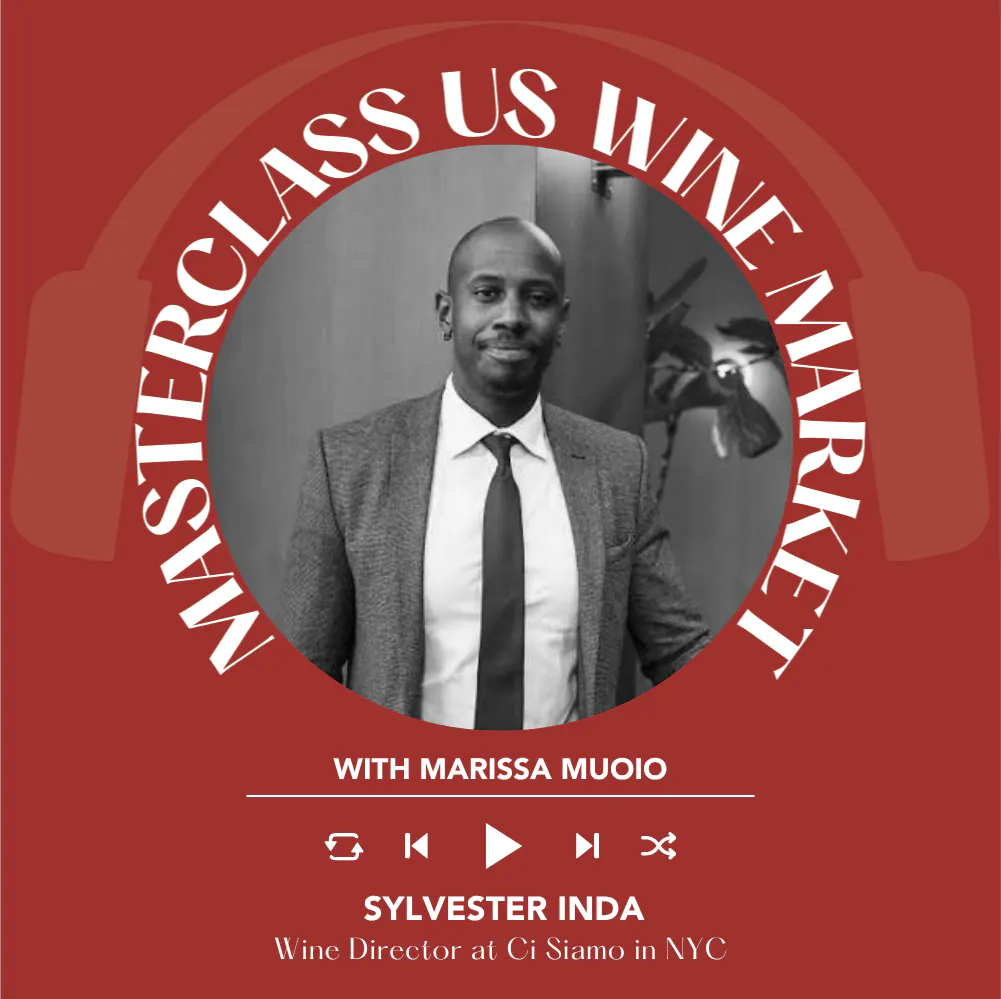
Ep. 2760 Winning the Restaurant Floor: Training, Education & Italian Wine with Sylvester Inda of Ci Siamo | Masterclass US Wine Market
Episode 2760

Ep. 2751 From Montalcino to Kazakhstan with Francesca Arquint of Collemattoni | Asia Wine Market
Episode 2751

Ep. 2748 Florida Wine Market & Vinitaly USA with VIA Italian Wine Ambassadors Stefano Campanini & Daisy Penzo | Masterclass US Wine Market
Episode 2748

Ep. 2746 From Almaty to Verona: Inside the Italian Sommelier Challenge with Leonid Kirsanov | Asia Wine Market
Episode 2746