

Ep. 1829 Giulia Stocchetti interviews Larissa Lawrence | The Next Generation
The Next Generation
Episode Summary
Content Analysis Key Themes and Main Ideas 1. The *Via Gitaskolastica* educational trip and immersive experience in Italy's Marche region. 2. The diverse expressions and characteristics of Verdicchio wine, including its comparison to Verdicchio from Lugana. 3. Exploration of other unique Marche wines, specifically La Grima di Morro d'Alba. 4. The significant influence of winemaking techniques versus regional terroir on wine profiles in Marche. 5. The rich cultural, historical, and gastronomic heritage of Marche, with a strong focus on truffles and traditional food. 6. The concept of wine as a cultural product deeply intertwined with its local context. 7. The role of wine educational programs and ambassador experiences in promoting Italian wine. Summary In this episode of the Italian Wine Podcast, host Julia Stochettie interviews Larissa Lawrence, an Italian wine ambassador and co-founder of a wine importing company, about her recent *Via Gitaskolastica* trip to the Marche region. Larissa shares her first impressions of Marche, highlighting its welcoming people, exceptional wines, and delicious traditional cuisine. A central theme is the versatility of Verdicchio, Marche's flagship white grape. Larissa discusses how winemaking techniques in Marche often have a more pronounced impact on the wine's character than regional terroir, contrasting this with the leaner, mineral-driven Verdicchio from Lugana. She also recounts her discovery of La Grima di Morro d'Alba, a charming and accessible red wine unique to Marche. The conversation delves into the region's history, diverse geography, and its ""magnificent sixteen"" denominations. Larissa enthusiastically describes the culinary highlights, especially the abundance of truffles and how well Verdicchio pairs with local traditional dishes. The episode concludes with Larissa recommending several standout wine producers from various sub-regions in Marche, emphasizing their commitment to quality and unique winemaking approaches. Takeaways * Marche is an underrated and welcoming central Italian region offering a holistic experience of wine, food, and culture. * Verdicchio from Marche is a highly versatile and age-worthy white wine, showcasing a wide range of styles often influenced by winemaker choices. * La Grima di Morro d'Alba is a distinctive and appealing red wine from Marche that deserves more international recognition. * The Marche region's winemaking is characterized by a blend of tradition and experimentation. * Truffles are a significant and luxurious culinary highlight of the Marche region. * Wine is intrinsically linked to the culture, history, and gastronomy of its region of origin. * Immersive educational trips are effective in deepening understanding and appreciation of specific wine regions. Notable Quotes * ""Marche is located in central Italy, and it's an amazing region to visit for the outstanding wines and the really delicious traditional food. But, oh my god, the people there are so nice and so friendly."
About This Episode
In this podcast, the hosts discuss the importance of winemaking techniques and experimentation in their approach to wine production. They also discuss their favorite wines, including Matelica and La Gr [The Gr [The Gr [The Gr [The Gr [The Gr [The Gr [The Gr [The Gr [The Gr [The Gr [The Gr [The Gr [The Gr [The Gr [The Gr [The Gr [The Gr [The Gr [The Gr [The Gr [The Gr [The Gr [The Gr [The Gr [The Gr [The Gr [The Gr [The Gr [The Gr [The Gr [The Gr [The Gr [The Gr [The Gr [The Gr [The Gr [The Gr [The Gr [The Gr [The Gr [The Gr [The Gr [The Gr [The Gr [The Gr [The Gr [The Gr [The Gr [The Gr [The Gr [The Gr [The Gr [The Gr [The Gr [The Gr [The Gr [The Gr [The Gr [The Gr [The Gr [The Gr [The Gr [The Gr [The Gr [The Gr [The Gr [The Gr [The Gr [The Gr [The Gr [The Gr [The Gr [The Gr [The Gr [The Gr [The Gr [The Gr [The Gr [The Gr [The Gr [The
Transcript
The Italian wine podcast is the community driven platform for Italian winegeeks around the world. Support the show by donating at italian wine podcast dot com. Donate five or more Euros, and we'll send you a copy of our latest book, my Italian Great Geek journal. Absolutely free. To get your free copy of my Italian GreatGeek journal, click support us at italian wine podcast dot com, or wherever you get your pots. Ben Venuti, welcome to the next generation with me, your host, Julia Stochettie. Join me as I take you on a journey to discover young stars of Italian food and wine world, from tea andiamo. Hello. This is Julia from the Italian wine podcast team. And today, there's this special edition dedicated to the Via Jitaskolastica in Marqu one region. For who doesn't know, Market is located in central Italy, and it's an amazing region to visit for the outstanding wines and the really delicious traditional food. But, oh my god, the people there are so nice and so friendly. We had such a great welcome when we were there because, yes, I was there too. I was part of the staff. Today's guest, Larissa Lawrence, an Italian wine ambassador, is gonna recap the experience we had in, le market. So let me tell you something about this amazing woman. She is American, but she lives actually in Mexico City, and I can say that she moved there for love. Because, she lives there with her family, and she's also a businesswoman because she's the cofounder of Venus Interos, a wine importing and distributing company based in Mexico City. And they mostly work with artisanal wineries, and I would say most of their portfolio is made up of organic wines, and they also have some biodynamic wines. So it's quite interesting to look at. That said, I would say, hi, Larissa. Hi, Julia. Thank you so much for that introduction. Oh my god. My pleasure. I'm so glad to have you here and It's like, you know, leaving again the market experience that was great. I was so happy to be part of this stuff. So but let me ask you something because I'm pretty curious about that. Like, what was it your first time, It was. It was my first time visiting Le Marquis, and I remember that something that stood out to me just amongst the group of people on the trip was that it was everyone's first time in Le Marquis with the exception of Stevie Kim. So I think in general, you know, a wine region that a lot of us have curiosity about, but haven't had a chance to visit before. Oh, wow. And so what brought you there? Like, the curiosity to visit on your region, Definitely. That was a part of it. I have read about Le Marque had tried some wines from there before, hadn't had a chance to visit it. And then I would say beyond that, I really love Verdicchio. I've had the opportunity to to taste Veradicchio from different parts of Italy. We actually work with a producer from Ligana, and I love it. So I thought it would be a fantastic opportunity to get to try so many different expressions from what is ostensibly probably the most important region for Veradigio production in Italy? Well, I definitely think so because for those who don't know. Verdicchio is the same as Dolbyana. So the grape variety they used to make, lugana on Lake Garda. So, yeah, for Verdicchio market is the benchmark region, I would say. What surprised you the most? A lot. I I found that I came away from the trip with very different impressions than what I had anticipated. I think that to be concise about it, probably the most important takeaway for me was really the prevailing importance of winemaking techniques vis à vis territories. So I think that, you know, in retrospect, it's it's not particularly surprising because particularly when we talk about Castelie de Yayzi, we're talking about really, really big region with lots of different microclimates, kind of important distinctions from the various subappellations to others. On balance, even when we were tasting within a specific subappellation, there was so much variation. So I think it was really the impression that wine making is really differentiating the various different wines, and it's the fingerprints of the winemakers more so than the region on the wines that, really stood out to me. Wow. That's really, really interesting. But you think that there's still wines that are related to the winemaking traditions of the region, or you find also a lot of experimentations and like new styles. I think that the answer is that, yeah. So of course, there are some regional tendencies that you see and some certain, you know, similarities for sure. So to be specific, I think that Matelica was one of the regions where we saw sort of the most uniformity in terms of wines that generally speaking were a little bit fresher, brighter, leaner, less of a tendency to experiment with Barrique, with later harvests, with botrytis, blending with Vasito, things like that. So, certainly, there were some regional similarities that came out. But there is a lot of experimentation. There is a lot of sort of technical winemaking that we also saw, which was really, really interesting. And I would say that even thinking about the sort of technical winemaking sphere, there also were tendencies that came out in some of the different subappellations. And so what was your favorite style? My palette definitely tends more towards wines that I would say are less technical, more focused on kind of a pure expression of the fruit and the territory. And so I definitely found regions or rather wines from every single region that we visited that absolutely sort of express that. But again, if I'm to talk about, you know, kind of specific region in broad strokes or a specific couple of regions, I would say that my favorites were probably Matelica for Verdicchio. And I also loved our visit to La Gríma de Morodialba, which was just so so fascinating. I had never had the grape of La Gríma before. And although I love verdicchio and adore white wine, it was also fun to have a bit of a change of pace and taste some red wine from the marque. It sounds about right because they're not making just white wines out of verdicchio in the market, but they're making also some reds like Laquima Rod alba that's actually I can say is pretty unknown also in Italy as a red wine. It's not among the most famous. I think it's most known from the region as a red wine among wine lovers throughout Italy. Let's talk about your LaCRimadimor Rodalbek experience. How was that? It was great. So we spent the afternoon at a stunning estate by the name of if my notes served me correctly, we tasted thirty eight wines in that tasting. So it was, sort of true to form. It was pretty prolific. Yeah. It was like a deep dive into the LaKima. It was. And it was so great because just as you said, these are wines that don't really see internationally very much, particularly not in Mexico. It and it was actually the first time that I had had the La Grima grape. So for me, it was really just kind of rich education tasted really widely. I think we tasted wines from approximately ten producers that day. So we had an opportunity to taste a couple of wines from each producers, which was really great. Either tasting different crew from the same producer, sometimes tasting different vintages. I am just looking over my notes a bit more. In general, I found the wines were really charming. So the region is quite close to the sea. These aren't wines that are overly panic, overly austere. They're pretty accessible. I remember one or two of the wines that we tasted was actually served a little bit chilled in temp, and that was actually lovely. So these are wines that taste like fruit for the most part. And I found them to be really, really charming, much more of a tendency to use steel or cement versus new oak. Again, it was a really nice change of pace, and I thought that the wines were pretty delicious. Wow. That's great. I mean, actually it was an amazing experience for the whole group, I guess, because as you said, it was the first time for the all of you. And so now we're gonna have more Italian wine ambassadors talking about verdicchio, lack and all the wines we had there. That's great, especially because when you go actually where they make the wines and you meet the producers, you leave the area everything has another taste after that, and you actually really understand as you say that wine is a cultural product. Let me just ask you how many wines did we taste during the Jita? Because I remember there were a lot like, ten producers from La prima de Morada, and I can't count the so many wines. Yeah. We had a lot of wines So our exposure to the wines was kind of through two different channels. So channel one would be sitting down and doing formal guided tastings, which were led by the producers. And we have four days of those casings. In some instances, we have one tasting a day, some instances we have two. So through those casings, we had about one hundred and fifty wines approximately. But in addition to those formal guided tastings, we also had the opportunity to taste again with producers during lunches and dinners. And sometimes through the second channel, we had historic vintages. We have large formats. And so if you think about all of the additional wines that we tried through these lunches and dinners, I would say we're talking about minimum another fifty wines over the course of the four days. You know, at least two hundred wines we tried during the course of the Jitsan. So now we should all recognize verdicchio and wines from the market during blind tastings. Are you enjoying this podcast? Don't forget to visit our YouTube channel, mama jumbo shrimp for fascinating videos covering Stevie Kim and her travels across Italy and beyond. Meeting winemakers, eating local food, and taking in the scenery. Now back to the show. How does the region look like? I mean, in terms of like history and geography, how's the market? One thing that I really loved about this trip was that such a brilliant job was done in terms of blending formal tastings with the broader history and culture of the region for complete nerd like me, that was just amazing. And as I always say, wine is a cultural product. I know you mentioned that earlier. So having a handle on the broader context is really, really important. For understanding the wine. In terms of le Marquis, I think that the first thing to talk about is kind of where it sits geographically. You mentioned that it is in Central Italy. It is in the central eastern part of the country. And so on one side, on the eastern side, it's the seaboard, it's the Adriatic sea. And then on the western side of Lemarque, you have the Appanine mountains. And they kind of descend into these rolling hills that become closer and closer to sea level as you travel eastward toward the sea. It is a region with a lot of rivers. I believe that there were eight rivers if I'm not mistaken in the region. And those tend to generally speaking kind of demarcate the various different docs and docGs. One of the things that we saw throughout the course of our trip was this branding around what they call the magnificent sixteen. And that's because there are fifteen different docs and one IgT in Le Marquay. So There's just a lot of variation, really, in terms of the geography, the microclimates, the soil, etcetera. And you see that in terms of the various denominations. Let's see what else is key to talk about I think something for me that was really interesting that I hadn't known before was that Le Marque or at least parts of Le Marque most notably, you know, right along the sea we're actually part of mania Grichan. So, you know, Greek speaking, settled by Greek settlers from as early as the eighth century, BC. So, you know, when you think about mania Grichan, typically you're thinking about the south of Italy. Is soleca Campania. Even parts of La Marque were included in that. We talked about how Verdicchio. It's really found an important home in La Marque, but it's believed to have originated in Northern Italy in La Maria and the Veneto where it's called, as you mentioned, either Toriana or Treviano de Lughana. It's been produced for quite a long time, probably about, you know, somewhere between five hundred to eight hundred years in Le Marque, but it was actually brought from the north to Central Italy by the lombards. Those were a couple of highlights in terms of things that stood out to me, but really the whole trip was just kind of interspersed with all of these great historical anthropological lessons. So I really, really enjoyed that. Yeah. We mixed wine with cultural stuff. And, actually, there's quite a lot of history in Le Marcus, so it was cool. It was also internationally in ancient times, basically, starting from mania great and then becoming part of Italy. You mentioned also the production of Trebiano de Luggana. Right? What do you think is the most different thing between the Trebiano de Luggana and Vericchio? That's such a great question, and it's something that I've given a lot of thought to because I think that my perspective is kind of an unusual one given that Verdicchio is more widely known from La Marque, but the expression that I'm more familiar with just by virtue of my importation portfolio is not of Lugana. And so in Lugana, Verdicchio, Torgiana, tends to have a pretty lean expression. So typically, the vineyards are quite close to Lake Garada, which is a really, really big lake in Italy. So extremely important in terms of having a tempering effect on the weather or lake breezes. Definitely a cooler region of Italy, not one with you know, particularly high altitude. We're talking about very close to sea level, but by virtue of the soil, the wines tend to be very kind of fresh, mineral driven. They're not typically playing around with a later harvest. Unless the idea is to make kind of a sweeter dessert wine with residual sugar much more of a tendency to use stainless steel or cement for fermentation. And what I found with the verdicchio from Ligana is that particularly as they evolve and model, they start to develop some of the same kind of classic petrol notes that you expect of in age German riesling for instance. That's kind of what I had in mind as a a key reference point when I went to La Marque. In La Marque, again, we saw such a wide breadth of expressions of But by and large, if I'm to generalize, I would say the Verdicchio that we saw, Le Marque, definitely seem to be a warmer weather, Verdicchio. So, you know, richer, fuller, more luscious, There was a very wide variety of winemaking styles. So we had, you know, bone dry to, you know, wines that were definitely a bit more viscous with some residual sugar. Playing around with late harvest, also having some bossertized wines. Also some pacito. So, you know, when you blend in the wine making, you start to see a whole lot of variation, but just in general, I think climatically really strong differences. Elevation actually was higher for the most part in Limarque, whether we're talking about Yesi or Matelica. But again, I found the wines to generally speaking be richer, less lean and kind of less been by the minerality and acidity that I see in lugana and much more by kind of this, like, beautiful, full fruit. So wildly different. And then in terms of that, that kind of petrol nose that I found in lugana, I didn't see that at all, actually, in Lemarque. Are you saying that they are both age worthy wines, or do you think that one is more age worthy than the other? I think that they're absolutely both age worthy wines. So we had the opportunity to taste wine going back to ten. I think in in one case, we had a wine that was thirteen years old, if I'm not mistaken. From La Marque. Beautiful, beautiful, beautiful, age worthy wines without question. In Lughana, I have had fewer older vintage wines, but those that I have had I think are evolving beautifully and have the potential to really improve in bottle in both regions. There is definitely, I would say, a strong push to pay very close attention to parcels to be holding back to start building libraries. So I think it's something that both regions are working towards in terms of knowing that they're producing ageable white wines and wanting to be able to have a supply that they can actually sell to the market. That's fantastic because usually white wines are not capable of long aging. I mean, there are just few examples and is among those examples. So I think that's great. During the market experience, we had also some typical food. Right? We did. We had beautiful food. We had the most generous hosts. I don't think anyone went hungry on the trip. So you mentioned at the beginning that the food was traditional. Right? Like, we had so many expressions of local cheeses, seasonal autumnal vegetables, local nuts. I remember having one day this really beautiful sort of like timbale of pistachio that was just so gorgeous. We have fresh pastas. We have beautiful desserts truffles. Oh, my god. Do you remember the all falls? Yes. I remember that particular lunch that you're talking about Juliet had been baked into the itinerary as a light lunch. It was hysterical because we sat down at the table and everybody first had a massive plate of charcuterie and cheese and serves, and then you're right. We had o full. We had I think grilled to me, we had just kind of course after course after course. It's lunch for people, like, working twenty four hours a day in the countryside. I don't know, moving big rocks from one side to another because It was really too much food. It was beautiful. And so again, I was really struck not only in that meal, but throughout the entire trip by the generosity of our hosts. They were so giving just exposed us to so many different ingredients and dishes, and the food was delicious and Veradickio is so food friendly. I can say with complete confidence having tested that now, many, many times throughout the trip, it was brilliant having it with the local food. So if you don't know what kind of bottle to put on your table, just go for a verdiceo, and you'll be fine. That's right. I think it's a good choice. We should become like the verdic your girls, you know, worrisome because we love verdic your so much. We should like found the club, the verdic your girls around the world spreading the verdic your gospel. I like that. We just need to get some baseball caps and we'll be ready to go. While I was saying awful, you were mentioning something, like, extremely precious and delicious that is truffle. That's right. So the very first day when we arrived We went directly to the Institute that's dedicated to kind of supporting the Consurgio and is focused on both wine as well as food. And we had kind of an initial grounding in in the various different denominations of Lei Merke, and then we had a master class on truffles. And we've learned about all of the different varieties of truffles that are grown in La Marque that our indigenous tele Marque, it's well over a dozen. And we're talking about both white as well as black truffles. And that evening, we had this incredibly indulgent and beautiful pasta sort of like an a rich egg pasta and egg noodle type pasta with these beautiful luscious white truffles shades over the pasta and midway through the course, Julia, you may remember the chef came around and shaved a second serving of truffles. It was just like the most luxurious over the top thing, and that was certainly not the only time we had truffles. Throughout the trip, we had truffles on a number of different occasions just intoxicating beautiful, incredibly aromatic, really, really lovely. So the truffles were certainly a highlight for me of the trip. Yeah. Like a bite of heaven. Now my mouth is watering, and I wanna have time machine to go back to have some sliced white truffle on my fresh pasta. What a dream. You and me both. Okay. Let's go. Yeah. Also, truffle was a great, great experience. Do you have any producer that you recommend? I do. I have several events. As I was mentioning, You know, we kind of went methodically through different subregions within Le Marquis. And so when I went back and I was looking over my news, I had, you know, one, two producers typically in every region, that I really liked. And so if I kind of get chronologically through the trip, our first sort of guided formal tasting was in the right bank of Yay z. And there for me, the standout producer is And we tried two wines from Tabignano, both from the misco parcel or from a single parcel rather in the misco vineyard, which is a crew. They also use the contrada contrada system in Yeezy. And so I thought their wines were beautiful, just, you know, super complex, really savory, gorgeous. They do not use oak for their wines. In Matelica, there were two producers that released it out. By and large, the producers that we tasted in Matelica were pretty small. There was one new producer called Borgo Alaineto. These guys are new. I think that they founded their estate in two thousand eight. They make a hundred thousand bottles in total. They're one of those producers that is working to build a library so they're holding back about twenty percent of their production every year of their crew wines. We had six wines from them. So we were able to do a vertical of one of their crews. We had a traditional method perdicchio. Just really, really beautiful wines. I could see how quality minded they were, and I thought that they were producing something that was really lovely. And then the last wine that we had in that particular tasting came from a producer named and these guys are teeny tiny. They make only twenty thousand bottles per year and only one wine, but I found them to be so charming and so delicious. Really, really liked those wines. Then the next tasting was the left bank of Yeezy. There, again, there were two producers that for me really stood out. The first was Pierre Balta founded in two thousand two, Biodynamics since two thousand five. Work with Indigenousisty, spontaneous fermentation. We tried two of the reservas, again, just like beautiful, elegant, delicious. And then we had wines from a producer by the name of Ventura Roberto. Also quite small eighty thousand bottles per year indigenous sea spontaneous fermentation. We did something cool with these wines. We had the first wine, which was a two thousand thirteen cruz superiore, And then we had the most recent wine, a two thousand nineteen Curiserva, that won Gamorosi's Brebiquieri Awards. So that was really cool to kind of see these really special wines for the estate. In La prima de Moro de Alba. I loved the wines from Juicy. I just thought they were so characterful. They've really tasted like fruit, not overly technical. My tasting notes for this producer just read yum in cow capital letters. Also, really liked Marzola. These were the last wines that we had in this particular tasting. Tiny producer are only three hectares of vineyards. They also work biodynamically. They have a very long fermentation, so a slow long cold fermentation, forty days, prolonged aging. So all of the wines are held back for at least three years before they're released. High new production, only twenty five thousand bottles a year. I just found them to be really pure true wines focused one hundred percent on expressing the terroir. And then in I really enjoyed the wines from a producer named factoria Leterazim. Really close to this week, tons of minerality. The winemaker is just a complete character. He was like the Bob deal and winemaker. Yes. A fan of rock and roll. And I found the wines to be powerful, but still pretty. And, you know, just very classic, very traditional, really, really liked those wines too. Thank you so much for sharing. So those were some of my faves? Well, I guess that from the Verdicchio girls, That's all. Thank you so much for being here with me today, Marissa. Thank you, Julie. It was my pleasure. And, hopefully, we'll see each other soon in front of a bottle of Verdicchio. Maybe with a plate of fresh pasta showered in tartuffi. I can wait. Well, Arissa, thank you so much, and see you soon. Thank you, Julia. Bye bye. Gracier for being with me today and listening to the next generation on the Italian wine podcast. A la prosima Chinchin.
Episode Details
Keywords
Related Episodes

Ep. 2434 Giulia Stocchetti interviews Alberto Sabaini and Sara Piubelli from Cantina Sabaini | Next Generation
Episode 2434

Ep. 2427 Margherita Andrenacci interviews Alejandro Fargosonini of Châteauneuf-du-Fargosonini | Next Generation
Episode 2427

Ep. 2415 Giulia Stocchetti interviews Claudia Bustos from Viña Raíz Criolla | Next Generation
Episode 2415
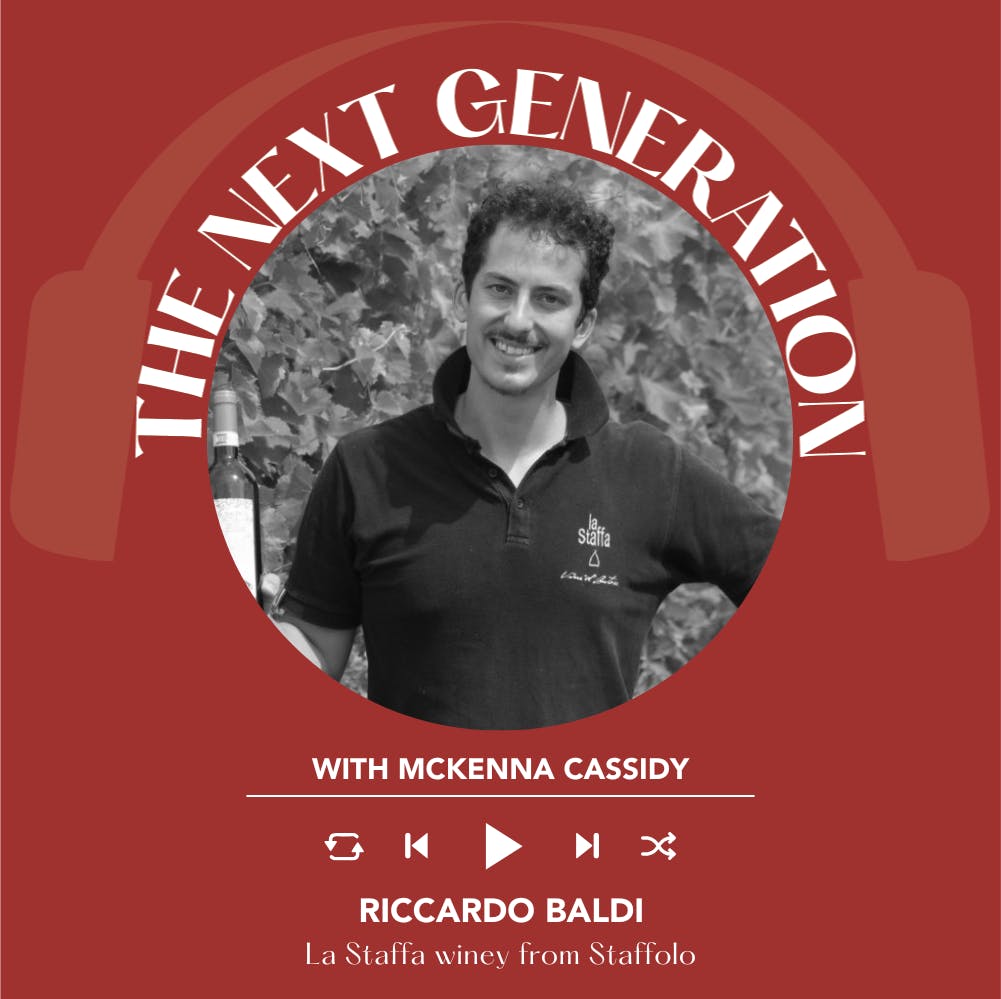
Ep. 2409 McKenna Cassidy interviews Riccardo Baldi of La Staffa | Next Generation
Episode 2409

Ep. 2402 Margherita Andrenacci interviews Erin Kirschenmann of Wine Business Monthly | Next Generation
Episode 2402

Ep 2396 McKenna Cassidy interviews Luca Paolo Virgilio of Caprera Winery in Abruzzo | Next Generation
Episode 2396