
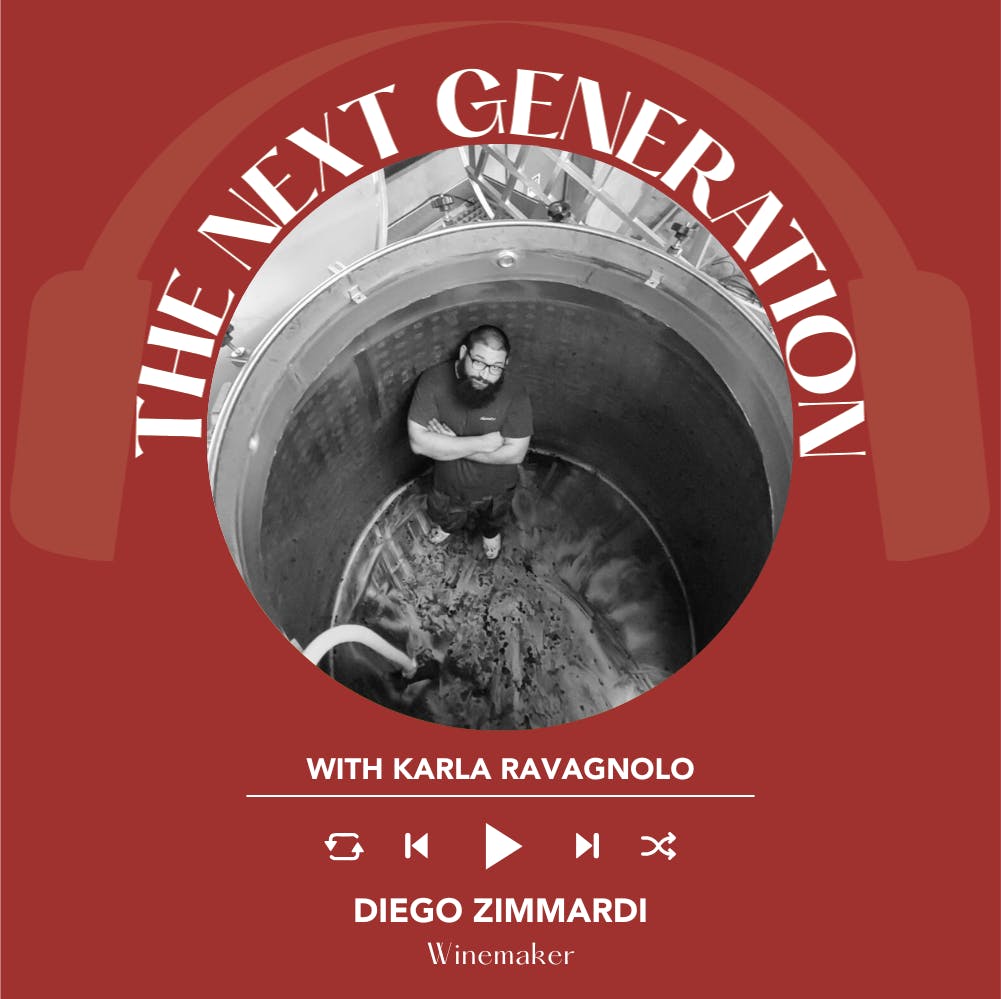
Ep. 2243 Karla Ravagnolo interviews Diego Zimmardi | Next Generation
The Next Generation
Episode Summary
Content Analysis Key Themes and Main Ideas 1. Challenges for Young Winemakers in Italy: The difficulties faced by young professionals entering and thriving in the Italian wine industry, particularly regarding unpaid internships, limited opportunities, and inadequate treatment. 2. Contrast with International Wine Industries: A comparison of career development paths and working conditions for winemakers in Italy versus other countries (e.g., France, Germany, Austria, South Africa). 3. Importance of Human Resources in Winemaking: The critical role of valuing and investing in people within the wine production process, moving beyond a focus solely on financial or product-related aspects. 4. The Debate on Natural Wine: A nuanced perspective on natural, biodynamic, and conventional wines, emphasizing that quality and taste should be prioritized over production philosophy alone. 5. Criticism of Wine Communication and Social Media: A critique of pretentious language, dishonesty, and arrogance prevalent in the wine world, especially concerning marketing, expert opinions, and social media influence. Summary In this episode of the Italian Wine Podcast's Next Generation series, host Carla Naviano interviews Sicilian winemaker Diego Dimardi, a well-traveled and outspoken individual. Dimardi shares his unconventional journey into winemaking and his extensive international experiences across South Africa, Portugal, Chile, Austria, and France. He vividly contrasts the challenging realities for young winemakers in Italy, marked by unpaid internships, scarcity of good job opportunities, and a lack of respect for human resources, with the more structured and supportive environments found abroad. Dimardi passionately argues that the ""human"" aspect of human resources is often overlooked in Italy, hindering growth and innovation. He also delves into the contentious topic of natural wines, asserting that a wine's quality is paramount, regardless of its production method, and criticizes the common misconception that ""natural"" automatically means ""better."" Furthermore, Dimardi expresses his disdain for the overly complex, pretentious, and often dishonest communication prevalent in the wine industry, particularly among social media influencers who lack practical knowledge. He champions honesty, humility, and the importance of shared experiences over superficial displays in the wine world. Takeaways - Young winemakers in Italy (especially Sicily) face significant hurdles, including unpaid internships and difficulty finding fair employment. - International wine industries, particularly in Europe (e.g., Germany, France), offer more structured and paid pathways for aspiring winemakers. - Valuing human capital and providing opportunities for growth and learning are crucial for the success and sustainability of wine companies. - The quality of wine should be the primary focus, not just the method of production (conventional, biodynamic, natural). - There is a prevalent issue of pretentiousness, dishonesty, and lack of practical knowledge in wine communication, particularly on social media. - Authenticity, transparency, and the ability to admit mistakes are essential for progress and learning in the wine industry. - Sharing wine and experiences with others fosters connection and genuine understanding, contrasting with isolated, often superficial online interactions. Notable Quotes - ""Don't make the things more complicated on what they are."
About This Episode
Speaker 1 and Speaker 2 discuss the pros and cons of living in small village and the importance of finding a balance between work and personal life. They emphasize the challenges of finding a job and the importance of learning and development in the industry. Speaker 1 advises Speaker 2 to be professional and not try to be an expert, while Speaker 2 suggests being mindful of words and not trying to be a professional. They also discuss the importance of following a winery and being mindful of the information.
Transcript
I also think that one of the problem that we have today is, like, for many, many years, when you talk about one, he was talking about, I don't know, something that was like religious, some mystic with a lot of super complex words that Noah will understand. Also, you know, this wine just let me remind, fresh cut grass during, midnight summer, whatever. I mean, come on man. You are not Shakespeare, you know? It's like you have to be truly. So that's the point. It's like, don't make the things more complicated on what they are. That's the thing that I I don't like about one good. Welcome to another episode of the Italian wine podcast. The next generation series, where we aim to answer one simple question. What are the new generations up to when it comes to wine and food? My name is Kat Lariano. Join me as we dive into the latest trends in Italian wine. Hello, and welcome to another episode of the Italian wine podcast. My name is Carla Naviano. I'll be the host for this episode of the next generation series. And today, I'm very much excited to welcome Diego dimardi. An extremely wonderful human being I met in Tarmina Gourmet this year in Sicily. He is, well traveled winemaker, and he's extremely outspoken. He has some very brave and honest thoughts that he would like to share with us today. So I'm very much pleased to welcome him. Hi, Diego. Hello. Thank you to everybody. Too kind to kind. I'm not so much good as you describe me. No. No. No. You are. You are. I'm sure I'm sure people will agree with me. So we're gonna start slowly and then we're gonna get into the the tougher part. But I would like to start to interview. Since you're from Sicily, and actually today, you are talking from a sunny, warm day nearby the sea. You are from Palermo. Am I correct? Nice. So give us three words to describe Sicily. Okay. I would say beautiful, but I don't want to go like two panels, you know. So maybe sunny, unpredictable, wild. Why unpredictable and wild? Yes. It's quite hard to find a a balance. You know, it depends where you stay. I mean, if you stay in a big city like Palenmo Catania, it's something. If you move, like, more in the inter part of the Sicily, in the really countryside, the small village with few thousand people or not even thousand people, to live in that place. It's quite harsh to live, you know. You are live accepting another dimension. You're not even living in Italy. Sometimes, you know, it's like for them, it's another world completely almost. Imagine to live in a place among them up on the mountain with six hundred person. It's like if you don't travel, if you don't go in another city for all of your life for you. It just, you know, doesn't matter who is the government or whatever. Nothing's gonna change for you. I mean, there's pros and cons of this type of lifestyle. You know, sometimes I wish I was somewhat isolated from society, especially, like, in these days. In some ways, you kinda have the opportunity to focus on your little, like, village and have a very serene lifestyle. But do you think that Sicily influenced you in some way? And if so, how? For sure inference mean. I mean, if you think from the beginning, I think it's, could be stupid, but it's not. If you think we are in Iceland, so we are not connect with anyone. And it's also like this kind of, independent way how you grow up, you know? This is all, it's always to be like that with everyone. Every people that come from Sicily have this kind of, really good strength. I don't know, like, this have, definition to be, like, sicilian. You are proud with sicilian to be linked with your territory. Even if it's love and hate, you know, like, atul, you know, probably a time. It's fifty fifty. I love you, but I hate you in the same time as much as I hate you as much as I love you. You know? That's the point because you don't have, like, kind of, this point ability to do, well, you know, like, the job, or whatever. It's it's not so easy to find a job. It's not so easy to to get to develop some culture, cultural, or social, whatever. I mean, right now, it's much more easy, back before. And what you learn in Sicily is that you have to work hard than anyone else. Because if you consider also, like, the a guy that is sixteen years old or eighteen years old from Palermo to Milan or much better if you go outside of Italy, you are able to find a job work one year and go for traveling, you know, but it's easily not like that things work, you know. So to have, like, the standard line that everyone have, you have to work more than a harder than anyone that it's something that will just mark you. Like, And if for for this reason, I'd say, I hate as I love because, yeah, you have amazing, environment, amazing, see amazing culture, amazing food, or whatever, but you not only live without with pleasure, you know. So this is this is harsh. This kinda already introduces one of the topics that we're gonna discuss later, which is the actual situation of young people in Sicily, especially young winemakers, and people who wanna approach the industry of wine. But before touching on that, I would like for you to tell us why did you decide to, start a career in wine? Why did you study analogy? What did you do in the past years, I see from your CV that you've been traveling quite a bit. You had some experiences in South Africa, Portugal, Chile, Austria, and France. Would you mind a little bit more. So, actually, it's funny because, like, no one in my family, it was in a business of wine, no one. But, you know, when you are kind of sixteen, seventeen that you felt like lost, you don't know what you have to do, you don't know what you would like to do and all this kind of stuff, you know. And to be honest, it's like also the high school not vibrate you to be ready to go to work or to go to university, whatever. So you you feel lost, you know. And I I wasn't so good at a high school. A heavy year, it was a fight. So at the at the end, I didn't know what I want to do. So I was, like, I was too in, like, in philosophy. So I wanted to do, like, philosophy history at university. And the other way, I want to, I want to do chemistry. As I also love, like, natural environment, and I always, like, love, drinking, but drinking, not only, like, wine. Like, mixing, vitamin, whatever. So I try to focus and find something that it's, like, put everything together. And one day, like my sister told me, but did you know there are six, like, the university, how to study, like, how to produce wine, how you manage in the the vineyards, something like that? I say, no, I have no idea about it. So I go to read, and I just fell in love with this one. And I say, yeah, why not? So I moved because, this university, it wasn't in my city. I mean, it's still university of Paremon, but it is not here. It was in Marcella close to Japanese, but I think everyone knows for the forty five wine that produced that. So I moved there when it was nineteen, and I started to do my my bachelor's degree. At the beginning, it was harsh, I have to say, because as I say, it's like not everyone in the band. Also, how we study during high school is not so easy to go to university. But in the second semester, I start to do, like, really well, and I finished cum laude. So I was proud. And, I I think I found my way, you know, I think I found my way. Which is the most important thing, actually. I'm still looking for mine. So I congratulate Sure. But, you know, what what I understand is, like, I I think it's also a message that, that have to pass, not just for me, but I think to everyone is like, you you you you never know what's going to happen. You know, when I start to university, like, a close friend of mine, there was, like, almost fifty years old. It was a super engineering and tornado, whatever. He quit everything to start to do, like, one making. And right now, we produce natural wines. At fifty five years old. You know, so you never know what is your life. You never know. You know, it's it's just a trouble. You don't know when you're starting to know where you're landing. You you never know. So you graduate and you let's say you have to pick what to do basically with this bachelor degree. So my question for you, I think it's, why did you decide to travel abroad instead of, like, focusing just in the Italian market? So, basically, when I when started to do my my bachelor's degree. There is one, lot of wine firm in Palamo, authenticity, and, like the seller asked to the to the university if there is some guy that wants to work with them. Like, during the Wi Fi, you know? So I accept and I start to work with, this seller. It's called De Bella, that I discovered because I didn't know before. They have kind of, a partnership with a university in specific with a research group of microbiology. About about wine. I mean, food journal, but I was about wine. So I start to collaborate with them during all the secular's journey. So, for, any kind of seller sizes. You know, we were working with a experimental, regional wine to be cooperative, size and everything in between, small cellar, big seller, huge big gigantic cooperative, So I and we did, like, I don't know. Like, in one one harvest, two hundred with different humidification, with different type of bacteria. He's the Sacramento on Sacramento natural. How also, like, the nutrition profile can evolve and how develop the different aspect of the organometrics in the wine and whatever. So it was, like, super nice for me to discover so many things. But, in the end, when I finished the, the journey, it was was amazing. I had the possibility to, today's a lot of wine, to know a lot of things, and I met one of the two masters in my life. It's, they teach me everything about Micro Bureau, I was really focused on Micro Bureau, and and after it's like, I felt there is something wrong, you know, as you say, what it's like right now, the position of a young one maker in Sicily. So not so easy to find, correct position in, in a winery, but in general, I mean, it's, it's not so easy to find, like, where you can go to work and they can treat you as, as every human being to be treated when you work, you know? It's like, of course, no award for the glory, but, no one work only for the for the money. I think you have to give, like, the good average to the people. The good value to the people, not only like, economically aspects, but also how you treat the people. You know, sometimes I only think that when we talk about human resources, the most important thing is the first word, you know, because it's human resources. So you have to focus on human. Because to be who you are right now, you have someone under you that make you possible to be who you are right now. I mean, if you go all over the world, win, gold medals in New York, gold, blah, blah, blah, blah, whatever. Super nice, but you can do this one because there are some guy that brought their back to shoveling the grapes to produce your, Roso, superiority reserve or whatever. So it's that's how the the life is working, you know. To be on top, And if you feel like a building, if you have to ride to the fourth floor, you have to pass from the first one. I totally agree with you. And this is also why when we first talked, you mentioned something like how can you truly value and enhance your land and your terror that is a word that everybody keeps saying, when you are not actually valuing the people and the human resources in it that are working it. Exactly. One of this guy that was, like, my master. It's, John Carlos kepti always tell us. It's like, what is there? He always say is a knowledge, collective production. So it's, of course, it's the climate, of course, it's the soil, of course, it's all the practice in the vineyards, in the in the cellar and whatever, but it's also the people. You know? It's like the people. It's a really important part about terroir. Because if you come here and you talk with a farmer close to traveling close to agriculture, they know they land. They defend their land. So they know also If it's trained, what you have to do? I mean, it's it's not just it's it's nice to have like a, a theory background. So you know about the disease and whatever. But I mean, with this experience that you can have with your hands, and if you think, like, that in your own, in, in bourgogne is the same, you know, they know a lot about the third one. But if you cut the human part, as we said before, about human research, I mean, yeah, you can go to own, win, whatever metal, but if you don't trade the people. There's a good value. What what does it mean? You know, you you just open a lot of websites from some seller. They always tell you they follow the traditional of the family. They try to focus on the environmental stuff. They want to be sustainable. They want to be whatever. But it's like, we know that, like, eighty percent of them is just lying because that is not true because you just, you just, like, set up storytelling that you have to be and has to be like that. And again, understanding somehow, but in the in the other part, it's like, you really want to think about your territory, your culture, your land, you have to take care of the people that work in your land. If you want to take care about the wine production, why you don't try to focus on the people that are one nigger, a young one nigger in that region in that land, because they are the future. But if you don't invest money and time to that people, to teach them people, what you want in in the future. And I mean, we're talking about one, but it's the same in astronomy. It's it's it's always the same. It's always the same. You have to teach to people. You have to let them know what is about the job. And you also have to give them the possibility to make mistakes. That's the biggest freedom that I understand. You have to be free to make mistake. Otherwise, you never learn. Yeah. I know this may be a little challenging, but I also feel like many people that are now heads of companies are like extremely well esteemed winemakers sometimes tend to forget that they were young in the past. And then they they did mistakes too, and that they learned from them. I feel like this is an extremely important passage My other question for you is this is a situation here in Italy, but since you have so many experiences in international companies, as I mentioned, in different countries, do you think this same situation is reflected and represents also, the international scene, or is there a different approach? It's completely different. It's completely different. I met a lot of people all over the world, the young one maker, mean, just focus on Europe. Okay. Because it's like, if you go to the United States, South America, of course, the things change. But if you only focus on Europe, you know, just to give you an idea. When you are in university, you have to make one hundred and twenty five hours of internship. So it means that you're gonna work in a seller or you're gonna work in the lab or you're gonna work in the vineyards. That internship is not paid. So, actually, you work for free for the company. If you go to France, it's completely different. If you go to Germany, they also have these VDCs where it is fifty percent is thirty, fifty percent is practice. So you go one week to university to land, one week to the vineyards of the seller to work. But you got paid to do it. Like, they give you, like, minimum salary per month, you know. So that's how you develop work career. It's not just a voluntary stuff, but also you develop your, like, your knowledge about theoretical experience. And, of course, you have to spend hours on the on the book But not only the book, you also have to spend some hours in the seller, I have to be balanced fifty fifty. So as I said before, especially if you come from the Southport Bureau, I didn't have the same possibility of the other people that study while making in, in France, in Germany, Even in Spain right now, it's it's different. I mean, I think just if you just consider this one as the basic of your knowledge, as the basic of your journey, it's already wrong. So how can you imagine that all the steps that's gonna be after it's gonna be correct, you know. That is the mentality and it's gonna be like that. Think about that I I I I I fight a lot to tried the possibility to go out for every experience because I didn't have the money to do it. You know? So I have to work like three different jobs. Doesn't matter, always black money in restaurants or whatever. So But if you think like in Germany, you go there for the Viticulture school. You work one year and you go to South America and travel for one year without any problem, you know. For us, it's completely different. So you don't have the same possibility. You have to you have to work more and harder than anyone else arrive at the same level that is the standard, not to be the best, just the standard. That's why it always is like people that come from the south, they're always frustrating, and they're always starting for this reason. I'm gonna jump right in because you mentioned the word that is key, and that I'm I was thinking actually at the same time, and it's frustration. So I guess my new question for you is, is there any suggestions that you would share with new wine producers who may feel frustrated. And do you have any tips for wine companies and how should they approach and take care of the new generations? Sure. For the young producer, I know a lot of them in Sicily, in Austria, in younger in Slovakia. So what I want to say is, like, they they I think they should, the show, you know, and I think for them is the same. I know they truly believe what they are doing, and I know they make good stuff. So I think they should continue to do what they're doing and still fighting for their ideas and their production about the big company and how they supposed to treat the the young people is like, as I said before, let them make mistakes, teach them, put them under your shoulder, and also give them a good value, not only about money, but just also let them understand. Really if you're staying inside the company, they cannot also develop a career. You cannot only come inside a seller to work for a seller hand and stay seller hand for the rest of your life. Just washing tank or whatever. I mean, it it's nice because you have to start with them. I always say that if you want to be a good lawmaker, you have to be a good seller and but I I I discover, like, by myself this, due during this journey, during this experience, I discovered this, you know? So what I want to say, if you are a company and you want to try to implement your company or sell it with young people, just be human, just be social with them. And teach them, you know, and in the end of the day, if you have a long harvest day, then everyone is gonna be tired, opens a bottle of wine, and teach them, like, tell them why they have to broke their back to produce that bottle, you know, That's what I did, for example, in, in Austria where I met the my one nigga was, Thomas. It's, one of the elements. It's the best human being that you can meet all over the planet. Like, the best one, it's so friendly. It's so nice with every kind of human being. You know? And it was amazing because we always drink together, even if we spend like sixteen hours in the cellar because I was like his right arm in the cellar. So if we spend all the day, it doesn't matter. We stay together. We open a bottle of wine together. Just chill, relax, And that's what I want to be is, like, take care of the human parts of the people. They're you you don't have only to see the people has their horses, they will work in the vineyard, or they work in the cellar, that they finish, you make your eight hour. So I'll see you tomorrow. No. It's not like that that they think so. Period. I completely agree with you. I know this is a very important topic, but there's another hot topic that I wanna discuss with you that is natural wine. You attended a biodynamic certification course or something like that in Kind of kind of like more introduction introduction about one, like, biodynamic words, but I as I said, like in Australia, I was working for the biodynamic company. And, in in Hungary as well, I was working for the biggest biodynamic, salary, Hungary, and it's Cristinos. So, yeah, I mean, you have to consider a different approach. But, yeah, hold on. Yeah. No. Because, like, it's funny because you have a lot of experience in in this side, in this niche of wine production. But you mentioned to me, and you asked me this question, is it even still worth discussing if a wine is natural or not. Yeah. Of course, if you talk about biodynamic natural wine, okay. But in the end, the one has to be good. Doesn't matter if it's bio conventional, biodynamic, or natural, or, whatever you want. Doesn't matter. It has to be good. First one. If it's faulty, it's faulty. Doesn't matter how you make it. Doesn't matter. So for this reason, I mean, of course, there is some discussion about it. If you go, I don't know, like, for example, scandinavia. Like, to that market, there are a lot of this kind of, wine bar that are running by kind of I don't want to say, like, ipi, but you know what I mean? Like, Buhan, it's natural wine bars with, funky stuff, blah, blah, blah. Okay. That's nice. I mean, I can understand I can accept, but you have to understand that it's funky, not because it's the expression that there are. Because if I work if I don't work well in the cellar and the wine is faulty, it's not at the run. The wine is faulty. Close a sentence. So I I don't think we have to discuss about how you do produce wine. You know? I mean, I think you can produce wine how you want. It doesn't matter. If you want to be an outright, you want to be biodynamic, try to be sustainable. This one, yes, I can just give this maybe deeper, I don't know, whatever, but I think you try to be, like, respectful on environment that give you, like, the grades. This one, yeah, hundred percent. I truly believe you have to be so, like, respectful and sustainable as a human and as an environmental stuff. For me, it doesn't matter if a wine is biodynamic, if it's natural or it's conventional wine. If you ask me, there is some difference, for sure, it's gonna be some difference. But if one is different to the other, it does not mean that one is better than the other. Sometimes you are forced to use analogical hist. Sometimes you can make also spontaneous fermentation. It's always this one. It's always depend. It's always what you want to do, how you want to do. And if you can do as well. I mean, if you have to clarify the wine, if you have to filtering the wine, no one is gonna it's gonna die. You know, if you have to put sulfites because I need to put sulfites, Just go put to put sulfites. What's going to happen? Nothing. If you are really good and you have no problem and you cannot put sulfites, let's do it. I mean, it doesn't matter. You know, for me, it really doesn't matter. There is no one that is better than the other one. I ate that right now, everything is not about critical stuff. I have to be always against you. I have to be always against you. Yeah. Because natural one at fault, you know. Like, if you think about before, Like all the big vineyard owner in burgundy, all the big producer in baroque, they always go for a spontaneous fermentation always, but they don't tell you because they don't care. Got it. Do you think because, like, of course, this is the standpoint of a winemaker, your extremely knowledgeable about all of this. But have you ever had this type of conversation maybe with your friends or somebody who's not familiar with with wine? Do you think they care about natural wine and their wine production philosophy? Yes. Most of the people think that natural is better. I'm not talking about one in my journal. Always say, that something that is natural is better. But we always have to consider that biggest poisoning stuff, it's also come from Nature. So natural is not mean that it is better. It's always linked with, your able to be good to produce the wine. Yeah. I have a main discussion with the other people. Someone tell me. It's like, yeah, I only drink natural wine because they are better because they show you the the and whatever. They say, well, look. Could be. It could be. It's not mean that it has to be like this. You know, it it could be. Could be they are more, able to say, like, more, true. Let me show you truly that there are wrong, whatever, but I don't really believe in this, you know. It's like, I think if you want to make natural wine, you can make natural wine. Most of the people that I know they make this, it's just people that all they start to be focused on wine, so they start to to knowledge about something. So you want to you want to show that you are in one instead of the other party, or have people that are I don't want to say, like, stupid, but, unprofessional, you know. And, also, it's like, I also think that one of the problem that we have today is, like, for many, many years, when you talk about one, he was talking about, I don't know, something that was, like, religious, some mystic with a lot of super complex words that Noah will understand. Also, you know, this wine just let me remind, fresh cut grass during, midnight summer, whatever. I mean, come on man, you are not Shakespeare, you know, it's like you have to be truly. So that's the point. It's like, don't make the things more complicated than what they are. That the thing that I I don't like about one word, completely. You know, they always arrive. It's super fancy, so familiar with the type, silly. Whatever. Yeah. Okay. Fair enough. But if we have to drink a bottle of wine, with six grand, don't be like, yeah, this wine, it's perfect with, I don't know, horse, deep age, thirty six month, you know, in a cell or whatever. No. Come on. Just treat about even if we don't have the proper glass to drink that wine? Who cares? Just drink? You know, in a in a word that always make our alone behind the screen or whatever. Sharing is a revolution for me. So I like to share the bottle of wine, the bottle of beer sharing time with the people, talk about the stuff. Just discover that the people is the best way to discover yourself as well. So that's the thing that I don't like it, and especially in, with the social media, visits arrive to the peak, you know, like the people that don't know nothing about wine, just because they have few thousand of followers or medium of followers. They just feel that they can say, they can do whatever they want. That's not like these are the things work, you know. How can I say you want to be a good and expert to somebody? Just follow my free webinars and you're gonna make the expert somebody in your life. You don't need to taste different bottles. You know, it's normal that you have to taste many different bottles. It's normal. It's like these are the things work. You know, you have to be experienced. Of course, you have to study, but you also have to make in your experience, you know. So don't be, like, whatever that you want to show, you want to teach the people. No. I don't think that if you only speak with people that are in your antibody wine world. That's the stuff that I don't like it. Most of the people are like that. And especially is, like, if I also have a summary we discussed before, then I also have, like, the w set, the third level. It's like sometimes when I go to the tasting, I had someone, like, someone have had to speak about how irrigation can influence the the wine. So What is your study about irrigation? How you know how the irrigation can affect the plant and that effect can affect the aroma of the one? How can you explain to me if you don't know? So first of all, talk about what you know. It's always like that. Be professional. Talk about the stuff that you know. I don't come to tell you. It's like, I think with the foie gras, I can put this one instead of that one. Yeah. And I'm I'm a sole, but I don't feel super skilled as someone else. So I will not do it. I will not come to you and teach you the stuff, but don't try to be, you know, super much professional. I'd say also something that completely doesn't exist. You know, like, completely doesn't exist about scientific work. That's the stuff that I I I don't like about the world of wine. Irogans. Most of the people are Harrogans. It's funny because you mentioned to me that you've been blocked on social media by a couple of people just because you published something and you were like, hey, I don't completely agree with you. Maybe, and you started, like, respectfully, of course, you were trying to start a conversation maybe about it and just to discuss it. Right? And this didn't happen. You literally were just like blocked or your comment gets canceled. You mentioned multiple times during our earlier talk that there's somewhat of a, that it is a Latin word for our fellow American. Listeners, it's a Latin word that means that if somebody says so, that's the truth. Let's that's the given truth. Nobody's gonna debate that, basically. Like, like religion, you know, because the priest say is the truth. He say but it's normally nothing about certificate. I mean, yeah, it's true. I try many times. As you say, respectfully because it's like, I don't like social media as much. You know, I I don't really care about it. I prefer to stay in minutes. But, okay, if I use Instagram Facebook or whatever, it's nice because I think they have the possibility to link the people and it's amazing. You have the possibility to know a lot of a small production, small people that produce one. You can also have a good knowledge from social media. I cannot say that I have the Hebrew because I think it's it's stupid, you know, a knife you can use to stop someone or to cut the tukin. So it's always how you use the stuff. It's not the stuff in itself. That's what I think. So I think social media is amazing, but you are one influencer. You want to talk about some technical stuff. Okay. Fine. You want to be like this kind of devregation about one. Okay. Just make your post and let them let let this read by a one maker, like someone that you know that is professional, about and he's also competent about chemical, microbiology, vineyard, culture, whatever. So try to to be critical and try to talk with the other person, but they don't care. And when you also write, them with VM or you comment below the post or whatever. They just told you, no. You are wrong. Yeah. Bye. Explain why I'm wrong. Explain why I'm wrong. If I, like, if I comment your public post tell me this tell me something, you know, also because it's about transparency. Right now, there is this kind of trend that I I saw to many people that I make a bad review on a wine, but I will not tell you which one is it. So what is your job? It's like to be anonymous journalist? What what what's your job? What's your job? You have to be brave. You have to be brave. Take the picture of the bottle. Even if you pay a hundred forty euros at the bottle. Even if it's super well recognized producer from whatever. Just say why the wine's faulty. Yeah. You feel like you there's a lack of integrity and honesty maybe sometimes in the communication. Hundred percent. A hundred percent. A hundred percent. Out of curiosity, you mentioned multiple times that you're not extremely, like, you don't love as much, social media. But do you follow mostly what are so called influencers, or do you mainly follow company profiles? Like ninety percent its company profile or, other people that I know that I met in my life, there are maybe some so many in some restaurant, whatever parts of the world or some other guy that, working or some friends that they have their own seller. Like, this kind of one influencer, full influencer, I think I only follow, like, two or three. I think one in one in Italy that, I mean, I don't want to make, like, any kind of advice for her, but, like, Karota Sabini, I think she's great. Like she's the best for me in Italy about the how talking about the wine because she's really professional, you know. She had a bachelor's degree in, in agriculture in, in, in knowledge as well. She's also double resets or, diploma, and she's super nice. She represents, like, the, consortium, Bruno, she's super nice. She's big always, like, with, the wood words and what, I mean, there is, there is a lot of them. So I don't follow so much, so I don't know. But she's super nice. If I may, one last question before we wrap this up because I think we're running out of time. But, when you follow, when you decide to follow a winery, why do you follow them and what is the type of content that you wish to see from them? Well, most of them, SSA just the storytelling. So they're never gonna post a picture of the seller or whatever. They're just gonna post, like, the happy family, they make a picnic with the new vintage of Rossella wine that I ate them, you know, because it's it's lying. It's pure relying, but it's fine. I mean, I can understand that you have to be like this. So I just wonder they've showed themselves what they do. Like, you know, you know, this is my vineyard I prune like this today, whatever. So most time or I get, like, attractive by the label or whatever because of course, in social media, they in in image is the most important thing, and I can understand. Or it's seller that I already know. So I already they stayed and whatever. It it was funny, but for example, if you think how I arrived to work in Australia, I came back from Chile to Sicily. I make an order in one shop in, in Italy, and I order a bottle of this wine, dang good vessel in, in language. I joined this boat and I say, wow, this incredible. Let me send an email. Let's see if they're looking for some, and I stay there one year. You know, that's that's that's the I mean, you have to believe in somehow, you know, something. That's what if That's what I think. Yeah. I think circling it back to the beginning of the interview, actually. I think that it may be interesting, especially for people like you to see the human resources side of the winery instead of the hectic family with the picnic, etcetera, etcetera, as you mentioned. Yeah. I think this is a wrap. Thank you so much, Diego. I am so excited about this conversation. I am very grateful that you've been honest and that who are so passionate about your beliefs, the wine industry, and the values that that it should stand for. My pleasure. Thank you for the, for the space that you give to me, for the attention. So thank you very much. Really appreciate it. Thank you so much for joining us today. Let us know your thoughts on our social media at Italian wine podcast and follow us to keep up with the next generation of Italian wine people, tears.
Episode Details
Keywords
Related Episodes

Ep. 2772 A Surprising Partnership between Japanese Sake & Italian Wine with Monica Samuels | Masterclass US Wine Market
Episode 2772

Ep. 2770 China’s Wine Market: From Misleading Import Numbers to Today’s Consumer with Fongyee Walker MW - Part 1 | Asia Wine Market
Episode 2770
Ep. 2760 Winning the Restaurant Floor: Training, Education & Italian Wine with Sylvester Inda of Ci Siamo | Masterclass US Wine Market
Episode 2760

Ep. 2751 From Montalcino to Kazakhstan with Francesca Arquint of Collemattoni | Asia Wine Market
Episode 2751

Ep. 2748 Florida Wine Market & Vinitaly USA with VIA Italian Wine Ambassadors Stefano Campanini & Daisy Penzo | Masterclass US Wine Market
Episode 2748

Ep. 2746 From Almaty to Verona: Inside the Italian Sommelier Challenge with Leonid Kirsanov | Asia Wine Market
Episode 2746