

Ep. 2261 McKenna Cassidy interviews Alessio Inama | Next Generation
The Next Generation
Episode Summary
Content Analysis Key Themes and Main Ideas 1. Evolution of Wine Communication: The need to modernize wine communication from traditional, ""dusty,"" and ""boring"" methods to more engaging and entertaining approaches, especially for younger audiences. 2. Entertainment Over Education: Aleseo Inama's philosophy of using social media and viral strategies to bring fun and entertainment to wine, rather than focusing solely on education, which he believes people often avoid. 3. Generational Shift in Family Business: The impact of the third generation (Inama 3.0) on the Inama family wine business, embracing new ideas and a ""crazy"" yet effective approach to marketing, with family support. 4. Challenging Wine Elitism: A critique of the perceived complexity and intimidation often associated with wine (e.g., through sommeliers) and a call for a more ""easy-going"" and approachable wine culture. 5. Redefining Luxury: Exploring the concept of luxury in wine, suggesting it's less about price or rigid formality and more about the quality of the product, attention to detail, and human connection in brand interaction. 6. The Human Element of Wine: Emphasizing that wine is fundamentally about sharing moments, connection, and enjoyment, rather than just technical appreciation. Summary In this episode of the Italian Wine Podcast, host Makenna Cassidy interviews Aleseo Inama, a third-generation member of the renowned Inama family, famous for their wines from Soave. Aleseo shares his unconventional journey into the family business, initially resisting it despite his family's deep roots in winemaking, pursuing degrees in physics and mathematics, and working as a business consultant abroad. He humorously recounts being ""tricked"" back by his mother's cooking and a compelling offer to travel the world promoting wine. A core theme of the discussion is Aleseo's innovative approach to wine communication. He argues that traditional wine marketing is outdated and boring, and that most people on social media seek entertainment, not education. He details his strategy of injecting humor and viral content into Inama's brand presence, citing examples like ""Peaky Winers"" and ""giving birth to a bottle"" for a new wine launch. He highlights the family's support for these ""crazy"" ideas. Aleseo also challenges the perceived snobbery and complexity of the wine world, controversially stating that sommeliers have been ""the worst thing that ever happened to wine"" because they make it intimidating. He advocates for an ""easy-going"" approach where personal enjoyment and freedom in pairing wine are prioritized. He discusses the evolving definition of luxury in wine, arguing that Inama, while producing ""serious wine,"" aims to be both exclusive and inclusive, emphasizing human, direct communication over buttoned-up formality. The episode concludes with a rapid-fire Q&A covering food and wine pairings, travel insights, and cinematic wine associations, reinforcing Aleseo's fun, approachable philosophy towards wine. Takeaways * Embrace Modern Communication: Traditional industries, like wine, need to adapt their communication strategies to engage contemporary audiences, especially youth, moving beyond purely educational content. * Humor and Authenticity Resonate: Using humor, entertainment, and genuine human connection in brand messaging can be highly effective in making a product more approachable and desirable. * Generational Innovation: New generations entering family businesses can be catalysts for significant innovation and a fresh perspective, provided they are given the freedom to experiment. * Demystifying Wine: There's a strong desire among consumers for wine to be less intimidating and more accessible, focusing on personal enjoyment rather than strict rules or complex knowledge. * Luxury Redefined: The concept of luxury is blurring, and high-quality products can coexist with a fun, unconventional, and highly personal brand identity. * Travel Broadens Perspective: Extensive travel and immersion in diverse cultures offer unique insights that can inform and enrich professional strategies and personal philosophy. * Wine as Connection: Ultimately, wine's greatest value lies in its ability to facilitate shared moments, joy, and human connection. Notable Quotes * ""The communication was a bit dusty, a bit boring."
About This Episode
The speakers discuss their experience with Italian wine culture and how it has changed their approach to communication and media. They use social media to promote their brand and create viral videos, and discuss the importance of creating a positive vibe among wine lovers. They also discuss the importance of avoiding giving out too many things and pairing food and wine with partners, and give advice on tequila and peanut butter. They remind listeners to catch their podcasts weekly and offer feedback on Italian wine pairing.
Transcript
One of the cross pins that I realized when I entered the wine board, it was that it was a bit stuck in the past. The communication was a bit dusty, a bit boring. And so I just tried to kind of have fun with social media and develop viral strategies to create contents and bring entertainment into why rather than education. People don't want to be educated. If they want to study or they go to a course or something, people are on their phones most of the time just to disconnect in their brain. So I was like, yeah, we should definitely engage with them in a more fun and entertaining way. Welcome to the Italian wine podcast. This is the next generation with me, McKenna Cassidy. For the next episode, I invite you to explore with me what young adults are up to in the Italian wine scene. Let's feast on our discussion of Italian wine and culture. Grab a glass with us. Cheching. My name is Makenna on the Italian wine podcast, the next generation, and I'm joined today by Alecio Inama. Welcome, Melissa. Hello. Thank you for being with us. For all of the listeners, you probably already know, but Alastio is a member of the third generation of that Iyama family famous for their wines from Swave, the Coley Barici and the surrounding areas. They were one of the first families to really establish bordeaux varieties in this part of the world and to make a single wine from Foscarolina, which is what their suave is for. So welcome, Melissa. It's, like, truly an honor to have you, and I'm really excited to hear from you about the next generation and and all you're up to with. And would you be so kind as to just introduce yourself, share kind of where you're calling in from today and your age and just a little bit of background for everyone to get to know you? I'm, Alayshio in Nama, part of the third generation. And, we are three brothers in the Nama family. It's what I call In Nama three point zero, basically. It's the third phase of the Nama family. My grandfather put the basis. My dad had the idea and the vision, and now we are kind of the generational details, but we do things a bit in our own way. We're a bit different how we do things. And let's say that, I'm on the three brothers, I'm definitely the black sheep. I'm allergic to pollen, so I can Okay. Inconvenience, and I'm allergic to hard work. So I cannot be in the in the cellar. I never wanted to make wine. Actually, when I was eighteen, I wrote a letter to my dad saying that, I would have never ever joined the family business or make wine at all. So I I started something very different just kind of opened my mind, on a lot of things. Low everyone. It became more of a brain training. I got a degree in physics, and then a master in mathematics. So very different from, any kind of, wind background. I've been working between London and Bangkok, New York as a business consultant. When I finally decided to go back to the family world, the wine world, it was because my family kind of tricked me. And they tricked me with my mom's food. I'm here. How did that happen? They said come for dinner and you got stuck? Or what happened? It's kind of a funny Fannytail. I was working in Bangkok, and, I decided to quit my job, and my dad was in Tokyo for work. And he calls me and saying, your mom told me that you decided to quit. What are you gonna do? And I say, I'm going to Panama City. I got a new job offer there. And she says, I come into Bangkok. I need to talk to you. And he came and said, why don't you come back for, like, a month or so? You've been out for a long time. Your mom misses you. And I say, well, you know, I miss mom's food. So maybe I'm coming back for one month, one month, and then then I'm off again. And then mom became, like, a change of life. Oh, that's beautiful. I'm sure She was happy to have you back, and she was probably not trying to remind you that you had other plans. So, oh, my goodness. That's hilarious. I realized in a different age how cool it was, the job of wine, what how interesting was in the family project, I saw everything with different eyes. And they made me an offer that I couldn't say, no. I'm not gonna do it. Yeah. Because they kind of, detail or the perfect job for me. They offered me to travel around the world, drinking wine and meeting people. And I was, like, maybe I can try to do that. So you didn't have to be in the cellar. You didn't have to be in the vineyard. They offered you flights, travel, and food, and you were hooked. Yeah. I said. Okay. Let's try. And then That's the move. For any of the listeners who follow Aleseo on Instagram, you OSseo are very good at cataloging your adventures or at least in recent history. I mean, like, windsurfing in Africa and all over Asia and South America. Do you just get, like, a kick out of this? Do you love it? And does it do you feel like connected to the wines doing it, or do you love the traveling of people more? So, first of all, I believe that my job is not really about selling, you know, or because I do a lot of things. I manage, like, sales in sixty eight countries, so all the importers, all the agents, so all the strategies of growth. But communication, marketing, everything is involved and the press, and, also, all the packaging, the labels, so it's a lot of work. But the thing that, I love the most is really to share and, be able to kind of create awareness about what Inamada does in the area and raise the perception is the biggest part of my job really, like, go around book testing, you know, stay with people, kind of create a different perception of, of our wise and, you know, taking the time to understand who are our ambassadors and who are our customers. And so it's a very key part of the job that we do is to take care of people. We are a family that is involved in every level of wine, so from the Viticulture to the winemaking, to being out doing sales. And we take care of everything. So it is really, like, you know, this is what we do, and we try to do it every day in a better way. One of the questions that I realized when I entered the wine board, it was that it was a bit stuck in the past. The communication was a bit dusty, a bit boring. And, I was coming also from a long background in the music industry as a event organizer and DJ. And so I just tried to, you know, to settle up fun with it, you know, with social media and my pulled in, my past experiences and started to kind of, have fun with social media and develop viral strategies to create contents and bring entertainment into why rather than education. Because sometimes Everybody's like, we need to do more wine content to educate people. People don't want to be educated. If they want to study and they go to a course or something, people are on their phones most of the time just to spend some time, you know, disconnecting her brain. So I was like, yeah, we should definitely engage with them in a more fun and entertaining way. And that's how we should do some things that were a bit crazy in the beginning. So, like, I don't know. During COVID time, I had this idea. I was watching, basically, picky blinders. Let's do a series called, picky weiners. My brother was dressed as picky blinders just, you know, just doing To speak to make the connection. Yeah. Yeah. To make something just like something that you watch on your phone because it's fun and cool. And then, certain point, we launched a new label on your wife. A serious wine and expensive wine. And I decided that the best way to launch it was to give birth to it. So I actually gave birth to a bottle of wine, you know. Right? So it was still good. I mean Is this video a bill mobile on the internet. Yeah. It's on my Instagram and my Alice in our account. If you you have to go back a few years, but when I I showed my idea, to my brothers, and my dad, they were like, you're crazy. You know, we are you're not gonna do this. And I was like, I know it sounds crazy, but if we can do it with a good caption, we're gonna make it, and the day after I'm gonna release that video, everybody would know we released a new one, and that's how it works. It's pretty awesome. So, first of all, like, a ton of boundaries broken here in a really positive light and that your family gave you the freedom to act that way. I think is awesome. Like, not everyone can act on those, like, crazy ideas. They have in you with the courage to do it and clearly it was wildly successful. So that's awesome. So, yeah, sometimes especially, like, generational change can be complicated. Many families in many areas of production, not just wine. The reality is that, my dad is also very creative mind. Some people call him the OC Osborne of Italian white wine. So he's a very outspoken personality and a bit, difficult somehow, but also, like, very bright mind and and very proud of his own ideas. But when he saw that the three brothers were getting along first of all, we were just a bit crazy, but also, like, serious willing to work hard and to make things in the best way. He didn't kind of stab in between. He he never said, no. Until I'm here, we do things my own way. He gave us a lot of freedom to express ourselves to change also the style of some lines and why not to change also the style of communication. Yeah. And Inama has this kind of a aura of, like, classic, a new classic Italian style with the labels. And I'm keeping, of course, dead style. It's just we are putting our face in front we are engaging with people in a different way in a more, direct way in a bit of less presumptuous way that sometimes wine is. And just, you know, we're having fun. And people are loving it because we are literally having fun. So Exactly. It's infectious as a result. Exactly. Thanks for sharing that story. That's awesome. Yeah. It sounds like humor really brings, like, a joy to wine that makes it simple, and you don't have to know all about it. You just have to be attracted to it and humor's the perfect way to do that. So my friend is doing a sopranos wine tasting here in Chicago and is sold out and they had to add two more nights, thirty people at, like, different ticket prices. So so to that point, like, when you're looking at, like, young people in the wine scene, What do you see them struggling the most with to enjoy wine? Like, are they just confused about how to shop for wine? Do they feel like they have to understand wine to enjoy it? Or when, like, what's your advice to them to, like, feel comfortable with wine? First of all, I believe that the worst thing that ever happened to wine is the summary. Wait. Okay. This is very controversial. And, of course, my customers are most of them are somebody else, and I love my friends, so many But at a certain point, wine became something complicated for people to understand. You know, you have this personal reason between the creative gap between producers and consumers. So you do, you know, to smell the wine, saying a lot of things, how it's made, what it tastes like, how you should pay a wine. And, you know, like, I see a lot of people around the world, and, you know, people grow up drinking Coca Cola and petting it with everything. So how can you go to a people and say, this is right. This is wrong. I believe that some pairings are better than others, but who am I to tell you, what you should like, what you should taste, what you should smell, what you should feel? You know, if you like a certain type of food and you like a certain type of wine, you want too much them is your freedom, you know, have fun with it. So my idea is that we should somehow go back to be a bit more easy going in terms of, knowledge of what we know and just, you know, have fun. Try different wise, pair it with whatever you want. I believe also that the world of natural wise has been very interesting how they developed a very direct and simple communication. And they were the only ones who were already able to create a positive vibe among wine lovers of especially young age because they said a very, a very simple message. Mhmm. Okay. I'm not a fan of the natural wines, especially, but about just a few of them, but I understand that the message was very clear. The style of communication was more easy. The style of the labels was more approachable and more artistic. And so they kind of cut a little bit a lot of, presumptuousness. When people think about wine and they think about this person with somebody here that is, like, well dressed and comes to the table and tells you a lot of things. They're like, oh my god. It became even almost a joke. And I know there are some very good souvenirs that are really, like, helping to the side, helping to have a journey with food, but it has to be a game to play. It has to be something fun. It doesn't have to be educational. It has to be a fun and entertaining moment. Do you consider me Nava to be a luxury brand? And if so, do you see attention between luxury and humor? And do you see, like, concerns, including fun and humor with luxury brands? Like, many luxury brands seem very, like, buttoned up. They're very precise in everything and part of their mantra and that. But, I mean, your wine is poured on, like, Emirates's business class. Like, that's kind of, like, one of the height of luxury in the air. You know? And so this is proof that it can work. So Yeah. No. Absolutely. But we make serious wine. Okay? There's a crazy level of detail attention to make a very serious wines. And, it's luxury. I don't know what is luxury? First of all, luxury, some people think it's about price. And I don't believe we are that pricey. We are stepping up, but we are still, like, affordable. And, anyway, we are a brand you can find around the world. It's not that, complicated. You don't have to go to a three missions, the restaurant to find Yama, you know. But I like to think that Yama is both exclusive and inclusive. What is luxury? I don't know. I've been reasoning about this. It's it's just a perception. Is Louis Vu actually? I don't think so. It's just expensive, but it's everywhere and it's for everybody. It's creativity is important. You know, if you go to a tailor in Napoli, that is luxury for me because, you know, it's for a few people and it's the real goodness of the materials and the attention to detail, but maybe it's not as expensive. As summer, you know, Gucci bag. And Right. And if you think about brands as Prada, they are not anymore that bottomed up. They became, like, very strict style. And so what is the the real luxury communication nowadays? I don't know. You know, like, it's clear that even, like, rappers that they're not, like, that elegant, they are anyway, like, a model of luxuriness. Mhmm. But, you know, everything I think is mixed at this point, the boundaries are very blurred. So we have to make something that the product is very good and very serious and that the consumer can find the goodness like the level of dedication behind. The bottle is beautiful, the style, the packaging, But then the way we interact the way that we talk about it, by the way, that we create connections with our partners, it has to be to me very simple, very human, not opened up. Because, I mean, first of all, we are Italians and we like to embrace the noise and to be loud and be together. French people are much better than us at creating, like, the elegance since communication. But, you know, it's important to keep volume on one side. To be serious, to be dedicated. And when I do a master class, of course, I can go very in-depth about saying how serious we are in what we do, but then I'm gonna put a lot of jokes inside and create, like, a fun conversation with an engaging conversation with the with the audience, because at the end of the day, we are just having a glass of wine. It's literally about why. To that point, okay. Let's go through our rapid fire questions. So bridging the boundaries, making it fun. I think there's something there in both sides coming together. So I think that was really well said. What's the best food and wine pairing that you had when you were in China recently? China was fun, and, I believe one of the best pairing ahead. I mean, I love spicy food, and they have this, area, this region of China called Sichuan where they have this very spicy pepper. Mhmm. And I love how the sichuan pepper can pair with the spices of caramel air. They really match beautifully. And our caramel air, which is a our red wine is an ancient variety from bordeaux that kinda was lost for a long time. Many people think it's present only in South America, but, actually, there is something called Italian Carminab. That is very different, a bit more elegant, a bit more clean and precise than, the South American Carminab. But this pie is this kind of instantly black pepper, the white pepper, really, really matching beautifully with the cichuan cuisine. Awesome. What's the best food and wine pairing you had in Africa? Well, African food wasn't like, the best. So we are actually having a bit of, everything when we were there. I was in Kenya. I did a bit of Safari, but also was on the course doing some kite surfing. I will go here with a classic. I had swab a classic or lobster. Perfect. Bobby Castico and sea salt. Yeah. It's a real lobster that has that kind of a slightly sweetness. And with a fresh mineral swabicastica, it was just like, this is life. It's made for each other. Okay. Not wine related. What's one of the most interesting things you've seen on your travels? Well, I see a lot of interesting things and a lot of weird things. I'm sure you do. Keep in mind that, I travel about two hundred days per year or around the world. And, I mean, of course, I see a lot of different kinds of insurers, but at the end of the day, the people are different, but all the same around the world. Everybody is looking for the same things. But definitely, the most interesting thing is to meet people. I mean, you can take me to visit some sightseeing, to do some sightseeing, to understand the history, the art, But what I really love about traveling is that, you know, I get off a plane and I jump in the car of somebody who lives there. It takes me around to meet the local people to explain the wise. Yes. But I'm absorbing the lifestyle and how these people think and reason and I live and, you know, if you are in Japan, if you are in Mexico, if you are, in London or in South of Italy, everybody wants great food and great wine. But somehow there is something different in the way the experience so it's fun. What's your favorite cocktail when you're not drinking wine? I drink a lot of tequila. But you know why? This is a medical reason behind you. Oh, say more. So troubling a lot, of course, sometimes I'm pretty tired and jet lagged. And, you know, I have to be up and fun and smiling from morning to night. And, you know, maybe after a whole day visiting customers are talking about wine. I have a wine dinner with, private people, and I'm always like, oh my god. It's so much. And they look at me and they and they look tired. Like, do you want a coffee? And I'm like, that doesn't work. Give me some tequila. Give me some tequila is the only thing that it makes me awake. He he really wakes me up, of course, not much. Just like one or two. It can be a shot or a margarita or a paloma, but, you know, you know, without exceeding, of course. But really, like, I feel much better. Anyages come back. I come back to life. It's definitely kind of a breath of fresh air. I think it's one of the only spirits that's, like, an upper, not an outer. It's an upper. But it has to be serious tequila. Please don't give me at me. But you know, cheap the key like a step to me is gasoline. That'll bring you down for sure. Which, you know, Hawaiian goes best with ramen? Ramen, let's say. You know, hospital in Cismo? Yeah. The bratty Cismo, I haven't had it yet because I can't find it in Chicago, but I keep seeing it out. I can, send you where there is. Bratty Cismo. Okay. I I I thought you might be able to help me. I found those while they class to go, but the other ones I can't find yet, maybe you can tell me where to go. Mhmm. Mhmm. Okay. Good. What about peanut butter? Americans are obsessed with peanut butter. So, like I think we don't really peanut butter any of that. But if I have to think about something a bit sweet and a bit sticky, reminds me a bit of caramel. Maybe I don't know, and nutty and a bit of cap. Yeah. I will go through with for Scarino. For our cruise of Swava. That has the roundness, the richness, but also the salinity to kind of clean the ballot. Nice. Okay. Witching on the line goes the best with sushi or sashimi. Very refreshing, very vertical, a lot a lot of acidity. Just like, refreshing. And then That sounds. With the acidity. Yeah. Give me and the sushi can pur perfectly. Yeah. Perfect. Rapidfire movie. Or TV show, but you don't watch TV because we're all very busy here. But, yes, so Just a few. Just a few minutes. Let's think of, you know, miss Swave, like, what pairing for, like, Netflix show would you put with it? My own Netflix show. Just queue up the giving birth to the bottle and then grab your glass of swabbing. Yeah. No. I would say Bibank theory. Nice. It's bright. It's funny. It's good. Fresh. Fresh humor. It's fun, but smart. Well, set. Big Bang Theory. There you have it. What about Carbonar? How would you describe that wine through a show or a movie? Squid game. More intense. That's deep, Pelosi. Season one and season two? Or Season one. Season one. Okay. Commining a season one of squid game for carbonara. What about oratorio di sanoran? So So auditorium is, like, the contrast between a shaker and profane is serious, but depravate, I will go with, picker blinders. There you go. Yeah. It all comes back together. That's awesome. I'm so excited to try these wipes. You've you've given us such a vision of the vibe of them without even having tasted them through what we already know and love. So that was awesome. Unless you, we've met our time. Is there anything else you wanna share with the listeners today? Drinking is fun. Drink it have fun. Not drink, like, for drinking, getting drunk, but, you know, to share moments, to stay with people is the best possible way. I think you know, like, we're in a in a moment where everything is a bit, like, reshaping. And, as Italian, I can tell you, you finish the work, have a potato with your friends, share a bottle of wine, and share fun stories and good moments. That's the the best. Here's to that. That's awesome. Thank you so much. Thank you so much. Thanks so much for being here with me today. Remember to catch our episodes weekly on the Italian wine podcast. Available everywhere you get your pods. Salud Day.
Episode Details
Keywords
Related Episodes

Ep. 2772 A Surprising Partnership between Japanese Sake & Italian Wine with Monica Samuels | Masterclass US Wine Market
Episode 2772

Ep. 2770 China’s Wine Market: From Misleading Import Numbers to Today’s Consumer with Fongyee Walker MW - Part 1 | Asia Wine Market
Episode 2770
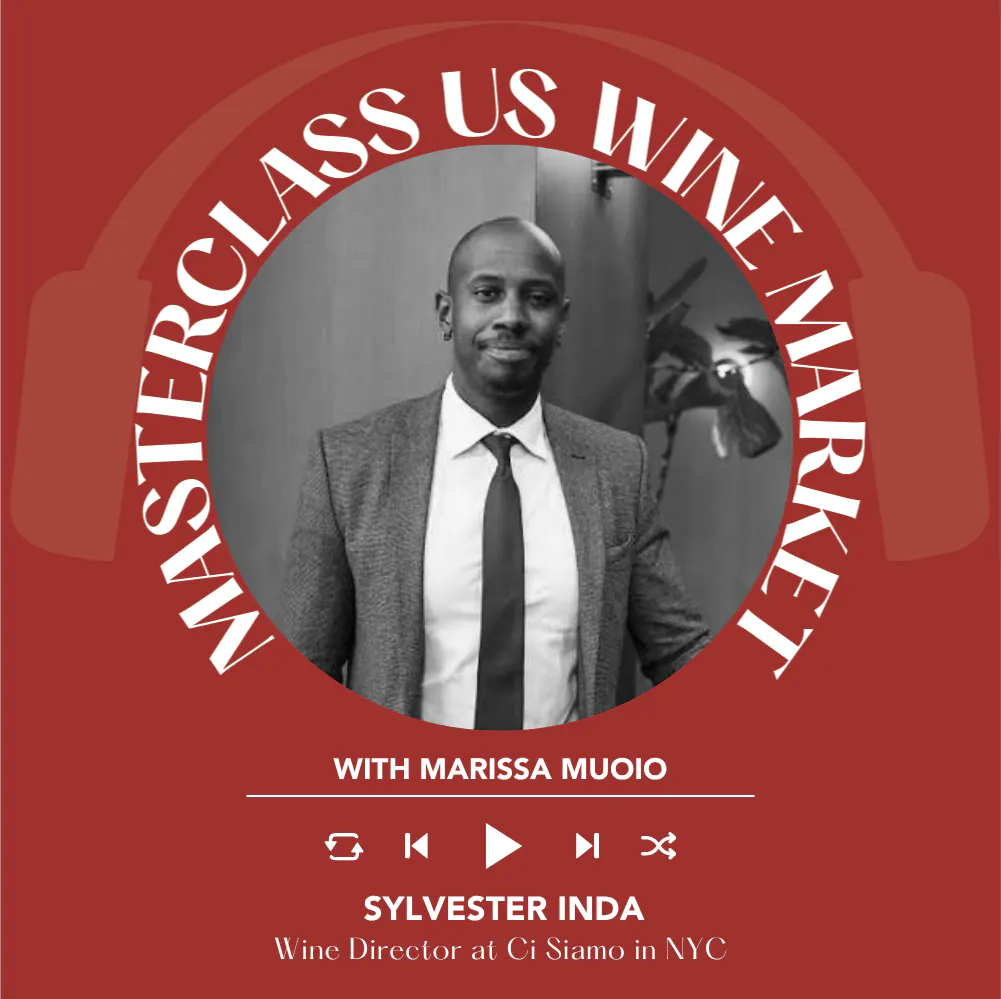
Ep. 2760 Winning the Restaurant Floor: Training, Education & Italian Wine with Sylvester Inda of Ci Siamo | Masterclass US Wine Market
Episode 2760

Ep. 2751 From Montalcino to Kazakhstan with Francesca Arquint of Collemattoni | Asia Wine Market
Episode 2751

Ep. 2748 Florida Wine Market & Vinitaly USA with VIA Italian Wine Ambassadors Stefano Campanini & Daisy Penzo | Masterclass US Wine Market
Episode 2748

Ep. 2746 From Almaty to Verona: Inside the Italian Sommelier Challenge with Leonid Kirsanov | Asia Wine Market
Episode 2746