
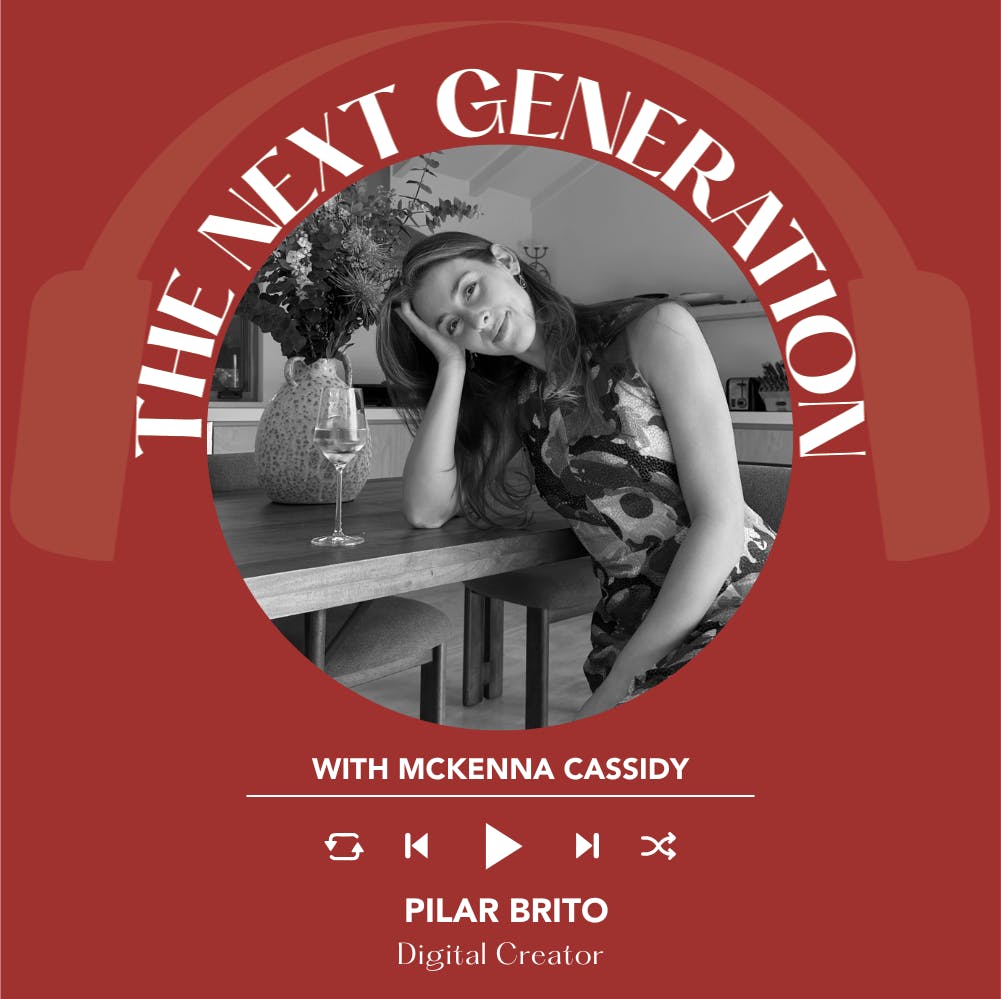
Ep. 2312 McKenna Cassidy interviews Pilar Brito | Next Generation
The Next Generation
Episode Summary
Content Analysis Key Themes and Main Ideas 1. Transition from Traditional Career to Wine Media: Pilar Brito's personal journey from a venture capital attorney to a full-time wine content creator. 2. Strategic Use of Social Media for Wine Education: Developing engaging content series that resonate with specific audiences and demonstrate wine's value beyond technical knowledge. 3. Wine as an Aspirational Product: The argument that wine inherently possesses aspirational qualities and attempts to make it ""hyper-accessible"" may be counterproductive for a significant market segment. 4. Experiential Wine Consumption and Community Building: Emphasizing hosting, curating experiences, and using wine to foster connection and enhance social events. 5. Engaging the Future Luxury Wine Consumer: The importance of reaching younger audiences who aspire to a sophisticated lifestyle and are willing to invest in wine. Summary This episode of the Italian Wine Podcast features host Mackenzie interviewing Pilar Brito, widely known as ""Barpilar"" on Instagram and TikTok. Pilar shares her unique career transition from a venture capital attorney to a prominent wine content creator. Despite lacking traditional wine industry experience, she leveraged her certifications and passion to build a substantial online following, which now totals 140,000 across platforms. Pilar explains how her social media success stemmed from a ""product-market fit"" achieved by shifting from one-off videos to consistent content series (like ""Name Drop"" and ""Cult Classics"") that effectively communicate how wine can enhance one's life. She strongly advocates for viewing wine as an aspirational product, arguing that while accessibility is important, attempts to over-relate or ""democratize"" wine can cannibalize its inherent character. Pilar also highlights the role of wine in curating elevated hosting experiences and fostering community, acknowledging the growing desire among consumers for meaningful social interactions. She emphasizes that luxury wine brands should not underestimate the interest and aspiration of younger consumers, who, though they may start with more affordable options, are willing to invest and grow into the market. Takeaways - Pilar Brito, known as ""Barpilar,"" successfully transitioned from a legal career to full-time wine content creation via social media. - Her content strategy pivoted to creating themed series that showcase wine's lifestyle benefits, rather than solely focusing on technical details. - Pilar believes wine is inherently an aspirational product and challenging this perception in marketing may be detrimental. - Hosting and creating curated wine experiences are key ways to engage consumers and build community around wine. - There is a significant, often underestimated, market of younger consumers who aspire to luxury wine experiences and are willing to invest in them. - Building a successful social media presence requires understanding audience needs and consistent content strategy. Notable Quotes - ""I don't try to take out the fact that it's a very aspirational product... I try to make people who are interested in putting a little more effort into wine and learning more about wine and are kind of willing to spend a little bit more on it."
About This Episode
Speaker 1 and Speaker 2 discuss their desire to transition into a professional career in wine, including struggles with managing their wine community and finding a niche audience. They also discuss the importance of creating experiences for their audience and curating their wine experiences for home parties. They emphasize the importance of introducing consumers to their products and building a future consumer base, and offer advice on finding the right place to buy wine and finding the right place to buy craft beer. Speaker 2 expresses excitement about their transition to craft beer and being a full-time craft beer drinker.
Transcript
Ever since law school, when I was doing all those things, I felt like I wanted to be in mine instead of law. But at that point, I had already committed to being in law school. You know how expensive law school is in the United States. For those of you who go to school elsewhere, be grateful. So I I started having conversations with people in the industry. They were all like, you know, you're great. You have good certifications. You have good professional experience in other areas, but you don't actually have any wine experience. Like, we have no idea where we'd slot you in. I was like, okay. Well, at least outside of law, I can fit in this social media thing. And I can kind of put myself out there with wine and learn a little bit more about it, and at least still meet new people in the industry and whatnot. Welcome to the Italian wine podcast. This is the next generation with me, Mackenzie. For the next episode, I invite you to explore with me what young adults are up to in the Italian wine scene. Let's feast on our discuss of Italian wine and culture. Grab a glass with us. Chinch you. Hello, everyone. I'm Makenna. Your hostess on the Italian wine podcast, and I'm joined today with the fabulous Pilar Brito. Welcome Pilar, so good to be with you. Thank you for having me. Guys, this is such a treat. I'm super excited that Pilar was able to make the time to join us on the pod. So for everyone listening, of course, we nerd out and geek out on Italian wine, and today we have Pilar joining us from Los Angeles, California. You may know her as Barpilar on Instagram or TikTok, but what she makes is really impressive, wine videos for teaching and learning, but also including, like, high level knowledge for normal people. And she's a certified sommelier with many other awesome certifications. So, again, Paula, welcome. And why don't you share with us kind of your age where you grew up and your start with the wine industry, and we'll go from there. Yeah. So hi everyone. Thank you so much for having me. I've been hearing great things about the podcast. I'm really happy to be on it and actually lived in Italy as a kid, so a big fan of Italian wine and culture in general. So my name is Pilar Brito. You can find me on Instagram and TikTok at Barpilar. It's just with two r's at the end because I couldn't get the handle with one r. It's owned by a bar in DC with, like, fourteen followers. So at Barpilar with two r's at the end. Yeah. I'm gonna try to get it from them at some point. At Barpilar with two r's at the end, and then I'm also on stack. If you take a look for that, the link is also on my socials. I originally trained as an attorney. I was a venture capital and startup attorney for four years before I made the full time transition into doing this. But in the meantime, during my legal journey. I also discovered mine and just felt madly in love. Happy to get more into that. My kind of if you want to, but basically started doing blind tasting competitions, hosting a bunch of tastings, running blind tasting groups at my house, and then, of course, doing all my fine certifications. So I started with CMS. I actually switched over to w set, and I'm now getting my w set diploma. About a year ago while I was still a practicing attorney, I felt like I wanted more of a way into the wine industry despite not really having any experience outside my certifications. And I wanted, like, more of a wine community too. So I started my social media pages. I knew nothing about social media. So if you're curious to talk more about how we can always talk about, like, the rough transition from knowing nothing to learning about social media, it's definitely tough. And, yep, it started doing it a year ago, and over time grew a pretty big following. At by the end of last year, it started to become very difficult to manage both law and managing my wine community. So I decided to make the full time jump. Have about a hundred and forty thousand followers across platforms, and my focus is really on sort of striking that balance between the aspirational and accessible qualities of wine. So I don't try to take out the fact that it's a very aspirational product. And don't air on hyper accessibility, but I try to make people who are interested in putting a little more effort into wine and learning more about wine and are kind of willing to spend a little bit more on it. I focus on kind of bringing them in as well. So I try to cater to both people in the industry and people who respect the expertise that mine requires and when we brought into that. Really well said thank you so much for sharing that. Take us to that moment where you had come to the realization. You're you're at this like cracks between like law and seeing the momentum that's going on with your own wine journey, but also your followers. Like, what was that moment like for you? Was it scary? Was it exhilarating? Was it anxiety inducing? What what did that feel like? Yeah. Probably all of the above. So it's sort of like everything I feel like it sort of happened, like, slow and then it happened fast. Like, building up a social media following from scratch, especially when you have no social media experience really takes a while. Like, to give you an idea last year, I'm almost at my birthday. So last year, my birthday, I had, like, five hundred followers. And I remember being really excited that I had reached five hundred followers because getting from that, like, zero to five hundred and then five hundred to a thousand and then a thousand to five thousand, it just took so long. It took so much work. And then once I found, like, for a black of a better term, I mean, I used to be a venture capital attorney product market fit, it really kind of exponentially grew from there because I I had a few key takeaways that really helped me hone my content and understand the community that I was speaking to. So I have been thinking I have basically been wanting to transition into wine for a long time. And I had been having conversations with people in the wine industry because ever since law school, I joined the board of the wine society. I was competing in blind tasting competitions. I started my CMS sort occasions. And ever since law school, when I was doing all those things, I felt like I wanted to be in wine instead of law. But at that point, I had already committed to being in law school. You know how expensive law school is in the United States. For those of you who go to school elsewhere, be grateful. Yeah. I was like, I just spent a lot of money on this degree as much as I wanna go into wine. I should probably, like, try being a lawyer. And I liked it. I worked with good people. I learned a lot, but, you know, I started after giving it a try, and for a while and feeling like, you know, this certainly isn't a bad job. It's actually a great job, but wine is still what I really wanna be in. I started having conversations with people in the industry. And they were all like, you know, you're great. You have good certifications. You have good professional experience in other areas, but you don't actually have any wine experience. Like, you haven't worked at a restaurant, you haven't worked for a producer, like, you haven't worked for an importer. Like, we have no idea where we'd slot you in because at this point with your age, like, I've and thirty. And at the point when I was talking to them, I was in my late twenties, they were like, at your age, your level of experience, your credentials. Like, we don't wanna slot you in at the beginning, but we also can't slot you in any higher because you don't have the experience. And even if you are willing to start from scratch, it's gonna be hard for an employer to believe you because I was like, I'll do it. And they were like, no one's gonna believe you, which I I appreciated the camera. It wasn't like what I wanted to hear, but I was like, okay. Well, at least outside of law, I can fit in this social media thing, and I can kind of put myself out there with wine and learn bit more about it, and at least they'll meet new people in the industry and whatnot. So I've been thinking about it basically since I started my page. It wasn't, like, necessarily super specifically a way to, like, transition into a wine career, but I was thinking about it as something that could potentially be additive. I've been thinking about it for a long time. I've been trying to kinda, like, grow my community, learn how to communicate about mine more effectively for a long time, and happy to, like, get more into this if you like. I don't know how far in detail you wanna go, but basically in Oh, you're good. Yeah. It was basically kinda like twofold. Like, I would say January of so it would have been twenty twenty four when I started it through August of twenty twenty four was partly just, you know, keeping up my wine knowledge, but then also learning how to use social media. So listen to all of these podcasts, watching all these YouTube videos. They're a bunch of, like, creators for creators. That's why I was following all of them. I tried to learn how useless effectively. And in August, I had kind of two, like, aha moments for how I think about wine and how I think about communicating over social media, I started shifting my content, and then it immediately took off. So I went from, like, five thousand followers one week to, like, ten thousand the next week to twenty five thousand the next week to, like, a hundred a few weeks later. So it it really, really took off. And it wasn't even, like, one video that went viral. I know that's kind of the case for some people. It was a it was a couple of series that I was doing. And at that point, it, like, was overwhelming because it hadn't taken off for so long that I, like, it it was a lot to just manage, like, a much larger community. And I realized I had to very seriously start thinking about, like, do I choose law or do I choose this? Because managing these now is gonna be really difficult. At the same time, it was, like, really exciting and also not that anxiety inducing because I've been thinking about it for so long and I kind of been wanting that to like, I've been wanting to transition into wine for a long time. So there was, like, a brief two month period where I was, like, kind of trying to make the call of, like, when do I leave and how much do I let the account grow and, like, when am I really sure? And Yeah. When is it real? Yeah. That makes sense. Yeah. Exactly. Because even with, like, all creative stuff, I feel like, like, success comes a little bit before payment. Like, I it's not like I'm making anyway, it's it was a big, big, big financial transition, and I'm confident over time it'll, you know, it'll lean than out, but Sure. I still had to make this choice. I couldn't yeah. Like, I couldn't do this at all. So, anyway, it's a long way of saying, like, overwhelming because in a way, it'll happen at once, but also, like, not because I've been thinking about it for so long. I've been trying to strategize for it to be totally honest and I did feel really good about the series I was putting out that did have my account take off. So, like, it worked better than I thought it would, but I definitely was, like, okay. I think this is really gonna resonate. So I wasn't, like, shocked at, like, oh my god. I can't believe this video went viral if that makes sense. Sure. You had been this is this is a longer extended thought process. I wanna go back to that theme of like product market fit a little bit. I thought that was really well put. I noticed you do a few series now, like, cult classics or name drop wines for fancy business dinners. You also feature a ton of dessert wines, which we have to go back to because this is just it's dope. There's no strategy behind the dessert wine package. But you just love them and yeah. It's kinda I know and I love that. And so what was could you just put voice to or shape to the like, segment that you were doing at the time that your fellowship kind of took off just for the listeners to understand almost like a paradigm shift, it sounds like you were doing one thing. You made a change and there was significant difference after that. Yeah. Totally. So like I said, for, like, the first, like, six to eight months, I really spent so much time. And I still do this just not to the same degree because I'm, like, more socially native for, like, lack of a better term. Like, I'm online more. I understand how social media works more, but, like, at first, I was just so confused by the whole thing. So I spent a lot of time listening to, like, creators for creators and reading articles on, like, how to make effective content and how to speak authentically to an audience. And the two things over time that really clicked with me, and it was kind of I wish I had, like, one source I could people to, but it was really through, like, listening to and reading a bunch of things were one of the importance of series, and I've been doing one off videos the entire time. And something clicked with me. I think there's just through listening to a bunch of people where I realized I had to start treating my page like a channel, like, the same way like a TV channel would work where, like, people there were various different forms of programming, some click more with other people than, like, than others do, but there's something that makes people want to keep coming back and there's kind of something for, like, everyone in your niche audience that they wanna keep coming back to and, like, give them something to look forward to every time instead of just the one video. And it's like, oh, I like this one video, but then they go to your page and there's nothing else on that topic, if that makes like you wanna build up the anticipation and the familiarity and treat it more like a channel. So I started to think in terms of series, and then the other kind of big aha moment I had was just the idea of communicating to people how wine can improve their life, I was kind of, like, I spent I was spending more time online, listening to all these content creators, and I just it clears with me that people's attention is so divided, and there are so many creators online right now, even within mine, and for anyone to genuinely stop on the Explore page or their feed and listen to what you have to say, you really have to tell them why they should bother. And what I was doing before when I had these one off videos is and I still do a little bit of this just because, like, I like to talk about, like, dessert wine or, you know, champagne or sherry, but that's just more fun for me. And it will probably resonate with, like, twenty five people, but whatever. But you're you being one of them. But what I was doing before thing went off videos is, yeah, I was I was doing, like, I was sharing technical line knowledge, assuming that whatever audience I was reaching already cared enough about line to wanna have that technical knowledge. Like, I was assuming that whoever was, like, scrolling through their Explorer page wanted to learn about, like, alcohol levels and tenon levels. The reality is as much as, like, that's interesting to me because I've spent, you know, years studying wine. That's really not the case for everyone. And even if you want that to be the case for people eventually, like, you kind of have to hook them with something that makes it click why wine is important, why wine will affect their life. So I started making these series, and I started with the two series you named that really, really took off, and that's what kind of exploded my page. So one is the name drop series. If you guys are unfamiliar with my content around that the way I open all of them is and I used to do them every week, but I was doing them every week for, like, five months. So it's more like every time I do this. The way I open them is if you're just starting to go to your first fancy business dinners with clients or investors, there are a handful of wines that always come up, should just know what they are. And then I kind of focus on one wine that week. And what I'm really targeting with that is someone who is a round wine, is in a professional environment, wants to succeed, is maybe a little bit intimidated by wine, but interested or at least interested in succeeding in those environments. And I'm telling them, like, hey, this can help you get ahead in your career. This can help you feel more comfortable at business centers. This can help you impress a client. Like, let me help you get comfortable with this topic. So that really clicked. And then the other one that I did where sort of that idea of series and to showing people why wine is important is my cult classic series. And that one, that's a little bit more of like a personal project too. Like, I I love small producers that people might not have heard of. So the cult classic series is really where I focus on those. And I talk about, like, Salmellier favorite wines that you might not have heard of. Normally, that would be, like, you know, like, I'm talking about, like, Dumen UA or JP and Jackie Blo. And, like, just, yeah, normally, that would be like a deep wine nerd kind of topic. But the way I chose to phrase that series, and I don't open every video like this, because I don't really need to reintroduce the concept every time at this point, but I do open some of my videos like this and certainly at first. I open with this idea that wine is a way you can express your taste. Like, we live in a world now where everyone kinda looks the same. Everyone's kind of, like, like, with Instagram based and whatnot at least online. Everyone's kinda, like, buying all the same stuff. People are really trying to figure out ways to develop their taste, elevate their taste and differentiate themselves. And so I open with this idea that, like, wine is one of those. Wine is an extension of your lifestyle. Wine is an expression of your lifestyle. Wine is an expression of your taste. And when you're expressing your taste, you want a little bit of diversity. Like, have the flagships, like, you know, the Harlins or, you know, whatever. Like, the same way you would have, like, the designer bag everyone has. That's totally fine. There's definitely something to be said for that, but also have, you know, a handful of small producers in your cellar that you can pull out for your friends and tell a story around them and talk to people about why these are important and why these express your taste the same way. Like, you'd pair that designer bag with like a vintage sweater from Japan. So Those series really took off, I think, because they've built familiarity and anticipation with my channel, and they showed people how wine can improve their own lives. And I think that that's what really clicked. That's awesome. And you seem to also pair that the familiarity ties in with the activity of host to sing as well. Like you will host your friends and you'll show how people can create an experience with what you've been talking about this whole time. Like you had your caviar picnic, etcetera. What would you say about the importance of experiential things for Yeah. Yeah. Yeah. Creating experiences. And for someone who's intimidated to create experiences, like, it's really simple and you lay it out quite blatantly. So what's your thoughts there for not only just picking a wine from a store and enjoying it, but like creating a space where others can encounter it as well? Yeah. Totally. And I'm so glad you asked that because that's actually in the next series I'm working on. Like, the caviar picking was more just like, my friends came over with a ton of caviar on Monday. And so I just, like, filmed it in kind of a low production manner. I have no idea what friends clearly. Yeah. That was insane, but, that's kind of the next iteration I worked out. Yeah. That's the next iteration I'm working on is a series around hosting that really that really emphasizes the idea that one of the ways wine can enhance your life is by curing loneliness and bringing you together with people care about and bringing people into your home and feeling more comfortable with hosting. I think that's something that you hear people talking about a lot on social media and in the press right now that, like, we have a lonely enough epidemic. People have been hosting a lot less after COVID. People got out of the practice, and people want to be using that more. I have been wanting to do that for a long time. Like, I've been wanting to make that kind of content for a long time, but being a lawyer and doing this, it was just, like, it was not a possible thing to fit in. There's so much more work that goes into, like, a big dinner party and, like, filming all of that. So that's kind of the next thing I'm working on. And, I mean, I think that what I'm gonna do is kind of take people through the narrative of like, hey, help me set up. If you wanna set this up yourself, here's kind of like a step by step guide you would do it. And then here's how to think about curating a really cool experience around wine and food for your friends. I'm not even gonna get, like, too detailed on it because I think that, you know, people are gonna know what fits into their budget and what their friends are gonna like, but I do wanna highlight the idea that wine is actually a really easy way that you can create a really special experience and bring people together. Like, not everyone has a big kitchen. A lot of my audience lives in a city, not everyone is really comfortable cooking, but anyone can go to a store, pick up a couple of really good bottles of wine, like, talk to, talk to whoever manages the store, get some good recommendations, line up, get five friends, line up three glasses per friend, and do, like, a fun wine tasting at home. And that takes that takes hosting from, like, hey, let's order pizza, to, like, actually let's make this something a little bit more elevated, a little bit more special, let's make it a real event, even though all you're doing is just, like, pouring a liquid into a glass. It, it just it, like, connect. And I think also that want people to think a little bit about more about wine when they're hosting because at least in the US, something I find is that the people who do cook and do enjoy having dinner parties at their house, they'll cook this, like, big elaborate meal. And then when people ask what they can bring, they're like, oh, just bring wine. And then, like, the person brings a wine that has like it doesn't, like, at all pair with the dish that you've made. It's like not something you would necessarily pick for yourself. Like, I am I'm not gonna talk about this too blatantly, but I'll talk about it more blatantly here. Like, I think that hosting can also be this whole creative process where you actually have a vision, and wine really needs to be a part of that to, like, execute it properly if you really wanna, like, curate a full experience in your home. So have someone bring the loaf of French bread Exactly. Or, like, dessert like, if you're not doing a dessert line pairing, yeah, but, like, or the caviar, but, like, mom yeah. Like, I just it's gotta be someone you really trust and you can coordinate with to have them bring the line. Otherwise, I think it throws off the entire experience. And, like, if you're already going all out on, like, cooking in this huge meal for your friends, like, get the whole vision right, wine is definitely a part of that. Totally. And the wine too, like, it comes with a package story. Like, there's very little work that needs to be done to share the story of that wine, you Google the label, or you ask the some of the store, like, hey, can you give me, like, three bullet points on this wine? Because I wanna share it with my friends. And to your point, if you're doing that wine tasting too, like, just because you're presented the wines you don't have to be the expert on them. Like, leave it to the table to to, you know, throw the toast tasting notes down that you printed off the site and and let them everyone else dive in to telling the story of these wines. You know, there's some intimidation back to be had for someone who's just learning about wine and needing to present every detail to the room. And if you're not ready for that, it's okay. You can share that adventure with everyone in the room, but you're choosing the wines to start because you know that you need a dry white. You know you want a big rich red and you know you want something off, try to finish. So that makes sense. That's really awesome. Yeah. No. Exactly. Like, you're curating, and that's what differentiates you as a host, and wine is a way you can really effectively curate without actually putting in that much effort. And, like, to your point, like, you don't have to talk through the details of it too much. Like, even when I I do host find them there's a lot for my friends, and I've just now started filming them. But even when I do, like, they all say they wanna learn more about wine, but really, like, everyone wants to, like, drink something beautiful, catch up, learn a little bit. They don't wanna, like, get super into the technicalities and have a big long lecture on it. Totally. The point of it is to create a really special experience that brings people together. Totally. Yeah. We have a rooftop here in my building and like a similar, at the end of summer, we did this really nice, like, Spanish wine tasting, and they needed to know so much less about the wines than I had perhaps prepared, but they were highly selected wines to the point where I was enjoying them as well. We knew they would go with the food. We had planned ahead, and everyone was just kind of captivated with with very low lift from all parties. So I I definitely hear you. So what do you think about people who are trying wine brands and wine media in general and also companies who manage the sale of wine brands, and there seems to be a hyper fixation on making wine relatable. Or quote unquote relatable, accessible. There's canned wine. There's, like, like, there's just everyone wants to try to find that silver bullet to make wine hot and trendy again. And it seems like you might have a different ache on that. So kind of what's your what's your take? Yeah. I have such strong feelings on this. And so you're happy. Those are welcome. Yeah. I don't think that there's anything necessarily wrong with, like, the canned wine, for example, because, like, I wanna go to a sports game and, like, still have a good glass of wine, and I'm not gonna bring a bottle. So, like, I don't necessarily think there's anything wrong with, like, different packaging per se. But in the communication, I I just do think the wine industry is cannibalizing itself a little bit. At least from I mean, I'm mostly a consumer despite my certifications. Like, at least from a consumer perspective, I don't think I think it is an aspirational product, and I think that there is a huge proportion of the population that wants it to remain an aspirational product. They just want to find a way to be brought into that. Like, the reason I started my page is, and there's nothing wrong with this. But, well, I have strong opinions on it, but it does reach a very specific type of audience and, like, there's definitely an audience for it. The reason I started my page is I felt like I was seeing a lot of wine creators that emphasized hyper accessibility, like, you know, here are, like, the ten dollar wines to get at Costco for your girls night or whatever. And there's nothing wrong with that, but I just felt like Okay. That wouldn't have resonated with me when I wanted to get into wine. What I wanted when I wanted to get into wine was I was, like, twenty four, twenty five. I was in law school. I had the promise of pretty good disposable income in the future. I saw myself as kind of moving into this more sophisticated adult style that I wanted to have, and I wanted wine to be, like, a representation of it and an extension of that and an experience of it. So I was actually willing to put a little bit of effort into it. I was willing to spend a little bit on it, and I wanted it to give this aspirational, luxurious, you know, global thing, I didn't want it to be, like, the ten dollar Rosay I was buying at the grocery store. So I really started my case because I wanted to kind of speak to that community of people who, you know, maybe they're not totally comfortable with it. They're busy. They're probably not gonna have time to get, like, normal certifications at any point. Maybe they'd be interested in doing, like, w set one or something like that, but they're not gonna, like, go as far as I have, but they do see themselves as sophisticated adults. They have a reasonable amount of disposable income. They wanna find new sophisticated ways to their friends or entertain themselves or have a date night. They just want someone to, like, help them along a little bit with that. I just I think most mine is inherently an aspirational product, and I think that anytime you try to, like, take out the character of, like, the inherent character of a product, it doesn't go very well. I also think that people are just drinking less alcohol, and I think that if someone's going to bother drinking alcohol at this point, it's going to be for a more elevated product and a more elevated experience. Like, there has to be a reason to drink alcohol now, I feel. Whereas, like, I don't know. Just drink like juice if you're if it's very aspirational. Like, there's so many other options. No. I mean, drink whatever you want. It's not my business, but, like, that's how I view it. I feel very strongly that, like, not shying away from the aspirational quality of wine is really important. And I don't think you have to move away from the aspirational quality to make it accessible. Yeah. Totally heard. I think, actually, it seems like There's two kind of target markets. Like, if you're trying to make wine radically accessible and radically relatable, like, that's a different target audience than people who are who you just described who have the freedom and the willingness to kind of go into these experiential wine selective, like, moments. But this this actually seems to be a good answer for the luxury wine industry, which is actually at a point of confusion right now, be, like, we don't really wanna lose the the aspirational aspects of luxury wine, and we actually can't because it's what our entire brands hinge on. And so, like, how Can you market to this other subset that responds to that hyper rate elatability of here all the wines I tried from Kirkland and Costco? Well, people who are interested in that, but are, like, this seems your strategy I think really applies nicely to the luxury wine industry. I think you made that out really clearly, which is cool. Yeah. I mean, and I think, like, for the luxury wine industry, I think, like, don't under us. I mean, I, again, I haven't been in like, I haven't been on that side of the industry, but my opinion is, like, don't underestimate your potential community or audience, like, just because I mean, when I was in college, like, I was drinking a poffic and yellowtail, like, I thought they were good. I did not. I did not know. I did not know. I did not know. I never knew it was. Absolutely. I was a nineteen year old who wanted to look cool and look sophisticated and ten a ten dollar ride was what I could afford. But I grew into something different later, and I think that if you're willing to invest in a younger community, but at least have a little bit of interest, it might not show immediately, but it will really grow, and it will really grow your future consumer base. And I think that, like, yeah, just don't underestimate consumer's interest in actually putting effort and thought and money into a product. I think it's there. I just think you have to, like, meet them where they are, not meet them where they are in terms of your product, but, like, just introduce them to your product a little bit and not disregard them and then kind of, like, bring them along to build that future consumer base. That's what that's what, the venture producers did at my law school. They came to give us to eat things, And that's how I got really into wine. Like, we had Ball intercoming. We had Chateau margaux coming. And, like, of course, I couldn't afford a bottle of Chateau margaux back then. I was a law student, but, like, I tried a glass of it, and I was like, this is the best thing I've had in my life. Okay. I wanna learn more about Fine wine. I wanna be a future customer of Chateau Margaux, and now I do buy Chateau Margaux, not a lot of it because, you know, there are limits. Yeah. Just don't don't know that. I switched to careers. No. I'm just kidding. That's awesome. It might not be obvious, but, like, the interest the interest and aspiration to be a part of a fine line community is there with way, way, way more people than is obvious, I think. That's a great point. Any final thoughts before we wrap? I actually do have two rapid fire questions for you. Let's do it. Yeah. What question do you get most often asked about wine that kind of annoys you? That kind of annoys me. I mean, very little. What question do you get most often asked? Yeah. Very little. Very few questions annoy me about wine. I wouldn't say this annoys me, but I get a lot of questions about my videos of like, hey, can you, like, list out prices and where to find them. And, like, in the US, that's just so tough. The pricing varies. The pricing and distribution just varies so much, but that's just an annoying me. I think the other question I get a lot is just where do I get started. Like, hey, I wanna learn more about buying your videos are great. Like, but if I wanna do a little bit more, where do I started. The answer we usually have to that is, like, before doing the certification programs, just read the wine bible by Karen McNeil, super comprehensive, user friendly, twenty something dollars on Amazon. Like, that in my opinion gets you to, like, the level of one of those really early certifications without the cost and commitment. So that's usually my recommendation. And then just kind of like getting a group of friends together because we're into wine to, like, do a tasting group and just, yeah, develop a social calendar around it. That's beautiful. Okay. So what if you walk up to a bar, pilar, and there is no wine, and you have to choose between cocktail or heart seltzer? What are you ordering? Oh, god. Not perfect. Or beer? I actually the funny thing is I love craft beer. My stomach can't handle it. At least lately. I I really do like the taste fit, but I mean, a cocktail for sure. What cocktail are you drinking? It depends. I like I mean, I love Nagronis. Love a good Nagroni. I like like Wahawk and Old fashion. It's funny. I drink less, like, fewer cocktail. Oh, I mean, I also love, like, sherry spritzes, but those are wine based. So I don't know if that counts, but I love those. Those are definitely my go tos. I love cocktails, actually. I just drink a little less of them because I drink so much wine now and I have to, like, have to be a little bit mindful, but when I was really into cocktails, I was really into, like, corpse revivers and Wahawk at Old oceans. And now I'm probably just returning. Yeah. Okay. And then one final one. You're in Tahiti on the beach. What minor are you drinking? I think I saw Taren. Is that weird? Maybe for some, but not for you. I think that's a so on brand. Yeah. I'm pulling. I'm just like, okay. I'm in Tahiti. There's probably, like, some tropical food. It's sunset. Like, I just, yeah, sauterine with, like, some pineapple rice or whatever they serve there. Like, that and Wow. They speak French. Like, it just it hits. Yeah. I think it's sauterine. That's beautiful. I heard that. Everyone go find pineapple rice ASAP and some soft perm and test this. That's beautiful. Yeah. That's great. Oh my gosh. This has been so much fun. Any final thoughts that you just wanna share on this platform about wine or your emotions towards wine or your excitement about the wine industry this coming year? I mean, no. Just I'm really excited to be doing this full time. Like, this is a really big transition for me, and I feel really lucky to have built the community that I have. Only other thought I'd add is I really try to be responsive to everyone. So if you guys are listening to this and you have questions or wanna engage or wanna meet the rest of the community or something, just reach out at Barpilar with two hours at the end on Instagram and TikTok, and I I really do try to respond to everyone. So feel free to reach out anytime. That's awesome. You guys gotta do it. This is great. Well, Pilar, I can't thank you enough for sharing your expertise, your time with us. We're so grateful and can't wait to share this story with everyone. Cheers you. Thank you. Thank you so much for having me. Thanks so much for being here with me today. Remember to catch our episodes weekly on the Italian wine podcast, available everywhere you get your pods. Sally's Day.
Episode Details
Keywords
Related Episodes

Ep. 2434 Giulia Stocchetti interviews Alberto Sabaini and Sara Piubelli from Cantina Sabaini | Next Generation
Episode 2434

Ep. 2427 Margherita Andrenacci interviews Alejandro Fargosonini of Châteauneuf-du-Fargosonini | Next Generation
Episode 2427

Ep. 2415 Giulia Stocchetti interviews Claudia Bustos from Viña Raíz Criolla | Next Generation
Episode 2415
Ep. 2409 McKenna Cassidy interviews Riccardo Baldi of La Staffa | Next Generation
Episode 2409

Ep. 2402 Margherita Andrenacci interviews Erin Kirschenmann of Wine Business Monthly | Next Generation
Episode 2402

Ep 2396 McKenna Cassidy interviews Luca Paolo Virgilio of Caprera Winery in Abruzzo | Next Generation
Episode 2396