
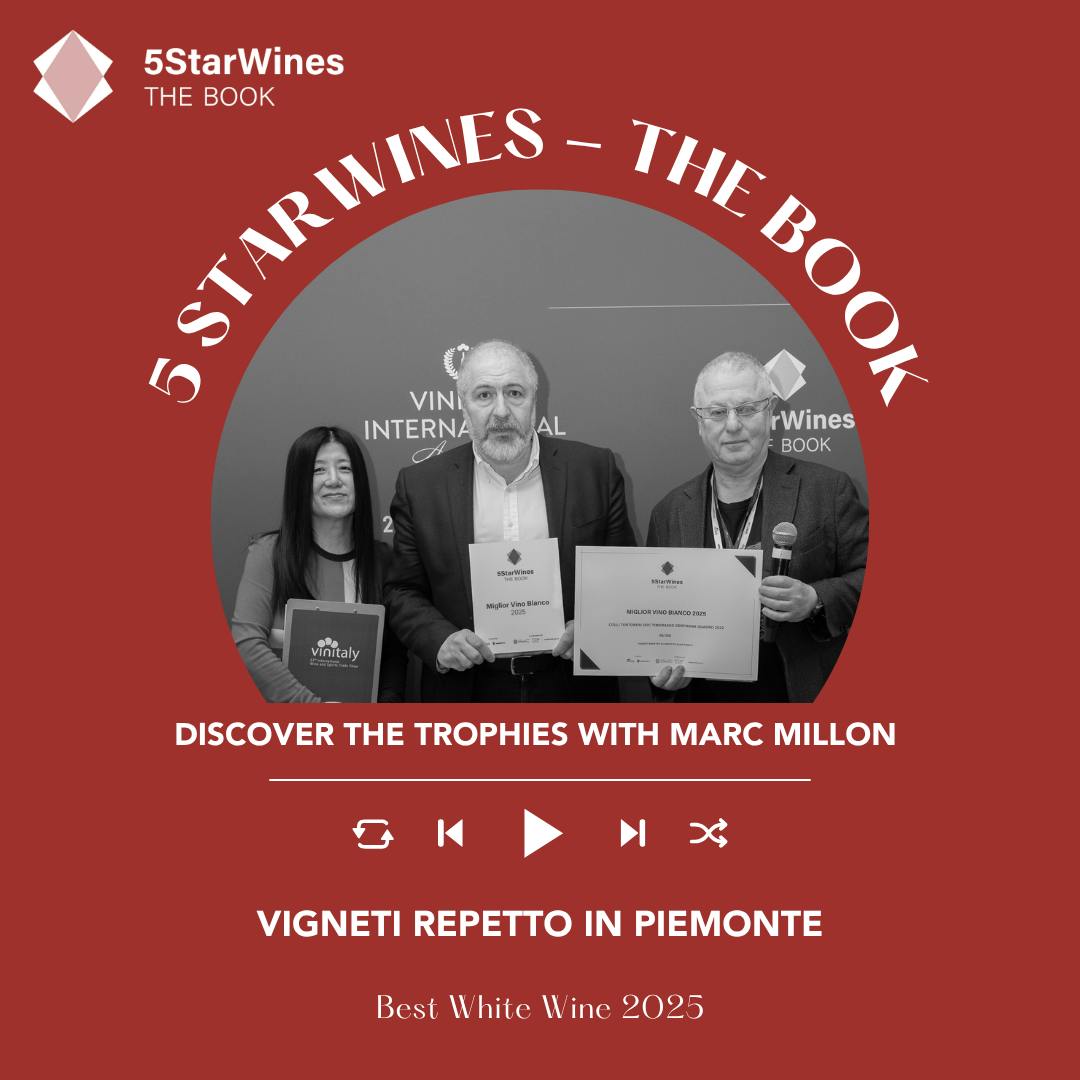
Ep 2392 Vigneti Repetto | Wine, Food & Travel with Marc Millon (5StarWines-the Book 2025 Series)
Wine, Food & Travel with Marc Millon (5StarWines-the Book 2025 Series)
Episode Summary
Content Analysis Key Themes and Main Ideas 1. The success of Vigneti Repetto's Dertona Quadro 2022 as the ""Best White Wine"" at the 5-Star Wines competition. 2. An in-depth exploration of the Colli Tortonesi region in Piedmont, including its geography, history, and distinctive ""Sant'Agata Fossili marls"" soil. 3. The compelling story of the Timorasso grape variety: its near extinction, remarkable revival, and unique characteristics (longevity, structure, acidity). 4. Gian Paolo Repetto's winemaking philosophy, emphasizing sustainability and the innovative use of modern technology to minimize chemical intervention. 5. The versatility of Dertona wines in food pairing, highlighting local Colli Tortonesi gastronomy, including unique cheeses, noble salamis, and white truffles. 6. The growing wine tourism potential of the Colli Tortonesi region, offering a balanced and tranquil experience for visitors. Summary This episode of the Italian Wine Podcast features an interview with Gian Paolo Repetto of Vigneti Repetto, celebrating their Dertona Quadro 2022's award as ""Best White Wine"" at the 5-Star Wines competition. Gian Paolo provides a vivid description of the Colli Tortonesi region, located in southeastern Piedmont, emphasizing its ancient viticultural history and unique terroir characterized by Sant'Agata Fossili marls—fossil-rich marine sediments. He recounts his personal journey from automation engineering back to his family's farming roots, detailing his commitment to sustainable winemaking through technological innovation, such as using mechanical tools and precise temperature control to avoid chemicals. A significant part of the conversation is dedicated to the Timorasso grape, which was nearly extinct in 1987 but revived largely due to Walter Massa's efforts. Gian Paolo highlights Timorasso's exceptional longevity and freshness, explaining why the consortium mandates a minimum one-year aging for Dertona wines. He also discusses the versatility of Dertona in food pairings, recommending local specialties like Montebore cheese, ""Noble"" salami, and white truffles. The interview concludes with an invitation to visit the serene Colli Tortonesi region, emphasizing its balanced landscape, hospitality, and opportunities for wine tourism. Takeaways - Vigneti Repetto's Dertona Quadro 2022 was awarded ""Best White Wine"" at the prestigious 5-Star Wines competition. - The Colli Tortonesi is a historic wine region in Piedmont with unique Sant'Agata Fossili marl soils, ideal for viticulture. - The Timorasso grape experienced a dramatic revival from near extinction (only one acre remaining in 1987) to over 500 hectares today. - Timorasso wines are renowned for their exceptional longevity and ability to age gracefully for 10-30 years due to naturally high acidity and low pH. - The Dertona consortium mandates a minimum one-year aging for Timorasso wines before release, ensuring quality and complexity. - Gian Paolo Repetto champions a winemaking approach that combines sustainability with cutting-edge technology to minimize chemical use in vineyards and the winery. - Dertona wines are highly versatile for food pairings, complementing a range of dishes from local Piedmontese cheeses and cured meats (like ""Noble"" salami) to white truffles and various international cuisines. - The Colli Tortonesi region offers a tranquil and authentic wine tourism experience, less bustling than other famous Piedmontese areas, with opportunities for hiking and cycling. Notable Quotes - ""Consider that in nineteen eighty seven, there was only one acre left. Alphanector more or less. So almost zero."
About This Episode
The speakers discuss their background in the industry and their interest in working in automation and technology to improve their winery. They also talk about their experience with building a winery and their current focus on sustainability and modern technology. They discuss the use of technology in the wine industry, including detergents and the use of technology in the wine. They also discuss the success of their award-win white wine, Dertona QuLive, and how it has a long enough length to age. They emphasize the importance of balance and diversity in their approach to their production, as well as the importance of visiting winery and learning about the wine culture in Japan.
Transcript
Us about this incredible grape variety, Timorazo. Consider that in nineteen eighty seven, there was only one acre left. Alphanector more or less. So almost zero. And then, Walter Masa, our good father for Timorasm decided to try to grow the this grape again, trying to benefit I at the beginning was not so exciting because there was no technology for white wines in our area because it was more dedicated to red wines, mainly barbera. And, after a few years, aging this wine, it was crystal clear. It was a gray gray But I Fascinating people with stories to share, fabulous wines, and the best local foods to accompany them, and beautiful places to discover and visit. All of this and more on wine, food, and travel with me, Mark Millen, on the Italian wine podcast. Join me for a new episode every Tuesday. Welcome to wine, food, and travel with me, Mark Minen, on Italian wine podcast. Today, I'm delighted to continue a special subseries that highlights the winners, the prestigious five star wines competition that took place in April just before Vinitalee two thousand and twenty five. Those wines that scored more than ninety points were awarded certificates and have been included in the five star wines twenty twenty five book, while the very best wines in each category were singled out for special awards. Today, we traveled to Piedmont to the Coli tortonese to meet my guest, John Paulo Repeto Avinetti Repeto, who's wine, their tuna Quadro two thousand twenty two Coli tortonese, DOC scooped the best white wine award, scoring ninety five points. Many, congratulations, John Paulo. This is a fabulous achievement and award. I was one of the judges myself, and I know how rigorous this competition is. With more than two thousand wines submitted for tasting and judgment. So you must be very pleased with the award. Thanks for joining us. And how are you? Very good. Thank you. Thank you for the words you spent. I'm happy to be here and to to describe what we do. Great. Well, John Paulo, just to begin with, as we start our conversation, I think many of our listeners are located all around the world, and they may not know where the Colle tortonese are. So can you give a description, a visual description so that we can gain a picture of the world you live in. So we are better, as you said, in Coletor tonese that we call Terro Dertona because the name of the wine, and we are in the north west part of Italy. I didn't talk about Pittmont because it's easier to understand. Looking at Italy, we are in the north west part in on the top. And inside Pittmont, we are in the southeast on the opposite. We are the the gate of Biedmont. The the city of Tortuna, our little capital is the gate to access Giedmont from all other regions. Okay. That's a good description. And, John Peller, just to help our listeners. If they, for example, flew to Geneva. It's not that far to Geneva from your area of Piedmont. Is that right? Is is that right? Because, we are located in Piedmont, but we are located in between genoa and Milan, actually. And so fifty minutes from January and fifty minutes from Milan in the middle more or less. Okay. And to Torino? To Torino is a a little bit more one hour and a half. So we are, in Piedmont, my index party, it's a little bit far Okay. That's great. Now, John Paulo, you came from a family of farmers, but you chose originally to work in another sector. Is that right and what brought you back to the land? Can you share with us the story of vignette repeto? Yes. As you said, I was born in a family of farmers, but I'm the black sheep of my families. So I decided to start a completely different business in automation, and engineering. And, for the the first part of my life. I started the business when I I was twenty. And, we grew quite well with two units in the US, Mexico, or license in China, India. But that life brought me six month per year, quite far from home. And, so I decided at a certain point of my life to sell all the operation outside Italy and come back in the farm with my wife, Marina. So in the we started, to grow the farm again, in two thousand thirteen, more or less. And, Vinetti Repeto started to produce seriously in two thousand fifteen. So ten years ago, we already started the business, the family business entirely And, at that point, I decided to invest a little bit more. We decided to build a new winery. And since that, and now we are a quite good winery in our area. And, so we are trying to to do a good job to produce this kind of wine. It's very unique. Okay. So was the farm that you returned to your original family farm, or was it somewhere that you had to find? It's in the same area, but I decided to start a new farm. And not not far from here ten minutes, but, I decided to build a winery in the middle of our vineyards located in Sarizano. Salvizano is, a small villa just above, tortona, our little capital, And, so I can say that, I did not restart from scratch because vineyards are where he are, and so that's the most important part. But talking about the winery is, I restarted off completely moving from the point one. Okay. Now I know that your motto is and I'm wondering if this engineering background that you had, this working in a completely different sectors with solving problems in a different way is is vital to the approach you're doing now in the winery. Yeah. Absolutely. My background probably is influencing a lot of what I do nowadays. I always say for me, sustainability is the is the driver, but using the technology that we have nowadays. So it means that our motto is, anti mater and modern technology, but the the reason is that to avoid chemicals. I know. I always say, so we don't use pesticides for the weeds. But, for example, we have mechanical tools that that can maintain the vineyards in a quite good condition. The same we use, the temperature for the tanks. Every tanks can be warm up or pull down. And then during the fermentation, we can manage everything without chemicals. So that's that's my idea, Adros. For some other example, to clean the vessels, we use an eye pressure rotating tool who can use a very few water, and in the meantime works at one hundred and thirty celsius degree. I don't know if it's clear for anyone around the world, but it's, above the boiling point of the water because of the high pressure. And so we don't use the detergents in that way. So everything is based on technology by in a in a clean way. So because when you talk about technology in wine. People usually, they think something else. No. But technology can be used in the proper way or not. It depends on you. Okay. So you're using these technological advances and mechanical millions in order to minimize use of sulfites, for example, or chemicals in the vineyard pesticides, herbicides, and all of that. So that's a very important use of technology. I'd like to turn to the land itself, the, in particular, it's an area, particularly well suited to Viticulture. And vines have, I imagine, been planted in this area since at least the time of the Romans when Dertona was the ancient name for Tortona. Is that right? Yeah. That means, in the museum, we are in Tortona, and Mosike, who is the the first century after Christ. And then, there is a white grape on that, you know, so we don't we don't know which kind of grape, but for sure it means there are more than two thousand years that that is Viticulture in tortona. And so because it's, an area very evocative, very very suitable for good wines, for good grapes, and to grow grapes, especially because, we have a quite peculiar soils. And maybe you are many people that then know wines and they know Santa Feosly Mars, that are white Mars with, a lot of limestone, and Santagata Fosili is a village in the center of Chollettoetonese. And the same for the era for the period, the in the Nutaine, we are, in between, Seravale and Tatiana are the area in between twenty and ten millions and ago, so, characterizes for this kind of soil, very good for Viticulture. Okay. Actually, that Santagata Fosili, of course, this is a laminated marne, marle that we find in, in the Barolo wine zone, for example. But I didn't know it was actually a place very near you, a little town near you that's given it the name. Yes. It's a city if you it's a villa, it's not a city. It's a small village in the center of Colitortoneziel, sir, where you can see so many fossils. So that's the reason because as you know, all this part of Piedmont was, floated by the sea and was below the sea level. So in the vineyards, you can find the shells, fishbone petrify, there are cars. So any kind of stuff from the bottom of the sea, and Santagata Fosili is the center, well, this kind of bar has been characterized. Okay. And so this laminated mara rich in in limestone in clay is particularly suited, and it's particularly suited to a unique grape variety that I've only heard of grown in the Coli tortonese, and it's a grape variety that I think many listeners may not have sampled, but which is really become one of the most exciting white grapes in Italy. Tell us about this incredible grape variety. Timorasso. Timorasso, the name is, almost unknown around the world. So now not completely, but because of all the wine lovers, evoluted wine lovers, I say, they know. But it's, a very old varieties that, we have here, we have some notes written in the, the fourteen and the sixty more or less. And then at the beginning of the last century was after the philosopher a little bit abandoned. And then after the second world war again, and considered that in nineteen eighty seven, there was only one acre left, alphanectar more or less. So, almost zero. And then, Walter Masa, and our good father for Timorasm decided to try to grow the this grape again. Trying to benefit eye at the beginning was not so exciting because there was no technology for white wines in our area because it was more dedicated to red wines, mainly barbera. And, after a few years, aging this wine, it was crystal clear, it was a gray, gray variety. And since that, I'm the president of the consorts, so I'm happy to say what is successful now, because considering that in the two thousand, so thirteen years ago, when Baltar started. There were three point five vectors. So ten acres is nothing in the appalachian. Now we have almost five hundred hectares. We were, in two thousand fifteen, thirty five members in the consortium. Now we are one hundred and seventeen. And so everything is doing really well in this area. We are so happy what is happening. And then, people that know Dertona because, Tynorazo is the name of the grape, and for us, the name of the wine is Dertona, because, of the old name of the city of Dortona in order to connect the wine to the area. Now it's something that, I don't know, in Italy, one hundred percent of the Michelin star restaurant, have at least one or two, and upon usually many more. And around the world, the is growing constantly in in many countries. We are present, at least forty one areas are exporting in a in a very good ways. Okay. Well, this is, a really fascinating story, John Powell. It's a story that we hear of elsewhere in Italy of ancient great variety that was almost extinct, but through the efforts in this case of Walter Masa, it was saved from extinction and has now been validated and and recognized as one of the great white, great varieties of Italy. And I'm amazed at the number of producers that you just mentioned, how quickly this has grown and how exciting an area this must be for you as a wine grower now to be producing a wine that is viewed around the world in such a exciting way. John Paulo, what makes Timaraso so exceptional is a great variety for making great white wines? There are some characteristic that are very peculiar to Timaraso. But okay. There are some bad that that there is a because it was abandoned. And maybe we talked late that the great characteristic of the wine are, I don't know, usually you prised me with a two thousand twenty two Vintaje, who is for us an extremely authentic vintage, but, this white wine maintained complexity and freshness, even in a unbelievable ought to be intelligent. That's one of the first characteristics. The characteristic sticker that helps a lot this variety because I I I made it a bit technical now. Even in that condition, we have very low ph and high acidity. Comproder white wines that they lose the acidity immediately when they're so sunny and so on. And that's a big advantage in term of, aging the wine, because you can age this wine for ten, fifteen, twenty years. We tasted the at this point, the doctorate morassau with twenty five, twenty eight, thirty years. With a very, very good results after a so long period, which is quite unique, especially for an Italian white wine. What we say in the operation is that we are the only Italian white wine with the date of birth because we decided as a consortium to age Dertona minimum one year. So you cannot find the current release. So two thousand twenty four is not yet on the market. So just to have an idea. So that's the real characteristic of this wine. Longevity. Longevity is for sure longevity and then aging improving qualities. Yes. Actually, I have tasted some aged Dotunas that have just extraordinary with wonderful tertiary aromas and flavors developing with age. So it's a wine that I urge our listeners if you can be patient to enjoy as it evolves. You make a variety of wines from this exceptional grape variety, but let's talk about your award winning best white wine, the Dertona Quadro twenty twenty two. I'd like to read the tasting note that the five star panel and judges gave to this one because in five star, we sit as panels of four or five judges and mark wines and scores, but the very top wines, and your wine received ninety five points, the highest white wine. It's tasted again and again by the expert top panola of judges, and they wrote about your wine. A great example of a grape that was almost extinct as recently as forty years ago, bright and intense with scents and flavors of baked apple, ripe tropical fruits, and subtle oak. It has a lovely mouth filling roundness supported by crisp and refreshing acidity, impressive long finish. Is that a fair tasting note for describing your wine and tell us about how you produce this wine? First of all, I I have to say we don't use, okay, for this production, but, I describe all the cycle. Dertona Quadra is our Dertona classic. And, what we do is the opposite that we do with our crews. Because, the single vineyard, they have all the vintage inside. Dertona Quadro is an assembling of different parcels, the best parcels that we select every year in a different way. So it's not always exactly the same, being after they contribute to to that. We decided to plant it in the similar soil, but in different expositions because, we understood that in the last years, the differences between Vintages is so big that it's difficult to manage only single vineyards. And so we have a single parcels that we decide out to assemble. So that's that's the idea behind the the so looking for balance. Then we do soft pressing after they harvest, and then we stay in contact with the skins more or less for twelve hours. A very short maceration, just a little contact with the skins. After the fermentation, we are back and we move in stainless steel on the nobelize, and then we do batonage for nine months. I say batonage, but it's still stainless steel. So no rock is involved. But remaining on the lease, you give complexity, and you can avoid to use sulfites because you are in protection. So that's a secondary advantage that we have doing Batonage on the lease. Once finished the cycle of Batonage, we bottle, and then we keep the wine nine months in bottle. So we release this wine eighteen months after the harvest. So that's what we do for that white wine. And that's what happened for the two thousand twenty two, also for the the other Vintages. The only difference that year by year is the selection of different proportion in the parcels that we use. And in changing the different proportions, is that because Quadro always has a particular style you're hoping to achieve? You're aiming to achieve? That's the reason because we look for the balance, not a specific style because every event had to remain different. But for example, we had two thousand twenty two and two thousand twenty three extremely odd. And so some South exposition, they are even a little bit too much. In two thousand twenty four, it was the opposite. We had so much rain that we it's difficult to have another winters like that. And so the proportion changed because the south exposition were the best position, one hundred percent. And so we decide year by year to compose the wine, even if it is one hundred percent, the morassau grape, one hundred percent, the the parts that are in our vineyard, but what we don't consider, enough to become a Dertona quaddro goes to Picolo, Dertona, is, with our entry level. So that's, our idea to keep the quality, even if it is, not a single venue. Okay. Okay. That's really interesting. Now Dertona is a wine, a structure, this acidity that keeps it fresh and allows it to age. Also means that it's a great gastronomic wine. Can we turn to the gastronomy of the Coli Tour Tonese. And can you tell us about some of the local specialties in the Piate TPG from your area that pair well with Dertona? Dertona is very versatile. You know, it's a white wine but then you can use especially with different aging in many different ways, you know. But in our area, we are not far from the good area. You said, we have a pastel pesto who works really well. And then, we have a medium major cheese. In this case, we have a specific cheese, is the cheese selected by leonardo da vinci for the marriage of isabella Ragone lud because forza, which is something unique that you can taste if you come. So it's, it's just a local cheese, and the shape is shape of a wedding cake, and it's a raw milk, cow, and sheep mix the seventy percent and thirty percent. And it's something very, very, very unique. And then we are in Piedmont, so there are resorty, so there are resulted based on carbonaroli, but not only in many different ways. So we have a with the cheese. For example, the the the the one table we said before with asparagus and in many ways. And The toner works really well on that. Then on top of that, we have a something is a novel. It's a salami. It means noble because in this era, we don't produce m and Curatello. It's something unique. There are only twenty producers that they age in very old caves, with a specific molds, different molds that that that they give the taste to the salami. We usually in the winter, we do verticals of dirt on and horizontals of different salami, so with different taste and different aging. So that's another way to use their toner. And then, if it aged more, we've, with truffle. So with truffle, it works again really well. Maybe not the young one, but but you need some here to get the best. And then white meat, cut fish, soups, and, so shellfish, and talking to other countries that even Asian food works really well with with their toll. So it's a a very eclectic white wine. So Yes. Actually, I think, I can imagine Daytona in in its various guises and styles working with so many different foods. I'm interested as well because the is an area where, as you say, the prized white truffle lead, tortufa Bianco Dialba is found in your area. And what would be the best way to experience the white truffles and with Daytona. How would you What would you serve with the truffles? Oh, man. So the with the truffle, you need something really simple. So a tartar or fasona piemontece is an example, an egg or tairin. So spaghetti with butter. So something simple you can appreciate one hundred percent the aroma of the truffle. So usually, we use truffle with very simple dishes, high quality ingredients, but very same for now. So that's the key for me. Okay. Okay. Now turning to I I know our listeners would be fascinated to hear your story to hear about this wonderful grape variety team Marasso and the wine, Dertona. It's not an area as well visited, for example, as Alba. Which is not far away. What about hospitality and visiting Vignati Repeto? And can our listeners, visit you? And can they sample some of these wonderful specialties with their Tona wines at Vignati Repeto? For sure, one of the reason to visit us. Okay. We have also five rooms, so we can ask people if they if they come. And, we are on the top of a hill with a fantastic view. And the occasion to come in the winery is to taste all the vintages that maybe on the market is much more difficult to find. And it's a unique opportunity when you come to a winery. So, to vinigarapetto, but you can find many good producers in Colette Oronese. So there are many reason to come. And, and what is quite different compare are there areas that, everything is very balanced because just to have an idea who have, in acres, three thousand five hundred acres of vineyards that represents only two percent of the tension of the denominator. So you can find the different fields, wood, everything. There is a very good ballast. And so if you visit Kolitor Tunesi, there are three hundred kilometers of path that you can use for tracking or by bicycle call or ebike or whatever you like. So it's it's something that, you can stay in a relaxing place, but with a very good, and, wine, and, an excellent quality of food all around. Okay. Well, that sounds a very, very good reason to visit. And I'd certainly like to visit you, John Paulo, and I'm next traveling in your area. So thank you for sharing the story of vignette And telling us about this extraordinary grape timorazo, the wine produced from it Dertona, and I stressed to our listeners that Dertona, the name of the wine. When you see that name on a label, if you're in Tokyo or New York or, Los Angeles or Buenos Aires, you know that this is a wine from the made from the grape, and it's certainly something I urge people to try. Congratulations once again. For this fantastic five star wines, best white wine award, and thank you for sharing your morning with us. I've really enjoyed our conversation. No. Thank you for for inviting me. Thank you, Ebona Jonata. We hope today's episode of wine food and travel with me, Mark Milin, on the Italian wine podcast has transported you to somewhere special. Please remember to like share and subscribe wherever you get your pods. Likewise, you can visit us at Italian wine podcast dot com. Until next time, Chincin.
Episode Details
Keywords
Related Episodes

Ep. 2791 Italian Wine in a Changing Climate: PIWI, Terroir & Tradition with Nicola Biasi | Wine, Food & Travel with Marc Millon
Episode 2791
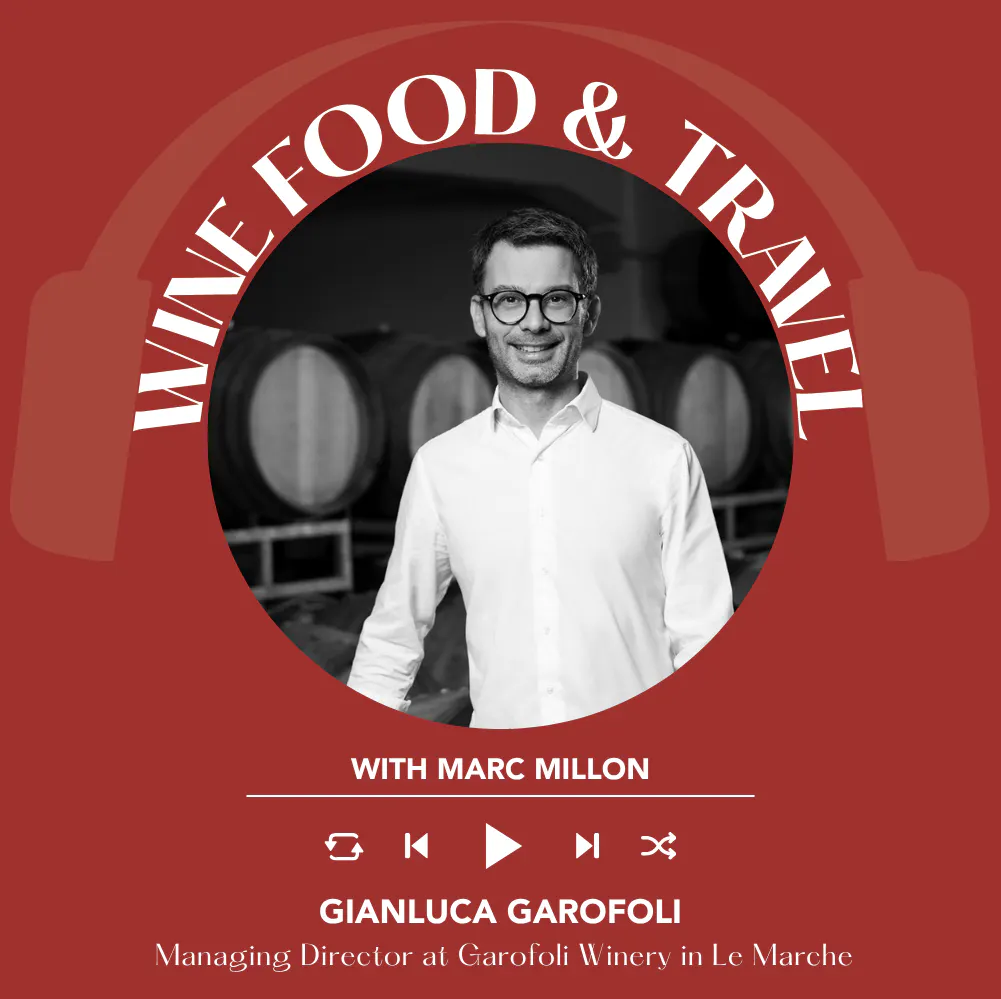
Ep. 2767 Le Marche: Verdicchio and the Wines that Shape the Region with Gianluca Garofoli of Garofoli Vini | Wine, Food & Travel with Marc Millon
Episode 2767
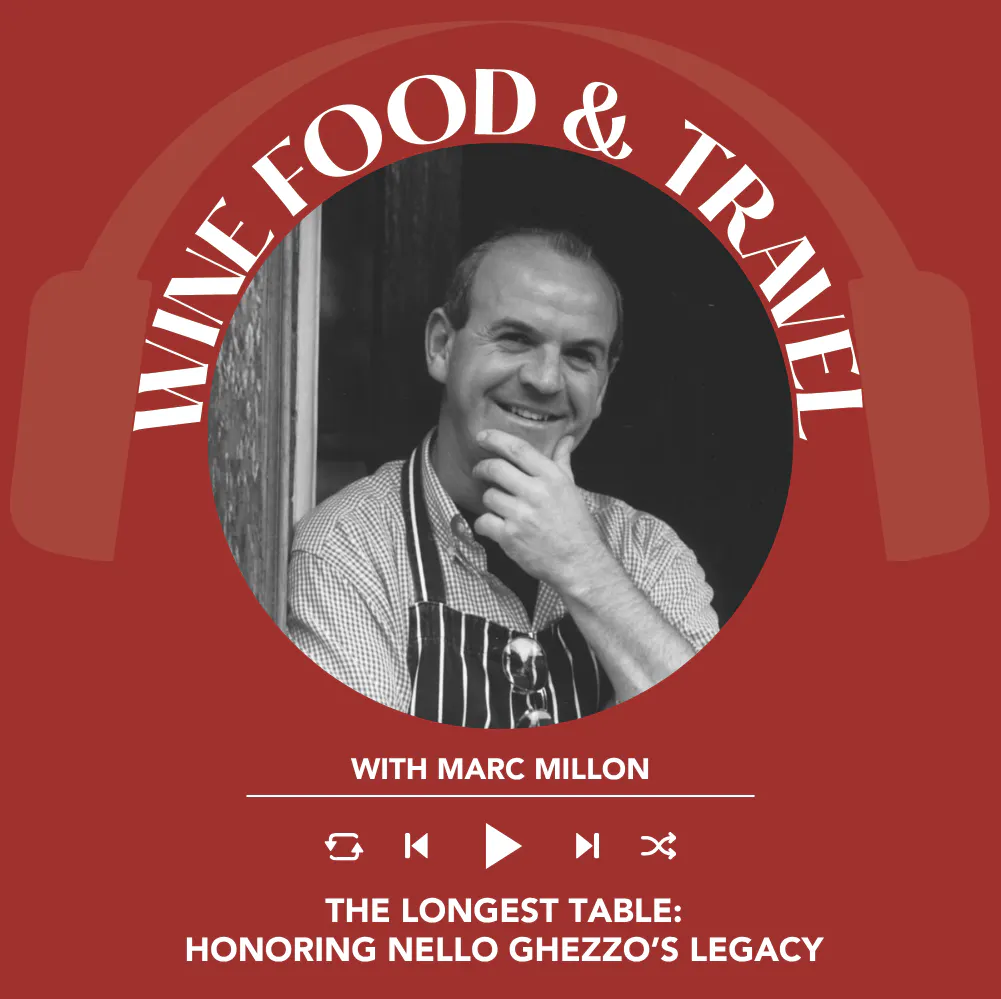
Ep. 2755 The Longest Table: Honoring Nello Ghezzo’s legacy | Wine, Food & Travel with Marc Millon
Episode 2755

Ep. 2681 Giro d’Italia 2026 Special Episode 1: From Bulgaria to the Mezzogiorno in search of wine and cheese | Wine, Food & Travel with Marc Millon
Episode 2681

Ep. 2675 Tuscany Wine Revolution, Barolo Boys & the Rise of Etna Wines with Marco De Grazia | Wine, Food & Travel with Marc Millon
Episode 2675

Ep. 2658 Ferraro's Ristorante: Building an Italian Food & Wine Empire in Las Vegas with Gino Ferraro | Wine, Food & Travel with Marc Millon
Episode 2658