
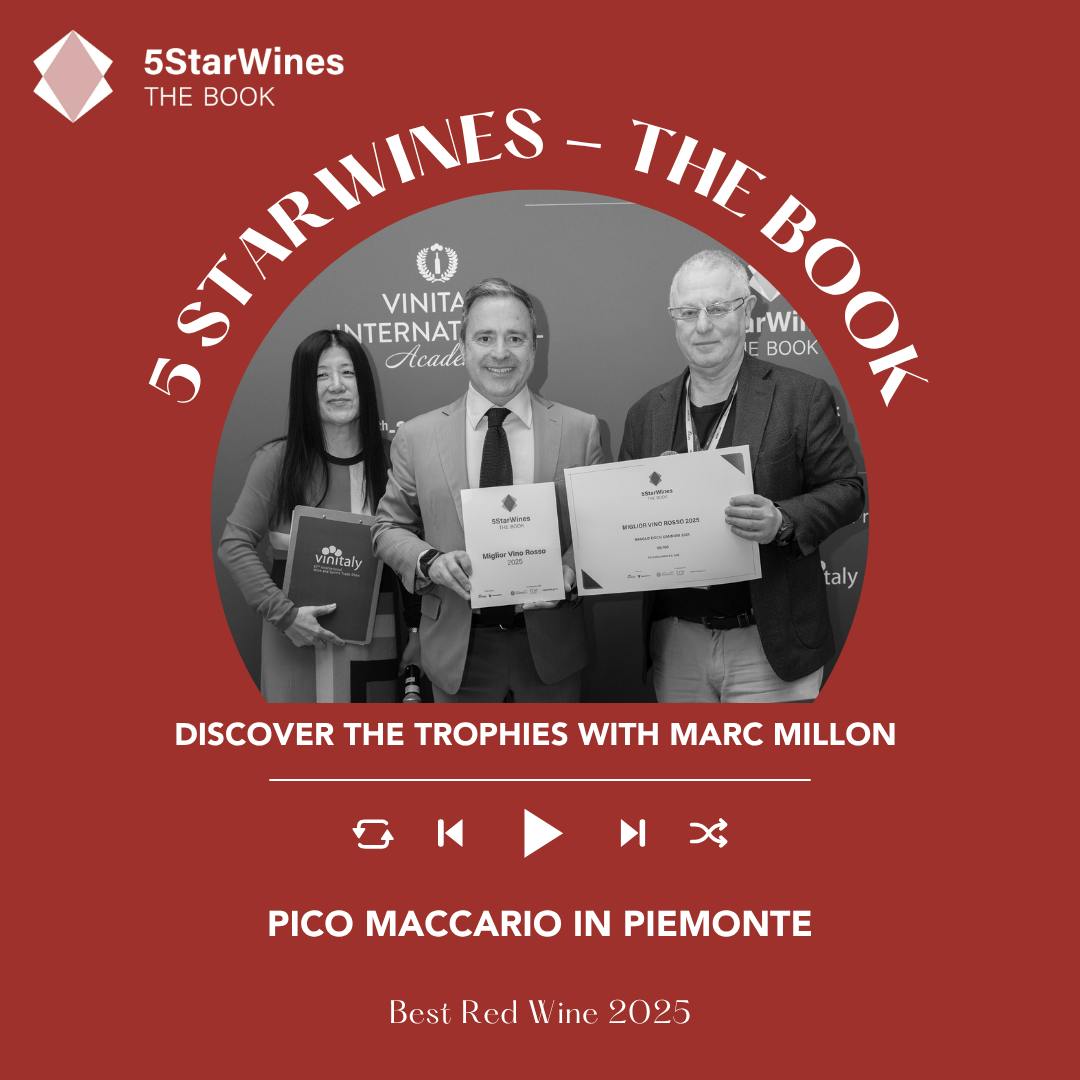
Ep. 2398 Pico Maccario Winery in Piedmont | Wine, Food & Travel with Marc Millon (5StarWines - the Book 2025 Series)
Wine, Food & Travel with Marc Millon (5StarWines - the Book 2025 Series)
Episode Summary
Content Analysis Key Themes and Main Ideas 1. Pico Macario Winery's History and Identity: The evolution of Pico Macario from primarily selling grapes to cooperatives to becoming a renowned producer of high-end Barbera and Barolo, emphasizing its ""young"" yet successful trajectory. 2. Piedmont's Diverse Terroir and Wine Regions: A detailed geographical and geological description of Piedmont, specifically the Montarato, Langhe, and Roero sub-regions, and how Pico Macario spans these areas, focusing on Barbera and Nebbiolo. 3. The Award-Winning Barolo Kanubi 2021: In-depth discussion of this specific wine, its historical significance as an MGA (cru), unique soil composition, and tasting notes, highlighting its exceptional quality and the achievement of winning the ""Best Red Wine"" award. 4. Philosophy of Winemaking and Marketing: Pico Macario's commitment to tradition with a touch of modernity, including innovative packaging (pencil cylinder) to attract new, younger consumers, and the challenges of a rapidly changing market. 5. The Intertwined World of Wine, Food, and Culture: Exploration of Piedmont's rich gastronomic traditions (Carne Cruda, Bagna Cauda, Ravioli, Truffles) and suggested wine pairings, emphasizing the region's appeal for culinary tourism. 6. Hospitality and Future Growth: The winery's current and future plans for visitor experiences, including direct sales, vineyard picnics, and the development of a B&B and restaurant to enhance wine tourism. 7. Emiliano Murando's Personal Journey and Insights: Emiliano's career trajectory in the wine industry, his role as export manager, and his reflections on the synergy between wine and music, and the importance of conveying emotion and culture. Summary This episode of the Italian Wine Podcast features host Mark Millen interviewing Emiliano Murando, the export manager for Pico Macario, a winery in Piedmont. The discussion centers on Pico Macario's winemaking philosophy, its history, and its recent achievement of winning the Five Star Wines ""Best Red Wine"" award for their Barolo Kanubi 2021. Emiliano details the winery's journey from selling grapes to cooperatives to bottling their own wines, with the first vintage of Barbera in 1995. He describes Pico Macario as a ""young"" yet successful producer, now making nearly half a million bottles annually, specializing in high-end Barbera and single-vineyard Barolo. The interview delves into the unique geographical and geological characteristics of Piedmont, explaining how Pico Macario leverages vineyards across Montarato and Langhe. A significant portion of the conversation is dedicated to the Barolo Kanubi, highlighting its status as one of the oldest and most unique single vineyards globally due to its distinct soil composition. Emiliano explains the historical ""right"" that allows Pico Macario to produce Barolo outside the DOCG area, a privilege granted before 1966. He also shares the judges' impressive tasting notes for the young 2021 vintage, emphasizing its surprising elegance and approachability. Emiliano discusses the winery's blend of tradition and modernity, including their distinctive ""pencil"" packaging for Barolo, designed to attract younger consumers. He shares his personal journey in the wine industry and his passion for music, drawing parallels between the emotional connection fostered by both. The conversation also explores Piedmont's renowned gastronomic specialties, offering pairing suggestions for Pico Macario wines and painting a vivid picture of the region's culinary appeal. Finally, Emiliano outlines Pico Macario's commitment to hospitality, detailing current visitor offerings and ambitious future plans for an on-site B&B and restaurant to further enhance the wine tourism experience. Takeaways * Pico Macario, though ""young"" as a brand (since 1995), has successfully grown into a major producer of high-quality Piedmont wines. * The winery's main focus is Barbera d'Asti DOCG, with its flagship wine being Barbera, but they also produce significant Nebbiolo, including Barolo. * The Barolo Kanubi vineyard is historically significant (appearing in records since 1753) and boasts a unique soil composition from two tectonic plates, contributing to its distinct elegance. * Pico Macario holds a rare historical license allowing them to own Barolo/Barbaresco vineyards and vinify outside the DOCG area, a privilege inaccessible to new wineries today. * The winery embraces modernity in marketing, using innovative packaging (e.g., the ""pencil"" gift box for Barolo) to appeal to a younger demographic. * Piedmont offers a rich gastronomic experience, with specialties like Carne Cruda, Bagna Cauda, and various pasta dishes, which pair well with Pico Macario's diverse wine range. * Emiliano Murando, Pico Macario's export manager, emphasizes the emotional connection between wine and music, highlighting ""Bella Vita"" and ""Dolce Vita"" aspects. * Pico Macario is expanding its hospitality offerings, planning an on-site B&B and restaurant by 2026 to provide a more immersive visitor experience. * The 2021 Barolo Kanubi, despite its youth, received high praise for its balance, fruit, and elegant tannins, suggesting it's enjoyable even when young. Notable Quotes * ""The first real vintage of Pico Macario Barbera is nineteen ninety five. Well, it's now a long time ago, but we're fairly new, we're fairly young."
About This Episode
The speakers discuss the success of their business and the importance of working hard to achieve success. They discuss their backgrounds and experiences in the wine industry, including their love for language learning and the importance of transferring emotions. They also discuss the synergy between wine and music, the importance of being prepared to respond to changes in the market, and the importance of being prepared to respond to changes in the market. They share their own experiences with the traditional barolo industry and the value of the traditional dish, particularly the Karanekruda and Banakauda. They emphasize the importance of staying in the area to experience the wine and food experience and mention the B dealer of Lezikue. They invite listeners to visit the winery and offer a wine and food touristic area.
Transcript
The first real vintage of Pico Macario Barbera is ninety ninety five. Well, it's now a long time ago, but we're fairly new, we're fairly young. We used to be calling United States, the new kid in town. I remember, you know, when I started in the business two thousand and one, Picamakari was on everybody's mouth as a new kid in town with Barbera. But, a lot, a lot of things happen in a long path, and we succeed. It took twenty, twenty five years. We're now with a production of almost half a million bottles, one of the major producer of high end quality Barbera, with some of the high end single vineyards in Barolo. So you need to be constant. You need to work hard. You need to be there. You need to be fast. Fascinating people with stories to share, fabulous wines, and the best local foods to accompany them, and beautiful places to discover and visit. All of this and more on wine food and travel with me, Mark Millen, on the Italian wine podcast. Join me for a new episode every Tuesday. Welcome to wine food and travel with me, Mark Millen, on Italian wine podcast. Today, I'm delighted to continue a special subseries that highlights the winners of the prestigious five star wines competition that took place in April just prior to Vin Italy twenty twenty five. Those wines had scored more than ninety points were awarded certificates and have been included in the five star wines twenty twenty five book, while the very best wines in each category were singled out for special awards. Today, we traveled to Piedmont, to the wine hills of Leilonge, to meet my guest, Emiliano Murando, who is the export manager of the Pico Macario winery, who's wine Barolo Canoebi two thousand twenty one DOCG, won the five star wines best red wine award with a score of ninety five points. Congratulations, Emiliano, to you and to all it, Picco Machario. This is a fabulous achievement award. I was actually one of the judges, and I know how rigorous this competition is. With more than two thousand lines submitted for tasting and judgment. So, bravissimo, to you all. Many thanks for being my guest. How are you today? Thank you very much, and good morning, everybody from Biedmont to where located between the beautiful hills of Langue and Montarato. It's a pleasure to be with you today. Doing great. So, ready for a great thirty minutes chat with you guys about our winery about this beautiful wines, this beautiful region. Great. Well, let's start with this beautiful region, Emiliano. Our listeners are located all around the world, and they may not know exactly where Leilenge and Monfirato are. And I don't know exactly where Pico Machadio is. So take us to your world. Give us a visual description of where you are. I know you have one foot in two different wine zones between Montarato and Lange. So tell us where you are, and then we'll carry on with the story. Absolutely. I like to do the geographical instruction most of the time. You know, we are located in the west side of Italy, Piedmont. It's in the northwest side, you know, facing France and Piedmont is always being divided in three main region, subregion in terms of wine. We're talking about the Monterado with the capital of Esti, where, you know, most of the Moscado diasti, the Barbera diasti is located. Then we got the language, a little bit east, southeast, with the capital, of course, with alba, with the white truffle, with some of the best villages in the area. And then we have a ROero that is on the right hand side of the female, the river Tannaro. So if these are the three main region, ROero is, of course, land of, Arnes. Most of the people will know this would know this variety. White wine. And, of course, Neppiolo. Picco Macado has been around for thirty five years, and most of the vineyards are located in the Montarato, you know, in the border between Langue and Montarato, between the province of Asti and the province of Cunil. We run about hundred and twelve hectares in total. AAT of them, so it was the best and the biggest part of it. It's, of course, Barbera, with the appalachian VOCG, Dasty. And then we have a twelve. We run twelve vector in the longue area with course, in the biolo grapes, primarily in the comune of Cerralunga, almost five hundred meters from sea level, the beautiful canopy hill, and, of course, the little brother, a little bit of her shadow sometimes, but great wine in Barbarresco in the village of Navy. So we are at Piedmont East. We are one hundred three hundred and sixty degrees winery. I mean, with, vineyards run-in both sub region. Hundred percent made and vineified in Mumbai. So this little village in the province of Asti, like I said, in the Montarato hills, about fifteen kilometers, twenty kilometers from the city of Basti and the capital of Nitza Montarato for Balaradasti. Okay. That's a great description and a great overview that Pico Machario has vineyards And what did you say the name of the villages where the wine area is? Mombaruzzo. Mombaruzzo is the capital of, the amarete is a DOP, a population for these little cookies made of liquor and or their cookies and, they're well known. Yes. These are the paper wrap. Right. The ones that are paper wrapped. Yeah. Lovely. There's so many rich gastronomic specialties in every small village in Capemont. You come across these wonderful things to eat. But, of course, our subject is wine and wonderful wines. Now, before we dive more into the story of of the Pico Macario wines, tell me a little bit about yourself, I mean, Yana. Have you always been in the world of wine? Well, yeah. That's that's what I've been doing in the past twenty three years. I was just back from Finland after the rasmus program, and then, the only one involved in the wine business was my grand uncle. That is that it has been a great guy, has been the founder of, of bomthy winery in Tuscany with the American Oh, my. Wow. Family. So but, yeah, long story short, I was just back from this amazing journey and experience in Finland. And I said, I wanna I wanna I wanna work with experts. I mean, I wanted to do something with the export using languages, and I like people around the world, new culture, and everything. So he said, you know what, if you want, we need somebody to make photocopies over there. So I started at the age of eighteen, and then, I started as a junior winemaker, an important winery based here in Piedmont taking care of the Scandinavian market. And then, little by little, you know, I joined the rest of the team. I moved into other two wineries and the last one as a family of course. This is a this is a real family with the Piccocario brothers. It's almost ten years ago, because, I said eight, but it's almost ten years ago. So, focusing on the export only worldwide. So, there's no others in the winery taking care of our customers around the world. That's beautiful because they're so different. So, I work with the North American market, the European that is completely different. The Asian, been great in two thousand ten and fifteen, but then now it's, it's a difficult side of the world, with the Middle East. It's been great. Even now with a bit of, the troubles. But, yeah, I've been twenty three, in the, twenty three years in the wine business. Primarily, Pemonte, and a little parenthesis in Tuscana because of migraine. Hongco and Peru. Okay. Well, that's back fifteen years ago. Okay. And where did you learn your perfect English? It's not real. It depends, you know. First, well, I spent some times in Finland, but finish is not the real perfect English. And then I lived for a while in Carbondale, Southern Illinois. Oh my. That was back in two thousand eight. I was cooperating with an importer base in Saint Louis, Missouri, and I was just across the rivers. I was in Carbondale, University City. So I lived there for almost two years back and forth. But then again, you know, US market is so far as the biggest. It's always been the biggest for Piamonte, for toscana. There's a lot of travels, a lot of connections up there. And then I like I like languages, So I tried to imitate. I tried to do my best. You speak very well. No, Aminiano, I I noticed as well. You're also a musician. Is that right? Yes. Absolutely. That is my other thing. Yeah. I'm very proud because I've been I've been positioned for what almost forty years because I was three, four years old when I start to play drums. And then, in the past eight years, I'm, you know, more like, vocals. So, yeah, we just got the other month. We got Italian official Trebo Benfell Queen. Oh, wow. Congratulations. Amazing. Scoring this summer until the summer. So it's easy, busy. Great. Alright. I'm just wondering, is there a synergy between do you find between wine and music They're obviously two important aspects of your life. Absolutely. I mean, the wine business is one of the sector. I mean, there's synergy with everything, with fashion, with sports, with music, with food, of course. It's same, you know, category. But, yeah, it it's easy to play with these two these two games, you know, the wine music. It's the Belavita at the end of the day. It's the Dolcevita. So makes people happy, share your, your emotion. I mean, there's a lot of wines around, a lot of music around. They're all good, and it's how you transfer. Are you are you talk with people? How you play with people? How you show your wine with people? So there's a lot of, a lot in common, and, it depends, you know, who is in the other side who is your conversation with, and I always been trying to transfer your emotions because, that's just the first thing you need to self first of all, you need to sell yourself your culture and your way of living. There's a lot in common that's that I found. Actually, I like that that really linking, wine and music through emotion. You're right. That's the key to both. Absolutely. End is like politics wine. I like it. You don't like it. You know, we need to talk about it. Let's discuss about it. Music is the same thing. Yeah. Sure. Now, Emiliana, let's go a little more deeper into the story of Pico Machario. You say that you've been there close to ten years now, and it's really being part of a family. Tell us about the family. Tell us about the winery. Tell us about the philosophy of what you're trying to achieve with the wines. Absolutely. I mean, the, the Pico Macario brand has a brand has been around thirty five years. I would say we're young from a certain point of view. I mean, if you look at some barolo producers or toscana producer, they've been around for six, seven, eight generation. Or more. Oh, more. Exactly. At the end of the day, we're one generation. I mean, as a brand, but the winery has been around for three generations since the second World War, when most of the be a monetized producer used to to drop the crops into cooperatives, you know. So I would say that in the forties and fifties, most of our grapes were about twenty, twenty two hectares that time. We used to drop all the grapes into cooperatives. So we're not we were not making wine but we were selling grapes. That happened for the first and second generation. So that with the grandfather and the father of Pico and Vitalliano, the two owners, until the eighties, the eighties, when the last generation came on board, Pico and Vitalliano, And they said, well, you know, why why is selling, why we're not gonna make our own things, build our own facility. That means a lot of investment. You can imagine, bottom line, tractors here and there. So that happened in the middle of the eighties, and we were ready, we were ready at the beginning of the nineties, matter of fact, the first real vintage of Pico Macario Barbera is nineteen ninety five. Well, it's now a long time ago, but we're fairly new, we're fairly young. We used to be calling United States the new kid in town I remember, you know, when I started in the business two thousand and one, Picamakari was on everybody's mouth as a new kid in town with Barbera. But, a lot, a lot of things happen in a long path, and we succeed. It took twenty, twenty five years. We're now with a production of almost half a million bottles, one of the major producer of high end quality Barbera with some of the high end single vineyards in Barolo. So you need to be constant. You need to work hard. You need to be there. You need to be fast. You can imagine today how the market is changing. It used to be every six months. Now, direction change after every three weeks. You need to be prepared to respond of I mean, not making the wine that people like. So tradition first, and that has been the philosophy for for Pico Machario with tradition first, but with a touch of modernity. Thinking about a lot of things that happen in the past fifteen years, I think we are a very special example of how you can succeed trying to talk with young generation and new generation of consumer as everybody knows. The wine is decreasing. I mean, the consumption is decreasing versus spirits. So you need to be more attractive. You need to be more catchy. I mean, with your label, with your I mean, we have been the first one to, to make a Barolo can nubie in a pencil gift pack in aluminum, you know, for our retailers, for our wine lover. Don't know if you had a chance to look at our website. Our winery is surrounded by pencil poles, colored one in woods all over the vineyards. And more than fifteen years ago, we created this pack packaging. That looks like, very elegant Pringles packaging, you know, the chips. And, it's an aluminum. And it's, it's a collection thing. It's a gift box in aluminum. And he put the bottle inside, and everyone has his dedicated one. Guess what? The sales of Barolo, that has always been for middle aged people, I would say, something unreachable because too expensive, two gig wine has been great, because, I mean, the young people started to be attracted by, first of all, the catch, you think, and then with the real tradition of the wine. So approaching again the Nebula world, the barbarian world. That's really, really interesting. I like, you know, the way you've explained how, Post War or the family were selling the grapes to the cooperatives, which is a story around Italy, and then a new generation with more forward thinking, well, yes, these wines are great. We can make this and bottle it. Under our own label and the family have gone on from there. Let's have a brief, a brief overview before we go into detail about the award winning wine. Let's just have a little brief overview. We've touched on it of the range of wines, but from both Mufferato and Leilenge, not the full range, but just to give us a flavor of what consumers wine lovers, wine buyers around the world might be able to find when you're taking your wines around the world. Absolutely. Pico Machario has been, again, over twenty five years, a Barbera specialist. Like I said at the beginning, was the new kid in town because it was the first one to offer a Barbera with the balance acidity because it was back in the eighties and seventies, it was a slap on your face, but acidity was too high. So Pico was one of the first one to work together with the michele carlo with bride. I mean, with other big guru in the Barbera production to work on the pleasant side of the barbera and the potential side of the barbera. So I would say eighty percent of our production as a barbera specialist is barbera diasti docg with the biggest, biggest barbera vineyard in Italy, with fifty four. So it's about a hundred and fifty acres single vineyard. It's amazing. Wow. That's amazing. Where is that located, Dimignano? In, in next to the wine. Okay. But next to the winery. Wow. Okay. I would say eighty percent of the production, it's it's Barbara, and that's our flagship our business card all over the world. It's the first wine that we introduce in Portfolio. Then for sure, Nebiola, Nebiola, but as you will notice, and our customers know, we work only with high hand single vineyards, so talking about Vigna Rianda in Saralanga, Saralanga Dialba, single vineyard, canopy Boskis. And then we got everything. Has all the wineries in Piedmont, a little bit of this and the know, like in Muscalfodias decimal production. We got some Arnes in the Barbarresco vineyard. We got some, international because we grew up in the nineties with international. That was time of the boom of the international variety, like cab, sovignon, vionier. Today, we're just just working with. We're just, just fine growing, a little bit of vionier and a little bit of sovignon. They're getting old. That means beautiful white wines, a little bit of Cortese as indigenous. Then was that the indigenous are gone, like, favorita, I mean, Dolcekto, those are those are gone throughout the years, and they've been replanted and replaced with, with Barbera and Napiolo. So that's stuff. We can review on our production eighty percent. This is Barbara, about ten plus percent, and then a little percentage of carnees, Moscato, and Cortes. Okay. Just to have some whites within your range of vines. Okay. So it's a big range, but focused. And I'm I'm very interested in the heart of it being the barbadon, which is one of my favorite grape varieties. But let's talk now. Let's move to your award winning one fine. Canoubi, of course, is one of the most historic crews in the Bureau area. Can you tell us about this special MGA, and then tell us a little bit about the wine itself because it's a great achievement. I was, as I say, one of the judges, and you know, we tasted many, many red wines. We were all on different panels, and I don't think I was on the panel that was fortunate to taste this wine. But afterwards, the wines with the highest points are retasted to times again by the best of the best judges that are overseeing the five star wines. And so to come out as the top best red wine is a huge achievement. Take us through this wine. It's been an honor, you know, and, proud to be one of the over thirty five producers of Kanuby and Kanuby BOSkis. Well, Kanuby located in Barolo. It's for sure the oldest on the planet single vineyard. We're talking about seventeen fifty three, seventeen fifty six. So it appeared on the mark, you know, Margaret wine list. Well, we're talking we're talking about the kingdom of Italy. So one of the oldest, if not the first one in the world, a single vineyard that appear in the book. Khanube is located in this beautiful hill in a perfect position is the confluence of two great tectonic blacks. So that have more than a million years difference once in the other. That means that the vineyard, in the vineyard, you can find, you know, shellfish, and you can find sand, you can find alpin stars. That means that soil is so unique because it's the confluence of to different era, elevation, and turtonian year. That means one side of the vineyard was the bottom of the ocean, and the other side of the vineyard was the top of the Alps, top of the mountains. That's why you have a unique soil where you can find limestone. You can find clay. You can find sand. A beautiful and a perfect storm of, characters that give birth to this beautiful, so different barolo you know, compared to the others MGA in the area. You got you got this softness that seems, you know, sugary. You got this big, you know, blooming, this big fruity side. You got tendons very elegant. So that's the beauty of canoubi. Canoubi means to gather, you know, to gather these two soils from two different eras. Picamakari is a drop in the out in the ocean, of course, in the, in the Kanubiboskis. So we are at the end of this beautiful hill, the pin side of the, of the canopy hill. It's a drop on the ocean. We're talking about five thousand in a good year scenario bottles with less than three thousand meters. That means, I would say, one third of a connector that we own and we run-in the Barolo. Kennalevoski's Vineyard. And the other great thing is that Picco Macario located in Montaracco is one of the few producer with the, I would say, the historical license to own vineyards in Barolo in Barabaresco, the OCG area, but we vilify and white make outside it. So that is something that we call historical license since we were making and we were, you know, producing grapes. We were selling grapes at that time before nineteen sixty six when, Barolo became DOCG control and guarantee. Today, there is no way. No way to buy a vineyard in Barolo. If you don't have the winery and the facility in Barolo. So that is the other additional value of Pico Machadio. I was going to ask you about that. Oh, that's very interesting. So it's an historic right that's been granted to Pico Machadio because of the historic situation. Yes. We are sixteen at the moment that we were making Barolo or producing grapes of Barolo before nineteen sixty six without having the winery there without having, you know, the barrels, the aging process in the Barolo and Barabares with usage. Today is so restricted. There's no way to get any license or maybe if you got a million in your pockets, you know, they're not going to enlarge or to increase the area to a larger producer, and that we're proud about that. We're proud about that to be part of in a small way Like I said, we are dropping the ocean with this amazing ablation. It's the ablation for Arolo. You've described that very well. You described the vineyard. Let me just share what the judges said in their tasting note. And you can confirm whether you agree with this. The judges, who were very, very impressed, said, find classic tar and roses Barolo with very precise aromas of red petals, raspberry, red cherry, cinnamon and nutmeg spices. Classic in its tightly woven structure. There is the backbone of typical Nebula's fine grained tannins supported by acidity and ripeness, long, complex, and built to last. Is that a fair description in Mideano? It's a super fair description, and it's, it's a kind of unusual description for a generic Barolo. Barolo, it's it's always, I would say, balance between, at the beginning, especially when it's young, when you got a very high tannin, and something is missing sometimes. It's missing the fruit, it's missing the rose petal, I mean, the violet side, or the elegant side. And that's because most of the barolo needs a lot of time needs about six, seven years to show beauty and all the spices. Canopy has his own character as his own character from day one, has fruit, has cherry, has balance acidity, very fine and refined tannin. So it's always, you know, this powder of sugar on the top. It's always pleasant since you drink the first glass from day one, and imagine when it's developed when he reached the peak up ten, fifteen years. So it's a unique one. It's the barolo of the barolo. Yeah. I was very impressive that this is the twenty twenty one vintage. So as you're saying, Minyana, very young. Release in January, but drinking beautifully. Okay. And just to be clear, only five thousand bottles of this special wine made if and I know this is your job is taking this wine around the world. So people will be able to find this in select markets around the world in this distinctive pencil cylinder. Only. It's only sold. It's sold. Well, a couple of market. It depends where, like, in there, is it legal to sell wine in a pencil gift, all over the world is sold in this golden pencil with a a golden pin on the top. Other markets is solely in a put in case only. Each bottle is number wrapped on his own paper. It's, of course, this is an eye hand animal and we'd like to stay as we are, you know, with a small production. There's no way to increase. Most of the time, we lose a ten percent, eight percent of the production. Because, you know, modern nature today is here with a bill back to us. So it's very brutal losing a lot of the crops. Especially in Barolo with hail and everything. So that's just for sure our is our is our flagship, and, we stay small. We wanna stay small with the with Canoebe with Canoebe Bolsk is, I would I would say. That's another story. It's the end of the event of the bill over here. Okay. Now let's turn to the gastronomy of Leilangue, and it may be also of Monterata. I know there's some differences go similar to the, but let's talk about some of the the specialties, the Pianti TPG that for somebody visiting, they really must sample some of these wonderful dishes, and which of the pico macadio wines would pair best with them. Just give us a few, please, just to give a flavor. Of the land? Well, we're in Pivante, and it doesn't matter if it's asi or alba. We got a lot in common, and, you know, it's a matter of how you present, how you show the dishes. But at the end, we always started with a beautiful Khanacruda with the raw meat, the batutal Coltello, you know, cut it with a knife. In how about they like to do, like, a tartar. We do, like, bigger chunk of of, Karna Cruda. That that works perfectly with some of the, fresh Barbera that you can also also serve a little bit chilled, especially in this in this era, and it's, you know, how you have very, very hot winter time. I mean, there's no, there's no winter anymore. So, I would say the beauty of Barbera is so is the versatility and with dishes like Karanekruda, with a lot of Banakauda, that's another as another antipasti for most of the piemontezi. Oh, one of my favorite things. Tell us about that. Yeah. The Panakauda is beautiful. Sauce made of tons of garlic. I mean, you need a couple of days off after that, but that's that's beauty. We we used to make this we used to make since the, the early days, the spanakada sauce made of olive oil with anchovies with, garlic and it cooked for hours and hours. We're talking about four or five hours on the stove. And then fresh vegetables, and you dip like a bourguignon, you know, you dip this fresh vegetables in it, And then we got asparagus. This is the DOP area for, green asparagus, not the white one. Those are beautiful with a shave on the top of, you know, summertime, a little bit of a black truffle, what we call, Tarpuffer Stivo, you know, the black truffle, cheaper thirty, thirty five euros per hundred grams. So that's, you know, you can't think you can afford. As opposed to four thousand. Exactly. Four thousand per kilos. That's right. Exactly. Well, then we we reached the full time in October, November, December. Now sometimes until January, we got some of the beautiful, most beautiful white truffle, but then, like you said, it goes up to ten times fifteen, twenty times more. So that's another big thing in the area. Would you have your barolo with the tartufo Bianco? And on what would you shave the truffles on? Mhmm. When it comes to Kanubie Boskis, leave me. Most of the barolo drinker, I heard the same story everywhere. When they start to approach Barolo was difficult, because to panic. So you need to educate your palate to the tenants. But when it comes to Barolo, Kanubi, most of them, they say, oh, that's easy. It's so pleasant, you know, you can drink it as, you know, why they go ask. You can start with buy the glass, but all of the can will be, especially when it's young, because it got this fruit, not too sharp tannins, but then when it comes to an age, Barolo, I would go throughout the meal. I would go from the carnecreuda. We'd go or the asparagus with an egg on the top, nice yolk on the top shave of shave of white truffle. I will go for the, raviol plain. Raviol plain is handmade pasta stuffed with meat, with the three meats that you can find in alba, in a way, in a state, in another way, in the Asda district, you find a squared ravioli. So they're a bit bigger, bigger. And alba, you find a little one that are bigger like a penny, And again, you can play with everything you want. With a phone view on the top, you can have with butter and sage. I mean, Barolo, the beauty of Barolo is that with acidity and tenants can face a fat side of food So with a nice with a nice tagliata as well, think about the burrito mister that's beautiful with a nice bravo with a nice barolo. There's, you know, beautiful selection of, part of the cow that we call mixed boiled meat that you serve with sauces with different thing. Pemonte is beautiful from that side. It has a million of antipasti that you can play with Nipiolo But my personal taste, for my personal taste, but all it goes with something saucy, little bit fat next to the tendons, you know, you can drop the glass and have another glass. Clean your mouth while with the Barabera, that is more simple. I would go for more simple and fresh stuff. So even a, you know, like a chicken salad that we do a lot, like, rabbit, salad, cold, with mixed vegetables. But the beauty, again, of Kanubie, is that it's as an easy drinking side of the biolo, because it's not, like I said, too sharp in tenants. And when it's getting older, all these beautiful spices, or show you the potential of this scrape. Okay. Well, that is a brilliant overview of some of the great specialties of Leilangue and, Monterato of Alba and ASTy, which is One of the most exciting gastronomic areas in Italy to for anybody to visit. And what I liked about that overview was you also took us through the seasons, you know, the season of summer season of asparagus moving to autumn with the Bania Kalda and the winter with the Bolito Misto, and, of course, the white truffles from October to the end of December. So that's a really, really good overview. Now final question, Emmanuel, what about, hospital vitality at Pico Macario. I'm sure our listeners are really eager to visit the area having heard you speak about it and to try this wonderful canoe. Can they visit? And what do you offer? Yep. Absolutely. Well, the winery since day one has always been opened to visitor. This is the, the wine and food touristic area. There's nothing else. There's no pizza tower or, you know, come see him to see people that are coming for a specific reason. They wanna drink well. They wanna eat well. They wanna have an experience. And that's what we do every day from Monday into Friday. And then during the, the springtime and Easter time, Then, again, from October until December, we, opened visitor for for for the weekend. We do wine tasting and the winery, visit of the winery on the vineyards. That's beautiful because also in September, you know, we allow people to do their picnic, their own picnic, they buy, they buy wine, and they go in our vineyards to, to share with friends this picnic experience. And then we got, we we got a lot of restaurants around us, of course, a lot of beds, just just itself itself. The village of Monvaruzzo is more than two hundred and twenty beds available. Oh, my. We are always been thinking about, but, well, back in the old days, we we thought, that's not our business. It's a total different business hospitality. We thought, I mean, we're not gonna make we're not gonna have, you know, BES or BNB. But we changed our mind last year, and that's what we're working. We're working on, on our own BNB inside, because hospitality is becoming very, very working on a hospitality side with, eight beds BNB. We'll have our own shop and wine tasting room, a bigger one. More like, you know, for an appetitivo or for the people they can come also in in the evening time, not only during the, let's say, office time in the afternoon or in the in the morning or in the weekend. So they can come. They can spend time overnight there, and we'll have also probably a restaurant inside of the winery by the end of twenty twenty six. Okay. Well, that's great. I think that is the, by far, the best way for somebody to really experience an area, a wine producer, the foods is to stay in the area to stay on and wine estate. And so you'll soon be having that all available. Well, that that's brilliant. You've given us a great overview of Pico Macario, and also of this very special award winning Barolo Kanubio. So thank you again for being my guest. Congratulations to all of you at Pico Macario again for this fabulous award, and I hope to visit you myself. Sometime soon when I'm next in the area. It's been a pleasure to share with you all this. You're all welcome. People are listening. You know, we're open and just Google it. Just find Pico Macario. You will find a way on it. Right. Well, that's brilliant. Thank you again. I mean, Jano. One weekend. Have a great weekend. Thank you. Bye. We hope today's episode of wine food and travel with me, Mark Millen, on the Italian wine podcast, has transported you to somewhere special. Please remember to like share and subscribe, wherever you get your pods. Likewise, you can visit us at Italian wine podcast dot com. Until next time, Chincin.
Episode Details
Keywords
Related Episodes

Ep. 2791 Italian Wine in a Changing Climate: PIWI, Terroir & Tradition with Nicola Biasi | Wine, Food & Travel with Marc Millon
Episode 2791
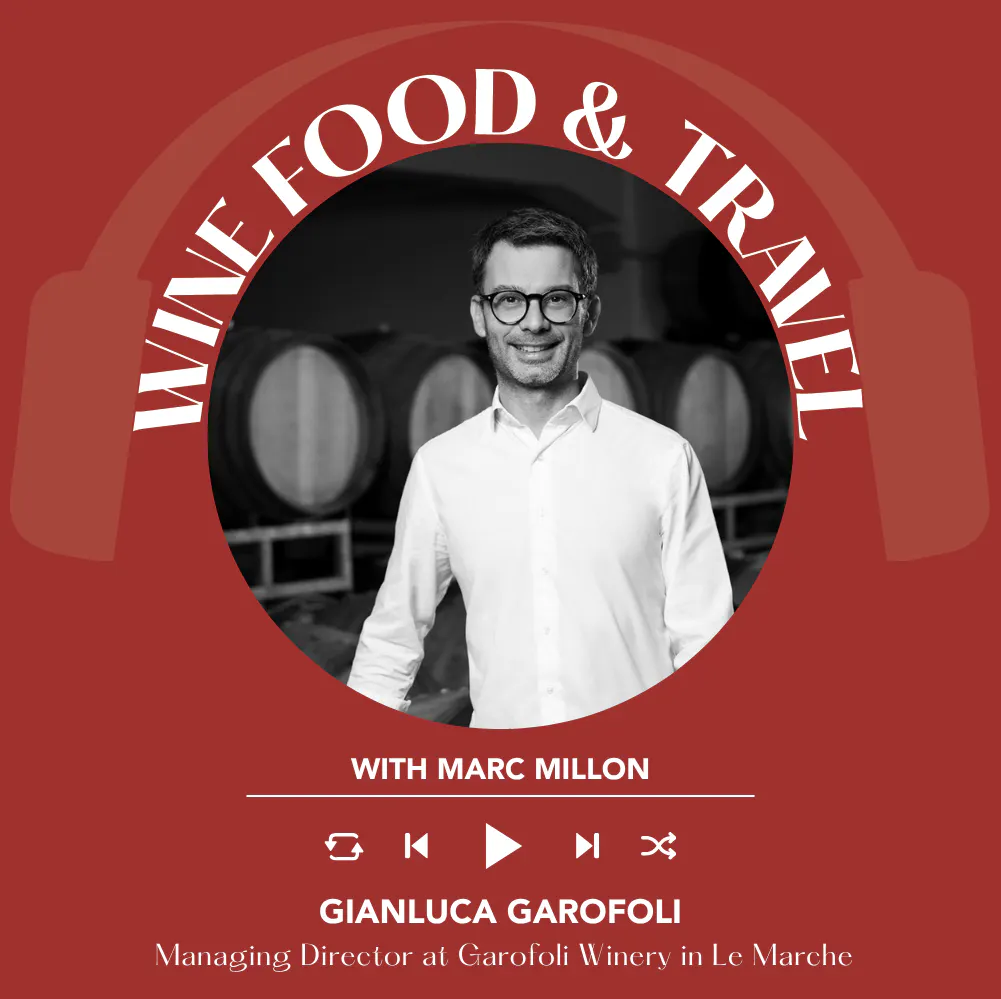
Ep. 2767 Le Marche: Verdicchio and the Wines that Shape the Region with Gianluca Garofoli of Garofoli Vini | Wine, Food & Travel with Marc Millon
Episode 2767
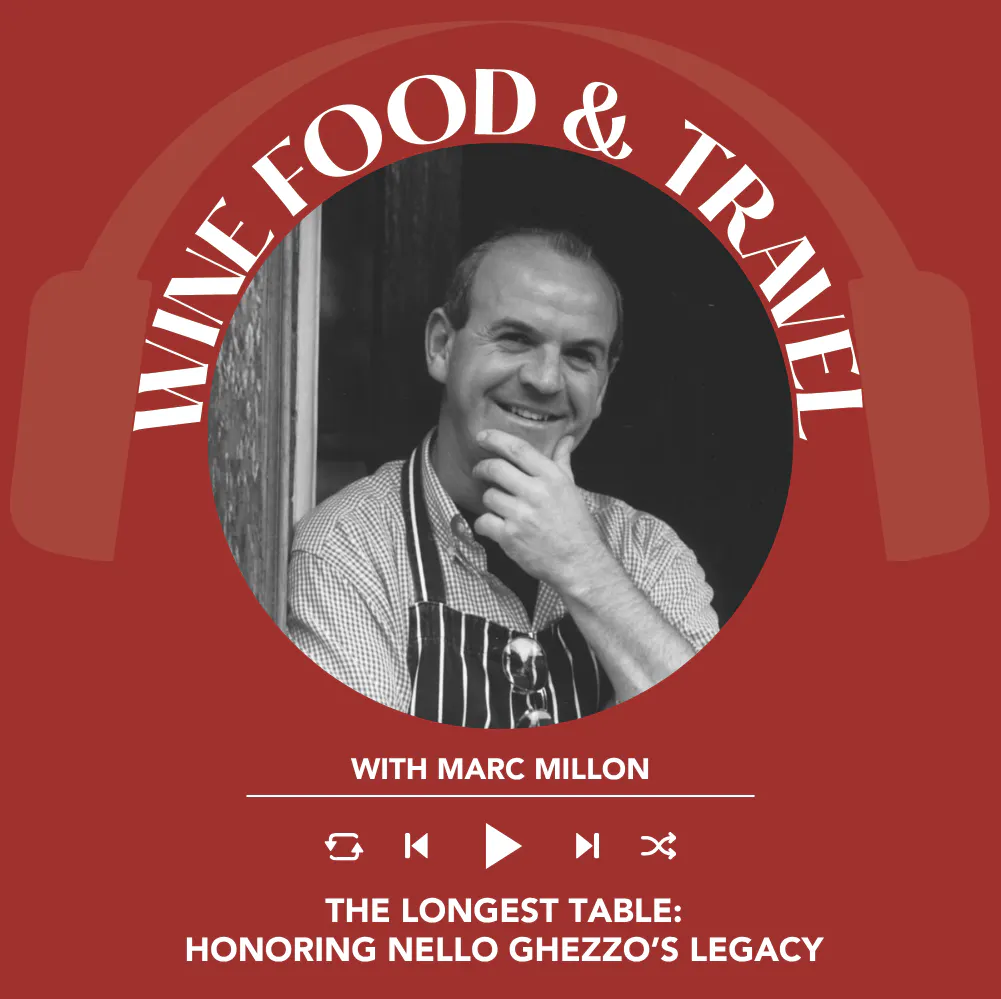
Ep. 2755 The Longest Table: Honoring Nello Ghezzo’s legacy | Wine, Food & Travel with Marc Millon
Episode 2755

Ep. 2681 Giro d’Italia 2026 Special Episode 1: From Bulgaria to the Mezzogiorno in search of wine and cheese | Wine, Food & Travel with Marc Millon
Episode 2681

Ep. 2675 Tuscany Wine Revolution, Barolo Boys & the Rise of Etna Wines with Marco De Grazia | Wine, Food & Travel with Marc Millon
Episode 2675

Ep. 2658 Ferraro's Ristorante: Building an Italian Food & Wine Empire in Las Vegas with Gino Ferraro | Wine, Food & Travel with Marc Millon
Episode 2658