
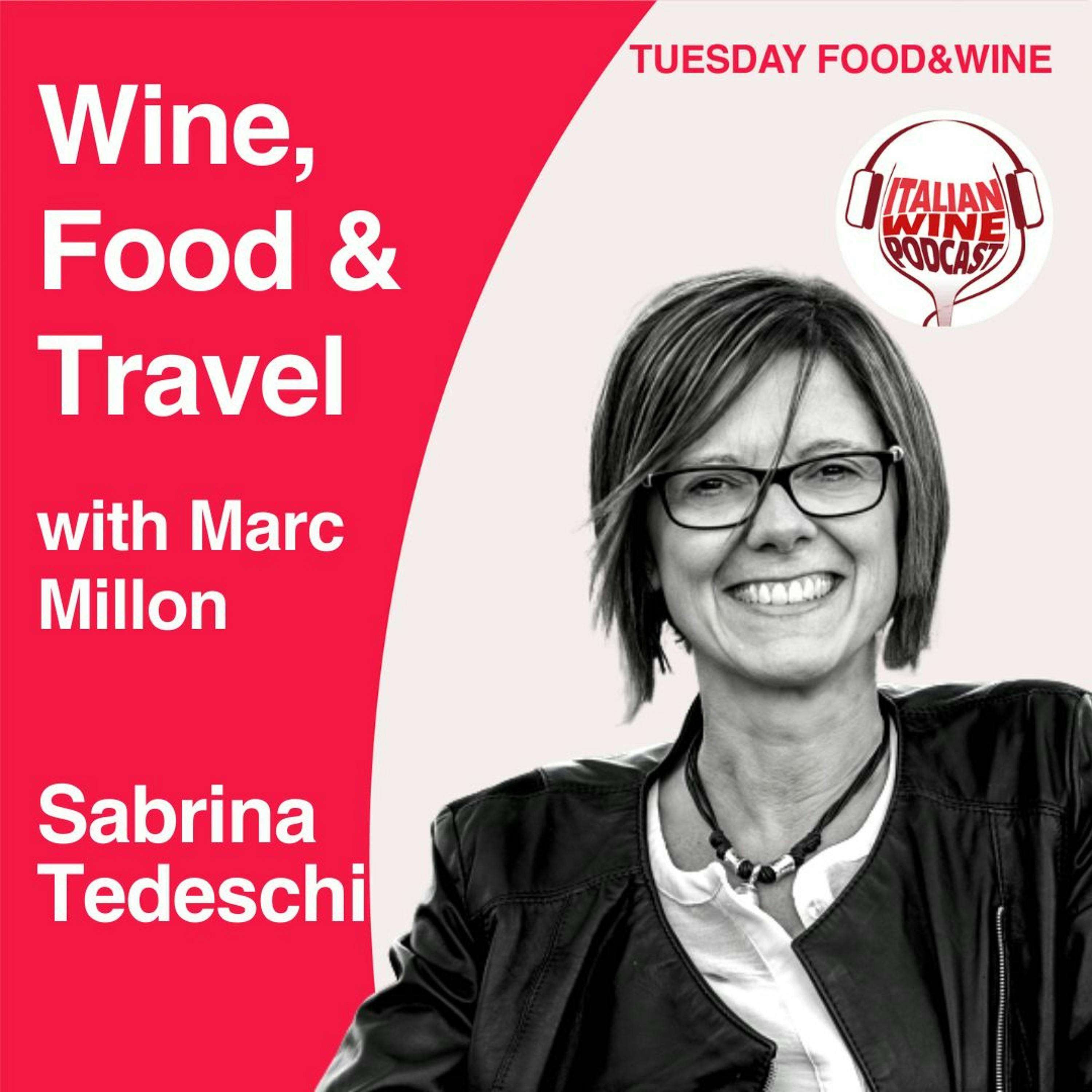
Ep. 1178 Sabrina Tedeschi | Wine, Food & Travel With Marc Millon
Wine, Food & Travel with Marc Millon
Episode Summary
Content Analysis Key Themes and Main Ideas 1. The Valpolicella wine region, its diverse sub-regions, and the significance of its classic hillside vineyards. 2. The history and pioneering role of the Tedeschi family in elevating the reputation of Valpolicella wines, particularly Amarone. 3. The unique winemaking process of Amarone, including the *Appassimento* (grape drying) method. 4. The range of wines produced in Valpolicella (Valpolicella, Ripasso, Amarone, Recioto) from the same grape varieties. 5. The rich gastronomy of Valpolicella and Verona, emphasizing traditional dishes and wine pairings. 6. Wine tourism and hospitality offerings at historic wineries like Tedeschi. 7. The importance of ""cru"" or single-vineyard wines in expressing terroir. Summary The Italian Wine Podcast introduces a new fan-driven donation initiative before host Mark Millen interviews Sabrina Tedeschi of the historic Fratelli Tedeschi winery in Valpolicella. Sabrina provides a detailed overview of the Valpolicella region, highlighting the superior quality of wines from its classic hillside areas compared to the broader plains. She recounts her family's pivotal role, spearheaded by her father Renzo, in the renaissance of Valpolicella wines, particularly in establishing the reputation of Amarone and pioneering single-vineyard bottlings. The conversation delves into the meticulous *Appassimento* process central to Amarone production, explaining how grape drying contributes to character and complexity. Sabrina also describes the unique ability of the region to produce diverse wine styles from shared grape varieties. The discussion expands to the rich local gastronomy of Verona and Valpolicella, featuring traditional dishes like risotto with Amarone, pearà, and various tortellini, often paired with the region's wines. Lastly, Tedeschi outlines the winery's welcoming hospitality, including vineyard tours, aged wine tastings, and the unique experience of tasting wines directly in their respective vineyards. Takeaways * The Italian Wine Podcast relies on public funding and donations to continue producing content. * Valpolicella's ""Classica"" hillside area is particularly renowned for producing high-quality wines due to its unique terroir. * The Tedeschi family significantly contributed to the global recognition of Valpolicella wines, notably Amarone, through their focus on quality and single-vineyard expressions. * Amarone production involves a unique *Appassimento* method where grapes are dried for several months to concentrate flavors and complexity. * Valpolicella's local cuisine is deeply intertwined with its wines, offering a rich cultural and gastronomic experience. * Historic wineries like Tedeschi offer comprehensive wine tourism experiences, including unique vineyard tastings. * The concept of 'cru' or single-vineyard wines is crucial in Valpolicella for understanding the nuances of different terroirs. Notable Quotes * ""The high quality wines comes, especially from his side area. And today, this is only forty eight hectares and the forty four are in the his side area. For us, to us, it is a very, very important because, we have a different kind of a soil. We have a different kind of a micro climate And so, we from the hillside area, we can produce a wine, sir, which are much more character, complexity, richness, and flavors."
About This Episode
The Italian wine podcast, YMI Fans, is a tour of the historic and prestigious Val 49% classic wine wines, including historic and historic wines from the Vini Arts, and historic and historic wines from the Val opinion. Valveral has created a single linear label for their brand, and they have been producing the wine in small quantities to ensure a freshness and character. The traditional Italian wines, such as Capitella and Amaroni, are now part of Valveral's national brand, and they have created a single linear label for their brand. Valveral offers a different wine hospitality proposal for visitors, including a traditional vines and a risotto MOTH, and suggests touring the winery and sharing wine and food. They invite listeners to visit the winery and mention their plans to visit again.
Transcript
The Italian wine podcast is introducing a new donation drive this month. It's called YMI fan. We are encouraging anyone who tunes on a regular basis to send us your ten second video on why you are a fan of our podcast network or a specific show. We will then share your thoughts with the world, with the goal of garnering support for our donation drive. Italian wine podcast is a publicly funded sponsored driven enterprise that needs you in order to continue to receive awesome pre wine edutainment. Seven days a week, we are asking our listeners to donate to the Italian wine podcast. By clicking either the go fund me link or the Patreon link found on Italian wine podcast dot com. Remember, if you sign up as a monthly donor on our Patreon, we will send you a free IWP t shirt. And a copy of the wine democracy book, the newest mama jumbo shrimp publication. Welcome to wine food and travel. With me, Mark Billen, on Italian wine podcast. Listen in as we journey to some of Italy's most beautiful places in the company of those who know them best. The families who grow grapes and make fabulous wines. Through their stories, we'll learn not just about their wines, but also about their ways of life, the local and regional foods and specialties that pair naturally with their wines, and the most beautiful places to visit. We have a wonderful journey of discovery ahead of us. And I hope you will join me. Welcome to wine, food, and travel with me, Mark Minen, on Italian wine podcast. Today, we travel to the Valpolicella winehills to visit an historic and prestigious wine estate, the Fratelli Tadeshi winery, and to meet my guest Sabrina Tadeshi. Whose family have roots in the area dating back to sixteen thirty. It's a real pleasure to have you here with me today, Sabrina. How are you? And is it a beautiful autumn day in the Valpolicella? Yes. Yes. I it is a Saturday today. And, thank you so much for, the invitation. And, welcome to everybody to Vipolicello, where I am now. I am in the classic area. I am a in where our winery is. K. So we're in the Valpolicella Classicicon. It's very important for our listeners to understand, I think, the historic, Val Pollicella area, the classica, because it's very different from the the extensive vineyards on the Pea Nura. Tell us a little bit. Describe this area. It's very, very beautiful. The valleys that that extend down. So that our our listeners can understand why the wines from here are so special. Yes. But, Priscilla, today is, a larger area. But Priscilla, is, a territory not far from, the city of a verona and developer in the north of a verona. And, Bairoicella is, more or less, eight thousand, eight hundred hectares. And, is a divided, in three sub region. The classic area is at the western side of Republic, and more or less, a standard in four thousand hectares. And it is the historic area. And, it is, in the classic area, there are five different columns. Then there's a stripper in the middle. It's a volcano area. And, it is about, eight hundred hectares. And then there's the Easter part of a white colicella. It is called just a white colicella, and, it is tender, more or less, four thousand hectares. The next key is, a producer in, a historic producer of, by Pollicella Classic. But we, today, We own Vina Arts in the classic area and, in the eastern part of a Vipulicella. But you talk about, Vipulicella developer on the plan area and the inside area. And the high quality wines comes, especially from his side area. And today, this is only forty eight hectares and the forty four are in the his side area. For us, to us, it is a very, very important because, we have a different kind of a soil. We have a different kind of a micro climate And so, we from the hillside area, we can produce a wine, sir, which are much more character, complexity, richness, and flavors. It is the reason now we have a decide, in the time, to invest more and more in the hillside area. Okay. So that that's giving our listeners a good picture of this historic area. These hills very hilly with the valleys coming down, and the the dry stone wall separating vineyards because of keeping the integrity of the soil. Yeah. Yes. We we own we own a vinaulta between a hundred eighty up to five hundred meters, especially the highest vinaulta. We own a, it is, in the classic area. It is, up to San George, And, but the the oldest VINA are to be on a is a Monte only. From, from the Monte only. We produce our iconic, Amerone, for sure, one of the first, single vineer wine and a crew wine, thanks to the to our father that, who foresight the potential of this special and, it started to vilify separately the grapes from the Monte Army since nineteen sixty four. And I'm very, very important. It started to put the name of the VIN Aarta on the label since sixty four vintage. So quite unusual, because, in the, in those period, we nobody talks about a little war. Yes. That's a very, very important point. In fact, Sabrina, I remember visiting your property more than thirty years ago when we were researching and writing our book The Wine Roads of Italy, which was published in nineteen ninety one. And I met with your father Renzo, who is considered one of the pioneers in the renaissance of the wines of the Valpulicella. I remember him giving me something of a history lesson explaining that that though the wines of Valpulicella had been known by the Romans and celebrated in the middle ages that somehow in the last century, this great patrimony had been somewhat lost, and wines were being mainly sold spousal from fifty four liter demijohns to be delivered to the bars of verona. And that was part of your family story as well. Isn't it? Yeah. Yes. Yes. Yes. I remember, when I was, very young, part of our product was a wine in a, in a larger, and that we sold to, in their own area. But then, year by year, our, our fathers started to contact, importers from different countries. So we started, for sure, in, Switzerland, in the seventy years, in, in Germany, in UK, in the United States, And so we we changed the production in two more quality, wines, in the time. And, today, we produce, five million bottles of wines, and we support eighty five percent. But, yeah, I I remember. I still remember when our father was alone, in the seventy years, so he managed the production says everything in the company. And, I remember when, it was back from different, trips, business trips, and, people ask, to cancel the name of Vipolicella on the labels because it was not so popular, in the seventy years. And they said, I I am from Vipolicella. I can do that. And, it it was, the the right direction. So he worked a lot together with the, many other producer, historical producer of our region. And, and, and today, wines of our region, are, much better popular than the pasta, especially, of course, Amarrone. But, my family is working quite hard also on by Portuguese wise, because, our our region is a very special because, same grape varieties, the the mandatory varieties are, I remember, you, are Corvina, Corvino, Ronvino, and then some others, but the three mandatory varieties, are those. And, different humidification, we can produce for a different, population wise. So I think it is a quite unique from the same vineyards, we can produce different wines. For sure today, the most popular one of the iconic Italian wines is a maroona definitely. But then also by Puerto Elaripaso is a well known And I think we are, we are working for, for the, especially because, we have to to give, a more, I think a more character, more presence in the in the market, than we did in the past. Okay. Well, that's a really good overview of, the range of wines that are produced in the Valpoli Chana Hills. But also, you're, telling the story of your family how you have been pioneers in really raising the reputation along with the other historic families. Of valpolicella from the classic zone, especially from the hill vineyards so that it's now recognized around the world as one of the great Italian wines, valpolicella, the straight valley polycella for everyday drinking, but also, of course, the the repasso and the amarone and ricciotto wines. Let's talk about one one thing I wanted to ask you Sabrina. You mentioned Capitell, Monteolmee, one of your iconic wines. What is a Capitell? Because I know you you've named wines as Capitell. Yes. Capitella is, a name we borrow from the tradition of our region. And, it is the monument. You can find, in the filter, in the street dedicated to a center or to the mother. And, was built in the past for protecting, the crops from the bad weather or even, to separate a different, property in some in some area. And so, our capital, it is, the capital, of, dedicated to San Rocko. We have in the main square of our village, where we are. And, at the beginning, we decided to the to put the capital brand in our, single linear label. But, they cut by they cut, we can say now, the Capitella became our brand, our logo, together with the family name. Okay. So these are actual, little shrines in the vineyards, marking Yes. Marking territories and, and marking your your crew vineyards as well. Yes. Yes. Yes. Because, we talk about the But are they Monte only, introduce, the philosophy, style production of the family because after Monte only, today, we have, other two single vina Ramarone, because, as I said, we own a vina in the heels, in different, at a different elevation, at a different exposure, And so we try to explain the specific water in different labels. So not not a huge volume for each label. So we have the and in the east part of a we have the new Amaroni maternego. And, not only amarone crew, but we produce always so the Vipulicella crew. Vipulicella in the class from the classic area, and from the Easter property, Maternigo. Okay. So, that's very interesting to note that that, in Valporal, now there's this expression of territory, which is very important, I think. Now just as to, for our listeners, you may not, know the wines of Al Pollicello. Well, let's just speak about Amarrone, this great wine, this really special wine of the Valicello. And, explain a little bit about the process of making a Marone. Yes. Marone is a producer with the the, I selected the grapes. So we, we have to select the, the best branches the most health branches of, of the grapes. As I said, the most important, amarone is, is from his area. So it is important to select the grapes. It is important to select the vinai because, it's not possible to produce a amarone, everywhere in Vipolicella. We are vista by only by end. We lay down, in the plastic grades, just a one layer. And, we try grapes, for three, four months. Regarding the drying process, today, we manage the process. I mean, we don't force natural, but are we simple manager in terms of, humidity, in terms of a ventilation. So we avoid to the the moza can develop on the grapes. It is very important. Because, in this way, we can keep a freshness, a fruitiness, of our original grapes. And then we can enjoy in the glass of wines at the end, this character. In the last two years, we started also to dry grapes at a low temperature. So we can make a longer process, even if at this year, it is quite expensive because, the cost of energy. But, it is important to to have a quite a longer drying process because, in the first part of the process, we just concentrate our grapes. In the second part of the process, we can, produce the compounds that give a complexity and richness then to the wines. Okay. So so this period of Pacamento, it goes on in pedemonte or in the hills. Italian wine podcast. If you think you love wine as much as we do, then give us a like and a follow anywhere you get your pods. No. We have a two different, facility. We say Frutio in Italian language, and we have a one in And then we have another one in Matamigo State. So in the eastern part, the the property we own in the eastern part. So this is in the hills, and, it is always very ventilated this area. So it is perfect also for, the drying process. And, so the grapes of dinner are, vilify usually a part before, Christmas, part after Christmas time. So in the very cold, period of the year, the grape size, start with the cold maceration, and then fermentation start after, two weeks, more or less. Anyway, the temperature during the the process is pretty low. And then we have a two eight. We have a two, three, four years for the reserve because our crew wines are also reserve, and that we age in larger barrels. We prefer to age in the larger barrels. And then once bottle, the wines are as a two agent because I, as a two relapse to balance in the bottle for, one year before releasing the market. So, characteristic of maroney, we have to certify the wise, but also we have to certify the grapes, before the unification. So there's a double certification. And, I think, it is, it is important to control the high quality of the final wines. Okay. Well, that's a great overview of of Amaroni as produced by the tedeschi winery. Producing some of the greatest examples. Now Sabrina, let's turn to the gastronomy of Valpolicella. It's a great area for visitors to come and enjoy genuine and authentic foods paired with great wines. Tell us a little bit about what people enjoy eating where you are. We cook, every finger with the marone. So we we enjoy the risotto with the marone cooked with the marrone. We braised the the beef with the marrone. So we can have a very soft meat with the cream, made with the the wine. And then we are, we we cook also in our region, in Verona area. We have also the awesome and done big other food, traditional food of our region are a tortellini from Vallejo. It is, also a very famous dish. And then Is that with the cheese? Or a meat filling? Oh, both. Because we have some different, tortellini. Depends on the season because the traditional are made with the the meat. Okay. But we have also some, vegetarian version. So with, today, this this period over the year is, the great, tortilla, tortilla, are made with a pump Okay. Also, or, with, we have some, some made with some cheese local cheeses, spinach, and ricotta. There are many different versions of a tortilla. And, and then, other, another local food is, I say it in Italian because it's a very local and traditional. It it is our some Sunday lunch. And so it is, it is a pro producer with different pieces of, meat. So the henna, the beef, the tanga, boiled, meat. And then with the the broth, we can prepare also the para. And para is made with a grated bread, parmesan, and pepper, a lot of paper. So it is a pepper sauce that we are, used to eat with the the the bullet. So there are many different, yeah, food. That sounds wonderful. The Pera. So that's a Sunday lunch in the in verona as well as in Balpolicella. Yeah. Yes. Yes. It is very traditional because, of course, it is a a winter, a winter food, because, in the summer, some somebody eat also in the summer, not me. Yes. What would be the best wine to have with Petah? I think, amarone, because there's a a a redasa as well. But, voice amarone, because, there's a, this, pepper notes, very well with the spiciness that we saw over the and also the softness, character of the because of the raising character of the wine. Right. Yes. Now what about, some of the dolce, in the area? Because I want to mention one other special wine that you've touched on as well, which is. Rachelo. Yes, sir. It is the father of all wines. Because in the past, when a Roman people arrived in the region, they introduced the sweeter style of one. So they're ricciotto. And, in verona, we have the Christmas cake. It is, the Pandora. It is very traditional, but also another, traditional, cake. It is, it's called Sabiosa, and Sabiosa, is a sort of a butter cake. And, it it pair very, very well, with, with the with the recioto. Okay. And then from, from Villa Franco, we have a is a sort of, butter, butter biscuits, also perfect with the recheoto. Somebody, producer with the in the draft, they put us some recheoto. So it is, another typical, cake of the region. Okay. That's great. With a beautiful sweet wine made from the dried grapes as well. Now, Sabrina, you're currently president of one of my very favorite places in the world, the Antica bottega Delvino, which is owned by the historic family group of producers. Tell us a little bit about this very special place. Yeah. It was bought by our association. Family, historic families, in two thousand, a few months after a bottega delvino closed. And, it is a sort of, monument for verona. It is a antique a bottega delvino. It is a restaurant, sir, but, It is a a place where people go there for a toaster with a a glass of wines. There's a huge selection of wines, in the in the in this restaurant. But, it is interesting because, every day you can enjoy a a huge selection of wines by the glass. Yes. It's a very special place. And then and also it's somewhere somebody could enjoy a risotto Alamaroni, for example. Yes. And, it is a very friendly place. This, I I I think, it is a a it you can enjoy a good result of La Marone, and that there are some, some other, traditional foods, like, the the the beef cooked with the Marone, So you can find a very traditional, dish of a verona, but also you can find, some, special dish of, of the restaurants. Like the like the Galina is a master in, in the restaurants together, of course, with the other dish cooked with the with the wines. Yes. Always very friendly. Always lots of people there. Yes, sir. Yes, sir. Now Sabrina, my final question, can our listeners visit the tedeschi winery and what wine hospitality do you offer, for visitors. Oh, yes. You are more than welcome. And, we offer, we have a different proposal from, the, the most classic traditional visit with the visit of the winery and the testing, of the the most important, population. We we have, but then we have some other specific visit. So So people that can choose, the tasting of, some old vintages because we have a library of, of a wines of different vintages. And, it is interesting for, for consumer, for wine lovers to, to know how amarone can develop in the time. It is an interesting experience. And then we have, another proposal. People can come and, they can, taste the different single VIN Air VINAR wines that we have. And there's, we can suggest the tasting with the pairing with the pairings of, some, a selection of a cheese's, a special selection of a cheese's, of, of the region. And then, we like a lot. We we suggest that we saw some tours. We go in the vineyard. And that we open the bottle of wine we produce from, the specific vineyards with our customer. It is a quite, unique experience because, we bring the back into the into the vineyard. The wines and that we can share with the the the winelovers. And, of course, this experience is better in the spring during the summer in early autumn, winter, even if some people like to come also for the wintertime, but, of course, it is a colder Yes. To go to go in the in the heat, in the high heat because sometimes, it is very, very windy at five hundred meters above sea level. Yes. I can imagine. In fact, that sounds so appealing for wine lovers to actually stand in a vineyard amongst the vines tasting the wine and understanding the the terroir and and where the wine comes from. So I hope some of our listeners will make their way to pedemonte and visit the Tadeshi winery. Sabrina, it's been a real pleasure speaking with you this morning reacquainting myself with the Tadeshi family story and learning about your wines and about food and life in Naval Pollicella. So thank you very much for being my guest today. Thank you so much. Also, on behalf of, my brother Ricardo is the white maker and my sister Antonita. We are, we talk about the family, and, we are working together today, with our father. Our father is, today is eighty, ninety years old, but, it is always in the wineries to welcome you if, you decide to visit us, It is, our pleasure, many things. Well, I hope I can visit you again, and I would love to, to meet you and your family and, and to say hello again to your father who was very welcoming to me many years ago. So thank you Sabrina. I hope to see you. We hope you enjoyed today's episode of wine, food, and travel. With me, Mark Millen, on Italian wine podcast. Please remember to like, share, and subscribe right here, or wherever you get your pods. Likewise, you can visit us at Italian podcast dot com. Until next time.
Episode Details
Keywords
Related Episodes

Ep. 2791 Italian Wine in a Changing Climate: PIWI, Terroir & Tradition with Nicola Biasi | Wine, Food & Travel with Marc Millon
Episode 2791

Ep. 2784 The Other Side of Valpolicella: Volcanic Soils & Sparkling Wines with Francesca Marcato of Talestri Winery | Wine, Food & Travel with Marc Millon
Episode 2784

Ep. 2778 Bread of the Sea: The Story of the Anchovy with Sudi Pigott | Wine, Food & Travel with Marc Millon
Episode 2778

Ep. 2773 Trento DOC: one of Italy’s finest sparkling wines with Alessandra Caroni of Maso Martis | Wine, Food & Travel with Marc Millon
Episode 2773
Ep. 2767 Le Marche: Verdicchio and the Wines that Shape the Region with Gianluca Garofoli of Garofoli Vini | Wine, Food & Travel with Marc Millon
Episode 2767
Ep. 2755 The Longest Table: Honoring Nello Ghezzo’s legacy | Wine, Food & Travel with Marc Millon
Episode 2755