
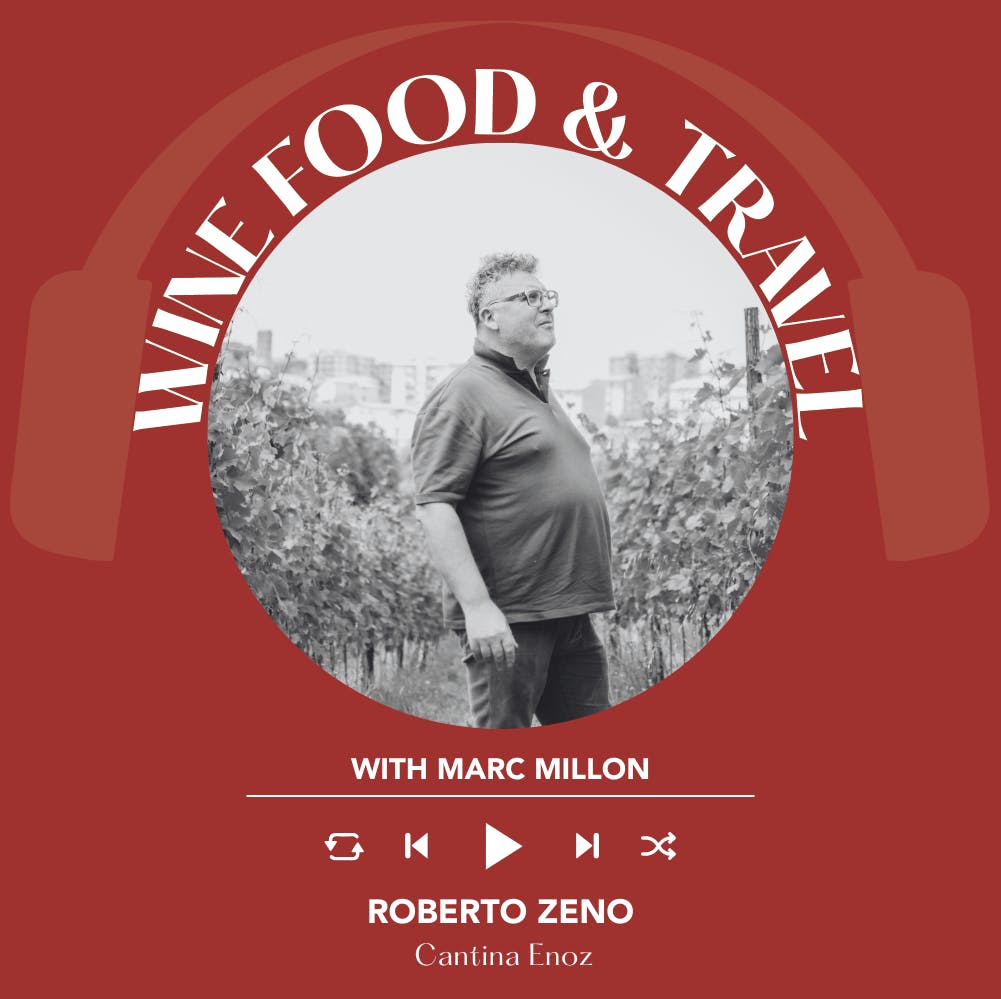
Ep. 2245 Roberto Zeno | Wine, Food & Travel with Marc Millon
Wine, Food & Travel with Marc Millon
Episode Summary
Content Analysis Key Themes and Main Ideas 1. The historical significance and unique terroir of Campania Felix as an ancient Italian winemaking region. 2. Roberto Zeno's personal journey and philosophical approach to establishing Inoz wines. 3. The commitment to organic and biodynamic farming and minimal intervention winemaking at Inoz. 4. Adaptation strategies employed by Inoz wines to mitigate the effects of climate change. 5. The storytelling and unique characteristics behind Inoz's specific wine labels (Renudo, Lamona, Caos). 6. The integration of Campania's rich gastronomy with the Inoz wine experience. 7. The family-style hospitality offered at Inoz for visitors. Summary In this episode of the Italian Wine Podcast, host Mark Millen travels to Sessa Aurunca in Campania to interview Roberto Zeno of Inoz wines. The discussion highlights the historical importance of the region, known as Campania Felix, which produced famous ancient Roman wines like Falernum. Roberto shares his personal story of leaving a finance career to return to his family's agricultural roots on the volcanic slopes of Rocca Monfina, driven by a desire to reconnect with the land and his origins. Inoz wines are deeply committed to organic and biodynamic practices, focusing on environmental sustainability and minimal intervention winemaking, including fermentation in amphorae. Roberto discusses the challenges of producing wines that purely reflect the terroir with minimal human interference and how they adapt to climate change through practices like higher-altitude plantings and natural homeopathic vine treatments. The conversation delves into three of Inoz's wines: Renudo, a Primitivo rosato made without skin maceration; Lamona, a skin-contact Fiano; and Caos, a Primitivo red harvested earlier to maintain freshness and moderate alcohol. Each wine is imbued with a unique philosophy and story, reflecting Roberto's connection to history and nature. The episode concludes by exploring the perfect food pairings with Campanian specialties, particularly local mozzarella di bufala, and inviting listeners to experience Inoz's intimate, family-style hospitality at Masseria Toriciana. Takeaways * Campania Felix, specifically the Rocca Monfina area, boasts a profound ancient winemaking legacy, dating back to Roman times. * Inoz wines represent a philosophical return to natural, ancestral winemaking methods, driven by Roberto Zeno's personal journey. * The winery is dedicated to certified organic and biodynamic practices, emphasizing environmental stewardship and minimal intervention from vineyard to cellar. * Climate change impacts are being addressed through adaptive viticultural techniques, including planting at higher elevations and using natural remedies for vine health. * Each of Inoz's wines (Renudo, Lamona, Caos) is crafted to express individuality and carries a symbolic narrative chosen by Roberto. * The region offers exceptional gastronomic experiences, with Inoz wines pairing harmoniously with local delicacies like mozzarella di bufala, wild game, and seafood. * Inoz provides a distinct, family-oriented hospitality experience, inviting visitors to taste wines and local products in an intimate setting. Notable Quotes * ""This is perhaps an area they haven't heard of before, but it's one of the most historic winelands in all of Italy."" - Mark Millen * ""The project, thirty, then twenty, thirteen, when I decided, to change my life. And, return to my paternal family's room."" - Roberto Zeno * ""He's really a custodian of the earth, of the land that he's working. That you really want to make sure you leave it in better condition than when you came to it."" - Mark Millen (paraphrasing Roberto Zeno) * ""The challenge is to produce a wine, that really reflects the war without any human interference."" - Roberto Zeno * ""It's not by chance. That the Romans, made some of their greatest wines in the same lands because the conditions here are fantastic for growing grapes."" - Mark Millen Related Topics or Follow-up Questions 1. What are the specific details and preparations involved in Inoz's biodynamic practices? 2. How does Inoz market and distribute its low-intervention wines, especially considering their unique profile? 3. What are the economic benefits of wine tourism for the Campania Felix region, and how might they be further enhanced? 4. Can you elaborate on the specific chemical compositions of the volcanic soil in Rocca Monfina and how they influence wine characteristics? 5. Are there plans for Inoz to experiment with other indigenous grape varieties or expand their product line in the future? 6. How does the ""storytelling"" aspect of Inoz's wines influence consumer perception and educational initiatives?
About This Episode
The speakers discuss the challenges of producing sustainable and low-pressure wines, including the need for healthy grapes and cleanliness in salad. They also touch on the use of biomass and the benefits of organic and biod Ale recipe methods. The importance of natural ways to help with climate change is emphasized, including leaving grass in between vines and using no herbicides. The fruitary wines are discussed, including Rosato from the EGTiano and Rosato from the Fiano grapes, and the importance of pristine grapes and the world. Visitors are encouraged to visit the Inoz in Campania and the wines.
Transcript
It's a beautiful position where you're located Roberto. I've been in your area recently, and I want our listeners to understand. This is perhaps an area they haven't heard of before, but it's one of the most historic winelands in all of Italy. It's where some of the most famous wines in ancient Rome were produced, most notably falernum. Yes. Yes. This is, the very Campana FedEx because, it's near to Rome. And, the first, winery for Roman is, Campania Felix. Fascinating people with stories to share, fabulous wines, and the best local foods to accompany them, and beautiful places to discover and visit. All of this and more on wine, food, and travel with me, Mark Millen, on the Italian wine podcast. Join me for a new episode every Tuesday. Welcome to wine, food, and travel with me, Mark Millen, on Italian line podcast. Today, we travel to Campania, the Campania Felix of antiquity, and more precisely to Sessa Arunka, and to the slopes of a long, extinct volcano, roca Munfina, to meet my guest, roberto Zeno of Inoz wines. How are you today? Yes. Yes. He's, very good. Okay. A beautiful day in Campania. Roberta, for our listeners, can you describe where you are, what the countryside and the landscape, is like to give our listeners an image of your world? I know you're on the border with Latio, you're in Northern Campania. So tell us where you are. Yes. You know, it's, situated the on the slopes by the volcano of Raca Mufina. It says so within, the province of Caserta in Campania near the lots of border near the gulf of of Gueta. The winers are between two thousand eighteen and four thousand meters above sea level in about five, kilometers from, the sea. Okay. Between two hundred eighty and four hundred meters. Yes. I think it's a beautiful position where you're located Roberto. I've been in your area recently, and I want our listeners to understand. This is perhaps an area they haven't heard of before, but it's one of the most historic winelands in all of Italy. It's where some of the most famous wines in ancient Rome were produced, most notably, falernum. Yes. Yes. This is, the very Campania fairings, because, it's near to Rome, only one hundred twenty kilometer. And, the first, winery for Roman is a Campania Felix. Okay. The fertile companion, this rich land where everything grows so well. And as you say, for Lerno and also Cöcubo, the stainless and things from antiquity. Roberto, what is the soil and the climate like in this Campania Felix? Okay. The soil are volcanic silica lows, and, the cleanup is a typical immediately. With a strong temperature variation between day and the night. And, this situation is, ideal for growing, wines in, somewhere, they, thirteen eight, fourteen in the day. And, in a night, fifteen, max, twenty, The difference is very, very important. Okay. So these hot days in summer. Yes. Yes. And then the cooler nights, this diurnal temperature range is very good for the vines. Also, Roberto, you have the influence of the gold for the Galleta. So you have the sea breezes coming in and also coming down from the mountains. We're near to the larger range of the Apanini. Is that correct? Yes. Yes. Yes. The volcano, overall community protected from, Apenini, Aria, Alfred. The, the cold wind, the cold wind coming down. Yes. Yes. But, the sea wind, Okay. No. No. Okay. That's very important. The roco Monfina volcano is protecting from the cold winds of the Appenini, the big high mountains that run down the whole spine of Italy. And meanwhile, there's a constant sea breeze coming from the gulfadi Galleta that helps to ventilate the vineyards and keep them from this ventilation helps to keep the grapes very healthy, it moves the air. And so it means that minimal treatments are required in the vineyard. Roberto. Tell us your story, your background, and how this beautiful inos project began. The project, thirty, then twenty, thirteen, when I decided, to change my life. And, return to my paternal family's room. We cultivated the land on Wesubius, where I see Lona, some small, clothes. I sold everything, enables, and, as I was, no able to continue the project, due to exam, organization, I moved it to a similar area with the similar characteristic to the vesuvius. My background is in finance, and I still work at professional human research. I needed to run, away from the city, frenetic life. And the most important is to discover myself, and my origin. It's very, very important for me, the whiner. Okay. In, agriculture life. Okay. So your family roots, you had land. You had land on Vesuvius, on similar volcanic soil. And after a life working in cities, working in finance, You just decided to begin again return to your family roots and return to working directly with the land. So wine represents something to you. Okay. So I said to Roberto. Wine is really deeply within his soul and he says, and and you're saying that you're really returning to the way your your noni, your grandparents lived and made wine simply on the slopes of Vesuvius. So it's a very important and fundamental project to who you are. What is your approach and your philosophy then to growing grapes and making the inoz wines? The concept, which is my comitant, reality start white, making sure I leave the small part of the in the best possible condition for the future generation. Okay. So Roberto is saying he's really a custodian of the earth, of the land that he's working. That you really want to make sure you leave it in better condition than when you came to it. So it's a real respect for the earth itself. This content drives to focus, in environmental sustainability and harmony between the viners and the the, surrounding an outer such as woods, maidos, and, overall flora and fauna. The wires are, surrounded by edge and woods to maintain a continuous balance. The cellar located, inside the volcanic cave, which, align with the the philosophy. Okay. So, ultimately, for you, wine is really telling a story of of humanity of of our relation to the earth and our connection to the earth. And I guess that's that underpins everything you're doing in your approach with you don't use chemicals in the vineyard and cellar, do you? Company is organic and the Beautyomic certification that address to this protocol. You. Okay. So Roberto, you're certified organic and biodynamic, and you've returned to some ancient methods of winemaking ancient methods both that you learned from your grandparents but also going back to the time of the origins of wines in Georgia, fermenting in large terracotta, vessels in the so called Amfore to really make wines, it's purely and as naturally as possible. Roberto, this method, this very natural, this very pure method of returning to trying to express the land and the grapes as purely as possible has challenges. What are some of the challenges you encounter in making low intervention and sustainable wine? The challenge is to produce a wine, that really reflects the war without any human interference. War rule is to weed the grapes from the vineyard to reseller. Ensuring that the winemaking process remains, as natural as possible with the minimal intervention. This can be I keep it through very careful selection in the weinard and the maintaining clean list, in the seller. Okay. So this very, very natural process of winemaking dependent on very healthy grapes and on the utmost cleanse cleanliness in the salad, since there are no chemicals being used preservatives. And Roberto, you're also not filtering or clarifying your wines because to do so is to to remove some of the goodness of the wine. See, yes. Okay. These are very, very pure wines. Wines made without added sulfites, except for wines destined for export a small amount added at the minimum and below well below the permitted organic and biodynamic levels, just to help, ensure the stability of the wines. So Roberto, what are some of the effects? You're in a beautiful place. My difficile, Camiamento de claim, in questy, Journey. Climate change is having a large effect on the world of wine in almost every region. How is it affecting you where you are and how are the vineyards adapting? The vineyards, are already adapting to the Agisammer temperatures and springs frost. Arvets is happening, earlier, but by understanding the land and working, with it. It is possible to render weather events and, pathologist. Finding the, correct, Patic, integration is okay. Okay. There's some very, very interesting points, Roberto. It's not by chance. That the Romans, made some of their greatest wines in the same lands because the conditions here are fantastic for growing grapes. Yes, the temperatures have been excessively hot in recent years, but you're now planting the vineyards higher and higher. So the the most recent planted vineyards are at around four hundred meters. And on the lower slopes, you're either growing grapes that are more resistant to the challenges of heat and also the humidity and fungal diseases that could come, but also, you're growing olives in this area. So it's a question of of adapting to the conditions, but also realizing, it's a beautiful and fantastic area. To grow vines. And growing organically, biodynamically, does this assist? Are the vines more resistant to the challenges? Oh, yes. Okay. Okay. This is really interesting, and I'm not sure if all our listeners know much about biodynamic methods of farming. This this very particular method of farming that relies on the planets, the the alignment of planets because gravity has an effect on liquids, but also very natural homeopathic treatments of the vines. So Roberto is using a Tisan, made from nettles and from chamomile that grows in the fields. And by adding this to the vines. It helps them to address to the the stress of having too little water, in these hot periods. So it's an an an example of how the challenges of climate change are being dealt with through the biodynamic process. And this is something I've heard from other wine growers as well that a more natural approach actually assists in these challenging times of climate change. Okay. So another natural way of helping with these challenging times is to leave the grass in between the rows of vines without using, of course, no herbicide, but not even using manual methods to remove the grass. And this helps to keep the soil cool and fresh, especially at night to add some refreshing humidity during the hot days. So another way of dealing with climate change through natural methods. Roberto, let's turn to some of the wines that you produce. I know you produce five labels, but there are three that I'm familiar with and have enjoyed. And I'd like to talk about these three very different wines. Can we begin with? Yes. Okay. This is, this is very important. Robert to say before we begin looking at these individual wines that that for you Roberto, the wines are a wave expressing the story of yourself, of your family, of the territorial where you were growing grapes. And so they have a message And these wines, the names of the wines are all chosen very precisely. The names of the wines are indicative or part of representing what the wines are and what you want to transmit to the world. A Okay. So beginning with And Roberto's, these wines form part of a trilogy of fables that have a message, and the wines have a message, and Renudo from the Hans Christian Anderson, the emperor who has no clothes. Because you know we okay. Okay. So in the fable, as we will all remember, perhaps, from childhood, there is the child who isn't afraid when the tailors are saying that the king is dressed in the most beautiful clothes, but they're transparent when in fact he's naked. And the child is not afraid to say what he sees, to say that the king is naked. And so this is the philosophy behind this wine. Okay. Okay. Is a risotto from the primativo grape, and it's the only wine that Reberta makes, which doesn't have maceration on the skins. The grapes are softly pressed, and then the the juice, the must goes directly into amphora. Okay. So one of Roberto's best known wines is cows, which is a primitivo, and this is a rosato made from those same grapes from the primitivo grape. Okay. So it it's really, iran noodle because generally Primitivo makes these deeply colored full red wines, and it's an important grape variety. And so you're going against the the sort of current trends to make a Rosato from Primitivo to say that, yes, this is This is possible. This isn't what we normally expect from Primitivo. It's a beautiful line. I've I've enjoyed that wine here in the UK, and I think it's a very successful wine. It's also very interesting wine. To enjoy with food, but we'll talk about food a little bit later. So, you know, let's move to Lamona the next. Lamona, and is a EGTiano. Fiano grapes. The philosophy. Okay. Okay. Lamonade is part of a a trilogy together with Latimo and Calos. Really, a human philosophy, philosophy really respects that each of us as individuals are unique. And wines should be unique as well. If wines are all the same, then it's made through chemical interventions. And manipulation, but wines need to be allowed to express their own individuality. This wine from the fiano grape, an ancient grape originated in Campania, which is grown also in Urpena. This grape grape fiano really does express an individuality. It's a wine that I've enjoyed many times. I've I've selected it for wine dinners here where I live, And so it's a skin contact, white. Okay. So Fiano is an octopus grape variety of the roco Monfina, not just where it's more well known, in Urpina, but also here along with Moscato and Palagrilla, bianca. Justo, Palagrilla bianco. Palagrado bianco. Yes. C. C. Okay. And it's a grape that really needs to, period of of aging to, to allow it to express itself most fully. So Roberto, you're having the Macharazione on the skins. Okay. So there's no definitive time that necessarily macerates, but it's not a not an excessively long one. Six days, perhaps, on the skins, then into the amphora for nine months and nine months, at least, of a finamento in Botilia, of, reposing aging in the bottle before it's released. And as I say, it's a really wonderful full expression of the Theo grape. Roberto, finally, because I know we're running out of time a bit, let's turn to the cows, this important red wine made from the primativo grape. Okay. I'll let me just explain that, Roberto. Caos represents certainly for the ancients, this primordial world before the earth was created. And for you personally, this wine represents something of your story that you you left, life you had in finance a very different life to return to this more primordial way of living and connecting directly with the earth, with where your family had come from, with your roots, with who you are. C. Yeah. Yes. Yes. Okay. Okay. Primitivo can be a wine that has a huge alcohol color, almost a juicy sweetness to it, when it's made in other ways. And and indeed, another area, it's it's a variety that we associate with puglia, for example. But Roberto, you're trying to make a wine that has a freshness to it, this sapidity, this minerality that comes from the influence of the sea to make a primitivo that is. Yes. Yes. Okay. Okay. So the primitivo grapes are harvested a little bit earlier than normal to keep them from being overripe and also to keep this freshness that you're searching and to keep The alcohol levels at a moderate level, which is very important. Everybody is concerned today about wines getting stronger and stronger, but this callous primitivo is twelve thirteen degrees most. So that's a very important because Primitivo can reach fifteen degrees, sixteen degrees make huge wines, but this is a more moderate level already with a more elegant and finesse to it, fermented in the amphora for about a fortnight, fifteen days on the skins, and then a lengthy aging of a year in the amphora, and another year in the bottle. So it's a wine that's really had a a lot of care and attention put into it. A beautiful wine that I have, again, enjoyed here very much. So no, so novini Grande roberto, complimenti. Okay. This is a very, very important point. Primitivo, as I said, we think of that grape. We associate the grape with puglia, but Roberto's reminding us that, sasorunka, that Roca Monfina, the most famous of all Roman roads, the via appia, that went from Rome to Brindisi, this great thoroughfare that which the Roman legions marched on in and from Brindisi would embark on voyages across Eastern Mediterranean. This great road, Roman Road was also a transfer of ideas and people and people from Pulia came along the via appia and settled in this area in at least as early as he the eighteenth century to bring their grapes, including Primitivo. So it's been here for more than two or three hundred years. And can really be considered an octacton as a local grape varieties. I believe that your wines are wonderful wines to enjoy with food. I think all Italian wines are always meant to be enjoyed with food. But particularly the Enos wines or gastronomic wines, and of course you are in Campania, one of the greatest of all gastronomic regions. So can you just give us a few of the most typical foods from provincio de Casa or foods that are local foods that pair perfectly with your wines. Yes. Laura, It's important to remember, we we associate Campania with the mozzarella debuffalo. This area, here in the provincial Dica Serta, is the home of, mozzarella debuffula. It's a huge, the important production. You know, we're talking about water buffalos that have been in Campania for centuries, making this rich creamy mozzarella debuffalo. And if you've tasted it in this area, you've tasted mozzarella debuffalo. It's only a few hours old or day or two. It's one of the most exquisite things you will ever eat in your life. And the mozzarella de buffala pairs beautifully with or indeed with with and the whites. Okay. So, a couple of other cheeses to mention in addition to the our goat and, sheep cheeses from the higher mountains. And also in these areas, there is a a wealth of games such as wild boar or hare. And these go very well with the the red wine, with the cows. While the proximity of the sea means there's a really mixed giant here, plenty of beautiful fish from the gulf of the Gallate. Yes. Yes. This complements, you know, the the range of wine. So it's a wonderful place for discovering the foods of Campania as well as the wine. Now Roberto, I know our listeners will be eager to find out more. Can they visit Inoz? And what can they do if they come to to your part of Campania? Okay. That's a beautiful, beautiful way to experience wine. So at Masseria Toriciana, Roberto where you live, our visitors can really come and visit you as if they're visiting your home. They can enjoy tasting your wine, your extra virgin olive oil, your own tasting the local producers, is exquisite creamy cheese and other cheeses and cured meats, but it's really sitting around the table as if it was family style. For me, this is the very best way to experience wine and wine hospitality around the table with the wine producer explaining. So I think that's a beautiful invitation, and I hope that our listeners will come to to visit, and discover Ino's wines. Roberto, it's been a fabulous, mourning speaking with you. I'd like to thank you for being my guest. I've enjoyed your wines here in the UK, and I feel I know more about them now. So I myself look forward to visiting you sometime perhaps in the coming year. Okay. We hope today's episode of wine food and travel with me, Mark Milin, on the Italian wine podcast, has transported you to somewhere special. Please remember to like, share, and subscribe wherever you get your pods. Likewise, you can visit us at italian wine podcast dot com. Until next time, Chinchin.
Episode Details
Keywords
Related Episodes

Ep. 2791 Italian Wine in a Changing Climate: PIWI, Terroir & Tradition with Nicola Biasi | Wine, Food & Travel with Marc Millon
Episode 2791

Ep. 2784 The Other Side of Valpolicella: Volcanic Soils & Sparkling Wines with Francesca Marcato of Talestri Winery | Wine, Food & Travel with Marc Millon
Episode 2784

Ep. 2778 Bread of the Sea: The Story of the Anchovy with Sudi Pigott | Wine, Food & Travel with Marc Millon
Episode 2778

Ep. 2773 Trento DOC: one of Italy’s finest sparkling wines with Alessandra Caroni of Maso Martis | Wine, Food & Travel with Marc Millon
Episode 2773
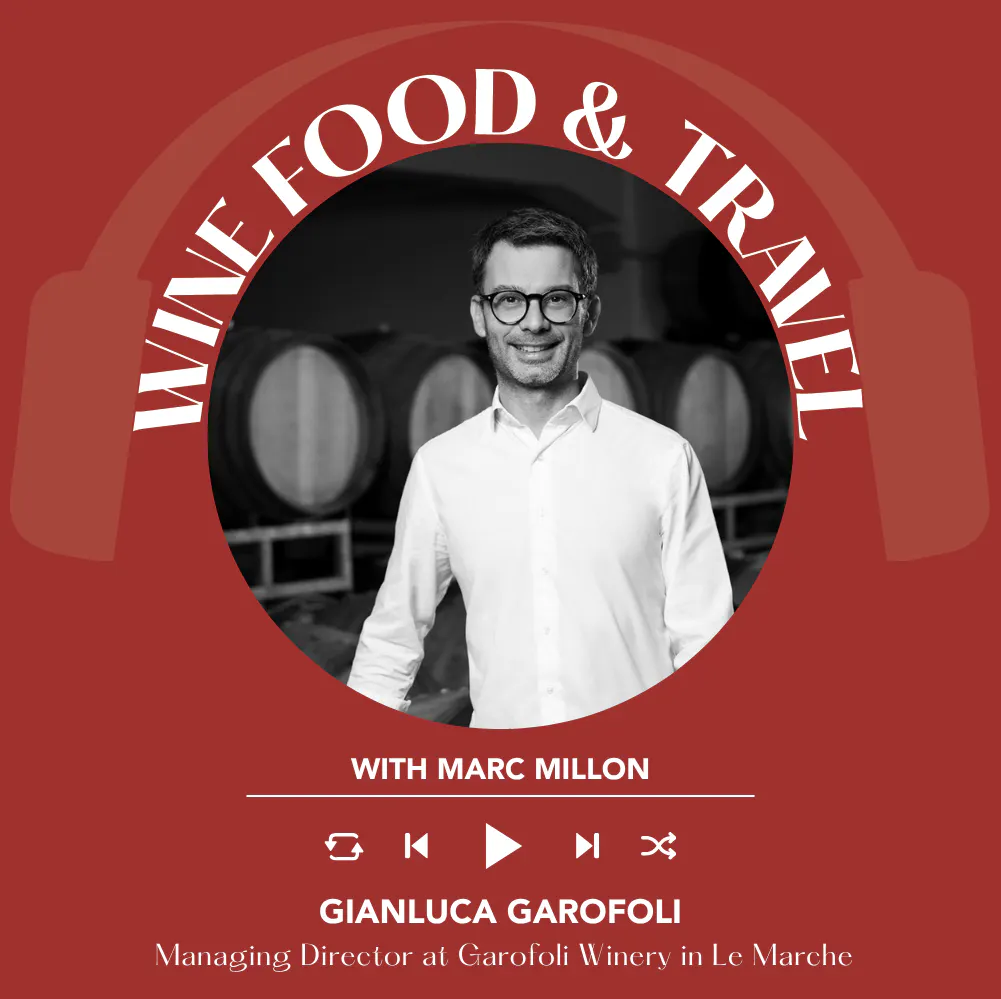
Ep. 2767 Le Marche: Verdicchio and the Wines that Shape the Region with Gianluca Garofoli of Garofoli Vini | Wine, Food & Travel with Marc Millon
Episode 2767
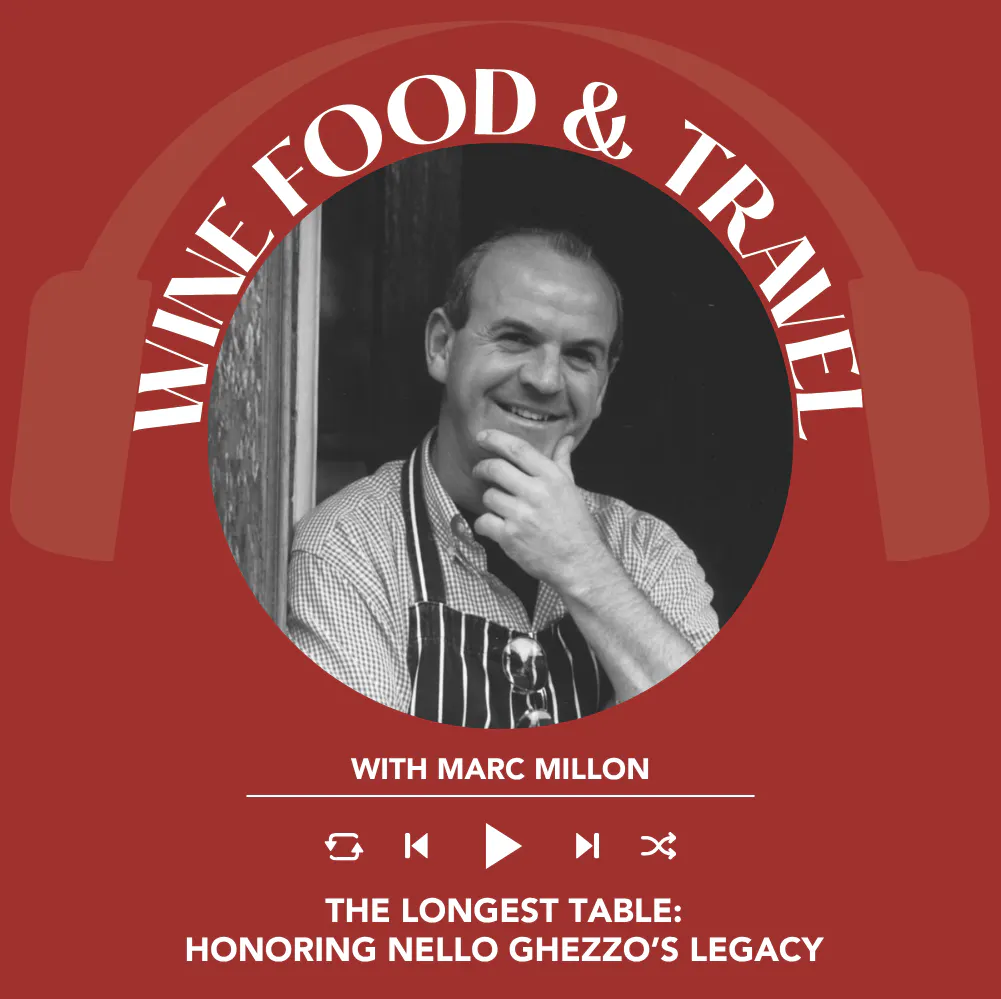
Ep. 2755 The Longest Table: Honoring Nello Ghezzo’s legacy | Wine, Food & Travel with Marc Millon
Episode 2755