

Ep. 736 Teresa Severini | Wine, Food & Travel With Marc Millon
Wine, Food & Travel with Marc Millon
Episode Summary
Content Analysis Key Themes and Main Ideas 1. The Pioneering Legacy of Lungarotti Winery: Focus on Dr. Giorgio Lungarotti's vision and revolutionary approach to viticulture and wine production in Umbria. 2. Umbria as a Wine and Cultural Destination: Highlighting the region's unique characteristics, history, and offerings beyond wine. 3. The Evolution of Italian Wine Tourism and Culture: Discussing the early adoption of enotourism and integrating wine with art, history, and food. 4. Family Continuity and Innovation: How the Lungarotti family (Theresa, Chiara, Maria Grazia, Francesco, Gemma) continues the legacy while embracing new approaches. 5. Flagship Wines and Terroir Expression: Detailed discussion of key Lungarotti wines like Rubesco Riserva and Torre di Giano, emphasizing traditional grape varieties and terroir. 6. The Role of Museums (Wine and Olive Oil) in Wine Culture: The significance and unique collections of the Lungarotti Foundation's museums. 7. Umbrian Gastronomy and Wine Pairing: Exploring the local food traditions and how they complement Lungarotti wines. Summary In this episode of the Italian Wine Podcast, host Mark Millen speaks with Theresa Sabarini of the Lungarotti winery in Umbria. Theresa discusses the pioneering legacy of her stepfather, Dr. Giorgio Lungarotti, who revolutionized viticulture in Umbria by shifting from traditional mixed cultivation to specialized wine production in the 1960s, leading to Lungarotti receiving Umbria's first DOC in 1968. She elaborates on the family's continued dedication to winemaking, now involving her sister, mother, son, and daughter. The conversation highlights Lungarotti's flagship wines, Rubesco Riserva and Torre di Giano, emphasizing their commitment to traditional Umbrian grape varieties and terroir. A significant portion of the discussion focuses on the Lungarotti Foundation's museums (the Wine Museum and the Olive Oil Museum), which house extensive collections linking wine and oil to art, history, and civilization. Theresa also passionately describes Umbrian hospitality, the region's unique culinary traditions, and how food and wine together offer a profound cultural experience. Takeaways * Lungarotti winery, under Dr. Giorgio Lungarotti, was a pioneer in modern Italian viticulture in Umbria. * Umbria is an inland Italian region known as the ""green heart,"" with rich history and culture. * Lungarotti received Umbria's first DOC in 1968, demonstrating its early influence. * The winery is a multi-generational family business, involving Theresa, her sister Chiara, mother Maria Grazia, son Francesco, and daughter Gemma. * Lungarotti produces flagship wines like Rubesco Riserva (Sangiovese) and Torre di Giano (Trebbiano/Grechetto), focusing on traditional varietals. * The Lungarotti Foundation runs a world-renowned Wine Museum and an Olive Oil Museum, integrating wine and oil with art, history, and culture. * Umbrian food, characterized by quality ingredients and traditional recipes (meats, cheeses, legumes), pairs excellently with local wines. * Wine tourism and hospitality have been central to Lungarotti's approach since its early days. Notable Quotes * ""Umbria is a region right in the center of Italy... just to let you know a little bit about the famous places. And Torgiano is a medieval village, a small one."
About This Episode
The speakers discuss the importance of family in the wine industry and the creation of the first DOC in Italy. They also talk about the love for wine and the importance of culture and wine in their respective areas, as well as the love for the Rub Rub Rub Rub Rub Rub Rub Rub Rub Rub Rub Rub Rub Rub Rub Rub Rub Rub Rub Rub Rub Rub Rub Rub Rub Rub Rub Rub Rub Rub Rub Rub Rub Rub Rub Rub Rub Rub Rub Rub Rub Rub Rub Rub Rub Rub Rub Rub Rub Rub Rub Rub Rub Rub Rub Rub Rub Rub Rub Rub Rub Rub Rub Rub Rub Rub Rub Rub Rub Rub Rub Rub Rub Rub Rub Rub Rub Rub Rub Rub Rub Rub Rub Rub Rub Rub Rub Rub Rub Rub Rub Rub Rub Rub Rub Rub Rub Rub Rub Rub Rub Rub Rub Rub Rub Rub Rub Rub Rub Rub Rub Rub Rub Rub Rub Rub Rub Rub Rub Rub Rub Rub Rub Rub Rub Rub Rub Rub Rub Rub Rub Rub Rub Rub Rub Rub Rub Rub Rub Rub Rub Rub Rub Rub Rub Rub Rub Rub Rub Rub Rub Rub
Transcript
Welcome to wine food and travel. With me, Mark Millen, on Italian wine podcast. Listen in as we journey to some of Italy's most beautiful places in the company of those who know them best. The families who grow grapes and make fabulous wines. Through their stories, we will learn not just about their wines, but also about their ways of life, the local and regional foods and specialities that pair naturally with their wines. And the most beautiful places to visit. We have a wonderful journey of discovery ahead of us, and I hope you will join me. Welcome to wine food and travel with me, Mark Millen, on Italian wine podcast. Today, we travel to Umbria, the green heart of Italy. To meet Theresa Sabarini, of the lungarotti winery, one of the pioneering wineries inumbria. It's great to be in contact again today. Thank you for joining me this morning. Oh, thank you, Mark. It's so nice to hear you again and to be in contact, and thank you for let me talk about us. Thank you. Oh, no. It's a real pleasure. First of all, I'd like our listeners to get, a real idea of where you are inumbria, ofumbria itself because it's a very special place. Yeah. UBriah is a region right in the center of Italy. There are no no coast. It's, in land. And, Georgiano is right to close to Peru and assisi, just to let you know a little bit about, the the famous places. And Georgiano is a medieval village, a small one, fifteen minutes from these two cities. And, easy to reach, not so much, but, difficult to leave because, when you come, you stay so well that you it's a it's a pleasure to stay. And I love my country. I love my places and, I would like to share with, with the people you're we are talking to, the peaceful place we are living in. Yes. Hi, Chai. I have such fond memories of the times I visit to you in Torigiano. It's a really beautiful place, and it's a beautiful whole complex that your family has created. In fact, the entire wine zone of Torigiano didn't exist until your your stepfather, Doctor. Georgio Lungarotti came to the area to establish a new wine with a new mentality. He's really one of the pioneers of the modern renaissance of Italian wine. Can you tell us a little bit about this family story and how the region has developed? Yes. Thank you. Yes. He's a really a pioneer. He was a visionary man and, decided to give, a new life because, he understood very well. He was graduated in a bit of culture. He understood that, the place had the potential, a great potential. So he had to change things from the tradition because the wines were already known for being nice wines, but he wanted to create great wines. So he started to work the land, changing a little bit the way to grow the vineyard, when I say a little bit, I say a lot because there's been a lot of re revolutions in a in the in the wine field, you know, in the in the vineyard, in the winery, and so he changed it a lot. But he was humble. And, he wanted to to visit visit, before creating all these. He visited a lot of France, Germany, other countries to see what was, creating a difference from, the tradition here. And so he started really a new age, and he was the first inumbria as as a matter of fact we received the the first DOC in, sixty eight. So it was the fifth DOC in Italy. And one of the very first DOCG later So that's the proof that what he thought to do the difference was right. And, he started, today, you know, it's so easy to to think of, changing in the styles and so on, but go back to the sixties, late fifties, early sixties. It was something, like, really a revolution, and people could say, this man is mad. But, he was right. And together with my mother who was, with him, forming a couple excellent superior, I would say. They started to talk about wine and about culture. And this was making a great difference also. And, giving also a great attention to a specialized tourism on wine. Today, we call it enno turismo, but, at that time, it was, attracting people on wine days to live a territory, which is so beautiful. And so dedicated to the wine production. Yes. It really was visionary in in so many respects then. And, of course, we have to recall that in the nineteen sixties, the countryside itself was completely different. This was a time of the Matsadria of of mixed cultivations. It wasn't a specialized, Viticulture. Yes. Georgia was one of the first to close the Metadria, contracts. And he reemployed all the people, Demet Zadri, as a salaryati. So he he was forming, and he keep very tied to him And, shall I stay with us too? Because, we have the the, the children of them working for us again. So it's a a continuation of dynasties, shall I stay? Yeah. Yeah. That really was so important. And it actually was very early to be doing that in the nineteen sixties. Today, the Lungarati Wainer is headed by you, your sister, Kiara, and your mother, Maria Gracia still is overseeing the Longurote Foundation. Is that right? Exactly. Shall I say that also my son, Franchesco, join us, Franchesco Zaganelli, and, at the foundation where I'm more and more active together with my mother. Also, my daughter, Gemma, arrived. So a continuation of families, as you see. Oh, that's wonderful. That's wonderful to hear, and I look forward to meeting them when I next visit you. We must come. Yes. Gemma is a historic of art, like my mother, and Francesco is taking care of all the export. So he's, he's one of the front men, as you can say, in a women winery. Right. Yes. Well, in fact, you were the first female anonymous when you qualified in was that in nineteen seventy eight? Early seventy nine. Yes. But I I because I worked for three years of on a technical thesis, on the aging of red wines. So that's why I graduated in six seventy nine instead of seventy eight. And, this was really, something shocking because, it was not a female field. For many years, I've been, the Ymaker here, but, also, I took care of the promotion abroad. And then more and more, I moved to the marketing and communication sector, and now more and more on the Lungarroti Foundation because I'm so fond of the fact that culture and wine they they have to go together. So, you know? Yes. Yes. Well, we'll talk a little bit about the foundation and activities in a moment. I'd just like to, draw our listeners' attention to some of your flagship wines, wines that I've been very fond of over the years. The, in particularly the crew ones, the tour de dijano, Vigna, Elpino, and the Rubesco, Vigna Montecchio. Can you tell us about these? Because, the Rubesco certainly is is what people think of first when they hear the lungarotti name, but, these are these are wonderful wines that are, I think, are amongst the great wines of Italy. Yeah. I agree. This year, we we want the the the first statement with, together with SASica. Yeah. The fir the best bread wines in Italy. Red wine in Italy. So when you discover, is ever, two thousand sixteen, And this was, great, great proud for all of us, for my sister, not for me, for Kiara, but, remembering the, the passion that, Georgio put on this wine, and also the passion of all the young people working here because, this is another point that I have to emphasize is, a young winery, and that's very important. A lot of, enthusiasm, a lot of, working on this. And, so the, the placement, such a placement for the Rubescorezera was, fabulous. But you're right. Tore dijana, Avini Pino, which is, the white counterpart. Of Rubescorezera is, a great wine. I remember Edmond Penney Russell writing about this in nineteen eighty. He he was drinking a nineteen seventy of this wine, He put an article on on this saying I was astonished to see how, Italian white wine can not only last for ten years, but even grow in the in this year. And that's that's the real thing. It was much before the fashion of, white wine in wood. It's all it's a partially in wood, but in the same time, it keeps flavor, elegance, and body. And it's not the the wood is not overpowering, not at all. And this was going back many years ago. Today is still the same wine, fantastic for wine lovers. And, is is a couple. Rubescore Zervo and Tory Bijano, very, very nice. On the label, it's nice also to point this, on the label, you have a particular detail of the Fontana majority in Peru, which I love, and I it's the best, the the most beautiful fountain, for square from the thirteenth century. Again, is a tight between art, culture, and wine, and go back many years ago, with this label. So the these are these are two lines that are flagships of Lungarothi, and they also celebrate the traditional grape varieties. The San Jose, Treviano Grequeto. Absolutely. We we experiment, clones and so on, since many, many years ago, we think that, of course, the quality is already set at the inconvenience. So you have to find the right place for the right trade. For the variety and then, obtain more and more and more. And, that's the what Georgia gave us as a as a statement and, like, a legacy, shall I say? And that's what we do. And, for many years, we have been, very tied with, they need to go here. Unfortunately, it's no more, on this land, but, he died a few years ago. But, is a man that I respect with, all myself. When I studied in Bordeaux for my specialization, I met him, his wife, the family, and I found great personality in wine, also a great friend. And after Georgia died, he started to be our consultant. So he started to give us a new idea of keep on the the revolution, let's say. And I thank him for, having a lot of suggestion. So we still have the the Italian Italian style, but, we've, a deep attention to the to the soil, to the vineyard. You're really expressing the terroir of Torgiana? The terroir. The terroir of Torgiana. And you know that now we have also another winery in Montefalco. Yeah. It's different because Sacramento is a special grape, so different from San Jose. And the land also is different. So thanks to our experience in inside the vineyard on the soil that we kept the right way to grow Sabantino to propose a Sanantino, which is not too aggressive, but very pleasant and round. That's what we like on the on the wines. To be pleasant, to be drunk, and not only a glass, but an entire bottle. Yes. Yes. Great. So, but we have many wines, different kind, for, you know, wine is something that you have to match with your food, with your occasion. So it's not only one kind of wine, but many. We also have San Georgia, for example, which is a combination of, Sandro Beze and Cabernet sauvignon. We have, our rent, which is a great, great chardonnayo, but we have many. Yes. You have a wonderful range of wines and extensive range. And I think what I've liked following the Longorothi story, is this blend of tradition and creating new traditions, new wines? I like this. Yes. I agree. We created new tradition. Now let's turn to the the culture of wine and and wine hospitality because Again, you were pioneers here at a time when, I remember when we were researching our wine roads of Italy book, which was in the late eighties, in the early it came out in the early nineties, you already had in place, a really important complex of hospitality and culture through the Museum of Vine, which is one of the, I think one of the great vine museums in the world, so extensive and, important in not just showing how wine was made, but in placing wine in the context of culture, art, and it's a beautiful project. Yeah. Something that you everybody must know. I mean, first of all, it's not the museum of the wine's superiority. Mhmm. But is, I mean, the foundation, it has, the activity to expand the the culture of wine, but the two museums because it's a wine museum and a olive oil museum are two art museums. Shall I say decorative art? And the history of man. And, for example, talking about the museum, the wine Museum. My mother always says the name wine Museum is, not enough to explain what is it. In because, really, is, of course, the, the, the, the history, the tools, etcetera. This is a part which cannot, cannot avoid. But, mainly you can find museums inside the museum. Let's say, for example, the ceramic. We have the most important collection of ceramics on one theme existing. Going from the middle age to the renaissance, to the modern time, the contemporary art, or the, for example, let's some, let's say, some, name, Jean Cotto, Joe Tillson, Canada, caruso on the contemporary, but we also have pay pieces from Jirolamo de Laropia or, from, the the most ancient pottega in, in the central Italy. Then a collection of, ancient printings, ancient because we go from Montana, for example, but we arrive to Picasso. So it's a long time period that is, observed. Through more than six hundred drawings or printings. Or we have the archaeological findings going back to the third millennium before Christ. So five thousand history of the civilization online. And, also, we like to do something to create a dialogue with, modern exhibition of art, contemporary art For example, in this moment, we have, Andrea Anna who is an American grown in in England and then in Paris and now inumbria. And it's so beautiful to see this dialogue because the conception is not a museum with Dutch, but a museum, which is dynamic and talking different languages. Of course, that one of wine is the more important. And the Longaratta Foundation is very active also in the education of drinkings. The respect for wine and the, sensibility for this. And my mother has written different books, me too, on, on this field because I think that young, they have to be educated to the to the moderate drinking. The second museum is the olive oil museum, and it's very it came very late because, the wine museum is, as born in seventy four, and then, of course, up to date it continuously. The white the olive oil museum was created after Georgia's death because, it was a legacy from him to to have also another museum on this beautiful product of our land, which is the a survegent olive oil. And so with, my mother, the historic of art, she created the two museums on hep by herself. She created the olive oil museum. But as you tell, as you have told, why museum is considered the most important. Shall I say in the world, not only in Italy, because, of the collection inside. I would say so. Certainly, from anything I have visited, and I would urge all our listeners who are possibly traveling to Umbria to make a point of visiting the museums and the lungarotti winery. Now, and I I know that that welcoming visitors is, has also been central to your approach almost from the beginning, and also this hospitality, the linking of wine and food. Wine isn't something that just exists outside of the context of living. Can we talk a little bit about hospitality and the typical foods of of umbria, the typical foods that pair so well with your wines? Oh, for sure. Hospitality, culture, and wine has been always very tight here. Also, because it's such a place for land, such a place for territory. So, it's so easy to to to put them together where you have the pleasure to stay, to live, the pleasure to drink, and the pleasure to eat, and of course to match the food. And, we have a good reason. In in Georgia. There is also the Treva Zelle, which was, hotel, a five star hotel that we created, and now is run by other people because we wanted to focus on the agreed to resume. And we also have different places where to serve food. Of course, always very attentive to the to the quality, to the bill. And, to the, ancient recipe of, umbria. So when you say which food, which recipe to match, is not easy. Because, generally, can we say that inumbria, the food is more poor in the in the season, seasoning, but very tasteful in, in the in the quality. And so there's a lot of, meats, very, very good, very important here, but, also some fish, not from the sea coast, but, from the lake, trasimeno, or from the river. And, we have, some cakes special, and a salted one, which is, the torta dipasqua, which is, salted cake with cheese. Fantastic. It's only from this place, and we see, we eat it for Easter. And we also have, the total pesto, which is sort of a bread, very thin, not like, but a little bit thick, but, we use to to eat with, prosciutto. We have a wonderful prosciutto. Ham, salted, and spicy, and other charcuterie. Because, in this region, there is a Norcha, you say, Norcha is the land of, charcuterie. And, fantastic. We have, you know, cheeses like the Peccarino, which is excellent with the Rubesco, with our vendor with the thoroughly, John Avino, and, capuleti, which are different from the tortellini from Modena, very, exquisite with different needs from this land. And, a lot of, greens, legumes, and vegetables a lot. On the season, we use on the seasoning, we use the extra virgin olive oil, which is very mild in the same times very flavored is, the the this is the child of this land. Okay. So the oil and wine have been there since, I guess, since etruscan times, Absolutely. Yes. When you visit the Y Museum and the Alibaba Museum, you can follow this long history of, of the civilization of this land. And, and I think that, an experience is, the visit to the winery, of course, the tastings, but also the visiting of the wine museum and, and tasting the food altogether. That's our feeling from the beginning. Yes. And I think in that way, one can really through taste, taste of wine, taste of food, really begin to understand not just a place, but also the culture of a place. And you you have put that together beautifully in the activities you offer. So I hope that some of our listeners will be visiting you in the future. Thank you. You have all the all the information on our website, of course. And on the on the videos, you can see here and there. But, when you come, you will really touch the main things that we have done since the last time you came. And the new visitors, I'm I'm sure they will fall in love with, umbria, with, Tatiana. I'm sure they will too. Well, it's been a real pleasure speaking with you today. I'm delighted to be back in contact, and I look forward to seeing you again perhaps in the year to come. Thank you. I hope to see you here, really. Thank you today, Zaa. Thank you, Mark. Ciao. We hope you enjoy today's episode of wine, food, and travel. With me, Mark Miller, on Italian wine podcast. Please remember to like, share, and subscribe right here, or wherever you get your pods. Likewise, you can visit us at Italianwine podcast dot com. Until next time. Hi guys. I'm Joy Livingston, and I am the producer of the Italian wine podcast. Thank you for listening. We are the only wine podcast that has been doing a daily show since the pandemic began. This is a labor of love and we are committed to bringing you free content every day. Of course, this takes time and effort not to mention the cost of equipment, production, and editing. We would be grateful for your donations, suggestions, requests, and ideas. For more information on how to get in touch, go to Italian wine podcast dot com.
Episode Details
Keywords
Related Episodes

Ep. 2791 Italian Wine in a Changing Climate: PIWI, Terroir & Tradition with Nicola Biasi | Wine, Food & Travel with Marc Millon
Episode 2791

Ep. 2784 The Other Side of Valpolicella: Volcanic Soils & Sparkling Wines with Francesca Marcato of Talestri Winery | Wine, Food & Travel with Marc Millon
Episode 2784

Ep. 2778 Bread of the Sea: The Story of the Anchovy with Sudi Pigott | Wine, Food & Travel with Marc Millon
Episode 2778

Ep. 2773 Trento DOC: one of Italy’s finest sparkling wines with Alessandra Caroni of Maso Martis | Wine, Food & Travel with Marc Millon
Episode 2773
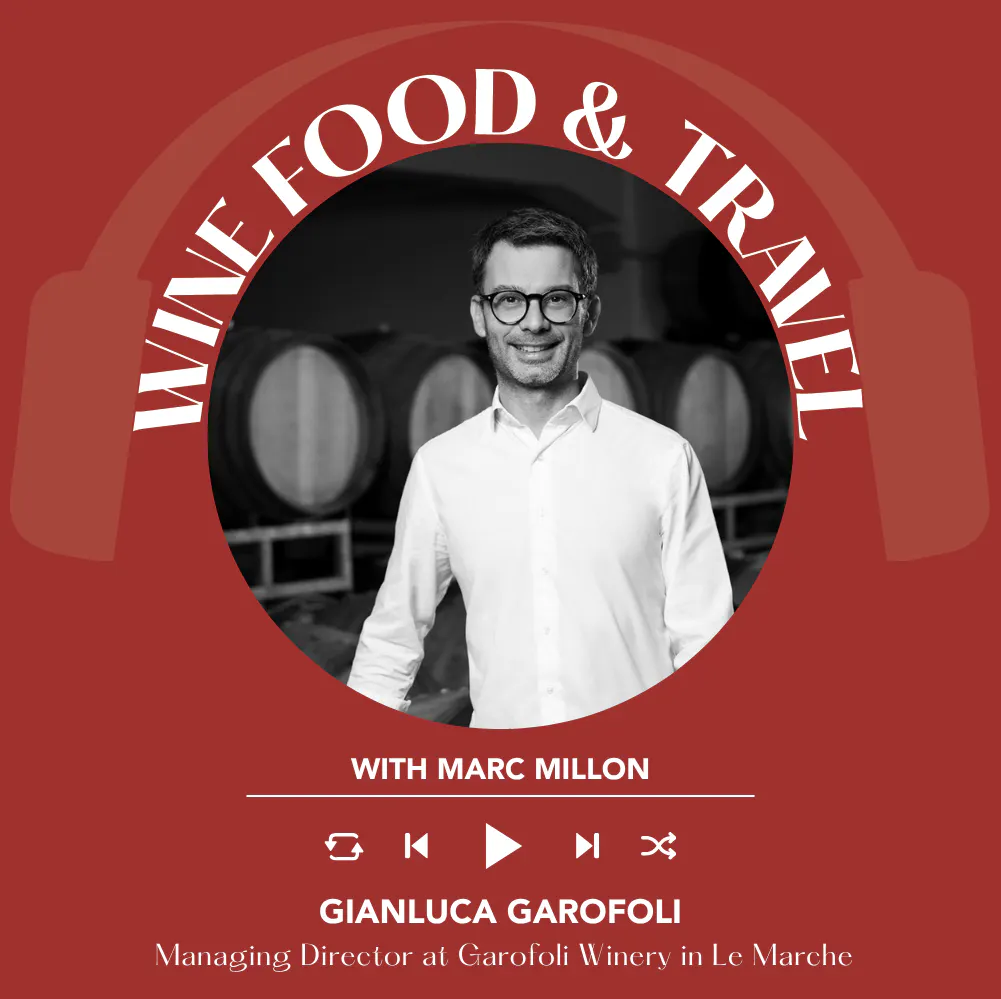
Ep. 2767 Le Marche: Verdicchio and the Wines that Shape the Region with Gianluca Garofoli of Garofoli Vini | Wine, Food & Travel with Marc Millon
Episode 2767
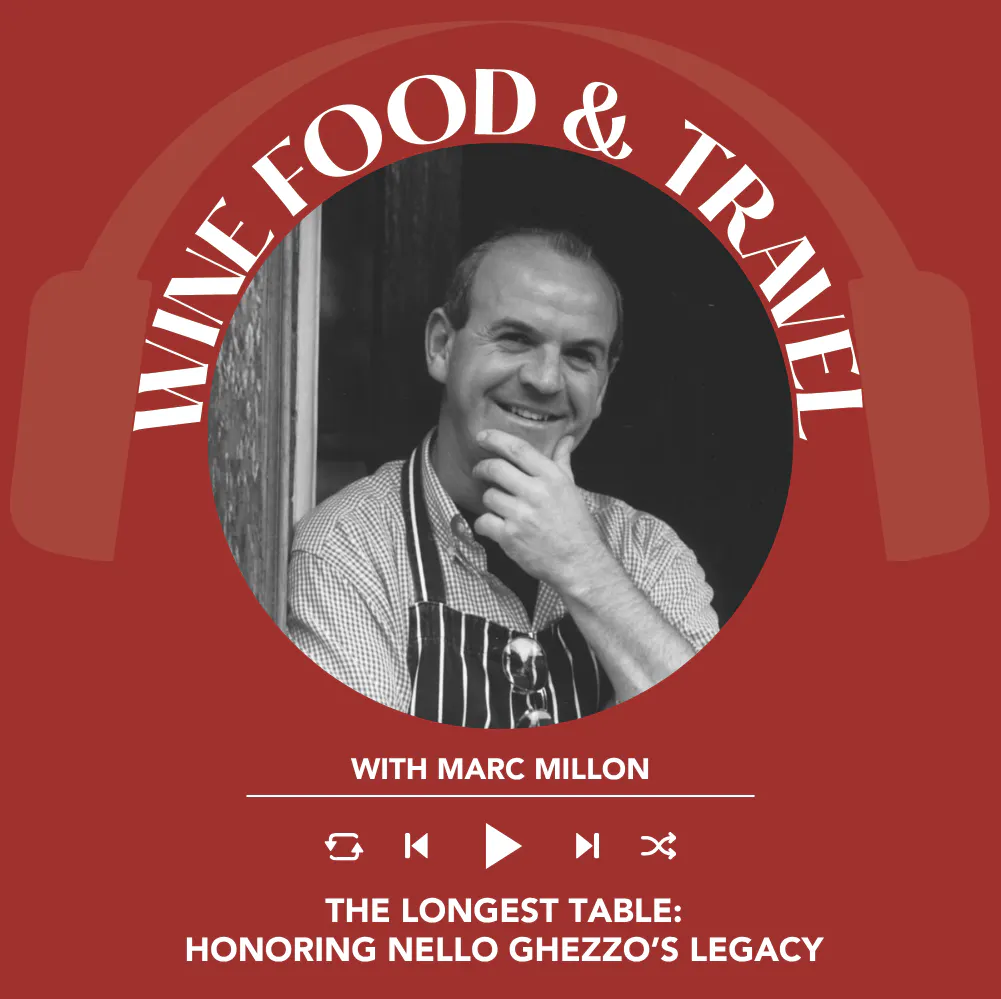
Ep. 2755 The Longest Table: Honoring Nello Ghezzo’s legacy | Wine, Food & Travel with Marc Millon
Episode 2755